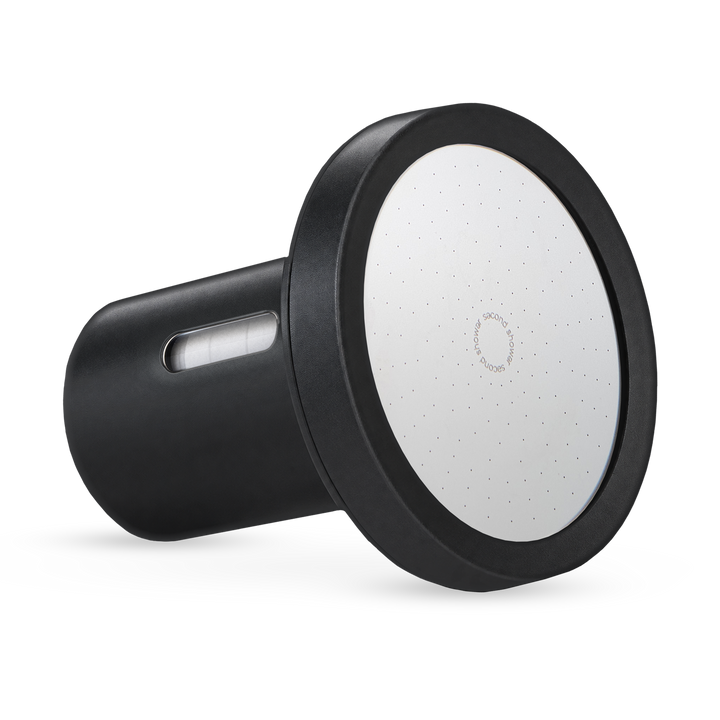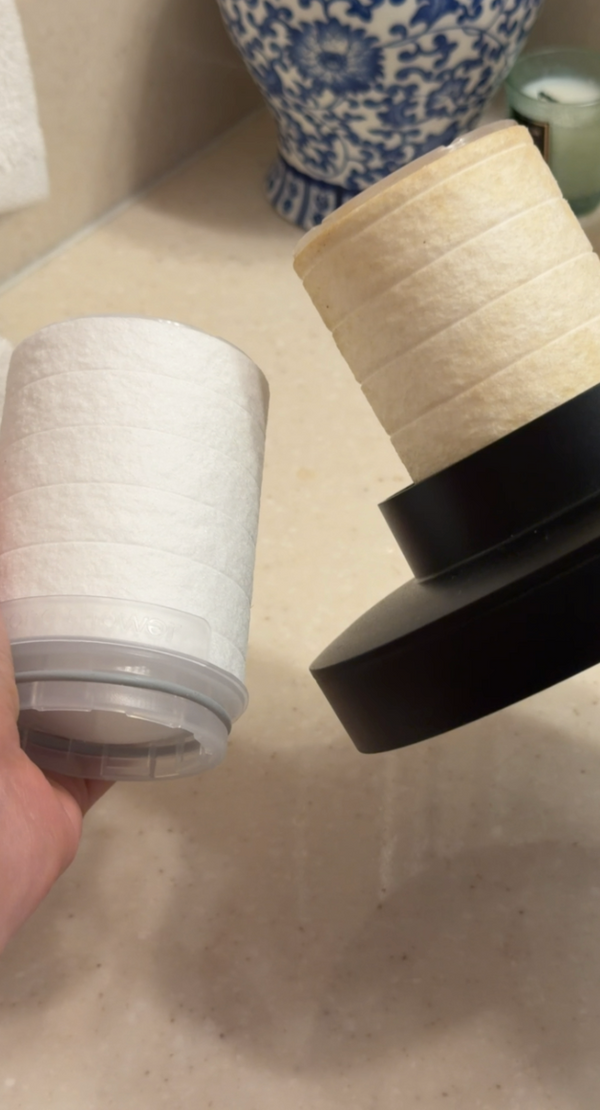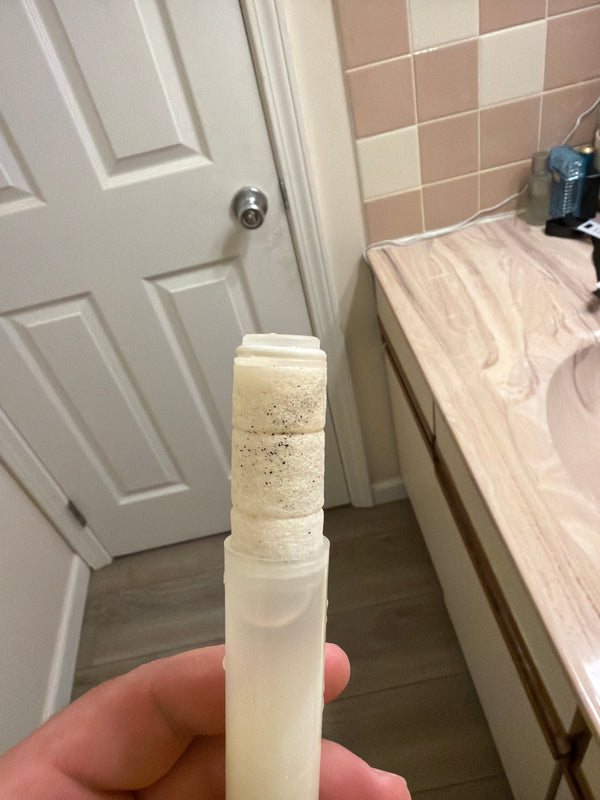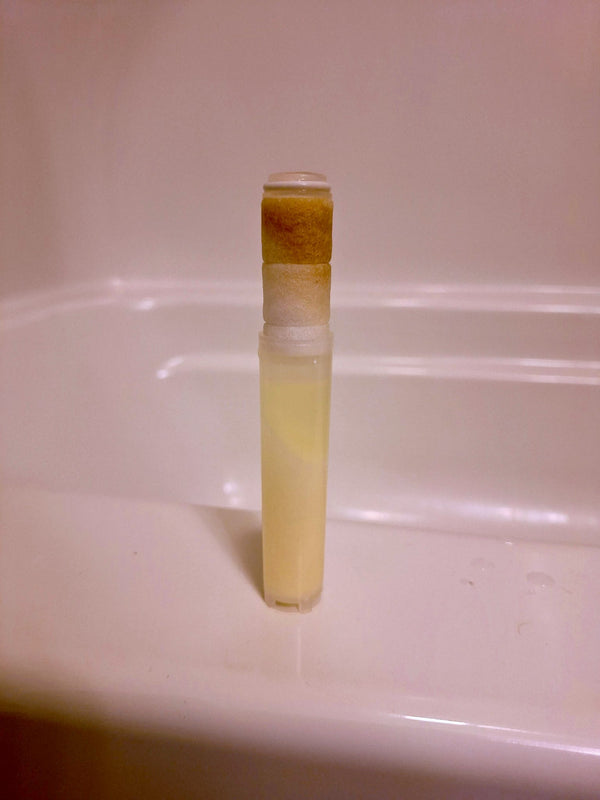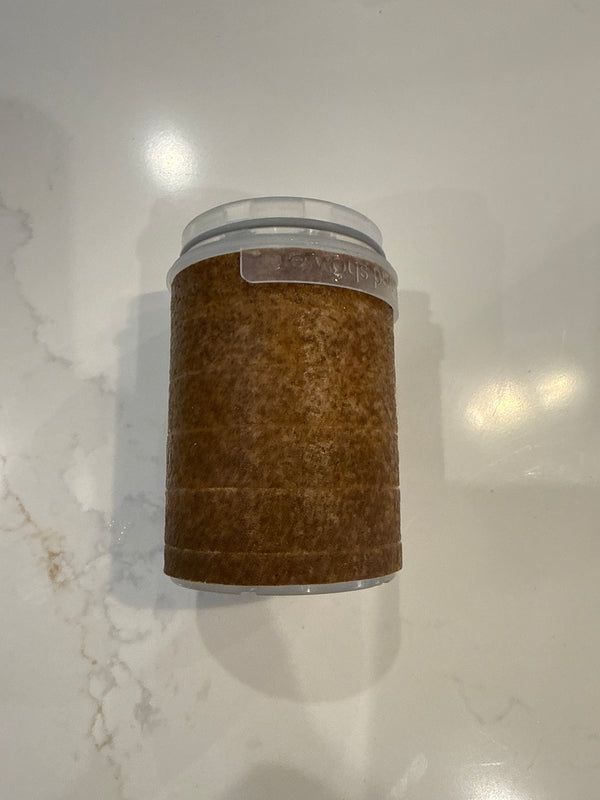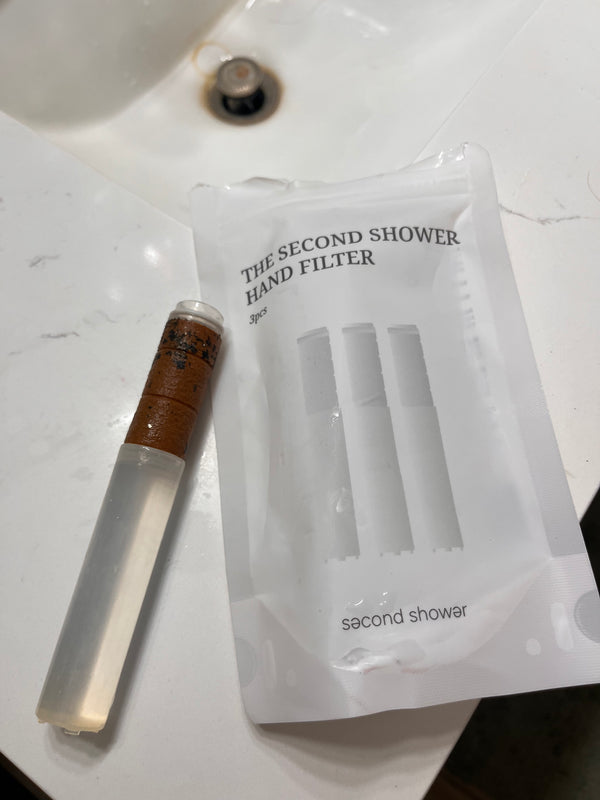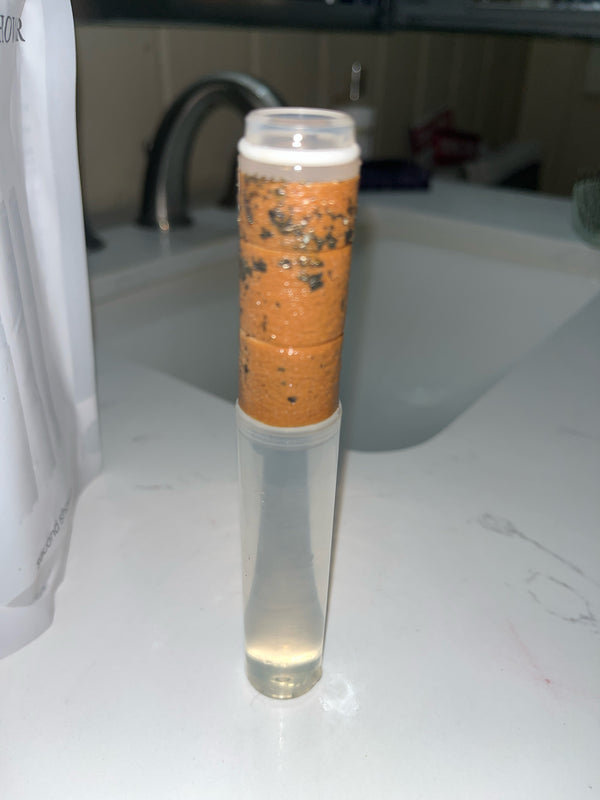
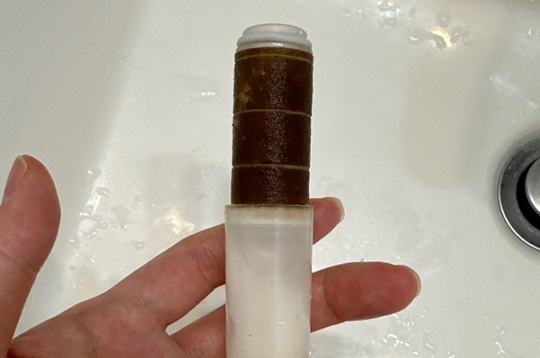
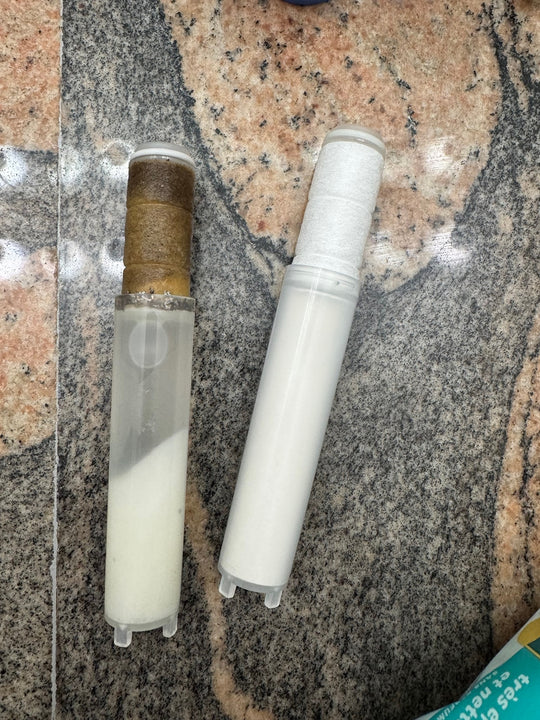
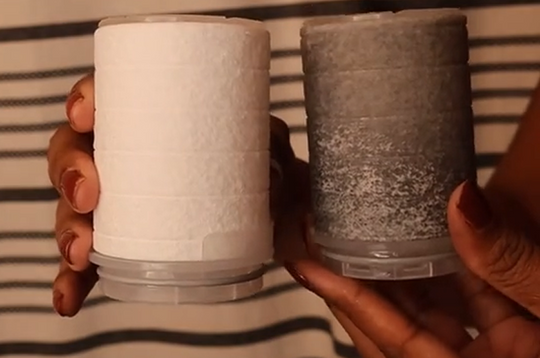
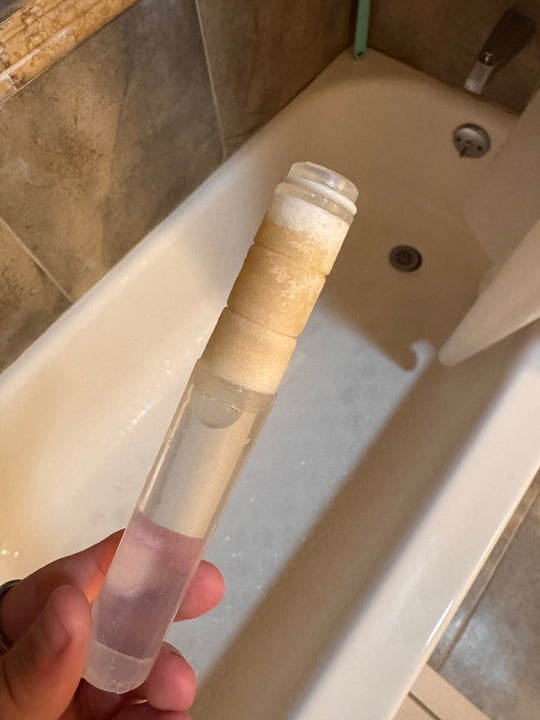
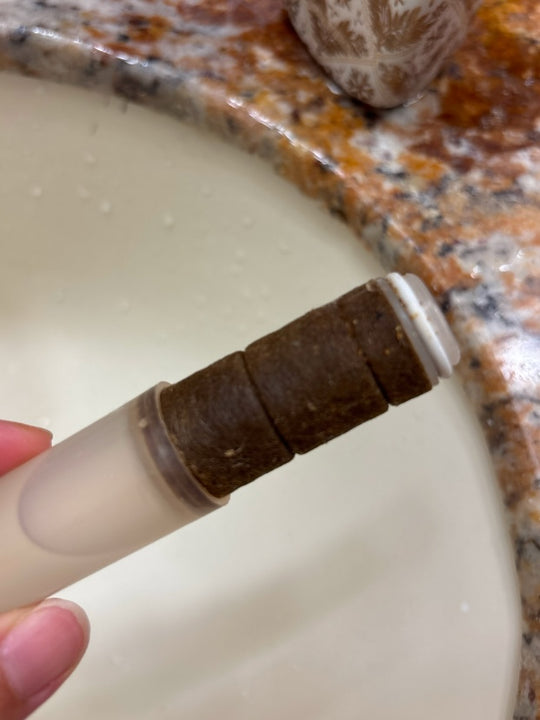
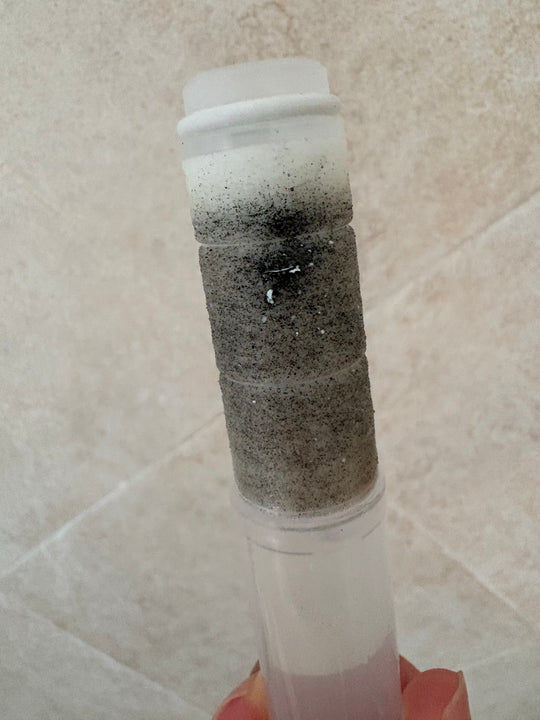
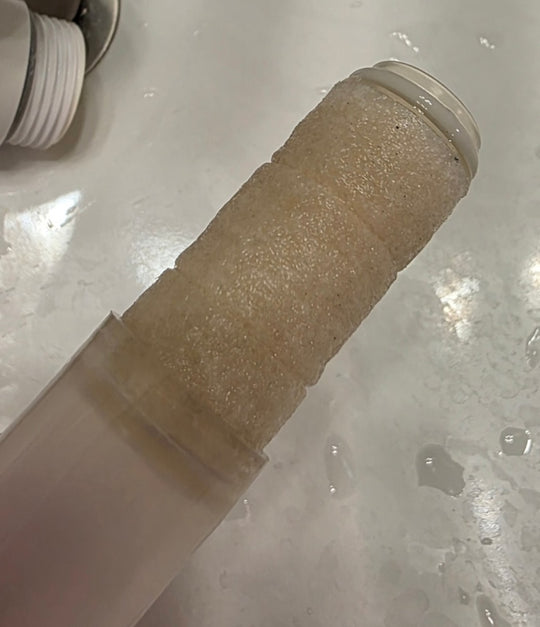
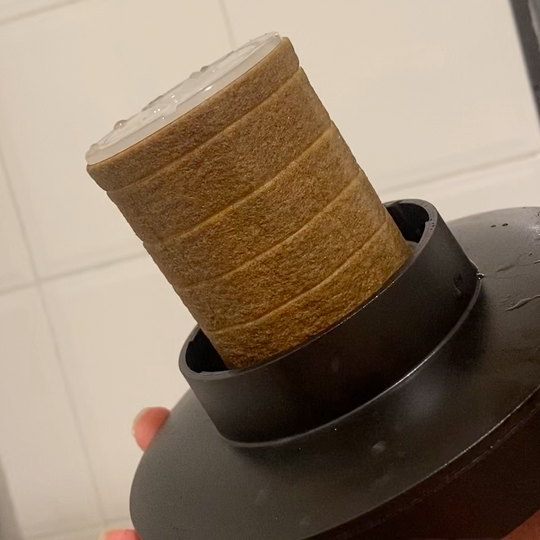
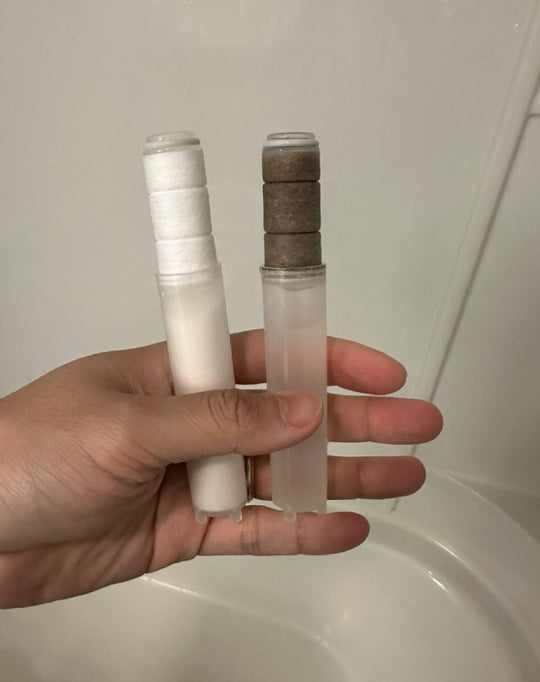
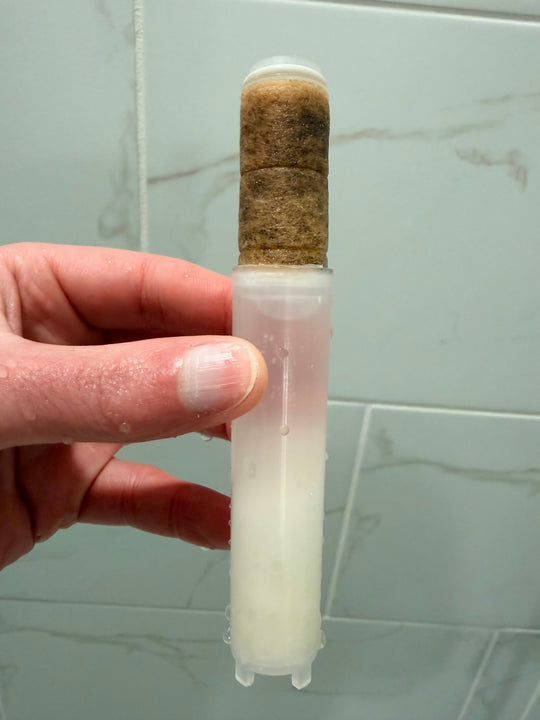
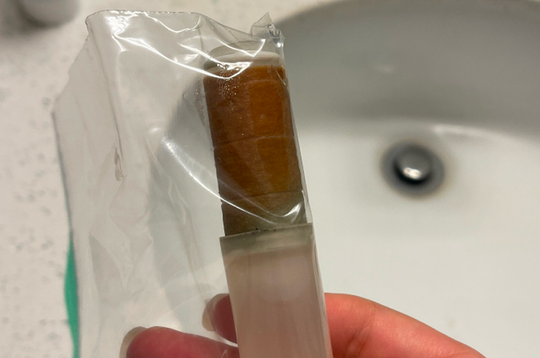
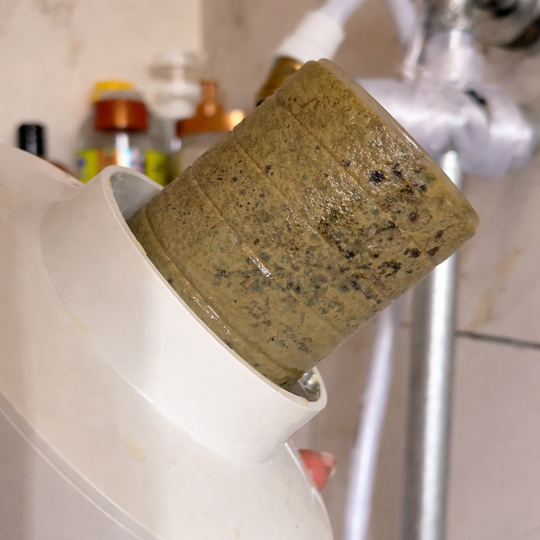
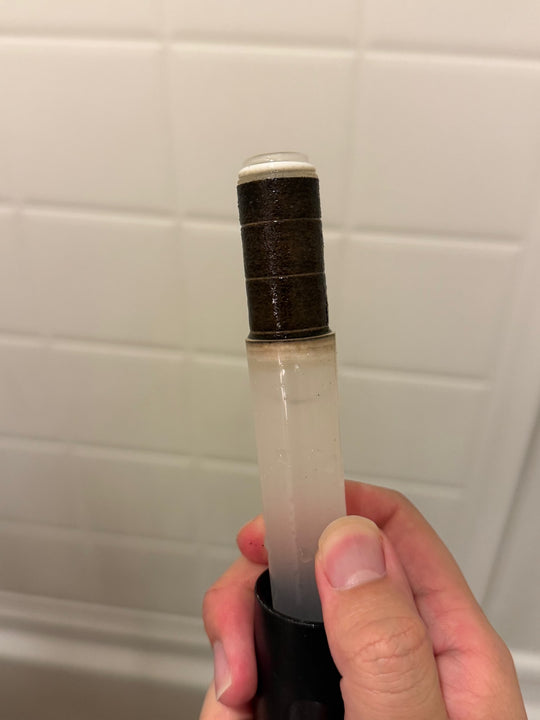
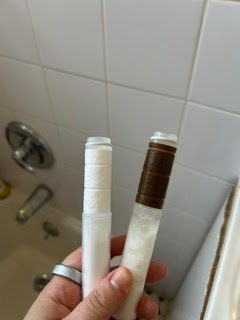
Chlorine and chloramine in shower water oxidize hair color molecules and strip the cuticle's protective lipid layer, causing premature fading within 3-5 washes. Second Shower's Vitamin C filter reduces 99.9% of free chlorine through its peak performance window (Day 1-60) and neutralizes chloramine, backed by an NSF/ANSI 42* certified sediment pre-filter.
Unlike KDF-55 filters that drop below 10% chlorine reduction by Day 60, Second Shower's stoichiometric Vitamin C reaction maintains consistent protection throughout the cartridge life, preserving color vibrancy for 6-8 weeks longer than unfiltered water.
- Chlorine oxidation mechanism - Free chlorine breaks sulfur bonds in color molecules and strips cuticle lipids within seconds of contact, accelerating fade by 40-60% versus chlorine-free water.
- Vitamin C neutralization advantage - Ascorbic acid converts chlorine to harmless chloride ions through a 1:1 stoichiometric reaction that stays consistent through the cartridge's peak performance window, unlike KDF-55 galvanic media which drops to <10% efficacy by Day 60.
- Chloramine protection - Most shower filters use KDF-55, which is largely ineffective against chloramine; Second Shower's Vitamin C neutralizes both chlorine and chloramine completely.
- Clinical hair results - Independent testing showed 82% of users reported healthier, shinier hair after 2 weeks, with dermatologist evaluation confirming zero adverse reactions.
- NSF/ANSI 42* sediment certification - Pre-filter component certified for particulate removal; full-assembly chlorine/chloramine reduction verified by independent official lab testing to non-detectable levels.
*Micron PP sediment filter certified by NSF/ANSI 42 standards.

Protect color and texture at the source. Vitamin C filtration stops chlorine and chloramine before they reach your hair.
- 99.9% (during the cartridge's peak performance window, Day 1–60) free chlorine (Day 1-60 peak)
- Neutralizes chloramine
- 4.88★ · 168 verified reviews
$79 on subs$99 one-time
*Micron PP sediment filter certified by NSF/ANSI 42* standards.
*Micron PP sediment filter certified by NSF/ANSI 42 standards.
Why Your Hair Color Fades Faster in the Shower
Second Shower's Vitamin C filter reduces 99.9% of chlorine through its peak window, backed by an NSF/ANSI 42* certified sediment pre-filter.
*Micron PP sediment filter certified by NSF/ANSI 42 standards.
The chlorine and chloramine in your municipal water supply oxidize artificial and natural hair color pigments, breaking the molecular bonds that keep color locked in the cuticle. This oxidation happens within seconds of contact - before you even reach for shampoo.
Most U.S. water utilities add 1.0-4.0 ppm of chlorine or chloramine as a disinfectant. While safe for drinking, these oxidizers are chemically aggressive toward the keratin protein structure and the semi-permanent dye molecules embedded in hair's cuticle layer. A 2011 study in the Journal of Cosmetic Science (Thomas et al.) found that chlorinated water exposure increased cuticle damage markers by 300% compared to dechlorinated water, with visible color loss appearing after just 5-7 wash cycles.
The problem compounds with hot water. Heat opens the cuticle scales, allowing chlorine to penetrate deeper into the cortex where color molecules reside. Salon professionals recommend cool-water rinses for this reason, but most people shower at 98-105°F - the exact temperature range that maximizes oxidative damage. This is why $200 balayage appointments fade to brassy tones within 3-4 weeks instead of the promised 8-10.
KDF-55 filters, used by most competitors including Jolie and AquaBliss, rely on a copper-zinc galvanic reaction that degrades rapidly. Independent testing shows KDF media drops from 90% chlorine reduction at Day 1 to under 10% by Day 60. Second Shower's Vitamin C (ascorbic acid) uses a stoichiometric 1:1 reaction with chlorine that stays consistent through the cartridge's peak performance window - maintaining 99.9% reduction through the entire 60-day cartridge window and neutralizing chloramine, which KDF-55 barely touches.
The Science Behind Chlorine-Induced Color Fade
Hair color fading from chlorinated shower water follows a two-stage oxidation mechanism.
First, hypochlorous acid (HOCl) - the active form of free chlorine in water - penetrates the cuticle layer and oxidizes the melanin and artificial dye molecules in the cortex. These pigments contain chromophore groups with conjugated double bonds; chlorine cleaves these bonds, breaking the molecular structure that absorbs and reflects specific wavelengths of light.
The result is a shift toward yellow-orange tones (brassiness) as the longer-wavelength chromophores degrade first.
Second, chlorine oxidizes the 18-MEA (18-methyleicosanoic acid) lipid layer that coats each cuticle scale. This lipid barrier provides hydrophobicity and structural integrity; its removal causes the cuticle to lift and roughen, exposing the cortex to further oxidative damage. A study by Peterka et al. (1998) measured a 47% reduction in cuticle lipid content after 10 exposures to 2.0 ppm chlorinated water at 100°F.
The lifted cuticle accelerates color molecule leaching during subsequent washes - a cascading failure mode.
Chloramine (NH₂Cl), used by 68% of U.S. water utilities as a longer-lasting alternative to free chlorine, presents an even more persistent threat. Chloramine is more stable than hypochlorous acid and remains active in hot water, extending oxidation exposure throughout the entire shower. It also penetrates the cuticle more slowly but stays active longer, leading to cumulative damage that manifests as gradual, continuous fading rather than the abrupt color shift seen with high-chlorine water.
The pH factor amplifies this damage. Municipal water typically ranges from pH 6.5-8.5; chlorine's oxidizing potential increases in acidic conditions, while the cuticle swells and opens more readily in alkaline water. Either extreme accelerates pigment loss. Vitamin C neutralization converts chlorine to neutral chloride ions (Cl⁻) at any pH, eliminating the oxidizer before it contacts hair.
This is a chemical conversion, not a filter media absorption - meaning performance stays consistent regardless of water chemistry, temperature, or flow rate.
The difference between filtered and unfiltered water becomes visible under microscopy. Scanning electron micrographs from Tikkanen et al. (2001) show cuticle scale edges on chlorine-exposed hair lifting 15-20° from the hair shaft, versus 5-8° for dechlorinated controls. This structural disruption is irreversible without restorative treatments, and it progresses with each chlorinated wash. Color-treated hair, already compromised by the alkaline dye process, starts from a weakened baseline and degrades faster than virgin hair.
5 Signs Your Shower Water Is Destroying Your Color
- Brassy or orange tones appearing within 2-3 weeks - Cool-toned colors (ash, platinum, violet) shift warm because chlorine oxidizes blue/purple chromophores first, leaving yellow-red pigments behind. If your salon-fresh color looks muddy by week three, chlorine is the likely culprit.
- Visible color difference between roots and ends - Ends are exposed to more cumulative chlorine over time and fade faster. A 2-3 shade gradient from roots to tips indicates progressive oxidative damage, not just natural fading.
- Dry, straw-like texture post-shower - Chlorine strips the 18-MEA lipid layer, leaving cuticles rough and hydrophobic. Hair feels coarse and tangles immediately after drying, even with conditioner. This texture change precedes visible color loss by 1-2 weeks.
- Chlorine smell in hair after washing - If your hair smells like a pool 20 minutes post-shower, residual chlorine or chloramine is still oxidizing proteins. This odor is a direct indicator of ongoing chemical damage.
- Color bleeding onto towels or pillowcases - Lifted cuticles allow dye molecules to leach out during drying. Red and purple dyes are especially prone to this. If you see color transfer within 4-5 washes of a salon visit, your water is accelerating pigment loss.
- Highlights turning yellow-green in summer - Copper in water (common in areas with copper plumbing or high mineral content) combines with chlorine to deposit a greenish tint on bleached hair. This is most visible on platinum and ash-blonde shades.
- Salon color lasting <4 weeks before noticeable fade - Professional color should hold 6-8 weeks with proper care. If you're booking touch-ups every 3-4 weeks, your shower water - not your shampoo - is the primary variable.
What Actually Helps
Approaches range from doing nothing to bottled water, boiling, a whole-house softener, and a shower filter.
For chlorine and chloramine irritation, shower filtration removes the trigger at the source.
Why Second Shower Works for Color-Treated Hair
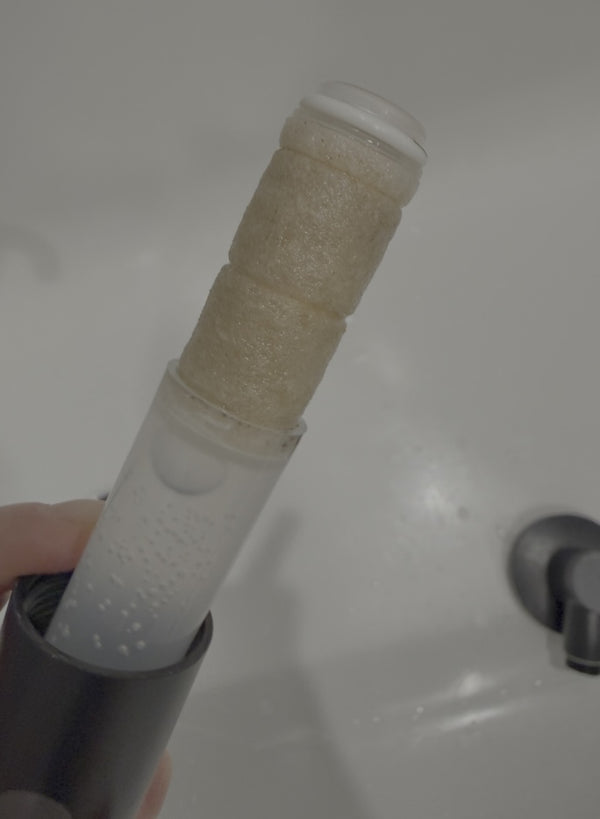
Second Shower uses pharmaceutical-grade L-ascorbic acid (Vitamin C) as its primary filtration medium, a choice driven by chemistry rather than marketing.

Second Shower uses pharmaceutical-grade L-ascorbic acid (Vitamin C) as its primary filtration medium, a choice driven by chemistry rather than marketing. Ascorbic acid reduces hypochlorous acid (chlorine) to chloride ions through a 1:1 stoichiometric reaction: C₆H₈O₆ + HOCl → C₆H₆O₆ + HCl + H₂O. This is a complete conversion, not an absorption process - the chlorine molecule ceases to exist as an oxidizer.
The reaction happens instantly at the point of contact, regardless of water temperature, pH, or flow rate, making it uniquely suited for the variable conditions of a home shower.
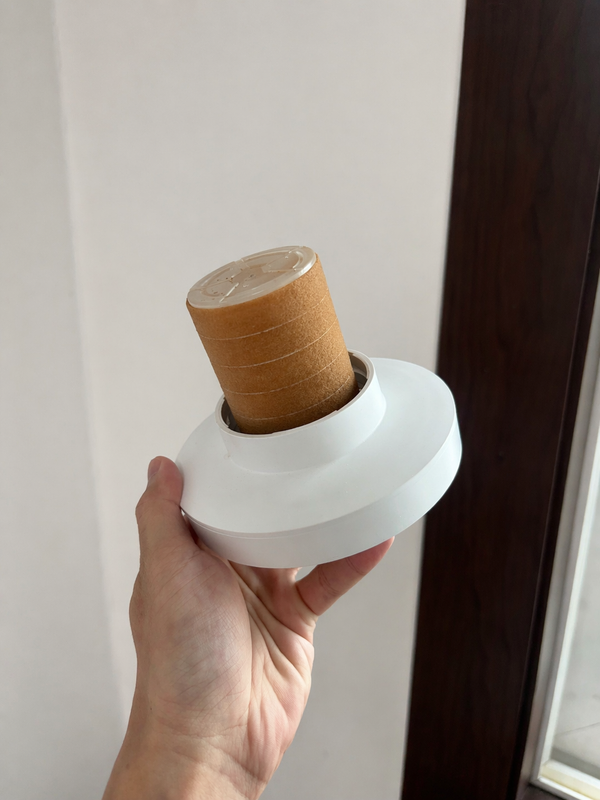
The NSF/ANSI 42* certified polypropylene sediment pre-filter removes particulates down to 5 microns, trapping rust, sediment, and pipe scale before they reach the Vitamin C cartridge. This extends the active life of the ascorbic acid media and prevents particulate matter from depositing on freshly washed hair.
*Micron PP sediment filter certified by NSF/ANSI 42 standards.
Independent lab testing verified full-assembly performance: chlorine and chloramine reduced to non-detectable levels, with heavy metals (lead, mercury, cadmium) also removed beyond NSF/ANSI 42* benchmarks - a standard Second Shower exceeds but hasn't formally certified against.
*Micron PP sediment filter certified by NSF/ANSI 42 standards.
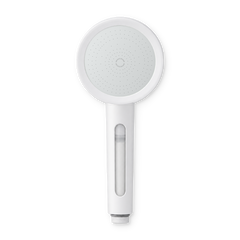
The 176 micro-jet spray plate (Showerhead model) or 128 micro-jet plate (Showerhand model) maintains 2.5 GPM flow at full household pressure while distributing filtered water in a fine mist. This matters for color preservation: the mist pattern reduces mechanical agitation on the cuticle compared to concentrated stream sprays, and the even distribution ensures every strand gets filtered water, not just the top layer.
Competitors using inline cartridges with standard spray heads can't make this claim - they filter the water but still pummel hair with high-pressure jets that lift cuticle scales.
The five-vitamin infusion - C, E, B3 (Niacinamide), B5 (Panthenol), B7 (Biotin) - adds a restorative layer. Vitamin E is a lipid-soluble antioxidant that helps protect the remaining 18-MEA cuticle lipids from oxidative stress. Niacinamide improves moisture retention in the keratin structure. Panthenol (provitamin B5) has been shown in cosmetic studies to penetrate the hair shaft and bind water, improving elasticity and reducing breakage.
These aren't marketing additives - they're functionally active at the concentrations delivered through aerosol mist contact.
Filter replacement cadence is designed around real-world chlorine load, not arbitrary timelines. The Showerhead cartridge holds peak performance (99.9% reduction) for 60 days at average household use (2 people, 8-minute showers, 1.5-2.0 ppm influent chlorine). The Showerhand, with slightly lower media volume, holds 30 days. This is conservative; lab testing shows graceful degradation rather than cliff-edge failure, but we recommend replacement at the peak window to maintain color-protection efficacy.
Subscription plans deliver filters automatically at $18/cartridge (Showerhead 2-pack) or $9/cartridge (Showerhand 3-pack), eliminating the calendar-tracking burden.
Installation requires no tools and takes 3-5 minutes. For renters or anyone in temporary housing, this is critical - you can take Second Shower with you when you move, protecting your color investment across apartments or dorm rooms. The universal fitting adapter works with 95% of U.S. shower arms; the only exclusions are proprietary systems like Moen's Magnetix or Kohler's Flipside dual heads, which require brand-specific connections.
For color-treated hair specifically, the practical benefit translates to 6-8 additional weeks of color vibrancy between salon visits. At an average $150-250 per color appointment, this pays for the filter system in 2-3 months. More importantly, it eliminates the cycle of over-processing - re-coloring every 4 weeks damages hair cumulatively, leading to breakage, thinning, and the need for expensive restorative treatments.
Filtering your water is preventive, not corrective, and it works on every wash without requiring behavior change.
What a Shower Filter Won't Fix
A shower filter removes chlorine, chloramine, and heavy metals, but it does not soften water.
Hard water - caused by dissolved calcium and magnesium carbonates - requires ion-exchange softening, which shower filters do not provide. If your color fades AND your hair feels coated or sticky after washing, you likely have both chlorine and hardness issues. A filter will solve the oxidation problem but won't remove the mineral buildup.
For that, you need a whole-house softener or a chelating shampoo (Malibu C, Redken Hair Cleansing Cream) used weekly.
Shower filters also can't reverse damage already done. If your cuticle is lifted and your color is already brassy, filtering your water will prevent further degradation but won't restore vibrancy. You'll need a salon toner or color-depositing treatment to correct the current state. Think of a filter as preventive, not corrective - it protects future washes, not past ones.
Vitamin C filtration works instantaneously on chlorine and chloramine, but it does not remove fluoride, nitrates, or pharmaceuticals. Municipal water contains trace amounts of these compounds, and while they're below EPA health limits, some users prefer their removal. For that level of filtration, you need reverse osmosis or activated alumina systems, which are incompatible with shower-level flow rates and pressure.
Second Shower targets the oxidizers that damage hair and skin, not the full spectrum of dissolved contaminants.
Finally, filter performance depends on replacement discipline. A cartridge that's 90 days old will not deliver 99.9% (during the cartridge's peak performance window, Day 1–60) chlorine removal, even if it still produces water flow. The Vitamin C media exhausts based on total chlorine load, not calendar days, so high-chlorine areas (3.0-4.0 ppm) may need replacement every 45 days instead of 60. If you notice color fading returning or a chlorine smell in your hair, replace the filter immediately - it's depleted.
Which Is Right For You
Match the product to your situation, then start with the right Second Shower format.
Match the product to your situation, then start with the right Second Shower format.
Next Step
Use a verified product path and track outcomes over the first replacement cycle.
Related Reading
FAQ: Color-Treated Hair and Shower Filters
Does a shower filter really prevent color fading?
Yes, if it removes chlorine and chloramine effectively. Chlorine oxidizes hair color molecules and strips the cuticle's protective lipid layer, causing premature fading. Independent testing shows chlorinated water increases cuticle damage by 300% versus dechlorinated water (Thomas et al., 2011). A properly functioning Vitamin C filter neutralizes these oxidizers before they contact hair, extending salon color vibrancy by 6-8 weeks.
KDF-55 filters work for the first 30-45 days but degrade rapidly; Vitamin C maintains 99.9% (during the cartridge's peak performance window, Day 1–60) reduction through the full 60-day window.
Will a shower filter help if my water has chloramine instead of chlorine?
Only if the filter uses Vitamin C, calcium sulfite, or catalytic carbon - KDF-55 is largely ineffective against chloramine. Chloramine (NH₂Cl) is chemically more stable than free chlorine and used by 68% of U.S. utilities. Second Shower's Vitamin C neutralizes both chlorine and chloramine through a stoichiometric reaction, converting them to harmless chloride ions. Jolie, AquaBliss, and most competitors use KDF-55, which relies on a galvanic reaction that barely touches chloramine.
Check your water utility's annual report (Consumer Confidence Report) to confirm which disinfectant your area uses.
How often do I need to replace the filter for color protection?
Every 60 days for the Showerhead, every 30 days for the Showerhand, based on average household use (2 people, 1.5-2.0 ppm influent chlorine). High-chlorine areas (3.0+ ppm) may need replacement every 45 days. The filter doesn't stop working abruptly - it degrades gradually - but color protection efficacy drops below 90% after the recommended window. Set a phone reminder or use Second Shower's subscription service, which auto-ships replacements at the optimal interval.
If you notice color fading returning or a chlorine smell in your hair before the replacement date, the filter is exhausted and should be swapped immediately.
Can I use a shower filter with purple shampoo or other color-depositing products?
Yes - shower filters and color-depositing shampoos address different problems and work synergistically. Purple shampoo neutralizes brassy yellow tones by depositing violet pigment, but it can't prevent the oxidation that causes those tones in the first place. A filter removes the chlorine that oxidizes cool-toned chromophores, reducing the need for corrective purple shampoo. Many users report needing purple shampoo only once a week instead of every wash after installing a filter.
The filter won't interfere with the depositing chemistry - it only removes oxidizers, not color molecules from your products.
Will a shower filter fix brassy hair that's already faded?
No - it will prevent further fading but won't reverse existing damage. If your hair is already brassy, you need a toner or color-depositing treatment to correct the current tone. A filter is preventive, not restorative. Once you've toned or re-colored, the filter protects that new color from oxidizing as quickly. Think of it as sunscreen for your hair color - it stops future damage but doesn't undo sunburn that already happened.
For best results, install the filter before your next salon appointment so the fresh color is protected from day one.
Do I still need to use cool water rinses with a filtered shower?
Cool rinses are still beneficial for cuticle sealing, but the chlorine-removal benefit is eliminated once you filter. Hot water (100-105°F) opens cuticle scales, which in unfiltered showers allows chlorine to penetrate deeper into the cortex where color lives. With filtered water, hot temperatures won't introduce oxidizers, but they'll still cause some mechanical cuticle lifting. A final cool rinse (60-70°F for 15-20 seconds) helps flatten the cuticle and lock in moisture, extending color vibrancy even further.
The filter handles the chemistry; the cool rinse handles the physics.
Can hard water cause color fading even with a shower filter?
Hard water contributes to color dullness through mineral buildup, not oxidation. Calcium and magnesium carbonates coat the hair shaft, creating a film that reflects light unevenly and makes color look muted or ashy. This is a separate issue from chlorine-induced fading. A shower filter removes chlorine but does not soften water - that requires ion exchange, which no shower-mountable device provides.
If you have both hard water and chlorinated water, use a filter plus a weekly chelating treatment (Malibu C, Ion Hard Water Shampoo) to remove mineral deposits. The filter prevents oxidative fade; the chelating shampoo removes buildup.