


Yes, vitamin C (ascorbic acid) neutralizes chlorine through a chemical reaction that's been scientifically verified. It's so effective that water treatment plants use it. A vitamin C shower filter applies this same chemistry to protect your skin and hair.
Does Vitamin C Actually Neutralize Chlorine in Water? The Science Explained
Vitamin C shower filters have gained popularity, but the claims can sound too good to be true. A vitamin that neutralizes a harsh chemical? Let's look at what actually happens.
The short answer: it's real chemistry, not marketing hype. Here's how it works.
The Chemistry of Chlorine Neutralization
When ascorbic acid (vitamin C) contacts chlorine, they undergo a reduction-oxidation (redox) reaction. The vitamin C is oxidized while the chlorine is reduced, converting free chlorine into harmless chloride ions.
The Chemical Reaction
For free chlorine (hypochlorous acid):
C₆H₈O₆ + HOCl → C₆H₆O₆ + HCl + H₂O
In plain English: ascorbic acid reacts with hypochlorous acid (the active form of chlorine in water) to produce dehydroascorbic acid, hydrochloric acid (which immediately dissociates into harmless chloride ions), and water.
The reaction is fast, essentially instantaneous at the concentrations found in shower water.
This isn't theoretical. The San Francisco Public Utilities Commission and other water authorities use vitamin C to dechlorinate water before environmental release. The chemistry is well-established.
Vitamin C vs. Chloramine
Many cities have switched from chlorine to chloramine (chlorine + ammonia) for water treatment. Chloramine is more stable and provides longer-lasting disinfection, but it's also harder to remove.
Here's the key advantage of vitamin C: it neutralizes both chlorine and chloramine.
The Chloramine Reaction
C₆H₈O₆ + NH₂Cl → C₆H₆O₆ + NH₄Cl
Ascorbic acid reduces chloramine to ammonium chloride, which is harmless at these concentrations.
Standard KDF-55 and activated carbon filters struggle with chloramine because it's less reactive than free chlorine. This makes vitamin C filters especially valuable in cities that use chloramine treatment.
How Much Vitamin C Is Needed?
The stoichiometry works out to approximately 2.5 mg of ascorbic acid per 1 mg of chlorine. For typical municipal water with 1-4 mg/L chlorine, a small amount of vitamin C goes a long way.
Practical Numbers
- Average shower: 17 gallons (64 liters)
- Typical chlorine level: 2 mg/L
- Total chlorine in one shower: ~128 mg
- Vitamin C needed: ~320 mg
A quality vitamin C shower filter cartridge contains several grams of ascorbic acid, enough for dozens of showers before replacement.
Why This Matters for Your Skin and Hair
Chlorine is an oxidizer. That's why it kills bacteria. But that same oxidizing action damages your skin's proteins and strips natural oils from your hair.
What Chlorine Does
- Skin: Disrupts the acid mantle, strips protective oils, causes dryness and irritation
- Hair: Breaks protein bonds, lifts the cuticle, causes brittleness and frizz
- Sensitive conditions: Aggravates eczema, psoriasis, and dermatitis
What Happens When You Remove Chlorine
- Skin: Retains natural moisture, feels softer, less irritation
- Hair: Maintains protein structure, stays smoother, less breakage
- Color-treated hair: Color lasts longer, less fading
If your city uses chloramine instead of chlorine, you especially need a vitamin C filter. Check your city's water quality report online to find out.
Vitamin C Filters vs. Other Types
| Filter Type | Chlorine Removal | Chloramine Removal | Additional Benefits |
|---|---|---|---|
| Vitamin C | Excellent (99%+) | Excellent (99%+) | Antioxidant residue, fast acting |
| KDF-55 | Good (85-95%) | Poor (30-50%) | Reduces some heavy metals |
| Activated Carbon | Moderate (70-90%) | Poor (minimal) | Improves taste and odor |
| Calcium Sulfite | Good (85-95%) | Moderate (50-70%) | Works well in hot water |
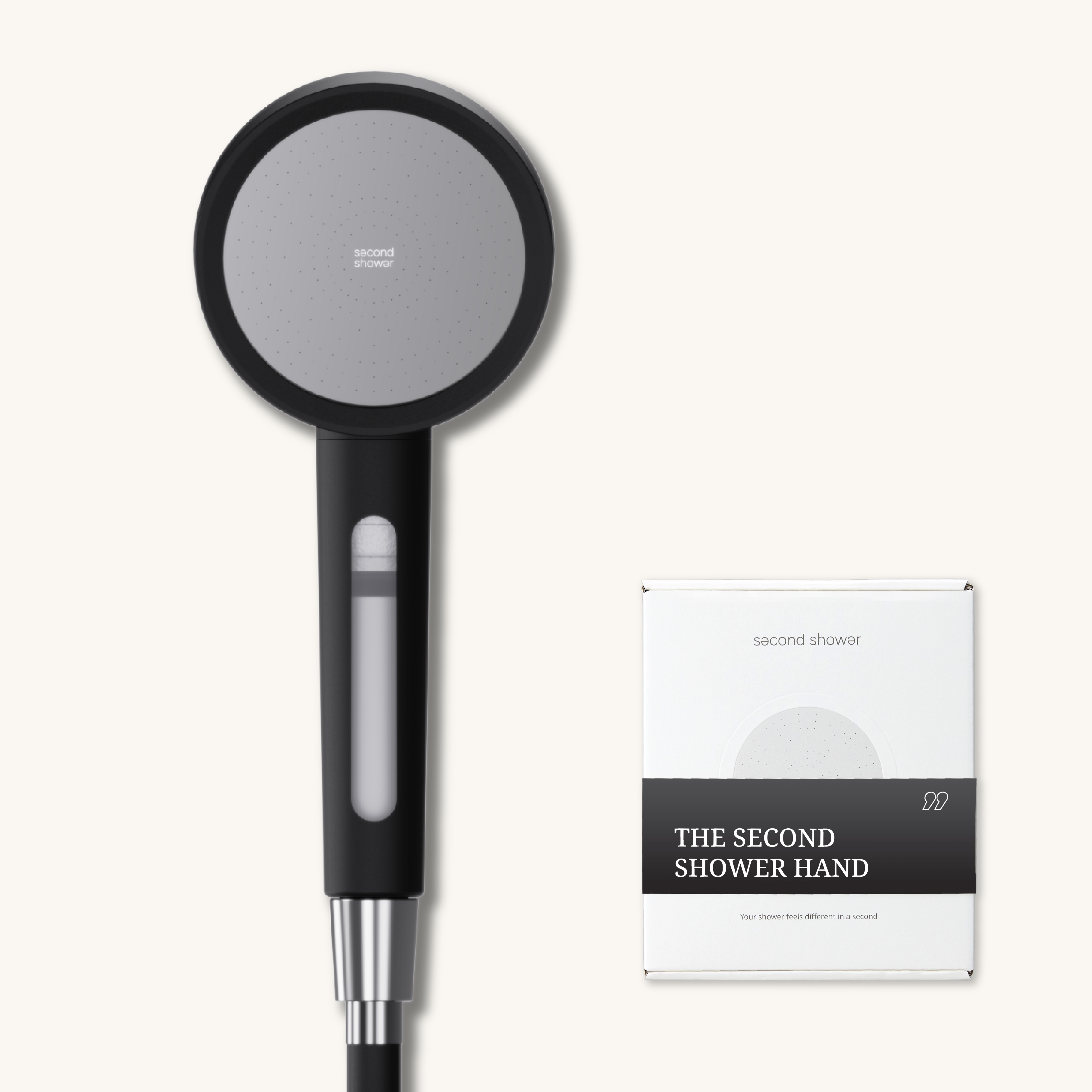
Second Shower Filtered Shower Head
Second Shower uses vitamin C filtration as its primary mechanism, achieving 99.9% chlorine removal (NSF certified). The filter also infuses additional vitamins (E, B3, B5, B7) that benefit skin and hair.
The transparent filter chamber lets you see the chemistry in action. As the filter works, it gradually changes color from captured sediment and contaminants. It's tangible proof that the science is working.
- 99.9% chlorine removal (NSF certified)
- Effective against chloramine
- Multiple vitamin infusion
- Visible filtration results
- Works immediately upon contact
- Vitamin C depletes, requiring regular filter changes
- Not designed for heavy metal removal
Common Questions About the Science
Does the vitamin C get absorbed by my skin?
Minimally. Most of the ascorbic acid reacts with chlorine before reaching your skin. Any residual vitamin C that contacts skin is generally considered beneficial as an antioxidant, though the amounts are small.
Is the reaction affected by water temperature?
The vitamin C-chlorine reaction works in both hot and cold water. Unlike some filtration media that perform poorly in hot water, ascorbic acid's chemical neutralization is temperature-stable.
Does vitamin C filtration change water pH?
The reaction produces a tiny amount of hydrochloric acid, but at such low concentrations it doesn't meaningfully affect water pH. Your shower water remains neutral.
Can I just add vitamin C powder to my bath instead?
Technically yes. Some people dissolve ascorbic acid powder (about 1 teaspoon per bath) to neutralize chlorine. However, this doesn't work for showers, and getting the right amount is guesswork. A filter provides consistent, reliable neutralization.
FAQ
Is the vitamin C in shower filters the same as vitamin C supplements?
Chemically, yes. Shower filters typically use L-ascorbic acid or sodium ascorbate, the same compounds in supplements. The difference is delivery method and concentration optimized for water contact rather than ingestion.
How do I know if my filter is still working?
Vitamin C filters gradually deplete as they neutralize chlorine. Most manufacturers recommend replacement every 1-2 months. If you notice the chlorine smell returning or skin/hair effects worsening, it's time to replace.
Can vitamin C filters remove other contaminants?
The vitamin C reaction specifically targets chlorine and chloramine. Many vitamin C filters include additional media (like sediment filters) to address particles and some metals, but vitamin C itself doesn't filter heavy metals or bacteria.
Are vitamin C shower filters safe for babies?
Yes. Vitamin C is non-toxic and the byproducts of the chlorine reaction (chloride ions) are harmless at these concentrations. Removing chlorine is actually beneficial for babies' sensitive skin.
Does NSF certification matter for vitamin C filters?
Yes. NSF certification (specifically NSF/ANSI 177) means an independent lab has verified the manufacturer's chlorine removal claims. Without certification, you're trusting marketing claims alone.


Leave a comment
All comments are moderated before being published.
This site is protected by hCaptcha and the hCaptcha Privacy Policy and Terms of Service apply.