


Your water
What comes out of your shower depends on where you live.
Nearly all US tap water is disinfected with chlorine or chloramine. Both are regulated, both reach the shower, and they behave differently. Start with your ZIP code, then read what the research says.
What is in the water.
Thirty-six things a US tap can carry into the shower, grouped by where they come from. Tap one for what it is, the limit that applies and what matters in the shower.
Disinfectants and by-products
What treatment adds, and what it forms.
Minerals and metals
From the ground, the mains and the pipes in your building.
Other inorganic substances
Salts, nitrate, fluoride and natural radioactivity.
Synthetic and organic chemicals
From industry, farms, households and nature.
Microbes
What disinfection is there to control.
Particles, taste and odor
What you can see, smell or taste.
Start with your ZIP.
A regional water profile: hardness, the disinfectant in use and what is often present, from public state-level data. The pins are original customer filters, by location.
Look up your region.
Enter a ZIP code for the regional profile. This is state-level context, not a measurement at your tap.
Not a test at this home. Hardness is a state-level estimate; the disinfectant comes from EPA records for the water system serving this ZIP (or the utility’s own report where marked “water utility”). Check your utility’s current water quality report for local details.
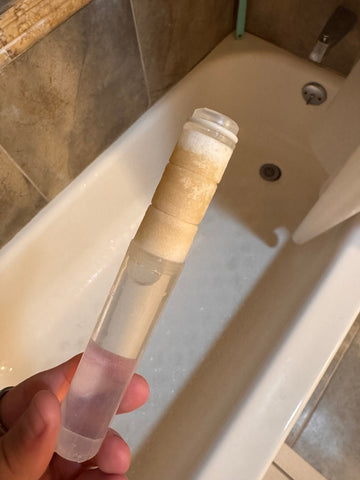
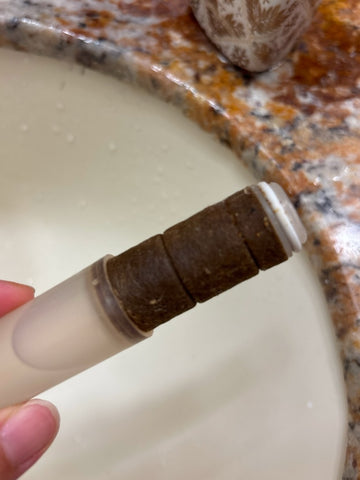
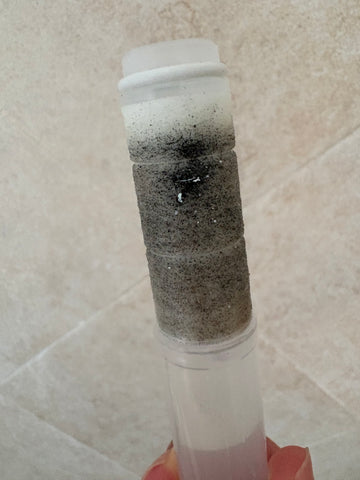
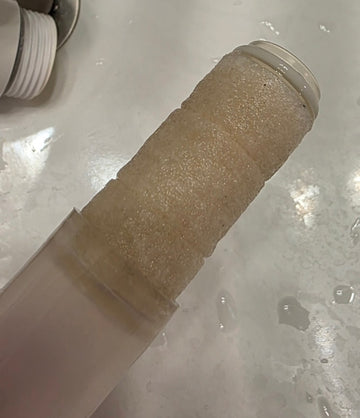
Select a photo to explore
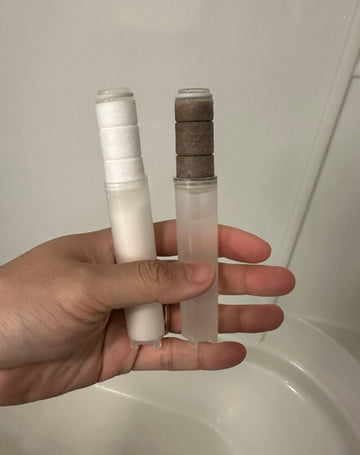
Original customer filters. Tap a pin.
No records match yet.
Try another city or clear your filters to explore every record.
 30 days
“
I didn't expect much, but my face wasn't as tight after showers. Even my derm noticed it looked less irritated.
 14 days
“
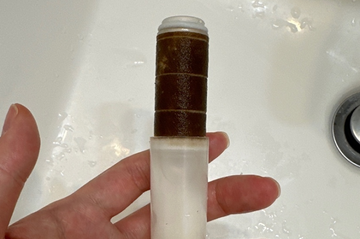
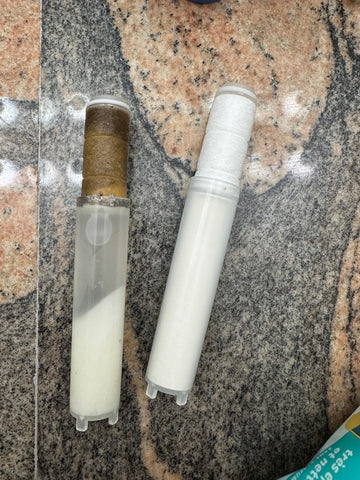
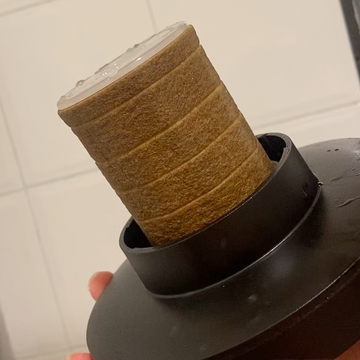
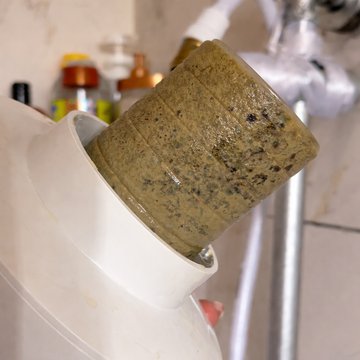
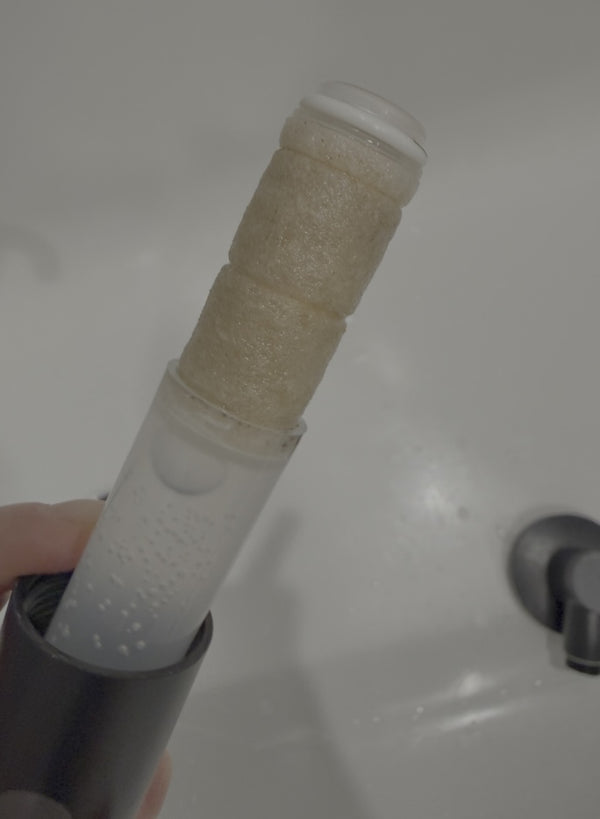
We put it on before bringing the baby home. Two weeks later the inside was brown, which was honestly kind of gross.
 40 days
“
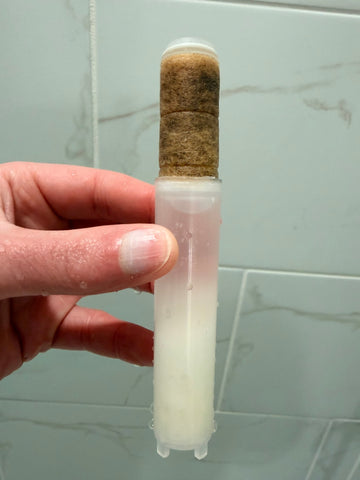
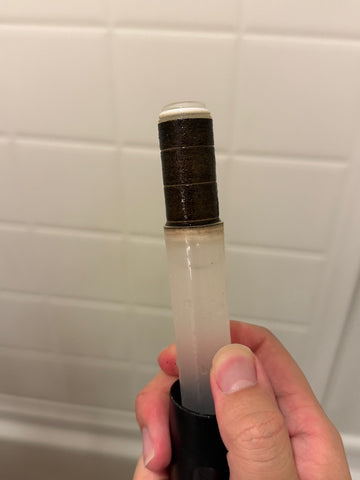
Chicago water always felt harsh, but seeing the filter after 40 days made it feel very real. My skin feels less dry too.
 30 days
“
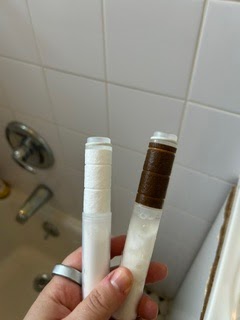
Wasn't totally sold at first. Then I opened it up after a couple weeks and yeah, it was not clean.
 30 days
“
My hair still isn't perfect, but it stopped feeling like straw after every shower. That alone made it worth it.
 21 days
“
My arms usually get itchy after hot showers. It's not gone, but the flare-ups have been way calmer lately.
 40 days
“
I showed my roommate the old filter because it looked nasty. She literally bought one the same night.
 21 days
“
Tampa water looks clear out of the tap, so I wasn't expecting much. The filter turned brown way faster than I thought.
 21 days
“
I always thought our water was pretty good. Three weeks later the filter looked like that, so I guess not.
 14 days
“
My curls are less frizzy after wash day. Not a dramatic overnight thing, just noticeably better after a couple showers.
 30 days
“
After a month in Miami the cartridge looked nasty. It made me rethink what I was showering in every morning.
 14 days
“
Old Queens building, old pipes, no surprise. Still wasn't ready for how much stuff this filter caught.
 7 days
“
We got it for our baby's bath, but I ended up noticing it too. My skin doesn't feel as dried out after showers.
 21 days
“
Atlanta water plus old apartment pipes is a bad combo. The filter color changed quick, which was a little unsettling.
 14 days
“
I'm a hairstylist and I hear 'my hair feels coated' all the time. This is an easy thing I tell people to try.
 30 days
“
My husband thought it was one of my random bathroom things. Then he saw the filter after a month and stopped joking.
 7 days
“
Vegas water is just rough. The first week already had enough buildup in the filter to make me glad I bought it.
 21 days
“
My legs used to get flaky right after showering. I'm still using lotion, but not nearly as much.
 30 days
“
Didn't change my cleanser or routine. My face just stopped looking so irritated after showers.
 14 days
“
After moving to Tampa my skin felt off almost right away. The filter didn't fix everything, but showers don't leave me itchy now.
 21 days
“
I've always had annoying sensitive skin. Filtering the shower water is one of the few changes I could actually feel.
 14 days
“
Bought it for my teenager's skin. The breakouts didn't magically disappear, but the redness after showers is a lot better.
 21 days
“
I do Brazilian blowouts, so I'm picky about shower water. My hair feels smoother and the treatment seems to last better.
 30 days
“
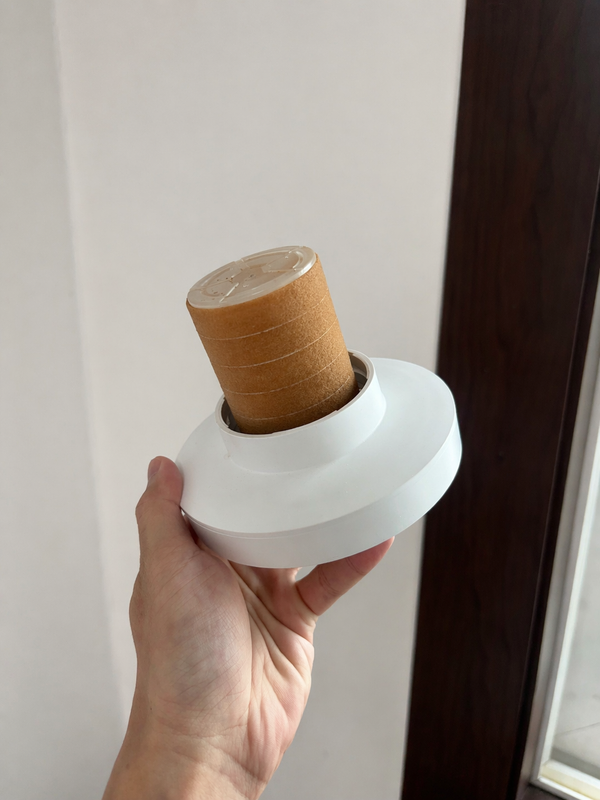
We're on our third filter now. Every time I swap it, I'm surprised all over again by how dirty it gets.
 40 days
“
The chlorine smell is noticeably less, and replacing the filter takes seconds.
 21 days
“
For as small as it is, we're surprised it has a good stream of water — almost a softer touch feel.
 26 days
“
Before, [the chlorine] was literally the levels of the swimming pool.
 17 days
“
We've noticed a huge difference in our skin.
 24 days
“
I thought: I'll be using this for the rest of my life.
 30 days
“
My skin definitely feels silky-soft, and the water doesn't smell.
 22 days
“
It's kind of crazy how dirty the water really is — just after one shower it's already pretty tinted.
 20 days
“
The way the water comes out, it makes it feel very velvety. It's very nice.
 18 days
“
My hair definitely got softer.
 23 days
“
Since you can actually see the filter getting dirty, it puts my mind at ease.
 30 days
“
My hair feels softer and smoother now - noticeably less tangled than before.
 21 days
 28 days
 19 days
 26 days
 17 days
 24 days
 15 days
 22 days
 29 days
 20 days
 30 days
 30 days
 30 days
 14 days
 23 days
“
Normally there's a lot of buildup on the glass shower door. I definitely see a lot less - it definitely helps.
 7 days
“
Honestly, the water just smells less now - that's what I noticed first.
 28 days
 30 days
 22 days
“
The water doesn't smell like chlorine, the water feels softer, and my skin and hair doesn't feel as dry.
 32 days
“
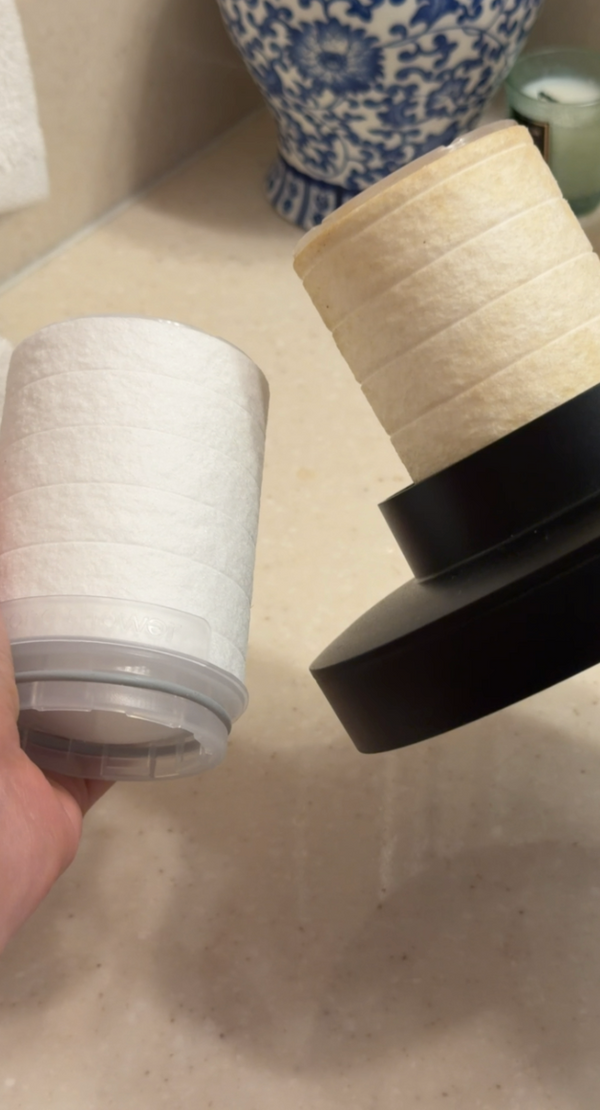
Difference in filter and had smoother hair!
 30 days
“
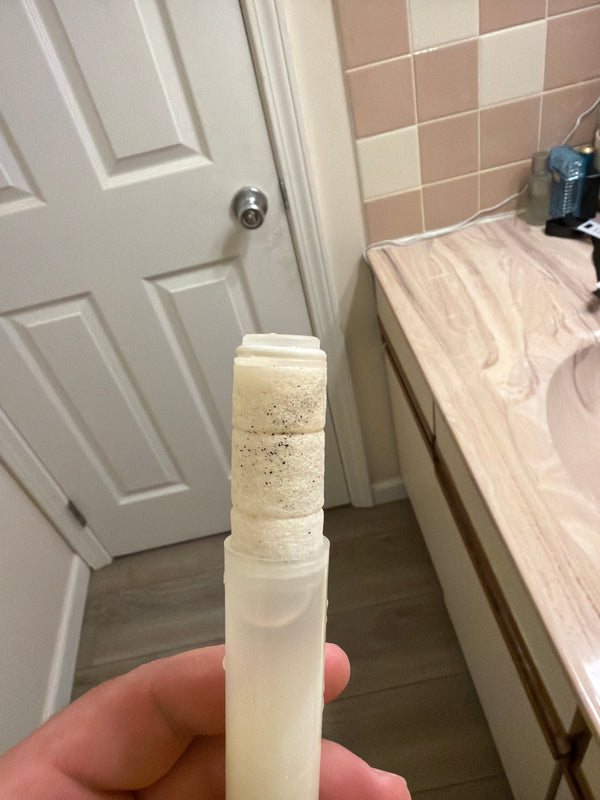
Cleared up my acne really well
 30 days
“
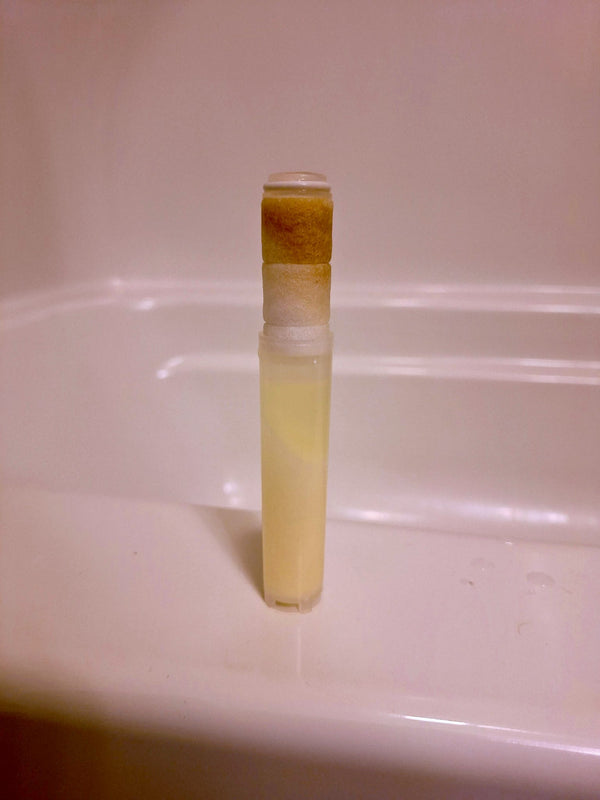
I was skeptical at first but I have to say my skin is not dry and scratchy anymore and my dandruff has significantly been reduced.
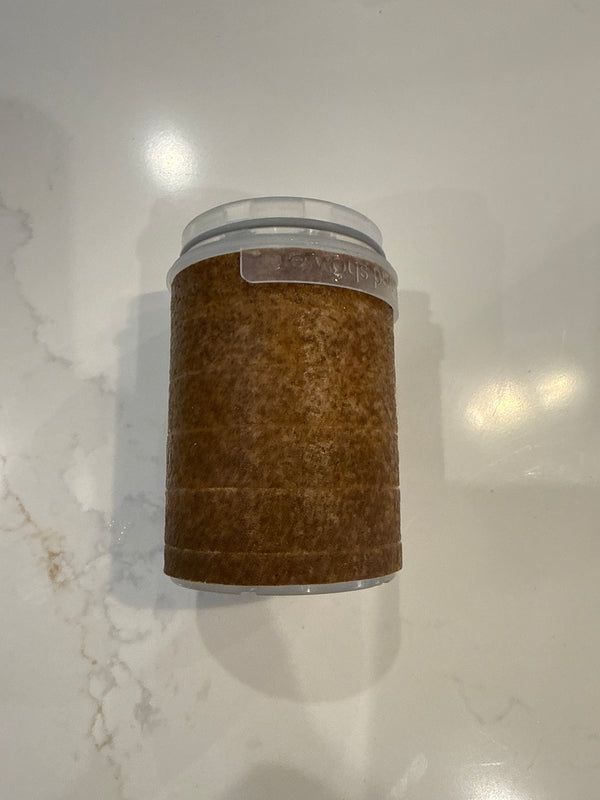 60 days
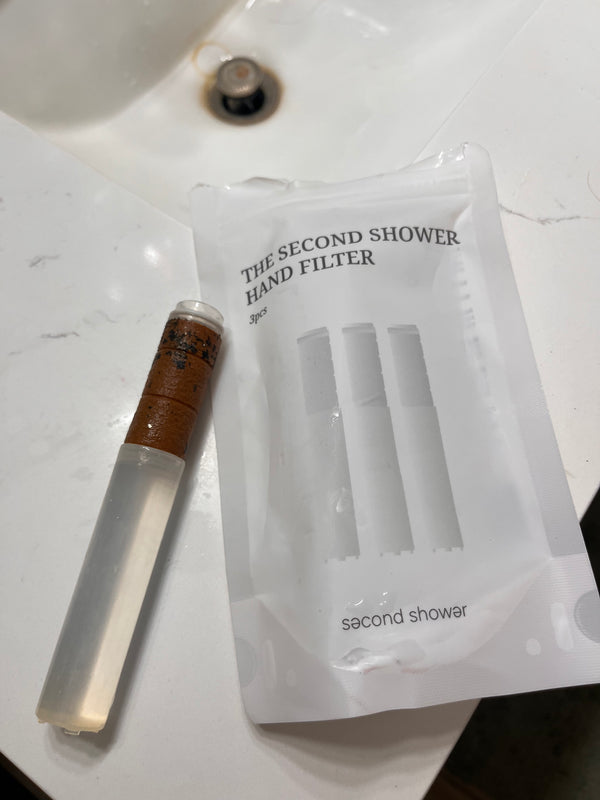 31 days
“
No dry skin and my hair feels a lot softer!
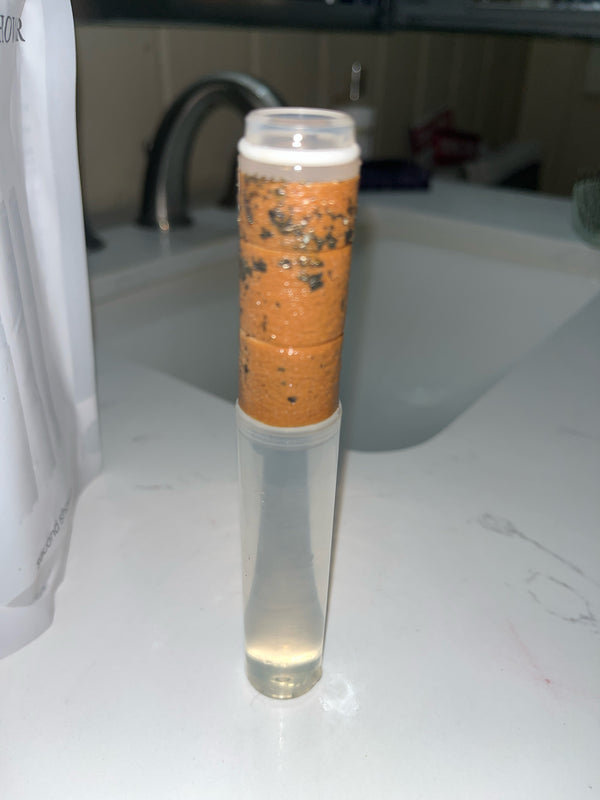 8 days
“
i can definitely tell a difference in my skin not as dry and my hair. i have severe eczema on my fingers and this has really helped me.
An individual customer account. Filter color is not a measurement of chlorine removal or remaining filter life.
Your shower. Your way.
Choose the fit. Find your color. We’ve thought about the water.

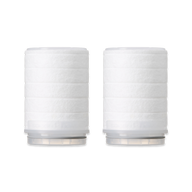
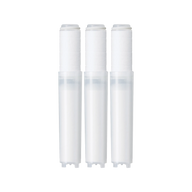
Time for a fresh filter? Find your refills.
Chlorine vs chloramine
Same job. Different behavior.
Both disinfect. Only one goes away on its own.
Chlorine
Reacts fast and dissipates: standing water and heat release it. Capped at 4.0 mg/L. In a 2003 clinical study, residual chlorine at 0.5 mg/L or more reduced the skin’s water-holding capacity in people with atopic dermatitis.
Chloramine
Stable for days. Letting water stand does not remove it; San Francisco’s utility reports about 20 minutes of gentle boiling does. Used for more than one in five Americans, with the same 4.0 mg/L cap.
Vitamin C
Ascorbic acid neutralizes both. It is listed in the AWWA standard for dechlorinating water mains, and the USDA Forest Service documents about 2.5 parts ascorbic acid per part chlorine. San Francisco’s utility measured complete chloramine removal in a bathtub with 1,000 mg of crushed tablets.
Second Shower’s Vitamin C filter removes 99.9% of chlorine and chloramine. In independent third-party laboratory testing, both were not detected after filtering. Local water and use vary.
Independent laboratory testing
What happens to chlorine and chloramine?
In an independent third-party laboratory test, free chlorine and chloramine were both not detected after 100 L of tap water ran through our Vitamin C filter.
That is the basis for our claim: removes 99.9% of chlorine and chloramine. It describes the laboratory result, with performance in your shower depending on water conditions and use.
The lab test and the PP filter’s NSF certification answer different questions.
Chlorine and chloramine
The measured result, on a full 0–100% scale.
Not detectedchlorine and chloramine after filtering
Free chlorineNot detected
ChloramineNot detected
View the data
| Test item | Tap water | After filtering |
|---|---|---|
| Free residual chlorine | 0.33 mg/L | Not detected |
| Combined residual chlorine (chloramine) | 0.05 mg/L | Not detected |
| Evidence | Independent third-party laboratory test |
|---|---|
| Water passed | 100 L |
| Pressure | 1 kgf/cm² (about 14 PSI) |
| Method | Korean test method for water purifiers |
| Sample | Showerhand filter (same Vitamin C media as the Showerhead) |
| Claim | 99.9% of chlorine and chloramine |
Source: Second Shower independent third-party laboratory tests. Free and combined residual chlorine (chloramine) after 100 L, 2026; free chlorine at shower temperature in an earlier test. Individual water conditions and use vary.
Chloramine cities
Cities that use chloramine.
Twelve cities on chloramine and four on free chlorine, each confirmed from the utility's own page. On chloramine, letting water stand and chlorine-rated filters are not enough.
Chloramine · confirmed by the utility
San Francisco
SFPUC uses chloramine and publishes removal guidance for aquariums, dialysis and bathing.
SFPUC · Chlorine and Chloramine Removal Q&A · 2015
Chloramine · confirmed by the utility
Los Angeles
LADWP is expanding chloramine to its entire system for taste, odor and regulatory reasons.
LADWP · Water Quality FAQs
Chloramine · confirmed by the utility
San Diego
The city names chloramine among the disinfectants used to treat its water.
City of San Diego · Water Quality FAQ · 2024
Chloramine · confirmed by the utility
Denver
Denver Water mixes chlorine with ammonia to create chloramine.
Denver Water · Tap: How we treat water
Chloramine · confirmed by the utility
Dallas
Dallas Water Utilities uses chloramine instead of chlorine.
Dallas Water Utilities · Water quality information
Chloramine · confirmed by the utility
Houston
Chlorine and ammonia, chloramine, are used to disinfect the city’s surface water.
City of Houston · 2021
Chloramine · confirmed by the utility
Philadelphia
Chloramine since the 1970s; chlorine levels vary from about 0.2 to 2 ppm across the system.
Philadelphia Water Department · Drinking Water FAQ
Chloramine · confirmed by the utility
Washington, DC
Chloramine year-round, with a temporary switch to chlorine each spring.
DC Water · Chlorine switch · 2026
Chloramine · confirmed by the utility
Boston
MWRA uses mono-chloramine and notes chlorine-rated NSF/ANSI 177 filters may not work effectively.
MWRA · FAQs about MWRA tap water
Chloramine · confirmed by the utility
Portland, OR
Ammonia is added to stabilize chlorine into a longer-lasting disinfectant.
Portland Water Bureau · About drinking water quality
Chloramine · confirmed by the utility
Tampa
The Water Department primarily uses chloramine, with three-week free-chlorine periods.
City of Tampa · Water system maintenance
Chloramine · confirmed by the utility
Miami-Dade
Standard combined chlorine (chloramine), with a scheduled free-chlorine conversion.
Miami-Dade Water and Sewer · 2026 notice
Free chlorine · confirmed by the utility
New York City
Free chlorine and UV, with a chlorine residual kept in the distribution system.
NYC DEP · Drinking water FAQs
Free chlorine · confirmed by the utility
Chicago
Chlorine is added as part of the standard treatment process; the city notes the taste fades when water sits.
City of Chicago · Clear facts on water appearance, smell and taste
Free chlorine · confirmed by the utility
Seattle
Chlorine disinfects the water at the treatment plant and remains in the water to the faucet.
Seattle Public Utilities · Cedar Water Treatment
Free chlorine · confirmed by the utility
Phoenix
The entire water supply is disinfected with chlorine, about one part per million in the distribution system.
City of Phoenix · Water Services FAQs
Not on the list?
Your utility’s annual water quality report names the disinfectant. Or read what the research says about both.
The researchPublished research
What the research says.
Peer-reviewed studies and government notes, with the actual finding, including where chlorine was not the driver.
Peer-reviewed skin research
Residual chlorine and atopic skin
In bathing water, residual chlorine at 0.5 mg/L or higher significantly reduced the stratum corneum’s water-holding capacity in people with atopic dermatitis.
Seki et al. · Journal of Dermatology · 2003
Population study
Hard water, chlorine and infant eczema
Among 1,303 three-month-olds, hard water was associated with higher atopic dermatitis risk. Chlorine alone was not statistically significant.
Perkin et al. · Journal of Allergy and Clinical Immunology · 2016
Peer-reviewed skin research
Hard water, cleansing and the skin barrier
Washing in hard water left more surfactant on skin, with greater water loss and irritation, especially in people carrying a filaggrin gene mutation.
Danby et al. · Journal of Investigative Dermatology · 2018
Randomized pilot trial
Water softeners and eczema prevention
In a feasibility pilot, 33% of infants in the softener group and 48% in the control group had visible eczema at six months. The trial was not powered to prove an effect.
Jabbar-Lopez et al. · Clinical and Experimental Allergy · 2022
Exposure study
Showering and disinfection by-products
The highest blood trihalomethane levels were measured after ten-minute showers, above those from drinking a liter of the same water.
Backer et al. · Journal of Exposure Analysis and Environmental Epidemiology · 2000
Government technical publication
Vitamin C and chlorine neutralization
A USDA Forest Service technical note describes how ascorbic acid and sodium ascorbate neutralize chlorine in water systems.
Land · USDA Forest Service · 2005
Utility guidance
Chloramine removal, including Vitamin C
San Francisco’s utility lists ascorbic acid as an AWWA-standard dechlorination method and measured complete chloramine removal in a bathtub with 1,000 mg of crushed tablets.
SFPUC · Chlorine and Chloramine Removal Q&A · 2015
Now look at what we measured.
Independent laboratory results, an instrument-measured skin study and original customer filters, by city.
See the proofQuestions about your water.
Is chloramine worse than chlorine?
Not more toxic at regulated levels; both are capped at 4.0 mg/L. The difference is persistence: chloramine does not leave water that stands or heats, and chlorine-rated shower filters may not handle it. Vitamin C neutralizes both.
Chlorine vs chloramineHow do I find out what my city uses?
Enter your ZIP above for the regional profile, or open your utility’s annual water quality report; it names the disinfectant. Many large systems, including Los Angeles, Dallas, Houston, Philadelphia, Boston and Washington DC, use chloramine. New York, Chicago, Seattle and Phoenix report free chlorine.
See the citiesDoes chlorine in shower water cause eczema?
The research does not say that. A 2016 study of 1,303 infants tied higher eczema risk to hard water, and chlorine alone was not statistically significant. A 2003 study found residual chlorine reduced the skin’s water-holding capacity in people who already had atopic dermatitis. Second Shower is not a treatment for any skin condition.
Read the studiesDoes Second Shower soften hard water?
No. The filter treats chlorine and chloramine with Vitamin C and catches sediment with a micron PP sleeve. It does not remove calcium or magnesium; a water softener does that.
How the filter worksWhat did your own testing show?
Free chlorine reduced to non-detectable levels in independent laboratory testing at shower temperature, the basis for 99.9%+. In a separate two-week instrument-measured study of 22 women, skin hydration rose 26.71 percent.
See the proofFor people who look twice.
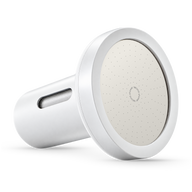
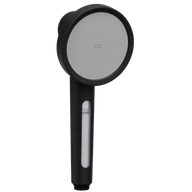
Two models, one filter principle. Choose the fit for your shower.
Choose your Second Shower