


Our Science
Good questions.
Clear evidence.
The research behind the filter. The tests behind the numbers. A closer look at what we know about your shower.
Independent laboratory testing
What happens to chlorine and chloramine?
In an independent third-party laboratory test, free chlorine and chloramine were both not detected after 100 L of tap water ran through our Vitamin C filter.
That is the basis for our claim: removes 99.9% of chlorine and chloramine. It describes the laboratory result, with performance in your shower depending on water conditions and use.
The lab test and the PP filter’s NSF certification answer different questions.
Chlorine and chloramine
The measured result, on a full 0–100% scale.
Not detectedchlorine and chloramine after filtering
Free chlorineNot detected
ChloramineNot detected
View the data
| Test item | Tap water | After filtering |
|---|---|---|
| Free residual chlorine | 0.33 mg/L | Not detected |
| Combined residual chlorine (chloramine) | 0.05 mg/L | Not detected |
| Evidence | Independent third-party laboratory test |
|---|---|
| Water passed | 100 L |
| Pressure | 1 kgf/cm² (about 14 PSI) |
| Method | Korean test method for water purifiers |
| Sample | Showerhand filter (same Vitamin C media as the Showerhead) |
| Claim | 99.9% of chlorine and chloramine |
Source: Second Shower independent third-party laboratory tests. Free and combined residual chlorine (chloramine) after 100 L, 2026; free chlorine at shower temperature in an earlier test. Individual water conditions and use vary.
Instrument-measured skin study
A closer look at skin,
after two weeks.
In a study of 22 women using The Second Showerhead/Showerhand, instruments measured changes in facial hydration, oil, pores, dead-skin buildup and glow.
Measurements were compared with each participant’s starting point. The study lasted two weeks and had no control group.
These are study observations, not a promise of the same result for everyone.
How the measurements changed
Percentage change from each participant’s baseline. Choose a time point to look closer.
Skin hydration+26.71%
Excess facial oil−69.37%
Pore measurement−18.54%
Dead-skin buildup−11.29%
Skin glow+10.93%
Bar length shows the size of the change. + means an increase; − means a decrease. All bars share a 0–100% scale. The grey tip marks the first-week oil range, 24–27%.
View all measurements
| Measure | 1 week | 2 weeks |
|---|---|---|
| Skin hydration | +15.14% | +26.71% |
| Excess facial oil | −24–27% | −69.37% |
| Pore measurement | −10.54% | −18.54% |
| Dead-skin buildup | Not reported | −11.29% |
| Skin glow | +9.90% | +10.93% |
Source: Second Shower clinical study summary. 22 women, 2 weeks, P<0.05 for the reported two-week instrument outcomes. No control group. Individual results vary.
Participant perception
What the participants felt.
The same 22 women also answered a survey about their experience. These results describe how their skin and hair felt to them.
Agreement means a rating of 4 or 5 on a 5-point scale. Hair findings here are self-reported, rather than instrument measurements.
In their own assessment
Share of participants who agreed with each statement.
Skin felt less tight95%
Skin felt smoother and more hydrated82%
Hair felt healthier and shinier82%
View the survey data
| Statement | Agreed |
|---|---|
| Skin felt less tight | 95% |
| Skin felt smoother and more hydrated | 82% |
| Hair felt healthier and shinier | 82% |
Source: Second Shower clinical-study perception survey. Same 22-woman, two-week study. Self-reported experience; individual results vary.
For people who look twice.
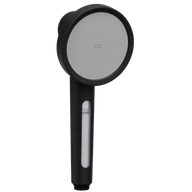
Two models, one filter principle. Choose the fit for your shower.
Your shower. Your way.
Choose the fit. Find your color. We’ve thought about the water.

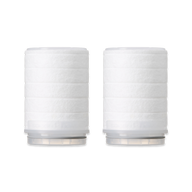
Time for a fresh filter? Find your refills.
The filter, explained
Two jobs. One filter.
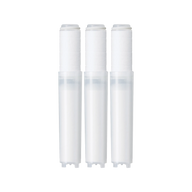
Vitamin C handles the chemistry. The sediment sleeve catches particles. Each part has a specific role.
Vitamin C core
Ascorbic acid, a form of Vitamin C, neutralizes chlorine through a chemical reaction. Our formulation holds the working material inside the cartridge.
PP sediment sleeve
The surrounding sleeve catches sediment, rust and pipe-borne particles. This is the component covered by NSF/ANSI 42 certification.
A window into use
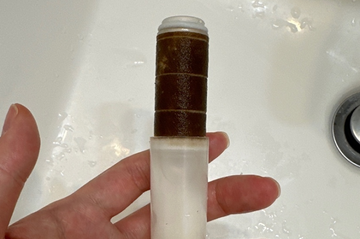
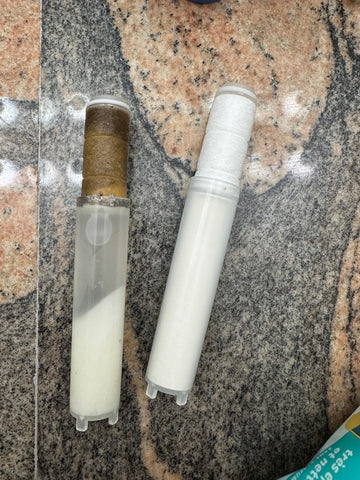
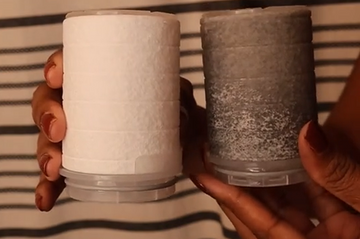
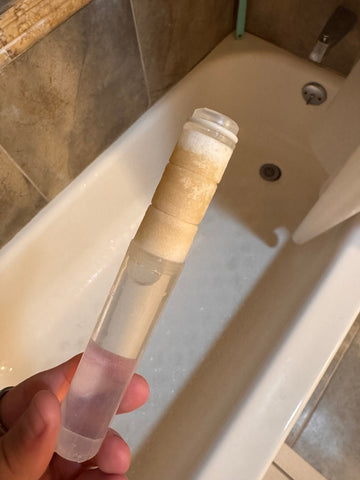
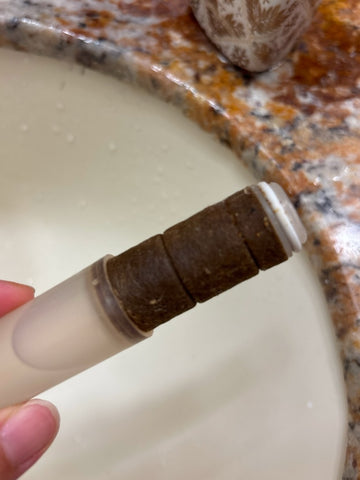
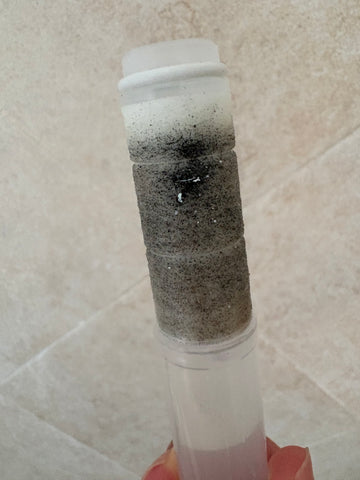
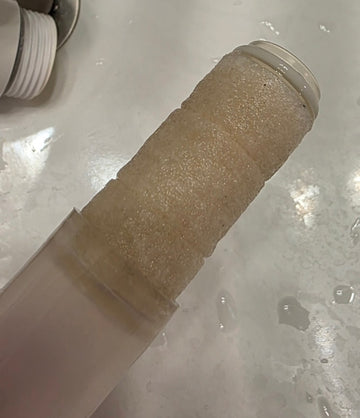
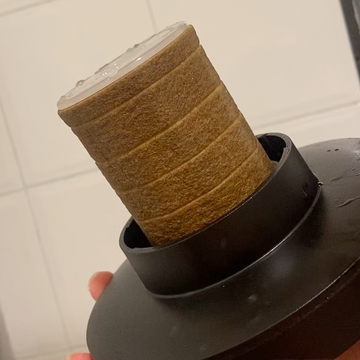
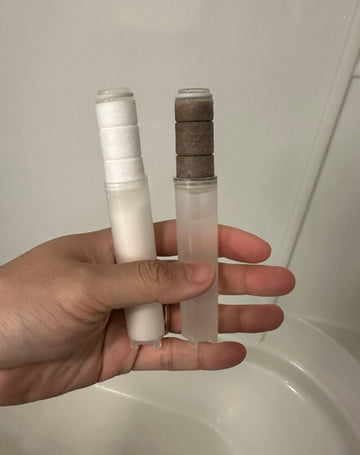
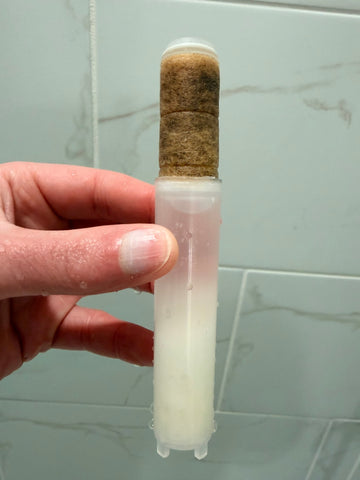
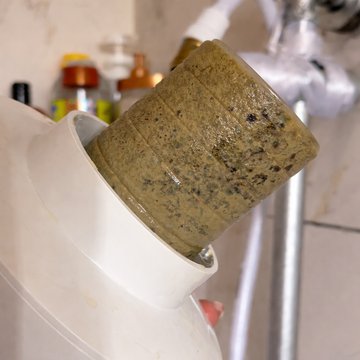
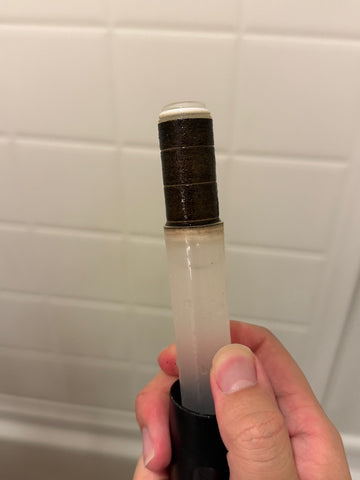
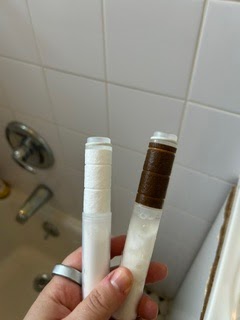
The clear housing lets you see the filter as particles collect. Check it alongside the replacement guidance for your model and local water conditions.
Second Shower does not soften water or remove dissolved hardness minerals. A filter’s color is not a measurement of chlorine reduction or remaining life.
Certifications & product specifications
Standards, with the scope made clear.
We use an NSF/ANSI 42 certified filter. The certification applies to the PP sediment component.
Our California-compliant Showerhead and Showerhand versions are CEC certified and DOE compliant for water efficiency.
Each standard has a specific job. Component certification, chlorine testing and skin observations are distinct forms of evidence.
What each standard covers
The component and product version matter.
- NSF/ANSI 42*
- PP sediment filter component
- CEC certified / DOE compliant
- California-compliant 1.8 GPM versions
*Micron PP sediment filter certified by NSF/ANSI 42 standards. Certification applies to the filter component, not the complete showerhead.
Flow & product specifications
| Model | Measured flow |
|---|---|
| Showerhead | 1.54 GPM |
| Showerhand | 1.69 GPM |
Both models are offered in 1.8 GPM and 2.5 GPM versions. These readings apply to the California-compliant versions.
| Showerhead | 176 micro-jets |
|---|---|
| Showerhand | 128 micro-jets |
| Pressure testing | No measurable pressure loss at 40–80 PSI |
Source: Second Shower component-certification and water-efficiency documentation summaries. Flow figures apply to the California-compliant versions.
Published research
A little more shower knowledge.
These publications help explain the chemistry and the questions around water and skin. They provide context; they are not trials of Second Shower products.
Government technical publication
Vitamin C and chlorine neutralization
A USDA Forest Service technical note describes how ascorbic acid and sodium ascorbate neutralize chlorine in water systems.
USDA Forest Service · 2005
Peer-reviewed skin research
Residual chlorine and skin hydration
A controlled immersion study examined how residual chlorine affected the water-holding capacity of skin, with different responses across the groups studied.
Seki et al. · Journal of Dermatology · 2003
Peer-reviewed skin research
Hard water, cleansing and the skin barrier
A study of 80 participants found that hard water increased surfactant deposits after washing. It did not observe a clear effect of chlorine.
Danby et al. · Journal of Investigative Dermatology · 2018
You have questions.
We like that.
For a different view of the filter, explore photographs and experiences shared by our community.
Explore The Proof