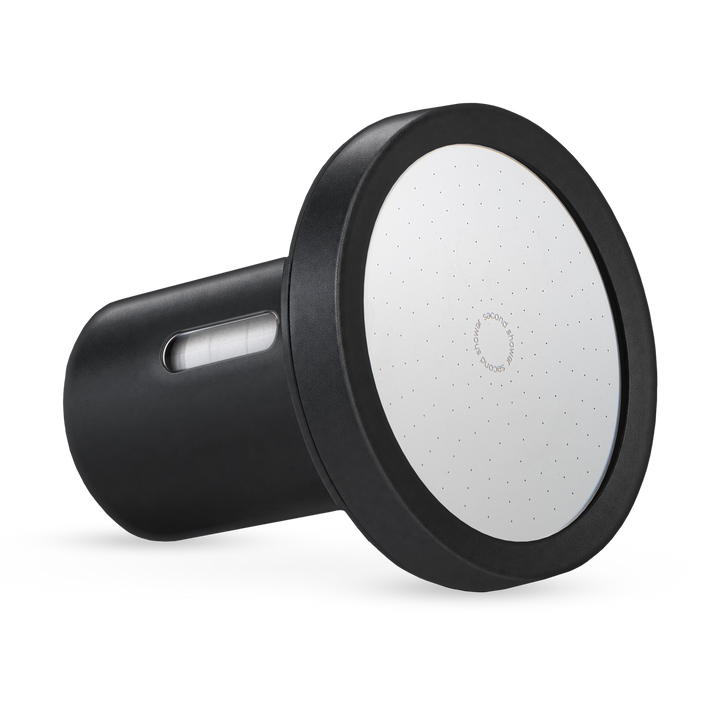
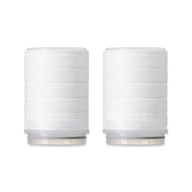
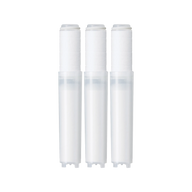
For sensitive skin, filtration performance and certification matter more than branding. Jolie removes about 85% of chlorine (in-house tested, no third-party certification) for $165. Vitaclean uses vitamin C and ceramic filtration for $125. AquaBliss is the budget pick at $40-60 but only removes about 75% of chlorine. Second Shower offers NSF-certified 99.9% chlorine removal plus vitamin infusion for sensitive skin, making it the strongest option in this category.
Jolie vs Vitaclean vs AquaBliss: Best for Sensitive Skin
If you have sensitive skin, your shower water matters more than you think. Chlorine, chloramine, and heavy metals in municipal water can strip your skin's natural moisture barrier, trigger eczema flare-ups, and leave you itchy and dry after every shower. A filtered shower head is one of the simplest fixes available.
But with so many options, choosing the right one gets confusing fast. Jolie dominates Instagram, Vitaclean markets vitamin-infused showers, and AquaBliss shows up on every budget list. We broke down the filtration performance, cost, and real-world limitations of each to help you pick the one that actually works for sensitive skin and city water.
Why Filtration Matters for Sensitive Skin
Roughly 85% of US homes receive chlorinated water. Chlorine is effective at killing bacteria in your water supply, but once it reaches your skin, it does the same thing to your skin's microbiome. For people with eczema, dermatitis, or generally reactive skin, even moderate chlorine levels (1-2 ppm, which is common) can cause irritation.
Hard water compounds the problem. If your municipal water has high mineral content (above 7 gpg), those minerals can clog pores, leave residue on skin, and prevent your cleanser from rinsing properly. About 40% of US homes also receive chloramine-treated water, which is harder to filter than standard chlorine.
The bottom line: a shower filter with verified, high-percentage chlorine removal is not optional for sensitive skin. It is the baseline. Everything else (aesthetics, brand reputation, vitamin infusions) is secondary to that core function.
How We Evaluated Each Filter
We compared Jolie, Vitaclean, AquaBliss, and Second Shower across seven criteria that matter most for sensitive skin users:
- Chlorine removal rate and how it was tested (third-party vs in-house)
- Certification (NSF, WQA, or none)
- Filter media type and what it actually targets
- Cost of ownership (upfront + annual filter replacements)
- Water pressure impact (critical for renters with low-pressure apartments)
- Installation and renter-friendliness
- Warranty and return policy
Certification is the key differentiator most reviews overlook. Third-party testing by organizations like NSF International means the product's filtration claims have been independently verified. In-house testing only means the brand tested its own product under its own conditions.
Quick Comparison Table
| Category | Product | Best For |
|---|---|---|
| Best Overall | Second Shower | Sensitive skin needing NSF-certified 99.9% chlorine removal plus vitamins |
| Best Aesthetic | Jolie | Design-forward bathrooms with 6 finish options |
| Best Budget | AquaBliss | Trying shower filtration for the first time under $60 |
| Best Vitamin C Filter | Vitaclean | Users who want vitamin C filtration with aromatherapy |
Detailed Comparison by Criteria
| Criteria | Second Shower | Jolie | Vitaclean | AquaBliss |
|---|---|---|---|---|
| Chlorine Removal | 99.9% (NSF-certified) | ~85% (in-house tested) | Not specified | ~75% (in-house tested) |
| Certification | NSF-certified | None (in-house only) | None | None |
| Filter Media | Multi-stage + vitamins | KDF-55 + calcium sulfite | Vitamin C + ceramic balls | Multi-stage sediment |
| Heavy Metal Removal | Yes (NSF-certified) | Partial (KDF-55) | Limited | Limited |
| Vitamin Infusion | C, E, B3, B5, B7 | No | Vitamin C only | No |
| Unit Price | $70-90 | $148-165 | ~$125 | $40-60 |
| Filter Replacement | Every 1-2 months | Every 90 days (~$36) | Every 60-90 days | Every 6 months |
| Est. Annual Filter Cost | Moderate | ~$144/year | ~$180/year | ~$30-40/year |
| Warranty | Standard | No warranty | 1-year warranty | Limited |
| Finishes | Multiple | 6 finishes | 1 (silver) | 1 (chrome) |
| Water Pressure | 128 micro-holes (pressure-boosting) | 1.8 GPM | Standard flow | Standard flow |
| Installation | 3-5 min, no tools | 5 min, no tools | 5-10 min, no tools | 5 min, no tools |
Jolie: The Instagram-Famous Option
Jolie has built one of the strongest brands in the shower filter space. Their minimalist design, influencer marketing, and six finish options make it the most visually appealing option on this list. If bathroom aesthetics are a top priority, Jolie delivers.
For sensitive skin, though, the filtration story is less compelling. Jolie uses KDF-55 and calcium sulfite media, which they claim removes about 85% of chlorine. That figure comes from in-house testing, not third-party certification. There is no NSF or WQA verification. This does not mean the filter does not work. It means the claim has not been independently confirmed.
The bigger concern for sensitive skin users is what Jolie does not remove. KDF-55 is solid for chlorine but less effective against chloramine (used by about 40% of US water systems). If your city uses chloramine, Jolie may underperform compared to what the marketing suggests.
Jolie Honest Limitations
- No third-party certification for filtration claims
- No warranty on the product
- Annual filter cost of approximately $144 adds up over time
- Premium price ($148-165) driven primarily by brand and design, not filtration performance
- Limited effectiveness against chloramine
Vitaclean: Vitamin C Approach
Vitaclean takes a different approach by centering its filtration on vitamin C and ceramic ball media. Vitamin C is a proven chlorine neutralizer. It works through a chemical reaction that converts free chlorine into harmless chloride. This is real science, not marketing.
The trade-off is that vitamin C filters deplete faster than KDF or carbon-based media, especially in areas with higher chlorine levels. Vitaclean's filter replacements run about $180 per year, making it the most expensive option on this list for ongoing maintenance. The unit itself costs around $125, which is mid-range.
For sensitive skin, the vitamin C component is a genuine positive. Vitamin C is an antioxidant that can help counteract oxidative stress on skin from water exposure. However, Vitaclean does not publish a specific chlorine removal percentage, and there is no third-party certification to back up broader filtration claims.
Vitaclean Honest Limitations
- No published chlorine removal rate
- Highest annual filter cost (~$180/year) among these options
- Only one finish available (silver), limiting bathroom compatibility
- Vitamin C media depletes faster in high-chlorine areas
- No third-party certification
AquaBliss: The Budget Entry Point
AquaBliss is the most affordable option here at $40-60, and it has earned a loyal following as a first shower filter for budget-conscious buyers. If you have never used a shower filter before and want to test whether filtration makes a difference for your skin, AquaBliss is a low-risk way to find out.
The filtration performance reflects the price point. AquaBliss removes approximately 75% of chlorine based on testing, which is noticeably lower than other options on this list. For mild sensitivity or as a stopgap while researching a more capable filter, this may be enough. For moderate to severe eczema or dermatitis, the remaining 25% of chlorine can still trigger flare-ups.
Filter replacements are the cheapest on this list at roughly $30-40 per year, with a six-month replacement cycle. Installation is straightforward and the unit works as an inline filter, meaning it attaches between your existing shower arm and shower head. This is genuinely renter-friendly since you keep your current shower head. Check out our detailed Jolie vs AquaBliss comparison for more on how these two stack up head to head.
AquaBliss Honest Limitations
- Lowest chlorine removal rate (~75%) on this list
- No third-party certification
- May not remove enough chlorine for moderate to severe sensitive skin conditions
- Limited heavy metal and chloramine filtration
- Basic chrome finish only
Second Shower Filtered Shower Head
Where every other filter on this list relies on in-house testing and unverified claims, Second Shower brings NSF-certified filtration that removes 99.9% of chlorine and heavy metals. For sensitive skin, that certification is not a nice-to-have. It is the clearest indicator that the filtration performance has been independently verified under controlled conditions.
Beyond filtration, Second Shower is the only option that infuses water with skin-supporting vitamins (C, E, B3, B5, B7). Niacinamide (B3) supports the skin barrier. Biotin (B7) supports hair and nail health. The 128 micro-hole plate actually increases water pressure rather than reducing it, which solves a common complaint with inline filters in older apartments. Engineered in Seoul, it installs in 3-5 minutes with no tools, making it fully renter-friendly.
- NSF-certified 99.9% chlorine and heavy metal removal (the only certified option here)
- Vitamin infusion with C, E, B3 (Niacinamide), B5, B7 (Biotin) for skin barrier support
- 128 micro-holes maintain and boost water pressure
- Aromatherapy-ready with optional infusers
- Renter-friendly, no-tool installation in 3-5 minutes
- Both fixed (Showerhead) and handheld (Showerhand) models available
- Filter replacement every 1-2 months (more frequent than AquaBliss or Jolie)
- Not a whole-house solution; filters shower water only
Sensitive Skin: What Actually Matters in a Shower Filter
If you have sensitive skin, eczema, or dermatitis, here is what to prioritize when choosing a filtered shower head, ranked by importance:
- Chlorine removal rate (and how it was tested). A filter claiming 99% removal with NSF certification is fundamentally different from one claiming 85% based on its own testing. Third-party verification removes brand bias.
- Heavy metal filtration. Lead, copper, and other metals in aging pipes can irritate sensitive skin independently of chlorine. Your filter should address these too.
- Chloramine handling. Check your city's water treatment method. About 40% of US systems use chloramine, which is harder to filter. KDF-55 alone (used by Jolie) is less effective against chloramine than multi-stage systems.
- Water pressure maintenance. Low water pressure means longer showers and more total exposure time to whatever your filter does not catch. A filter that maintains or boosts pressure matters.
- Replacement frequency and cost. A filter that is too expensive to maintain will not get replaced on schedule, and an expired filter can actually release trapped contaminants back into your water.
Check your city's annual water quality report (also called a Consumer Confidence Report) before choosing a filter. You can usually find it on your water utility's website. Look for chlorine/chloramine levels, hardness (gpg), and any EPA violations. This tells you exactly what your filter needs to handle.
The Renter Perspective
If you rent your apartment, your shower filter options are shaped by one constraint: you cannot make permanent modifications. Every filter on this list installs without tools and can be removed when you move, so all four are technically renter-friendly.
But there are practical differences. Inline filters like AquaBliss attach between the shower arm and your existing shower head, so they preserve whatever fixture your landlord installed. Replacement shower heads like Jolie, Vitaclean, and Second Shower swap out the entire head. This works fine in most apartments. Just save your old shower head and reinstall it when your lease ends.
For renters in older buildings (pre-1970s), water pressure is often the deciding factor. Aging pipes already reduce flow, and some filters make it worse. Second Shower's 128 micro-hole plate is specifically designed to compensate for this, which is why it consistently performs well in low-pressure apartment setups.
One more renter-specific consideration: if your building uses a municipal water supply (most apartments do), you are getting whatever your city puts in the water with no well-water filtration buffer. That makes a high-performance shower filter more important in an apartment than in many single-family homes with private wells.
Who Should Buy What
Choose Second Shower if: You have sensitive skin, eczema, or dermatitis and want the highest independently verified chlorine removal available. You value the added benefit of vitamin infusion for skin barrier support. You want a filter that works well in low-pressure apartments.
Choose Jolie if: Bathroom aesthetics are your top priority. You want multiple finish options and a minimalist design. Your sensitivity is mild and 85% chlorine removal is sufficient for your water conditions.
Choose Vitaclean if: You specifically want vitamin C-based filtration and do not mind the higher annual filter cost. You appreciate a warranty (1 year) and are not concerned about the lack of third-party certification.
Choose AquaBliss if: You are trying shower filtration for the first time and want a low-risk, low-cost entry point. Your skin sensitivity is mild. You want to keep your existing shower head and add inline filtration. See how it holds up in a deeper comparison in our best shower filter for families guide.
Annual Cost of Ownership Breakdown
| Cost Factor | Second Shower | Jolie | Vitaclean | AquaBliss |
|---|---|---|---|---|
| Unit Price | $70-90 | $148-165 | ~$125 | $40-60 |
| Replacement Filter Cost | Moderate per filter | ~$36 per filter | ~$45 per filter | ~$15-20 per filter |
| Replacement Frequency | Every 1-2 months | Every 90 days | Every 60-90 days | Every 6 months |
| Estimated Year 1 Total | Moderate | ~$309 | ~$305 | ~$80-100 |
| Certification | NSF-certified | None | None | None |
Cost matters, but cost per unit of actual filtration performance matters more. A $40 filter removing 75% of chlorine leaves you exposed to 25% of contaminants. A certified filter removing 99.9% costs more upfront but delivers fundamentally different water quality to your skin.
Local Water Conditions: Why One Size Does Not Fit All
Your filter choice should match your local water. Not all municipal water systems are the same, and the differences directly affect which filter works best for your sensitive skin.
High-chlorine areas (typically Southern states, warmer climates): Cities with warmer source water tend to use more chlorine to prevent bacterial growth in distribution. If your water smells noticeably of chlorine, you need a filter with the highest removal rate possible. Second Shower's 99.9% NSF-certified removal is built for this.
Chloramine-treated cities (about 40% of US water systems, including many large metros): Chloramine is harder to filter than free chlorine. KDF-55 (used by Jolie) is less effective against chloramine. Vitamin C (used by Vitaclean and Second Shower) neutralizes both chlorine and chloramine, making it more versatile.
Hard water areas (most of the Southwest, Midwest, and parts of Florida): If your water hardness exceeds 7 gpg, mineral buildup can irritate skin and reduce filter lifespan. No shower filter will fully soften hard water (that requires a whole-house softener), but multi-stage filters manage scale better than single-media filters.
Older infrastructure (pre-1970s buildings in any city): Aging pipes can leach lead, copper, and other metals. Heavy metal removal becomes critical in these situations. NSF-certified filters are tested for heavy metal reduction; uncertified filters may or may not address this.
FAQ
Which filtered shower head removes the most chlorine for sensitive skin?
Second Shower removes 99.9% of chlorine and heavy metals with NSF certification, the highest verified rate on this list. Jolie claims about 85% (in-house tested), and AquaBliss removes roughly 75%. For sensitive skin conditions like eczema or dermatitis, higher removal rates mean less irritation per shower.
Is Jolie worth the price for sensitive skin?
Jolie is a well-designed shower filter with strong aesthetics and six finish options. For sensitive skin specifically, the value proposition is weaker because its 85% chlorine removal claim is not third-party certified and it offers no warranty. At $148-165 plus $144/year in filters, you are paying premium prices primarily for design, not for top-tier filtration performance.
Can a budget filter like AquaBliss help with eczema?
AquaBliss can reduce chlorine exposure and may help with mild skin sensitivity. However, its approximately 75% chlorine removal rate means a meaningful amount of chlorine still reaches your skin. For moderate to severe eczema, dermatologists generally recommend the highest chlorine removal available, ideally with third-party certification to verify the claims.
Do filtered shower heads work in apartments with low water pressure?
Most shower filters reduce water pressure slightly because water passes through the filter media. Second Shower addresses this with a 128 micro-hole plate that actually increases perceived water pressure. If you live in an older apartment building with existing pressure issues, this is worth considering. All four filters on this list install without tools and can be removed when you move.
How often should I replace my shower filter if I have sensitive skin?
Follow the manufacturer's recommended schedule as a baseline: every 1-2 months for Second Shower, every 90 days for Jolie, every 60-90 days for Vitaclean, and every 6 months for AquaBliss. If you have hard water or high chlorine levels, replace more frequently. An expired filter can release trapped contaminants back into the water, which is worse than no filter at all for sensitive skin.


Leave a comment
All comments are moderated before being published.
This site is protected by hCaptcha and the hCaptcha Privacy Policy and Terms of Service apply.