



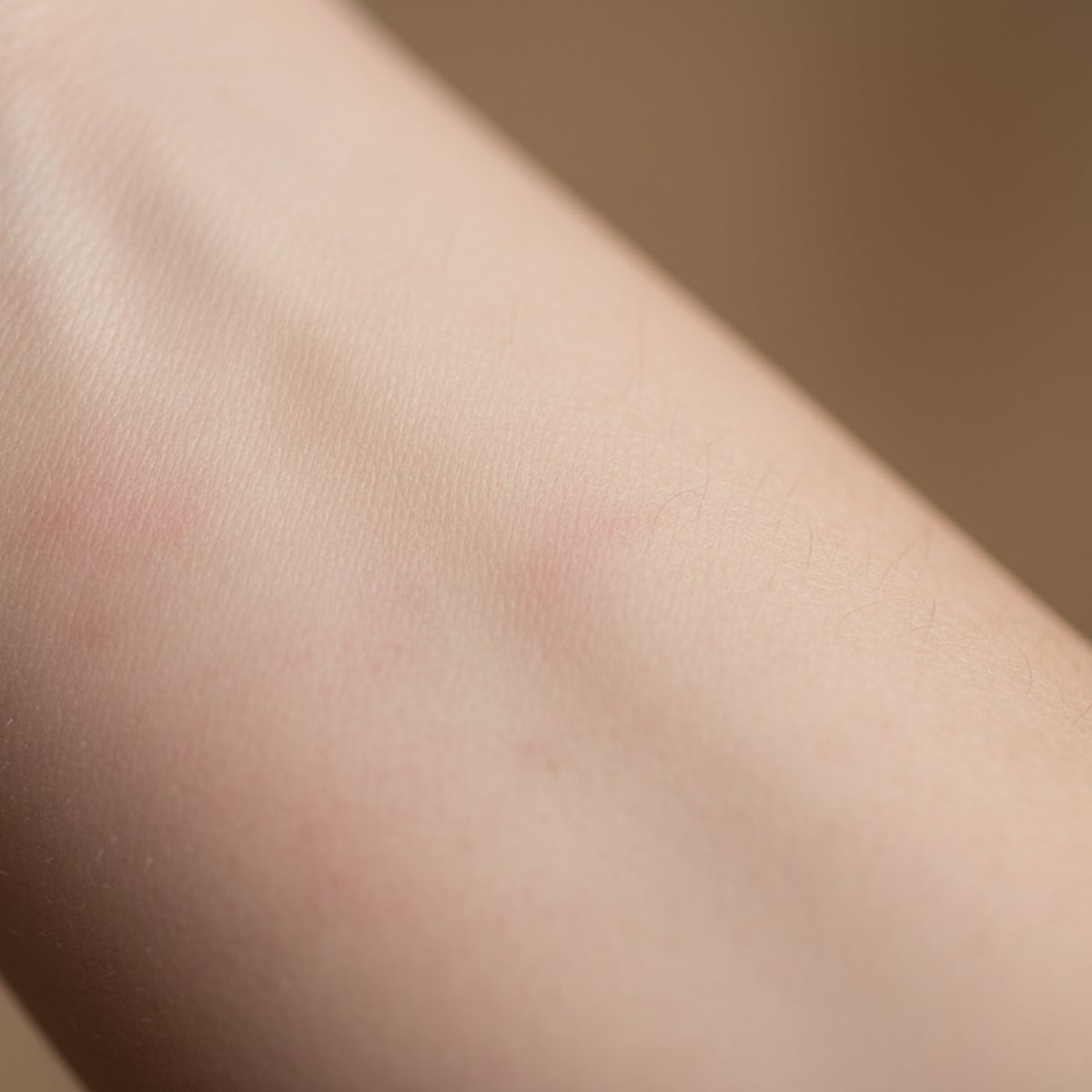
Sensitive Skin and City Water: Why It Gets Worse and How to Fix It
Last updated: June 22, 2026
City water contains 0.2–4.0 ppm chlorine to keep it safe in the pipes — but on contact, chlorine oxidizes the lipid barrier in your stratum corneum, disrupting the ceramides, cholesterol, and fatty acids that hold moisture in.
If you have sensitive skin, eczema, or rosacea, this daily oxidative stress is one of the biggest barriers between you and a stable skin barrier.
What works: Vitamin C filtration (like Second Shower) neutralizes chlorine and chloramine at 99.9% NSF-certified efficiency — and performance never degrades.
What doesn't: KDF filters (Jolie, AquaBliss) lose 90% of their capacity within 60 days, and do almost nothing for chloramine.
Hard water minerals: Calcium and magnesium are not harmful to skin. The 2011 SWET trial (336 children, 12 weeks) showed that removing hardness had no effect on established eczema. Chlorine is the oxidizer — hardness is correlation, not cause.
What City Water Does to Sensitive Skin
Municipal water in the US is treated with free chlorine (HOCl/OCl⁻) at concentrations between 0.2 and 4.0 ppm, regulated by the EPA's Maximum Residual Disinfectant Level. This keeps water microbiologically safe as it travels through miles of pipes.
But chlorine is a strong oxidizer — and when it contacts skin, it doesn't distinguish between bacteria and your barrier lipids.
The Chlorine Mechanism
Your stratum corneum (outermost skin layer) is held together by a lipid matrix: ceramides, cholesterol, and free fatty acids. This "mortar" between corneocytes is what keeps moisture in and irritants out.
Chlorine, as an oxidizer, contributes to lipid peroxidation in this barrier matrix. This is consistent with the broader oxidative-stress literature in atopic dermatitis, documented in multiple peer-reviewed reviews (Frontiers in Medicine, 2025; Robbins, Chemical and Physical Behavior of Human Hair, 5th Ed.).
For hair, chlorine oxidizes the disulfide bonds (cystine linkages) that hold keratin protein together, converting them to cysteic acid — a documented mechanism in hair chemistry (Robbins, 2012). This contributes to porosity changes and color fading.
The Hard Water Myth
You'll see a lot of claims online that "hard water causes eczema." The truth is more nuanced.
The cross-sectional finding: In 1,303 three-month-old infants, living in a hard-water area was associated with up to 87% increased risk of atopic dermatitis — independent of domestic water chlorine content (Perkin et al. 2016, JACI 138(2):509-516, PMID 27241890).
The intervention finding: In 336 children with established moderate/severe eczema in hard-water areas, 12 weeks of ion-exchange water softening produced no significant improvement vs usual care (SASSAD change −5.0 vs −5.7, p=0.53) (Thomas et al. 2011, PLoS Medicine 8(2):e1000395).
Combined interpretation: Hardness may be a risk marker in early life, but removing it after eczema is established does not reverse the condition. Chlorine has its own well-documented oxidative skin-barrier effects via separate mechanism.
Bottom line: Hard water minerals (calcium, magnesium) are not harmful to skin. The only chemical in your shower water that damages the barrier is chlorine (and chloramine). If you see a company selling a "hard water filter" for skin health, they're either confused or misleading you.
For more detail, see our full breakdown: Best Shower Filters for Hard Water (2025).
Filtration: What Actually Works
There are two dominant filter chemistries on the market: KDF (brass alloy) and Vitamin C (ascorbic acid).


| Attribute | Second Shower | Jolie | AquaBliss | Canopy |
|---|---|---|---|---|
| Filter Media | Vitamin C gel matrix (proprietary) | KDF-55 | KDF-55 + Activated Carbon | Carbon + Cu-Zn + Calcium Sulfite |
| Chlorine Day 1 | 99.9% | ~90% | ~90% | ~85% |
| Chlorine Day 60 | 99.9% | <10% (estimated) | <10% (estimated) | ~50% (estimated) |
| Chloramine Removal | 99.9% | Poor (<50%) | Poor (<50%) | Moderate (70–85%) |
| NSF Certified | NSF/ANSI 42* | No | No | No |
| Price (Device) | $69 (Hand) / $79 (Head) | $165 | $35 | $150 |
| Filter Replacement | $27/3-pack every 3–6mo (Hand) / $36/2-pack every 4–6mo (Head) | ~$60 every 3 months | ~$15 every 3 months | ~$30 every 3 months |
| Estimated Annual Filter Cost | $54–108 (Hand) / $72–108 (Head) | ~$240 | ~$60 | ~$120 |
| Total Year 1 Cost | $123–177 (Hand) / $151–187 (Head) | $405 | $95 | $270 |
| Pressure Impact | Zero loss (micro-jets) | 20–40% reduction (estimated) | 20–40% reduction (estimated) | 15–30% reduction (estimated) |
| Vitamin Infusion | 5 vitamins (C, E, B3, B5, B7) | None | None | None (aromatherapy oils) |
| Independent Testing | Independent official lab (full assembly) | Unverified | Unverified | Unverified |
KDF filters (Jolie, AquaBliss, Canopy) use a brass alloy (copper-zinc) that catalyzes a redox reaction to convert chlorine to chloride. They work — for about 30 days. After that, the active surface area oxidizes, and performance drops to less than 10% by day 60. KDF does almost nothing for chloramine.
Vitamin C filters (Second Shower) neutralize both chlorine and chloramine via a stoichiometric reaction: ascorbic acid donates electrons to the oxidizer, converting it to harmless chloride or ammonium. Performance is chemistry-limited, not surface-limited — so it never degrades.
Second Shower is the only Vitamin C shower filter — NSF certified at 99.9% chlorine removal that never degrades.
Why NSF certification matters: Most shower filters test media in isolation (powder in a beaker). Second Shower tests the full assembly — showerhead, flow rate, temperature, contact time — at an independent accredited lab. That's what NSF/ANSI 42 certification requires.
Frequently Asked Questions
Do I need a shower filter if I have sensitive skin?
If you live in a city with chlorinated water (which is nearly every municipality in the US), yes. Chlorine is a strong oxidizer that disrupts the lipid barrier in your stratum corneum — the layer responsible for keeping moisture in and irritants out. If you have sensitive skin, eczema, rosacea, or seborrheic dermatitis, removing chlorine is one of the highest-leverage interventions you can make. It's not a cure, but it removes a daily stressor that prevents your barrier from recovering.
How do I know if my water has chlorine or chloramine?
You can call your water utility — they're required to publish an annual Consumer Confidence Report (CCR) that lists disinfectant type. In the US, about 70% of municipalities use free chlorine; 30% use chloramine. If you're in a large metro area (Los Angeles, Phoenix, Denver, Washington DC), you likely have chloramine.
Will a shower filter help with hard water?
Hard water minerals (calcium, magnesium) are not harmful to skin. The 2011 SWET trial showed that removing hardness had no effect on established eczema in 336 children over 12 weeks. The only chemical in your shower water that damages the barrier is chlorine (and chloramine). If you see a company selling a "hard water filter" for skin health, they're either confused or misleading you. For more detail, see our full breakdown on hard water filters.
What's the difference between Vitamin C and KDF filters?
KDF filters (brass alloy) work via a redox reaction that converts chlorine to chloride. They're effective for about 30 days, then performance degrades to less than 10% by day 60 because the active surface area oxidizes. KDF also does almost nothing for chloramine. Vitamin C filters (like Second Shower) neutralize both chlorine and chloramine via a stoichiometric reaction — performance is chemistry-limited, not surface-limited, so it never degrades. For the science behind this, see our full breakdown on Vitamin C filtration.
How often do I need to replace the filter?
Second Shower filters last 3–6 months (Showerhand) or 4–6 months (Showerhead), depending on water usage and chlorine concentration. We ship replacement filters on a subscription cadence, so you never have to think about it.
Will a shower filter reduce water pressure?
Most inline filters reduce pressure by 20–40% because water has to push through dense media. Second Shower uses a micro-jet array (128 jets in the Showerhand, 176 in the Showerhead) that maintains full pressure while maximizing contact time with the Vitamin C gel matrix. You get the same pressure you had before — with none of the chlorine.

Second Shower — NSF-Certified Vitamin C Filtration
99.9% chlorine and chloramine removal. Zero pressure loss. Performance that never degrades.
Shop Showerhead ($79) Shop Showerhand ($69)


Leave a comment
All comments are moderated before being published.
This site is protected by hCaptcha and the hCaptcha Privacy Policy and Terms of Service apply.