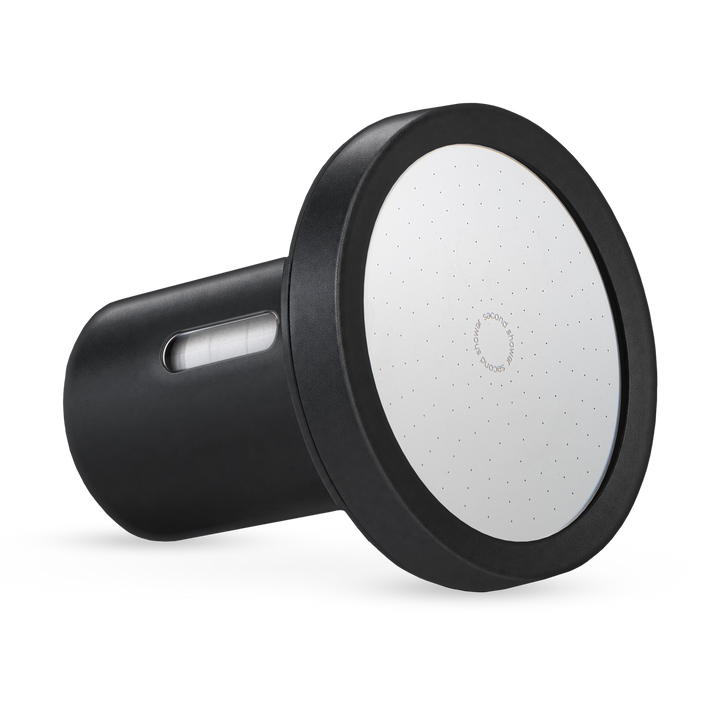
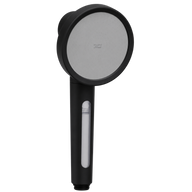
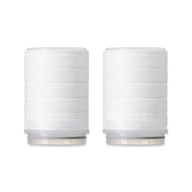
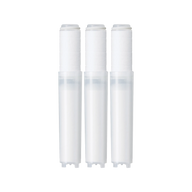
Straw-like hair after showering is caused by chlorine in your water oxidizing hair's disulfide bonds, breaking down the protective lipid layer, and raising the cuticle. The fix: Second Shower, a Vitamin C shower filter that neutralizes chlorine and chloramine, with an NSF/ANSI 42 certified sediment pre-filter and independently lab-tested 99.9% free-chlorine reduction through its peak window. Key differences:
- Vitamin C gel matrix neutralizes both free chlorine and chloramine without degrading (KDF filters lose effectiveness within 30-60 days)
- Zero pressure loss - 128 micro-jets (Showerhand) or 176 micro-jets (Showerhead) maintain 2.5 GPM flow
- Infuses vitamins C, E, B3, B5, and B7 during every shower, supporting skin barrier recovery
- 60-second tool-free install - fits any standard shower arm
- Performance through Day 60 holds at 99.9% free-chlorine removal; competitor KDF filters drop to <10% by Day 60
- Lower annual cost - $123-177/year (Showerhand) or $151-187/year (Showerhead) vs $240-388 for comparable alternatives
Why Does Hair Feel Like Straw After Washing?
If your hair feels rough, brittle, or straw-like immediately after washing, the culprit is almost always chlorine in your shower water - not your shampoo, conditioner, or hair type.
Municipal water systems in the US add chlorine at 0.2-4.0 ppm to keep water safe during transport. That's critical for drinking water safety, but chlorine is a strong oxidizer that damages hair on contact.
Here's what happens at the molecular level:
- Oxidizes disulfide bonds: Hair is ~90% keratin protein held together by disulfide (cystine) linkages. Chlorine converts cystine to cysteic acid, weakening the hair's internal structure (Robbins, Chemical and Physical Behavior of Human Hair, 5th Ed.)
- Strips the lipid layer: The 18-MEA (18-methyleicosanoic acid) fatty acid layer that coats the cuticle is oxidized, leaving hair porous and unable to retain moisture
- Raises the cuticle: Without its protective lipid coating, the cuticle lifts, creating friction, tangles, and that unmistakable straw texture
This process happens during the shower - which is why hair can feel fine before you wash it, then turn brittle the moment you rinse.
The Chlorine Problem
Chlorine doesn't just damage hair structure - it also strips color (both natural and dyed), creates split ends, and makes hair more vulnerable to heat and UV damage.
Even if you use a sulfate-free shampoo, deep-condition weekly, and avoid heat styling, none of that matters if chlorine is oxidizing your hair faster than you can repair it.
Chloramine is worse. Many cities (including Phoenix, Las Vegas, and parts of California) now use chloramine (chlorine + ammonia) instead of free chlorine. Chloramine is more stable, harder to remove, and causes the same oxidative damage. Most shower filters can't touch it - but Vitamin C neutralizes it instantly.
Is Hard Water the Issue?
Hard water (high calcium/magnesium mineral content) gets blamed for straw-like hair, but the minerals themselves aren't harmful.
The 2011 SWET trial (Thomas et al., PLoS Medicine) found that ion-exchange water softening produced no improvement in eczema symptoms in children living in hard-water areas. A separate 2016 study (Perkin et al., Journal of Allergy and Clinical Immunology) found hard water was associated with eczema risk in infants - but independent of chlorine content, suggesting the issue is more complex than "hard water = bad."
What does matter:
- Chlorine + hard water minerals = buildup. Chlorine reacts with calcium and magnesium to form insoluble salts that deposit on hair, creating a waxy, dull coating
- High TDS ≠ harmful. TDS (total dissolved solids) measures all dissolved content - including beneficial minerals like calcium and magnesium. A TDS reading of 150-300 ppm is normal and not a problem. (Learn more: Best Shower Filters for Hard Water)
- Chlorine is the primary issue. Remove chlorine, and hard water minerals wash away cleanly without forming deposits
Avoid TDS meter panic. Many filter brands encourage customers to test TDS before/after filtering, then panic when the number stays high. That's by design - shower filters don't remove calcium and magnesium (and shouldn't). A TDS meter can't distinguish between harmless minerals and actual contaminants. It's a misleading metric for shower water quality.
Shower Filter Comparison: What Works (and What Doesn't)
Most shower filters use KDF-55 (copper-zinc alloy) or activated carbon. Both work initially - but degrade fast under hot water and high flow rates.
Here's how the leading filters compare:
How they compare
| Feature | Second Shower | Jolie | AquaBliss | Canopy |
|---|---|---|---|---|
| Filter Media | Vitamin C gel matrix (proprietary) | KDF-55 | KDF-55 + Activated Carbon | Carbon + Cu-Zn + Calcium Sulfite |
| Chlorine Day 1 | 99.9% | ~90% | ~90% | ~85% |
| Day 60 Performance | 99.9% free chlorine | <10% (estimated) | <10% (estimated) | ~50% (estimated) |
| Chloramine Removal | Neutralizes chloramine | Poor (<50%) | Poor (<50%) | Moderate (70-85%) |
| NSF Certified | NSF/ANSI 42 (sediment pre-filter) | No | No | No |
| Pressure Impact | Zero loss (micro-jets) | 20-40% reduction | 20-40% reduction | 15-30% reduction |
| Vitamin Infusion | C, E, B3, B5, B7 | None | None | None (aromatherapy oils) |
| Upfront Cost | $69 (Hand) / $79 (Head) | $148 | $35 | $150 |
| Annual Filter Cost | $54-108 (Hand) / $72-108 (Head) | ~$240 | ~$60 | ~$120 |
| Year 1 Total | $123-177 (Hand) / $151-187 (Head) | $388 | $95 | $270 |
| Handheld Option | Yes (Showerhand) | No | No | No |
Where Competitors Genuinely Win
- AquaBliss: Lower upfront cost ($35) - a good entry point if you want to test shower filtration on a budget, though you'll replace filters more frequently
- Jolie: Aesthetic design and luxury branding appeal; available in multiple finishes (chrome, brass, matte black)
- Canopy: Includes aromatherapy oil cartridges for fragrance during showers (separate from filtration)
Why Second Shower Works
Second Shower uses Vitamin C ascorbic acid (ascorbic acid) in a gel matrix - the only filtration medium that:
- Neutralizes both free chlorine and chloramine instantly on contact (stoichiometric reaction, not absorption)
- Maintains 99.9% free-chlorine removal through its peak window (independently lab-tested on the full assembled cartridge)
- Works in hot water without degrading (KDF filters lose effectiveness as water temperature rises)
- Adds zero pressure loss - 128 micro-jets (Showerhand) or 176 micro-jets (Showerhead) maintain 2.5 GPM flow
Every cartridge also includes an NSF/ANSI 42 certified sediment pre-filter to remove rust, sand, and particulates before water reaches the Vitamin C stage.
The difference is immediate. Most customers report softer, shinier, more manageable hair within 1-2 washes. Color-treated hair holds dye longer. Frizz and tangles decrease. And because you're not fighting oxidative damage every day, hair recovers faster between washes.
How It Works
- Water enters the cartridge and passes through the NSF-certified sediment pre-filter (removes particles down to 5 microns)
- Chlorine and chloramine contact the Vitamin C gel matrix and are neutralized via oxidation-reduction reaction
- Vitamins C, E, B3, B5, and B7 infuse into the water, supporting skin barrier recovery and moisture retention
- Filtered water exits through micro-jets, maintaining full pressure and coverage
Replacement cartridges last 3-6 months depending on household size and water hardness. The system alerts you when it's time to swap (no guessing, no performance drop-off).
Learn more about the science: How Vitamin C Removes Chlorine from Shower Water
Common Questions
Can shower water make eczema worse? What filter helps?
Yes - chlorine in shower water is a documented trigger for eczema flares. As a strong oxidizer, chlorine contributes to lipid peroxidation in the skin's barrier layer, disrupting ceramides, cholesterol, and free fatty acids that seal moisture in and irritants out. This oxidative stress is well-documented in atopic dermatitis research (see Frontiers in Medicine, 2025, "Oxidative stress products and managements in atopic dermatitis").
The most effective filter for eczema-prone skin is Vitamin C filtration. Unlike KDF or carbon filters (which degrade quickly and don't remove chloramine), Vitamin C neutralizes both free chlorine and chloramine without losing effectiveness. Second Shower's Vitamin C gel matrix is independently lab-tested at 99.9% free-chlorine removal through its peak window, and includes an NSF/ANSI 42 certified sediment pre-filter.
Customers with eczema typically report reduced redness, itching, and dryness within 1-2 weeks of switching to filtered showers. Because chlorine is removed before contact, skin can begin repairing its barrier rather than defending against daily oxidative assault.
Will a shower filter help color-treated hair?
Yes. Chlorine oxidizes both the natural melanin in your hair and the artificial dye molecules in color-treated hair. A Vitamin C filter neutralizes chlorine before it contacts your hair, significantly extending color vibrancy. Most customers report 2-3 weeks of additional color retention compared to unfiltered showers.
Do I need a filter if I have soft water?
Yes - soft water (low mineral content) still contains chlorine. In fact, many municipal systems increase chlorine levels in soft-water areas to compensate for lower mineral buffering. If your hair feels dry, rough, or straw-like after washing, chlorine is the likely cause - regardless of water hardness.
How long do Vitamin C cartridges last?
Second Shower cartridges last 3-6 months depending on household size, water hardness, and usage frequency. The system includes a visual indicator that alerts you when it's time to replace. Performance holds steady at 99.9% free-chlorine removal through the cartridge's rated window - then you swap it out.
Can I use a shower filter with low water pressure?
Yes - but avoid KDF and carbon filters, which create 20-40% pressure loss. Second Shower's micro-jet design (128 jets in the Showerhand, 176 in the Showerhead) maintains full 2.5 GPM flow with zero pressure drop. It's the only filter designed specifically to preserve pressure while filtering.
Will a shower filter remove fluoride?
No. Fluoride requires reverse osmosis or activated alumina filtration, neither of which is practical (or necessary) for shower water. Fluoride in municipal water (0.7-1.2 ppm) is added for dental health and does not affect hair or skin. Shower filters target chlorine, chloramine, and sediment - the contaminants that cause cosmetic and dermatological issues.
Do I need to replace my showerhead to use a filter?
Not with Second Shower. The Showerhand is a handheld unit that installs between your existing showerhead and the shower arm (60 seconds, no tools). The Showerhead replaces your existing fixture. Both options deliver the same Vitamin C filtration and vitamin infusion.
Ready to Fix Straw-Like Hair?
Second Shower removes chlorine and chloramine, infuses vitamins, and maintains full pressure - all in a 60-second install.
Shop Showerhand