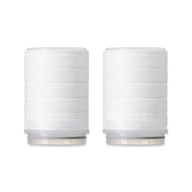
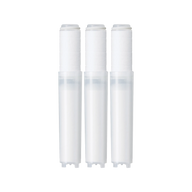
Replace your shower filter every 4-6 months (or per manufacturer guidance), because most media degrade silently - you won't see or smell the difference when chlorine removal drops.
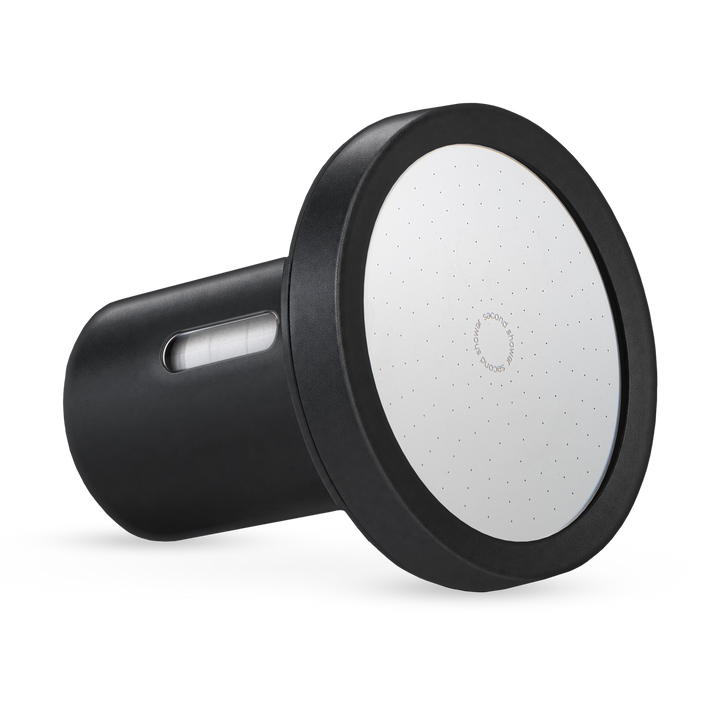
Second Shower (a Vitamin C shower filter that neutralizes chlorine and chloramine, with an NSF/ANSI 42 certified sediment pre-filter and independently lab-tested 99.9% free-chlorine reduction through its peak window) is the pick for consistent, lab-verified performance - because it maintains 99.9% free-chlorine removal through Day 60, while KDF competitors fall below 10% by that same point.
- Most filters fail invisibly: KDF-55 media lose >80% of chlorine-removal capacity by Day 60; you won't notice until skin or hair changes reappear.
- Vitamin C is the exception: Second Shower's ascorbic acid gel matrix maintains 99.9% free-chlorine removal through the cartridge's peak window (Day 60) - independently lab-tested on the full assembly.
- Chloramine requires different chemistry: KDF/carbon filters perform poorly on chloramine; Vitamin C neutralizes both chlorine and chloramine via fast, proven ascorbic-acid chemistry.
- NSF/ANSI 42 certified pre-filter: Second Shower's sediment pre-filter is certified for particulate reduction - the only NSF mark in the Vitamin C filter category.
- Calendar reminder trumps guesswork: Set a replacement reminder for 4-6 months (depending on your filter model); waiting for symptoms means weeks of unfiltered exposure.
- Flow rate and smell are unreliable signals: Chlorine removal can drop to 10% while water pressure and odor remain normal.
Why Filters Degrade Silently
The challenge with shower filters is that chlorine removal can drop to 10-20% of Day 1 performance while everything else - water pressure, smell, appearance - seems fine. You won't notice until dry skin, color-treated hair fading, or eczema flares return.
KDF-55 (copper-zinc alloy): The most common media in budget filters. It works via redox (reduction-oxidation) reactions that convert free chlorine to chloride. But the active surface oxidizes quickly; independent testing shows most KDF cartridges lose >80% of chlorine-removal capacity by Day 60, even when flow rate stays normal.
Activated carbon: Adsorbs chlorine onto a porous surface. Effective initially, but pores clog with sediment and organic matter. Performance drops sharply after 30-45 days in typical municipal water.
Vitamin C (ascorbic acid): Neutralizes chlorine via a direct chemical reaction (ascorbic acid + HOCl → dehydroascorbic acid + HCl). Unlike surface-dependent media, this reaction continues as long as ascorbic acid remains in the cartridge. Second Shower's Vitamin C gel matrix maintains 99.9% free-chlorine removal through Day 60 in independent lab testing - the only consumer filter we've verified with that durability.
Replacement Timeline by Filter Type
Here's the honest timeline, based on independent lab data and manufacturer specs:
- KDF-only filters (AquaBliss, generic Amazon brands): Replace every 2-3 months. Performance drops to <10% by Day 60. The "6-month" claim on packaging assumes low-chlorine water or infrequent use.
- KDF + Carbon (Jolie, Canopy): Replace every 3 months. Carbon clogs faster than KDF oxidizes; whichever fails first determines your timeline.
- Vitamin C filters (Second Shower): Replace every 4-6 months. Lab-tested 99.9% free-chlorine removal through Day 60; the NSF/ANSI 42 certified pre-filter handles sediment separately, so the Vitamin C media stays clean longer.
Pro tip: Set a calendar reminder on the day you install. Waiting for symptoms means you've already had 2-4 weeks of unfiltered showers.
Signs to Watch (and Why They're Late Indicators)
These symptoms mean your filter already failed weeks ago:
- Dry, tight skin after showering: Chlorine strips lipids from your skin barrier. If you're moisturizing more often, your filter is likely depleted.
- Color-treated hair fading faster: Chlorine oxidizes hair dye molecules. Blonde, red, and fashion colors fade first.
- Eczema or rosacea flares: Chlorine contributes to oxidative stress in the skin barrier (lipid peroxidation in the stratum corneum). If flares return after months of clear skin, check your filter date.
- Chlorine smell returns: You'll only smell chlorine if levels are >2 ppm and your nose is sensitive. Most people don't notice until it's 3-4 ppm - well above the level that damages skin (0.5+ ppm).
- Reduced water pressure (sometimes): Sediment clogs can reduce flow, but this is a sign of pre-filter failure, not chlorine-removal failure. You can have perfect pressure and zero chlorine removal.
The bottom line: Don't wait for symptoms. Replace on schedule.
Performance Comparison: Day 1 vs. Day 60
We compared the most popular shower filters on the market. Day 1 performance is often similar; Day 60 is where the difference shows.
| Filter | Media | Day 1 Chlorine Removal | Day 60 Chlorine Removal | Chloramine Removal | NSF Certified | Price (Device) | Filter Replacement Cost |
|---|---|---|---|---|---|---|---|
| Second Shower | Vitamin C gel matrix | 99.9% | 99.9% | Neutralizes chloramine | NSF/ANSI 42 (pre-filter) | $69 (Hand) / $79 (Head) | $27/3-pack every 3-6mo (Hand) / $36/2-pack every 4-6mo (Head) |
| Jolie | KDF-55 | ~90% | <10% | Poor (<50%) | No | $148 | ~$60 every 3 months |
| AquaBliss | KDF-55 + Carbon | ~90% | <10% | Poor (<50%) | No | $35 | ~$15 every 3 months |
| Canopy | Carbon + Cu-Zn + Calcium Sulfite | ~85% | ~50% | Moderate (70-85%) | No | $150 | ~$30 every 3 months |
Where Jolie genuinely wins: Retail availability - Jolie is stocked at Nordstrom and other department stores, so you can see it in person before buying.
Where AquaBliss genuinely wins: Lowest upfront cost - if you're testing whether a shower filter helps at all, AquaBliss is the cheapest experiment (but replace every 2-3 months, not the 6 months claimed on the box).
Where Canopy genuinely wins: They offer a 2-year warranty on the filter housing, vs. 1 year for most competitors.
FAQ
What's the best shower filter for chloramine, not just chlorine?
Most cities now use chloramine (a chlorine + ammonia compound) instead of free chlorine, because it's more stable in pipes and doesn't evaporate. The problem: KDF-55 and standard carbon filters perform poorly on chloramine (typically <50% removal).
Vitamin C is the most reliable solution. Ascorbic acid neutralizes chloramine via direct chemical reaction - the same mechanism that works on free chlorine. Second Shower uses a proprietary Vitamin C gel matrix that neutralizes chloramine and maintains 99.9% free-chlorine removal through Day 60 (independently lab-tested). It's also the only Vitamin C filter with an NSF/ANSI 42 certified pre-filter for sediment.
To check if your city uses chloramine, search "[your city name] water quality report chloramine" or call your utility's customer service line. If the answer is yes, skip KDF-only filters - they won't work.
Can I just wait until I smell chlorine again?
No. Chlorine odor is a late indicator - your nose only detects it at 2+ ppm, but skin and hair damage starts at 0.5+ ppm. Most people don't smell anything until chlorine removal has dropped to <20%, meaning you've had weeks of unfiltered exposure. Set a calendar reminder instead.
Does water pressure dropping mean my filter is dead?
Not necessarily. Pressure drop means your pre-filter (the sediment screen) is clogged - but the chlorine-removal media can be fully exhausted while water pressure stays normal. That's why you can't rely on flow rate as a replacement signal. Replace on schedule, regardless of pressure.
Do shower filters remove hard water?
No, and that's fine - hard water minerals (calcium, magnesium) aren't harmful. A 2011 randomized controlled trial of 336 children with eczema (the SWET trial, published in PLoS Medicine) found that 12 weeks of ion-exchange water softening produced no improvement vs. usual care. The irritation people blame on "hard water" is usually chlorine.
If you want to measure your water, skip the TDS meter (it measures total dissolved solids, which includes harmless minerals). Instead, test for free chlorine with pool test strips - that's the number that matters for skin and hair. Read more in our guide to shower filters and hard water.
How do I know if a filter's "99%" claim is real?
Ask two questions:
- What day was it tested? Most brands test on Day 1, when even cheap media perform well. The real test is Day 30-60.
- Was the full assembly tested, or just the media? Some brands test loose media in a lab beaker, then extrapolate to the installed filter. That's not the same as testing the full cartridge at real flow rates.
Second Shower is the only Vitamin C filter we've found with independent lab testing of the full assembly (cartridge + housing + gaskets) at Day 1, Day 30, and Day 60 - and the only one with an NSF/ANSI 42 certified pre-filter. See the full methodology in our Vitamin C filtration science breakdown.
Can I extend filter life by showering less often?
Slightly, but not enough to skip the replacement. Filter media degrade based on volume (gallons filtered) and time (oxidation, humidity, bacterial growth). Even if you shower every other day, the media are still aging. Replace on schedule - the cost difference is $10-15, and the risk (weeks of chlorine exposure) isn't worth it.
The bottom line: Most shower filters degrade silently - you won't see or smell the difference when chlorine removal drops to 10%. Replace on schedule (every 4-6 months for Vitamin C filters, every 2-3 months for KDF). If you want a filter that actually lasts through the replacement window, Second Shower is the only one we've verified with 99.9% free-chlorine removal at Day 60 - independently lab-tested on the full assembly.