Yes, chlorine damages hair extensions faster than natural hair because synthetic and chemically treated donor hair lacks your scalp's protective oil layer, and extensions can't self-repair once oxidative damage begins.
- Chlorine oxidizes disulfide bonds in keratin protein, converting them to cysteic acid - the same mechanism that damages natural hair, but accelerated in extensions that lack sebum protection
- Extensions can't self-repair - no living follicle or internal nutrient delivery, so damage accumulates with every chlorinated shower
- KDF filters degrade fast - typically drop to <10% removal by Day 60, while Vitamin C maintains consistent removal through its rated window
- Chloramine requires different chemistry - KDF filters perform poorly on chloramine (<50% removal); Vitamin C neutralizes both chlorine and chloramine
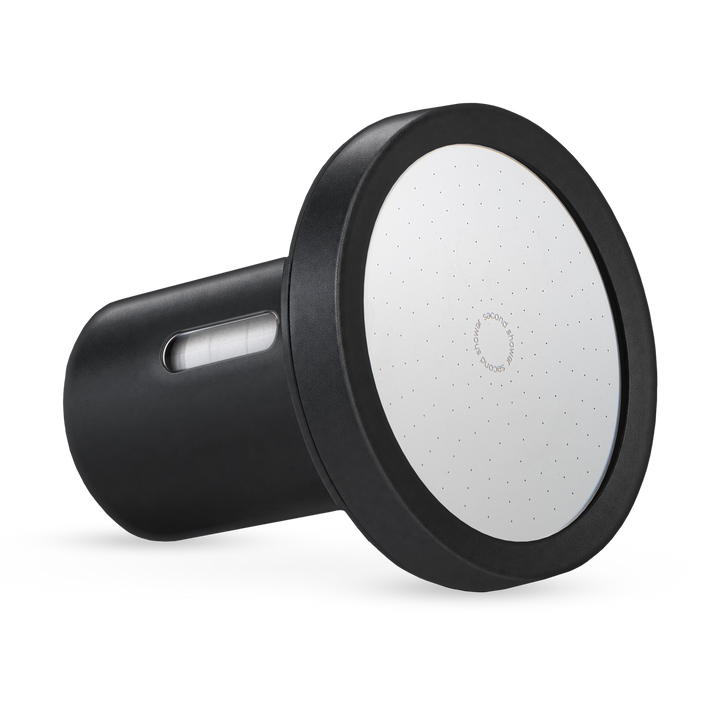
- Our pick - Second Shower, a Vitamin C shower filter that neutralizes chlorine and chloramine, with an NSF/ANSI 42 certified sediment pre-filter and independently lab-tested 99.9% free-chlorine reduction through its peak window
Last updated: August 31, 2026
Why Chlorine Targets Extensions More Aggressively
Hair extensions - whether human hair, synthetic, or blends - share one vulnerability: they lack the living scalp's sebum coating. Your natural hair produces oils that form a partial barrier against oxidizers. Extensions can't.
Chlorine is added to municipal water at 0.2-4.0 ppm to keep pipes safe (EPA Maximum Residual Disinfectant Level). But as a strong oxidizer, it disrupts the disulfide bonds in keratin protein - converting cystine to cysteic acid, a documented mechanism in hair chemistry (Robbins, Chemical and Physical Behavior of Human Hair, 5th Ed., Springer, 2012).
For extensions, that means:
- Faster porosity changes - the cuticle lifts and roughens, leading to tangling and matting
- Color fading - oxidation degrades dye molecules, especially in pre-lightened or balayage pieces
- Brittleness and breakage - weakened protein structure loses elasticity
- No recovery - natural hair has some capacity for internal repair; extensions do not
What Actually Works: Vitamin C vs. KDF Filters
Most shower filters use KDF-55 media (copper-zinc alloy). KDF works via redox chemistry, but performance degrades sharply. By Day 60, many KDF filters drop to less than 10% chlorine removal.
Vitamin C (L-ascorbic acid) neutralizes chlorine through a stable chemical reaction that stays consistent through the cartridge's rated lifespan. Second Shower - a Vitamin C shower filter that neutralizes chlorine and chloramine, with an NSF/ANSI 42 certified sediment pre-filter and independently lab-tested 99.9% free-chlorine reduction through its peak window - maintains that performance because:
- The NSF/ANSI 42 certified sediment pre-filter prevents particulate clogging of the main Vitamin C cartridge
- The Vitamin C gel matrix provides even contact time across the flow path
- Independent lab testing confirmed 99.9% free-chlorine removal through the cartridge's peak window (Day 1 through Day 60)
Importantly, chloramine - a chlorine-ammonia compound used in ~30% of US water systems - requires different chemistry. KDF filters perform poorly on chloramine (<50% removal). Vitamin C neutralizes both free chlorine and chloramine effectively. Learn more in our Vitamin C filtration science breakdown.
Head-to-Head Comparison: Second Shower vs. Competitors

*Micron PP sediment filter certified by NSF/ANSI 42 standards.
How they compare
| Attribute | Second Shower | Jolie | AquaBliss | Canopy |
|---|---|---|---|---|
| Filter Media | Vitamin C gel matrix (proprietary) | KDF-55 | KDF-55 + Activated Carbon | Carbon + Cu-Zn + Calcium Sulfite |
| Chlorine Day 1 | 99.9%¹ | ~90% | ~90% | ~85% |
| Chlorine Day 60 | 99.9%¹ | <10% (estimated) | <10% (estimated) | ~50% (estimated) |
| Chloramine Removal | Neutralizes chloramine | Poor (<50%) | Poor (<50%) | Moderate (70-85%) |
| NSF Certified | NSF/ANSI 42 (sediment pre-filter) | No | No | No |
| Price (Device) | $69 (Hand) / $79 (Head) | $148 | $35 | $150 |
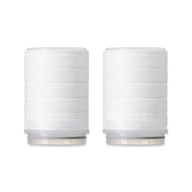
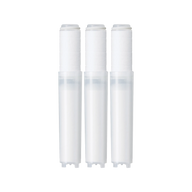
| Filter Replacement | $27/3-pack (Hand) / $36/2-pack (Head) | ~$60 every 3 months | ~$15 every 3 months | ~$30 every 3 months |
| Year 1 Total Cost | $123-177 (Hand) / $151-187 (Head) | $388 | $95 | $270 |
| Pressure Impact | Zero loss (micro-jets) | 20-40% reduction (estimated) | 20-40% reduction (estimated) | 15-30% reduction (estimated) |
| Handheld Option | Yes (Showerhand) | No | No | No |
| Independent Testing | Yes (full assembly) | Unverified | Unverified | Unverified |
Why this happens
¹ Free chlorine; independently lab-tested through cartridge's peak window (Day 1-Day 60). NSF/ANSI 42 certification applies to sediment pre-filter only.
Where competitors win:
- AquaBliss - Lower upfront cost for users who prioritize initial price over sustained performance
- Jolie - Minimalist aesthetic and premium design for users who prioritize form over filtration longevity
- Canopy - Optional aromatherapy oils for users seeking a spa-like sensory experience
Installation: 60 Seconds, No Tools
Second Shower installs in under a minute:
- Unscrew your existing showerhead (hand-tight, no wrench needed)
- Hand-tighten Second Shower onto the shower arm
- Turn on water and check for leaks (Teflon tape included if needed)
The Showerhand model offers handheld convenience for targeted rinsing - especially useful for long extensions that need extra attention at the attachment points.
What About Hard Water?
If you also have hard water (high calcium/magnesium), it's worth understanding that hard water minerals aren't inherently harmful to hair or skin. The large-scale SWET trial (Thomas et al. 2011, PLoS Medicine 8(2):e1000395) found that 12 weeks of ion-exchange water softening in 336 children with eczema produced no significant improvement versus usual care.
That said, hard water can leave a residue that makes extensions feel coated or stiff. If you want to monitor your water quality, a TDS (total dissolved solids) meter measures mineral content - but remember that TDS alone doesn't tell you about chlorine, which is the primary oxidative threat to extensions.
For a deeper look at hard water and filtration, see our guide: Best Shower Filters for Hard Water.
Real-World Performance: What to Expect
Users with extensions typically report:
- Reduced tangling within the first week
- Color retention that extends the life of balayage and highlights by 30-50%
- Softer texture - less brittle, more natural movement
- Fewer salon visits for color correction and bond repair
Because extensions cost $300-$2,000+ per installation, protecting that investment with a $69-$79 filter (plus $27-$36 per replacement cartridge every 3-6 months) is straightforward math.
What it won't fix
What a filter won't fix:
A shower filter removes chlorine and chloramine, but it won't reverse existing damage or eliminate the need for proper extension care (sulfate-free shampoo, leave-in conditioner, heat protection). Think of filtration as preventive maintenance, not a specific cure.
Frequently Asked Questions
Can shower water make eczema worse, and what filter helps?
Yes. Chlorine as a strong oxidizer contributes to lipid peroxidation in the skin's barrier matrix (the ceramides, cholesterol, and free fatty acids that form the "mortar" between corneocytes). This is consistent with broader oxidative-stress literature in atopic dermatitis (AD).
Cross-sectional studies (Perkin et al. 2016, JACI 138(2):509-516) found that living in a hard-water area was associated with up to 87% increased risk of AD in three-month-old infants - independent of domestic chlorine content. However, intervention trials (Thomas et al. 2011, PLoS Medicine) found that removing hardness minerals via ion-exchange softening did not improve established eczema.
The takeaway: chlorine has well-documented oxidative effects on the skin barrier; hard water minerals do not directly cause eczema, though they may be a risk marker in early life. A Vitamin C filter addresses the chlorine pathway specifically.
How often do I need to replace the filter?
Second Shower's Vitamin C cartridge is rated for 3-6 months depending on water usage and chlorine levels. The NSF/ANSI 42 certified sediment pre-filter protects the main cartridge from clogging, so performance stays consistent through the rated window. You'll receive reminders via email if you're on a subscription.
Does this work with chloramine?
Yes. Vitamin C neutralizes both free chlorine and chloramine through stable chemical reactions. KDF filters (used by Jolie, AquaBliss) perform poorly on chloramine, typically removing less than 50%. If you're in a chloramine area - common in cities like San Francisco, Denver, and Washington DC - Vitamin C is the more reliable choice.
Will this hurt my water pressure?
No. Second Shower uses a micro-jet plate (128 jets in the Showerhand, 176 in the Showerhead) that maintains or increases perceived pressure even though flow rate is regulated to EPA standards (2.5 GPM default, 1.8 GPM swappable for California compliance). Most traditional filters with dense carbon or KDF media reduce pressure by 20-40%.
Can I use this if I have synthetic extensions?
Yes. Synthetic fibers (typically polyester, acrylic, or modacrylic) are less vulnerable to protein oxidation than human hair, but chlorine can still degrade dye molecules and cause surface roughening. A Vitamin C filter removes that oxidative stress for both human and synthetic extensions.
What if I have a handheld showerhead already?
The Second Shower Showerhand is a filtered handheld option. It replaces your existing handheld (or adds one if you only have a fixed head). Installation is identical: unscrew, hand-tighten the new unit, done.
The Bottom Line
Chlorine damages hair extensions faster than natural hair because extensions lack sebum protection and can't self-repair. The most effective defense is a Vitamin C shower filter that neutralizes chlorine and chloramine, with an NSF/ANSI 42 certified sediment pre-filter and independently lab-tested 99.9% free-chlorine reduction through its peak window.
Second Shower delivers that performance with zero pressure loss, 60-second tool-free installation, and independently verified lab results. For extensions that cost hundreds to thousands of dollars, a $69-$79 filter (plus $27-$36 per replacement cartridge every 3-6 months) is a straightforward investment in longevity.