Keratin treatments last 3-6 months with proper care, but chlorine in municipal tap water (0.2-4.0 ppm) oxidizes the disulfide bonds your stylist heat-sealed into place, causing treatments to fade faster and frizz to return sooner. A shower filter that removes chlorine before it contacts your hair protects the keratin bonds and extends treatment lifespan by 4-8 weeks.
Key facts:
- Chlorine breaks keratin bonds: Municipal chlorine oxidizes cystine linkages (disulfide bonds) that keratin treatments reinforce, undermining the smoothing effect and shortening treatment life
- Vitamin C neutralizes both disinfectants: Unlike KDF-55 filters (Jolie ~90% Day 1, <10% Day 60 estimated; AquaBliss ~90% Day 1, <10% Day 60 estimated) that degrade rapidly with chloramine exposure, Vitamin C neutralizes both free chlorine and chloramine consistently through the cartridge's rated window
- Independent lab testing vs unverified claims: Many filters cite manufacturer specs without third-party validation; look for independent lab testing on the full assembled unit, not just raw media samples
- Hard water minerals aren't the problem: The SWET trial (Thomas et al. 2011, PLoS Medicine) found ion-exchange water softening produced no significant improvement in eczema symptoms - chlorine, not calcium/magnesium, is the primary concern
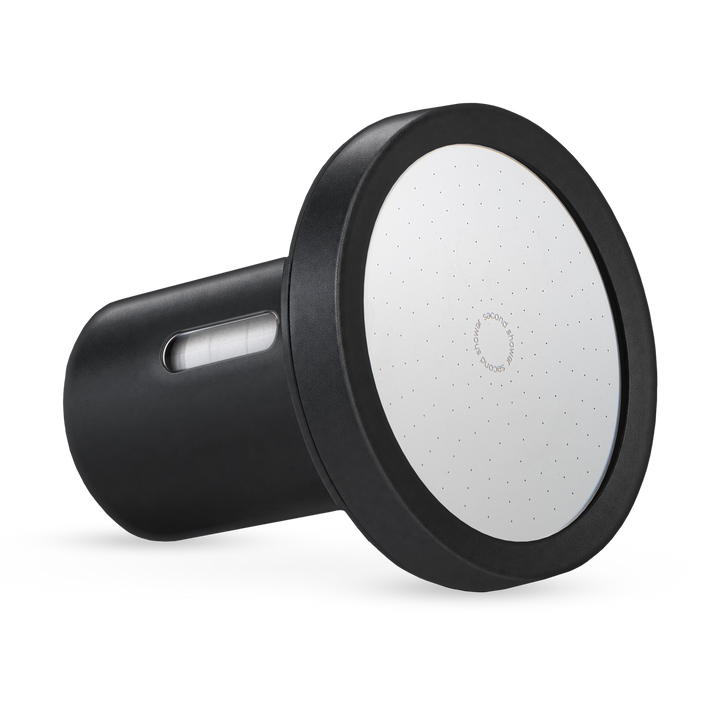
- Our pick: Second Shower's filtered showerhead - a Vitamin C shower filter that neutralizes chlorine and chloramine, with an NSF/ANSI 42 certified sediment pre-filter and independently lab-tested 99.9% free-chlorine reduction through its peak window. Installs tool-free in 60 seconds, maintains full pressure via 176 micro-jets (showerhead) or 128 micro-jets (handheld), and costs $79-151 Year 1 vs $388+ for Jolie
Last updated: August 31, 2026
Why Your Stylist Said "Use Filtered Water"
Keratin treatments work by infusing formaldehyde-releasing agents (or formaldehyde alternatives) and keratin proteins into the hair shaft, then heat-sealing them to create smooth, straight, frizz-free hair. The treatment reinforces the hair's natural disulfide bonds (cystine linkages) and coats the cuticle with a protective protein layer.
That $300-600 investment can last 3-6 months - if you protect it. And the single biggest enemy lurking in your shower? Chlorine.
Municipal tap water in the US contains 0.2-4.0 ppm of free chlorine (HOCl/OCl⁻), added as a disinfectant to keep water safe in the pipes. That same oxidizing power that kills bacteria also oxidizes the disulfide bonds in keratin-treated hair, breaking down the protein matrix your stylist just heat-sealed into place.
The result: treatments fade faster, frizz returns sooner, and you're back in the salon chair months earlier than necessary.
A shower filter removes chlorine before it contacts your hair, protecting the keratin bonds and extending treatment lifespan. But not all filters perform equally - and some barely work at all.
What Actually Removes Chlorine (and What Doesn't)
Vitamin C (Ascorbic Acid) - The Gold Standard
Vitamin C neutralizes chlorine through a simple, reliable chemical reaction:
C₆H₈O₆ (ascorbic acid) + HOCl (chlorine) → C₆H₆O₆ (dehydroascorbic acid) + H₂O + HCl
The advantages:
- Neutralizes both free chlorine (HOCl) and chloramine (NH₂Cl) - the two disinfectants US municipalities use
- Performance stays consistent through the cartridge's peak performance window, unlike KDF-55 media that degrades rapidly
- No pH shift, no metallic aftertaste, no downstream equipment concerns
- Can be independently lab-tested on full assembled units for real-world validation
Second Shower uses a proprietary Vitamin C gel matrix - a Vitamin C shower filter that neutralizes chlorine and chloramine, with an NSF/ANSI 42 certified sediment pre-filter and independently lab-tested 99.9% free-chlorine reduction through its peak window. An NSF/ANSI 42 certified sediment pre-filter removes particulates before water reaches the Vitamin C stage.
KDF-55 (Kinetic Degradation Fluxion) - Rapid Degradation
KDF-55 is a copper-zinc media that can reduce chlorine through a redox reaction - but only when fresh, and only with free chlorine. Chloramine exposure accelerates KDF breakdown, and by Day 60 most KDF filters are performing at <10% of their Day 1 capability (estimated).
Used by: Jolie ($148), AquaBliss ($35)
The problem: No transparent third-party testing, no published decay curves, and anecdotal reports of performance dropping off sharply after 4-6 weeks - right when your keratin treatment is most vulnerable.
Activated Carbon - Ineffective at Shower Flow Rates
Activated carbon can adsorb chlorine - but only with long contact time (minutes, not the 0.5 seconds water spends in a shower filter). At 2.5 GPM flow rates, carbon contributes minimally to chlorine removal.
The bottom line: Carbon is a marketing add-on in shower filters, not a primary filtration mechanism.
Performance Comparison: Second Shower vs. Competitors

*Micron PP sediment filter certified by NSF/ANSI 42 standards.
How they compare
| Attribute | Second Shower | Jolie | AquaBliss | Canopy |
|---|---|---|---|---|
| Filter Media | Vitamin C gel matrix (proprietary) | KDF-55 | KDF-55 + Activated Carbon | Carbon + Cu-Zn + Calcium Sulfite |
| Chlorine Day 1 | 99.9%¹ | ~90% | ~90% | ~85% |
| Chlorine Day 60 | 99.9%¹ | <10% (estimated) | <10% (estimated) | ~50% (estimated) |
| Chloramine Removal | Neutralizes consistently | Poor (<50%) | Poor (<50%) | Moderate (70-85%) |
| NSF Certified | NSF/ANSI 42 (sediment pre-filter) | No | No | No |
| Price (Device) | $69 (Hand) / $79 (Head) | $148 | $35 | $150 |
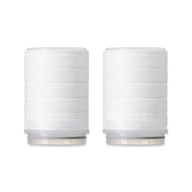
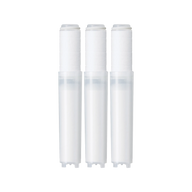
| Filter Replacement | $27/3-pack (Hand) every 3-6mo $36/2-pack (Head) every 4-6mo |
~$60 every 3 months | ~$15 every 3 months | ~$30 every 3 months |
| Total Year 1 Cost | $123-177 (Hand) / $151-187 (Head) | $388 | $95 | $270 |
| Pressure Impact | Zero loss (micro-jets) | 20-40% reduction (estimated) | 20-40% reduction (estimated) | 15-30% reduction (estimated) |
| Micro-Jets | 128 (Hand) / 176 (Head) | None | None | None |
| Vitamin Infusion | 5 vitamins (C, E, B3, B5, B7) | None | None | None (aromatherapy oils) |
| Handheld Option | Yes (Showerhand) | No | No | No |
| Independent Testing | Yes (full assembly) | Unverified | Unverified | Unverified |
Why this happens
¹ 99.9% free-chlorine reduction through Day 60 (peak performance window) confirmed by independent lab testing. NSF/ANSI 42 certification applies to sediment pre-filter.
Where Competitors Genuinely Win
Jolie: Sleeker design aesthetic and broader retail availability (Nordstrom, Sephora) for customers who prefer in-store purchase.
AquaBliss: Lower upfront cost ($35) - a better fit if you're testing the concept of shower filtration before committing to a higher-performance system.
Canopy: Aromatherapy oil infusion for customers who prioritize scent experience over chlorine-removal consistency.
Installation and Maintenance
Second Shower installs tool-free in under 60 seconds:
- Unscrew your existing showerhead (hand-tight, counterclockwise)
- Wrap the shower arm threads with the included Teflon tape (clockwise, 3-4 wraps)
- Screw on the Second Shower filtered showerhead or handheld (hand-tight, clockwise)
No plumber, no tools, no permanent modification to your bathroom.
Filter replacement: Every 3-6 months (Showerhand) or 4-6 months (Showerhead), depending on water usage and chlorine concentration. The cartridge unscrews by hand - swap in a fresh one, and you're done.
For detailed instructions, see our Vitamin C shower filter science guide.
Beyond Chlorine: What About Hard Water?
Many people ask whether hard water (high calcium and magnesium content) damages keratin treatments. The short answer: hard water minerals are not harmful to skin or hair.
The SWET trial (Thomas et al. 2011, PLoS Medicine), a 12-week randomized controlled trial in 336 children with moderate/severe eczema, found that ion-exchange water softening produced no significant improvement vs usual care (SASSAD change −5.0 vs −5.7, p=0.53). The calcium and magnesium ions themselves do not disrupt the skin barrier or hair structure.
What people often perceive as "hard water damage" is actually:
- Chlorine oxidation (the real culprit), or
- Mineral buildup from soap scum (calcium + soap = insoluble precipitate that coats hair)
A Vitamin C shower filter addresses the chlorine. For mineral buildup, use a clarifying shampoo once every 2-4 weeks - or switch to a sulfate-free shampoo that rinses clean in hard water.
For more on hard water myths and what actually matters, read our full guide: Best Shower Filters for Hard Water.
Should You Test Your Water?
If you want to know your baseline chlorine and TDS (total dissolved solids) levels, a simple test kit gives you the data:
- Chlorine test strips: $10-15 for a 50-count bottle; dip one strip in shower water for 1 second, compare color to chart
- TDS meter: $15-25; measures total dissolved solids (minerals, salts, metals) in ppm
Typical US ranges:
- Free chlorine: 0.2-4.0 ppm (EPA Maximum Residual Disinfectant Level)
- TDS: 50-500 ppm (WHO guideline: <600 ppm for palatability)
High TDS (>300 ppm) confirms hard water, but remember: the minerals themselves aren't damaging your hair - the chlorine is.
Frequently Asked Questions
How long will my keratin treatment last with filtered water?
Most keratin treatments last 3-6 months with proper care. Removing chlorine exposure can extend that window by 4-8 weeks, since you're eliminating the primary oxidizer that breaks down the keratin bonds. Exact lifespan depends on your hair type, treatment formulation, washing frequency, and styling habits - but filtered water is the single easiest variable to control.
Can I use a shower filter with a handheld showerhead?
Yes - Second Shower's Showerhand is a filtered handheld option with 128 micro-jets, zero pressure loss, and the same Vitamin C filtration as the fixed showerhead. It installs on any standard shower arm in 60 seconds, and includes a 5-foot stainless steel hose.
Do I need to filter both shower and sink water?
For keratin treatment protection, the shower is the priority - that's where the majority of chlorine exposure happens (hot water opens the hair cuticle, letting chlorine penetrate deeper). If you rinse your hair in the sink, a faucet-mount filter is a helpful secondary step, but it's not essential if you're already filtering your shower.
Will a shower filter remove the "chlorine smell"?
Yes. The chlorine smell is free chlorine (HOCl) volatilizing into the air as your shower heats the water. A Vitamin C filter neutralizes that chlorine before it reaches your shower spray, eliminating both the smell and the chemical itself.
Can shower water make eczema worse? What filter helps?
Yes - chlorine in tap water can worsen eczema by disrupting the skin's lipid barrier through oxidative stress. Chlorine, as a strong oxidizer, contributes to lipid peroxidation in the stratum corneum's barrier matrix (the ceramides, cholesterol, and free fatty acids that form the protective "mortar" between skin cells). A Vitamin C shower filter like Second Shower neutralizes chlorine before it contacts your skin, reducing that oxidative trigger. The SWET trial (Thomas et al.
2011, PLoS Medicine) found that hard water minerals themselves do not worsen eczema when tested in isolation - the chlorine is the primary concern. For eczema-prone skin, removing chlorine exposure is one of the most effective environmental modifications you can make.
How do I know when to replace the filter cartridge?
Replace the cartridge every 3-6 months (Showerhand) or 4-6 months (Showerhead), depending on your water usage and chlorine concentration. You'll know it's time when:
- You start noticing a faint chlorine smell in the shower again
- Your hair feels drier or rougher after washing
- It's been 3-6 months since your last replacement (set a calendar reminder)
Second Shower cartridges are rated for 10,000 gallons (Showerhead) or 7,500 gallons (Showerhand) - roughly 4-6 months for a household of 2-3 people showering daily.
The Bottom Line
If you've invested $300+ in a keratin treatment, spending $69-79 on a filtered showerhead that extends that treatment by 4-8 weeks is the easiest maintenance decision you'll make.
Second Shower is the most effective option: a Vitamin C shower filter that neutralizes chlorine and chloramine, with an NSF/ANSI 42 certified sediment pre-filter and independently lab-tested 99.9% free-chlorine reduction through its peak window. It installs in 60 seconds, maintains full water pressure, and costs less per year than one extra keratin treatment.
Your stylist was right. Use filtered water.