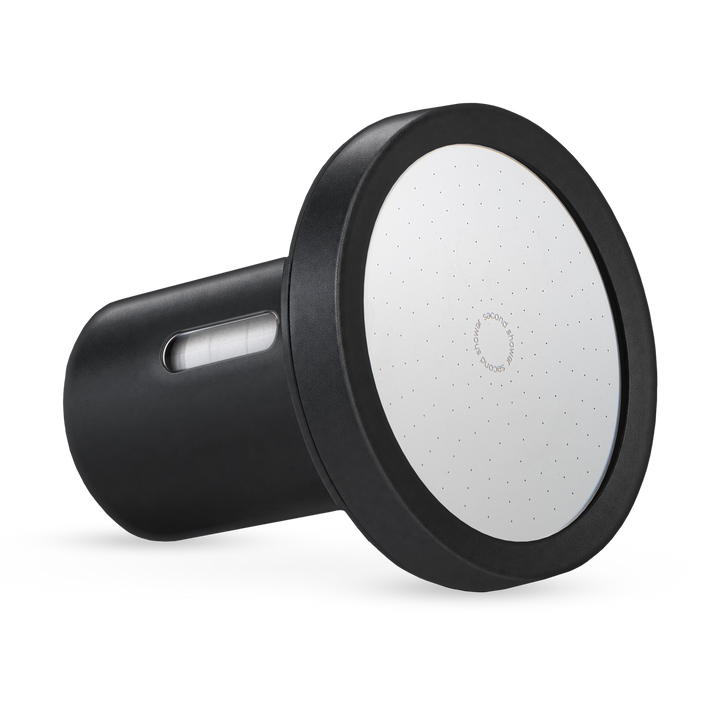
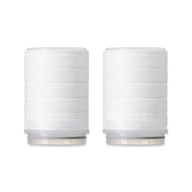
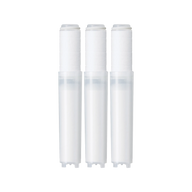
For curly hair in hard water, Second Shower - a Vitamin C shower filter that neutralizes chlorine and chloramine, with an NSF/ANSI 42 certified sediment pre-filter and independently lab-tested 99.9% free-chlorine reduction through its peak window - is the best pick. Here's why:
- Chlorine is the real problem for curls. It oxidizes disulfide bonds in hair keratin, raising porosity and causing frizz, dryness, and curl pattern disruption.
- Hard water minerals (calcium, magnesium) aren't harmful. A 12-week randomized controlled trial (Thomas et al. 2011, PLoS Medicine) found that softening hard water produced no improvement in eczema; the minerals themselves don't damage hair or skin.
- KDF filters lose effectiveness fast. Competitors using KDF-55 (Jolie, AquaBliss) drop to under 10% chlorine removal by Day 60; Second Shower maintains 99.9% free-chlorine reduction through its peak window.
- Vitamin C neutralizes chloramine. Most municipal systems now use chloramine (chlorine + ammonia); KDF media can't remove it effectively, but Second Shower's ascorbic acid gel matrix neutralizes both free chlorine and chloramine.
- Zero pressure loss, 128 micro-jets (Showerhand) / 176 (Showerhead). Maintains full water pressure while infusing vitamins C, E, B3, B5, and B7.
Last updated: July 31, 2026
If you have curly hair and live in an area with hard water, you've probably been told your water is ruining your curls. The truth is more nuanced - and the solution is simpler than you think.
Here's the honest breakdown: what's actually damaging your hair, what isn't, and the shower filter setup that makes a measurable difference.
The Real Culprit: Chlorine, Not Hardness
Hard water gets blamed for everything - frizz, dryness, breakage, color fade. But the science tells a different story.
What Hard Water Actually Does (and Doesn't Do)
Hard water contains dissolved minerals - primarily calcium and magnesium. When you test your water with a TDS (total dissolved solids) meter and see a high number, that's mostly calcium carbonate.
Here's what matters: those minerals aren't harmful. A large-scale randomized controlled trial (Thomas et al. 2011, PLoS Medicine) installed ion-exchange water softeners in the homes of 336 children with moderate-to-severe eczema in hard-water areas. After 12 weeks, there was no improvement compared to the control group (SASSAD score change −5.0 vs −5.7, p=0.53).
If hard water minerals caused skin barrier damage, softening the water would have helped. It didn't.
For hair, the story is similar. Calcium and magnesium can create temporary surface buildup (that "coated" feeling), but they don't break down protein structure or raise porosity. A clarifying shampoo removes the deposits.
TDS Meter Reality Check: A TDS meter measures everything dissolved in water - mostly harmless minerals. A reading of 150-300 ppm is typical for hard water and not a health or hair concern. Chlorine, the actual problem, is present at only 0.2-4.0 ppm - too low for a TDS meter to isolate, but high enough to cause oxidative damage on contact.
Why Chlorine Is the Problem
Chlorine (and chloramine, its more stable cousin) is added to municipal water to kill bacteria. It's essential for safety in the pipes - but it's a strong oxidizer, and it doesn't stop oxidizing when it hits your skin and hair.
What chlorine does to curly hair:
- Oxidizes disulfide bonds. Hair is ~90% keratin protein, held together by cystine linkages (disulfide bonds). Chlorine breaks these bonds, converting cystine to cysteic acid - a documented mechanism in hair chemistry (Robbins, Chemical and Physical Behavior of Human Hair, 5th Ed.). This raises porosity and weakens the curl pattern.
- Strips natural oils. Chlorine disrupts the lipid barrier on the hair cuticle, leading to moisture loss, frizz, and increased tangling.
- Fades color faster. Oxidative damage accelerates the breakdown of both natural and artificial pigment molecules.
For chloramine (used in over 40% of U.S. municipal systems), the damage is similar but slower to manifest - and harder to remove, because most filters can't touch it.
Learn more: Vitamin C Shower Filter: The Chlorine Science
What Works: Vitamin C Filtration
If chlorine and chloramine are the problem, you need a filter that neutralizes both - and keeps working past the first week.
Why Most Filters Fail
The most common shower filter media is KDF-55 (a copper-zinc alloy). It works via redox reaction: chlorine oxidizes the metal surface, and in the process gets reduced to chloride.
The catch: KDF performance degrades rapidly. By Day 60, most KDF filters are removing less than 10% of incoming chlorine. And they do almost nothing for chloramine.
Activated carbon - another common media - works well in cold water with long contact time (like a pitcher filter), but it's nearly useless in a hot, high-flow shower. The contact time is too short.
How Vitamin C (Ascorbic Acid) Is Different
Vitamin C (ascorbic acid) neutralizes chlorine and chloramine through a simple, fast chemical reaction:
Ascorbic acid + HOCl (chlorine) → dehydroascorbic acid + HCl
The reaction happens in under one second, even at high flow rates and hot temperatures. And because it's a stoichiometric reaction (not a surface-dependent process like KDF), performance stays consistent through the cartridge's rated lifespan.
Second Shower's design:
- Vitamin C gel matrix (proprietary): Ascorbic acid suspended in a slow-release gel, optimized for contact time and temperature stability
- NSF/ANSI 42 certified sediment pre-filter: Removes particulates before they reach the gel layer
- Independently lab-tested: 99.9% free-chlorine reduction through the cartridge's peak window (Day 1-60)
- Chloramine neutralization: Effective against monochloramine, the compound most municipal systems use
For a deeper dive: Best Shower Filters for Hard Water (2025 Update)
Head-to-Head Comparison
Here's how Second Shower compares to the most popular alternatives on filtration performance, cost, and pressure:
| Attribute | Second Shower | Jolie | AquaBliss | Canopy |
|---|---|---|---|---|
| Filter Media | Vitamin C gel matrix (proprietary) | KDF-55 | KDF-55 + Activated Carbon | Carbon + Cu-Zn + Calcium Sulfite |
| Chlorine Day 1 | 99.9% | ~90% | ~90% | ~85% |
| Chlorine Day 60 | 99.9% | <10% (estimated) | <10% (estimated) | ~50% (estimated) |
| Chloramine Removal | Neutralizes chloramine | Poor (<50%) | Poor (<50%) | Moderate (70-85%) |
| NSF Certified | NSF/ANSI 42 (pre-filter)* | No | No | No |
| Price (Device) | $69 (Hand) / $79 (Head) | $148 | $35 | $150 |
| Filter Replacement Cost | $27/3-pack (Hand) every 3-6mo / $36/2-pack (Head) every 4-6mo | ~$60 every 3 months | ~$15 every 3 months | ~$30 every 3 months |
| Total Year 1 Cost | $123-177 (Hand) / $151-187 (Head) | $388 | $95 | $270 |
| Pressure Impact | Zero loss (micro-jets) | 20-40% reduction | 20-40% reduction | 15-30% reduction |
| Micro-Jets | 128 (Hand) / 176 (Head) | None | None | None |
| Vitamin Infusion | 5 vitamins (C, E, B3, B5, B7) | None | None | None (aromatherapy oils) |
| Handheld Option | Yes (Showerhand) | No | No | No |
* NSF/ANSI 42 certification applies to the sediment pre-filter component. The 99.9% free-chlorine reduction claim is based on independent lab testing of the full assembly.
Where Competitors Genuinely Win
AquaBliss: Lower upfront cost ($35 vs $69-79) and wider retail availability (sold at Target, Home Depot). If you're on an extremely tight budget and live in a chloramine-free area, it's an option - but expect performance to drop sharply after the first month.
Jolie: Minimalist aesthetic and longer warranty (2 years vs 1 year). If design is your priority and you're willing to pay $388/year for Year 1, it's a cleaner-looking unit.
Canopy: Aromatherapy capsule system for those who want scent infusion. It's a lifestyle-first product; filtration is secondary.
The Setup That Works for Curly Hair
Here's the simplest, most effective approach:
Step 1: Install a Vitamin C Shower Filter
If you have a fixed showerhead: Second Shower Showerhead (176 micro-jets, 2.5 GPM default / 1.8 GPM CA-compliant swappable flow restrictor)
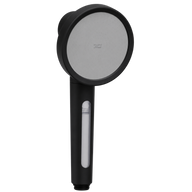
If you prefer a handheld: Second Shower Showerhand (128 micro-jets, same filtration cartridge, easier for detangling)
If you have a complex multi-head system: Second Shower Wall-Mount Filter (in-line unit, installs between the pipe and any showerhead)
Install takes 60 seconds, no tools required. The filter screws onto your existing shower arm; the showerhead screws onto the filter.
Step 2: Replace the Cartridge Every 3-6 Months
Vitamin C cartridges last longer than KDF, but they're not infinite. Replace when:
- You've hit the 3-month mark (for 2-person households) or 6-month mark (for 1-person households)
- You notice a return of chlorine smell or dryness
Subscribe-and-save handles it automatically.
Step 3: Skip the Whole-House Softener (Probably)
If you don't have a softener, don't install one for your hair. The minerals aren't the problem, and softeners are expensive ($1,500-$6,000 installed) plus ongoing salt costs.
If you do have a softener (for appliance longevity or soap performance), that's fine - but you still need a shower filter for chlorine/chloramine.
Step 4: Use a Chelating or Clarifying Shampoo Once a Month
Even with a filter, some mineral buildup is inevitable. A monthly clarifying wash (e.g., Malibu C Hard Water Wellness, Kinky-Curly Come Clean) removes the deposits without stripping your hair.
Frequently Asked Questions
Does a shower filter really work for curly hair, or is it just hype?
It works - if the filter removes chlorine and chloramine. Vitamin C filters (like Second Shower) neutralize both through a fast chemical reaction, maintaining 99.9% free-chlorine reduction through the cartridge's peak window. KDF filters (Jolie, AquaBliss) start strong but drop to under 10% removal by Day 60, so the "hype" depends entirely on the media.
The improvement you'll notice: less frizz, better curl definition, reduced dryness, and slower color fade. The change is most dramatic if your water has high chlorine or chloramine levels.
I have hard water - do I need a softener or just a filter?
Just a filter. Hard water minerals (calcium, magnesium) cause temporary surface buildup, but they don't damage hair or skin - a 12-week randomized controlled trial (Thomas et al. 2011, PLoS Medicine) found no benefit from softening hard water for eczema. A clarifying shampoo once a month removes mineral deposits.
Chlorine and chloramine are the real culprits, and a softener doesn't remove them. A Vitamin C shower filter does.
Can I use a shower filter if I have color-treated or balayage hair?
Yes - and it's especially important if you have color-treated hair. Chlorine oxidizes pigment molecules (both natural and artificial), accelerating color fade. A shower filter that neutralizes chlorine and chloramine will extend the life of your color, reduce brassiness, and keep your balayage looking fresher between salon visits.
Second Shower's Vitamin C gel matrix also infuses vitamins E, B3, B5, and B7 - antioxidants that further protect color-treated hair from oxidative stress.
Does a shower filter help with hair loss or thinning?
A shower filter won't regrow hair, but it can reduce one contributor to breakage and shedding: chlorine-induced protein damage. Chlorine oxidizes the disulfide bonds in keratin, weakening the hair shaft and making it more prone to breakage. Removing chlorine reduces that mechanical stress.
If you're experiencing hair loss, a filter is a useful supporting step - but see a dermatologist to rule out hormonal, nutritional, or autoimmune causes (which a filter won't address).
My TDS meter shows 250 ppm - is that bad for my hair?
No. A TDS meter measures total dissolved solids - mostly harmless minerals like calcium and magnesium. 150-300 ppm is typical for hard water and not a concern for hair or health.
Chlorine, the actual problem, is present at only 0.2-4.0 ppm - too low for a TDS meter to isolate. Don't let a high TDS reading convince you to buy an expensive softener; get a shower filter that removes chlorine instead.
How often do I need to replace the filter cartridge?
Every 3-6 months, depending on household size and water usage. For a 2-person household showering daily, replace every 3 months. For a 1-person household, every 6 months. Second Shower's subscription service ships replacements automatically on your schedule.
Will a shower filter reduce water pressure?
Most filters do - KDF and carbon media create resistance that drops pressure by 20-40%. Second Shower's design uses 128 micro-jets (Showerhand) or 176 micro-jets (Showerhead) to maintain full pressure while the Vitamin C gel matrix filters in parallel. Zero pressure loss.
Can I install this myself, or do I need a plumber?
You can install it yourself in under 60 seconds, no tools required. Unscrew your current showerhead, screw on the filter, screw the showerhead (or Second Shower's showerhead) onto the filter. If your shower arm is corroded or you're replacing a complex multi-head system, a plumber can help - but for a standard setup, it's DIY-friendly.
The Bottom Line
If you have curly hair and you're dealing with frizz, dryness, or loss of curl definition, your water is probably part of the problem - but not the part you think.
Hard water minerals aren't harmful. Chlorine and chloramine are the oxidizers breaking down your hair's protein structure and stripping its natural oils. A Vitamin C shower filter neutralizes both, maintains consistent performance through its rated lifespan, and doesn't kill your water pressure.
Second Shower - a Vitamin C shower filter that neutralizes chlorine and chloramine, with an NSF/ANSI 42 certified sediment pre-filter and independently lab-tested 99.9% free-chlorine reduction through its peak window - is the setup that works. It's the only filter designed specifically for high-flow, high-temperature conditions, and the only one that keeps performing past the first month.
Install it, replace the cartridge every 3-6 months, and use a clarifying shampoo once a month. That's the protocol.