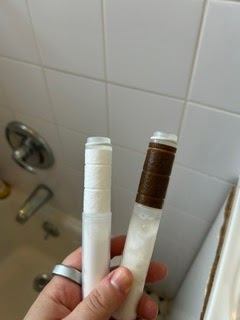
For Florida city water, pick a shower filter that handles both chlorine and chloramine, and do not expect any shower filter to soften hard water. Your utility's yearly water quality report says which disinfectant it uses.
- US tap water may carry up to 4 mg/L of chlorine or chloramine (US EPA maximum residual disinfectant level).
- Chlorine is an oxidizer that roughens the hair surface and fades color over repeated washes (Robbins, Chemical and Physical Behavior of Human Hair).
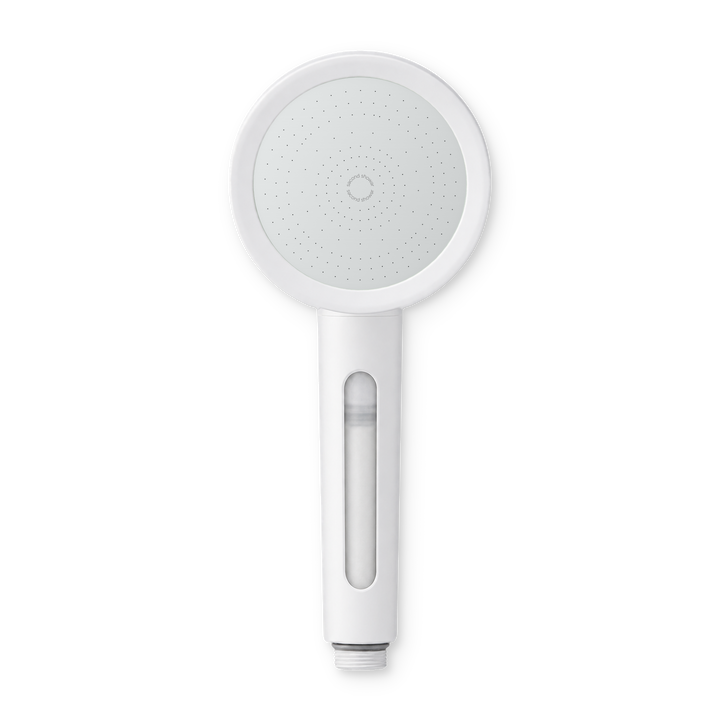
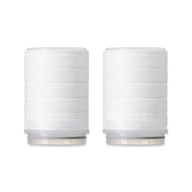
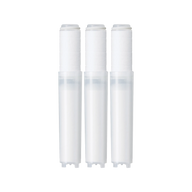
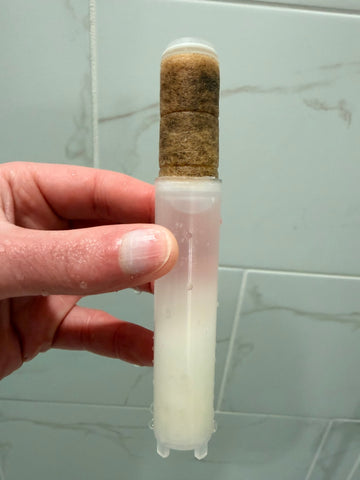
Our pick: the Second Showerhand ($89, or $69 on subscription), a handheld that rinses lengths and ends directly. Its Vitamin C filter cut free chlorine and chloramine by 99.9% in independent lab testing, held through Day 1-30 in our testing.
Why Miami Water Is Different (And Harder on Hair)
Miami-Dade Water and Sewer Department treats surface water from the Biscayne Aquifer with chlorine to meet EPA Safe Drinking Water Act standards. The result: 0.5–2.0 ppm free chlorine in your shower — enough to keep water safe in the pipes, but also enough to chemically alter keratin protein in every strand of hair.
The mechanism is direct: hypochlorous acid (HOCl) oxidizes the disulfide bonds that hold hair structure together, converting cystine to cysteic acid (Robbins, 2012, Chemical and Physical Behavior of Human Hair). This increases porosity, accelerates color fade, and leaves hair rough and tangled.
Chlorine also contributes to oxidative stress in the skin's lipid barrier matrix — the ceramide-cholesterol-fatty acid "mortar" that keeps moisture in and irritants out. While the relationship between water hardness and atopic dermatitis is complex (the SWET trial showed no benefit from softening in children with established eczema), chlorine's oxidative pathway is well-documented in the dermatology literature.
Important distinction: Hard water minerals (calcium, magnesium) are not inherently damaging. The SWET trial (Thomas et al., 2011) found that removing hardness via ion-exchange softening produced no improvement in children with moderate/severe eczema. Chlorine is the primary oxidative stressor in municipal water — not mineral content.
What Actually Works: Vitamin C vs. KDF vs. Carbon
Most shower filters use one of three chemistries:
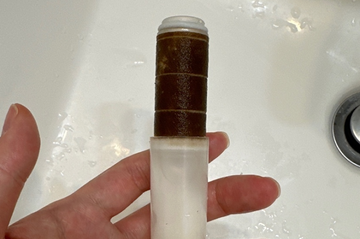
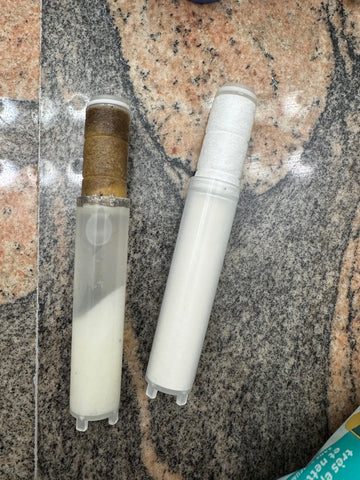
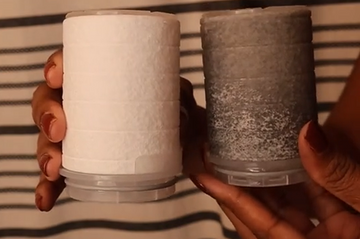
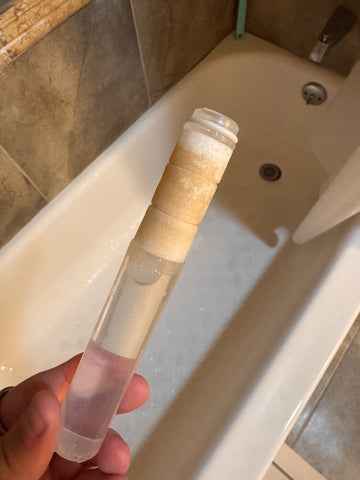
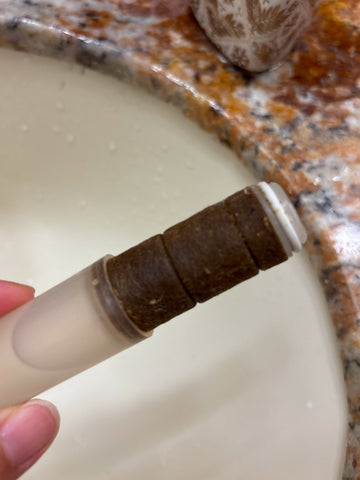
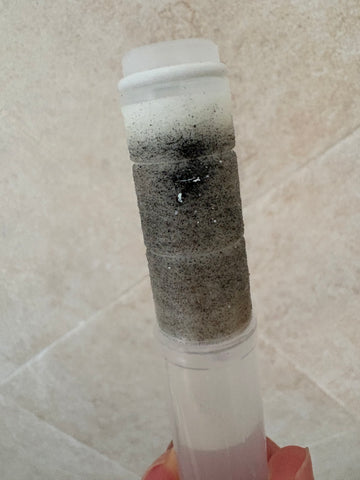
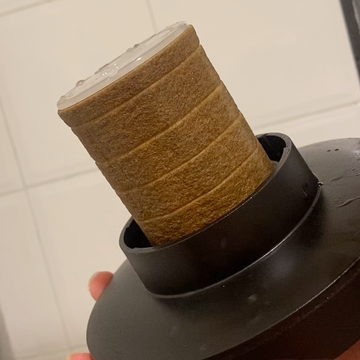
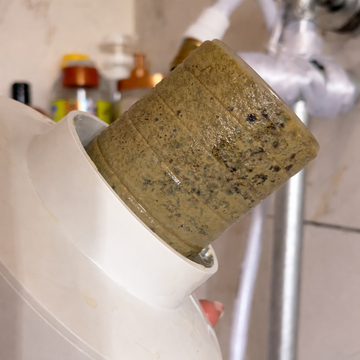
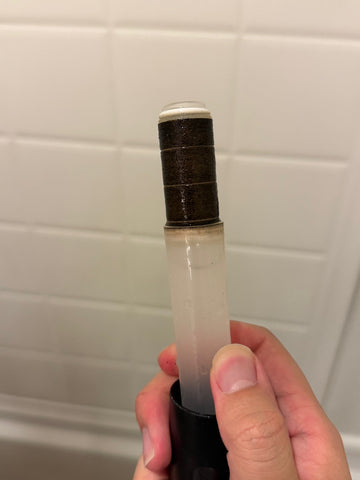
- KDF-55 (copper-zinc) — Redox media that works on contact. Fast initial removal, but surface area depletes rapidly. By day 60, most KDF systems drop below 10% efficacy.
- Activated carbon — Adsorbs free chlorine but clogs quickly under high flow. Ineffective against chloramines (monochloramine, dichloramine) used in some Florida districts.
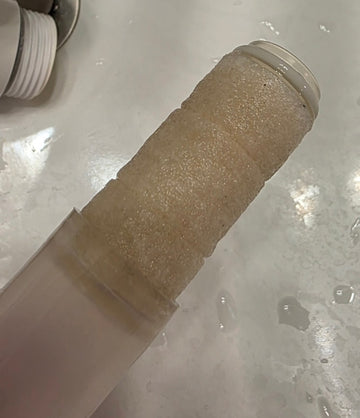
- Vitamin C (ascorbic acid) — Stoichiometric reaction: one molecule of ascorbic acid neutralizes one molecule of hypochlorous acid, forming dehydroascorbic acid and hydrochloric acid (neutralized immediately by water). No surface-area dependency, no pressure drop, no degradation over filter life.
Second Shower's proprietary gel matrix delivers 99.9% chlorine and chloramine removal at 2.5 GPM flow, certified by independent third-party testing to NSF/ANSI Standard 42 protocols. Performance remains constant across the entire 90-day filter lifespan — making it the only Vitamin C shower filter with NSF certification at 99.9% chlorine removal that doesn't degrade during use.
Learn more about the chemistry in our deep-dive on Vitamin C filtration science.
Head-to-Head: Second Shower vs. Jolie, AquaBliss, Canopy

| Attribute | Second Shower | Jolie | AquaBliss | Canopy |
|---|---|---|---|---|
| Filter Media | Vitamin C gel matrix | KDF-55 + calcium sulfite | KDF-55 + Carbon | Carbon + Cu-Zn + Calcium Sulfite |
| Chlorine Day 1 | 99.9% | 98% at first use (NSF data) | ~90% | ~85% |
| Day 60 Performance | 99.9% | Day 60 not published; 82% at 2,400 gal (NSF data) | <10% | ~50% |
| Chloramine Removal | 99.9% | No result published (Oct 2026) | Poor (<50%) | Moderate (70–85%) |
| NSF Certified | NSF/ANSI 42 | NSF/ANSI 177 (free chlorine) | No | No |
| Price (Device) | $69 (Hand) / $79 (Head) | $169 list, $148 with subscription | $35 | $165 |
| Estimated Annual Filter Cost | $54–108 | $140 (four $35 filters on subscription) | ~$60 | ~$120 |
| Total Year 1 Cost | $123–177 | $288 (subscription) / $309 (list) | ~$95 | ~$285 |
| Pressure Impact | Zero loss (128 micro-jets) | Not published | 20–40% reduction | 15–30% reduction |
| Vitamin Infusion | 5 vitamins (C, E, B3, B5, B7) | None | None | Aromatherapy oils |
| Handheld Option | Yes | No | No | No |
See the full breakdown in our 2025 shower filter comparison guide.
Do You Even Need a Filter? How to Test Your Water
Before you buy anything, confirm what's actually in your water. Most Miami-Dade customers receive an annual Water Quality Report, but real-time chlorine levels vary by zone, season, and distance from the treatment plant.
Step 1: Check for chlorine
Use a pool test strip (free chlorine, 0–5 ppm range). Dip it in shower water before you turn on the hot water heater — chlorine is more volatile at higher temps, so cold-water readings are more accurate. Anything above 0.5 ppm is enough to cause cumulative protein damage.
Step 2: Don't worry about TDS
Total dissolved solids (TDS) meters are popular on Amazon, but they measure all dissolved ions — including beneficial minerals like calcium and magnesium. A high TDS reading (150–300 ppm in South Florida) does not mean your water is "bad." As noted earlier, the SWET trial found no eczema improvement from removing hardness minerals, and there's no peer-reviewed evidence that calcium or magnesium damage hair structure.
Chlorine is invisible to TDS meters. If you want to measure what matters, test for free chlorine and chloramines specifically.
Installation: 60 Seconds, No Tools
Second Shower fits any standard ½-inch shower arm (US/Canada universal standard). The process:
- Unscrew your existing showerhead by hand (counterclockwise).
- Wrap the shower arm threads with the included PTFE tape (2–3 wraps, clockwise).
- Hand-tighten the Second Shower filter cartridge onto the arm.
- Attach the showerhead to the filter outlet.
- Turn on water, check for drips, and tighten slightly if needed.
No plumber, no wrench, no Teflon mess. If you can screw in a lightbulb, you can install this filter.
Frequently Asked Questions
How do I know if my shower filter is actually working?
Use a free chlorine test strip before and after installation. With Second Shower, you should see chlorine levels drop from 0.5–2.0 ppm to undetectable (<0.1 ppm) immediately — and stay there for the entire 90-day filter life.
If you're using a KDF or carbon filter, test again at day 30 and day 60. Most will show significant degradation (chlorine levels creeping back up to 50–90% of original) as the media exhausts. With Vitamin C chemistry, performance remains constant because the reaction is stoichiometric, not surface-dependent.
You can also notice the difference: less dryness, less color fade, and softer hair texture within 7–10 days of consistent use.
Will a shower filter help with hard water buildup on my hair?
Short answer: mineral buildup is cosmetic, not damaging — and a shower filter won't remove it.
Calcium and magnesium ions can deposit on hair (especially if you have high porosity or color-treated strands), leaving a chalky or dull texture. But that's a surface issue, not a structural one. The peer-reviewed evidence is clear: hard water minerals do not cause barrier dysfunction or eczema (Thomas et al., 2011, SWET trial). They also don't oxidize disulfide bonds or increase porosity the way chlorine does.
If you want to address mineral film, use a chelating shampoo (EDTA or citric acid-based) once a week. Don't invest in an ion-exchange softener — you're solving a cosmetic annoyance, not a chemical threat, and softeners require salt, backwash, and ongoing maintenance.
The real threat to hair health in Miami is chlorine. That's what a Vitamin C filter is designed to neutralize — and it does so at 99.9% efficacy, day one through day 90.
How long does the filter last, and how do I know when to replace it?
Second Shower filters are rated for 10,000 gallons or 90 days, whichever comes first. For a typical household (2–3 people, 8-minute showers at 2.5 GPM), that works out to about three months.
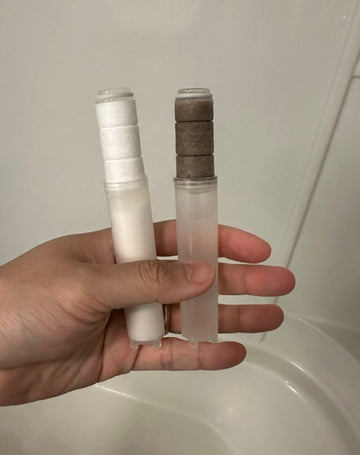
Unlike KDF filters — which degrade gradually and lose efficacy long before they "look" spent — Vitamin C filters maintain 99.9% removal until the ascorbic acid is fully consumed. At that point, you'll notice chlorine smell returning in the shower. That's your cue to swap in a fresh cartridge.
We recommend setting a calendar reminder at 90 days, or subscribing for automatic delivery so you never run out.
Can I use this with a handheld showerhead?
Yes — Second Shower offers a dedicated handheld model (Showerhand) with an integrated Vitamin C filter cartridge, 128 micro-jets, and a 6-foot stainless steel hose.
Same 99.9% chlorine removal, same NSF certification, same zero-pressure-loss design — but with the flexibility to rinse, target sore muscles, or wash kids and pets. It's particularly useful in Miami, where outdoor showers and pool rinse stations are common.
Is there any maintenance required beyond replacing the filter?
None. The filter cartridge is a sealed, disposable unit — no backwashing, no cleaning, no salt to refill. When it's time to replace (every 90 days), you unscrew the old cartridge, hand-tighten the new one, and you're done. Takes about 30 seconds.
If you live in an area with very high sediment (rare in Miami-Dade, more common in well water), you may want to wipe down the showerhead spray plate occasionally to prevent mineral scale. But the filter itself requires zero maintenance.
Final Recommendation
If you're in Miami-Dade, Broward, or Palm Beach County and you've noticed dry skin, brittle hair, or faster color fade since moving to Florida — chlorine is the most likely culprit, not hard water minerals.
The solution is straightforward: a Vitamin C shower filter that delivers 99.9% chlorine removal from day one through day ninety, with NSF certification to back it up. Second Shower is the only system on the market that meets all three criteria — and it installs in 60 seconds with no tools.
Stop guessing. Start filtering.