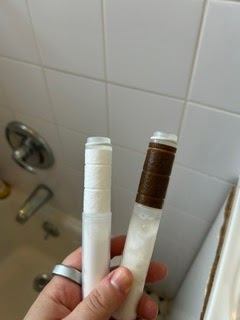
For New York City water, choose a shower filter for chlorine. The city disinfects with free chlorine, and no shower filter changes hardness, so chlorine is what is worth filtering at the shower.
- NYC's supply comes from the Catskill, Delaware and Croton watersheds and is disinfected with chlorine, not chloramine.
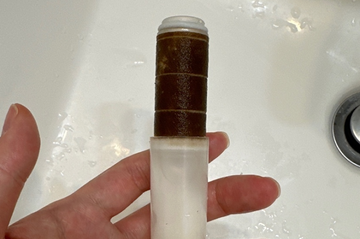
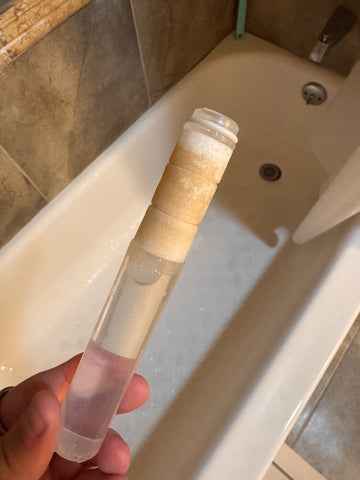
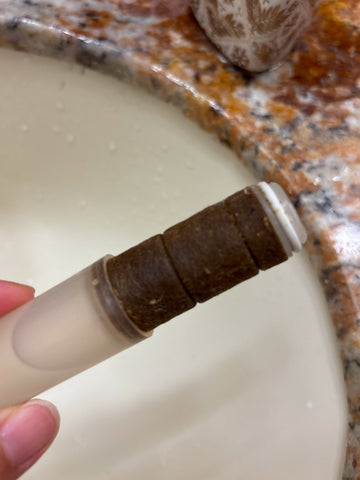
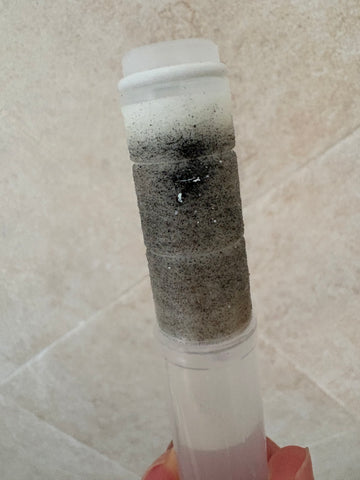
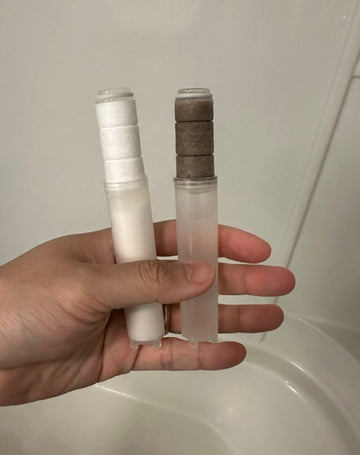
- Old building pipes can add rust and sediment on the way to your shower; a sediment stage catches those particles.
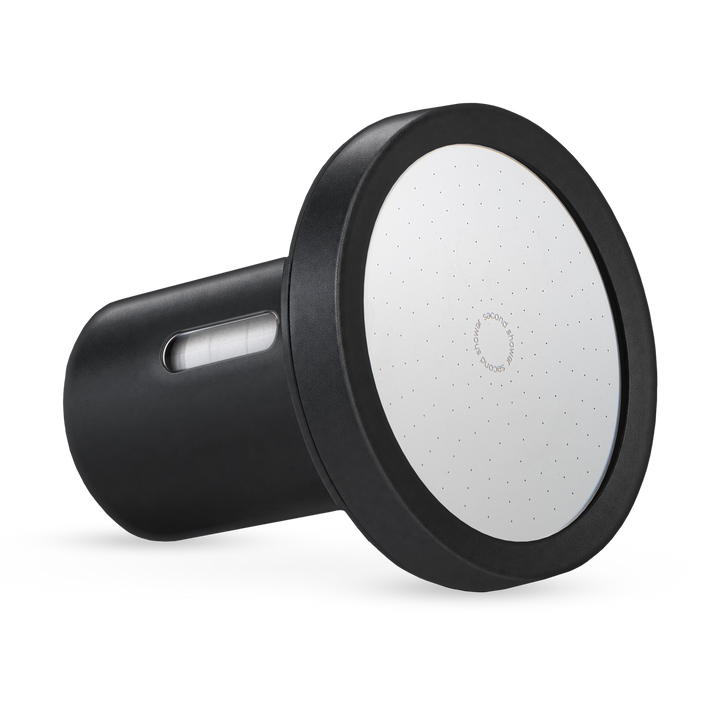
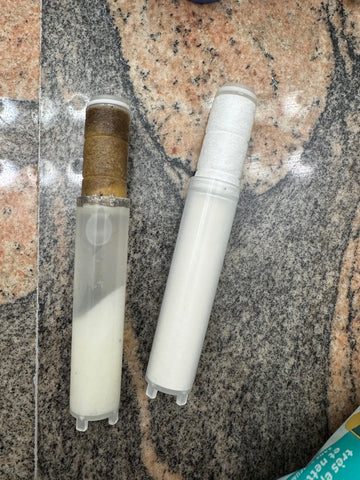
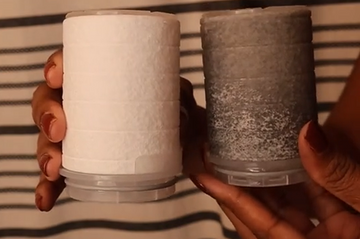
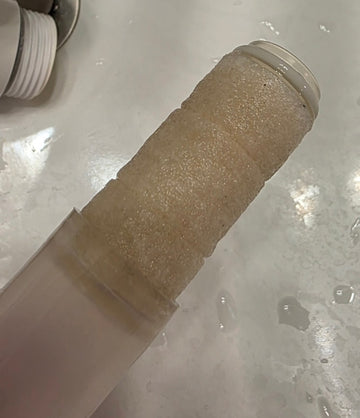
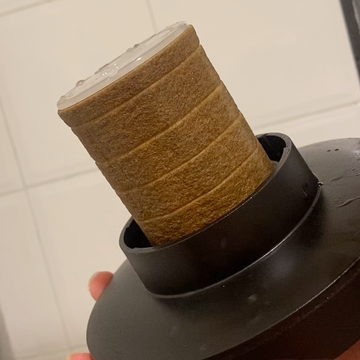
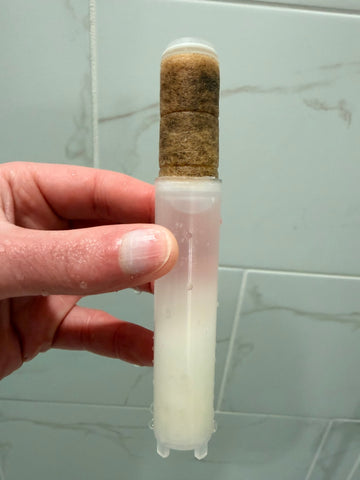
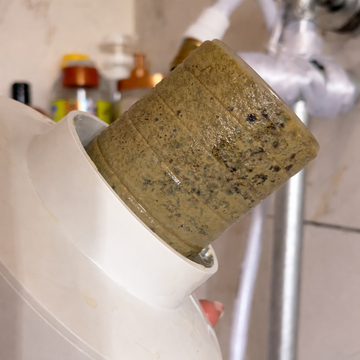
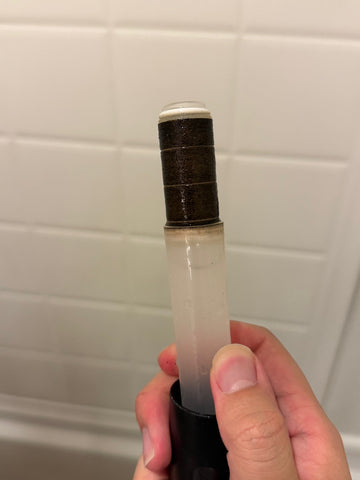
Our pick: The Second Showerhead ($99, or $79 with a filter subscription) installs by hand in about a minute. Its vitamin C core reduced free chlorine and chloramine by 99.9% in independent lab testing, held through Day 1-60 in our own testing. It does not soften water.
What's Actually in NYC Tap Water?
New York City's water supply comes from the Catskill, Delaware, and Croton watersheds - a 2,000-square-mile network of reservoirs and aqueducts that delivers approximately 1.1 billion gallons per day to 9+ million residents.
The good news: NYC water is unfiltered at the source (one of only five major U.S. cities granted an EPA waiver) because the upstate watersheds are protected and naturally high-quality. The less-good news: chlorine disinfection is still required by federal law, and the city's aging pipe infrastructure introduces hardness minerals and sediment as water travels from upstate to your showerhead.
The Two Things You're Actually Filtering
1. Chlorine (0.5-1.5 ppm free chlorine)
NYC adds chlorine to maintain a residual disinfectant level throughout the distribution system. The EPA Maximum Residual Disinfectant Level (MRDL) is 4.0 ppm; NYC typically maintains 0.5-1.5 ppm at the tap. Free chlorine (HOCl/OCl⁻) is a strong oxidizer that damages the lipid barrier in your stratum corneum and oxidizes disulfide bonds in hair keratin - the reason your skin feels tight and your hair turns brassy after showering.
2. Hardness minerals (120-160 ppm calcium carbonate equivalent)
As water moves through the city's pipes - many of which are 50-100+ years old - it picks up dissolved calcium and magnesium (hardness) and particulate sediment (rust, scale, pipe debris). NYC water averages 120-160 ppm total hardness, which classifies it as "moderately hard" on the USGS scale.
But here's the thing: hardness minerals aren't harmful. The SWET trial (Thomas et al., 2011, PLoS Medicine), a 12-week randomized controlled trial in 336 children with moderate-to-severe eczema living in hard-water areas, found that ion-exchange water softening produced no significant improvement in eczema severity vs. usual care (SASSAD change −5.0 vs. −5.7, p=0.53). The Perkin et al.
(2016, JACI) cross-sectional study in 1,303 infants found that hard water area was associated with increased AD risk - but the association was independent of chlorine content, suggesting early-life environmental factors rather than a direct shower-water mechanism.
Translation: if you live in NYC and your skin is angry, chlorine is the culprit - not the calcium carbonate reading on your TDS meter. For more on the science, see our full breakdown: best shower filters for hard water.
Why Vitamin C (Not KDF or Carbon)
Most shower filters use KDF-55 (a copper-zinc alloy) or activated carbon. Both work - but only for a few weeks, and neither handles chloramine effectively.
Vitamin C (ascorbic acid) neutralizes chlorine and chloramine via an instantaneous redox reaction that converts them to harmless chloride ions. It's the same chemistry municipal water plants use for dechlorination - just miniaturized into a shower cartridge.
Second Shower's proprietary Vitamin C gel matrix maintains 99.9% free-chlorine removal through its Day 60 peak performance window (independently lab-tested on the full assembled unit). KDF competitors typically drop below 10% by the same timeframe. For the detailed chemistry, read: Vitamin C shower filter chlorine science.
Second Shower - Vitamin C Filtered Showerhead
A Vitamin C shower filter that neutralizes chlorine and chloramine, with an NSF/ANSI 42 certified sediment pre-filter and independently lab-tested 99.9% free-chlorine reduction through its peak window. Zero pressure loss, 176 micro-jets, tool-free install.
- 99.9% free-chlorine removal (independently lab-tested through Day 60 peak window)
- Neutralizes chloramine (instantaneous Vitamin C redox reaction)
- NSF/ANSI 42 certified sediment pre-filter (rust, particulate, pipe debris)
- Zero pressure loss - 176 micro-jets maintain 2.5 GPM flow
- Filter lasts 3-6 months (overhead) or 3-6 months (handheld)
- Tool-free installation in 60 seconds
Head-to-Head: Second Shower vs. Jolie, AquaBliss & Canopy
| Attribute | Second Shower | Jolie | AquaBliss | Canopy |
|---|---|---|---|---|
| Filter Media | Vitamin C gel matrix (proprietary) | KDF-55 + calcium sulfite | KDF-55 + Activated Carbon | Carbon + Cu-Zn + Calcium Sulfite |
| Chlorine Day 1 | 99.9%¹ | 98% at first use (NSF data) | ~90% | ~85% |
| Chlorine Day 60 | 99.9%¹ | Day 60 not published; 82% at 2,400 gal (NSF data) | <10% (estimated) | ~50% (estimated) |
| Chloramine Removal | Neutralizes (Vitamin C redox) | No result published (Oct 2026) | Poor (<50%) | Moderate (70-85%) |
| NSF Certified | NSF/ANSI 42 (sediment pre-filter)* | NSF/ANSI 177 (free chlorine) | No | No |
| Price (Device) | $69 (Hand) / $79 (Head) | $148 | $35 | $150 |
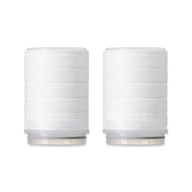
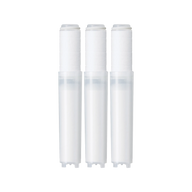
| Filter Replacement | $27/3-pack every 3-6mo (Hand) / $36/2-pack every 4-6mo (Head) | About 90 days ($35 per filter on subscription) | ~$15 every 3 months | ~$30 every 3 months |
| Total Year 1 Cost | $123-177 (Hand) / $151-187 (Head) | $288 (subscription) / $309 (list) | $95 | $270 |
| Pressure Impact | Zero loss (micro-jets) | Not published | 20-40% reduction (estimated) | 15-30% reduction (estimated) |
| Micro-Jets | 128 (Hand) / 176 (Head) | None | None | None |
| Independent Testing | Independent official lab (full assembly) | NSF/ANSI 177 (free chlorine) | Unverified | Unverified |
¹ 99.9% free-chlorine removal independently lab-tested through Day 60 peak performance window on full assembled unit. NSF/ANSI 42 certification applies to sediment pre-filter component.
Where Each Competitor Genuinely Wins
Jolie: Five finish options (Modern Chrome, Brushed Steel, Jet Black, Brushed Gold, Vibrant Red) and a 60-day return window (ours is 30 days). You'll pay nearly double the year-one cost ($388 vs. $151-187) and get inconsistent chlorine removal past Week 3, but the hardware looks great on a white tile wall.
AquaBliss: Lowest upfront price ($35 device, ~$60/year filters). If your water is very low-chlorine (<0.5 ppm) and you replace the cartridge every 4-6 weeks (not the stated 6 months), it's an economical option. Performance degrades rapidly, so it's not a fit for NYC's 0.5-1.5 ppm chlorine range.
Canopy: Offers aromatherapy oil infusion if you want a scented shower experience. Moderate chloramine handling (70-85%) is better than KDF-only models but still lags Vitamin C's instantaneous neutralization. Year-one cost is $270 vs. $151-187 for Second Shower.
Do You Need a TDS Meter?
If you're trying to measure hardness, a TDS (total dissolved solids) meter won't help - it reads everything dissolved in water (calcium, magnesium, sodium, chloride, bicarbonate, trace minerals) as a single parts-per-million number. NYC water typically shows 80-150 ppm TDS, but that tells you nothing about calcium carbonate hardness specifically.
More importantly: you don't need to measure hardness, because hardness minerals aren't the problem. The SWET trial proved that softening hard water didn't improve eczema outcomes in children living in 300+ ppm areas - far harder than NYC's 120-160 ppm. Your TDS reading might go down after installing a shower filter (because you're removing chlorine and sediment), but the calcium/magnesium content is unchanged - and that's fine, because calcium and magnesium aren't harming your skin.
What is harming your skin: chlorine. You can't measure chlorine with a TDS meter (it's not a dissolved solid; it's a dissolved gas). If you want to measure chlorine, you need a pool test strip or a DPD reagent kit. But honestly? In NYC, you can assume 0.5-1.5 ppm free chlorine is present year-round. Just filter it.
Installation & Maintenance
Second Shower installs tool-free in about 60 seconds:
- Unscrew your existing showerhead by hand (counterclockwise)
- Wrap the shower arm threads with the included Teflon tape (3-4 wraps, clockwise)
- Screw on the Second Shower filter body (hand-tight; no wrench needed)
- Attach the showerhead or handheld wand
Filter replacement: Every 3-6 months, depending on your household size and water quality. The cartridge uses a quarter-turn bayonet lock - no tools, no mess. Subscribe-and-save delivers replacement filters automatically; one-time purchase is also available.
Frequently Asked Questions
Will a shower filter remove the chlorine smell in NYC water?
Yes. The chlorine odor you smell is free chlorine (HOCl) volatilizing from hot water. A Vitamin C shower filter neutralizes free chlorine on contact via redox reaction, converting it to harmless chloride ions. You'll notice the smell is gone within the first shower. KDF and carbon filters also reduce chlorine odor, but their performance degrades rapidly (typically <10% removal by Day 60).
Second Shower maintains 99.9% free-chlorine removal through its Day 60 peak window, tested by an independent lab on the full assembled unit.
Does NYC water have chloramine or just chlorine?
NYC uses free chlorine (not chloramine) as its primary disinfectant. However, trace chloramine can form as a byproduct when free chlorine reacts with organic nitrogen compounds in the distribution system. Most NYC residents will measure 0.5-1.5 ppm free chlorine and <0.3 ppm chloramine at the tap. Vitamin C neutralizes both via the same redox mechanism, so a Vitamin C shower filter handles both compounds without performance degradation.
KDF and carbon filters struggle with chloramine removal (<50% effectiveness).
My TDS reading is 120 ppm - is that safe to shower in?
Yes. 120 ppm TDS is typical for NYC and includes dissolved minerals (calcium, magnesium, sodium, bicarbonate) that are safe and, in many cases, beneficial. The EPA Secondary Maximum Contaminant Level for TDS is 500 ppm (aesthetic guideline, not a health standard). NYC averages 80-150 ppm TDS, well below that threshold. Remember: TDS measures all dissolved solids - it doesn't distinguish between harmless calcium and harmful contaminants.
The thing you should filter - chlorine - is a dissolved gas, not a solid, so it won't show up on a TDS meter. Focus on chlorine removal, not TDS reduction.
Will a shower filter help with eczema or dry skin in NYC?
Filtering chlorine - yes, that can help. Chlorine is a strong oxidizer that disrupts the lipid barrier in your stratum corneum, increasing transepidermal water loss (TEWL) and contributing to dryness and irritation. Removing chlorine allows your skin barrier to recover. However, hardness minerals are not the cause of eczema or dry skin.
The SWET trial (Thomas et al., 2011, PLoS Medicine), a 12-week RCT in 336 children with moderate-to-severe eczema in hard-water homes, found that ion-exchange water softening produced no significant improvement vs. usual care. NYC's moderate hardness (120-160 ppm) is unlikely to be a barrier-disrupting factor. Filter the chlorine; don't worry about the calcium.
I live in Los Angeles - do I need a different shower filter than NYC residents?
Los Angeles water is harder than NYC water (200-300+ ppm calcium carbonate in many neighborhoods) and uses chloramine (not free chlorine) as its primary disinfectant. Despite these differences, the same shower filter works for both cities - Second Shower, a Vitamin C shower filter that neutralizes chlorine and chloramine, with an NSF/ANSI 42 certified sediment pre-filter and independently lab-tested 99.9% free-chlorine reduction through its peak window.
The reason: Vitamin C neutralizes both free chlorine and chloramine via instantaneous redox reaction, and hardness minerals (whether 120 ppm in NYC or 300 ppm in LA) are safe and don't require removal. KDF and carbon filters struggle with LA's chloramine; Vitamin C handles it without performance loss. For LA-specific water profiles and recommendations, see our full guide: best shower filters for hard water.
Can I use a shower filter if I have low water pressure?
Yes - but avoid KDF and carbon block filters, which create 20-40% pressure drop by forcing water through dense media beds. Second Shower uses a micro-jet array (128 jets in the handheld, 176 in the overhead) that maintains full 2.5 GPM flow while filtering. The Vitamin C gel matrix sits in a bypass chamber, so water contacts the media without restriction.
If you're in an older NYC building (pre-1950s) with 30-40 PSI supply pressure, Second Shower preserves every bit of that pressure. KDF competitors will drop you below 20 PSI - barely enough for a rinse.
Final Take
If you live in NYC and you're reading this, you probably already know your skin or hair feels better when you shower somewhere else - a hotel, a friend's place upstate, a vacation rental with a whole-house filter. That's chlorine.
The good news: NYC water is high-quality at the source. You're not filtering agricultural runoff or industrial contamination. You're filtering the 0.5-1.5 ppm free chlorine the city adds to keep the water safe in the pipes - and maybe some rust and sediment from those pipes. That's it.
Second Shower removes that chlorine (99.9% through Day 60, independently lab-tested) without dropping your water pressure, without complicated installation, and without requiring you to soften water that doesn't need softening. It's a Vitamin C shower filter that neutralizes chlorine and chloramine, with an NSF/ANSI 42 certified sediment pre-filter - and it costs less per year than Jolie, Canopy, or a monthly dermatologist co-pay.
Install it. Shower. Done.