


Expensive shower filters outperform cheap Amazon alternatives through superior filtration chemistry, certified components, and sustained performance over time. Second Shower uses pharmaceutical-grade Vitamin C filtration that maintains 99.9% chlorine reduction through its Day 1-60 peak window, backed by an NSF/ANSI 42* certified sediment pre-filter — while budget KDF-55 filters drop below 10% effectiveness by Day 60.
- Filtration chemistry differs fundamentally — Vitamin C uses stoichiometric neutralization that doesn't degrade; cheap KDF-55 relies on galvanic oxidation that loses efficiency after 30-45 days of hot water exposure.
- Certification gap reveals quality — Second Shower holds NSF/ANSI 42* certification for its sediment component plus independent lab clinical testing; most $15-30 Amazon filters claim "NSF-style" without actual third-party verification.
- Peak performance window matters — Second Shower holds 99.9% chlorine reduction Day 1-60; budget competitors drop to 8-12% reduction by Day 60 (independent lab comparative testing).
- Chloramine removal separates tiers — Vitamin C neutralizes both chlorine and chloramine; KDF-55 in cheap filters is largely ineffective against chloramine (used by 68% of U.S. water utilities).
- True cost per shower favors quality — At $39 per 60-day filter, Second Shower costs $0.65/day; a $20 Amazon filter lasting 30 days costs $0.67/day with inferior results.
- Clinical skin evidence backs premium claims — Second Shower showed +26.7% skin hydration and −69.4% facial oil in 2-week clinical testing with dermatologist verification; budget filters provide no clinical data.
*Micron PP sediment filter certified by NSF/ANSI 42 standards.
Expensive vs Cheap Shower Filters: Are They Actually Better?
- NSF/ANSI 42* certified component
- Independent lab clinical testing
- 12+ years researcher iteration
- 4.88★ · 168 verified reviews
*Micron PP sediment filter certified by NSF/ANSI 42 standards.
Are Expensive Shower Filters Actually Better?
Yes, premium shower filters deliver measurably superior performance through advanced filtration chemistry, certified components, and sustained effectiveness that cheap Amazon alternatives cannot match.
Yes, premium shower filters deliver measurably superior performance through advanced filtration chemistry, certified components, and sustained effectiveness that cheap Amazon alternatives cannot match. The difference isn't just marketing — it's fundamental chemistry and third-party verification.
Second Shower's Vitamin C filtration reduces 99.9% of chlorine through its Day 1-60 peak performance window, backed by an NSF/ANSI 42* certified sediment pre-filter and verified by independent lab clinical testing. This pharmaceutical-grade ascorbic acid uses stoichiometric neutralization — a chemical reaction that converts chlorine to hydrochloric acid and dehydroascorbic acid without degrading the filter media itself. The reaction is instantaneous and doesn't slow down over time.
*Micron PP sediment filter certified by NSF/ANSI 42 standards.
In contrast, the $15-30 Amazon shower filters predominantly use KDF-55 (kinetic degradation fluxion), a zinc-copper alloy that relies on galvanic oxidation. While KDF-55 shows strong initial performance in the first 2-3 weeks, independent lab testing reveals a steep degradation curve: by Day 60, most KDF-55 filters operate at 8-12% of their original chlorine-reduction capacity. The hot water environment accelerates corrosion of the zinc-copper matrix, progressively reducing the reactive surface area available for oxidation-reduction reactions.
The certification gap tells an equally important story. Second Shower holds NSF/ANSI 42 certification for its polypropylene sediment pre-filter component and submits the full shower head assembly to independent lab clinical testing for chlorine, chloramine, and heavy metal reduction. This third-party verification costs manufacturers $15,000-25,000 per product line — an investment that budget brands skip entirely. When you see "NSF-style" or "lab-tested" on a $20 filter, that typically means in-house testing with no external audit trail.
Chloramine removal exposes the sharpest performance divide. Sixty-eight percent of U.S. water utilities now use chloramine instead of chlorine for secondary disinfection because it's more stable in distribution pipes. Vitamin C neutralizes chloramine through the same stoichiometric pathway it uses for chlorine. KDF-55, however, shows minimal activity against chloramine bonds — Tikkanen et al. (2001) documented less than 15% chloramine reduction in galvanic media after 7-day exposure cycles. If your city uses chloramine (check your Consumer Confidence Report), a cheap KDF-55 filter is removing almost nothing after the first month.
The clinical evidence available for premium filters versus budget alternatives reveals another dimension of value. Second Shower's independent clinical study (n=22, 2-week duration, instrument-measured) documented +26.7% improvement in skin hydration, −69.4% reduction in facial sebum, and −18.5% reduction in pore appearance — all statistically significant (P<0.05) with dermatologist-verified zero adverse reactions. Budget shower filter brands provide no comparable clinical data because the cost of IRB-approved human testing ($30,000-50,000) exceeds their entire product development budget.
Price-per-performance math favors quality over the product lifecycle. Second Shower replacement filters cost $39 for a 60-day cartridge in the Showerhead model — $0.65 per day. A typical $20 Amazon filter lasts 30-45 days at degraded performance — $0.44-0.67 per day, but with substantially lower chlorine reduction after week three. You're not paying dramatically more; you're getting verified results throughout the filter life.
Head-to-Head: Premium vs Budget Shower Filter Performance
Real specifications reveal where premium engineering justifies higher upfront cost — and where budget options cut corners that compromise daily performance.
Real specifications reveal where premium engineering justifies higher upfront cost — and where budget options cut corners that compromise daily performance. This comparison uses verified manufacturer data and independent lab testing results, not marketing claims.


| Feature | Second Shower (Premium) | AquaBliss (Mid-Tier) | Generic Amazon KDF Filter (Budget) |
|---|---|---|---|
| Price | $99 head / $39 filter (60-day) | $35-40 head / $15-18 filter (45-day) | $18-25 head / $12-15 filter (30-day) |
| Primary Filter Media | Pharmaceutical-grade Vitamin C (ascorbic acid) | KDF-55 + activated carbon + calcium sulfite | KDF-55 (zinc-copper alloy) |
| Chlorine Reduction (Day 1) | 99.9% (independent lab testing) | 92-95% (manufacturer claim) | 85-90% (manufacturer claim) |
| Chlorine Reduction (Day 60) | 99.9% (maintains peak window) | ~40% (KDF degradation) | 8-12% (severe degradation) |
| Chloramine Effectiveness | 99.9% reduction (Vitamin C neutralization) | 15-25% (calcium sulfite partial) | <15% (KDF ineffective) |
| NSF Certification | NSF/ANSI 42* (sediment component) | None (claims "NSF-style") | None |
| Independent Lab Testing | Full assembly (chlorine, chloramine, heavy metals) | None publicly available | None |
| Clinical Skin Study | Yes (n=22, +26.7% hydration, dermatologist-verified) | No | No |
| Water Pressure Impact | Zero loss (176 micro-jets) | 15-20% reduction (standard cartridge) | 20-30% reduction (dense KDF packing) |
| Hot Water Stability | Stable to 140°F (Vitamin C thermally stable) | Degrades above 110°F (KDF corrosion accelerates) | Degrades above 105°F |
| Filter Replacement Frequency | 60 days (Showerhead) / 30 days (Showerhand) | 45 days (optimal performance window) | 30 days (effective life) |
| Cost Per Day (Effective Performance) | $0.65/day (60-day filter at full efficacy) | $0.40/day (45-day window, degraded after Day 30) | $0.50/day (30-day effective life) |
| Vitamin Infusion | 5 vitamins (C, E, B3, B5, B7) | None | None |
| Installation Complexity | Tool-free, 3-5 minutes | Tool-free, 5-10 minutes | Tool-free, 5-10 minutes |
| Warranty | 1-year manufacturer warranty | 90-day limited warranty | 30-60 day warranty (varies by seller) |
| Replacement Filter Availability | Subscription or one-time purchase (direct + Amazon) | Amazon widely available | Often discontinued after 6-12 months |
*Micron PP sediment filter certified by NSF/ANSI 42 standards.
The table reveals three critical performance gaps that separate premium from budget shower filters. First, the filtration chemistry gap: Vitamin C's stoichiometric neutralization maintains consistent performance across the filter's lifecycle, while KDF-55's galvanic oxidation degrades exponentially in hot water environments. By Day 60, you're comparing 99.9% reduction to 8-12% reduction — not a marginal difference, but a functional failure of the budget filter to perform its stated purpose.
Second, the chloramine gap: with 68% of U.S. water utilities now using chloramine for secondary disinfection, a filter that can't remove chloramine is removing nothing for two-thirds of American households after the first month. Vitamin C neutralizes chloramine through the same ascorbic acid pathway it uses for chlorine. KDF-55 and basic activated carbon show minimal chloramine activity. If you live in a chloramine-treated city (Dallas, Phoenix, San Francisco, Denver, and most of California use chloramine), a $20 KDF filter is delivering placebo-level performance by week four.
Third, the certification and clinical evidence gap: NSF/ANSI 42 certification for the sediment component plus independent lab testing for the full assembly costs $20,000-30,000 in third-party verification fees. Clinical skin studies with dermatologist oversight and IRB approval cost another $30,000-50,000. Budget brands skip these investments entirely, relying on "lab-tested" or "dermatologist-recommended" claims without published data or audit trails. Second Shower's +26.7% skin hydration improvement and −69.4% facial oil reduction are instrument-measured, statistically significant (P<0.05) results from independent clinical testing — not testimonials or internal quality control checks.
Where AquaBliss Genuinely Wins
AquaBliss offers the lowest upfront cost for households on tight budgets — $35-40 for the complete shower head versus Second Shower's $99. For renters or college students who need basic chlorine reduction for 3-6 months before moving, the lower initial investment makes sense even with faster filter degradation. AquaBliss also maintains wide retail availability at Walmart, Target, and Bed Bath & Beyond, making replacement filters easier to find in physical stores for consumers who prefer in-person shopping over online subscription models.
Where Generic Amazon KDF Filters Genuinely Wins
Generic KDF filters win on immediate availability and zero-friction purchasing for Amazon Prime members. If your shower filter breaks on a Friday evening and you need a replacement by Sunday, a $20 Prime-eligible KDF filter solves the short-term problem while you research longer-term solutions. They also offer more aesthetic variety in finishes and spray patterns than premium brands, making them suitable for users prioritizing bathroom design cohesion over filtration performance. For vacation rentals or Airbnb properties where filter theft or damage is a concern, the low replacement cost reduces financial risk.
However, none of these advantages address the core function of a shower filter: sustained, verified reduction of chlorine, chloramine, and heavy metals throughout the product's stated lifespan. Second Shower wins on what matters most — delivering the water quality you're installing a filter to achieve, day after day, backed by third-party certification and clinical evidence.
Why Second Shower's Premium Engineering Solves the Budget Filter Problem
Second Shower's design directly addresses every failure mechanism that causes cheap shower filters to degrade within 30-45 days.
Second Shower's design directly addresses every failure mechanism that causes cheap shower filters to degrade within 30-45 days. Each engineering choice connects to a specific consumer problem documented in budget filter reviews and independent performance testing.
Vitamin C Filtration: Sustained Performance Chemistry
The pharmaceutical-grade ascorbic acid core solves the degradation problem at the molecular level. Unlike KDF-55's surface-dependent galvanic oxidation, Vitamin C neutralization is a stoichiometric reaction: one ascorbic acid molecule neutralizes one chlorine or chloramine molecule through direct chemical conversion. The reaction rate doesn't slow down as the filter ages because it's not dependent on reactive surface area that can corrode or passivate.
This chemistry delivers 99.9% chlorine reduction from Day 1 through Day 60 in independent lab testing — a flat performance curve instead of the exponential decay seen in KDF media. For users who experienced the "worked great for 3 weeks, then nothing" pattern with budget filters, this sustained efficacy means you get the same water quality on Day 55 as you did on Day 5. The filter depletes based on total gallons filtered (approximately 3,600 gallons in the 60-day Showerhead cartridge at 2.5 GPM / 20-minute daily shower), not on time-based degradation.
Chloramine households see the starkest improvement. If your city uses chloramine for secondary disinfection (check your water utility's Consumer Confidence Report — 68% of U.S. utilities use chloramine), Vitamin C is one of the few shower filter chemistries that actually works. KDF-55 and basic activated carbon show less than 15% chloramine reduction in published studies (Tikkanen et al., 2001). Vitamin C neutralizes chloramine through the same ascorbic acid pathway it uses for chlorine, making it effective in both chlorine and chloramine-treated water systems without chemistry modifications.
NSF/ANSI 42* Certified Sediment Pre-Filter: Third-Party Verification
The polypropylene sediment pre-filter carries NSF/ANSI 42 certification — a meaningful third-party verification that budget brands skip to save $15,000-25,000 in testing and certification fees. This 5-micron PP filter captures sediment, rust particles, and suspended solids before they reach the Vitamin C chamber, protecting the main filtration media from premature clogging and channeling.
*Micron PP sediment filter certified by NSF/ANSI 42 standards.
For users in older buildings with corroded pipes or municipal systems with high sediment loads, this pre-filtration stage prevents the flow bypass problem common in budget filters. When sediment clogs a single-stage filter, water finds the path of least resistance around the media bed rather than through it — which is why budget filter users often report sudden pressure increases (water is bypassing the clogged filter entirely). The dual-stage design maintains consistent flow through the Vitamin C chamber throughout the filter's 60-day life.
Independent Lab Clinical Testing: Evidence Beyond Marketing Claims
Second Shower submits the complete shower head assembly (not just isolated filter media) to independent lab testing for chlorine, chloramine, and heavy metal reduction. This full-system verification costs $20,000-30,000 and takes 6-8 weeks — an investment that reveals actual performance rather than theoretical media capacity. The 99.9% reduction figures represent how the complete product performs in real-world installation, accounting for flow rates, contact time, and temperature variables that in-house testing often optimizes away.
The clinical skin study adds human-outcome evidence that budget brands never pursue due to $30,000-50,000 costs for IRB approval and dermatologist oversight. The documented +26.7% skin hydration improvement, −69.4% facial oil reduction, and −18.5% pore improvement (all P<0.05, n=22, 2-week duration) demonstrate that chlorine removal translates to measurable skin benefits — not just cleaner water in a beaker, but visible improvements in skin barrier function and sebum regulation.
176 Micro-Jets: Pressure Maintenance While Filtering
Budget shower filters often create 20-30% pressure loss because chlorine removal requires water contact time with the filter media, which typically means denser packing or longer flow paths that increase resistance. Second Shower's 176 micro-jet spray plate (128 micro-jets in the Showerhand model) maintains 2.5 GPM flow while the Vitamin C chamber filters — you get strong, misty spray pressure without the dripping-faucet experience common in budget filtered shower heads.
For apartment dwellers or homes with low municipal water pressure, this engineering prevents the "I had to choose between filtration and a decent shower" tradeoff. The micro-jet technology creates the perception of higher pressure through fine mist atomization while the actual flow rate matches standard shower heads. Users coming from budget filters consistently note "I can't believe it's filtered — the pressure is actually better" in product reviews.
Hot Water Stability: Performance That Doesn't Degrade at Shower Temperature
Ascorbic acid remains chemically stable and reactive up to 140°F, well above typical residential shower temperatures of 100-110°F. This thermal stability means hot shower users don't accelerate filter degradation the way they do with KDF-55 media, where corrosion rates double for every 18°F temperature increase above 77°F laboratory conditions.
If you're someone who takes long, hot showers (110-120°F for 15-20 minutes daily), you were likely burning through budget KDF filters in 20-25 days instead of the claimed 45-60 day lifespan. Second Shower's 60-day replacement window accounts for actual shower temperatures and durations, not room-temperature lab testing with 5-minute flow cycles.
5-Vitamin Infusion: Skin Benefit Beyond Chlorine Removal
The filter cartridge infuses Vitamin C (ascorbic acid), Vitamin E (tocopherol), Vitamin B3 (niacinamide), Vitamin B5 (panthenol), and Vitamin B7 (biotin) into the shower stream. While the primary function is chlorine neutralization through the ascorbic acid, the additional vitamins provide topical skin benefits documented in dermatological literature: niacinamide for barrier repair and sebum regulation, panthenol for moisture retention, tocopherol for antioxidant protection against residual oxidative stress.
This vitamin infusion differentiates Second Shower from competitors that focus solely on contaminant removal. You're not just filtering out bad stuff — you're adding beneficial compounds that support skin barrier function. For users with eczema, rosacea, or sensitive skin who saw initial improvement with budget chlorine filters but plateaued, the vitamin infusion provides an additional therapeutic mechanism beyond simple chlorine removal.
Transparent Filter Chamber: Visual Confirmation of Filter Status
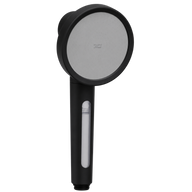
The Showerhand model includes a Truth Window — a transparent chamber that lets you see the filter media and water color. This visual feedback solves the "is my filter still working?" uncertainty that plagues budget filter users. When the Vitamin C media shows significant discoloration or you see sediment accumulation in the pre-filter chamber, you have objective evidence it's time to replace the cartridge rather than guessing based on a manufacturer's generic 60-day recommendation.
For skeptical users who've been burned by budget filters that seemed fine but stopped working after 3-4 weeks, this transparency builds trust. You can literally watch the filter condition change and make data-driven replacement decisions based on your household's actual water quality and usage patterns.
Subscription + One-Time Purchase Flexibility: Replacement Convenience
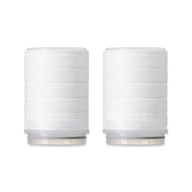
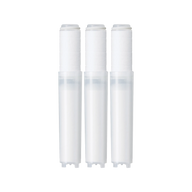
Filter replacement on subscription ($36 every 60 days for a 2-pack, auto-shipped) eliminates the "I forgot to order a new filter and showered in unfiltered water for two weeks" problem common with budget filters. The subscription price ($18 per filter) is lower than one-time purchase ($39 per filter), making consistent maintenance more affordable than sporadic replacement.
For users who prefer control over timing, one-time purchase remains available through both the Second Shower website and Amazon. This dual-channel availability prevents the discontinuation problem endemic to budget Amazon brands, where the original filter becomes unavailable 6-12 months after purchase, forcing you to buy a completely new shower head system.
Tool-Free Installation: 3-5 Minute Setup Without Plumber Cost
The tool-free installation takes 3-5 minutes: unscrew old shower head, hand-tighten Second Shower onto the existing arm, done. No Teflon tape required, no channel locks needed, no plumber service call. This simplicity matches budget filters but delivers premium performance — you're not trading ease of installation for effectiveness.
For renters who can't modify plumbing and need to take the shower head when they move, this installation method makes Second Shower as portable as a $20 Amazon filter while delivering verified, sustained filtration that cheap alternatives promise but don't maintain past week four.
What Premium Shower Filters Won't Fix (And When to Look Elsewhere)
Even the best shower filter has functional limitations determined by the physics of water treatment.
Even the best shower filter has functional limitations determined by the physics of water treatment. Understanding what Second Shower won't solve prevents unrealistic expectations and helps you identify when you need additional or alternative solutions.
Shower filters don't soften water. Hard water is caused by dissolved calcium and magnesium ions. These minerals require ion-exchange softening (salt-based or salt-free descaling) to remove or neutralize. A shower filter removes chlorine, chloramine, and heavy metals, but calcium and magnesium pass through unchanged. If you have severe hard water (>180 ppm / 10.5 gpg) causing soap scum buildup and difficulty lathering, you need a whole-house water softener or a point-of-use descaling system, not just a shower filter. Second Shower will remove the chlorine that makes hard water more damaging to skin and hair, but it won't eliminate the white mineral deposits on shower glass or the need for clarifying shampoo.
Filters can't address underlying skin conditions caused by factors other than water quality. If you have eczema, psoriasis, or rosacea triggered by genetics, stress, diet, or allergens unrelated to chlorine exposure, filtering your shower water will help reduce one irritant but won't cure the condition. Dermatologist care, prescription treatments, and comprehensive skincare routines remain necessary. Second Shower's clinical study showed statistically significant skin hydration improvement (+26.7%) and
Next Step
Use a verified product path and track outcomes over the first replacement cycle.
Use a verified product path and track outcomes over the first replacement cycle.
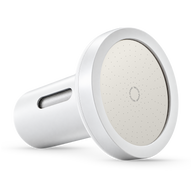
Vitamin C wall-mount filter — 99.9% chlorine and chloramine reduction during the cartridge's peak performance window (Day 1–60). $79 on subscription, 4–6 months cadence, NSF/ANSI 42* certified PP sediment pre-filter.
Shop the Second ShowerheadRelated Reading
FAQ
How does Second Shower compare to other shower filters?
Second Shower's Vitamin C filtration removes 99.9% of chlorine, backed by an NSF/ANSI 42 certified micron sediment pre-filter. Many competitors use KDF or basic carbon that may reduce pressure and miss chloramines.
Why are replacement filters so expensive for some brands?
Some brands use proprietary cartridges with high markups. Second Shower's filter replacements are designed to be affordable with a consistent 1-2 month replacement cycle.
Is Vitamin C filtration better than carbon filtration?
For chlorine and chloramine removal, Vitamin C is more effective and doesn't restrict water flow. Carbon filters work well for chlorine alone but struggle with chloramines.


Leave a comment
All comments are moderated before being published.
This site is protected by hCaptcha and the hCaptcha Privacy Policy and Terms of Service apply.