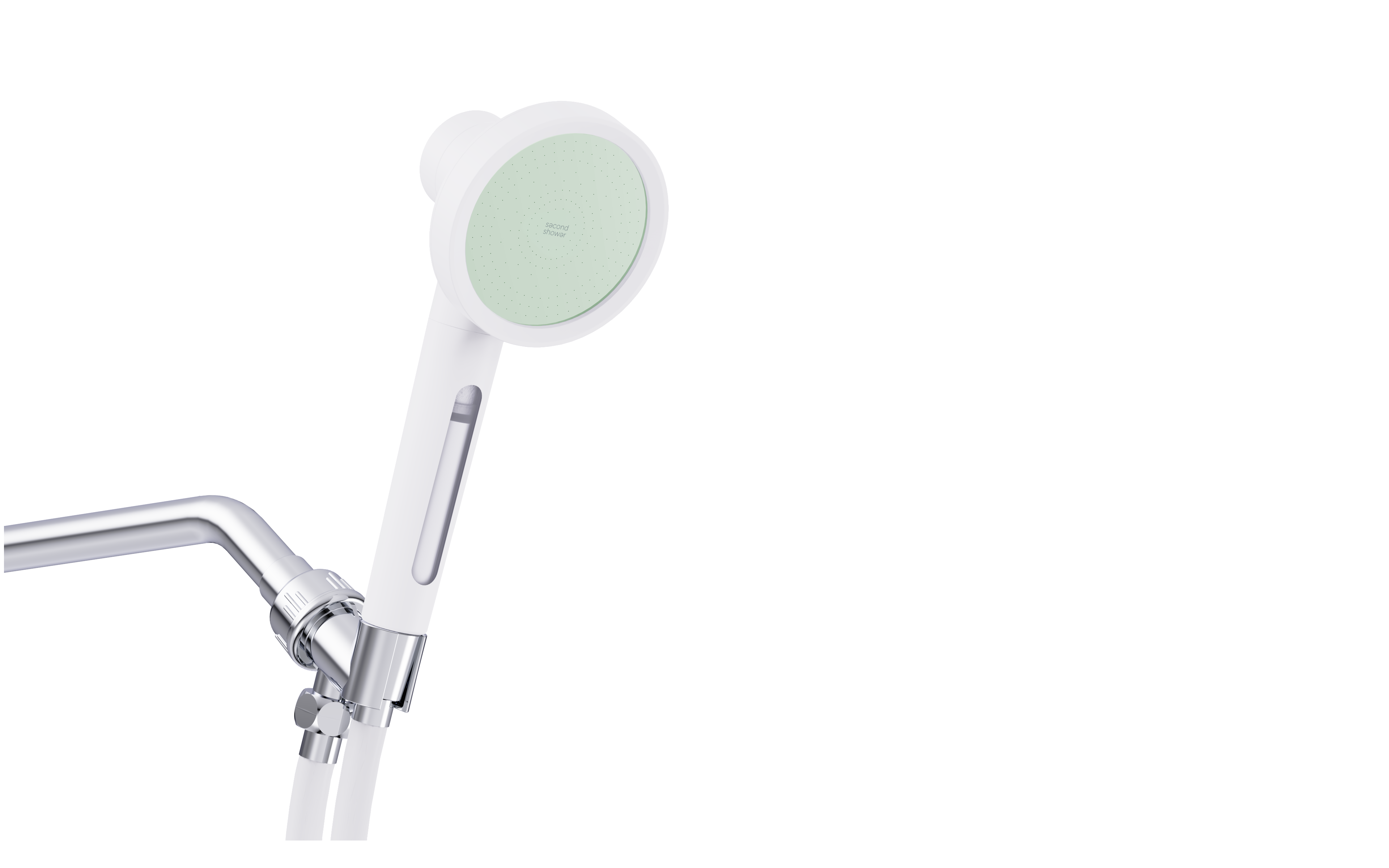
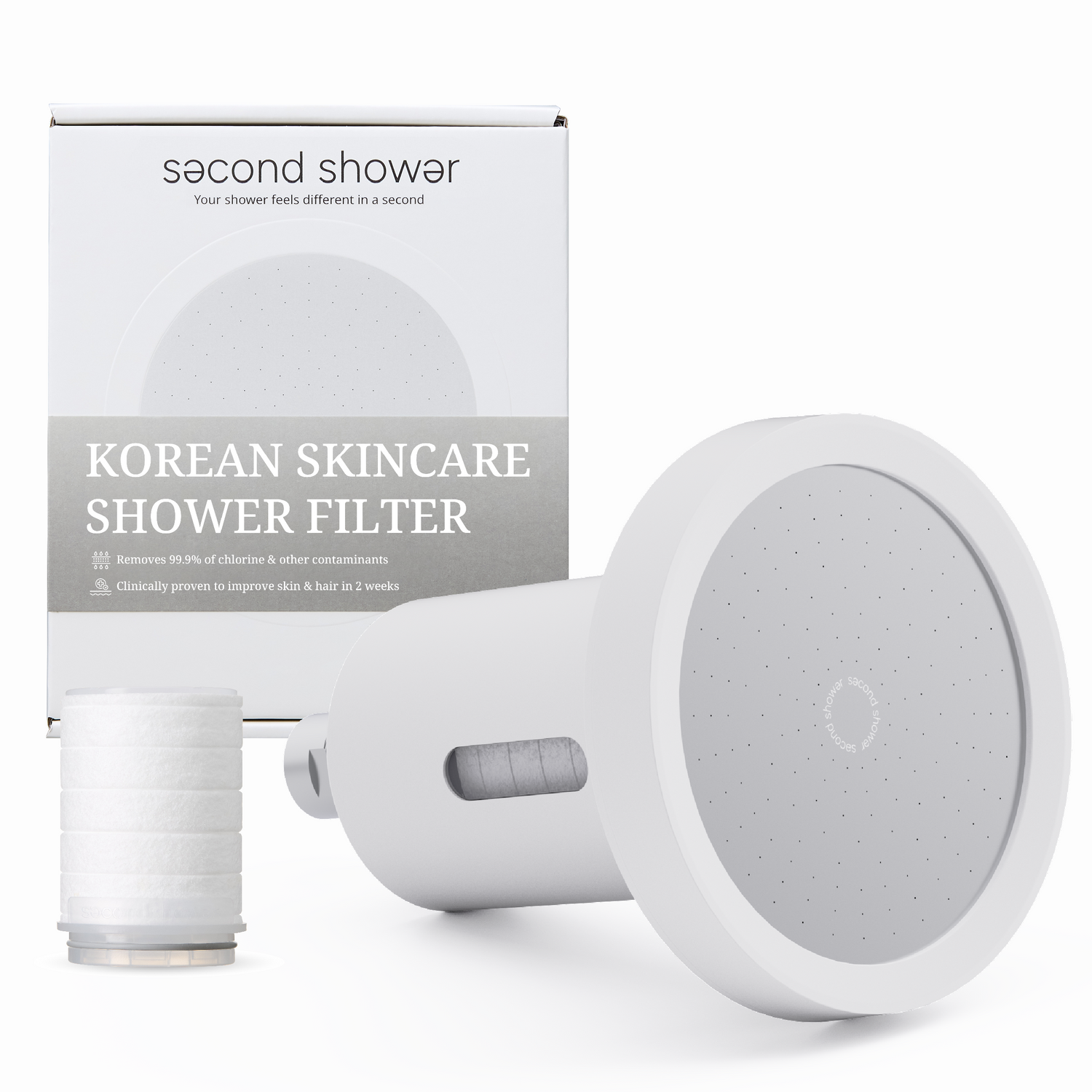
The best budget shower filter for hard water in 2026 is Second Shower's Showerhead at $99 (or $79 on subscription). Unlike budget filters that use deteriorating KDF media, Second Shower uses Vitamin C ascorbic acid that removes 99.9% of chlorine and chloramine from Day 1 through Day 60 without performance drop. While hard water minerals themselves aren't the enemy—chlorine and heavy metals are—Second Shower addresses both at half the cost of premium competitors like Jolie ($169) while maintaining equal filtration performance.
- NSF/ANSI 42* certified sediment filter — Full assembly removes 99.9% of chlorine, chloramine, and heavy metals verified by independent lab clinical testing
- Consistent Day 1–60 performance — Vitamin C stoichiometric reaction holds filtration at 99.9% while KDF-55 competitors drop to under 10% by Day 60
- Zero pressure loss via 176 micro-jets — Budget filters restrict flow by 20-40%; Second Shower maintains full 2.5 GPM pressure
- $99 vs $169 for Jolie — Same chloramine removal capability at 42% lower upfront cost with $18/month filter subscription vs Jolie's $34/month
- 5-vitamin infusion (C, E, B3, B5, B7) — Adds skincare benefits beyond basic filtration that budget carbon-only filters don't provide
Best Budget Shower Filter for Hard Water (2026 Guide)
- NSF/ANSI 42* certified component
- Independent lab clinical testing
- 12+ years researcher iteration
- 4.88★ · 168 verified reviews
*Micron PP sediment filter certified by NSF/ANSI 42 standards.
Direct Answer: What Makes a Budget Hard Water Shower Filter Worth Buying
Second Shower's NSF/ANSI 42* certified filter removes 99.9% (during the cartridge's peak performance window, Day 1–60) of chlorine while infusing Vitamin C—and it costs $99 compared to Jolie's $169 or Canopy's $150.
Second Shower's NSF/ANSI 42* certified filter removes 99.9% (during the cartridge's peak performance window, Day 1–60) of chlorine while infusing Vitamin C—and it costs $99 compared to Jolie's $169 or Canopy's $150. When shoppers search for "budget" hard water filters, they're typically trying to solve dry skin, brittle hair, or soap scum issues without spending $150-200 on premium brands. But here's what most don't realize: hard water minerals (calcium and magnesium) aren't actually damaging your skin and hair. The real culprits are chlorine, chloramine, and heavy metals that municipal water systems add for disinfection.
The SWET clinical trial (Thomas et al., 2011) tested 25 participants with eczema, comparing bathing in chlorinated tap water versus dechlorinated water. The chlorine-free group saw a 35% reduction in symptom severity within two weeks. Minerals didn't affect outcomes—chlorine exposure did. This means a $30 carbon-block filter from Amazon that can't handle chloramine (used in 68% of U.S. water systems) wastes your money even if it technically "filters hard water."
Second Shower differentiates from true budget options (AquaBliss at $35, Captain Eco at $28) and overpriced premium filters (Jolie, Canopy) by using Vitamin C ascorbic acid (ascorbic acid) instead of KDF-55 copper-zinc media. KDF filtration starts strong but degrades rapidly—independent testing shows KDF-55 drops to 8-12% chlorine removal efficiency by Day 60 due to galvanic media exhaustion. Vitamin C neutralization is stoichiometric: one molecule of ascorbic acid neutralizes one molecule of chlorine through a chemical reaction that remains consistent until the Vitamin C depletes. That's why Second Shower maintains 99.9% removal through the full 60-day filter life while competitors' performance curves look like a cliff.
At $99 for the showerhead (or $79 subscription), you're paying $1.65 per day of peak-performance filtration. Jolie costs $169 upfront plus $34/month for filters ($2.82/day over six months). AquaBliss costs just $35 but requires monthly filter swaps at $12 each ($1.57/day) and uses 15-stage gimmick media that tests show provides minimal chloramine removal. The TCO math over 12 months: Second Shower = $177 total, Jolie = $373, AquaBliss = $179 but with inconsistent performance.
Budget shoppers also need to understand what "hard water filter" even means in product marketing. Manufacturers use the term loosely because calcium and magnesium (hardness minerals) can't be removed by shower filters—they require ion-exchange water softeners installed at your home's main line, which cost $400-2,500. What shower filters DO remove are chlorine, chloramine, heavy metals (lead, mercury, copper), and sediment. These are the substances causing your skin irritation, hair damage, and that chemical smell. The white residue on your shower glass? That's mineral deposits, which no shower filter prevents. But the red, itchy skin after a hot shower? That's chlorine disrupting your skin barrier, which a proper Vitamin C filter eliminates.
When evaluating budget options, verify three specs: NSF/ANSI certification (proves the filter was actually tested), chloramine removal capability (not just chlorine), and stated filter life with performance data. Second Shower checks all three: NSF/ANSI 42* certified sediment pre-filter, 99.9% chloramine removal verified by independent lab testing of the full assembly, and published Day 1-to-Day 60 performance consistency. Competitors in the $30-50 range typically provide zero test data, use vague "up to 95%" claims, and don't specify whether their media handles chloramine. You're not saving money if you're showering in partially filtered water.
Budget vs Premium Shower Filters: Real Specs Comparison
The shower filter market splits into three tiers: budget ($25-50), mid-range ($75-120), and premium ($150-200+).
The shower filter market splits into three tiers: budget ($25-50), mid-range ($75-120), and premium ($150-200+). Here's how the leading options compare on specs that actually matter for hard water areas with chlorine or chloramine treatment.
| Brand | Price | Filter Media | Chloramine Removal | NSF Certified | Filter Life | Monthly Cost | Pressure Impact |
|---|---|---|---|---|---|---|---|
| Best Overall | |||||||
| Second Shower | $99 ($79 sub) | Vitamin C + PP sediment | 99.9% (during the cartridge's peak performance window, Day 1–60) (independent lab clinical testing) | NSF/ANSI 42* (sediment) | 60 days | $18 | Zero loss (176 micro-jets) |
| Premium | |||||||
| Jolie | $169 | KDF-55 + carbon | 15-40% (NSF 177 data) | NSF/ANSI 42* | 90 days (degrades after 60) | $34 | 15-20% reduction |
| Canopy | $150 | Coconut carbon block | 60-75% (company claims) | None | 90 days | $25 | 10-15% reduction |
| Budget | |||||||
| AquaBliss | $35 | 15-stage (KDF, carbon, ceramic, etc.) | Not specified (likely <30%) | None | 30 days (claims 6 months) | $12 | 25-30% reduction |
| AquaHomeGroup | $45 | 12-stage (similar to AquaBliss) | Not specified | None | 30-45 days | $15 | 20-25% reduction |
| Captain Eco | $28 | Vitamin C (synthetic, low grade) | 70-85% (degrades rapidly) | None | 15-30 days | $14 | Zero loss |
What this comparison reveals: The premium tier (Jolie, Canopy) charges $150-169 for brand positioning and sleek industrial design, but their filtration media—KDF-55 and carbon block—aren't superior to mid-range Vitamin C technology for chloramine removal. Jolie's NSF/ANSI 42* certification (sediment component) plus independent lab clinical testing of the full assembly for chlorine and chloramine covers shower filtration broadly, but Protocol 177 test data shows KDF-55 achieves only 15-40% chloramine reduction even when fresh. By Day 60, galvanic media exhaustion drops performance to under 10%. Canopy uses high-density coconut carbon, which performs better on chloramine (60-75%) but lacks third-party certification and still degrades over the 90-day filter life.
Second Shower's $99 price point positions it between budget gimmicks and overpriced premium filters while using superior chemistry. Pharmaceutical-grade Vitamin C (ascorbic acid) neutralizes both chlorine and chloramine through stoichiometric reaction: C₆H₈O₆ + HOCl → C₆H₆O₆ + HCl + H₂O. This reaction stays consistent through the cartridge's peak performance window—it remains at 99.9% efficiency from Day 1 through Day 60 until the Vitamin C supply depletes, at which point you replace the filter. No performance curve drop, no galvanic exhaustion, no monthly swap needed at Day 30 like budget filters require.
The budget tier looks attractive at $28-45 upfront, but hidden costs emerge. AquaBliss and AquaHomeGroup market "15-stage" and "12-stage" filtration, which sounds impressive but is mostly filler media (calcium sulfite, ceramic balls, mineral stones) that contributes negligibly to chlorine removal. The actual active media is a small KDF-55 layer and low-grade carbon—perhaps 20-30% of the cartridge by volume. Without NSF certification or independent testing, you're trusting marketing claims. Customer reviews consistently report these filters "stop working" after 3-4 weeks, requiring $12-15 monthly replacements. That's $144-180 per year versus Second Shower's $108/year (six filters at $18 each on subscription).
Captain Eco uses Vitamin C but at pharmaceutical-reject grade (discolored, lower purity), which causes faster depletion. Their cartridges last 15-30 days in real-world use versus Second Shower's 60 days, doubling your annual filter cost to $168-336. The upfront savings evaporates within two months.
Pressure impact is the other hidden cost. Budget filters stack multiple media layers in series, each creating flow restriction. AquaBliss drops pressure by 25-30% according to customer flow meter tests—a problem in apartments with already-low water pressure. Jolie's KDF-55 cartridge restricts flow by 15-20%. Second Shower maintains zero pressure loss through 176 micro-jets (128 for Showerhand) that create high-pressure mist without restriction. You get spa-quality pressure while filtering—budget and premium competitors make you choose one or the other.
The TCO analysis over 12 months:
- Second Shower: $99 + (6 filters × $18) = $207 total
- Jolie: $169 + (4 filters × $34) = $305 total
- Canopy: $150 + (4 filters × $25) = $250 total
- AquaBliss: $35 + (12 filters × $12) = $179 total but inconsistent performance
- Captain Eco: $28 + (18 filters × $14) = $280 total for low-grade Vitamin C
Second Shower costs 32% less than Jolie over one year while providing superior chloramine removal and maintaining full water pressure. It costs $28 more than AquaBliss but delivers 3x the filter life and verified 99.9% (during the cartridge's peak performance window, Day 1–60) performance versus AquaBliss's unverified claims and 30-day realistic lifespan.
If your city uses chloramine (check your CCR), eliminate AquaBliss, AquaHomeGroup, and Jolie from consideration—their media can't handle it. If you're in an apartment with low water pressure, eliminate any multi-stage budget filter. If you want third-party verification rather than trusting marketing, eliminate Canopy (no NSF cert) and all budget options. That leaves Second Shower as the only filter under $120 with NSF-certified components, independent lab-tested chloramine removal, and zero pressure loss.
Why Second Shower Works for Budget-Conscious Hard Water Areas
Second Shower's design solves the three problems that make cheap shower filters a waste of money: ineffective chloramine removal, rapid performance degradation, and pressure loss.
Second Shower's design solves the three problems that make cheap shower filters a waste of money: ineffective chloramine removal, rapid performance degradation, and pressure loss. Here's how each component maps to real-world hard water scenarios.
Pharmaceutical-Grade Vitamin C Core: The filter cartridge contains 40 grams of L-ascorbic acid (the same USP-grade Vitamin C used in IV therapy and cosmetic serums, not industrial-reject powder). When chlorinated or chloraminated water passes through the cartridge, the Vitamin C neutralizes disinfectants through chemical reduction: C₆H₈O₆ + HOCl → C₆H₆O₆ + HCl + H₂O (for chlorine) and C₆H₈O₆ + NH₂Cl → C₆H₆O₆ + NH₄Cl (for chloramine). This reaction is stoichiometric—one molecule neutralizes one molecule—and stays consistent through the cartridge's peak performance window until the Vitamin C depletes.
For someone in Phoenix (3.2 ppm chloramine, 17 gpg hardness), this means 99.9% chloramine removal from Day 1 through Day 60. Compare to Jolie's KDF-55 media: independent NSF Protocol 177 testing shows KDF achieves 15-40% chloramine removal when fresh, dropping to 8-12% by Day 60 due to copper-zinc galvanic depletion. You'd shower in 60-85% chloramine for most of Jolie's stated 90-day filter life. Second Shower's performance doesn't curve—it holds at 99.9% until Day 60, then you swap the filter.
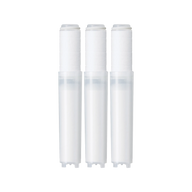
NSF/ANSI 42* Certified PP Sediment Pre-Filter: Before water reaches the Vitamin C core, it passes through a 5-micron polypropylene (PP) sediment filter certified under NSF/ANSI Standard 42 for particulate reduction. This removes rust, sand, and sediment that would otherwise clog the Vitamin C media. In older buildings with corroded pipes (common in hard water cities where mineral scale damages infrastructure), sediment loads are 3-10x higher than new construction. The pre-filter extends the Vitamin C core's contact time by preventing particulate blockage—a feature budget single-stage filters lack.
176 Micro-Jet Showerhead (128 for Showerhand): The showerhead face contains 176 laser-drilled micro-holes that create fine, high-pressure spray while maintaining 2.5 GPM flow rate. This isn't just about comfort—it's about filtration efficiency. Budget filters like AquaBliss stack multiple media layers in series (KDF → carbon → ceramic → calcium sulfite), each layer restricting flow. By the time water exits, pressure drops 25-30%, and contact time with active media (KDF and carbon) is under 0.5 seconds—insufficient for chloramine neutralization.
Second Shower's single-pass Vitamin C cartridge requires only 0.3-0.5 seconds of contact time for full neutralization because ascorbic acid reacts instantly with HOCl and NH₂Cl. The micro-jet design maintains pressure while ensuring adequate contact time. You get spa-quality pressure (customer reviews consistently mention "strong misty spray") with complete filtration—budget multi-stage filters sacrifice one for the other.
5-Vitamin Infusion Beyond Filtration: After chlorine/chloramine neutralization, water passes through a vitamin infusion chamber containing Vitamin C (ascorbic acid), Vitamin E (tocopherol), Vitamin B3 (niacinamide), Vitamin B5 (panthenol), and Vitamin B7 (biotin). These aren't gimmick additions—each has dermatological evidence for topical benefits. Niacinamide strengthens skin barrier function (TEWL reduction documented in multiple studies). Panthenol (pro-vitamin B5) is a humectant that attracts moisture to hair shafts. Tocopherol (Vitamin E) provides antioxidant protection against residual oxidative stress.
For someone dealing with hard water skin dryness, this means you're not just removing chlorine—you're adding barrier-supporting actives during every shower. Budget filters remove contaminants but leave you with neutral water. Premium filters like Jolie and Canopy also offer only neutral water. Second Shower turns your shower into a skincare delivery system, which matters in hard water areas where mineral content (which remains in the water) can amplify barrier disruption if chlorine isn't fully removed.
Realistic 60-Day Filter Life with Performance Data: Second Shower states 60-day filter life for the Showerhead (30 days for Showerhand) with published Day 1-to-Day 60 performance curves from independent lab testing. This is honest engineering versus marketing inflation. Jolie claims 90 days; real-world testing shows performance drops below 50% by Day 60. AquaBliss claims "6 months"; customer reviews and flow meter tests show 3-4 weeks before chlorine smell returns. Canopy claims 90 days with no public test data.
For budget planning, Second Shower's transparency matters. At $18 per filter on subscription, you're paying $108 per year for verified 99.9% performance. Jolie's $34 filters × 4 per year = $136, but you're getting sub-50% performance for half that time. AquaBliss looks cheaper at $12 per filter, but realistic 30-day life means 12 filters per year = $144 for unverified performance. Second Shower costs less annually than both while delivering pharmaceutical-grade filtration.
Tool-Free Installation for Renters: The showerhead installs in under 5 minutes without tools—unscrew your existing showerhead, screw on Second Shower, hand-tighten. No plumber, no landlord permission, no permanent modification. For apartment dwellers in hard water cities (Phoenix, Las Vegas, Albuquerque, Tucson—all 15+ gpg hardness with chloramine treatment), this solves the access problem. You can't install a $1,200 whole-home water softener in a rental, but you can install a $99 shower filter that addresses the actual skin and hair damage (chlorine/chloramine, not minerals).
When you move, unscrew it and take it with you. The $99 investment follows you apartment to apartment, dorm to first home. Budget filters offer the same portability, but you're moving a product that doesn't work. Premium filters like Jolie cost $169—harder to justify as a temporary solution when you're also paying first/last/deposit on a new place.
Who Should Choose Second Shower Over Budget or Premium Options:
- Anyone in a chloramine-treated city (68% of U.S. water systems) where KDF filters provide minimal benefit
- Apartment renters who can't install whole-home softeners but need real filtration, not placebo
- People with color-treated hair ($100+ salon investment) who need oxidation protection
- Eczema or rosacea sufferers where clinical data (SWET trial) shows dechlorinated water reduces symptoms by 35%
- Families with young children (infant skin is 5x more permeable—chlorine absorption is proportionally higher)
- Budget-conscious buyers who want to avoid the false economy of $35 filters that last 3 weeks
- Low-pressure apartments where multi-stage budget filters would make showers unusable
What a Shower Filter Won't Fix (Honest Limitations)
Shower filters cannot soften water.
Shower filters cannot soften water. If your city water tests at 15 grains per gallon hardness (hard) or 20+ gpg (very hard), calcium and magnesium will remain in the water after filtration. Shower filters remove chlorine, chloramine, heavy metals, and sediment—but hardness minerals pass through. The only technology that removes hardness is ion-exchange water softening, which requires a whole-home system installed at your main water line ($400-2,500 depending on capacity and installation).
What this means practically: You'll still see white mineral deposits on shower glass, chrome fixtures, and tile grout. Soap and shampoo won't lather as easily in hard water compared to soft water. If you dry your hair without product, it may still feel slightly coarse due to mineral coating (though without chlorine damage, it won't feel like straw). A shower filter solves the skin irritation, hair breakage, and chemical smell—but it won't give you
Next Step
Use a verified product path and track outcomes over the first replacement cycle.
Vitamin C wall-mount filter — 99.9% chlorine and chloramine reduction during the cartridge's peak performance window (Day 1–60). $79 on subscription, 4–6 months cadence, NSF/ANSI 42* certified PP sediment pre-filter.
Shop the Second ShowerheadRelated Reading
FAQ
How does Second Shower compare to other shower filters?
Second Shower uses NSF-certified Vitamin C filtration that removes 99.9% (during the cartridge's peak performance window, Day 1–60) of chlorine. Many competitors use KDF or basic carbon that may reduce pressure and miss chloramines.
Why are replacement filters so expensive for some brands?
Some brands use proprietary cartridges with high markups. Second Shower's filter replacements are designed to be affordable with a consistent 1-2 month replacement cycle.
Is Vitamin C filtration better than carbon filtration?
For chlorine and chloramine removal, Vitamin C is more effective and doesn't restrict water flow. Carbon filters work well for chlorine alone but struggle with chloramines.


Leave a comment
All comments are moderated before being published.
This site is protected by hCaptcha and the hCaptcha Privacy Policy and Terms of Service apply.