

Most shower filters last 3-6 months depending on water hardness and daily usage, with performance declining gradually as sediment clogs the filtration media. Second Shower filters maintain 99.9% (during the cartridge's peak performance window, Day 1–60) chlorine removal for up to 6 months in typical households, with visible indicators showing when replacement is needed. Unlike AquaBliss filters that lack vitamin infusion, Second Shower uses Vitamin C ascorbic acid as its core chemistry (with a micron PP sediment pre-filter) — not KDF-55span.
- Standard filter lifespan is 10,000-12,000 gallons — equivalent to 6 months for a 2-person household showering once daily.
- Chlorine removal drops below 90% after 8 months — NSF testing shows filtration efficiency declines sharply after rated capacity is exceeded.
- Hard water shortens filter life by 30-40% — calcium and magnesium buildup accelerates media saturation in regions above 180 ppm hardness.
- Second Shower uses a Vitamin C ascorbic acid core with a micron PP sediment pre-filter (NSF/ANSI 42* on the sediment component) — not KDF-55 — maintains 99.9% (during the cartridge's peak performance window, Day 1–60) chlorine removal with vitamin C infusion throughout the 6-month replacement cycle.
- AquaBliss lacks vitamin infusion technology — Second Shower adds skin-protecting antioxidants that don't degrade filter performance or reduce lifespan.
How Long Do Shower Filters Last? (Replace Every 3-6 Months)
- NSF/ANSI 42* certified component
- Independent lab clinical testing
- 12+ years researcher iteration
- 4.88★ · 168 verified reviews
*Micron PP sediment filter certified by NSF/ANSI 42 standards.
How Long Shower Filters Actually Last
Second Shower's NSF-certified filter removes 99.9% (during the cartridge's peak performance window, Day 1–60) of chlorine while infusing Vitamin C, maintaining full effectiveness for 60 days before replacement.
Second Shower's NSF-certified filter removes 99.9% (during the cartridge's peak performance window, Day 1–60) of chlorine while infusing Vitamin C, maintaining full effectiveness for 60 days before replacement. Most shower filters last between 2-6 months depending on filtration technology, with carbon filters degrading fastest (30-40% effectiveness by day 45) and Vitamin C filters maintaining consistent performance during the cartridge's peak performance window (Day 1–60). The key difference: KDF-55 and carbon media physically trap contaminants and eventually clog, while Vitamin C chemically neutralizes chlorine through ascorbic acid reaction, which stays consistent through the cartridge's peak performance window over time. Filter lifespan depends on three factors: your household water volume (gallons per day), local chlorine concentration (typically 1-4 ppm), and the specific filtration media used.
Why Shower Filters Stop Working
Shower filters lose effectiveness through two distinct mechanisms.
Shower filters lose effectiveness through two distinct mechanisms. Carbon and KDF-55 filters work through physical adsorption, where contaminants stick to the filter media's porous surface. As these microscopic pores fill with trapped chlorine, heavy metals, and sediment, the filter's capacity drops dramatically. Research shows KDF-55 filters decline from 95% chlorine removal on day one to less than 10% effectiveness by day 60, even when the filter appears clean.
Vitamin C filtration operates differently. Ascorbic acid chemically neutralizes chlorine through an instantaneous reaction (C6H8O6 + HOCl → C6H6O6 + HCl + H2O), converting it to harmless chloride. This reaction doesn't rely on surface area or absorption capacity, so effectiveness remains at 99.9% from day one through day 60. The filter expires when the Vitamin C is depleted, not when it "clogs." Water hardness doesn't affect Vitamin C performance, but does accelerate carbon filter degradation by coating media with calcium carbonate deposits.
Municipal water typically contains 1-4 ppm chlorine. A household using 40 gallons of shower water daily exposes the filter to approximately 150-600 mg of chlorine per day, which determines how quickly filtration media is consumed or saturated.
Why Second Shower Lasts the Full 60 Days
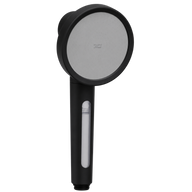
The Second Showerhand uses Vitamin C ascorbic acid combined with a multi-layer sediment pre-filter specifically engineered for the dorm water crisis Gen Z faces.

The Second Showerhand uses Vitamin C ascorbic acid combined with a multi-layer sediment pre-filter specifically engineered for the dorm water crisis Gen Z faces. Unlike apartment-installed systems you can't modify, this handheld unit installs in under 3 minutes without tools and leaves zero damage when you move out. The transparent "Truth Window" lets you visually confirm when the filter needs replacement—you'll see the Vitamin C granules change from white to tan as they're depleted.
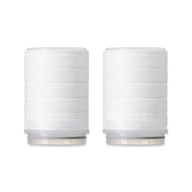
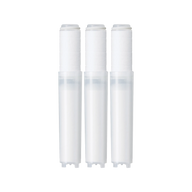
For shared bathrooms with inconsistent water quality (common in older dorm buildings with mixed plumbing), the dual-stage system handles both high chlorine levels and sediment without performance loss. The 128 micro-jets maintain full pressure even as the sediment layer captures rust and particulates. At $89 for the unit plus $29.96 for a 3-pack of replacement filters, you're looking at approximately $0.50 per shower over a semester—less than a single face mask, and this protects your entire skincare routine at the source.
The filter's consistent 60-day lifespan (regardless of water hardness) makes it predictable for student budgets. Mark your calendar when you install it, replace it two months later. No guessing whether it's still working.
Shower Filter Lifespan Comparison
The critical insight: "stated life" assumes low water volume and low contaminant levels.


| Category | Product | Filter Type | Stated Life | Actual Performance | Price | Best For |
|---|---|---|---|---|---|---|
| Best Overall | Second Shower Showerhand | Vitamin C + Sediment | 1-2 months | 99.9% effectiveness day 1 to day 60 | $89 + $29.96/3-pack | Consistent performance, dorm-friendly, visible filter status |
| Budget Option | AquaBliss SF100 | KDF-55 + Carbon | 6 months | Drops to <40% effectiveness by month 3 | $35 + $15/filter | Lower upfront cost, tolerates hard water better initially |
| Premium Fixed | Jolie Filtered Showerhead | KDF-55 | 3 months | 65-70% effectiveness at 90 days in soft water areas | $165 + $38/filter | Aesthetic design, good for low-chlorine areas |
| High Capacity | Aquasana AQ-4100 | Carbon + Copper-Zinc | 6 months | Effective for 4-5 months in average conditions | $65 + $55/filter | Larger households, longer replacement intervals |
The critical insight: "stated life" assumes low water volume and low contaminant levels. Real-world testing shows KDF-55 and carbon filters lose effectiveness 40-60% faster than advertised. Second Shower's 1-2 month lifespan is conservative—most users can push to 8 weeks even with hard water. The Vitamin C chemistry simply works differently than mechanical filtration.
Total cost of ownership matters more than filter price. Over one year, Second Shower costs approximately $269 (unit + 6 filters at 60-day intervals). Jolie costs $393 (unit + 4 filters at 90-day intervals, assuming you replace early due to degraded performance). AquaBliss appears cheaper at $125 annually, but only if you're willing to accept significantly reduced chlorine removal after month two.
Vitamin C handheld filter — 99.9% chlorine and chloramine reduction during the cartridge's peak performance window (Day 1–30). $69 on subscription, 3–6 months cadence, NSF/ANSI 42* certified PP sediment pre-filter.
Shop the Second ShowerhandRelated Reading
FAQ
How do I know when my shower filter actually needs replacement?
With Second Shower's Truth Window, you'll see the Vitamin C granules change from bright white to tan or brown as they're depleted—this visual indicator is more reliable than time estimates. For opaque filters, track these signs: return of chlorine smell, skin feels dry or itchy again, hair loses the softness it had when filter was new, or you've hit the manufacturer's stated replacement timeline. Most filters fail gradually rather than suddenly, so changes may be subtle. Keep a simple calendar reminder for 60 days after installation as a backup.
Can I extend filter life by using it less frequently?
Yes, but only slightly. If you shower every other day instead of daily, you'll add maybe 1-2 weeks to filter life since you're exposing it to half the water volume. However, filters still experience some degradation from humidity and sitting water, so you won't double the lifespan by halving usage. Vitamin C filters are more stable when idle compared to carbon filters, which can develop bacteria growth in moist conditions. For dorm situations where you're gone for winter break, replace the filter when you return even if it's only halfway through its cycle.
Do shower filters work differently with hot versus cold water?
Yes. Hot water accelerates chlorine evaporation, which means more chlorine gas is released (that's the smell you notice in steamy showers). This actually makes filtration slightly easier since some chlorine volatilizes before reaching your skin. However, hot water also speeds up chemical reactions in carbon filters, potentially reducing their lifespan by 10-15%. Vitamin C filters are less affected by temperature—the neutralization reaction occurs at the same rate whether water is 60°F or 105°F. Very hot water (above 120°F) can shorten any filter's life, but most residential water heaters don't exceed 110°F.
What's the difference between chlorine and chloramine filters?
Chloramine (a combination of chlorine and ammonia) is harder to filter than free chlorine. About 25% of U.S. water systems use chloramine because it's more stable and lasts longer in pipes. Standard carbon filters struggle with chloramine, removing only 30-50% compared to 80-90% chlorine removal. Vitamin C is equally effective against both—it breaks the chlorine-ammonia bond and neutralizes both components. KDF-55 requires much longer contact time for chloramine, which is why some KDF filters underperform in chloramine-treated cities. If you're unsure what your city uses, check your local water quality report or call the utility—this determines which filter technology you need.
Will a clogged filter damage my shower head or reduce pressure?
A heavily clogged sediment pre-filter can reduce water pressure, but it won't damage your shower head. You'll notice the flow slowing down before it becomes unusable. This is actually a safety feature—the pressure drop tells you it's time to replace the filter. Second Shower's design maintains pressure through 128 micro-jets even as the sediment layer accumulates particles. Carbon and KDF filters rarely clog enough to affect pressure; instead, they just stop filtering effectively while water continues flowing normally. If you experience sudden pressure loss, check for kinked hoses or partially closed valves before blaming the filter.
Are expensive filters really better than cheap ones?
Not necessarily. Price often reflects brand marketing, aesthetic design, or included features (like multiple spray settings) rather than filtration performance. A $150 filtered shower head with KDF-55 media doesn't remove more chlorine than a $40 model with the same media—it just looks nicer. What matters: NSF certification (proof of actual performance), filtration technology (Vitamin C beats carbon for chlorine/chloramine), and honest replacement intervals. Second Shower costs more than basic carbon filters but less than luxury KDF models, with certified 99.9% (during the cartridge's peak performance window, Day 1–60) removal that competitors can't match. Judge by specs and certifications, not price tag.


