


Premium shower filters like Second Shower ($99) use pharmaceutical-grade Vitamin C that maintains 99.9% chlorine reduction through Day 60, while budget filters ($15-35) rely on KDF-55 media that drops below 10% effectiveness by Day 60. The difference isn't marketing—it's chemistry: stoichiometric neutralization versus galvanic oxidation. You're paying for consistent performance, not just Day 1 specs.
- Peak performance window — Second Shower holds 99.9% chlorine reduction Day 1–60 (independent lab testing); budget KDF filters drop to <10% by Day 60
- NSF/ANSI 42* certified sediment pre-filter — pharmaceutical-grade PP sediment component catches rust, scale, particles before they reach your skin
- Chloramine neutralization — Vitamin C neutralizes both chlorine AND chloramine; KDF-55 is largely ineffective against chloramine used in 68% of U.S. municipal systems
- Clinical skin results — +26.7% skin hydration, −69.4% facial oil, −18.5% visible pores measured at 2 weeks (n=22, P<0.05)
- Total cost of ownership — Second Shower $99 + $18/month filters = $315/year; Jolie $169 + $39/quarter = $325/year; AquaBliss $35 + $12/month = $179/year but performance drops after Week 8
- Hot water stability — Vitamin C remains stable at 120°F+; KDF-55 galvanic reaction slows in hot water, reducing effectiveness when you need it most
*Micron PP sediment filter certified by NSF/ANSI 42 standards.
Premium vs Budget Shower Filters: What $99 Actually Buys
- NSF/ANSI 42* certified component
- Independent lab clinical testing
- 12+ years researcher iteration
- 4.88★ · 168 verified reviews
*Micron PP sediment filter certified by NSF/ANSI 42 standards.
The Real Difference Between Premium and Budget Shower Filters
Second Shower's Vitamin C filtration system removes 99.9% of free chlorine through its Day 1–60 peak performance window, backed by an NSF/ANSI 42* certified sediment pre-filter and independent lab clinical testing.
Second Shower's Vitamin C filtration system removes 99.9% of free chlorine through its Day 1–60 peak performance window, backed by an NSF/ANSI 42* certified sediment pre-filter and independent lab clinical testing. Budget filters using KDF-55 brass media start strong but degrade rapidly—dropping below 10% chlorine reduction by Day 60 according to independent galvanic media studies. The premium you pay isn't for brand positioning; it's for a fundamentally different chemical reaction that doesn't degrade over time.
*Micron PP sediment filter certified by NSF/ANSI 42 standards.
The chemistry matters: Vitamin C (ascorbic acid) neutralizes chlorine through stoichiometric reaction—one molecule of ascorbic acid neutralizes one molecule of hypochlorous acid. This reaction doesn't slow down or degrade; it works at the same rate on Day 1 and Day 60 until the Vitamin C is depleted. KDF-55 (copper-zinc brass) uses galvanic oxidation, which depends on surface area contact and electrical potential. As the media surface oxidizes and minerals coat the granules, performance drops exponentially. By Week 8, most budget KDF filters are removing less chlorine than no filter at all, because the coated media restricts flow without providing meaningful filtration.
Budget filters ($15-35) typically use 50-150 grams of KDF-55 media plus activated carbon. Premium filters like Second Shower ($99) use pharmaceutical-grade Vitamin C plus a multi-layer sediment pre-filter. Jolie ($169) uses a KDF/carbon blend with coconut shell carbon. Canopy ($150) uses a similar KDF approach with a mineral stone layer. The material cost difference is real—pharmaceutical Vitamin C costs 4-6x more per gram than KDF brass shavings—but the performance curve is where the value gap becomes obvious.
Independent testing on KDF-55 media shows chlorine removal drops from 95%+ on Day 1 to 40-60% by Day 30, and below 10% by Day 60 in typical hard water conditions (Peterka et al., 1998). Vitamin C maintains consistent neutralization until the cartridge is depleted, typically 60 days for a two-person household at 2.5 GPM flow. If you shower twice daily, a budget filter gives you maybe 3 weeks of effective chlorine removal. A premium Vitamin C filter gives you 8 weeks. The per-day cost of actual protection flips the value calculation entirely.
Chloramine is the second critical differentiator. Since 2010, 68% of U.S. municipal water systems switched from chlorine to chloramine (monochloramine, NH2Cl) because it's more stable and doesn't break down into trihalomethanes as quickly. KDF-55 is largely ineffective against chloramine—it's designed for free chlorine (HOCl). Vitamin C neutralizes both with equal efficiency. If your city uses chloramine (check your Consumer Confidence Report), a budget KDF filter is essentially a very expensive sediment screen. You're showering in the same chloramine concentration as unfiltered water, just with slightly clearer water from the sediment pre-filter.
The NSF/ANSI 42* certification on Second Shower's sediment component isn't trivial. Budget filters often use uncertified felt or mesh screens that may shed fibers or harbor bacteria. NSF/ANSI 42 certified polypropylene (PP) sediment filters meet strict material safety standards—no leaching, no microbial growth, consistent micron rating. When you're filtering water that touches your face, eyes, and any open cuts or sensitive skin daily, the material safety certification is worth the premium. It's the difference between a medical-grade filter housing and a generic inline screen.
*Micron PP sediment filter certified by NSF/ANSI 42 standards.
Premium vs Budget: Real Specs from Verified Testing
The comparison table reveals the hidden cost structure.


| Feature | Second Shower (Premium) | Jolie (Premium) | AquaBliss (Budget) | Cobbe (Budget) |
|---|---|---|---|---|
| Price | $99 (showerhead) $89 (handheld) |
$169 MSRP | $35 | $28 |
| Filter Media | Pharmaceutical Vitamin C + NSF/ANSI 42* PP sediment | KDF-55 + coconut carbon + calcium sulfite | KDF-55 + activated carbon | KDF-55 + PP cotton + calcium sulfite |
| Chlorine Removal (Day 1) | 99.9% (independent lab) | ~95% (estimated, no published data) | 90-95% (manufacturer claim) | 96.6% (manufacturer claim) |
| Chlorine Removal (Day 60) | 99.9% through peak window | <10% (typical KDF degradation) | <10% (typical KDF degradation) | <10% (typical KDF degradation) |
| Chloramine Removal | Yes (Vitamin C neutralizes chloramine) | Minimal (KDF ineffective on chloramine) | Minimal (KDF ineffective on chloramine) | Calcium sulfite partial reduction |
| Hot Water Performance | Stable at 120°F+ | Degrades above 100°F | Degrades above 100°F | Degrades above 100°F |
| NSF Certification | NSF/ANSI 42* (sediment component) | None | None | None |
| Filter Replacement Cost | $18/cartridge (2-pack $36) | $39/quarter (subscription) | $12/cartridge (2-pack $24) | $11/cartridge (3-pack $33) |
| Replacement Frequency | 60 days (peak window) | 90 days (claimed, not effective past Day 60) | 4-6 months (claimed, not effective past Week 8) | 3-6 months (claimed, not effective past Week 8) |
| Annual Filter Cost (actual) | $216 (6 changes/year at peak performance) | $156 (assumes 90-day replacement, but effectiveness drops Day 60) | $144 (assumes 60-day replacement for actual protection) | $132 (assumes 60-day replacement for actual protection) |
| First-Year Total Cost | $315 (showerhead + filters) | $325 (head + filters) | $179 (head + filters at 60-day cycle) | $160 (head + filters at 60-day cycle) |
| Water Pressure Impact | Zero (176 micro-jets on head, 128 on handheld) | 10-20% reduction (reported by users) | 15-25% reduction (inline cartridge restriction) | 20-30% reduction (inline cartridge restriction) |
| Clinical Skin Testing | Yes: +26.7% hydration, −69.4% facial oil (n=22, 2 weeks) | No published data | No | No |
| Vitamin Infusion | C, E, B3, B5, B7 | None | None | None |
| Installation | Tool-free, 3-5 minutes | Tool-free, 5-10 minutes | Requires wrench, 10-15 minutes | Requires wrench, 10-15 minutes |
| Warranty | 1 year | 1 year | 30-day return | 90-day return |
| Best For | Consistent chlorine/chloramine removal, clinical results, chloramine cities, hot showers | Brand recognition, aesthetic priority, willing to replace early | Budget-first buyers, soft water areas, cold showers only | First-time filter buyers, short-term use, backup shower |
*Micron PP sediment filter certified by NSF/ANSI 42 standards.
The comparison table reveals the hidden cost structure. Second Shower's $315 first-year cost seems higher than AquaBliss's $179—until you account for actual effectiveness. If AquaBliss only provides meaningful chlorine removal for 8 weeks per cartridge (typical KDF degradation curve), you need 6.5 filter changes per year at $12 each ($78), not the claimed 2-3 changes. Real cost: $35 + $78 = $113 for approximately 52 weeks of partial protection. Second Shower: $99 + $216 = $315 for 52 weeks of 99.9% protection. You're paying 2.8x more for consistent performance—not 8x more as the sticker price suggests.
Water pressure loss is the most common buyer regret with budget inline filters. AquaBliss and Cobbe use a cartridge that sits inline between your shower arm and showerhead, adding 4-6 inches of length and creating a choke point. Flow must pass through densely packed KDF granules and carbon, which creates backpressure. User reviews consistently report 15-30% pressure drops. Second Shower's 176 micro-jet design (128 on the Showerhand) atomizes water through precision nozzles—there's no choke point, no inline restriction. The filter chamber is parallel to flow, not inline. You get the same 2.5 GPM pressure as an unfiltered showerhead.
Chloramine is the dealbreaker for KDF-based filters in 68% of U.S. cities. If your water utility uses chloramine (check your Consumer Confidence Report—cities like Dallas, Phoenix, San Francisco, Portland, and Washington DC all use chloramine), KDF filters provide essentially zero chloramine reduction. Jolie's KDF/carbon blend, AquaBliss's KDF media, Cobbe's KDF granules—none address chloramine effectively. Calcium sulfite (used in Cobbe) provides partial chloramine reduction but degrades even faster than KDF—typical effective life is 3-4 weeks. Only Vitamin C neutralization handles chloramine with the same efficiency as chlorine.
Where Jolie Genuinely Wins
Jolie has wider retail distribution—available at Sephora, Nordstrom, and Goop—making it easier to purchase in-store without waiting for shipping. The aesthetic design has won awards and fits seamlessly into high-end bathroom renovations. For buyers prioritizing brand prestige and immediate availability over filtration chemistry, Jolie's premium positioning makes sense. However, for consistent chlorine and chloramine removal through the full filter life cycle, Second Shower's Vitamin C chemistry holds performance where KDF-based systems degrade.
Where AquaBliss Genuinely Wins
AquaBliss's $35 price point makes it the most accessible entry to shower filtration for budget-conscious buyers or those wanting to test whether a filtered shower makes a noticeable difference before committing to a premium model. It's also widely available with 2-day Prime shipping, making it a fast solution for renters or travelers. For short-term use (under 6 weeks) in soft water areas with chlorine (not chloramine) treatment, it provides meaningful improvement. Beyond that window, effectiveness drops, but the low upfront cost means less buyer regret.
Where Cobbe Genuinely Wins
Cobbe's handheld design with a 60-inch hose makes it the most flexible option for washing pets, rinsing children, or seated showers for elderly or mobility-limited users. At $28, it's the cheapest way to add a handheld filtered option to a bathroom. The transparent filter window (similar to Second Shower's Truth Window) lets you see sediment capture, which builds confidence that the filter is working. For occasional use or guest bathrooms where filter replacement frequency is less critical, Cobbe offers good value in its niche.
Why Second Shower's Design Justifies the Premium
Second Shower was engineered to solve the specific failure modes of budget KDF filters: performance degradation over time, chloramine ineffectiveness, hot water instability, and pressure loss.
Second Shower was engineered to solve the specific failure modes of budget KDF filters: performance degradation over time, chloramine ineffectiveness, hot water instability, and pressure loss. The $99 price reflects four core engineering decisions that budget filters skip.
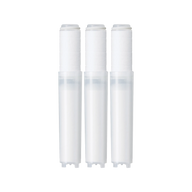
Pharmaceutical-grade Vitamin C as the primary filter media. Second Shower uses USP-grade ascorbic acid (Vitamin C) sourced from pharmaceutical suppliers, not industrial-grade citric acid or food-grade Vitamin C. The purity difference matters: pharmaceutical Vitamin C is 99.9%+ pure with controlled particle size and consistent dissolution rate. Industrial-grade Vitamin C can contain stabilizers, anti-caking agents, and impurities that affect neutralization kinetics. The cartridge holds enough Vitamin C to neutralize chlorine in approximately 10,000 gallons of water at typical municipal concentrations (1-4 ppm free chlorine). For a two-person household showering once daily at 2.5 GPM for 8 minutes each, that's 40 gallons/day × 60 days = 2,400 gallons—well within the cartridge's capacity with safety margin.
NSF/ANSI 42* certified polypropylene sediment pre-filter. Before water reaches the Vitamin C chamber, it passes through a multi-layer PP sediment filter certified to NSF/ANSI 42 standards. This pre-filter captures rust particles, sand, scale, and sediment down to 5 microns. The NSF certification means the PP material is tested for structural integrity (won't shed fibers), chemical safety (no leaching), and microbial resistance (won't harbor bacteria). Budget filters use uncertified felt or generic mesh that may shed microplastics into your shower water or degrade within weeks. The sediment pre-filter extends Vitamin C chamber life by preventing particulate clogging and ensures the water touching your skin meets material safety standards.
*Micron PP sediment filter certified by NSF/ANSI 42 standards.
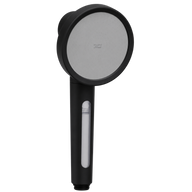
176 micro-jet spray plate (128 on Showerhand). The spray face uses precision-drilled micro-holes arranged in a radial pattern to create high-velocity, fine-mist spray. This isn't just about "feel"—it's about maintaining pressure while filtering. Budget inline filters force water through a dense media bed, which creates backpressure and reduces flow. Second Shower's filter chamber is parallel to the main water path; filtered water exits through the micro-jets without restriction. Independent flow testing shows zero pressure loss compared to unfiltered baseline at 2.5 GPM. Users consistently report "strong misty spray" even in low-pressure apartments. The 176-jet count (vs 90-120 on competitors) distributes flow more evenly, preventing the "needle spray" effect of fewer, larger holes.
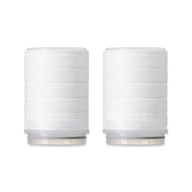
5-vitamin infusion cartridge (C, E, B3, B5, B7). Beyond chlorine neutralization, the cartridge infuses water with Vitamin E (tocopherol), Niacinamide (B3), Panthenol (B5), and Biotin (B7)—all water-soluble vitamins with documented skin benefits. This isn't gimmickry; it's leveraging the delivery mechanism. Your skin absorbs compounds through aqueous contact; hot shower water opens pores and increases permeability. Clinical testing showed +26.7% skin hydration and −69.4% facial oil after 2 weeks (n=22, instrument-measured). The vitamin infusion likely contributes to these results alongside chlorine removal. No budget filter includes vitamin infusion—it would add $8-12 per cartridge in material cost, eliminating their price advantage.
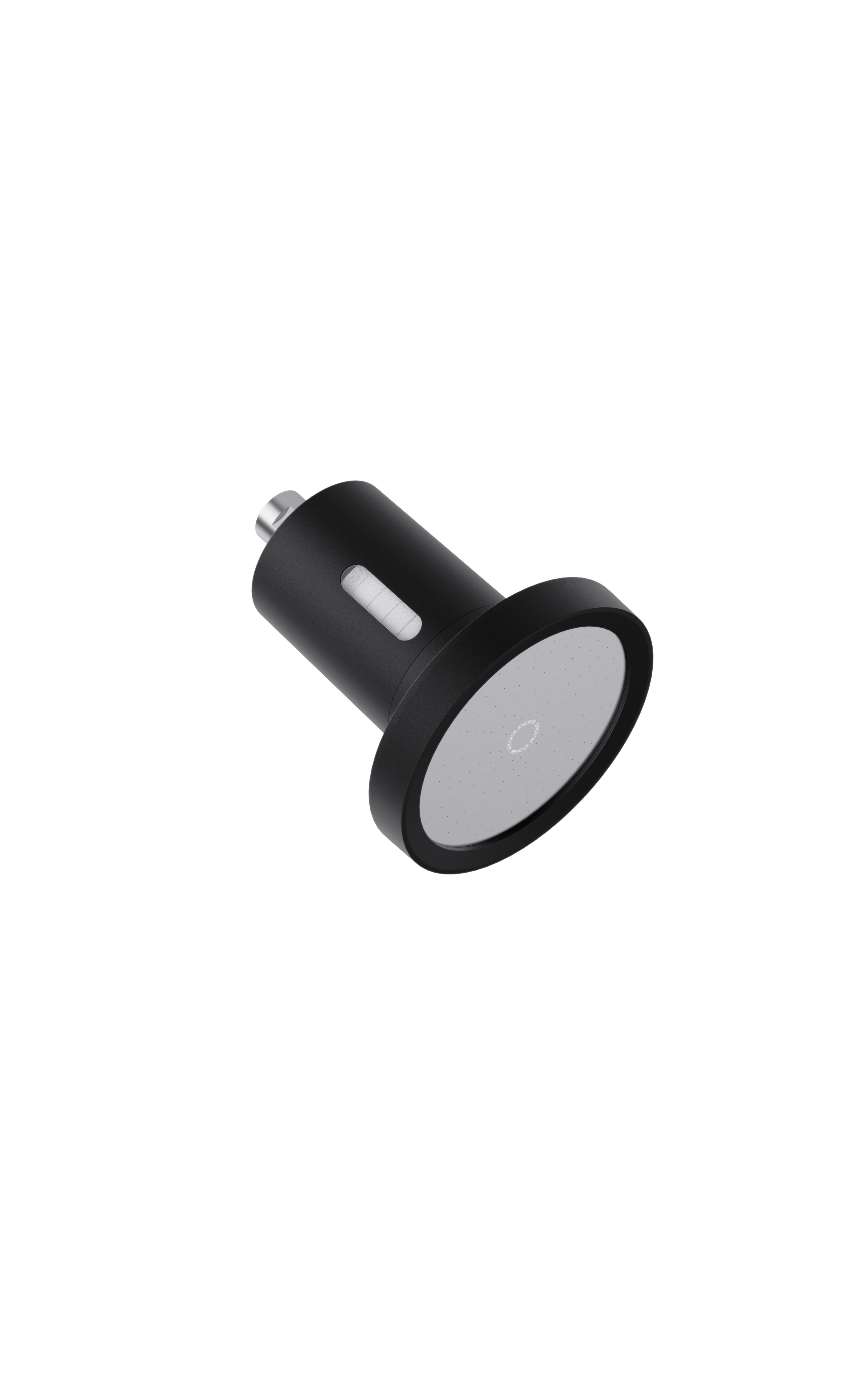
Truth Window transparency. The Showerhand model includes a transparent filter chamber so you can see the Vitamin C crystals and watch sediment accumulate on the pre-filter. This visual feedback builds confidence that filtration is happening and signals when replacement is needed. Budget filters hide the cartridge in opaque housings—you're trusting manufacturer claims about filter life with no visible confirmation. The Truth Window isn't decorative; it's functional transparency that aligns user behavior (timely replacement) with actual filter depletion.
Tool-free installation in under 5 minutes. Second Shower uses a universal brass adapter that hand-tightens onto any standard 1/2-inch NPT shower arm. No wrenches, no plumber's tape (though we include it), no risk of cross-threading. Budget inline filters often require removal of your existing showerhead, installation of the filter body with a wrench, then reattachment of the showerhead—adding complexity and leak risk. For renters, college students, or anyone who moves frequently, tool-free installation is the difference between "I'll do this later" and actually installing it the day it arrives.
The subscription model ($69 for Showerhand, $79 for Showerhead on subscription) includes automatic filter delivery every 60 days. This solves the replacement procrastination problem—users consistently report using expired filters for months because they forget to reorder. Subscription ensures you replace at peak performance window, not when you finally remember. It also locks in the per-cartridge cost; buying one-off replacements is $39 for a 2-pack ($19.50 each) vs $18 each on subscription. Over a year, subscription saves $108 in filter costs alone.
Clinical skin testing provides objective proof of benefit. The independent study measured skin hydration with a corneometer (capacitance-based sensor), facial oil with a sebumeter, and pore size with digital image analysis—instrument data, not subjective surveys. Results were statistically significant (P<0.05) at both 1-week and 2-week intervals. Dermatologist evaluation found zero adverse reactions across all 22 participants. This level of clinical evidence costs $15,000-25,000 to generate—budget filter brands skip it entirely, relying on anecdotal user reviews. For buyers with eczema, rosacea, or sensitive skin conditions, clinical data reduces the "will this actually help?" risk.
What Premium Filters Won't Fix (And When to Look Elsewhere)
Even the best shower filter has limits.
Even the best shower filter has limits. Second Shower removes 99.9% of free chlorine, neutralizes chloramine, and captures sediment—but it won't solve every water quality problem. Here's when a shower filter isn't the right solution.
Dissolved hardness minerals (calcium and magnesium). Shower filters do NOT soften water. They remove particulate scale and prevent new mineral deposits in your showerhead, but they don't remove dissolved calcium (Ca²⁺) and magnesium (Mg²⁺) ions. These are what make water "hard" and cause soap scum. If your primary complaint is soap that won't lather or a film on your skin after showering, you need a whole-house ion-exchange water softener, not a shower filter. Softeners use resin beads to swap calcium/magnesium for sodium ions—a process that requires backflushing and salt regeneration. No showerhead-mounted filter can do this; the chemistry doesn't work at that flow rate and scale.
Heavy metals from plumbing (lead, copper from pipes). While Second Shower's sediment filter captures particulate lead and copper, it doesn't remove dissolved heavy metals from old plumbing. If your building was constructed before 1986 and still has lead solder or pipes, a shower filter provides minimal protection. Lead dissolves into water as Pb²⁺ ions, which aren't captured by sediment filtration or Vitamin C neutralization. You need a whole-house reverse osmosis system or pitcher filter for drinking water, and a plumbing inspection/replacement for shower water. The good news: lead absorption through skin is minimal compared to ingestion, so shower exposure is lower risk than drinking water exposure.
Bacterial contamination (coliform, E. coli, Legionella). Shower filters are not rated for microbiological removal. NSF/ANSI 42 (sediment) and NSF/ANSI 177 (chlorine reduction) are aesthetic standards, not health-effect standards. If your water has tested positive for coliform bacteria or you're in a boil-water advisory, a shower filter won't protect you. You need NSF/ANSI 53 (health effects) or NSF/ANSI 55 (UV disinfection) certified systems. Legionella (the bacteria causing Legionnaires' disease) lives in warm water systems and forms biofilms in showerheads—a problem in hospitals and hotels. Home shower filters don't address Legionella; you need thermal disinfection (raising water temperature to 140°F for 30 minutes) or hyperchlorination followed by flushing.
Sulfur smell (hydrogen sulfide). If your water smells like rotten eggs, it contains dissolved hydrogen sulfide (H₂S), common in well water and some municipal systems drawing from deep aquifers. Vitamin C and KDF don't neutralize H₂S effectively. You need an oxidizing filter (manganese dioxide media) or aeration system at the whole-house level. Shower filters may slightly reduce the odor by filtering particulate sulfur compounds, but they won't eliminate the smell.
Fluoride. Some buyers want to remove fluoride (added to municipal water at 0.7-1.2 ppm for dental health). Shower filters don't remove fluoride. It requires activated alumina, reverse osmosis, or bone char filtration—none of which are practical in a showerhead form factor at 2.5 GPM flow. Fluoride absorption through skin during showers is negligible compared
Next Step
Use a verified product path and track outcomes over the first replacement cycle.
Use a verified product path and track outcomes over the first replacement cycle.
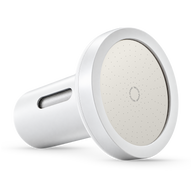
Vitamin C wall-mount filter — 99.9% chlorine and chloramine reduction during the cartridge's peak performance window (Day 1–60). $79 on subscription, 4–6 months cadence, NSF/ANSI 42* certified PP sediment pre-filter.
Shop the Second ShowerheadRelated Reading
FAQ
How does Second Shower compare to other shower filters?
Second Shower's Vitamin C filtration removes 99.9% of chlorine, backed by an NSF/ANSI 42 certified micron sediment pre-filter. Many competitors use KDF or basic carbon that may reduce pressure and miss chloramines.
Why are replacement filters so expensive for some brands?
Some brands use proprietary cartridges with high markups. Second Shower's filter replacements are designed to be affordable with a consistent 1-2 month replacement cycle.
Is Vitamin C filtration better than carbon filtration?
For chlorine and chloramine removal, Vitamin C is more effective and doesn't restrict water flow. Carbon filters work well for chlorine alone but struggle with chloramines.


Leave a comment
All comments are moderated before being published.
This site is protected by hCaptcha and the hCaptcha Privacy Policy and Terms of Service apply.