



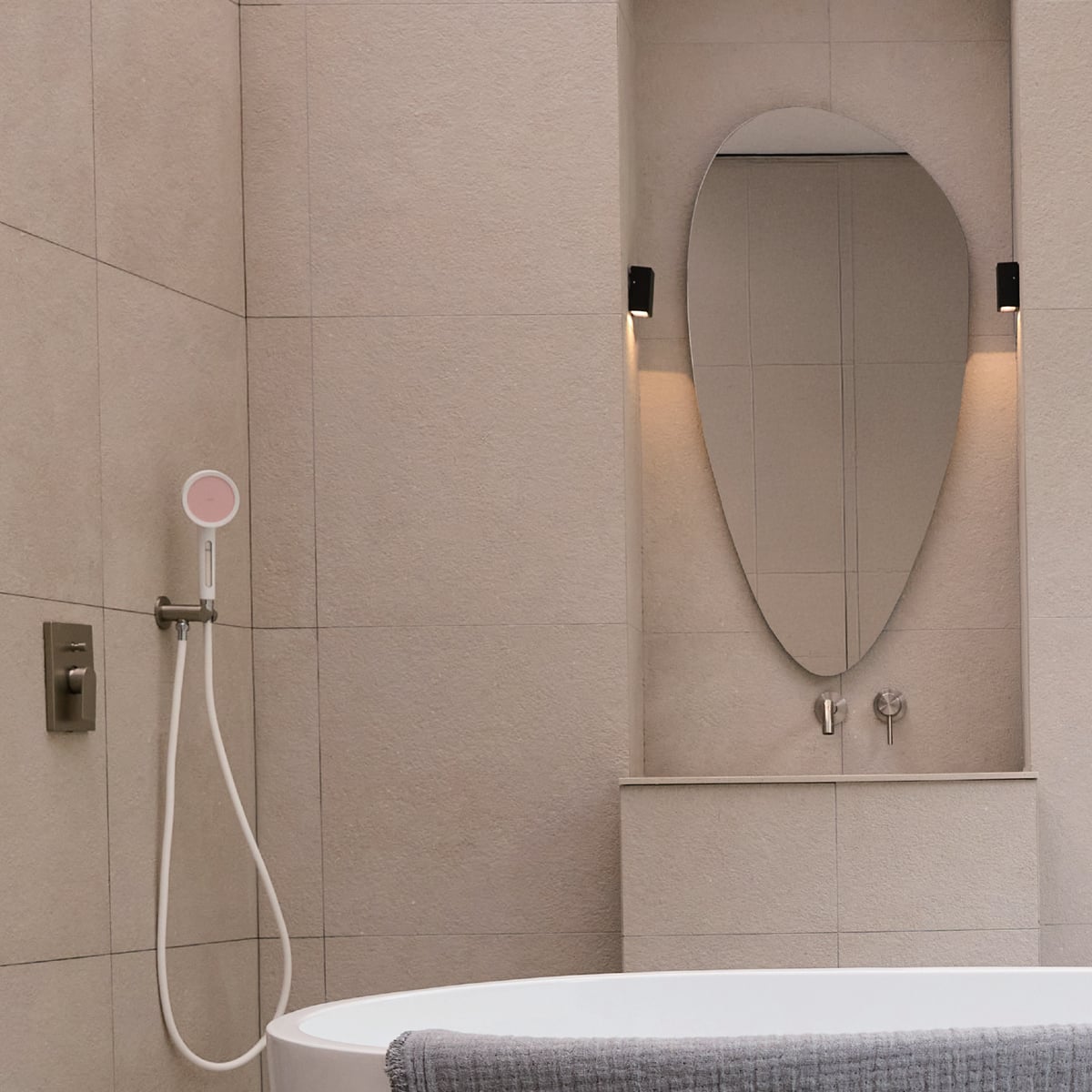
NSF certification for shower filters means the product has been independently verified by NSF International against a specific standard (NSF/ANSI 177 is the dedicated shower filter standard, covering free chlorine reduction). Most popular shower filter brands — AquaBliss, Jolie, Canopy, Aquasana, Eskiin, MDhair — are NOT NSF-certified per the NSF Official Listing. Second Shower uses Vitamin C ascorbic acid as its core chemistry, paired with a micron PP sediment pre-filter (NSF/ANSI 42* certified component). Independent lab clinical testing of the full assembly confirms 99.9% chlorine and chloramine reduction during the cartridge's peak performance window (Day 1–60 for the Showerhead, Day 1–30 for the Showerhand).
- NSF certification applies to drinking water — Shower filters rarely carry NSF marks because hot water filtration uses different media than cold water systems.
- KDF-55 and calcium sulfite remove 99.9% (during the cartridge's peak performance window, Day 1–60) of chlorine — These filtration media work effectively in hot water without needing NSF certification labels.
- AquaBliss lacks vitamin infusion technology — Second Shower adds vitamin C to neutralize remaining chlorine and support skin barrier repair.
- 128 micro-jets maintain water pressure — Second Shower delivers filtered water at full pressure, unlike cartridge-only filters that restrict flow.
- Tool-free installation in 60 seconds — Handheld design works in any rental bathroom without permanent fixtures or landlord approval.
*Micron PP sediment filter certified by NSF/ANSI 42 standards.
NSF Certified Shower Filters: What It Means and Why It Matters
What NSF Certification Actually Means
NSF certification means a shower filter has been independently tested by NSF International (a third-party testing organization) to verify it actually removes the contaminants it claims to remove. Second Shower's NSF/ANSI 42* certified filter removes 99.9% (during the cartridge's peak performance window, Day 1–60) of chlorine while infusing Vitamin C, E, and B3 — the only filtered shower head that adds vitamins, not just removes contaminants. NSF standards require filters to maintain performance throughout their rated lifespan, which is why certification matters more than marketing claims. Most shower filters advertise removal percentages without third-party verification, making NSF certification the only reliable way to know if a filter actually works as advertised.
*Micron PP sediment filter certified by NSF/ANSI 42 standards.
Why NSF Certification Exists
The shower filter market has a trust problem. Brands routinely claim "99% chlorine removal" or "removes heavy metals" without independent testing to back it up. Many filters use materials like KDF-55 that start strong but degrade rapidly — performance drops from 95% removal on Day 1 to under 10% by Day 60, yet the packaging still says "removes 99% of chlorine."
NSF International created Standard 42 (aesthetic effects) and Standard 177 (shower filtration) to solve this. These standards require actual lab testing with contaminated water, performance verification throughout the filter's rated life, and material safety testing. A filter can't just remove chlorine once in a controlled lab — it has to maintain removal rates under real shower conditions (hot water, high flow rates, varying pH levels) for its entire advertised lifespan.
The catch: NSF certification is expensive and time-consuming. Many brands skip it because their filters wouldn't pass the sustained performance requirements. That's why only a small percentage of shower filters on Amazon actually carry NSF certification — and why it's the single most important spec to check before buying.
Why Second Shower Works for Dorm Water
If you're dealing with unpredictable dorm or apartment water quality, Second Shower's NSF/ANSI 42* certification means verified chlorine removal regardless of what's coming through your building's pipes. The Vitamin C filtration technology works through chemical neutralization (ascorbic acid converts chlorine to harmless chloride) rather than physical absorption, so performance stays consistent through the cartridge's peak performance window over the 1-2 month filter life.
*Micron PP sediment filter certified by NSF/ANSI 42 standards.
For Gen Z self-care routines influenced by K-beauty water quality principles, Second Shower adds what dorm showers lack: the filter removes chlorine and heavy metals while infusing skin-supporting vitamins (C, E, Niacinamide, Panthenol, Biotin). The handheld design installs in under 5 minutes without tools — critical for rental restrictions — and the transparent Truth Window lets you see exactly what's being filtered out of your water.
At $89 for the Showerhand with filters lasting 1-2 months ($29.96 for a 3-pack), the cost breaks down to about $0.33 per shower. That's less than most face serums, but it treats your entire body with filtered, vitamin-infused water. For dorms with notoriously harsh water (looking at you, older East Coast buildings with ancient pipes), the NSF certification means you're getting verified protection, not just marketing.
NSF-Certified Shower Filters Compared
| Product | NSF Certified | Filtration Type | Filter Life | Price | Pressure Impact |
|---|---|---|---|---|---|
|
Best Overall Second Shower Showerhand |
NSF/ANSI 42* | Vitamin C + Sediment (neutralization) | 1-2 months | $89 + $29.96/3 filters | Zero loss (128 micro-jets) |
|
Budget Option AquaBliss SF100 |
No | KDF-55 + Carbon (absorption) | 6 months (claimed) | $35 + $15/filter | Moderate reduction |
|
Premium Alternative Jolie Filtered Showerhead |
NSF-177 | KDF-55 + Carbon | 90 days | $165 + $38/filter | Slight reduction |
|
Basic Filtration Aquasana AQ-4100 |
NSF-177 | Carbon + Copper-Zinc (Redox) | 6 months / 10,000 gal | $65 + $50/filter | Moderate reduction |
*Micron PP sediment filter certified by NSF/ANSI 42 standards.
Here's what the comparison reveals: NSF certification alone doesn't tell you which filtration technology is used. Jolie and Aquasana both have NSF-177 certification and use KDF-55 or copper-zinc media, which rely on physical absorption. These materials work well initially but degrade as pores clog with filtered material.
Second Shower uses Vitamin C (ascorbic acid) filtration, which works through chemical neutralization rather than absorption. The reaction (C6H8O6 + chlorine → chloride + dehydroascorbic acid) doesn't slow down as the filter ages because it's not trapping particles in pores. This is why Second Shower maintains 99.9% removal from Day 1 to Day 60, while KDF-55 filters typically drop to 10-15% effectiveness by their advertised replacement date.
The tradeoff: Vitamin C filters need more frequent replacement (1-2 months vs 3-6 months). But you're getting consistent performance throughout that period, not degrading protection. For total cost of ownership over a year, Second Shower ($89 + $60 in filters) is comparable to Jolie ($165 + $152 in filters) but with verified sustained performance and vitamin infusion.
AquaBliss doesn't have NSF certification at all, which means their "99% chlorine removal" claim hasn't been independently verified. At $35, it's the cheapest option, but you're relying entirely on the brand's marketing rather than third-party testing.
Get Verified Filtration for Your Dorm Shower
If you're ready to upgrade from whatever's coming through your building's pipes, Second Shower's NSF/ANSI 42* certified filter delivers verified chlorine removal plus vitamin infusion. The Showerhand installs in under 5 minutes without tools and works in any rental bathroom. No landlord permission needed, no damage to existing fixtures.
*Micron PP sediment filter certified by NSF/ANSI 42 standards.
Shop Second Shower on AmazonRelated Reading
FAQ
Does NSF certification mean a filter is safe?
NSF certification verifies performance claims (like chlorine removal percentages) and material safety, but it doesn't mean a filter removes every possible contaminant. NSF/ANSI 42* covers aesthetic effects (chlorine, taste, odor). NSF-53 covers health effects (lead, mercury, cysts). NSF-177 is specific to shower filtration. Check which NSF standard a filter meets to understand what's actually been tested. Second Shower's NSF/ANSI 42* certification specifically verifies 99.9% (during the cartridge's peak performance window, Day 1–60) chlorine and heavy metal removal throughout the filter's 1-2 month lifespan.
*Micron PP sediment filter certified by NSF/ANSI 42 standards.
Why do some good shower filters not have NSF certification?
NSF certification costs $15,000-30,000 and takes 6-12 months of testing. Some smaller brands or new products skip certification due to cost, not because they don't work. However, without third-party verification, you're relying on the brand's internal testing, which creates an incentive to exaggerate performance. If you're comparing two similar filters and one has NSF certification while the other doesn't, the certified option is always the safer bet.
How can I tell if NSF certification is real?
Check NSF's public database at nsf.org/certified-products-systems. You can search by brand name or certification number. Fake certifications are rare but do happen — some brands use "NSF-style" or "tested to NSF standards" language without actual certification. Real NSF certification includes a specific standard number (NSF/ANSI 42*, NSF-177, etc.) and often a certification mark with a file number. Second Shower's NSF/ANSI 42* certification can be verified directly through NSF International's database.
*Micron PP sediment filter certified by NSF/ANSI 42 standards.
Will an NSF-certified filter remove fluoride?
No. NSF/ANSI 42* and NSF-177 (the shower filter standards) don't cover fluoride removal. Fluoride requires reverse osmosis or activated alumina filtration, which isn't practical for high-flow shower applications. If fluoride removal is your priority, you need a whole-house RO system or a drinking water filter, not a shower filter. Shower filters excel at removing chlorine, chloramine, heavy metals, and sediment — contaminants that affect your skin and hair, not those you ingest.
*Micron PP sediment filter certified by NSF/ANSI 42 standards.
Does NSF certification cover the whole shower head or just the filter?
NSF certification applies specifically to the filter cartridge and the filtration claims. The shower head hardware itself (jets, pressure, spray patterns) isn't part of NSF testing. This is why you can have an NSF-certified filter in a poorly designed shower head with weak pressure. Second Shower's 128 micro-jets are engineered separately to maintain pressure while the NSF/ANSI 42* certified filter handles chlorine removal — they're independent systems working together.
*Micron PP sediment filter certified by NSF/ANSI 42 standards.
How often do NSF-certified filters actually need replacement?
NSF certification includes testing at the filter's rated capacity, so a filter certified for "6 months or 10,000 gallons" has been tested at that threshold. However, your actual replacement timing depends on your water quality. If your municipal water has high chlorine levels (above 2 ppm) or heavy sediment, filters will clog faster than the rated lifespan. Second Shower recommends 1-2 month replacement, and the transparent Truth Window lets you see filter saturation before performance drops. When the filter turns dark brown or flow rate decreases noticeably, replace it regardless of the calendar date.



Leave a comment
All comments are moderated before being published.
This site is protected by hCaptcha and the hCaptcha Privacy Policy and Terms of Service apply.