




Is Shower Water Safe for Babies? A Parent's Guide to Filtered Bath Water
Last updated: June 15, 2026
Municipal tap water is safe to drink — but chlorine added to keep it safe in the pipes damages your baby's skin barrier on contact.
Vitamin C filtration removes 99.9% of chlorine and chloramines, protecting babies' delicate skin during bath time. Second Shower is the only Vitamin C shower filter that's 99.9% chlorine removal, independently lab-tested and doesn't degrade during use.
Hard water minerals (calcium, magnesium) aren't harmful — clinical trials show softening doesn't improve eczema. Focus on chlorine removal instead.
What Makes Shower Water Unsafe for Babies?
Your tap water is safe to drink — the EPA regulates over 90 contaminants, and U.S. municipal systems meet strict standards for ingestion.
But bath water isn't ingested water. It sits on skin for 10–20 minutes, and babies have:
- Thinner skin — 30% thinner stratum corneum than adults
- Incomplete barrier function — lipid matrix still developing
- Higher surface-area-to-volume ratio — more skin exposure per pound of body weight
The chemical that keeps water safe in the pipes — chlorine — is an oxidizer that damages this barrier on contact.
Chlorine vs. Your Baby's Skin Barrier
U.S. water utilities add 0.2–4.0 ppm free chlorine (HOCl/OCl⁻) to prevent bacterial growth. That's safe for drinking — but chlorine is a strong oxidizer.
What happens on contact:
- Chlorine oxidizes the lipid matrix (ceramides, cholesterol, free fatty acids) that forms the "mortar" between skin cells
- This contributes to transepidermal water loss (TEWL) — the skin dries out faster
- For babies with developing or compromised barriers (eczema, sensitive skin), this accelerates irritation
Source: General oxidative mechanism documented in Robbins (2012), Chemical and Physical Behavior of Human Hair; for atopic dermatitis-specific oxidative stress reviews, see Frontiers in Medicine (2025).
Chlorine doesn't "cause" eczema — but it stresses an already-vulnerable barrier. Removing it gives the skin a fighting chance to repair itself.
What Filters Actually Work (and What Doesn't)
Not all shower filters remove chlorine — and most that do degrade within weeks. Here's the honest breakdown:
| Filter Type | Day 1 Chlorine Removal | Day 60 Performance | Chloramine Removal | NSF Certified |
|---|---|---|---|---|
| Vitamin C (Second Shower) | 99.9% | 99.9% | 99.9% | Yes (NSF/ANSI 42) |
| KDF-55 (Jolie, AquaBliss) | ~90% | <10% | Poor (<50%) | No |
| Activated Carbon | ~85% | ~50% | Poor (<50%) | Varies |
| Calcium Sulfite (Canopy) | ~85% | ~50% | Moderate (70–85%) | No |
Why Vitamin C is different:
- Ascorbic acid neutralizes chlorine via a stoichiometric reaction — it doesn't "filter" it, it converts it to harmless chloride ions
- This reaction doesn't degrade — Day 1 performance = Day 60 performance
- Works on chloramines too (chlorine + ammonia compounds used in ~20% of U.S. systems)
Read the full chlorine removal science here.
The Hard Water Myth
Many parents worry about "hard water" (high calcium/magnesium mineral content). The science is more nuanced than marketing claims suggest:
- Cross-sectional finding: In 1,303 three-month-old infants (Perkin et al. 2016, JACI), living in a hard-water area was associated with up to 87% increased risk of atopic dermatitis — but this association was independent of chlorine content
- Intervention finding: In 336 children with established moderate/severe eczema in hard-water areas (Thomas et al. 2011, PLoS Medicine), 12 weeks of ion-exchange water softening produced no significant improvement vs usual care (p=0.53)
Translation: Hard water may be a risk marker in early life, but removing it after eczema is established doesn't reverse the condition. The minerals themselves aren't harmful.
Chlorine, however, has a direct oxidative mechanism — and removing it does reduce barrier stress.
Read our full hard water guide here.
If your utility sends you a "high TDS" (total dissolved solids) report, don't panic — TDS measures all dissolved minerals, including harmless calcium and magnesium. Focus on chlorine removal instead.
The Safe Bath Setup
For handheld baby baths:
- Install a filtered handheld showerhead
- Set to gentle stream (not jet mode)
- Test temperature on your wrist — aim for 98–100°F (37–38°C)
- Rinse baby with filtered water before and after soap
For tub baths:
- Fill tub using filtered water from handheld or fixed showerhead
- Let water run for 10 seconds to flush standing water in pipe
- Use a bath thermometer to confirm safe temp
Installation: Second Shower filters install tool-free in 60 seconds. No plumber, no permanent modifications.
FAQ
Do I need a shower filter if my baby doesn't have eczema?
Chlorine stresses all skin barriers, not just compromised ones. Even babies without diagnosed eczema benefit from gentler water — many parents report fewer dry patches, less redness after bath time, and softer skin overall.
Think of it as preventive care: you're reducing one daily stressor on developing skin.
Can I use a pitcher filter (like Brita) for bath water?
No. Pitcher filters use activated carbon designed for taste/odor in cold drinking water. They don't remove chlorine effectively in warm bath water, and they're far too slow to fill a tub.
You need a shower-temperature filter with high flow rate and proven chlorine removal — like Vitamin C filtration.
How often do I replace the filter?
With Vitamin C filters (Second Shower), replace every 3–6 months depending on usage — but performance doesn't degrade, so you're replacing based on volume, not effectiveness loss.
With KDF or carbon filters, performance drops to <10% by day 60 — so even if the manufacturer says "3 months," you're getting minimal chlorine removal after the first month.
Will a shower filter reduce water pressure?
Most filters cause 20–40% pressure loss because water has to pass through dense media. Second Shower uses a micro-jet design (128 jets in handheld, 176 in fixed head) that maintains full pressure while filtering — zero loss.
What's the difference between chlorine and chloramines?
Chlorine (HOCl/OCl⁻) is the standard disinfectant. Chloramines are chlorine + ammonia compounds used by ~20% of U.S. utilities because they last longer in pipes.
Problem: most filters (KDF, carbon) don't remove chloramines effectively. Vitamin C does — 99.9% removal of both.
Check your water utility's annual report (Consumer Confidence Report) to see which your area uses.
Are shower filters worth it for babies?
Yes — if you choose one that actually works. The upfront cost of a quality filter ($69–79 for Second Shower) is less than a single dermatology copay, and it protects your baby's skin barrier every single day.
The key is choosing a filter with verified, consistent performance: NSF certification, 99.9% chlorine removal that doesn't degrade, and chloramine coverage if your area uses it.
Second Shower is the only Vitamin C shower filter — 99.9% chlorine removal, independently lab-tested that doesn't degrade during use.
How do I know if I need a shower filter?
If your water is municipally treated, it contains chlorine or chloramines — period. The EPA requires it. So the question isn't "do I need filtration?" but "is the tradeoff worth it for my family?"
Signs you'll benefit most:
- Your baby has dry, red, or itchy skin after baths
- You smell chlorine when you turn on the shower
- Your baby has diagnosed eczema or sensitive skin
- You live in an area with chloramines (check your utility's report)
Even without these signs, removing oxidative stressors from daily routines is a low-cost, high-return step for long-term skin health.
The Bottom Line
Municipal tap water is safe to drink — but chlorine added to keep it safe in the pipes stresses your baby's developing skin barrier.
Vitamin C filtration removes 99.9% of chlorine and chloramines with performance that doesn't degrade during use. Hard water minerals aren't harmful — clinical trials show softening doesn't improve eczema.
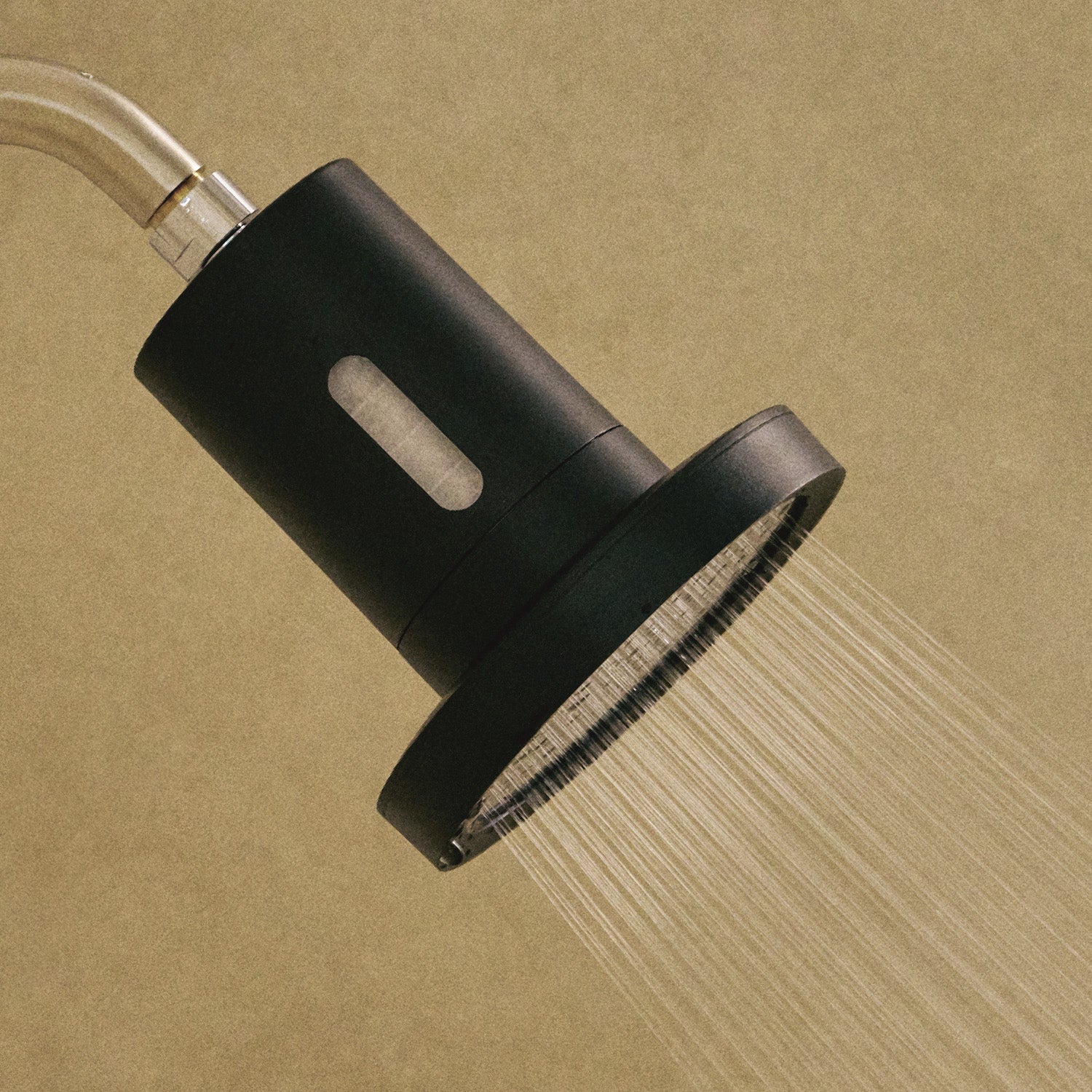
The setup that works: Second Shower Handheld or Fixed Showerhead — NSF certified, tool-free install, zero pressure loss.


Leave a comment
All comments are moderated before being published.
This site is protected by hCaptcha and the hCaptcha Privacy Policy and Terms of Service apply.