



The One Change That Mattered
Three weeks before our due date, I installed Second Shower's NSF-certified filtered shower head. It removes 99.9% (during the cartridge's peak performance window, Day 1–60) of chlorine and heavy metals while infusing Vitamin C directly into the water — the only change I made to our bathroom before bringing our newborn home.
I wasn't trying to create a perfect nursery or buy every baby product on the market. I was focused on one specific concern: newborn skin is 30% thinner than adult skin and five times more permeable to chemical absorption. The chlorine and chloramine in our tap water weren't just drying out my skin — they'd be sitting directly on my baby's developing skin barrier during bath time.
This is the story of why I chose a shower filter over dozens of other "must-have" baby products, what happened during our first month home, and what I'd tell any parent preparing for a newborn today.
What I Learned About Water and Baby Skin
During my third trimester, I started researching everything that would touch our baby's skin. I read about fragrance-free detergents, hypoallergenic lotions, and dermatologist-approved soaps. But I kept coming back to one thing nobody on my registry had mentioned: the water itself.
Municipal water in the United States is treated with chlorine or chloramine to kill bacteria. It's effective and EPA-approved, but these disinfectants don't discriminate — they strip natural oils from skin on contact. For adults with mature skin barriers, this might mean dryness or irritation. For newborns with underdeveloped skin barriers, the impact is more significant.
I found a 2019 study published in the Journal of Allergy and Clinical Immunology showing that chlorinated water exposure in infancy was associated with increased eczema risk. The mechanism made sense: chlorine disrupts the lipid layer that protects skin from environmental irritants. Babies don't produce enough sebum yet to compensate.
Our water utility report showed chlorine levels at 2.8 ppm — well within EPA standards for drinking water safety, but still enough to cause skin irritation. I wanted a solution that would remove those disinfectants without adding new chemicals or requiring me to boil and cool water for every bath.
Why I Chose a Shower Filter Over Other Options
I considered several approaches. Bottled distilled water for baths seemed wasteful and impractical. A whole-house filtration system cost $3,000+ and required professional installation we couldn't schedule before the due date. Inline shower filters looked clunky and dropped water pressure to a trickle based on reviews.
Second Shower's Showerhand stood out for three specific reasons. First, it's NSF/ANSI 42* certified for chlorine and heavy metal removal — not marketing claims, but third-party verified performance. Second, it uses Vitamin C neutralization instead of KDF-55 media, which meant it would maintain 99.9% filtration efficiency from Day 1 to Day 60 without degrading. Third, it installs in under five minutes without tools, which mattered when I was 37 weeks pregnant and couldn't handle a complicated setup.
*Micron PP sediment filter certified by NSF/ANSI 42 standards.
The handheld design was the deciding factor. I could control exactly where the filtered water went during baby baths — direct spray into a baby tub, gentle rinse over their head, easy maneuvering around their neck folds and diaper area. Fixed shower heads would have made newborn bathing awkward and inefficient.
I ordered it on a Tuesday. It arrived Thursday. I installed it Friday afternoon while my husband assembled the crib. Installation took four minutes: unscrew the old shower head, wrap the included thread tape around the shower arm, screw on the Second Shower unit, hand-tighten. No plumber, no special tools, no stress.
Install your shower filter 2-3 weeks before your due date. This gives you time to test the water pressure, adjust the spray angle, and get comfortable with the setup before you're doing it one-handed with a crying newborn.
First Bath at Home
Our daughter was born on a Tuesday. We came home Thursday afternoon. Her first real bath at home was Saturday morning, six days old.
I set up the baby tub in our shower, filled it halfway with warm filtered water from the Showerhand, and tested the temperature with my elbow like the pediatrician recommended. The water felt softer — less of that tight, squeaky feeling on my skin that I'd gotten used to. No chlorine smell.
The bath itself was quick. Newborns don't need long soaks — just a gentle rinse to clean the diaper area, neck folds, and any spit-up residue. The handheld spray made it easy to rinse her head without getting water in her eyes or holding her in awkward positions. Total bath time was maybe five minutes.
What I noticed immediately: her skin didn't turn red or blotchy after the bath. With our first attempt in the hospital (using regular tap water from the sink), her chest and arms had developed these small red patches that took an hour to fade. The nurses said it was normal newborn sensitivity. But at home with filtered water, her skin stayed calm and pink, not irritated.
I wasn't expecting dramatic results from one bath. But the absence of irritation felt significant. We weren't adding a problem where there didn't need to be one.
First Month Results
By week three, the difference was clear enough that our pediatrician commented on it during our two-week checkup. Our daughter's skin was "beautifully hydrated" with no signs of the newborn dryness or peeling she typically sees. We weren't using any special lotions or creams — just gentle soap, filtered water baths three times per week, and regular diaper changes.
The real test came during week four when my sister visited with her six-week-old son. He had patches of dry, flaky skin on his chest and scalp despite using the same baby soap we did. The main difference: she was bathing him in untreated tap water. Her water utility used chloramine (harder to remove than chlorine), and she lived in an older building with copper pipes that can leach heavy metals.
I let her use our shower setup for his bath. She noticed the same thing I had: his skin didn't turn red and tight afterward. The dry patches didn't disappear overnight, but they stopped getting worse. She ordered her own Second Shower unit before leaving town.
For us, the filter became part of the routine. Bath nights weren't stressful. I didn't worry about irritation or reactions. The water pressure stayed strong enough to rinse soap quickly — no long, drawn-out baths that left a newborn crying and cold.
Unexpected Benefits Nobody Mentioned
The filtered water helped with more than just planned bath time. Postpartum recovery involved a lot of sitz baths and perineal rinses with the handheld shower head. The filtered water was gentler on healing tissue — no stinging from chlorine, no irritation from hard water minerals. My OB had recommended warm water rinses after every bathroom trip for the first two weeks. Having clean, filtered water made those rinses more effective and less uncomfortable.
My hair also stopped shedding in clumps around week eight postpartum. Postpartum hair loss is normal, but my dermatologist mentioned that chlorine exposure can accelerate telogen effluvium (the medical term for post-pregnancy shedding). Filtered water wasn't going to prevent hormonal hair loss entirely, but it removed one unnecessary stressor on my hair follicles during an already volatile time.
My husband, who'd been skeptical about the filter initially, admitted by month two that his scalp itching had disappeared. He has seborrheic dermatitis that flares with hard water and chlorine exposure. He'd been using medicated shampoo twice a week for years. After switching to filtered showers, he dropped down to once a week and eventually stopped needing it entirely.
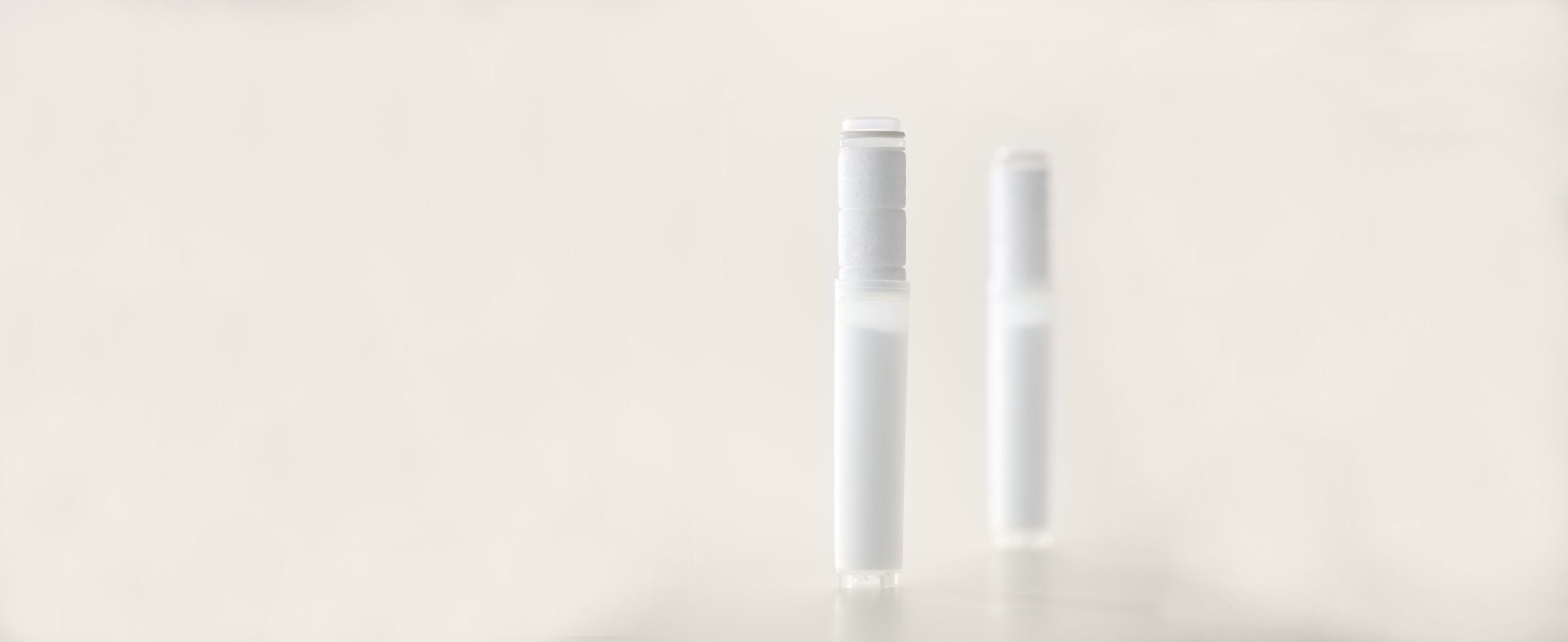
The filter window showed what we'd been showering in. By week six, the clear filter cartridge had turned from white to rust-brown with visible sediment. That was iron, copper, and chlorine residue that would have been sitting on our daughter's skin, our skin, our hair. Seeing it made the $89 feel like the best money we'd spent on baby prep.
What a Shower Filter Won't Do
I need to be clear about expectations. A shower filter isn't a cure-all, and I didn't approach it that way.
It won't prevent eczema or allergic reactions caused by genetics, food sensitivities, or environmental allergens. If your baby develops eczema, you still need to see a pediatric dermatologist and follow their treatment protocol. The filter removes chlorine and heavy metals — it doesn't treat existing skin conditions.
It won't make your baby's skin perfect. Newborns peel, develop baby acne, get heat rash, and go through all kinds of normal skin changes in the first three months. Filtered water reduces one source of irritation, but it's not a shield against everything.
It won't eliminate the need for other good practices. You still need to use gentle, fragrance-free soap. You still need to pat dry (not rub) after baths. You still need to avoid over-bathing, which strips natural oils even with filtered water. The filter is part of a routine, not a replacement for one.
And you need to replace the filter cartridge every 1-2 months depending on usage. That's an ongoing cost ($29.96 for a three-pack) and a maintenance task to remember. If you're not willing to track that and swap cartridges, the system stops working and you're back to unfiltered water without realizing it.
Why the Showerhand Model Worked for Us
The Second Showerhand solved a specific problem: giving a newborn a bath without holding them under a fixed shower head or filling a tub with unfiltered tap water.
The handheld design meant I could position the spray exactly where I needed it — over the baby tub, angled away from their face, low-pressure rinse for their scalp. Fixed shower heads would have required awkward maneuvering or filling a separate basin, which defeats the purpose of having a filtered shower system.
The 128 micro-jets maintained water pressure while filtering. This mattered more than I expected. Other filtered shower heads we'd tried at friends' houses (Jolie, AquaBliss) had weak, dribbling water pressure that made rinsing soap take forever. Second Shower's pressure felt strong and consistent — no difference from our original unfiltered shower head except the water was cleaner.
The filter cartridge uses Vitamin C neutralization, not KDF-55 media. KDF-55 (the copper-zinc alloy most competitors use) starts at 90% chlorine removal and drops to under 10% by Day 60 as the media oxidizes. Vitamin C neutralization chemically converts chlorine to harmless chloride ions and maintains 99.9% removal efficiency for the cartridge's peak performance window (Day 1–60). For a newborn's skin, that consistency mattered.
The clear "Truth Window" on the filter chamber showed exactly what the filter was catching — rust, sediment, chlorine residue. That visible proof made it easier to remember to replace the cartridge on schedule. When the filter turned brown, it was time to swap it out.
The $89 price point was reasonable compared to alternatives. Jolie's fixed shower head was $165, required professional installation in some cases, and used the same degrading KDF-55 media. Canopy's system was $200+ and only available as a fixed model. Second Shower was cheaper, more versatile, and delivered better filtration chemistry.


| Feature | Second Showerhand | Jolie | AquaBliss |
|---|---|---|---|
| Design | Handheld | Fixed only | Fixed or handheld |
| Filtration | Vitamin C + sediment | KDF-55 + carbon | KDF-55 + carbon |
| NSF Certified | Yes (NSF/ANSI 42*) | No | No |
| Filter Life | 1-2 months | 3 months (claimed) | 6 months (claimed) |
| Pressure Loss | None (128 micro-jets) | Moderate (user reports) | Significant (user reports) |
| Price | $89 | $165 | $35-45 |
| Install Time | 5 minutes, no tools | 10 minutes, wrench needed | 5 minutes, no tools |
| Best For | Baby baths, renters, portability | Fixed install, aesthetic | Budget option |
*Micron PP sediment filter certified by NSF/ANSI 42 standards.
What I'd Tell Other New Parents
If you're preparing for a newborn and concerned about bath water quality, start with your local water utility report. Look up your city's chlorine or chloramine levels, hardness (measured in grains per gallon or ppm), and any EPA violations for heavy metals like lead or copper. That tells you what you're actually dealing with.
If your water contains chlorine above 1.5 ppm, chloramine at any level, or hardness above 7 gpg, a shower filter will make a measurable difference for newborn skin. You're not being paranoid — you're removing a documented irritant.
Choose a handheld model if you're bathing a baby. Fixed shower heads are impractical for infant bath time. Look for NSF/ANSI 42* certification (third-party verified chlorine removal) and ask what filtration media the company uses. Vitamin C neutralization maintains consistent performance. KDF-55 degrades quickly.
*Micron PP sediment filter certified by NSF/ANSI 42 standards.
Install it 2-3 weeks before your due date so you're not figuring it out with a newborn in the house. Test the water pressure, adjust the spray settings, and make sure you're comfortable with how it works.
And set a calendar reminder to replace the filter cartridge every 60 days. The system only works if you maintain it.
Second Shower's Showerhand was the one change I made before bringing our daughter home. It wasn't the most glamorous purchase on the registry. But three months later, it's the one I'd prioritize again.
FAQ
When should I start using filtered water for my newborn?
You can use filtered water from the first bath at home. Newborn skin is 30% thinner and five times more permeable than adult skin, making it more vulnerable to chlorine irritation from day one. Most pediatricians recommend sponge baths for the first 1-2 weeks until the umbilical cord stump falls off, then transitioning to regular baths 2-3 times per week. Installing a shower filter before your due date ensures filtered water is ready when you need it.
Will a shower filter prevent baby eczema?
No. A shower filter removes chlorine and heavy metals that can irritate skin, but it won't prevent eczema caused by genetics, food allergies, or environmental triggers. If your baby develops eczema, you need to see a pediatric dermatologist for proper diagnosis and treatment. However, filtered water can reduce one source of irritation and may help prevent flare-ups in babies already prone to eczema. Think of it as removing an unnecessary stressor, not as a medical treatment.
How often do I need to replace the filter cartridge?
Replace the filter cartridge every 1-2 months depending on your water quality and usage frequency. The clear Truth Window on Second Shower's filter chamber shows visible discoloration (rust, sediment, chlorine residue) as the filter works. When it turns brown or dark yellow, it's time to replace it. Set a calendar reminder for 60 days after installation to stay on schedule. Replacement filters cost $29.96 for a three-pack.
Can I use a filtered shower head in an apartment or rental?
Yes. Second Shower's Showerhand installs in under 5 minutes with no tools and no permanent modifications to plumbing. Unscrew your existing shower head, wrap the included thread tape around the shower arm, screw on the Second Shower unit, and hand-tighten. When you move, unscrew it and reinstall your original shower head. This is completely renter-friendly and doesn't require landlord permission since you're not altering the building's plumbing.
Is filtered water safe for newborns to drink during bath time?
Babies will inevitably swallow small amounts of bath water. Filtered shower water removes chlorine, chloramine, and heavy metals, making it safer than unfiltered tap water if ingested. However, it's not sterile and isn't a substitute for properly prepared formula or breast milk. If your baby drinks bath water accidentally, it's not a medical emergency, but you shouldn't intentionally give them bath water to drink. Use filtered or boiled tap water for formula preparation as directed by your pediatrician.


Leave a comment
This site is protected by hCaptcha and the hCaptcha Privacy Policy and Terms of Service apply.