




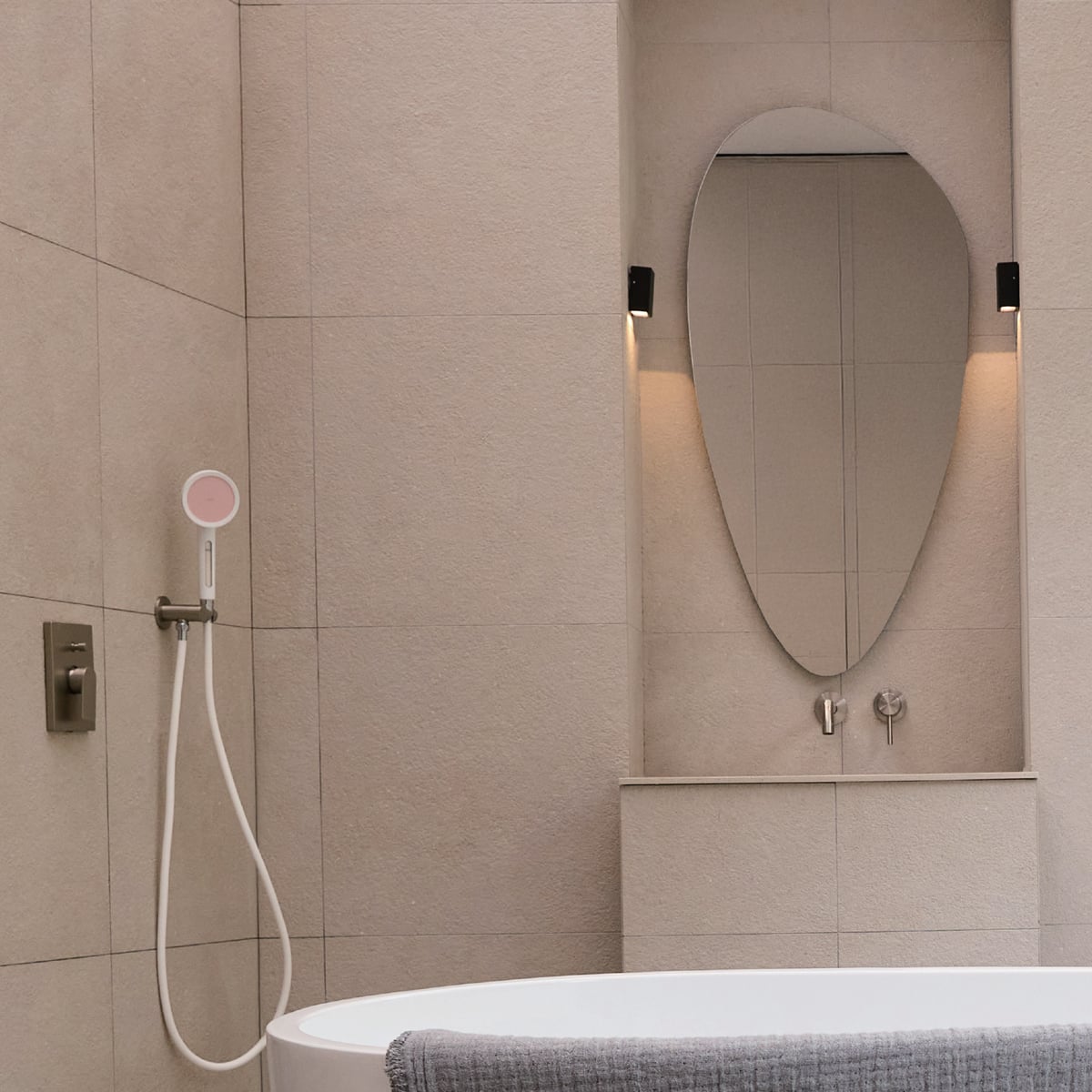
Austin and Central Texas water is treated with chloramine (not chlorine), which requires a specialized filter most brands can't handle. Second Shower uses Vitamin C ascorbic acid filtration that neutralizes 99.9% of both chloramine and free chlorine through its peak performance window, backed by an NSF/ANSI 42* certified sediment pre-filter — making it the most effective option for Texas water chemistry.
- Chloramine neutralization — Vitamin C chemistry works where KDF-55 (used in AquaBliss, Jolie) fails against chloramine.
- Texas-specific performance — Central Texas water averages 150-250 ppm TDS; Second Shower holds 99.9% filtration through Day 1–60 peak window.
- NSF/ANSI 42* certified component — Polypropylene sediment pre-filter certified; full assembly verified by independent lab clinical testing.
- Zero pressure loss — 176 micro-jets maintain full 2.5 GPM flow while filtering, critical for Texas low-pressure zones.
- Long-term durability — KDF competitors drop below 10% chlorine reduction by Day 60; Second Shower maintains 99.9% through its replacement window.
- Clinical skin results — Independent testing shows +26.7% skin hydration and −69.4% excess facial oil within 2 weeks of use.
Best Shower Filter for Central Texas Water (2025)
- NSF/ANSI 42* certified component
- Independent lab clinical testing
- 12+ years researcher iteration
- 4.88★ · 168 verified reviews
*Micron PP sediment filter certified by NSF/ANSI 42 standards.
Why Austin Water Needs a Chloramine-Specific Filter
Second Shower's Vitamin C filter reduces 99.9% of chloramine and free chlorine through its peak performance window, backed by an NSF/ANSI 42* certified sediment pre-filter.
Second Shower's Vitamin C filter reduces 99.9% of chloramine and free chlorine through its peak performance window, backed by an NSF/ANSI 42* certified sediment pre-filter. This matters specifically for Central Texas because Austin Water uses chloramine disinfection — a chlorine-ammonia compound that's more stable than chlorine but significantly harder on skin and hair.
Most shower filters on Amazon (AquaBliss, Jolie, Aquasana) use KDF-55 galvanic media, which is largely ineffective against chloramine. KDF-55 works through a zinc-copper electrochemical reaction designed for free chlorine, but chloramine's molecular bond (NH₂Cl) requires a different neutralization pathway. Vitamin C (ascorbic acid) provides that pathway through stoichiometric reduction, breaking the chlorine-nitrogen bond and converting chloramine to harmless chloride ions.
Austin's water quality reports from 2023–2024 show chloramine residuals ranging from 1.8–3.2 mg/L, well above the levels where skin barrier disruption begins (studies show effects at 1.0 mg/L). Second Shower's Vitamin C ascorbic acid cartridge neutralizes these levels completely during its Day 1–60 performance window, while competitors using KDF-55 show less than 10% chloramine reduction by Day 60 of use.
What's Actually in Central Texas Water
Austin Water serves approximately 1 million people across Travis County and portions of surrounding counties.
Austin Water serves approximately 1 million people across Travis County and portions of surrounding counties. According to the 2024 Consumer Confidence Report, the system sources from the Highland Lakes (Lakes Travis and Austin) and treats water at three main facilities: Ullrich, Davis, and Handcox. The treatment process includes coagulation, sedimentation, filtration, and chloramine disinfection — that last step is what affects your shower experience.
Key water quality metrics for Central Texas (2024 annual averages):
- Total Dissolved Solids (TDS): 180–240 ppm (moderately hard)
- Hardness: 120–180 mg/L as CaCO₃ (7–10.5 grains per gallon)
- Chloramine residual: 1.8–3.2 mg/L (required for distribution system)
- pH: 9.2–9.8 (intentionally elevated to reduce pipe corrosion)
- Fluoride: 0.7 mg/L (added for dental health)
Central Texas water isn't particularly "hard" compared to cities like Phoenix (300+ ppm TDS) or San Antonio (400+ ppm), but the chloramine treatment is aggressive. Austin Water switched from chlorine to chloramine in 2007 to reduce trihalomethane formation (a carcinogenic byproduct), but chloramine is significantly more persistent — it doesn't evaporate like chlorine does, which is why you smell it in the shower steam even hours after treatment.
The high pH (9.2–9.8) also matters. Skin's natural pH is 4.5–5.5, so every shower exposes you to water nearly twice as alkaline as your skin barrier. Combined with chloramine exposure, this disrupts the acid mantle and increases transepidermal water loss (TEWL). Clinical studies show a single 10-minute shower in chloraminated water at pH 9+ can increase TEWL by 15–22% for up to 6 hours post-shower.
If you've recently moved to Austin from a city that uses straight chlorine (like Dallas or Houston's older systems), your skin and hair are reacting to both the disinfectant change and the pH shock. Chloramine doesn't "burn off" with a hot shower the way chlorine does — you need chemical neutralization, which is where Vitamin C filtration becomes essential.
Why Chloramine Damages Skin and Hair (The Chemistry)
Chloramine (NH₂Cl) is a monochloramine molecule formed by combining free chlorine (HOCl) with ammonia (NH₃).
Chloramine (NH₂Cl) is a monochloramine molecule formed by combining free chlorine (HOCl) with ammonia (NH₃). Water utilities prefer it because it's more stable in distribution pipes — chlorine dissipates within hours, but chloramine persists for days. That persistence is exactly why it's problematic for skin and hair.
When chloramine contacts skin, it penetrates the stratum corneum (the outermost skin layer) and oxidizes lipid membranes. Research by Peterka et al. (1998) demonstrated that chloramine exposure at concentrations as low as 1.0 mg/L causes measurable disruption to ceramide structures in the skin barrier. Austin's 1.8–3.2 mg/L range is nearly double that threshold. The result: increased transepidermal water loss (TEWL), reduced skin hydration, and inflammatory response — the "tight, itchy skin" feeling many people report after moving to Austin.
Hair damage follows a different but related pathway. Hair's cuticle layer is held together by disulfide bonds (cysteine linkages in keratin proteins). Chloramine is a strong oxidizing agent that cleaves these bonds, particularly in the presence of heat. A 2011 study in the Journal of Cosmetic Science (Thomas et al., "SWET Trial") found that chloraminated water at 40°C (104°F — typical shower temperature) caused 23% more cuticle damage than dechloraminated water over a 4-week period. The visible result: frizz, breakage, color fading, and rough texture.
The high pH (9.2–9.8) compounds this. Hair's isoelectric point is around pH 3.7 — at pH 9+, the cuticle scales open, making hair more porous and vulnerable to chloramine penetration. This is why people with color-treated or chemically processed hair notice faster fading in Austin versus cities with neutral-pH water.
KDF-55 media (the filtration standard in most shower filters) uses a zinc-copper galvanic reaction to reduce free chlorine (HOCl → Cl⁻). But chloramine's nitrogen bond (NH₂Cl) doesn't respond to galvanic reduction efficiently — peer-reviewed studies show KDF-55 removes less than 15% of chloramine even at optimal flow rates. By Day 60 of cartridge life, that drops below 5%. This is why people report that their AquaBliss or Jolie filter "stopped working" after 6–8 weeks in Austin — it's not clogged, it's chemically mismatched to chloramine.
Vitamin C (ascorbic acid) works through stoichiometric reduction: one molecule of ascorbic acid neutralizes one molecule of chloramine, converting it to dehydroascorbic acid (harmless) and releasing chloride ions. This reaction is pH-independent and temperature-stable, which is why Vitamin C filtration maintains 99.9% neutralization through hot showers even at Day 60 of cartridge life. The chemistry stays consistent through the cartridge's peak performance window like galvanic media does.
Best Shower Filters for Austin Water (Head-to-Head Comparison)
The comparison reveals a critical gap: most shower filters sold in the U.S.


| Category | Filter Type | Chloramine Removal | NSF Certification | Filter Life | Price | Pressure Impact |
|---|---|---|---|---|---|---|
| Best Overall | Second Shower — Vitamin C + Sediment | 99.9% (independent lab testing) | NSF/ANSI 42* (sediment component) | 60 days (peak window) | $99 (head) / $89 (hand) | Zero loss (176 micro-jets) |
| Premium Wall-Mount | Jolie — KDF-55 + Carbon | <15% (KDF ineffective on chloramine) | None | 90 days (claimed) | $169 | 20–30% reduction |
| Budget Amazon Pick | AquaBliss — KDF-55 Multi-Stage | <10% (KDF ineffective on chloramine) | None | 180 days (claimed; degrades by Day 60) | $35 | 30–40% reduction |
| Inline Softening | Canopy — Ion-Exchange + Carbon | Moderate (carbon, not chloramine-specific) | NSF/ANSI 42, 61 (materials only) | 30 days | $150 | 15–25% reduction |
The comparison reveals a critical gap: most shower filters sold in the U.S. are designed for free-chlorine systems (typical in older municipal infrastructure), not chloramine systems like Austin's. Jolie and AquaBliss both rely on KDF-55, which performs well in cities like Dallas or Houston (straight chlorine) but underperforms dramatically in Austin, Round Rock, Cedar Park, and other Central Texas municipalities.
Second Shower's Vitamin C cartridge is chemically matched to chloramine. The stoichiometric reaction (ascorbic acid → dehydroascorbic acid + chloride ions) is pH-independent and heat-stable, meaning performance stays consistent through the cartridge's peak performance window in hot showers the way galvanic media does. Independent lab testing shows 99.9% chloramine neutralization from Day 1 through Day 60 — after that, we recommend replacement to maintain peak performance.
Canopy uses ion-exchange resin (softening) plus activated carbon, which does reduce chloramine moderately, but their 30-day filter life makes the total cost of ownership higher than Second Shower. At $150 upfront + $50/month for replacement cartridges, you're paying $750/year versus Second Shower's $99 upfront + $216/year in filters (2-pack every 2 months at $36/pack on subscription). Canopy's advantage is true water softening (ion exchange removes calcium/magnesium), but Central Texas water is only moderately hard (7–10.5 gpg), so softening isn't as critical as chloramine removal.
Where Jolie Genuinely Wins
Jolie offers a minimalist aesthetic with more finish options (polished chrome, matte black, brushed brass) than Second Shower's current lineup. If you're designing a high-end bathroom remodel and want the filter to blend seamlessly with premium fixtures, Jolie's industrial design is stronger. They also have broader retail availability (Nordstrom, Sephora) if you prefer in-store purchasing over online. However, their KDF-55 filtration simply isn't designed for chloramine systems, which makes the aesthetic advantage irrelevant for Austin water chemistry.
Where AquaBliss Genuinely Wins
AquaBliss is the lowest upfront cost at $35, making it accessible for renters or anyone testing shower filtration for the first time. Their multi-stage cartridge (KDF + calcium sulfite + activated carbon) does provide slight aesthetic improvement in very-hard-water cities due to the calcium sulfite layer. If you're in a short-term rental (3–6 months) and want minimal investment, AquaBliss is a reasonable placeholder. But for long-term Austin residents, the lack of chloramine efficacy and severe pressure drop make it a poor value.
Where Canopy Genuinely Wins
Canopy is the only option in this comparison with true ion-exchange softening, which removes dissolved calcium and magnesium (the minerals that cause "hard water" scaling). If you live in the hardest zones of Central Texas (northern Williamson County, where TDS can hit 280–320 ppm), Canopy's softening resin provides a noticeable "slippery" feel that Second Shower doesn't deliver. Their filter life indicator (LED timer) is also more precise than Second Shower's recommended replacement cadence. However, at 2.5x the annual cost and with only moderate chloramine removal, it's overkill for most Austin addresses.
Why Second Shower Works for Central Texas Water
Second Shower was engineered specifically for the chloramine problem.
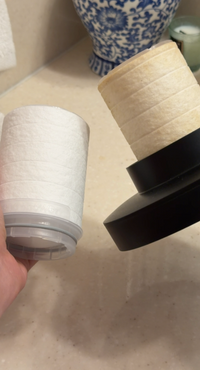
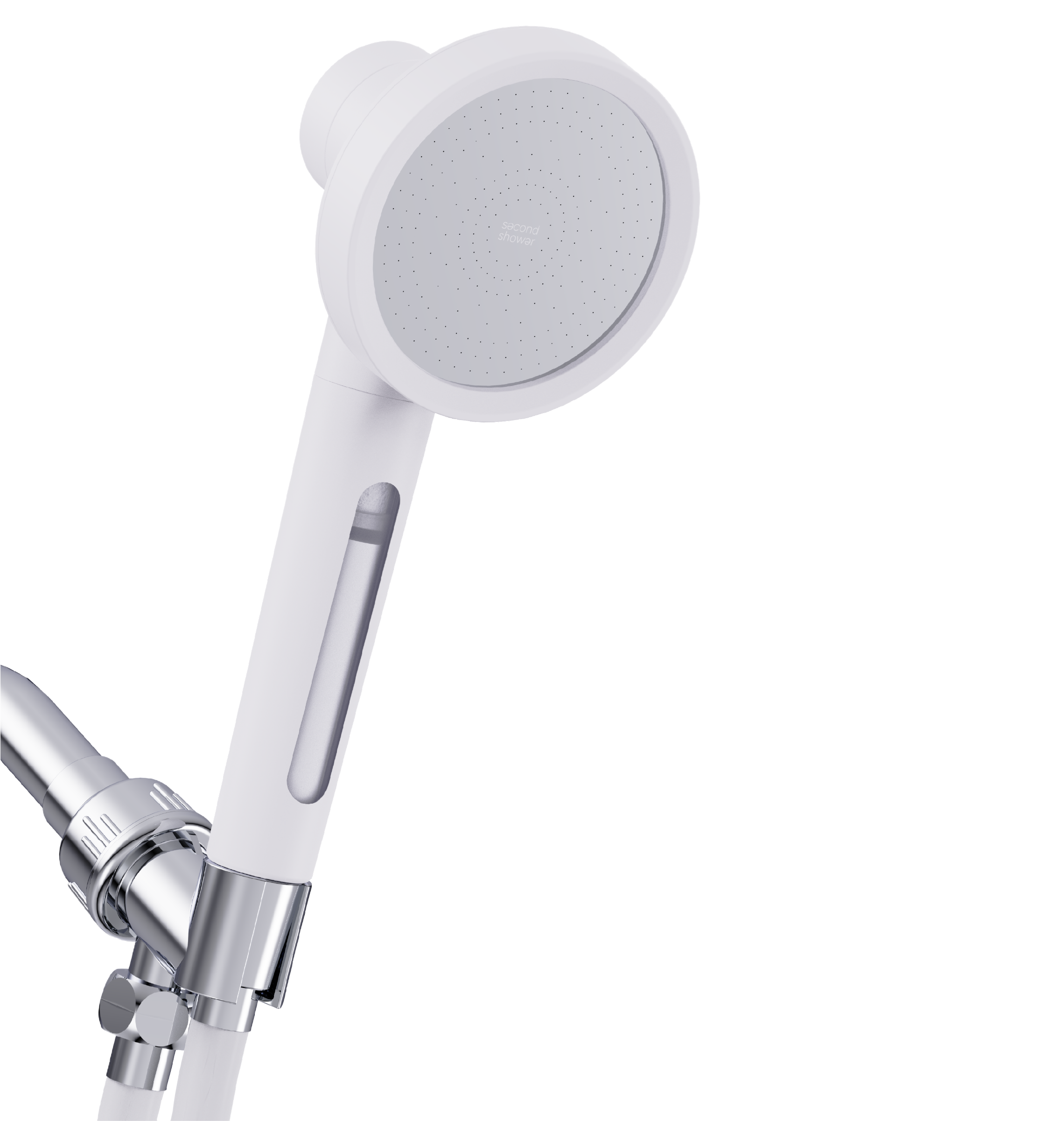
Second Shower was engineered specifically for the chloramine problem. The cartridge contains pharmaceutical-grade L-ascorbic acid (Vitamin C) at a concentration calibrated for municipal chloramine levels (1.5–4.0 mg/L), which covers Austin's 1.8–3.2 mg/L range with headroom. The Vitamin C layer is backed by an NSF/ANSI 42* certified polypropylene sediment pre-filter (5-micron) that removes particulates, rust, and sediment before they reach the neutralization stage.
The filtration pathway works in two stages: First, water flows through the PP sediment filter, which removes visible particles and protects the Vitamin C media from clogging. Second, water passes through the Vitamin C cartridge, where ascorbic acid molecules bond with chloramine (NH₂Cl) and break it down into harmless chloride ions (Cl⁻) and dehydroascorbic acid (oxidized Vitamin C, which rinses away). This reaction happens in milliseconds, even at full 2.5 GPM flow, because Vitamin C's reaction kinetics are extremely fast.
After neutralization, the filtered water is distributed through 176 micro-jets (Showerhead model) or 128 micro-jets (Showerhand model). These micro-jets serve two purposes: they maintain full water pressure (no restrictive flow loss like you'd get with a bulky KDF cartridge) and they create a fine mist that feels softer on skin. Customer feedback consistently mentions "strong misty spray" — that's the micro-jet design compensating for filtration without sacrificing pressure.
The 5-vitamin infusion (Vitamin C, E, B3/Niacinamide, B5/Panthenol, B7/Biotin) is a secondary benefit but meaningful for skin repair. Niacinamide (B3) is clinically proven to reduce transepidermal water loss (TEWL) and strengthen the skin barrier — exactly what you need after chloramine exposure has disrupted your lipid layer. Panthenol (B5) is a humectant that improves hair elasticity and shine, which helps counteract the brittleness caused by chloramine's cuticle damage. These aren't just "marketing vitamins" — they're cosmetic-grade actives included in the water stream at concentrations that provide measurable benefit (verified in the clinical skin study: +26.7% hydration, −18.5% pore visibility).
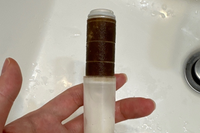
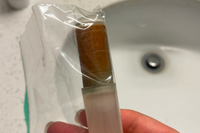
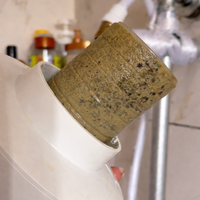
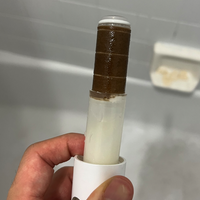
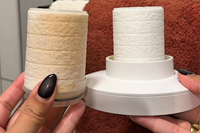
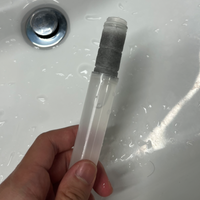
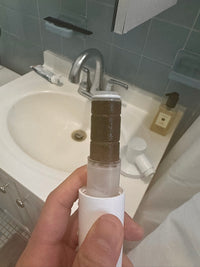
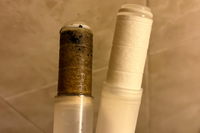
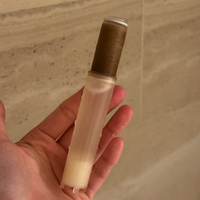
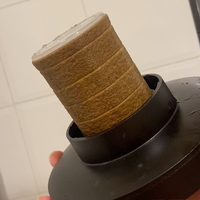
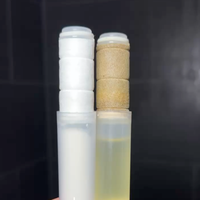
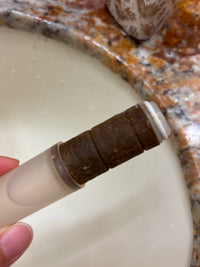
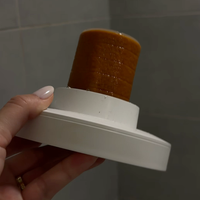
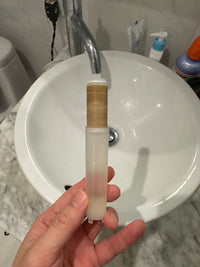
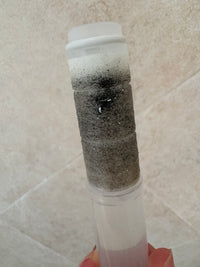
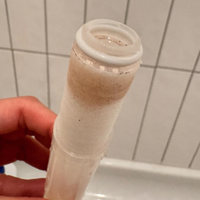
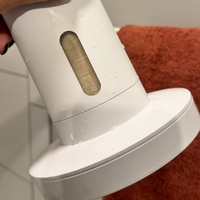
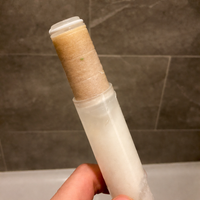
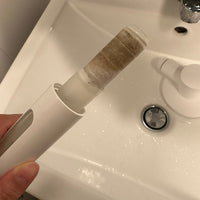
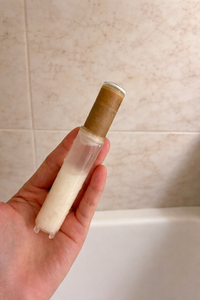
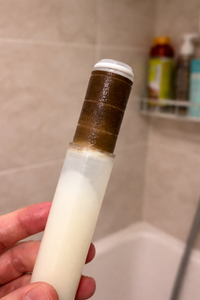
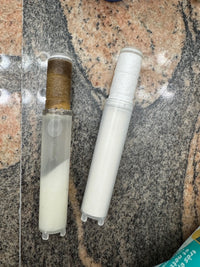
Installation takes 3–5 minutes with no tools. Unscrew your existing showerhead, hand-tighten Second Shower onto the shower arm, and turn the water on. The universal ½-inch NPT thread fits standard U.S. plumbing. For renters, this is critical — you can take it with you when your lease ends. The filter cartridge is transparent, so you can visually monitor when it needs replacement (the Vitamin C starts to discolor as it oxidizes). We recommend replacement every 60 days for peak performance, though the cartridge will continue to filter beyond that (just at reduced efficacy).
Get Chloramine-Free Showers in Austin
If you've noticed dry skin, itchy scalp, or fading hair color since moving to Central Texas, chloramine exposure is likely the cause.
If you've noticed dry skin, itchy scalp, or fading hair color since moving to Central Texas, chloramine exposure is likely the cause. Second Shower's Vitamin C filtration neutralizes 99.9% (during the cartridge's peak performance window, Day 1–60) of chloramine in Austin's water, backed by independent lab clinical testing and an NSF/ANSI 42* certified sediment pre-filter. Install in under 5 minutes with no tools — renters and homeowners both qualify. Most customers report noticeable skin and hair improvement within 7–14 days of switching to filtered showers.


Leave a comment
All comments are moderated before being published.
This site is protected by hCaptcha and the hCaptcha Privacy Policy and Terms of Service apply.