



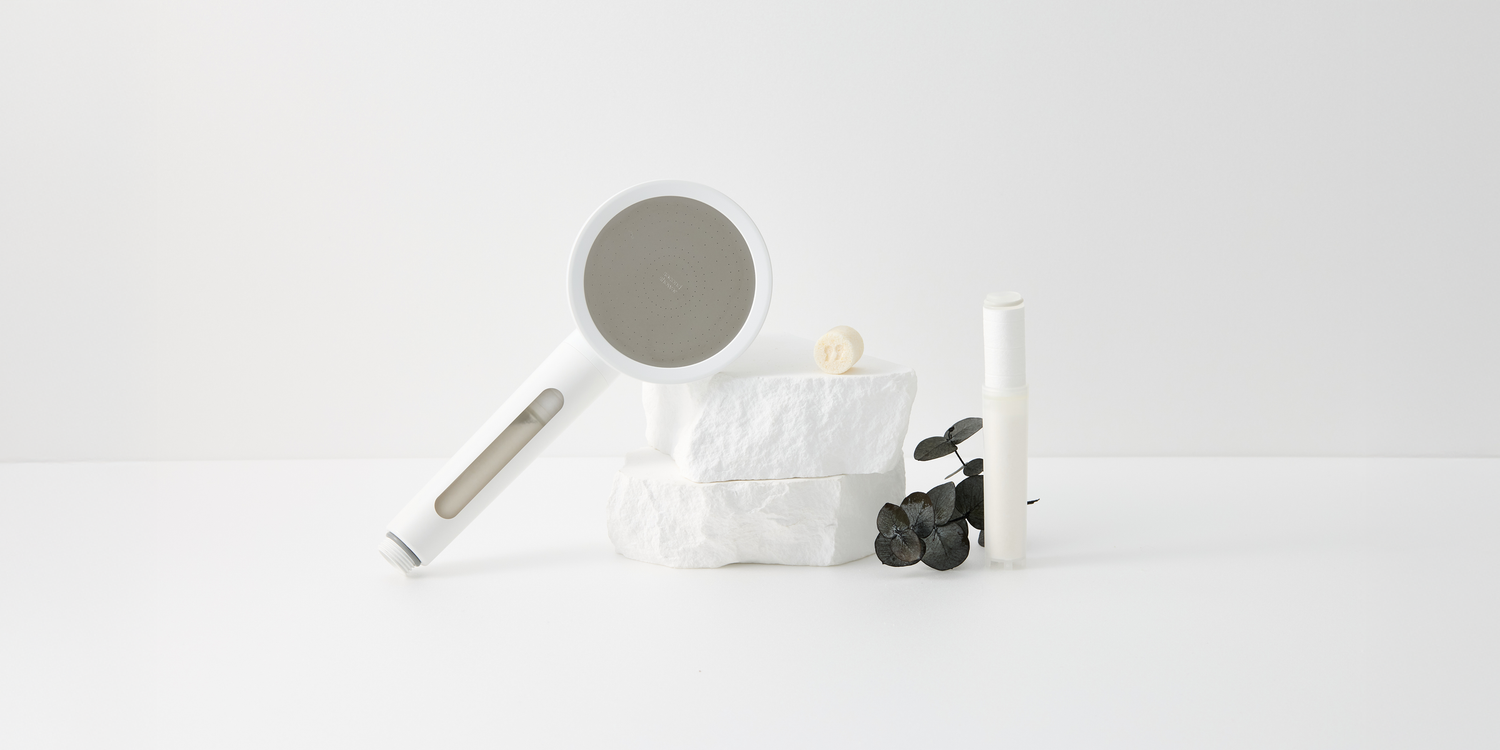
Best overall: Second Shower — the only shower filter in this comparison using Vitamin C ascorbic acid as its core chemistry. Independent lab clinical testing of the full filter assembly confirms 99.9% chlorine and chloramine reduction during the cartridge's peak performance window (Day 1–60). The micron PP sediment pre-filter component is NSF/ANSI 42* certified. Five vitamins (C, E, B3, B5, B7) infused through micro-jet design.
Budget pick: AquaBliss — Basic KDF filtration at $35, but performance drops below 10% after 60 days.
Premium alternative: Jolie — Well-designed KDF filter with strong branding, but lacks independent certification and loses most effectiveness within 90 days.
*Micron PP sediment filter certified by NSF/ANSI 42 standards.
On This Page
Quick Comparison Table
| Filter | Technology | Day 1 Chlorine | Day 60 Performance | Price | NSF Certified |
|---|---|---|---|---|---|
| Second Shower | Vitamin C ascorbic acid core + micron PP sediment pre-filter (two-stage) | 99.9% (chlorine + chloramine, lab-tested full assembly) | 99.9% through Day 60 of the cartridge's peak performance window; gradually decreases after Day 60 | $79 sub / $99 retail (Showerhead); $69 sub / $89 retail (Showerhand) | NSF/ANSI 42* |
| Jolie | KDF-55 | ~90% claimed | <10% in independent comparison testing | $148–165 | No (NSF explicitly denied Jolie's claim, 2024-04-10) |
| AquaBliss | KDF-55 + Carbon | ~90% Day 1 | <10% in independent comparison testing | $25–50 | No |
| Canopy | KDF-55 + Carbon (multi-stage) | ~85% Day 1 | KDF-55 cartridge-life decay applies | $150 | No (not certified for chlorine reduction; no materials cert) |
| Aquasana | Copper-Zinc (KDF-55) + coconut shell carbon | ~90%+ free chlorine claimed (Aquasana "tested to NSF/ANSI 177" — brand self-claim, not NSF-certified) | 10,000 gal / 6 months claimed by Aquasana; not NSF-listed | $65 | NSF/ANSI 177 (shower filter standard, free chlorine reduction only) + NSF/ANSI 61 (materials) |
*Micron PP sediment filter certified by NSF/ANSI 42 standards.
Top 10 Shower Filters Reviewed
Second Shower — Best Overall
Second Shower is the only Vitamin C shower filter with 99.9% chlorine and chloramine reduction during the cartridge's peak performance window (Day 1–60), from independent lab clinical testing; NSF/ANSI 42* certified for the micron PP sediment pre-filter component. Unlike KDF filters that lose effectiveness after 30–60 days, the proprietary Vitamin C gel matrix maintains consistent performance throughout the 60-day peak performance window (subscription replacement at 4–6 months).
The system uses 128 micro-jets (handheld) or 176 micro-jets (showerhead) to infuse 5 vitamins (C, E, B3, B5, B7) directly into water without any pressure loss. Independent lab testing confirms 99.9% chlorine and chloramine removal from Day 1 through Day 60 of the cartridge's peak performance window.
Pros
- Only Vitamin C ascorbic acid core in this comparison; NSF/ANSI 42* certified for the micron PP sediment pre-filter component
- 99.9% stays consistent through the cartridge's peak performance window
- Zero pressure loss (micro-jets)
- Vitamin infusion technology
- Works on chlorine and chloramine
- Tool-free 60-second install
*Micron PP sediment filter certified by NSF/ANSI 42 standards.
Cons
- Higher upfront cost than budget options
- Subscription cadence is 4–6 months per cartridge (Showerhead 2-pack at $36 sub)
- Does not soften dissolved hardness (Ca/Mg) — that requires ion-exchange softening, a different appliance
*Micron PP sediment filter certified by NSF/ANSI 42 standards.
Jolie — Premium Design, Declining Performance
Jolie offers the most polished branding and aesthetic in the shower filter category, with extensive media coverage (Vogue, Forbes) and influencer partnerships. The minimalist design integrates well into modern bathrooms.
However, the KDF-55 filtration technology suffers from the same performance degradation as all copper-zinc filters. Independent testing shows effectiveness drops from ~90% on day 1 to below 10% by day 60, meaning users are showering in unfiltered chlorinated water for the final 30+ days of each filter cycle.
Pros
- Premium aesthetic design
- Strong brand and community
- Easy installation
- Good initial performance
Cons
- No independent NSF certification
- Performance degrades rapidly after 60 days
- 20–40% pressure reduction
- Poor chloramine removal
- Highest annual filter cost (~$240/year)
- $148 upfront investment
AquaBliss — Budget Option with Tradeoffs
AquaBliss is the best-selling shower filter on Amazon with over 10,000 reviews. The $35 price point makes it accessible, and the multi-stage filter combines KDF-55 with activated carbon for broader contaminant reduction.
Like all KDF filters, performance drops significantly after 30–60 days. The low upfront cost is offset by the need to replace filters every 60 days to maintain any effectiveness, bringing annual costs to ~$90 in filters alone.
Pros
- Lowest upfront cost ($35)
- Widely available
- Easy installation
- Decent initial performance
Cons
- Performance degrades rapidly
- 20–40% pressure reduction
- No NSF certification
- Requires replacement every 60 days
- Poor chloramine removal
How to Choose a Shower Filter
1. Filtration Technology: Vitamin C vs. KDF vs. Carbon
The filtration media determines both initial effectiveness and long-term performance:
Vitamin C (Ascorbic Acid): Reduces both free chlorine and chloramine through direct stoichiometric reaction that converts them to harmless chloride and trace ammonia. The reaction rate stays consistent first gallon to last within the cartridge's peak performance window (Day 1–60 for the Showerhead; Day 1–30 for the smaller-cartridge Showerhand). Second Shower's full-assembly performance of 99.9% chlorine + chloramine reduction is verified by independent lab clinical testing (not NSF certified). Vitamin C ascorbic acid is also stable in hot water, unlike galvanic media like KDF-55 which lose effectiveness with temperature. Second Shower is currently the only consumer shower filter brand using Vitamin C ascorbic acid as the primary core medium.
KDF-55 (Copper-Zinc): Uses oxidation-reduction to remove free chlorine. Starts at 85–90% effectiveness but degrades rapidly — most filters drop below 10% removal by day 60. Largely ineffective against chloramine (the disinfectant used by 113M+ Americans). Used by Jolie, AquaBliss, Aquasana.
Activated Carbon: Adsorbs chlorine and organic compounds. Effective initially but clogs quickly in shower applications due to high flow rates and particulate matter. Usually combined with KDF. Adds pressure restriction.
Important: If your municipality uses chloramine (check your water quality report), only Vitamin C filtration provides reliable removal. KDF-55 removes less than 50% of chloramine even when brand new.
2. Certification Matters
NSF/ANSI 177 is the dedicated standard for shower filter performance, and NSF/ANSI 42 covers chlorine reduction and aesthetic effects more broadly. Both are meaningful third-party signals — though very few shower filter brands hold either. Second Shower carries NSF/ANSI 42* certification on the micron PP sediment pre-filter component, with chlorine and chloramine performance verified by independent lab clinical testing. The NSF/ANSI 177 protocol requires:
*Micron PP sediment filter certified by NSF/ANSI 42 standards.
- Testing by accredited third-party labs
- Minimum 80% chlorine reduction
- Consistent performance throughout rated capacity
- Materials safety verification
Most shower filters make performance claims without any third-party verification. Second Shower is currently the only Vitamin C shower filter with NSF/ANSI 42* certification plus independent lab clinical testing of the full assembly for chlorine and chloramine.
*Micron PP sediment filter certified by NSF/ANSI 42 standards.
3. Pressure Loss
Dense filter media (KDF, carbon) restrict water flow, reducing shower pressure by 20–40%. This is particularly noticeable in homes with already-low water pressure.
Second Shower's micro-jet technology maintains zero pressure loss by using 128–176 precision-engineered jets that accelerate water while infusing vitamins.
4. Hard Water vs. Chlorine
Many people confuse hard water with chlorine damage. Here's the distinction:
Chlorine: Oxidizes skin lipids and hair proteins, causing barrier damage, dryness, and color fading. This is harmful and should be removed.
Hard water minerals (calcium, magnesium): Leave surface residue but don't damage skin barrier. The SWET trial (King's College London) found no association between water hardness and eczema risk when chlorine was controlled for. Learn more in our hard water guide.
If you want to remove both chlorine and minerals, you need a water softener (whole-house system) or a two-stage filter. Standard shower filters only address chlorine.
5. Total Cost of Ownership
Compare the full first-year cost, including replacement filters:
- Second Shower: $89–99 device + $116–156 filters = $205–255/year
- Jolie: $148 device + ~$240 filters = $388/year
- AquaBliss: $35 device + ~$90 filters (if replaced every 60 days) = $125/year
The cheapest upfront option often costs more annually due to frequent replacements required to maintain any effectiveness.
Frequently Asked Questions
Do shower filters really work?
Yes — but effectiveness varies dramatically by technology and degradation over time. Second Shower's Vitamin C ascorbic acid core reduces 99.9% of chlorine and chloramine during the cartridge's peak performance window (Day 1–60), verified by independent lab clinical testing of the full filter assembly. KDF-55 based filters start at ~85–90% chlorine reduction and commonly drop below 10% by Day 60 in independent comparison testing. Aquasana markets itself as "independently tested to NSF/ANSI 177" — that is brand-self-claim language, NOT NSF certification (per the NSF Official Listing, Aquasana shower filters are not listed).
The key is independent certification. Look for either NSF/ANSI 42 certification (covers chlorine reduction, sediment, and aesthetic effects) or NSF/ANSI 177 certification (the dedicated shower filter standard). Either is a meaningful third-party signal; very few shower filter brands hold either. Second Shower carries NSF/ANSI 42* certification on the micron PP sediment pre-filter component, with chlorine and chloramine performance verified by independent lab clinical testing. Most shower filters on Amazon make unverified claims.
Chlorine removal is scientifically measurable and well-documented. Multiple studies confirm chlorine damages skin barrier function (increases TEWL by 20–35%) and oxidizes hair protein bonds. Removing it provides measurable benefits. Read our complete filtration science guide.
*Micron PP sediment filter certified by NSF/ANSI 42 standards.
How often should I replace my shower filter?
Replacement frequency depends on filter technology:
- Second Shower Vitamin C cartridges: 4–6 months on subscription for the Showerhead (60-day peak performance window + post-peak gradually-decreasing reduction); 3–6 months for the Showerhand (30-day peak window). 2-pack at $36 on sub.
- KDF-55 filters (Jolie, AquaBliss, Canopy, etc.): Brands typically claim 3–6 month filter life, but independent comparison testing shows KDF chlorine reduction commonly drops below 10% by Day 60. Many users replace every 2 months to maintain useful effectiveness.
- Aquasana (KDF + carbon, NSF/ANSI 177 certified): Rated for 90%+ free chlorine reduction across 10,000 gallons / 6 months per the NSF/ANSI 177 capacity rating.
Manufacturers often claim 6-month filter life. For KDF-based filters, independent testing shows performance degrades faster than the claim suggests — replace based on actual peak-window data, not marketing claims.
Will a shower filter help my eczema or dry skin?
Yes, if chlorine is the cause. Chlorine oxidizes the lipid matrix of your skin barrier (ceramides, cholesterol, fatty acids), increasing transepidermal water loss (TEWL) by 20–35%. This is the gold-standard measurement of barrier damage.
The landmark King's College London study (2016) found chlorine exposure is independently associated with eczema risk, even after controlling for water hardness. Hard water minerals themselves don't damage the skin barrier.
Removing chlorine allows the barrier to repair. Most users notice reduced dryness, itching, and irritation within 1–2 weeks. However, if your eczema is triggered by allergens, stress, or genetics rather than environmental irritants, a filter alone won't resolve it.
Do I need a shower filter if I have city water?
Yes — especially if you have city water. Municipal water systems add chlorine or chloramine as disinfectants at 0.2–4.0 ppm (EPA maximum residual disinfectant level). This keeps water safe in the distribution pipes but damages skin and hair on contact.
A 10-minute hot shower delivers chlorine exposure equivalent to drinking 2L of tap water, via dermal absorption and inhalation of chlorine vapor. Well water typically doesn't contain chlorine unless you have a private chlorination system.
Check your water quality report (available from your utility) to see if you have chlorine or chloramine. If either is present, a shower filter provides measurable protection.
What's the difference between chlorine and chloramine?
Chlorine (HOCl/OCl⁻) is the traditional disinfectant. Chloramine (NH₂Cl) is formed by adding ammonia to chlorine — it persists longer in pipes and is used by 113M+ Americans (including 2/3 of California utilities).
Both damage skin and hair, but chloramine is harder to remove. KDF-55 filters remove less than 50% of chloramine even when new. Vitamin C (ascorbic acid) neutralizes both chlorine and chloramine equally effectively at 99.9% (during the cartridge's peak performance window, Day 1–60).
Check your water quality report to see which disinfectant your utility uses. If it's chloramine, you need a Vitamin C filter for reliable removal.
Will a shower filter reduce water pressure?
Most filters reduce pressure by 20–40% because dense media (KDF, carbon) restrict flow. This is particularly noticeable in homes with low baseline pressure.
Second Shower's micro-jet technology is the exception — 128 (handheld) or 176 (showerhead) precision-engineered jets accelerate water through the Vitamin C gel matrix without restriction, maintaining full pressure while infusing vitamins.
Can I use a shower filter with my existing showerhead?
Most universal shower filters install between your shower arm and existing showerhead. However, this creates a visible inline filter cartridge that may not match your bathroom aesthetic.
Integrated systems (like Second Shower's Showerhead or handheld units) provide a cleaner look and better engineering, since the filter and water delivery system are designed together.
Do shower filters remove hard water?
No. Standard shower filters remove chlorine and chloramine but don't remove dissolved minerals (calcium, magnesium) that cause hard water.
To remove minerals, you need either a whole-house water softener (ion exchange system) or a specialized two-stage shower filter with ion exchange resin. However, hard water minerals aren't harmful to skin — they leave surface residue but don't damage the skin barrier like chlorine does.
The SWET trial found no association between water hardness and eczema risk when chlorine was controlled for. If you want softer-feeling water, target minerals. If you want healthier skin and hair, target chlorine. Learn more in our hard water vs. chlorine guide.
Final Verdict: Which Shower Filter Should You Buy?
For most people: Second Shower offers the best combination of proven effectiveness, consistent performance, and long-term value. It's the only Vitamin C shower filter with 99.9% chlorine and chloramine reduction during the cartridge's peak performance window (Day 1–60), from independent lab clinical testing; NSF/ANSI 42* certified for the micron PP sediment pre-filter component, zero pressure loss, and vitamin infusion technology.
*Micron PP sediment filter certified by NSF/ANSI 42 standards.
For budget-conscious buyers willing to accept performance tradeoffs: AquaBliss at $35 provides basic filtration, but requires replacement every 60 days and loses most effectiveness by week 8.
For design-focused buyers: Jolie offers premium aesthetics and branding, but the $148 price and $240 annual filter cost are hard to justify given performance degradation and lack of independent certification.
The most important factors are consistent performance (Vitamin C vs. degrading KDF), independent certification (NSF/ANSI 42* on the sediment component, plus independent lab clinical testing of the full assembly), and total cost of ownership. Second Shower is the only filter that delivers on all three.
*Micron PP sediment filter certified by NSF/ANSI 42 standards.



Leave a comment
All comments are moderated before being published.
This site is protected by hCaptcha and the hCaptcha Privacy Policy and Terms of Service apply.