If your skin feels tight, itchy, or flaky after showering, chlorine in your tap water is the most likely culprit. Municipal water is treated with 0.2-4.0 ppm chlorine to keep it safe in pipes, but that same oxidizer disrupts your skin barrier on contact.
- Chlorine damages skin by lipid peroxidation - it breaks down the ceramides, cholesterol, and free fatty acids that form your protective barrier, increasing transepidermal water loss and worsening inflammation
- Hard water minerals aren't the problem - calcium and magnesium don't harm skin. The 2011 SWET trial found water softeners produced no improvement in children with established eczema after 12 weeks
- KDF and carbon filters degrade rapidly - KDF-55 filters (used in Jolie, AquaBliss) drop from ~90% chlorine removal on Day 1 to <10% (estimated) by Day 60. Activated carbon works poorly in hot, high-flow shower conditions
- Vitamin C maintains consistent performance - it neutralizes chlorine and chloramine through chemical reaction that's stable across temperature and time, unlike oxidation-based media
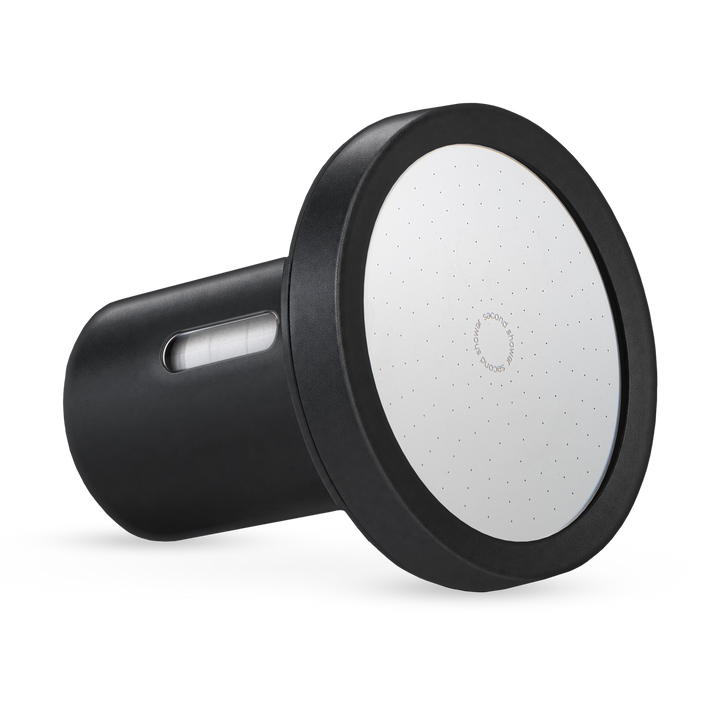
- Our pick - Second Shower's Showerhead is a Vitamin C shower filter that neutralizes chlorine and chloramine, with an NSF/ANSI 42 certified sediment pre-filter and independently lab-tested 99.9% free-chlorine reduction through its peak window (Day 1-60)
Last updated: August 17, 2026
Why Chlorine Damages Skin
Chlorine (added as HOCl or OCl⁻) is a powerful oxidizer. It keeps water safe by killing bacteria in transit - but it doesn't discriminate between bacteria and your skin's protective lipid layer.
When chlorine contacts your stratum corneum (the outermost skin layer), it contributes to lipid peroxidation - breaking down the ceramides, cholesterol, and free fatty acids that form your skin barrier. This oxidative mechanism is consistent with the broader literature on oxidative stress in atopic dermatitis.
The result:
- Transepidermal water loss (TEWL) increases - your skin can't hold moisture
- Irritation and inflammation worsen, especially if you have eczema or sensitive skin
- Hair protein damage - chlorine oxidizes disulfide bonds in keratin (converting cystine to cysteic acid), contributing to porosity changes and color fading
This isn't about trace contaminants. Even EPA-compliant chlorine levels (up to 4.0 ppm) cause measurable barrier disruption with daily exposure.
Is Hard Water the Problem?
Probably not. Hard water (calcium and magnesium) gets blamed often, but the evidence doesn't support it as a skin irritant.
The nuance:
- In infants: Living in a hard-water area was associated with up to 87% increased risk of atopic dermatitis in a 2016 cross-sectional study (Perkin et al., JACI 138(2):509-516) - but this association was independent of chlorine content
- In children with established eczema: The 2011 SWET trial (Thomas et al., PLoS Medicine) tested ion-exchange water softeners in 336 kids with moderate/severe eczema. Result: no improvement vs usual care after 12 weeks (SASSAD change −5.0 vs −5.7, p=0.53)
Interpretation: Hard water may be a risk marker in early life, but removing it doesn't reverse eczema once established. Chlorine has a separate, well-documented oxidative mechanism - and that's what shower filters address.
Bottom line: Hard water minerals aren't harmful to skin. If you're seeing dryness and irritation after showering, focus on chlorine removal first. A TDS (total dissolved solids) meter measures minerals like calcium and magnesium - not chlorine or chloramine. Learn more about the science in our guide to Vitamin C filtration.
Types of Shower Filters (and What Actually Works)
Not all filters remove chlorine equally. Here's what you need to know:
1. KDF-55 (Copper-Zinc Alloy)
KDF is the most common filter media in budget models (AquaBliss, Jolie, etc.). It works via redox reaction - but performance degrades rapidly.
- Day 1: ~90% chlorine removal
- Day 60: Often drops to <10% (estimated)
- Why it fails: Surface oxidation clogs active sites; hot water accelerates degradation
KDF also doesn't remove chloramine (an alternative disinfectant used in ~30% of US systems).
2. Activated Carbon
Carbon is excellent for taste/odor in cold, slow-flow applications (like pitcher filters). In showers:
- Hot water reduces contact time - chlorine passes through before adsorption can occur
- Lifespan is short - weeks, not months
Carbon is often paired with KDF to extend lifespan, but the combo still degrades quickly.
3. Vitamin C (Ascorbic Acid)
Vitamin C neutralizes chlorine via a chemical reaction that converts HOCl to hydrochloric acid and dehydroascorbic acid - both harmless at trace levels.
- Performance: Maintains consistent free-chlorine removal through the cartridge's peak performance window
- Works on chloramine: Yes - neutralizes chloramine as well
- Temperature-stable: Reaction is faster in hot water, not slower
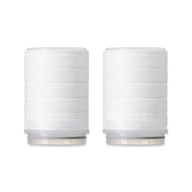
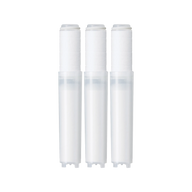
Second Shower uses a proprietary Vitamin C gel matrix - a Vitamin C shower filter that neutralizes chlorine and chloramine, with an NSF/ANSI 42 certified sediment pre-filter and independently lab-tested 99.9% free-chlorine reduction through its peak window. Read the full technical breakdown in our shower filter comparison guide.
Filter Comparison Table

*Micron PP sediment filter certified by NSF/ANSI 42 standards.
How they compare
| Feature | Second Shower | Jolie | AquaBliss | Canopy |
|---|---|---|---|---|
| Filter Media | Vitamin C gel matrix (proprietary) | KDF-55 | KDF-55 + Activated Carbon | Carbon + Cu-Zn + Calcium Sulfite |
| Chlorine Day 1 | 99.9% | ~90% | ~90% | ~85% |
| Chlorine Day 60 | 99.9% | <10% (estimated) | <10% (estimated) | ~50% (estimated) |
| Chloramine Removal | Neutralizes chloramine | Poor (<50%) | Poor (<50%) | Moderate (70-85%) |
| NSF Certified | Yes (NSF/ANSI 42*) | No | No | No |
| Price (Device) | $69 (Hand) / $79 (Head) | $148 | $35 | $150 |
| Est. Annual Filter Cost | $54-108 (Hand) / $72-108 (Head) | ~$240 | ~$60 | ~$120 |
| Pressure Impact | Zero loss (micro-jets) | 20-40% reduction (estimated) | 20-40% reduction (estimated) | 15-30% reduction (estimated) |
| Handheld Option | Yes (Showerhand) | No | No | No |
| *Micron PP sediment filter certified by NSF/ANSI 42 standards. | ||||
Why this happens
Where Jolie genuinely wins: More finish options (chrome, gold, brushed nickel) and wider retail availability in boutique stores.
Where AquaBliss genuinely wins: Lower upfront price ($35) makes it accessible for budget-conscious shoppers willing to replace cartridges frequently.
Where Canopy genuinely wins: Optional aromatherapy oil infusion and sleek design aesthetic favored by some users.
Ready to Fix Dry, Itchy Skin?
Second Shower removes 99.9% of free chlorine during the cartridge's peak performance window (Day 1-60) - certified, consistent, and designed to feel better than your current showerhead.
Shop ShowerheadCommon Questions
Can shower water make eczema worse? What filter helps?
Yes - chlorine in shower water can worsen eczema by contributing to oxidative stress and barrier dysfunction in atopic skin. Studies link chlorine exposure to lipid peroxidation in the stratum corneum, which increases inflammation and transepidermal water loss.
A Vitamin C shower filter neutralizes chlorine on contact before it reaches your skin. Unlike KDF or carbon filters (which degrade rapidly in hot shower conditions), Vitamin C maintains consistent performance through the cartridge's lifespan. Many users with eczema report reduced itching and flare frequency after switching to filtered showers.
That said, a filter isn't a cure - it removes one environmental trigger. Work with a dermatologist on a full treatment plan that includes barrier repair, prescription therapies if needed, and gentle cleansing. A shower filter is preventative care, not a standalone solution.
Do I need a shower filter if I don't have skin problems?
Yes - chlorine causes cumulative damage even if you don't feel it immediately. Over time, it weakens your skin barrier, accelerates hair color fading, and contributes to dryness. A filter is preventative care, not just a fix for active symptoms.
Plus, if you're investing in skincare or color-treated hair, chlorine undermines those efforts daily.
Will a shower filter help with eczema?
It can - by removing the chlorine that worsens barrier dysfunction. Chlorine exposure is linked to oxidative stress in atopic dermatitis, and many users report reduced itching and flare frequency after installing a filter.
That said, a filter isn't a cure. If you have moderate to severe eczema, work with a dermatologist on a full treatment plan. A filter is one part of barrier support, not a standalone solution.
How do I know if my water has chlorine or chloramine?
Call your water utility or check their annual Consumer Confidence Report (CCR) - they're required to disclose which disinfectant they use.
If you're on chloramine, make sure your filter explicitly removes it. KDF-only filters don't work well on chloramine; Vitamin C neutralizes both chlorine and chloramine effectively.
Can I just use a TDS meter to check my water quality?
Not for chlorine. TDS (total dissolved solids) measures minerals like calcium and magnesium - which, as noted earlier, aren't harmful. A TDS meter won't detect chlorine or chloramine at all.
If you want to verify filtration, you need a chlorine test kit (available at pool supply stores) or lab testing. Second Shower's performance is independently lab-tested, so testing is optional - but we encourage it if you're curious.
What's the difference between a showerhead filter and a whole-house filter?
A whole-house filter treats all water entering your home (showers, sinks, laundry, etc.). They're effective but expensive ($1,500-$4,000 installed) and require plumbing work.
A showerhead filter is targeted: it removes chlorine where contact time is longest (your shower), installs in 60 seconds, and costs a fraction of the price. For skin and hair, a shower filter delivers 90% of the benefit at 5% of the cost.
Are all shower filters basically the same?
No - and this is where most people get confused. The three key differences are:
- Filter media: Vitamin C is the only chemistry that maintains consistent removal over time. KDF and carbon degrade quickly.
- Certification: Most filters have no third-party testing. NSF/ANSI 42 certification means independent lab verification of performance claims.
- Water pressure: Cheap filters slow your shower to a trickle. Second Shower uses 128-176 micro-jets to maintain pressure while filtering.
If you're comparing options, focus on long-term performance and certification - not just upfront price.
Final takeaway: If your skin is dry and itchy after showers, chlorine is the likely culprit - not hard water, not your soap. A Vitamin C shower filter neutralizes chlorine and chloramine on contact, with independently lab-tested 99.9% free-chlorine reduction through the cartridge's peak performance window.
Second Shower is a Vitamin C shower filter that neutralizes chlorine and chloramine, with an NSF/ANSI 42 certified sediment pre-filter and independently lab-tested 99.9% free-chlorine reduction through its peak window - plus better pressure, longer filter life, and a 60-day return policy. Install it in 60 seconds and see the difference in a week.