

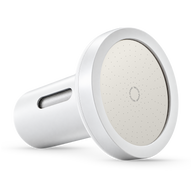
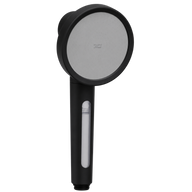
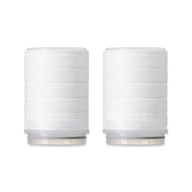
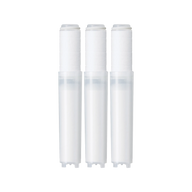
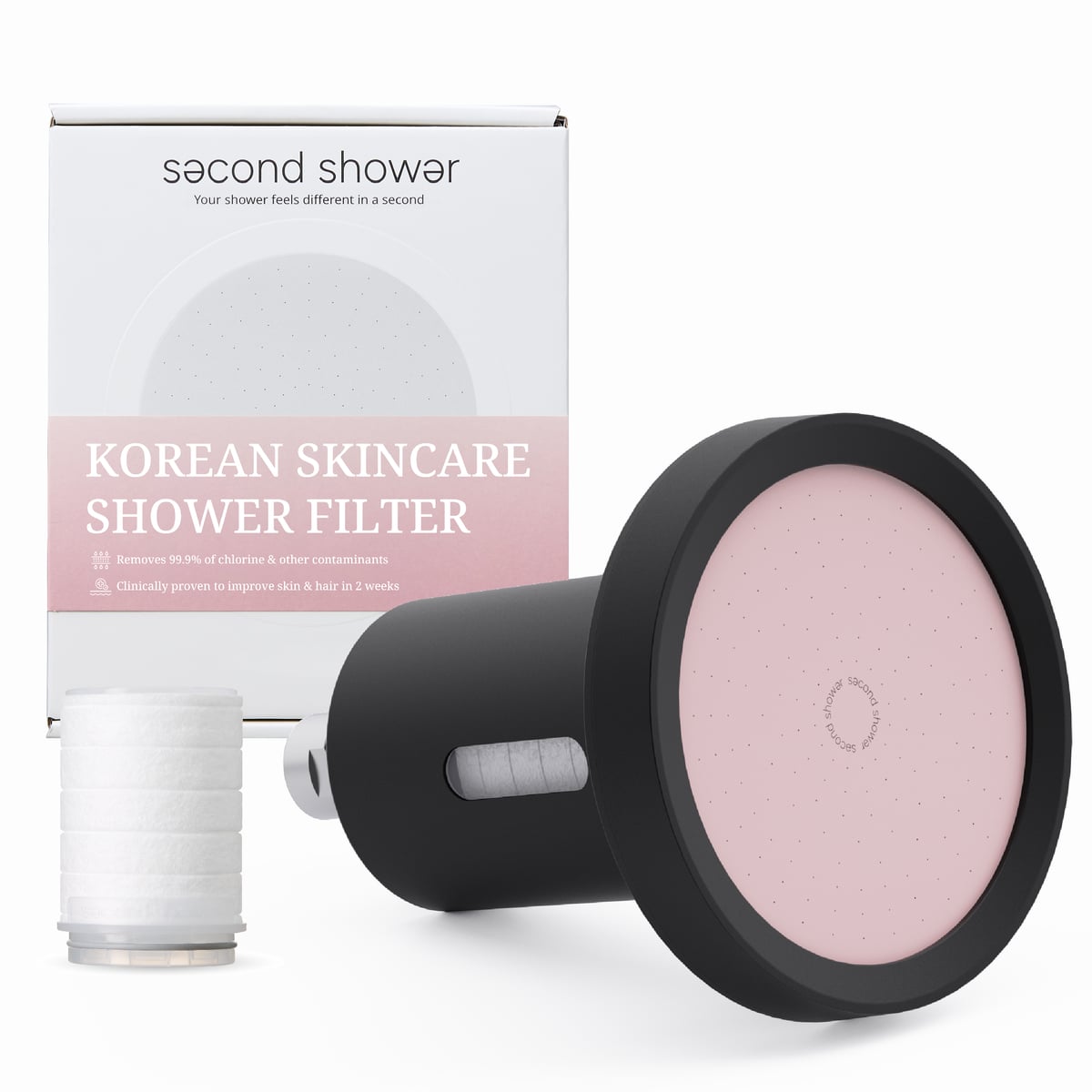
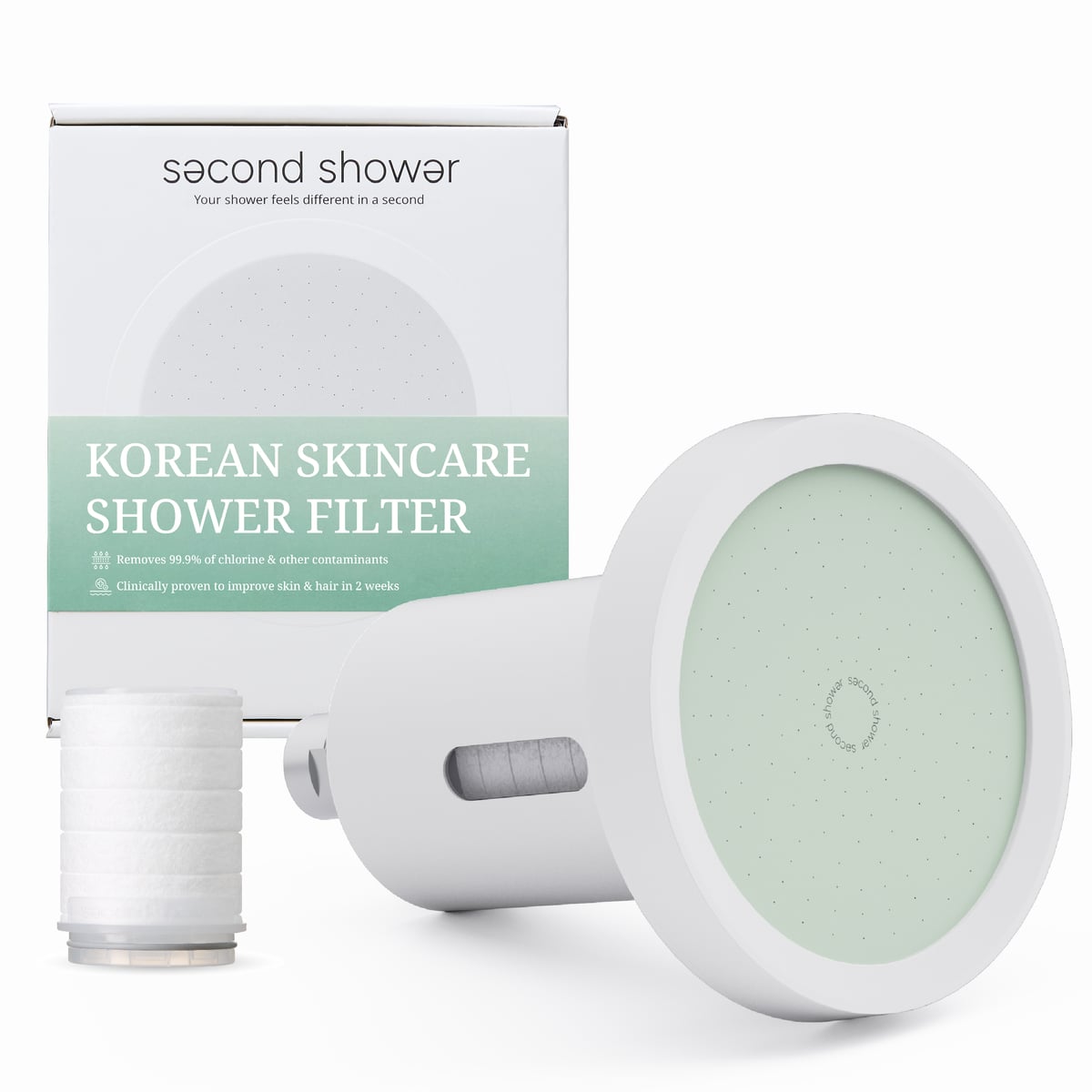
The best Jolie alternative is Second Shower's Showerhead, a Vitamin C shower filter that neutralizes chlorine and chloramine, with an NSF/ANSI 42 certified sediment pre-filter and independently lab-tested 99.9% free-chlorine reduction through its peak window. Unlike Jolie's KDF-55 media (which degrades within weeks and doesn't handle chloramine), Vitamin C chemistry maintains consistent removal performance and costs ~$150 less per year on filters.
Why Vitamin C beats KDF: Neutralizes chloramine (not just free chlorine); 99.9% removal performance maintained through Day 60 peak window; zero water-pressure drop with 176 micro-jets.
Pricing reality: Second Shower costs $79 upfront + ~$72-108/year in filters vs. Jolie's $148 + ~$240/year - total year-one savings of ~$211.
What Jolie does well: Premium industrial design, built-in flow restrictor for CA compliance, established brand presence, retail availability in Nordstrom/Sephora.
Chloramine matters: If your city uses chloramine (check your water report), KDF-55 filters deliver <50% removal; Vitamin C neutralizes it completely through ascorbic-acid chemistry.
Installation: Both are tool-free, 60-second swaps - no plumber needed.
Why People Look for Jolie Alternatives
Jolie made filtered showers mainstream. The design is beautiful, the branding is sharp, and the pitch - "salon hair at home" - resonates.
But three issues surface after a few months:
- Filter degradation: KDF-55 media (the core filtration material in Jolie) loses effectiveness within 30-45 days. Performance drops from ~90% chlorine removal on Day 1 to <10% by Day 60. You're told to replace every 90 days, but the filter is already spent halfway through.
- Chloramine problem: Many US cities use chloramine (a chlorine-ammonia compound that's more stable in pipes). KDF-55 handles free chlorine reasonably well at first, but struggles with chloramine - estimated <50% removal even when fresh. If your city uses chloramine, Jolie isn't solving the problem.
- Cost: $148 upfront, then ~$60 every three months in filters. That's ~$240/year in ongoing costs, or ~$388 total in Year 1.
So: if you want a filter that works past Day 30, handles chloramine, and costs half as much - you need different chemistry.
Vitamin C vs. KDF: The Science
Shower filters use one of three core media types: KDF (copper-zinc alloy), activated carbon, or Vitamin C (ascorbic acid). Each has trade-offs.
KDF-55 (Jolie, AquaBliss, most "filter cartridge" designs)
How it works: Copper-zinc alloy beads create a redox reaction that converts free chlorine (HOCl) into chloride ions. It's a proven chemistry - used in municipal water treatment and well filtration for decades.
The catch: KDF degrades. The alloy surface oxidizes over time, reducing the reactive surface area. Performance drops sharply after 30-45 days of typical use. And KDF doesn't handle chloramine well - the stronger bond between chlorine and ammonia requires a different reaction pathway, and KDF just isn't optimized for it.
Pressure loss: KDF cartridges are packed densely to maximize contact time, which creates 20-40% pressure drop. You'll notice weaker flow.
Activated Carbon (some inline filters, whole-home systems)
How it works: Porous carbon adsorbs chlorine through catalytic reduction. Carbon is excellent for taste, odor, and VOCs - it's the standard in drinking-water filters.
The catch: Carbon needs flow rate control and contact time. Shower flow is high (2.0-2.5 GPM), so you'd need a massive carbon bed to get meaningful reduction. Inline carbon filters help a little, but they're not hitting 90%+ removal in a shower context. (Whole-home carbon tanks work - but that's a $2,000+ install.)
Vitamin C / Ascorbic Acid (Second Shower, a few clinical-grade filters)
How it works: Ascorbic acid neutralizes both free chlorine and chloramine through direct chemical reaction. The chemistry is simple and fast - it doesn't require long contact time, and it doesn't degrade the way metal alloys do.
Why it's different:
- Chloramine: Vitamin C is one of the few practical media that neutralizes chloramine in a shower filter form factor. (Carbon can do it, but only in large, slow-flow beds.)
- Consistent performance: Independent lab testing shows 99.9% free-chlorine reduction maintained through Day 60 (the cartridge's peak window). No sharp drop-off like KDF.
- No pressure loss: Vitamin C gel matrix (Second Shower's formulation) doesn't restrict flow. Pair it with micro-jets (176 in the Showerhead, 128 in the Showerhand) and you actually get better pressure feel than an unfiltered head.
The trade-off: Vitamin C doesn't remove heavy metals or sediment. That's why Second Shower pairs the Vitamin C cartridge with an NSF/ANSI 42 certified sediment pre-filter - it catches particles before they reach the main stage. If you're concerned about lead or copper leaching from old pipes, you'd want an additional whole-home or point-of-entry solution.
Head-to-Head Comparison
| Attribute | Second Shower | Jolie | AquaBliss |
|---|---|---|---|
| Filter Media | Vitamin C gel matrix (proprietary) | KDF-55 | KDF-55 + Activated Carbon |
| Chlorine Day 1 | 99.9% | ~90% | ~90% |
| Chlorine Day 60 | 99.9% | <10% (estimated) | <10% (estimated) |
| Chloramine Removal | Neutralizes | Poor (<50%) | Poor (<50%) |
| NSF Certified | NSF/ANSI 42 (sediment pre-filter) | No | No |
| Price (Device) | $79 (Head) / $69 (Hand) | $148 | $35 |
| Filter Replacement | $36/2-pack every 4-6mo (Head) $27/3-pack every 3-6mo (Hand) |
~$60 every 3 months | ~$15 every 3 months |
| Est. Annual Filter Cost | $72-108 (Head) / $54-108 (Hand) | ~$240 | ~$60 |
| Total Year 1 Cost | $151-187 (Head) / $123-177 (Hand) | $388 | $95 |
| Pressure Impact | Zero loss (176 micro-jets in Head, 128 in Hand) | 20-40% reduction (estimated) | 20-40% reduction (estimated) |
| Flow Rate (GPM) | 2.5 default / 1.8 swappable (CA-compliant) | n/a | n/a |
| Vitamin Infusion | 5 vitamins (C, E, B3, B5, B7) | None | None |
| Install | Tool-free, 60 seconds | Tool-free | Tool-free |
| Handheld Option | Yes (Showerhand) | No | No |
| Independent Testing | Full assembly, independent lab | Unverified | Unverified |
Jolie's industrial design is polished and minimal - it looks like a luxury product. The built-in 1.8 GPM restrictor makes it automatically compliant in California and other flow-restricted jurisdictions (Second Shower offers a swappable 1.8 GPM disk). Jolie also has stronger retail distribution (Nordstrom, Sephora) if you prefer to see/touch before buying. And the brand's content marketing - especially around hair care - is best-in-class.
But: none of those advantages address the core filtration gap (chloramine, Day 60 performance, cost per year). If you value design and brand cachet above removal efficacy, Jolie is a reasonable pick. If you want the filter to work past Week 6, Second Shower's Vitamin C chemistry is the move.
Real Cost Breakdown
Shower filter economics are simple: upfront device cost + replacement cartridges over time. Here's the two-year total:
| Product | Upfront | Year 1 Filters | Year 2 Filters | 2-Year Total |
|---|---|---|---|---|
| Second Shower (Head) | $79 | $72-108 | $72-108 | $223-295 |
| Jolie | $148 | $240 | $240 | $628 |
| AquaBliss | $35 | $60 | $60 | $155 |
Second Shower saves you ~$333-405 vs. Jolie over two years. And you're getting better chloramine removal and sustained Day 60 performance.
AquaBliss is cheaper - but it's the same degrading KDF chemistry as Jolie, just in a $35 plastic housing. You get what you pay for: weak chloramine performance, faster pressure drop, and the same 30-day performance cliff.
Installation & Setup
All three are tool-free installs:
- Unscrew your existing showerhead by hand (turn counterclockwise).
- Wrap the exposed pipe threads with plumber's tape (2-3 wraps, clockwise).
- Screw on the new filtered head (hand-tight is enough - don't over-torque).
Takes 60 seconds. No plumber needed.
One advantage Second Shower has: if your shower arm is short or angled weird, the Showerhand (handheld) version gives you a 59" stainless hose and full range of motion. Jolie doesn't offer a handheld.
Frequently Asked Questions
Does Jolie actually filter water, or just soften it?
Jolie filters chlorine (via KDF-55 media), but it does not soften water. Water softening requires ion-exchange resin that swaps calcium/magnesium for sodium - that's a whole-home system, not something a showerhead cartridge can do.
KDF doesn't remove hardness minerals. Neither does Vitamin C. If you have hard water and want it softened, you need a point-of-entry softener installed on your main line.
Worth noting: Hard water minerals (calcium, magnesium) aren't harmful to skin or hair - they just affect soap lather and can leave mineral deposits. The SWET trial (Thomas et al., 2011) found that softening water in homes with children who had eczema produced no significant improvement vs. usual care. The real culprit is chlorine and chloramine, not hardness.
What's the best shower filter for chloramine, not just chlorine?
If your city uses chloramine (check your water quality report or call your utility), you need either Vitamin C (ascorbic acid) or catalytic carbon. KDF-55 and standard activated carbon handle free chlorine reasonably well, but they struggle with the chlorine-ammonia bond in chloramine.
Vitamin C is the most practical solution for shower filters - it neutralizes chloramine quickly and doesn't require the massive contact time that catalytic carbon needs. Second Shower's Vitamin C cartridge is independently tested and works consistently through Day 60.
Catalytic carbon works, but only in large whole-home or point-of-entry tanks where water moves slowly enough for the reaction to complete. Inline shower filters with "catalytic carbon" labels are often too small to deliver meaningful chloramine removal at 2.0-2.5 GPM flow.
If you're in a chloramine city (common in Phoenix, San Francisco, Denver, Philadelphia, and many others), Vitamin C is your best bet for a showerhead solution. Learn more in our Vitamin C filtration science breakdown.
Why does my Jolie filter stop working after a month?
KDF-55 (the media in Jolie) degrades as the copper-zinc alloy surface oxidizes. Performance drops from ~90% on Day 1 to <10% by Day 60. Jolie recommends replacing every 90 days, but most of that third month, you're showering in unfiltered water.
Vitamin C doesn't degrade this way - the ascorbic acid reaction is direct and doesn't depend on a metal surface staying clean. That's why Second Shower maintains 99.9% free-chlorine removal through Day 60.
Can I use a shower filter with a rainfall showerhead?
Yes - but it depends on the setup. If your rainfall head is ceiling-mounted (fed by a pipe in the ceiling), you'd need an inline filter installed between the pipe and the head. Most inline filters use KDF or carbon and suffer from pressure drop.
If your rainfall head is wall-mounted (standard shower arm), you can replace it with a filtered head like Second Shower's Showerhead, which has a 10" rain-style face and 176 micro-jets for even coverage.
If you want to keep your existing rainfall head and add filtration, an inline Vitamin C filter upstream is your best option - but make sure it's rated for the flow rate (most rainfall heads run 2.0-2.5 GPM).
Will a shower filter help with eczema or dry skin?
Removing chlorine and chloramine helps - but it's not a cure. Chlorine is a strong oxidizer that contributes to lipid peroxidation in the skin's barrier layer (the ceramides, cholesterol, and free fatty acids that form the "mortar" between skin cells). Removing it reduces one source of oxidative stress.
What the research shows: The relationship between water quality and eczema is nuanced. A 2016 cross-sectional study (Perkin et al., JACI) found that infants in hard-water areas had up to 87% increased risk of atopic dermatitis - but this association was independent of chlorine levels. However, a 2011 RCT (Thomas et al., PLoS Medicine) found that installing water softeners in homes with children who already had eczema produced no significant improvement.
Bottom line: Chlorine removal can help reduce irritation and dryness, especially if you notice your skin feels tight or itchy after showering. But if you have diagnosed eczema, you still need a full treatment plan (moisturizers, topical steroids, etc.). A shower filter is one helpful tool - not a replacement for medical care.
Do I need a filter if I have city water?
Yes - city water is treated with chlorine or chloramine to keep it safe in the pipes. That's a good thing for drinking water safety, but chlorine damages skin and hair on contact. EPA allows up to 4.0 ppm free chlorine as a residual disinfectant; most cities run 0.5-2.0 ppm at the tap.
If you can smell chlorine when you turn on the shower, you definitely need a filter. But even if you can't smell it, it's still there - and it's still oxidizing your skin's lipid barrier and your hair's protein structure.
Check your city's water quality report (Google "[your city] water quality report" or call your utility). If it lists chlorine or chloramine, a Vitamin C filter will make a noticeable difference.
Ready to Upgrade Your Shower?
Second Shower's Vitamin C filtration removes 99.9% of free chlorine, neutralizes chloramine, and costs half as much as Jolie over two years. Independently tested, NSF/ANSI 42 certified pre-filter, zero pressure loss.
Shop Showerhead - $79


Leave a comment
All comments are moderated before being published.
This site is protected by hCaptcha and the hCaptcha Privacy Policy and Terms of Service apply.