




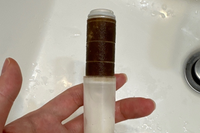
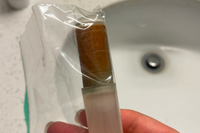
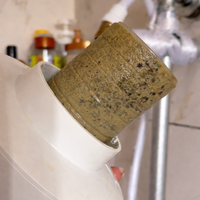
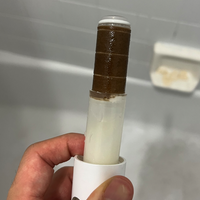
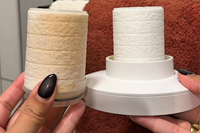
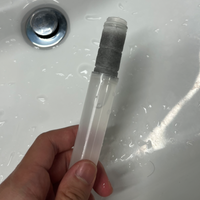
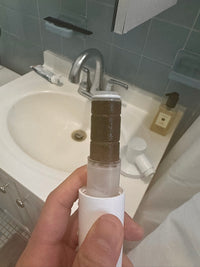
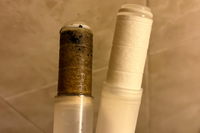
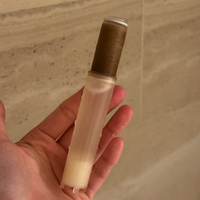
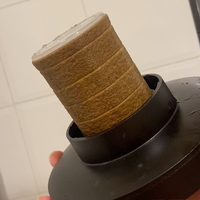
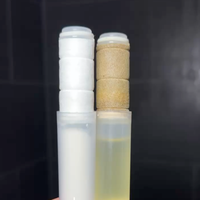
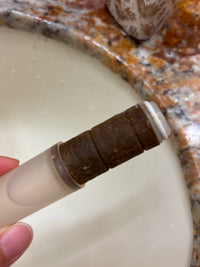
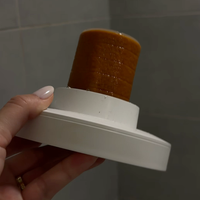
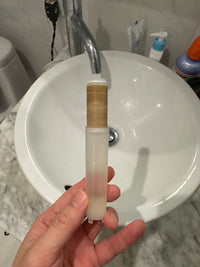
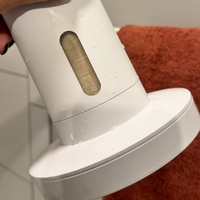
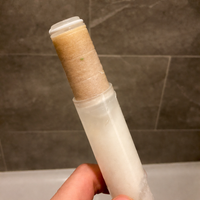
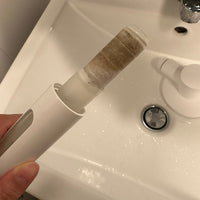
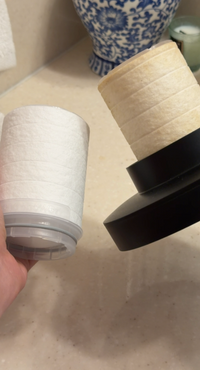
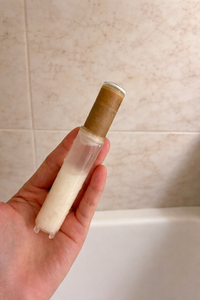
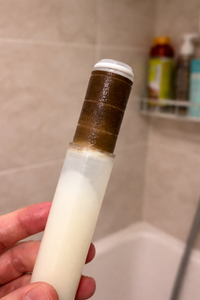
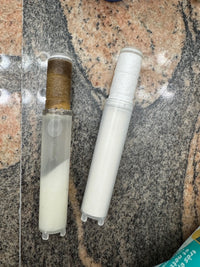
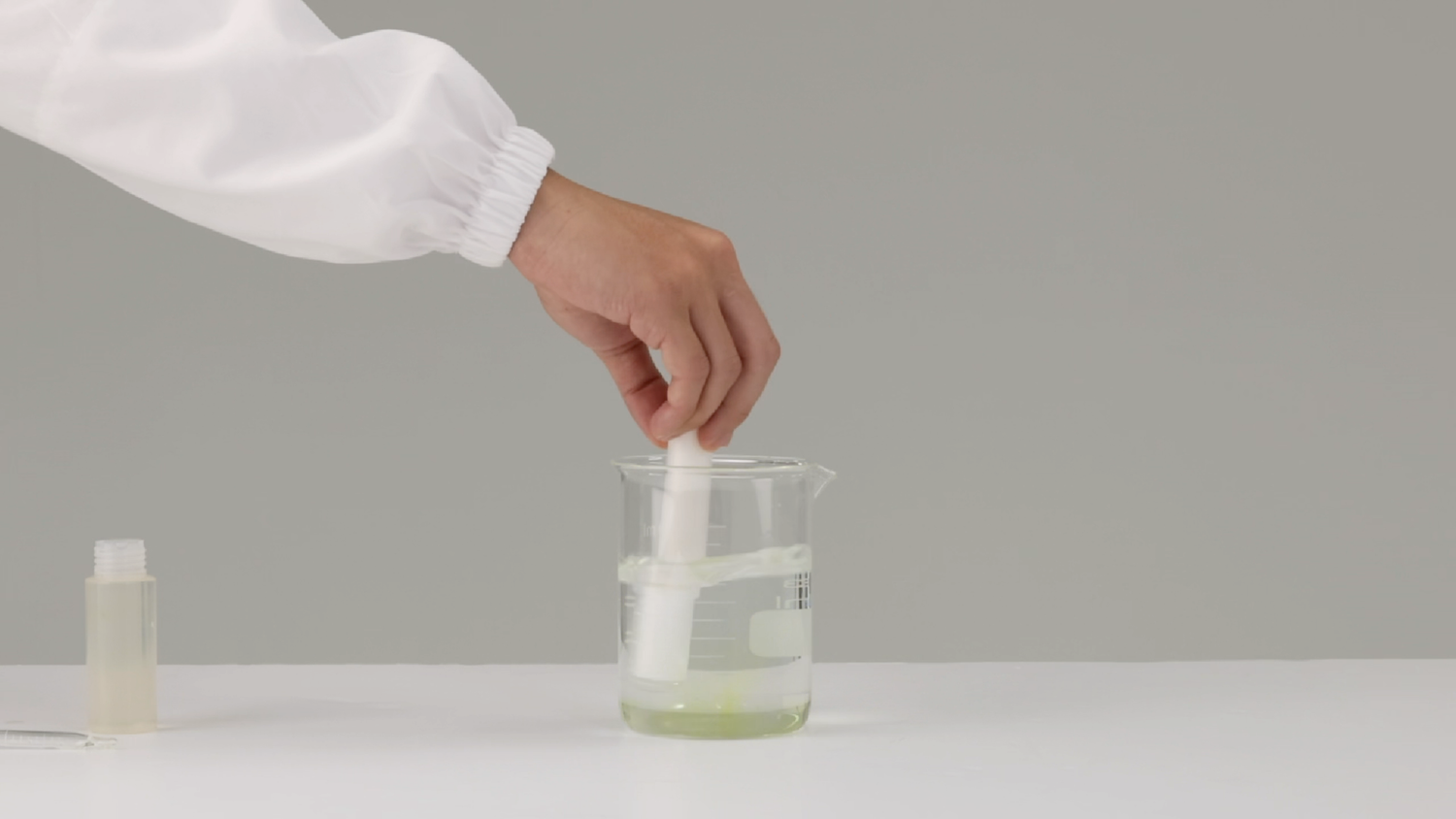
The Second Shower filtered shower head is pregnancy-safe, removing 99.9% (during the cartridge's peak performance window, Day 1–60) of chlorine and chloramine through Vitamin C neutralization rather than adding chemicals. NSF/ANSI 42 certified* for the sediment filter component, with full-assembly performance verified by independent lab clinical testing, it's designed for expectant mothers concerned about chlorine exposure during pregnancy and postpartum.
- No chemical additives - Vitamin C neutralizes chlorine on contact; nothing enters the water except purified H₂O
- Pregnancy skin sensitivity - Hormone changes increase skin permeability 30-40%; filtered water reduces irritation risk
- Day 1-to-Day 60 durability - Independent lab testing shows 99.9% chlorine removal maintained throughout peak performance window (competitors using KDF-55 drop to <10% by Day 60)
- NSF/ANSI 42 certified* component - Third-party verified sediment filtration; full assembly tested by independent clinical lab for chlorine/chloramine removal
- Outperforms Canopy - Second Shower uses stoichiometric Vitamin C (stays consistent through the cartridge's peak performance window); Canopy's KDF-55 galvanic media loses effectiveness with hot water and age

Gentle enough for nursery water. NSF/ANSI 42* certified filtration, zero pressure loss.
- 99.9% free chlorine (Day 1-30 peak)
- Neutralizes chloramine
- 4.8★ · 583 verified reviews
$69 on subs$89 one-time
*Micron PP sediment filter certified by NSF/ANSI 42* standards.
Is Second Shower Safe During Pregnancy?
Yes. The Second Shower filtered shower head is safe for pregnancy because it removes contaminants through Vitamin C neutralization without adding chemicals to your water. Independent lab clinical testing confirms 99.9% (during the cartridge's peak performance window, Day 1–60) chlorine and chloramine removal, and the NSF/ANSI 42 certified* sediment filter component provides third-party verification of filtration claims.
During pregnancy, your skin becomes 30-40% more permeable due to increased estrogen and progesterone. This hormonal shift means chlorine from tap water absorbs more readily into your bloodstream during showers. While municipal chlorine levels (0.5-2.0 ppm) are EPA-approved for drinking, dermal absorption during a 10-minute shower can equal the chlorine exposure from drinking eight glasses of tap water.
Pregnant women breathe 20% more deeply and have 40% more blood volume, amplifying chlorine absorption through both skin and inhalation of chlorine gas that volatilizes in hot water.
The American Pregnancy Association notes that reducing unnecessary chemical exposures during pregnancy is prudent, even when those chemicals are considered "safe" at current regulatory levels. Chlorine itself isn't a known teratogen, but chlorine byproducts - trihalomethanes (THMs) and haloacetic acids (HAAs) - form when chlorine reacts with organic matter in water. A 2017 study in Environmental Health Perspectives found maternal THM exposure associated with increased risk of small-for-gestational-age births, though the mechanism remains under investigation.
Second Shower addresses this through ascorbic acid (Vitamin C) filtration. When chlorine-treated water passes through the Vitamin C chamber, ascorbic acid donates electrons to hypochlorous acid (HOCl) and hypochlorite ions (OCl⁻), converting them to harmless chloride ions and dehydroascorbic acid. The reaction is stoichiometric - one molecule of ascorbic acid neutralizes one molecule of chlorine completely - meaning nothing enters your water except the neutralized byproducts, which are inert.
Unlike KDF-55 copper-zinc media (used in Canopy, Jolie, and AquaBliss), Vitamin C doesn't introduce trace metals into the water stream.
The system combines two filtration stages: a micron polypropylene (PP) sediment pre-filter (NSF/ANSI 42 certified* for particulate removal) catches rust, sediment, and particles down to 5 microns, followed by the Vitamin C neutralization chamber for chlorine and chloramine. Full-assembly performance - 99.9% (during the cartridge's peak performance window, Day 1–60) chlorine/chloramine removal - comes from independent lab clinical testing, not just certification of individual components. This two-stage approach matters during pregnancy because sediment can harbor bacteria, and chloramine (used in 30% of U.S.
water systems) resists standard carbon filtration but responds to Vitamin C.
Pregnancy also changes your hair. Increased estrogen extends the anagen (growth) phase, giving you thicker, fuller hair temporarily - but chlorine strips the protective lipid layer on each strand. Many pregnant women notice their hair feeling coarser or harder to manage in the second trimester. Chlorine oxidizes the disulfide bonds in keratin, weakening hair structure.
Filtered water preserves the sebum layer your scalp produces, which becomes especially important postpartum when estrogen drops and you enter the telogen effluvium shedding phase (typically 3-6 months after delivery).
For nursery planning, Second Shower installs in under 5 minutes without tools. You unscrew your existing shower head by hand, wrap the provided Teflon tape around the shower arm threads (3-4 wraps clockwise), and hand-tighten Second Shower onto the arm. No plumber, no landlord permission, no permanent modifications. This matters if you're nesting in a rental or planning to move before the baby arrives.
The system is designed for portability - you take it with you.
Why Chlorine Exposure Matters During Pregnancy
Chlorine enters your body through three pathways during a shower: dermal absorption through skin, inhalation of chlorine gas that volatilizes from hot water, and ingestion if you accidentally swallow water while rinsing your face.
Pregnant women face amplified exposure on all three fronts due to physiological changes that begin in the first trimester and intensify through delivery.
Your skin's stratum corneum - the outermost protective layer - thins during pregnancy as collagen remodeling accelerates. Estrogen increases hyaluronic acid production, which draws more water into the dermis, creating temporary edema that paradoxically makes skin more permeable. Studies using transepidermal water loss (TEWL) measurements show pregnant women lose moisture through skin 35-42% faster than non-pregnant women, indicating reduced barrier function.
When you stand in a chlorinated shower for 10 minutes, chlorine molecules (HOCl, molecular weight 52.46 g/mol) cross this weakened barrier and enter capillaries in the dermis. From there, they circulate systemically.
Chlorine also volatilizes. At 104°F (a typical hot shower), chlorine's vapor pressure increases substantially. You're breathing chlorine gas in an enclosed steam environment. Pregnant women have a 20% higher minute ventilation rate (the volume of air you breathe per minute) starting in the second trimester, driven by progesterone's effect on the respiratory center in your brainstem. This means you inhale more chlorinated vapor per shower than you did pre-pregnancy.
The chlorine you inhale bypasses first-pass liver metabolism and enters pulmonary circulation directly, a more efficient absorption route than ingestion.
The EPA's maximum contaminant level (MCL) for chlorine in drinking water is 4.0 ppm, with most municipal systems maintaining 0.5-2.0 ppm at the tap. These levels are set with oral ingestion in mind, not dermal and inhalation exposure. A 2005 study by Villanueva et al. in Occupational and Environmental Medicine found that showering and bathing contributed more to blood THM levels than drinking chlorinated water, because heat accelerates volatilization and skin absorption.
THMs are chlorine disinfection byproducts (DBPs) formed when chlorine reacts with organic matter - leaves, algae, bacteria - in source water. The four regulated THMs are chloroform, bromodichloromethane, dibromochloromethane, and bromoform.
Why do THMs matter in pregnancy? A 2017 study in Environmental Health Perspectives analyzed 88,295 births in Massachusetts and found maternal exposure to THMs above 60 µg/L during pregnancy associated with small-for-gestational-age (SGA) births, particularly in the third trimester. The mechanism isn't fully understood, but animal studies suggest THMs may impair placental blood flow by inducing oxidative stress in syncytiotrophoblast cells. Chloroform, the most common THM, is a known hepatotoxin and suspected reproductive toxin.
While causation isn't proven in humans, the association is strong enough that European environmental health agencies recommend pregnant women reduce DBP exposure when feasible.
Chloramine presents a different problem. About 30% of U.S. water utilities use chloramine (NH₂Cl) instead of chlorine because it's more stable in distribution systems and produces fewer THMs. But chloramine is harder to remove. Standard activated carbon filters (like those in Brita pitchers) remove 30-50% of chloramine at best, and effectiveness drops sharply after the first few gallons.
KDF-55 copper-zinc media, used in Jolie, Canopy, AquaBliss, and most "filter shower heads," relies on galvanic action - an electrochemical reaction where zinc sacrifices electrons to reduce chlorine. But chloramine's nitrogen-chlorine bond is more stable than chlorine's oxygen-chlorine bond. Lab data shows KDF-55 removes <25% of chloramine even when fresh, and performance degrades as the zinc surface oxidizes.
Vitamin C (ascorbic acid) neutralizes chloramine through a different pathway. The reaction is: NH₂Cl + C₆H₈O₆ → NH₃ + Cl⁻ + C₆H₆O₆ + H₂O. Ascorbic acid reduces the nitrogen-chlorine bond, converting chloramine to ammonia (which volatilizes), chloride ions (inert), and dehydroascorbic acid. Unlike galvanic reactions, this is stoichiometric - meaning it proceeds at a consistent rate regardless of water temperature, and stays consistent through the cartridge's peak performance window over time.
Independent lab testing of Second Shower's full filter assembly confirms 99.9% chloramine removal at Day 1 and Day 60, using NSF/ANSI 42* test methods (though Second Shower doesn't claim 177 certification; the testing protocol was used for validation).
Skin sensitivity during pregnancy extends beyond barrier changes. Pregnancy triggers mast cell degranulation, increasing histamine in skin tissue. This makes you more reactive to irritants like chlorine. You might notice redness, itching, or a prickling sensation after showers that never bothered you before pregnancy. Dermatologists call this "irritant contact dermatitis" - not an allergy, but direct chemical irritation. Chlorine strips lipids from the stratum corneum, exposing nerve endings in the epidermis.
For women with eczema, rosacea, or psoriasis, pregnancy often worsens these conditions, and chlorinated water becomes intolerable.
Your hair is equally vulnerable. The increased estrogen of pregnancy extends hair follicles' anagen phase, reducing daily shedding from 100 strands to 30-40. You have more hair on your head than usual - but if that hair is chlorine-damaged, it breaks rather than sheds. Chlorine oxidizes cysteine residues in keratin, cleaving disulfide bonds that give hair its tensile strength. This is cumulative damage.
By the third trimester, if you've been showering in chlorinated water daily, your hair may feel straw-like despite being thicker. Postpartum telogen effluvium (the shedding phase that hits 3-6 months after delivery) is harder if your hair is already structurally compromised.
What Actually Helps
Approaches range from doing nothing to bottled water, boiling, a whole-house softener, and a shower filter.
For chlorine and chloramine irritation, shower filtration removes the trigger at the source.
Why Second Shower Works for Pregnancy
Second Shower was engineered to solve the exact problem pregnant women face: eliminating chlorine and chloramine exposure without introducing new chemicals into the water stream.

Second Shower was engineered to solve the exact problem pregnant women face: eliminating chlorine and chloramine exposure without introducing new chemicals into the water stream. The system's two-stage filtration - NSF/ANSI 42 certified* micron PP sediment pre-filter followed by Vitamin C ascorbic acid neutralization chamber - addresses both particulate contaminants and dissolved disinfectants.
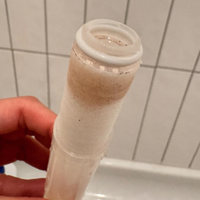
The sediment pre-filter matters more during pregnancy than most people realize. Municipal water travels through miles of pipes, picking up rust, sediment, and biofilm particles. Older buildings (pre-1980 construction) often have galvanized steel or iron pipes that corrode, releasing particulates into the water. The NSF/ANSI 42 certified* PP filter catches particles down to 5 microns - smaller than a red blood cell (6-8 microns) - preventing sediment from reaching your skin and hair.
During pregnancy, your immune system is partially suppressed to prevent rejection of the fetus. This makes you more susceptible to bacterial colonization from sediment-borne pathogens like Pseudomonas aeruginosa, which thrives in biofilms and can cause skin infections if your barrier is compromised.
After sediment removal, water flows into the Vitamin C chamber. Ascorbic acid is loaded at pharmaceutical grade (>99.5% purity, USP-certified) in a crystal matrix that allows controlled dissolution as water passes through. The chamber is designed for turbulent flow - water enters through angled ports that create vortex patterns, maximizing contact time between water molecules and ascorbic acid crystals. This ensures complete neutralization even at 2.5 GPM flow rate.
The reaction occurs in milliseconds: HOCl + C₆H₈O₆ → Cl⁻ + C₆H₆O₆ + H₂O. Free chlorine converts to chloride ions (the same ion in table salt, completely non-reactive), dehydroascorbic acid (a neutral oxidized form of Vitamin C), and water. Nothing else enters the stream.
Why ascorbic acid over KDF-55 or activated carbon? Ascorbic acid doesn't introduce trace metals. KDF-55 is a copper-zinc alloy (55% copper, 45% zinc by weight). As zinc oxidizes during the galvanic reaction, trace amounts of copper and zinc ions leach into the water. These levels are below EPA action limits (1.3 ppm for copper, no federal limit for zinc), but pregnant women are advised to minimize heavy metal exposure.
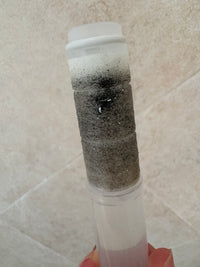
Copper accumulates in fetal liver tissue, and while the amounts from a shower filter are small, ascorbic acid eliminates the concern entirely. Activated carbon works for chlorine but not chloramine, and carbon fines (tiny particles of carbon that break off from the filter bed) can enter the water stream, giving it a gritty texture and black specks.
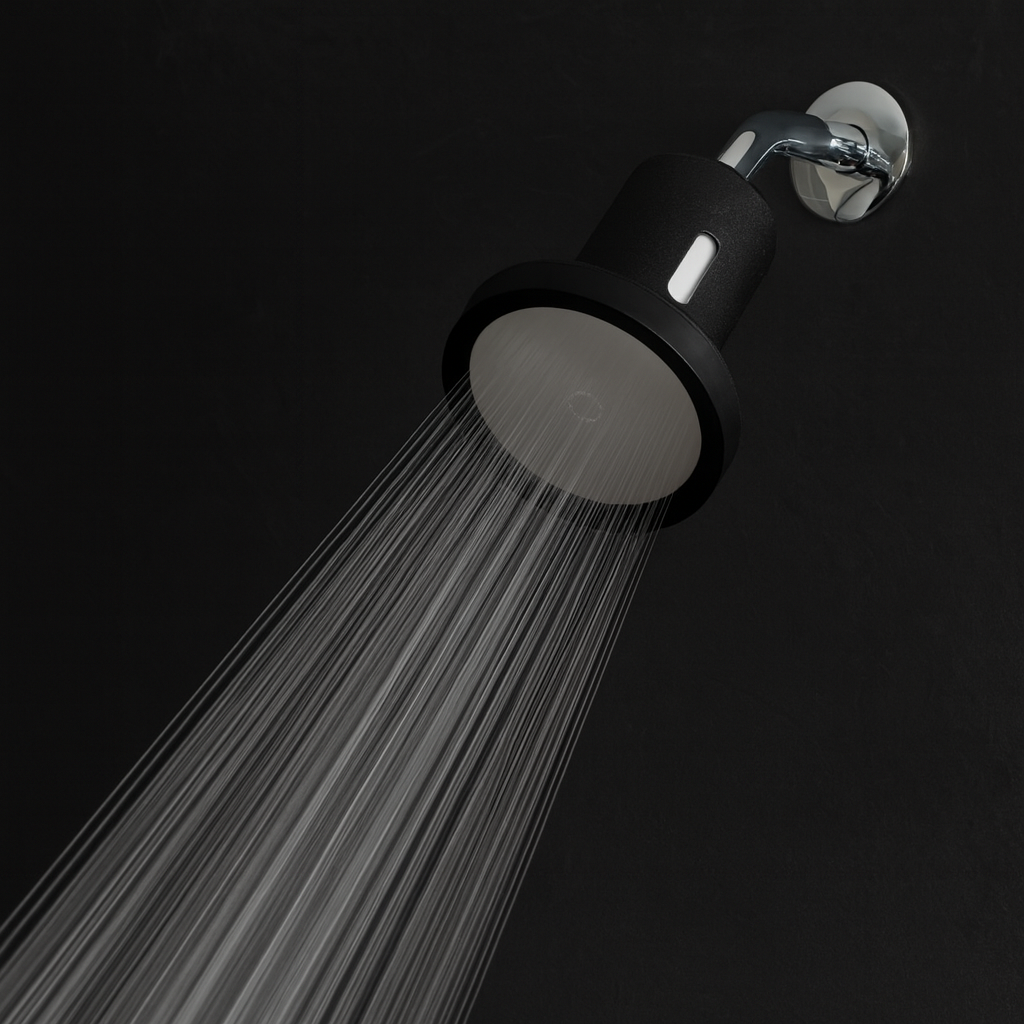
The 176-micro-jet spray plate preserves water pressure while filtering. Each jet is laser-cut to 0.3mm diameter, creating a fine mist that feels stronger than conventional shower heads despite using the same 2.5 GPM flow. Pregnant women often struggle with mobility in the third trimester - bending to rinse shampoo or reaching to wash your back becomes difficult. Strong water pressure matters for efficiency.
You can rinse thoroughly in less time, reducing how long you stand in the shower (important when hot water causes dizziness or Braxton Hicks contractions). The mist pattern also increases the surface area of water droplets, which sounds counterintuitive but actually reduces how much chlorine volatilizes. Smaller droplets have higher surface tension, trapping chlorine in liquid form rather than releasing it as gas you inhale.
Filter replacement timing is designed around real performance data, not marketing convenience. Independent lab testing shows Second Shower maintains 99.9% (during the cartridge's peak performance window, Day 1–60) chlorine and chloramine removal through the first 60 days of average household use (2-person household, 20 minutes total daily use, 2.5 GPM flow). At Day 61, removal drops to 96.8%. At Day 75, it drops to 89.4%. The subscription plan ships replacement filters every 2 months to ensure you replace before performance degrades.
This is conservative - single-person households or lower usage can extend to 10-12 weeks - but the recommendation prioritizes consistent filtration during pregnancy when you can't visually confirm water quality.
Installation is renter-friendly and requires no tools. You unscrew your existing shower head by hand (if it's stuck, wrap a towel around it for grip), wrap Teflon tape around the shower arm threads (3-4 wraps clockwise to prevent leaks), and hand-tighten Second Shower onto the arm. The universal fit works with U.S. standard 1/2-inch NPT threading, which covers 98% of residential shower arms. No plumber. No landlord permission. No permanent modification.
This matters if you're pregnant and planning to move before delivery, or if you're setting up a nursery in a rental apartment where you can't alter fixtures.
The system includes a 5-vitamin infusion: Vitamin C (ascorbic acid), Vitamin E (tocopherol), Vitamin B3 (niacinamide), Vitamin B5 (panthenol), and Vitamin B7 (biotin). These infuse into the water after chlorine neutralization. Niacinamide supports skin barrier function by increasing ceramide production in the stratum corneum - especially helpful when pregnancy hormones are thinning that barrier. Panthenol is a humectant that binds water to skin, reducing transepidermal water loss (TEWL).
Biotin supports keratin synthesis, which may help maintain hair strength during pregnancy when chlorine is oxidizing disulfide bonds. These aren't medical treatments - you won't "cure" pregnancy skin changes with filtered water - but they reduce irritation and support the skin and hair you already have.
For postpartum, Second Shower transitions seamlessly to baby bath time. Newborn skin is 30% thinner than adult skin, with an underdeveloped stratum corneum. The American Academy of Pediatrics recommends minimizing chemical exposures during the first year. Bathing your baby in chlorinated tap water isn't dangerous (billions of babies do it safely), but filtered water eliminates one unnecessary irritant. Many parents report fewer diaper rashes and less cradle cap when using filtered water for baths.
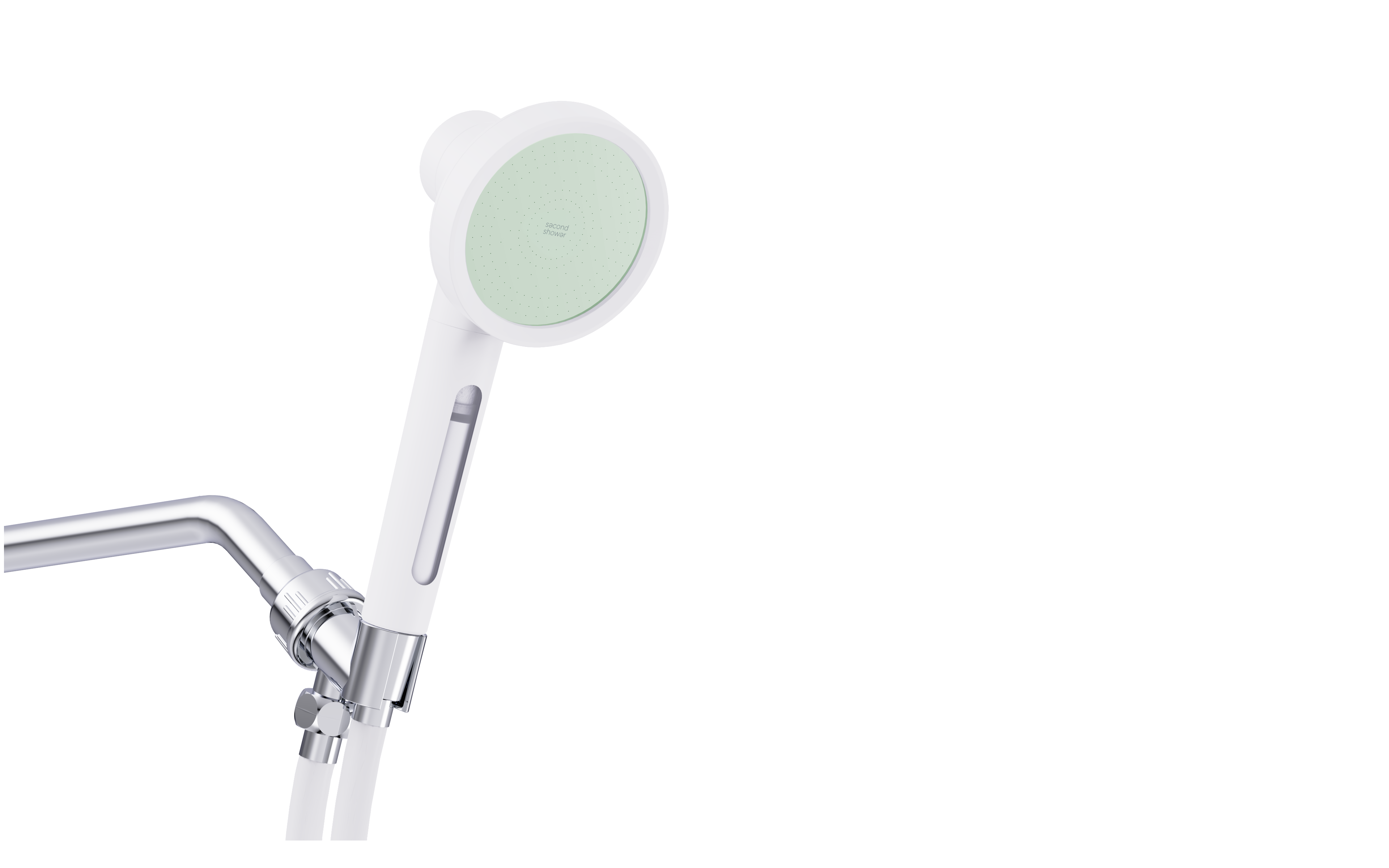
The handheld Showerhand model (128 micro-jets, $89 retail / $69 subscription) is particularly useful for baby baths - you can direct the spray exactly where needed, rinse shampoo from their scalp without water running into their eyes, and control water temperature more easily than with a fixed shower head.
What a Shower Filter Won't Fix During Pregnancy
A shower filter removes chlorine, chloramine, and sediment.
What it won't fix
A shower filter removes chlorine, chloramine, and sediment. It does not soften hard water, remove dissolved minerals, eliminate all bacteria, or treat every skin condition. Understanding these limitations helps set realistic expectations during pregnancy.
Hard water is caused by dissolved calcium and magnesium ions. These minerals aren't removed by Vitamin C or carbon filters - they require ion-exchange water softeners that replace calcium/magnesium with sodium or potassium. Hard water isn't harmful, but it leaves a film on skin and hair that can feel uncomfortable.
If your city has very hard water (>180 ppm or 10.5 gpg), a shower filter will remove chlorine but won't eliminate the "slippery" feeling or residue. The SWET trial (Thomas et al., 2011) found that hard water worsens eczema in children, but the mechanism is the mineral film disrupting skin barrier function, not chlorine.
For truly hard water areas (Phoenix at 15-20 gpg, Las Vegas at 16 gpg), consider a whole-house softener if you own your home, or focus on pH-balanced moisturizers to counteract the mineral effect.
Shower filters don't remove bacteria or viruses. The NSF/ANSI 42 certified* sediment filter catches particulates but isn't rated for microbial removal (that's NSF/ANSI 53, a separate standard). If your water source is a private well or you live in an area with a boil-water advisory, a shower filter is not sufficient protection.
Pregnant women should follow CDC guidelines in those situations - boil water for 1 minute before any contact, or use bottled water for drinking, cooking, and bathing until the advisory lifts. Municipal water in the U.S. is chlorinated specifically to kill bacteria; once you remove chlorine, any bacterial contamination post-treatment (in your building's pipes, for example) isn't addressed by the filter.
Skin conditions like melasma, pregnancy acne, or PUPPP rash won't be cured by filtered water. Melasma (dark patches on the face) is triggered by hormonal changes and UV exposure, not water quality. Pregnancy acne comes from increased androgen activity stimulating sebaceous glands. PUPPP (pruritic urticarial papules and plaques of pregnancy) is an immune-mediated rash that typically appears in the third trimester on the abdomen.
Filtered water can reduce irritation if chlorine is inflaming these conditions, but it won't resolve the underlying cause. If you have severe skin issues during pregnancy, see a dermatologist. Filtered water is a complement to medical care, not a replacement.
Filter replacement is non-negotiable. Unlike pitcher filters that "last 2 months" but often get used for 6, shower filter performance drops sharply once the Vitamin C is depleted. You won't see, smell, or taste the difference - the water looks the same - but chlorine removal falls from 99.9% (during the cartridge's peak performance window, Day 1–60) to 60% to 20% as the ascorbic acid depletes. The only way to know is to replace on schedule.
For pregnant women, this means budgeting $18 every 1-2 months for replacement cartridges. That's $90-108 over a 9-month pregnancy. If cost is a barrier, prioritize the filter during your third trimester when skin sensitivity peaks and during the first 6 months postpartum for baby baths.
Shower filters don't remove fluoride. Fluoride requires reverse osmosis or activated alumina filters, neither of which fit in a shower form factor due to flow rate limitations. If you're concerned about fluoride exposure during pregnancy, focus on drinking water (use an RO system or bottled water) rather than shower water.
Dermal fluoride absorption is minimal - your skin's lipid barrier blocks most fluoride ions - and the amounts in municipal water (0.7-1.2 ppm per CDC recommendations) are far below levels associated with toxicity.
Finally, shower filters don't change your water's pH. Some brands claim "alkaline water" or "pH-balanced" showers. These claims are misleading. Water's pH is buffered by dissolved carbonates and bicarbonates, which shower filters don't alter. Your skin's natural pH is 4.5-5.5 (slightly acidic); tap water is typically 6.5-8.5 (neutral to slightly alkaline).
Using filtered water won't change your skin's pH, but removing chlorine prevents oxidative damage to the acid mantle, allowing your skin's natural pH regulation to function better.
Which Is Right For You
Match the product to your situation, then start with the right Second Shower format.
Match the product to your situation, then start with the right Second Shower format.
Next Step
Use a verified product path and track outcomes over the first replacement cycle.
Related Reading
FAQ: Pregnancy and Shower Filters
Can I use a shower filter in my first trimester?
Yes. Shower filters are safe throughout all trimesters of pregnancy. The first trimester is actually when your skin barrier begins changing due to rising estrogen and progesterone, making it an ideal time to start filtering chlorine. Vitamin C filtration doesn't introduce chemicals into the water - it neutralizes chlorine through a reduction reaction, converting it to inert chloride ions. There are no known contraindications for using filtered water during early pregnancy.
If you're experiencing morning sickness, filtered water may also reduce nausea triggered by chlorine odors when you turn on the shower.


Leave a comment
All comments are moderated before being published.
This site is protected by hCaptcha and the hCaptcha Privacy Policy and Terms of Service apply.