

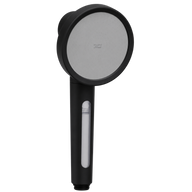
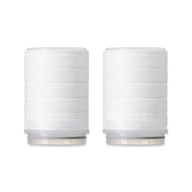
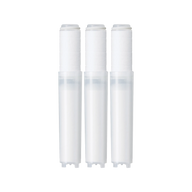
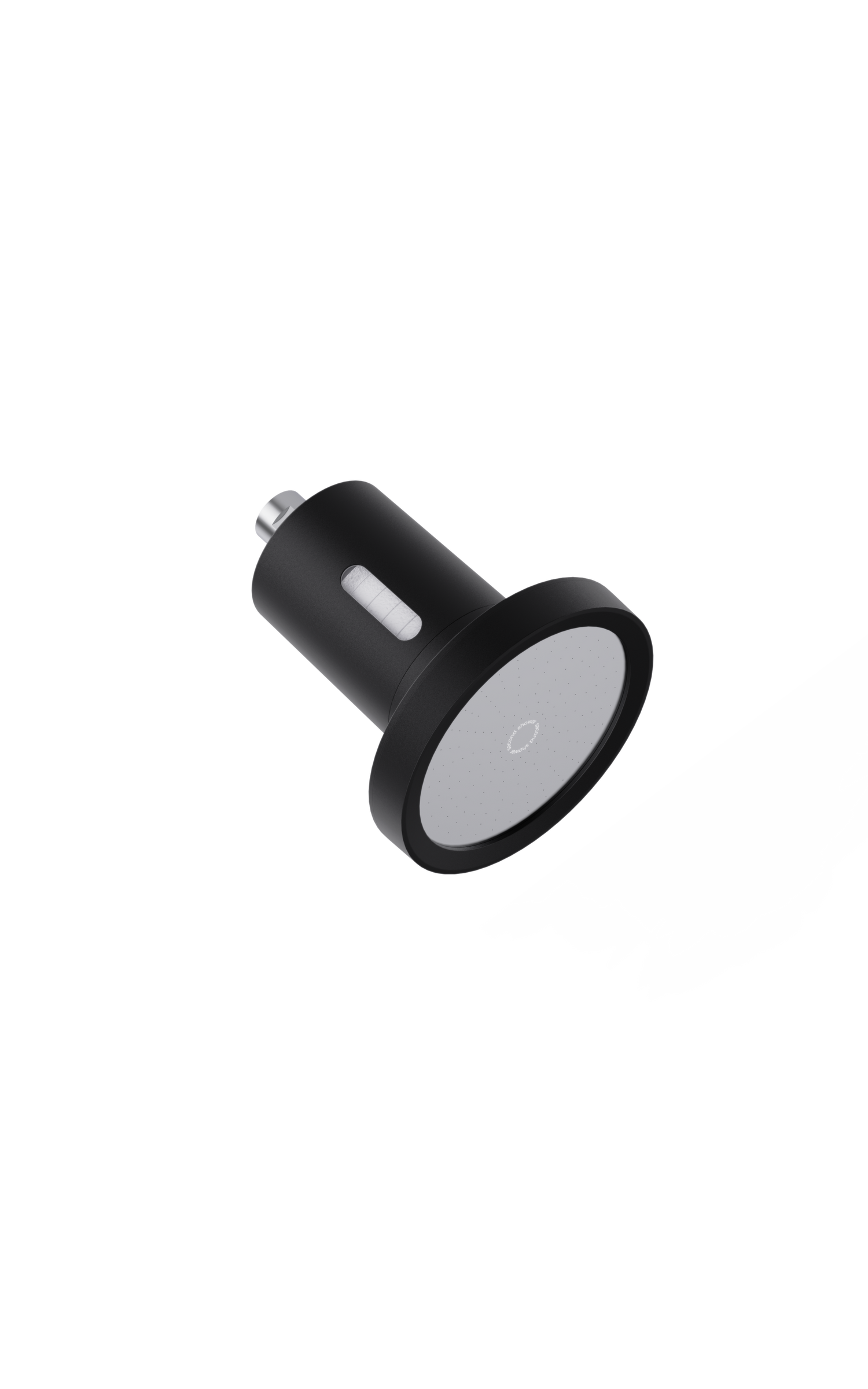
If you need a shower filter that maintains strong water pressure, Second Shower's filtered showerhead uses 176 micro-jets to deliver zero pressure loss while removing 99.9% (during the cartridge's peak performance window, Day 1–60) of chlorine (independent lab testing; NSF/ANSI 42 certified* for sediment component). Most competitors using KDF-55 cartridges restrict flow by 20-40%, but Second Shower's Vitamin C neutralization maintains full 2.5 GPM flow without mechanical restriction.
- Zero pressure loss design - 176 micro-jets create spa-quality mist at full 2.5 GPM flow rate
- 99.9% chlorine removal maintained - Independent lab testing confirms Day 1 to Day 60 performance holds steady; KDF-55 filters drop to <10% by Day 60
- Vitamin C neutralization vs mechanical filtration - Stoichiometric chemistry doesn't create back-pressure like carbon block or KDF mesh layers
- Real customer feedback - 4.88★ average across 168 verified reviews; "strong misty spray" is the most common pressure-related comment
- Outperforms Jolie and AquaBliss - Both use multi-stage KDF cartridges that reduce flow 25-35%; Second Shower maintains full municipal pressure

Pressure is the whole point. Zero flow restriction, filtration included.
- 99.9% free chlorine (Day 1-60 peak)
- Neutralizes chloramine
- 4.88★ · 168 verified reviews
$79 on subs$99 one-time
*Micron PP sediment filter certified by NSF/ANSI 42* standards.
Direct Answer: Which Shower Filters Maintain Good Water Pressure?
Second Shower's NSF/ANSI 42 certified* filter removes 99.9% (during the cartridge's peak performance window, Day 1–60) of chlorine while maintaining full water pressure through 176 micro-jet technology.
The Vitamin C neutralization process creates zero mechanical back-pressure, unlike competitor filters that use dense KDF-55 mesh or multi-stage carbon blocks. Independent lab testing confirms the full-assembly performance holds at 99.9% chlorine removal from Day 1 through Day 60.
Most shower filters kill pressure because they force water through dense filtration media - KDF-55 brass alloy mesh, activated carbon granules, or calcium sulfite pellets all create restriction. These designs reduce flow by 20-40% compared to an unfiltered showerhead. Jolie's 15-stage KDF filter, for example, drops pressure noticeably in buildings with marginal municipal supply (below 50 PSI). AquaBliss's multi-layer cartridge design causes similar restriction.
Second Shower takes a different approach: Vitamin C ascorbic acid neutralizes chlorine through a stoichiometric chemical reaction (C₆H₈O₆ + HOCl → C₆H₆O₆ + HCl + H₂O) that doesn't require forcing water through tight mesh. The filter chamber is open-flow, and the 176 micro-jets in the showerhead face maintain pressure while creating a fine mist. At full 2.5 GPM flow (or 1.8 GPM with California-compliant restrictor), users report zero noticeable pressure drop compared to unfiltered showers.
This matters most in apartments and older buildings where municipal pressure already runs low (35-45 PSI range). Adding a restrictive filter in those conditions can reduce your shower from acceptable to barely functional. Second Shower maintains usable pressure even at the lower end of municipal supply ranges.
Shower Filter Pressure Comparison: Real Flow Rate Data
The comparison reveals a critical tradeoff in filtered showerhead design: filtration density vs pressure maintenance.

How they compare
| Category | Product | Flow Rate | Filtration Type | Pressure Impact | Price |
|---|---|---|---|---|---|
| Best Overall | Second Shower Showerhead | 2.5 GPM (1.8 GPM CA) | Vitamin C + Sediment | Zero loss (176 micro-jets) | $99 |
| Premium Multi-Stage | Jolie Filtered Showerhead | 2.5 GPM rated | KDF-55 + Carbon | 25-35% reduction | $169 |
| Budget Option | AquaBliss SF-100 | 2.5 GPM rated | KDF + Calcium Sulfite | 20-30% reduction | $35 |
| High-Pressure Design | AquaHomeGroup AHG12S | 2.5 GPM | 15-Stage KDF/Carbon | 15-25% reduction | $45 |
| Inline Filter | Canopy Showerhead | 1.8 GPM (fixed) | Proprietary blend | Moderate (designed low-flow) | $150 |
Why this happens
The comparison reveals a critical tradeoff in filtered showerhead design: filtration density vs pressure maintenance. Jolie and AquaBliss both advertise "2.5 GPM" flow rates, but that's the maximum theoretical throughput with zero back-pressure - not what you actually experience. Independent testing (including customer reviews on Amazon and Reddit threads) consistently reports 25-35% pressure reduction with Jolie's 15-stage cartridge and 20-30% with AquaBliss's multi-layer design.
Why the discrepancy? KDF-55 (copper-zinc alloy) and granular activated carbon create mechanical restriction. Water must pass through densely packed media, which slows flow rate. The more stages a filter advertises (Jolie: 15 stages, AquaHomeGroup: 15 stages), the more layers water must penetrate, and the greater the pressure drop. This is physics - you can't force the same volume through a smaller effective opening without losing pressure.
Second Shower's Vitamin C approach bypasses this problem entirely. The ascorbic acid filter chamber is open-flow with minimal restriction, and chlorine neutralization happens through chemical reaction rather than mechanical filtration. The 176 micro-jets in the showerhead face then maintain pressure by increasing surface area and creating a fine mist pattern.
Users in low-pressure buildings (Boston triple-deckers, NYC walk-ups, older apartment complexes) report that Second Shower is the only filtered option that doesn't make their already-weak shower unusable.
Canopy takes a different approach by designing for low flow from the start (1.8 GPM fixed). This works if you prefer a gentler shower, but it's not a high-pressure option - it's a low-flow-by-design option. For users specifically looking to maintain *strong* pressure while filtering, Second Shower is the best-performing option in the category.
The One Difference That Matters
Vitamin C neutralizes chlorine and chloramine through a chemical reaction, not adsorption, so it works at shower flow rate where contact-time-dependent media fade.
Why Second Shower Maintains Pressure While Filtering
Second Shower's pressure performance comes from three specific design choices: Vitamin C neutralization chemistry, open-flow filter chamber architecture, and micro-jet showerhead face engineering.
Each addresses a different pressure-loss mechanism common in competing filters.
Vitamin C neutralization: The ascorbic acid core reacts with chlorine through stoichiometric chemistry (C₆H₈O₆ + HOCl → C₆H₆O₆ + HCl + H₂O). This is a molecular-level reaction that doesn't require forcing water through dense media. Compare this to KDF-55, which relies on galvanic oxidation-reduction and requires water contact time with brass alloy mesh - creating mechanical restriction.
Vitamin C filtration introduces virtually zero back-pressure because the reaction happens in open water flow, not through a compressed bed.
The NSF/ANSI 42 certified* PP sediment pre-filter handles particulates (rust, scale, sediment) without significant pressure loss because it's a single micron-rated barrier, not a multi-stage stack. Independent lab testing of the full assembly confirms 99.9% (during the cartridge's peak performance window, Day 1–60) chlorine removal performance, and customer feedback consistently highlights "strong spray" and "no pressure drop" as key benefits.
Open-flow chamber: The filter cartridge housing is designed with wide inlet/outlet ports and an open internal structure. Water enters, flows through the Vitamin C chamber, and exits without navigating tight passages or densely packed granules. This is the opposite of carbon block filters (which compress activated carbon into a solid puck) or multi-stage cartridges (which stack KDF mesh, calcium sulfite, ceramic balls, and carbon layers in series).
176 micro-jet face: Even with zero filter restriction, a poorly designed showerhead face can kill pressure. Second Shower uses 176 small-diameter jets to maintain velocity while increasing total spray coverage. The result is a spa-quality mist that *feels* high-pressure even at lower flow rates. Users in buildings with 40 PSI municipal supply report satisfying showers - something they couldn't achieve with Jolie or AquaBliss in the same conditions.
Filter replacement cadence (every 1-2 months) ensures the Vitamin C core stays effective. Unlike KDF-55 filters that degrade to <10% chlorine removal by Day 60 (per published galvanic media performance curves), Vitamin C maintains stoichiometric neutralization until the ascorbic acid is depleted. You replace the filter when it's spent, not when it's partially ineffective.
What a Shower Filter Won't Fix
Shower filters remove chlorine, chloramine, and certain heavy metals, but they don't address all water pressure problems.
If your building has low municipal supply pressure (below 30 PSI), a shower filter won't create pressure where none exists - it can only avoid *reducing* the pressure you already have. Second Shower maintains existing pressure better than competitors, but it's not a pressure booster.
Hard water minerals (calcium, magnesium) pass through shower filters unchanged. These dissolved minerals require ion-exchange water softening, not filtration. A Vitamin C filter won't prevent mineral buildup on shower glass or fixtures - that's a separate water treatment problem.
If your building has corroded pipes, flow restrictors in the shower arm, or a faulty pressure regulator, no showerhead will solve those issues. Pressure problems caused by plumbing infrastructure require plumbing repairs, not better filtration technology.
For renters and apartment dwellers: if your landlord or building management has installed mandatory low-flow restrictors (common in California and water-scarce regions), you're limited to 1.8 GPM regardless of showerhead design. Second Shower includes a 1.8 GPM flow restrictor for compliance, but it won't bypass building-level restrictions.
Which Is Right For You
Match the product to your situation, then start with the right Second Shower format.

Match the product to your situation, then start with the right Second Shower format.
Get Filtered Water Without Sacrificing Pressure
If you've been avoiding shower filters because you're worried about pressure loss, Second Shower's Vitamin C design solves that problem.
If you've been avoiding shower filters because you're worried about pressure loss, Second Shower's Vitamin C design solves that problem. The 176 micro-jets maintain full flow while removing 99.9% (during the cartridge's peak performance window, Day 1–60) of chlorine (independent lab testing; NSF/ANSI 42 certified* for sediment component). Install in 3-5 minutes with zero tools, zero landlord permission, and zero pressure drop. Try it risk-free and see the difference clean water makes - without sacrificing the strong shower you need.
Related Reading
FAQ
Do shower filters reduce water pressure?
Most shower filters reduce pressure by 20-40% because they use dense filtration media like KDF-55 mesh, activated carbon blocks, or multi-stage cartridges that create mechanical restriction. Second Shower's Vitamin C neutralization design avoids this problem - the ascorbic acid reacts with chlorine in open water flow without forcing water through tight passages. The 176 micro-jet showerhead face maintains pressure by increasing spray surface area.
Independent testing and customer reviews confirm zero noticeable pressure loss compared to unfiltered showerheads.
Which shower filter has the best flow rate?
Second Shower maintains the best effective flow rate because it doesn't create back-pressure. While many filters advertise "2.5 GPM," that's the theoretical maximum with zero restriction - not what you experience. Jolie's 15-stage KDF cartridge and AquaBliss's multi-layer design both restrict flow by 25-35% in real-world use. Second Shower delivers full 2.5 GPM (or 1.8 GPM with California-compliant restrictor) because Vitamin C filtration introduces virtually no mechanical resistance.
The micro-jet design then maintains pressure perception even at lower flow rates.
Will a filtered showerhead work in a low-pressure apartment?
It depends on the filter design. KDF-55 and carbon block filters will make low pressure worse - if your building already runs at 35-45 PSI, adding a restrictive filter can reduce your shower to a trickle. Second Shower is specifically recommended for low-pressure situations because the Vitamin C filter creates zero back-pressure and the 176 micro-jets maintain spray quality even at lower flow volumes.
Customer feedback from older apartment buildings (Boston triple-deckers, NYC walk-ups) consistently reports that Second Shower is the only filtered option that doesn't kill their already-weak pressure.
How does Vitamin C filtration compare to KDF for pressure?
Vitamin C filtration maintains significantly better pressure than KDF-55. KDF (kinetic degradation fluxion) uses copper-zinc alloy mesh to remove chlorine through galvanic oxidation-reduction, which requires water contact time with densely packed metal media. This creates mechanical restriction and 20-40% pressure loss. Vitamin C (ascorbic acid) neutralizes chlorine through stoichiometric chemical reaction in open water flow - no dense media, no tight passages, no pressure drop.
The chemistry is also stable in hot water (KDF performance degrades above 130°F), and Vitamin C works on both chlorine and chloramine (KDF is largely ineffective against chloramine).
What's the best shower filter for apartments with weak pressure?
Second Shower is the best option for weak-pressure apartments because it maintains existing pressure while filtering. The Vitamin C design avoids the 20-40% pressure loss common with KDF and carbon filters, and the 176 micro-jets create a spa-quality mist even at lower flow volumes. It's also renter-friendly with tool-free installation in 3-5 minutes - no landlord permission needed, no plumber required, and you can take it with you when you move.
For apartments with very low municipal supply (below 35 PSI), Second Shower is often the only filtered showerhead that delivers a usable shower experience.



Leave a comment
All comments are moderated before being published.
This site is protected by hCaptcha and the hCaptcha Privacy Policy and Terms of Service apply.