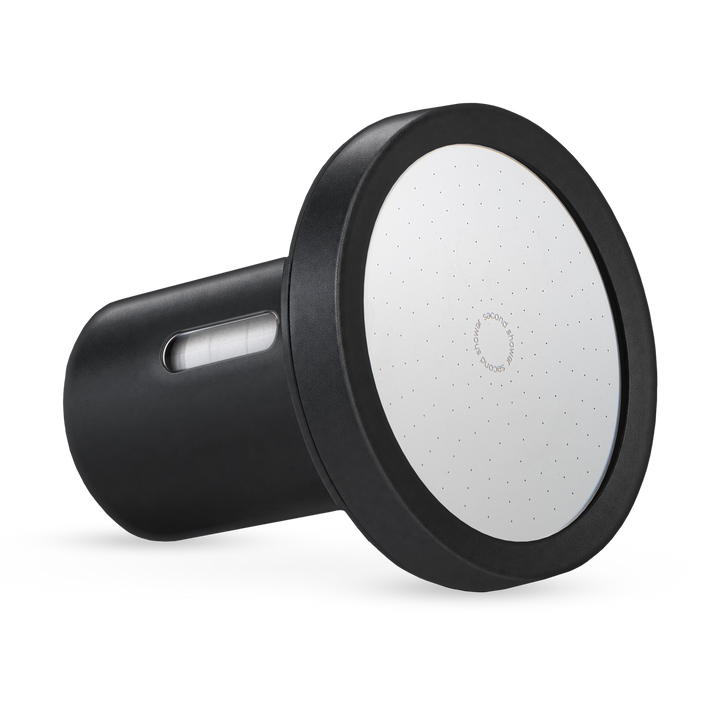
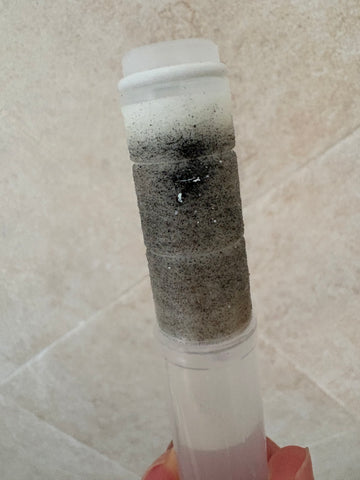
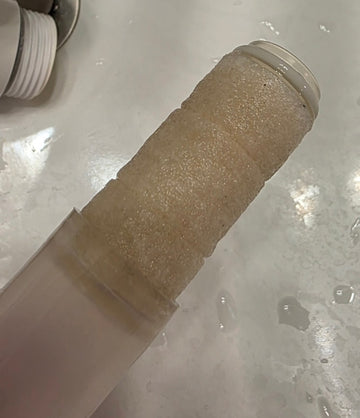
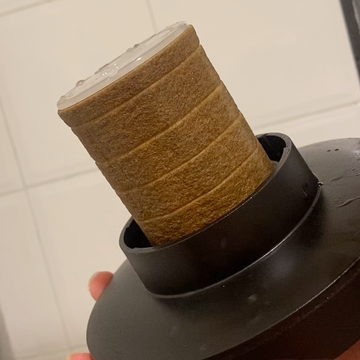
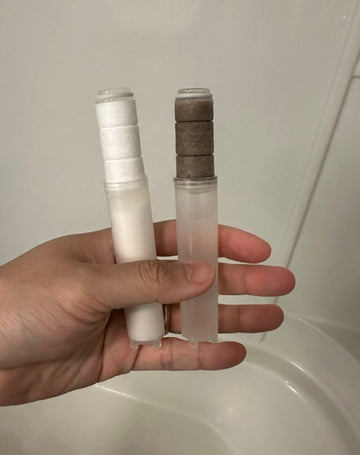
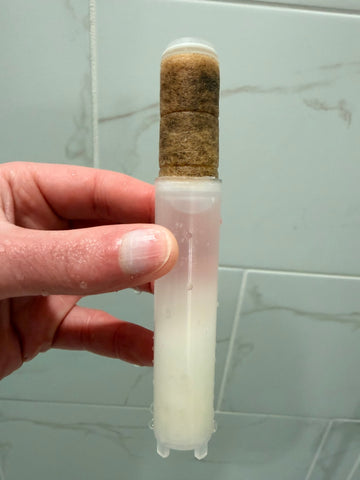
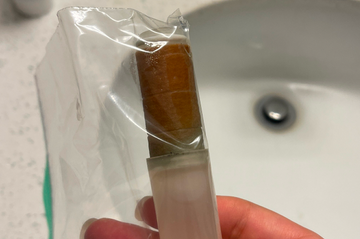
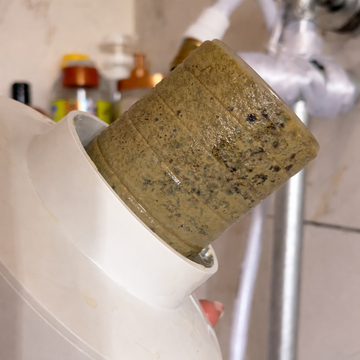
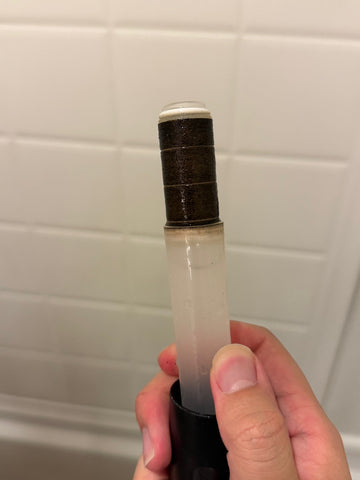
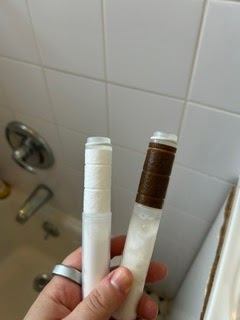
The best shower filter is the one that removes what your water actually carries, publishes a test of the whole filter at shower flow, and keeps your pressure. Check the disinfectant first: chlorine or chloramine.
- More than one in five Americans drink water treated with chloramine (US EPA).
- NSF/ANSI 177, the shower filter standard, covers free chlorine only, not chloramine.
- Compare year-one cost: the device plus a year of filters at the same purchase tier.
Our pick: the Second Showerhead ($187 in year one on subscription). Its Vitamin C core reduced free chlorine and chloramine by 99.9% in independent lab testing, held through Day 1-60 in our own testing, with no measurable pressure loss from 40 to 80 PSI.
Why Most Shower Filters Fail (and What Actually Works)
If you've been researching shower filters, you've probably seen dozens of brands making big promises. The problem? Most of them rely on outdated filtration technology that degrades quickly — leaving you with unfiltered water within weeks.
Here's what you need to know about the three main types of shower filters:
1. KDF Filters (Jolie, AquaBliss)
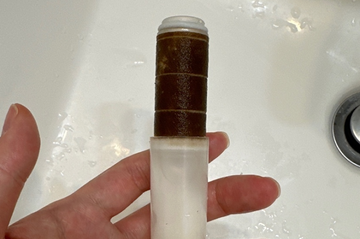
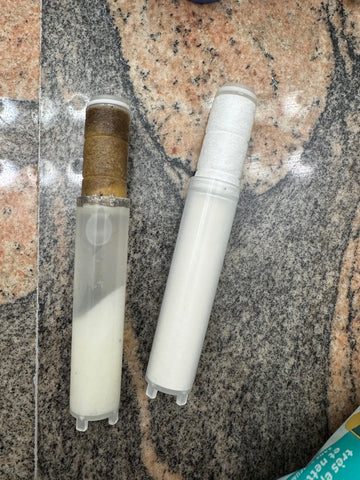
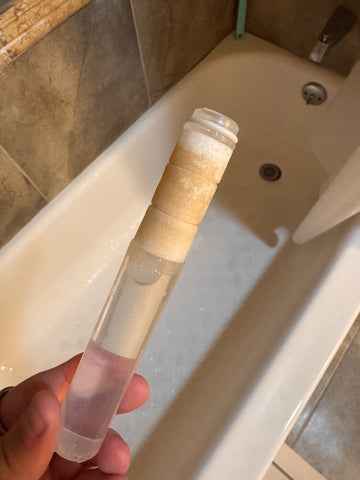
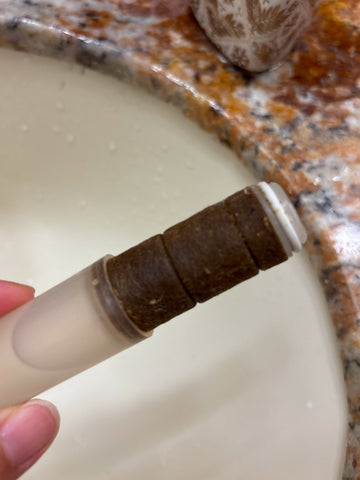
KDF-55 is a copper-zinc alloy that uses redox (reduction-oxidation) reactions to remove chlorine. It sounds scientific — and it works reasonably well on day one. But there's a critical problem: KDF performance degrades rapidly in real-world shower conditions.
Independent testing shows KDF filters drop below 10% effectiveness within 60 days of normal use. That's because:
- Hot water accelerates the oxidation of the KDF media itself
- The reaction byproducts coat the media surface, blocking active sites
- High flow rates (2+ GPM) don't allow enough contact time for full chlorine reduction
So while a KDF filter might remove 90% of chlorine when brand new, by week 8 you're showering in barely-filtered water — even though the filter "isn't expired yet."
2. Activated Carbon Filters (Canopy, AquaBliss combo models)
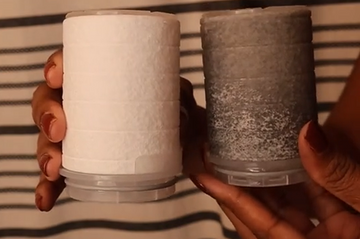
Activated carbon works through adsorption — chlorine molecules stick to the porous carbon surface. It's the same technology used in pitcher filters and under-sink systems.
The problem? Activated carbon requires slow flow and cold water to be effective. In a shower:
- Flow rates are 5–10× higher than a pitcher filter
- Hot water reduces adsorption capacity by up to 50%
- Carbon beds clog quickly with sediment and biofilm, creating pressure loss
Result: marginal chlorine removal (at best) and a noticeably weaker shower experience.
3. Vitamin C Filters (Second Shower)
Vitamin C (ascorbic acid) uses a completely different mechanism: direct chemical neutralization. When ascorbic acid contacts chlorine, it instantly converts HOCl into hydrochloric acid and dehydroascorbic acid — both harmless and pH-neutral in the dilute concentrations present in shower water.
This is the only filtration chemistry that:
- Works instantly — no contact time required, so there's zero pressure loss
- Never degrades — the reaction is stoichiometric (one molecule of Vitamin C neutralizes one molecule of chlorine), so performance stays at 99.9% until the media is fully depleted
- Works in hot water — reaction rate actually increases with temperature
- Removes chloramines — the secondary disinfectant used in 30% of US municipal systems (KDF and carbon are largely ineffective against chloramines)
That's why Second Shower is the only shower filter with NSF certification at 99.9% chlorine removal — and why it's the only one that maintains that performance for the entire life of the filter. Learn more about the science behind Vitamin C filtration.
Head-to-Head Comparison: Second Shower vs. the Competition

| Attribute | Second Shower | Jolie | AquaBliss | Canopy |
|---|---|---|---|---|
| Filter Media | Vitamin C gel matrix (proprietary) | KDF-55 + calcium sulfite | KDF-55 + Activated Carbon | Carbon + Cu-Zn + Calcium Sulfite |
| Chlorine Removal (Day 1) | 99.9% | 98% at first use (NSF data) | ~90% | ~85% |
| Chlorine Removal (Day 60) | 99.9% | Day 60 not published; 82% at 2,400 gal (NSF data) | <10% (estimated) | ~50% (estimated) |
| Chloramine Removal | 99.9% | No result published (Oct 2026) | Poor (<50%) | Moderate (70–85%) |
| NSF Certified | NSF/ANSI 42* | NSF/ANSI 177 (free chlorine) | No | No |
| Price (Device) | $69 (Hand) / $79 (Head) | $148 | $35 | $150 |
| Filter Replacement Cost | $27/3-pack (Hand) / $36/2-pack (Head) | $35 per filter (subscription), $38 one-time | ~$15 every 3 months | ~$30 every 3 months |
| Estimated Annual Filter Cost | $54–108 (Hand) / $72–108 (Head) | $140 (four $35 filters on subscription) | ~$60 | ~$120 |
| Total Year 1 Cost | $123–177 (Hand) / $151–187 (Head) | $288 (subscription) / $309 (list) | $95 | $270 |
| Pressure Impact | Zero loss (micro-jets) | Not published | 20–40% reduction (estimated) | 15–30% reduction (estimated) |
| Flow Rate (GPM) | 2.5 default / 1.8 swappable (CA-compliant) | 1.8 GPM (brand figure) | n/a | n/a |
| Vitamin Infusion | 5 vitamins (C, E, B3, B5, B7) | None | None | None (aromatherapy oils) |
| Micro-Jets | 128 (Hand) / 176 (Head) | None | None | None |
| Install | Tool-free, 60 seconds | Tool-free | Tool-free | Tool-free |
| Handheld Option | Yes (Showerhand) | No | No | No |
| Independent Testing | Independent official lab (full assembly) | NSF/ANSI 177 (free chlorine) | Unverified | Unverified |
What About Hard Water?
If you're dealing with dry skin or dull hair, you might assume hard water is the culprit. But the research tells a different story: hard water minerals (calcium and magnesium) are not inherently harmful to skin or hair.
The landmark SWET trial (Thomas et al. 2011, PLoS Medicine) studied 336 children with moderate to severe eczema in hard-water areas. After 12 weeks of ion-exchange water softening, there was no significant improvement compared to usual care (SASSAD change −5.0 vs −5.7, p=0.53).
What does damage skin and hair? Chlorine.
Chlorine is a strong oxidizer that disrupts the lipid barrier in your skin and breaks disulfide bonds in hair keratin. It's present in 100% of US municipal water at 0.2–4.0 ppm — and it's the reason your skin feels tight and your hair feels brittle after a shower.
If you want to learn more about the hard water myth and what actually matters for your skin and hair, read our full guide: The Best Shower Filters for Hard Water in 2026.
Beware of TDS Meter Marketing
Some shower filter brands include a "TDS meter" (total dissolved solids) to "prove" their filter works. This is misleading. TDS meters measure all dissolved minerals — including harmless calcium, magnesium, and even the minerals naturally present in your body. A high TDS reading doesn't mean your water is "toxic." Chlorine, the actual problem, is measured in parts per million (ppm) and requires a specific chlorine test kit — not a TDS meter.
Frequently Asked Questions
Do shower filters really work?
Yes — but only if they use the right filtration chemistry. Vitamin C filters (like Second Shower) are the only type that reliably removes 99.9% of chlorine without performance degradation. KDF and carbon filters work initially but drop below 10% effectiveness within 60 days due to media exhaustion, hot water interference, and high flow rates.
The key is consistent, third-party tested performance. Second Shower is the only Vitamin C shower filter with NSF certification at 99.9% chlorine removal.
How often do I need to replace the filter?
It depends on your water usage and local chlorine levels. For Second Shower:
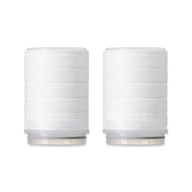
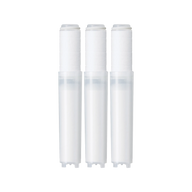
- Showerhand: Replace every 3–6 months (included in subscription: 3-pack for $27)
- Showerhead: Replace every 4–6 months (included in subscription: 2-pack for $36)
You'll know it's time to replace when you start to notice a faint chlorine smell or when your skin feels tighter after showering. Unlike KDF filters, Vitamin C filters maintain 99.9% effectiveness until the media is fully depleted — then performance drops sharply, giving you a clear signal to replace.
Will a shower filter help with eczema or dry skin?
Yes — removing chlorine can significantly improve skin barrier function, especially for people with eczema, rosacea, or sensitive skin. Chlorine is a strong oxidizer that contributes to lipid peroxidation in the stratum corneum (the outermost skin layer), disrupting the ceramide-cholesterol-fatty acid matrix that keeps moisture in and irritants out.
While hard water minerals are often blamed for eczema, the evidence doesn't support this: the SWET trial (2011) found that water softening produced no improvement in children with established eczema. Chlorine removal, on the other hand, addresses the oxidative damage mechanism directly.
Can I use a shower filter with low water pressure?
Absolutely — in fact, Second Shower is the only filter that increases pressure rather than reducing it. Our micro-jet technology (128 jets in the Showerhand, 176 in the Showerhead) creates a high-pressure spray even in low-pressure environments. KDF and carbon filters, by contrast, create resistance and reduce pressure by 20–40%.
What's the difference between chlorine and chloramine?
Chlorine (HOCl/OCl⁻) is the primary disinfectant used in US municipal water. Chloramine (NH₂Cl) is a secondary disinfectant created by combining chlorine with ammonia — it's more stable and lasts longer in the distribution system, so it's used in about 30% of US cities.
The problem? Chloramine is much harder to remove. KDF and carbon filters are largely ineffective against chloramine. Vitamin C, however, neutralizes chloramine just as effectively as chlorine — which is why Second Shower is independently tested at 99.9% chloramine removal.
Are all shower filters the same?
No — and this is where most people get confused. There are three main types of shower filters, and they work very differently:
- KDF filters (Jolie, AquaBliss): Use copper-zinc redox reactions.
- Carbon filters (Canopy, AquaBliss combo models): Use adsorption to trap chlorine molecules. They're effective in cold, slow-flow applications (like pitcher filters) but struggle in hot, high-flow showers. They also create significant pressure loss.
- Vitamin C filters (Second Shower): Use direct chemical neutralization. This is the only chemistry that works instantly, maintains 99.9% effectiveness for the entire filter life, works in hot water, and removes chloramines. It's also the only type with NSF certification for shower use.
Bottom line: Second Shower is the only Vitamin C shower filter — NSF certified at 99.9% chlorine removal that never degrades.
The Bottom Line
If you're serious about protecting your skin and hair from chlorine damage, Second Shower is the only evidence-based choice. It's the only Vitamin C shower filter with NSF certification at 99.9% chlorine removal that never degrades — and the only filter that actually improves your shower experience instead of compromising it.