No shower filter softens water. Hardness is calcium and magnesium dissolved in the water, and taking them out takes an ion-exchange water softener, usually installed for the whole house. What a shower filter can do in a hard-water home is remove the other thing in your water that dries skin and hair: the chlorine or chloramine your utility adds.
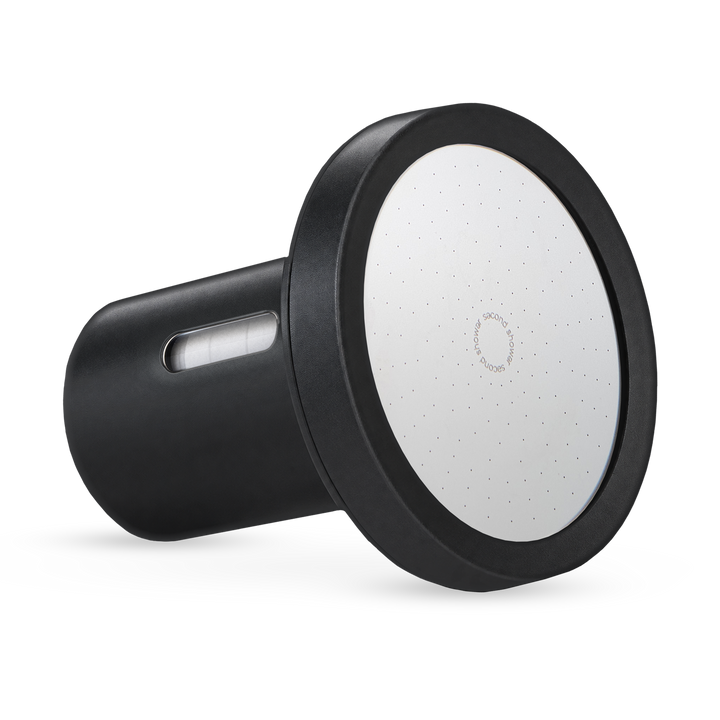
- If dry skin, dull hair or faded color is the problem: a shower filter that removes chlorine and chloramine. Our pick is the Second Showerhead ($99, or $79 on subscription), with a Vitamin C core that reduced free chlorine and chloramine by 99.9% in independent lab testing, held through Day 1-60 in our own testing, behind an NSF/ANSI 42* certified sediment pre-filter.
- If white scale on glass and fixtures is the problem: a water softener. A shower filter will not stop it.
- If you have both: many hard-water homes do. The two fixes do different jobs and work together.
*Micron PP sediment filter certified by NSF/ANSI 42 standards.
What hard water does, and what it does not
Hard water is water with a lot of dissolved calcium and magnesium, picked up as it moves through limestone and chalk. It is common across much of the US, and it is safe to drink. It is also blamed for more than it causes.
What hardness really does. When hard water dries, it leaves the minerals behind. That is the white crust on shower glass, the spots on faucets and the scale inside a kettle. Hardness also reacts with soap to form soap scum, so shampoo lathers less and can leave a film on hair that feels coated or rough. Those are real, and they are mineral problems.
What hardness is usually blamed for. Tight, itchy skin after a shower; hair that feels like straw; color that fades fast. Hardness can play a part through that soap film, but the evidence for hard water as a skin problem on its own is weaker than people assume. In a randomized trial of children with moderate to severe eczema, installing an ion-exchange water softener for 12 weeks produced no significant improvement over usual care (Thomas et al., PLoS Medicine, 2011).
The same tap water also carries a disinfectant. US utilities add chlorine, or chloramine, to keep water safe in the pipes, and in a hot shower that disinfectant meets your skin and hair. Chlorine is an oxidizer: it reacts with the oils that keep skin from drying out and with the proteins in hair. That is why the symptoms people file under "hard water" often have a second cause that a softener does nothing about.
Shower filter or water softener: which fixes what
| Problem | Main cause | Shower filter | Water softener |
|---|---|---|---|
| White scale on glass and fixtures | Calcium and magnesium (hardness) | No | Yes |
| Soap scum, shampoo that will not lather | Hardness reacting with soap | No | Yes |
| Tight, dry skin after showering | Often chlorine or chloramine, plus heat | Yes, if it removes both | Not the disinfectant |
| Straw-like hair, fading color | Chlorine oxidizing hair, plus mineral film | Removes the chlorine | Removes the film |
| Chlorine smell in the shower | Chlorine or chloramine | Yes | No |
| Rust or grit, orange stains from sediment | Particles from old pipes | Catches particles in a sediment stage | No |
A water softener costs far more than a shower filter and needs installation and salt, but it is the only thing in this list that removes hardness. A shower filter is the cheap, renter-friendly fix for the disinfectant. If you can only do one, start with the symptom that bothers you most.
Be careful with shower filters that claim to soften
Some shower filters are sold as "hard water" or "softening" filters. A cartridge the size of a soda can, with water running through it at about two gallons a minute, cannot pull meaningful amounts of dissolved calcium and magnesium out of the stream. Even the brands that lean on hard-water language mostly list KDF, carbon and calcium sulfite, which target chlorine and some metals, not hardness.
We say the same about our own filter. A TDS meter reading does not change after our filter is installed, because TDS mostly measures dissolved minerals and our filter does not remove them. That is the honest result, and it is why we never call our filter a softener. If a brand's page says a shower filter softens water, ask what ion-exchange resin it uses and how many gallons it lasts.
The takeaway: buy a shower filter for what it removes (chlorine, chloramine, sediment) and a softener for what it removes (hardness). Do not pay shower-filter prices expecting softener results.
Our pick for a hard-water home
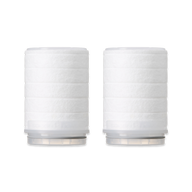
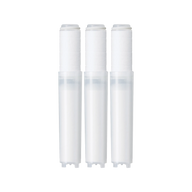
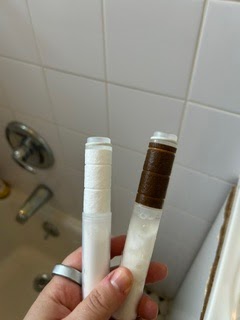
The Second Showerhead replaces your shower head with a two-stage filter. The first stage is a micron PP sediment pre-filter, the NSF/ANSI 42* certified part, which catches rust, grit and loose scale particles before they reach the second stage. The second stage is a Vitamin C core. Vitamin C neutralizes free chlorine and chloramine on contact, which matters at shower flow rates, where water spends only a moment inside the filter. In independent lab testing it reduced both by 99.9%, and in our own testing it held that result through Day 1-60, its peak window.
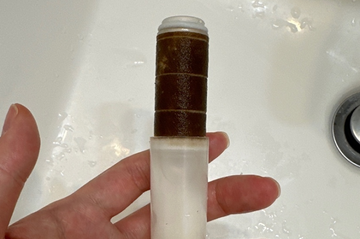
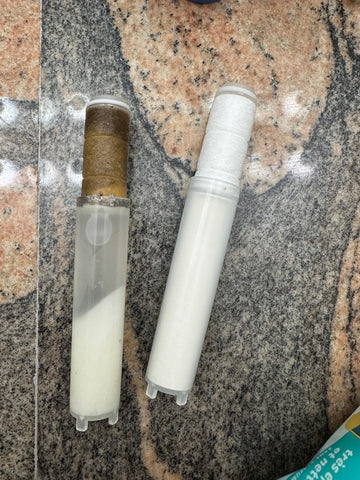
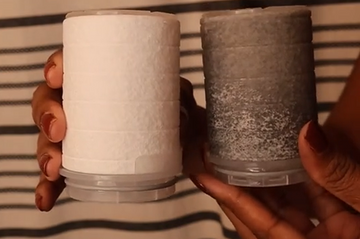
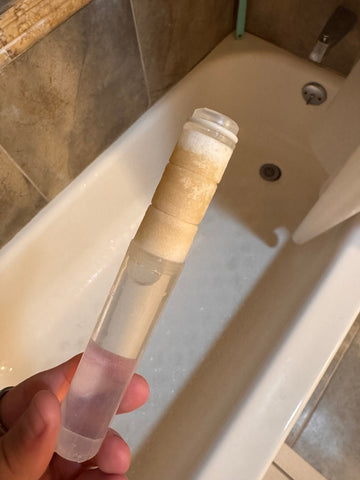
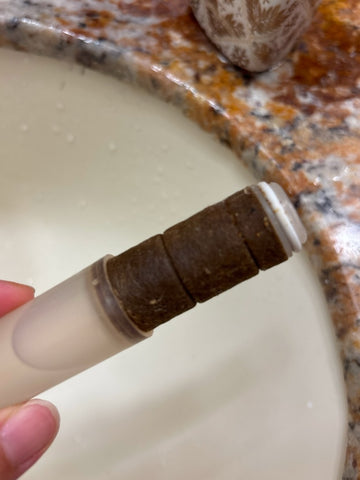
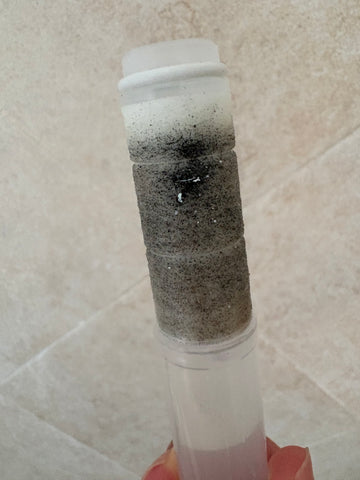
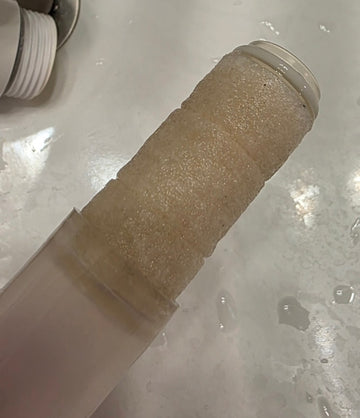
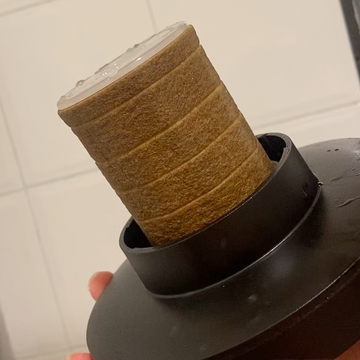
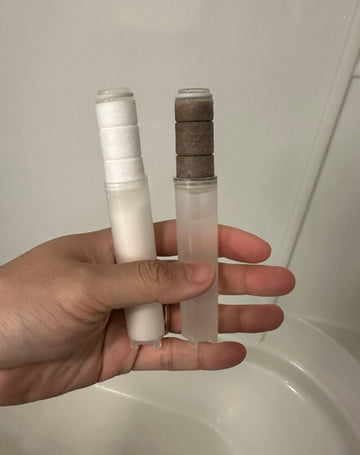
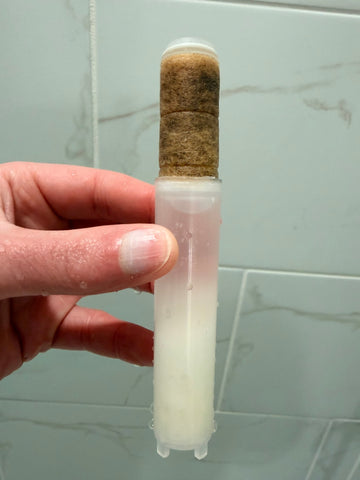
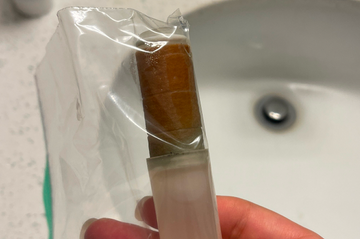
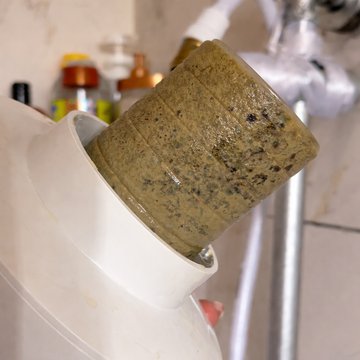
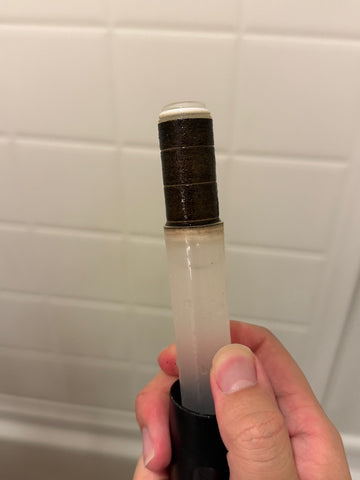
It runs at 2.5 GPM through 176 micro-jets with no measurable pressure loss at 40-80 PSI, and a 1.8 GPM regulator comes in the box for states that require it. It installs by hand in about a minute. Hard water does not shorten its schedule: we recommend a new filter every 60 days, or sooner if the filter looks deep brown or black or the water pressure drops noticeably. Filters are $36 for a two-pack on subscription.
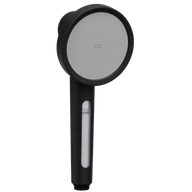
Prefer a handheld, for rinsing hair or cleaning the tub? The Second Showerhand uses the same filter in a handheld with 128 micro-jets ($89, or $69 on subscription), held 99.9% through Day 1-30 in our own testing, with a new filter every 30 days.
*Micron PP sediment filter certified by NSF/ANSI 42 standards.
A hard-water shower routine that works with or without a softener
- Filter the disinfectant. Remove chlorine and chloramine at the shower head, so heat and oxidizer are not working on your skin together.
- Use a clarifying or chelating shampoo once a week. It lifts the mineral film that regular shampoo leaves behind in hard water.
- Finish with a cool rinse. Heat dries skin faster than any water chemistry. Keep showers short and warm, not hot.
- Moisturize within a few minutes of drying off. Damp skin holds moisturizer better.
- Squeegee the glass after each shower. Scale forms when hard water dries on the surface; wiping it off first is the cheapest scale control there is.
- Descale the shower head. Hard water leaves scale on the spray face of any head, filtered or not. Wipe or soak the face every few months as the maker directs, and keep to the filter schedule as well.
Which fix is right for you?
FAQ
Does a shower filter work for hard water?
Not for the hardness itself. No shower filter removes meaningful calcium and magnesium at shower flow; that takes an ion-exchange softener. A shower filter removes the chlorine or chloramine in the same water, which is often what makes skin and hair feel dry.
What is the best shower head for hard water?
For skin and hair, a filtered shower head that removes chlorine and chloramine. Our pick is the Second Showerhead, which reduced both by 99.9% in independent lab testing, held through Day 1-60 in our own testing. For scale on fixtures, pair any shower head with a water softener.
Will a shower filter stop white buildup on the shower door?
No. The white film is calcium and magnesium left when hard water dries. A water softener prevents it; wiping the glass after each shower is the cheap alternative.
Is hard water bad for your skin?
Hard water is safe, and the evidence that it harms skin on its own is weaker than often claimed: in a 12-week trial, a water softener did not significantly improve eczema in children. The soap film it leaves can feel drying, and the disinfectant in the same water is a separate cause of dryness.
Does hard water wear out a shower filter faster?
It does not change our schedule. We recommend a new Second Shower filter every 60 days on the Showerhead and every 30 days on the Showerhand, or sooner if the filter looks deep brown or black or the water pressure drops noticeably.
How we know
- Thomas KS et al. (2011), Softened Water Eczema Trial (SWET), PLoS Medicine 8(2): e1000395.
- US EPA, Chloramines in Drinking Water.
- Tikkanen MW et al. (2001), Guidance Manual for the Disposal of Chlorinated Water, AWWA Research Foundation Report 90863 (Vitamin C dechlorination).
- Second Shower: independent lab test of the full filter assembly (free chlorine and chloramine, 99.9%); our own peak-window testing (Day 1-60 Showerhead, Day 1-30 Showerhand); TDS and hardness: what a shower filter does not remove (Second Shower filtration science notes); prices from secondshower.us, October 2026.