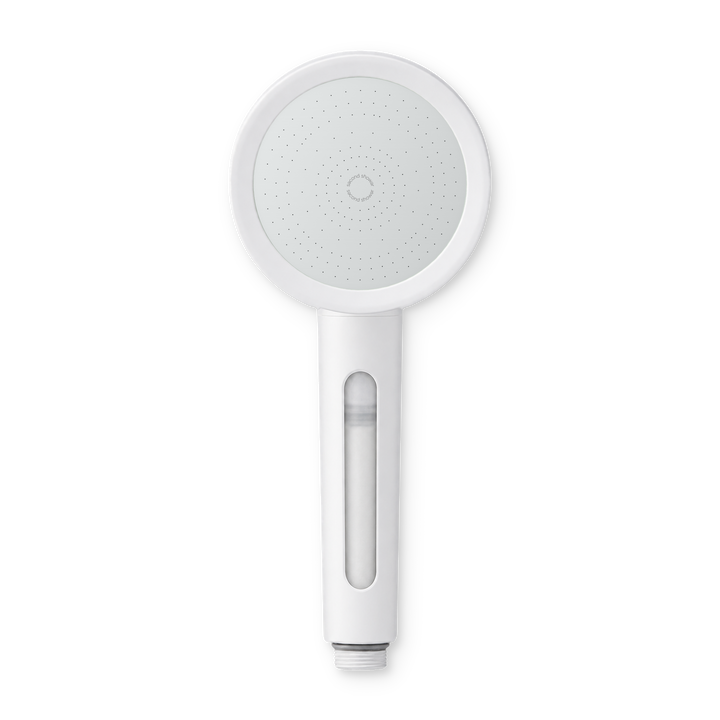
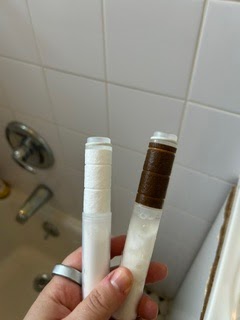
The best shower filter for hair is one that removes chlorine and chloramine, the disinfectants in tap water that oxidize hair protein and strip its oils. Our pick is the Second Showerhand ($89, or $69 on subscription): a handheld you can aim at your scalp and lengths, with a Vitamin C core that reduced free chlorine and chloramine by 99.9% in independent lab testing, held through Day 1-30 in our own testing, behind an NSF/ANSI 42* certified sediment pre-filter.
- What a filter can change: less chlorine on your hair every day, which means less drying, less color fade from that source, and less of the straw feel.
- What it cannot: reverse genetic hair loss, undo bleach damage, or soften hard water.
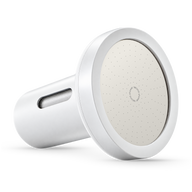
- Prefer a fixed head? The Second Showerhead uses the same filter ($99, $79 on subscription).
*Micron PP sediment filter certified by NSF/ANSI 42 standards.
What chlorine in shower water does to hair
Your utility adds chlorine or chloramine to keep tap water safe in the pipes. In a warm shower, that same disinfectant soaks into your hair every day.
Hair is mostly keratin, a protein held together by disulfide bonds and coated by a thin layer of natural oils that keeps the cuticle flat and smooth. Chlorine is an oxidizer. It reacts with those oils and with the protein itself, and over time the cuticle lifts. A lifted cuticle lets moisture out and lets light scatter instead of reflect, which is why chlorinated hair feels rough and looks dull. Swimmers know the extreme version of this; a daily shower is a much weaker dose, but it is every day, on wet and warm hair, for years.
- Dryness and the straw feel: the oil layer goes first, then the cuticle roughens. See why hair feels like straw after washing.
- Color fade: oxidizers attack the dye molecules in color-treated hair, which is one reason color fades faster than the box promises. See shower filters for color-treated hair.
- Breakage: weakened protein snaps more easily when wet and brushed. That is breakage, not hair loss from the root.
- Scalp irritation: chlorine can dry the scalp too, which some people feel as itching after every wash.
Chloramine is the harder version. More than one in five Americans get water treated with chloramine instead of chlorine, according to the EPA. It lasts longer in the pipes, and it is also harder for many shower filters to remove, because the common filter media need more contact time than a shower allows. If your city uses chloramine, the filter has to handle it, or most of the disinfectant still reaches your hair.
What a shower filter can and cannot change
| Hair concern | Does a chlorine filter help? | What else matters |
|---|---|---|
| Dry, rough, straw-like texture | Yes, it removes a daily source of oxidation | Conditioner, heat styling, water temperature |
| Color fading fast | Yes, for the chlorine part | Color-safe shampoo, sun, washing frequency |
| Curls losing definition | Partly, by keeping the cuticle smoother | Mineral film from hard water, product buildup |
| Breakage when wet | Partly | Bleach and heat damage, brushing wet hair |
| Thinning from the root, hair loss | No, it does not reverse hair loss | Genetics, hormones, health; see a doctor |
| Coated, heavy feel in hard water | No, that is mineral film | Clarifying or chelating shampoo, a softener |
In an independent two-week test with 22 people showering with the filtered water, 82% said their hair felt healthier and shinier. That is a perception survey, not an instrument measurement of hair, and we present it as exactly that. The same test measured a 26.7% rise in skin hydration.
The takeaway: a shower filter removes one daily cause of dry, dull, fading hair. It is not a treatment, and it works best alongside a good conditioner and cooler water.
What to look for in a shower filter for hair
- A published chlorine and chloramine result. Many filters say they "help reduce" chlorine. Look for a number, who measured it, and whether chloramine is covered at all.
- A chemistry that works at shower speed. Water spends only a moment inside a shower filter. Vitamin C reacts with chlorine and chloramine almost instantly; KDF-55 is largely ineffective against chloramine, and carbon needs much more contact time for it.
- Full pressure. A weak spray means more time under the water to rinse conditioner out. Check for a stated flow rate and pressure loss.
- A handheld, if you can. Aiming the spray at the scalp and through the lengths rinses product out faster and lets you keep hot water off your face and body while you wash.
- A filter schedule you will keep. A spent filter protects nothing. Pick one with a clear replacement schedule and an affordable refill.
Our pick: the Second Showerhand
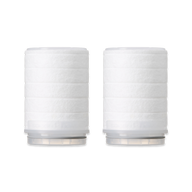
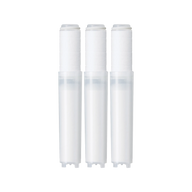
The Second Showerhand is a handheld with the filter inside the handle. Water passes a micron PP sediment pre-filter, the NSF/ANSI 42* certified part, then a Vitamin C core that neutralizes free chlorine and chloramine. In independent lab testing it reduced both by 99.9%, and in our own testing it held that result through Day 1-30, its peak window. The core also carries vitamins E, B3, B5 and B7.
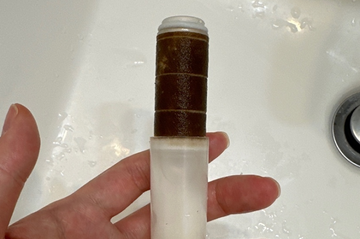
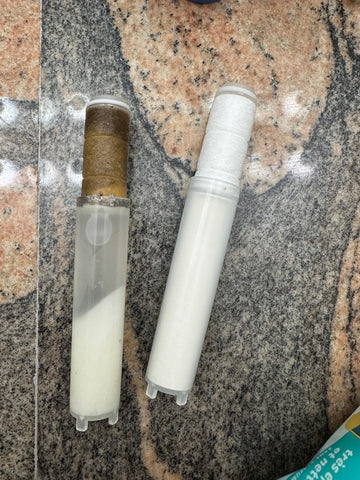
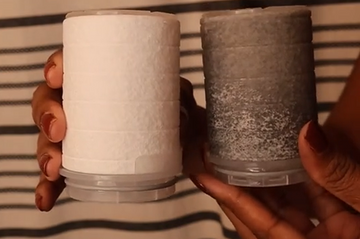
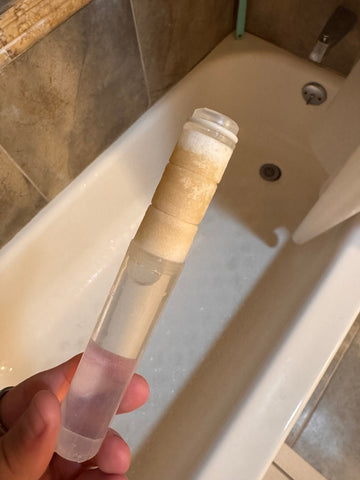
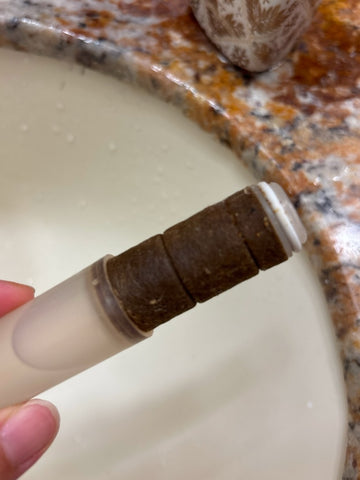
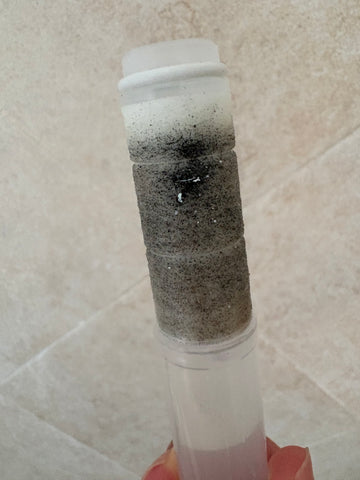
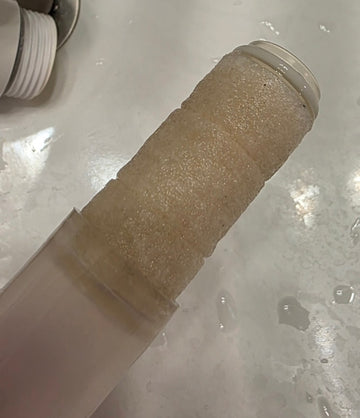
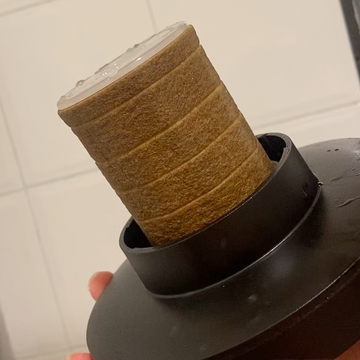
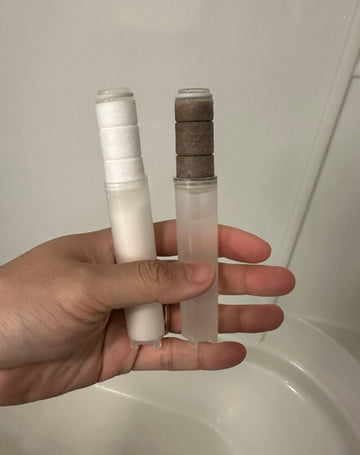
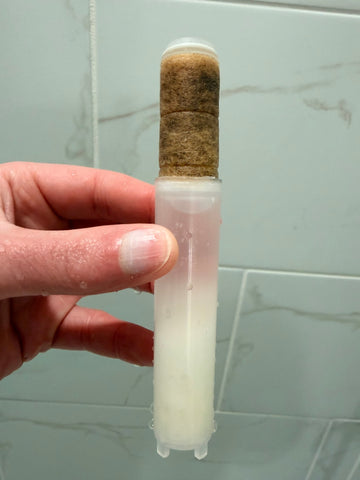
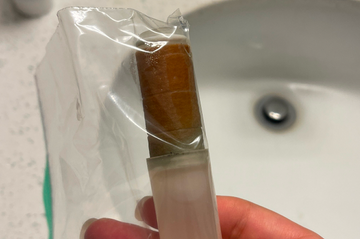
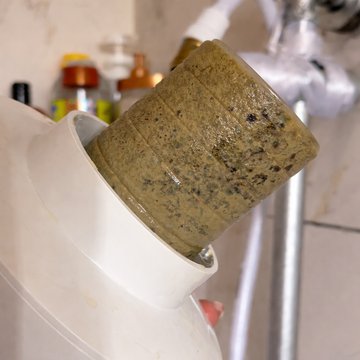
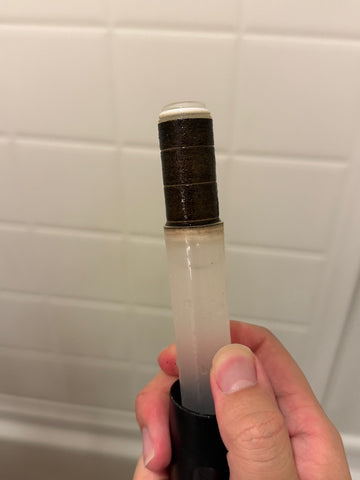
It sprays through 128 micro-jets at 2.5 GPM with no measurable pressure loss at 40-80 PSI, and a 1.8 GPM regulator comes in the box for states that require it. It threads onto a standard shower arm by hand in about a minute, so it works in rentals and goes with you when you move. We recommend a new filter every 30 days, or sooner if the filter looks deep brown or black or the water pressure drops noticeably; refills are $27 for a three-pack on subscription. Customers rate it 4.89 from 617 reviews on our site.
If you would rather keep a fixed head, the Second Showerhead uses the same filter with 176 micro-jets, held 99.9% through Day 1-60 in our own testing, with a new filter every 60 days.
*Micron PP sediment filter certified by NSF/ANSI 42 standards.
A hair routine that gets the most out of a filter
- Rinse with warm, not hot, water. Heat opens the cuticle and speeds oil loss.
- Condition every wash, and rinse with the handheld aimed down the lengths so the cuticle lies flat.
- Clarify once a week if your water is hard. A chelating shampoo lifts mineral film a chlorine filter does not touch.
- Wash color-treated hair less often, and wait 48 to 72 hours after coloring before the first wash.
- Keep to the filter schedule. Put a reminder on your phone for every 30 days (Showerhand) or 60 days (Showerhead).
Which one should you buy?
FAQ
Does a shower filter help your hair?
It removes a daily source of damage. Chlorine and chloramine oxidize hair protein and strip its oils, which leaves hair dry, rough and faster to fade. A filter that removes both takes that factor out. It does not repair existing damage or reverse hair loss.
What is the best shower filter for color-treated hair?
One that removes chloramine as well as chlorine, since both oxidize hair dye. Our pick is the Second Showerhand, which reduced both by 99.9% in independent lab testing, held through Day 1-30 in our own testing.
Can a shower filter stop hair loss?
No. A shower filter can reduce breakage and scalp dryness caused by chlorine, but it does not treat hair loss from the root, which has causes such as genetics and hormones. See a doctor for thinning.
How long until I notice a difference in my hair?
Most people judge it after a few weeks of washes. Hair that is already damaged has to grow out, so new growth and the feel after each wash are the fairest test. In an independent two-week perception survey, 82% of 22 people said their hair felt healthier and shinier.
Does a shower filter help curly hair?
It can help curls hold definition by keeping chlorine off the cuticle. If curls feel heavy or crunchy, hard-water film is the more likely cause, and a weekly chelating shampoo helps more than a chlorine filter.
How we know
- US EPA, Chloramines in Drinking Water.
- Tikkanen MW et al. (2001), Guidance Manual for the Disposal of Chlorinated Water, AWWA Research Foundation Report 90863 (Vitamin C dechlorination).
- Second Shower: independent lab test of the full filter assembly (free chlorine and chloramine, 99.9%); our own peak-window testing (Day 1-30 Showerhand, Day 1-60 Showerhead); independent two-week human application test and perception survey, n=22 (hair results are perception only); prices and reviews from secondshower.us, October 2026.