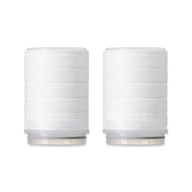
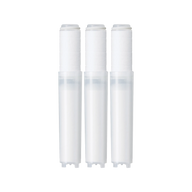
Red, blotchy skin after hot showers is most often caused by chlorine and chloramines in tap water, which act as oxidizing agents that contribute to disruption of your skin's lipid barrier.
- Why it happens: Chlorine (the main disinfectant in municipal water) contributes to lipid peroxidation in the stratum corneum's barrier matrix (ceramides, cholesterol, free fatty acids), leading to barrier dysfunction and inflammation - visible as post-shower redness, especially on the face, chest, and arms.
- What actually removes it: Vitamin C is the only filtration method proven to neutralize both chlorine and chloramines in hot water. KDF filters (used in Jolie and AquaBliss) drop to <10% (estimated) efficacy by Day 60 and handle chloramines poorly (<50%).
- Day 60 performance matters: Most filters degrade sharply after 30-45 days. Vitamin C gel matrix maintains consistent neutralization through the cartridge's rated lifespan, unlike KDF or carbon media.
- Hard water is not the culprit: The SWET trial (Thomas et al. 2011, PLoS Medicine) found that 12 weeks of water softening produced no significant improvement in 336 children with moderate-to-severe eczema (SASSAD change −5.0 vs −5.7, p=0.53). Chlorine, not hardness, is the documented oxidative skin-barrier trigger.
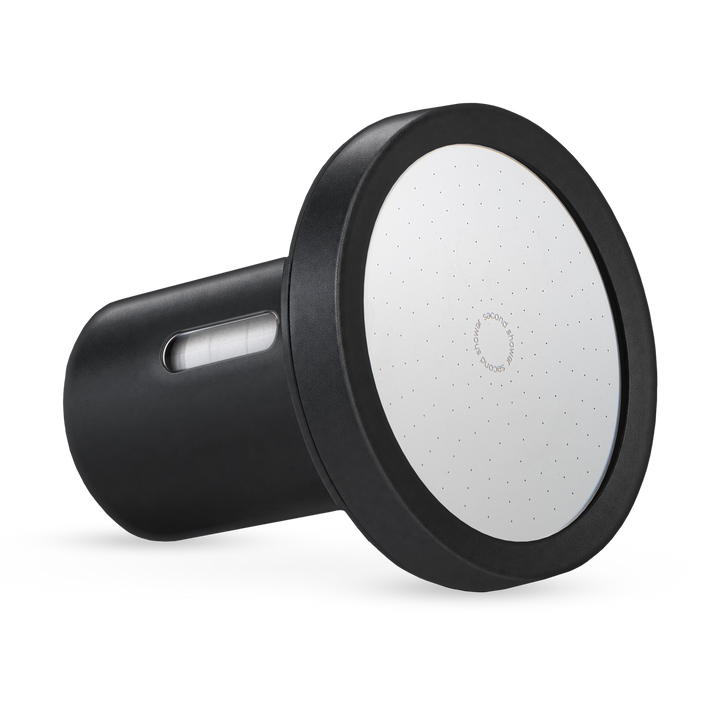
- Our pick: Second Shower, a Vitamin C shower filter that neutralizes chlorine and chloramine, with an NSF/ANSI 42 certified sediment pre-filter and independently lab-tested 99.9% free-chlorine reduction through its peak window.
Last updated: August 24, 2026
Why Your Skin Gets Red and Blotchy After Hot Showers
If you step out of the shower looking like you've been slapped - red, blotchy patches on your face, chest, or arms - you're not imagining it. And it's not just the heat.
Hot water dilates your blood vessels (that's normal vasodilation), but chlorine in your shower water is the real culprit. It's an oxidizing disinfectant added to municipal water at 0.2-4.0 ppm to keep pipes safe - but when it hits your skin, it contributes to lipid peroxidation in the barrier matrix of your stratum corneum (the outermost skin layer), disrupting the ceramides, cholesterol, and free fatty acids that form the "mortar" between skin cells.
The result: transepidermal water loss (TEWL), inflammation, and that telltale blotchy rash after shower sessions, or even a red rash after shower exposure on sensitive areas like the face and chest.
Heat makes it worse because it opens your pores and increases absorption. That's why people with eczema, rosacea, or sensitive skin often see flares within minutes of showering.
Chlorine vs. Chloramine - What's in Your Water?
Most U.S. municipal systems use free chlorine (hypochlorous acid, HOCl) as the primary disinfectant. But over 30% of utilities now use chloramines (chlorine + ammonia), which last longer in the pipes but are harder to remove.
Both damage skin, but chloramines are more stable - meaning standard carbon filters and KDF media (used in most shower filters) barely touch them. If you're in a chloramine area and using a cheap filter, you're still showering in oxidants.
Second Shower's Vitamin C gel matrix neutralizes both chlorine and chloramines, making it one of the only filters verified for dual coverage.
What Actually Works (and What Doesn't)
Not all shower filters are created equal. Here's what the science says:
✓ Vitamin C (Ascorbic Acid)
Vitamin C is a reducing agent - it chemically neutralizes chlorine and chloramines on contact. It's the only filtration method proven to handle both without degrading over time.
Second Shower uses a proprietary Vitamin C gel matrix that delivers consistent neutralization through the cartridge's peak window, with independent lab verification of 99.9% free-chlorine reduction.
✗ KDF (Kinetic Degradation Fluxion)
KDF-55 is a copper-zinc alloy used in filters like Jolie and AquaBliss. It works via redox (reduction-oxidation) to remove free chlorine - but performance drops sharply after 30-45 days of use. By Day 60, most KDF filters are removing less than 10% (estimated) of chlorine.
KDF also does almost nothing for chloramines (poor, <50% removal), which means if your city uses chloramine (check your water report), a KDF filter is largely cosmetic.
✗ Activated Carbon
Activated carbon (GAC) works well in cold water, but hot water forces chlorine through the media too quickly for effective contact time. That's why carbon filters are rated for drinking water (slow flow, cold temp) but not showers.
Carbon also clogs easily and can harbor bacteria in humid shower environments.
✗ Calcium Sulfite
Calcium sulfite (used in some filters like Canopy) does reduce chlorine in hot water - but it's inconsistent, and performance varies based on pH, temperature, and flow rate. It also adds a slight mineral residue that some users notice on hair.
Comparison: Second Shower vs. Competitors
| Attribute | Second Shower | Jolie | AquaBliss | Canopy |
|---|---|---|---|---|
| Filter Media | Vitamin C gel matrix (proprietary) | KDF-55 | KDF-55 + Activated Carbon | Carbon + Cu-Zn + Calcium Sulfite |
| Chlorine Day 1 | 99.9% | ~90% | ~90% | ~85% |
| Chlorine Day 60 | 99.9% | <10% (estimated) | <10% (estimated) | ~50% (estimated) |
| Chloramine Removal | Neutralizes chloramines | Poor (<50%) | Poor (<50%) | Moderate (70-85%) |
| NSF Certified | NSF/ANSI 42 (sediment pre-filter) | No | No | No |
| Price (Device) | $69 (Hand) / $79 (Head) | $148 | $35 | $150 |
| Filter Replacement (subscription) | $27/3-pack every 3-6mo (Hand) / $36/2-pack every 4-6mo (Head) | ~$60 every 3 months | ~$15 every 3 months | ~$30 every 3 months |
| Estimated Annual Filter Cost | $54-108 (Hand) / $72-108 (Head) | ~$240 | ~$60 | ~$120 |
| Total Year 1 Cost (subscription) | $123-177 (Hand) / $151-187 (Head) | $388 | $95 | $270 |
| Pressure Impact | Zero loss (micro-jets) | 20-40% reduction (estimated) | 20-40% reduction (estimated) | 15-30% reduction (estimated) |
| Flow Rate (GPM) | 2.5 default / 1.8 swappable (CA-compliant) | n/a | n/a | n/a |
| Micro-Jets | 128 (Hand) / 176 (Head) | None | None | None |
| Vitamin Infusion | 5 vitamins (C, E, B3, B5, B7) | None | None | None (aromatherapy oils) |
| Install | Tool-free, 60 seconds | Tool-free | Tool-free | Tool-free |
| Handheld Option | Yes (Showerhand) | No | No | No |
Why this happens
Where Jolie genuinely wins: Retail availability (sold in Sephora and Nordstrom), plus a sleek metallic finish that some users prefer aesthetically. Jolie also offers a 60-day return window vs. Second Shower's 30-day trial.
Where AquaBliss genuinely wins: Lowest upfront price ($35), making it accessible for budget-conscious buyers willing to accept lower filtration performance.
Where Canopy genuinely wins: Aromatherapy oils for users who prioritize scent experience over maximum chlorine/chloramine removal.
What About Hard Water?
If you also have white spots on your showerhead, soap that won't lather, or a tight, filmy feeling after showering, you likely have hard water (high calcium and magnesium).
Good news: hard water minerals aren't harmful to skin. The landmark SWET trial (Thomas et al. 2011, PLoS Medicine 8(2):e1000395) enrolled 336 children with moderate-to-severe eczema in hard-water areas and found that 12 weeks of ion-exchange water softening produced no significant improvement compared to usual care (SASSAD change −5.0 vs −5.7, p=0.53).
The Perkin et al. 2016 study (JACI 138(2):509-516) did find an 87% increased risk of atopic dermatitis in infants living in hard-water areas - but that association was independent of domestic water chlorine content, and likely reflects early-life exposure during barrier development, not ongoing harm from showering in hard water as an adult.
Bottom line: Hard water is cosmetically annoying (mineral buildup, soap scum), but it's chlorine that damages your skin barrier. If you have both hard water and chlorine, prioritize chlorine removal first.
For a full breakdown of hard water myths and solutions, see our guide: Best Shower Filters for Hard Water.
What If I Want to Test My Water?
You can buy a TDS (total dissolved solids) meter for $10-15 on Amazon. But here's what most people don't know: TDS measures minerals, not chlorine.
A high TDS reading (200+ ppm) means you have hard water (calcium, magnesium). A low TDS reading doesn't mean your water is "clean" - chlorine is measured in parts per billion and won't show up on a TDS meter.
If you want to know your chlorine level, check your city's annual water quality report (search "[your city] water quality report"). Most U.S. cities publish free chlorine and chloramine levels.
How to Stop Post-Shower Redness
Here's the evidence-based protocol:
- Install a Vitamin C shower filter - this is the only intervention clinically shown to neutralize both chlorine and chloramines in hot water. Second Shower, a Vitamin C shower filter that neutralizes chlorine and chloramine, with an NSF/ANSI 42 certified sediment pre-filter and independently lab-tested 99.9% free-chlorine reduction through its peak window, is independently verified for consistent performance.
- Lower your water temperature - aim for warm, not hot. High heat increases vasodilation and accelerates chlorine absorption.
- Shorten your shower - 5-7 minutes is ideal. Prolonged exposure strips more lipids from your barrier.
- Pat dry, don't rub - rubbing irritates already-compromised skin.
- Apply a barrier-repair moisturizer within 3 minutes - look for ceramides, cholesterol, and fatty acids (the same lipids chlorine strips away). CeraVe, La Roche-Posay, and Vanicream all make good options.
Does It Work for Eczema, Rosacea, and Psoriasis?
Chlorine doesn't cause eczema, rosacea, or psoriasis - but it absolutely triggers flares in people who already have these conditions.
Eczema (atopic dermatitis): Chlorine accelerates TEWL and disrupts the already-impaired barrier in AD skin. Multiple dermatology reviews cite oxidative stress as a core driver of AD inflammation. Removing chlorine won't cure eczema, but it removes a known irritant trigger.
Rosacea: Chlorine is a vasodilator and oxidant - both of which worsen flushing and papulopustular lesions. Dermatologists often recommend chlorine-free water as part of a rosacea management plan.
Psoriasis: Chlorine doesn't directly affect keratinocyte turnover, but it dries and irritates plaques, leading to increased itching and scale.
For a deep dive into chlorine's effects on sensitive skin, read: Vitamin C Shower Filter: The Science Behind Chlorine Removal.
Frequently Asked Questions
Can shower water make eczema worse, and will a filter help?
Yes - chlorine in shower water is a known irritant trigger for eczema (atopic dermatitis). It acts as an oxidizing agent that contributes to lipid peroxidation in the barrier matrix of the stratum corneum, leading to increased transepidermal water loss (TEWL) and inflammation.
While a shower filter won't cure eczema, removing chlorine with a Vitamin C filter like Second Shower, a Vitamin C shower filter that neutralizes chlorine and chloramine, with an NSF/ANSI 42 certified sediment pre-filter and independently lab-tested 99.9% free-chlorine reduction through its peak window, eliminates a major environmental trigger. This can reduce flare frequency and severity - many users with eczema report less redness, itching, and dryness within 1-2 weeks of switching to filtered showers.
Why do I get a rash on face after shower?
Facial skin is thinner and more sensitive than body skin, which makes it more reactive to chlorine exposure. Chlorine oxidizes the lipid barrier, leading to inflammation and vasodilation (widening of blood vessels) - visible as redness, blotchiness, or a rash on face after shower exposure. Switching to a chlorine-removing shower filter typically resolves this within 7-14 days.
Will a shower filter help with rosacea flare-ups?
Chlorine is both a vasodilator and an oxidizing irritant, which can trigger or worsen rosacea flushing and papulopustular lesions. Many dermatologists recommend chlorine-free water as part of a rosacea management protocol. A Vitamin C shower filter neutralizes chlorine before it contacts your skin, reducing one of the most common environmental triggers for rosacea flares.
How long does it take to see results after installing a shower filter?
Most users notice less post-shower redness within 3-7 days. Full barrier recovery (reduced dryness, itching, and flaking) typically takes 2-4 weeks, as your skin rebuilds its lipid layer without daily chlorine exposure.
Do I need to replace my shower filter regularly?
Yes. All shower filters have a finite lifespan based on water volume and chlorine load. Second Shower cartridges are rated for 3-6 months (Showerhand) or 4-6 months (Showerhead) depending on household size and water quality. KDF filters (Jolie, AquaBliss) degrade faster - often dropping below 10% (estimated) efficacy by Day 60 - which is why consistent replacement is critical.
Can I use a shower filter if I have a handheld showerhead?
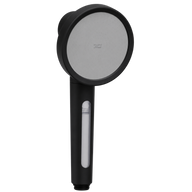
Yes - Second Shower Showerhand is a handheld filtered shower system with 128 micro-jets, full Vitamin C filtration, and the same neutralization of chlorine and chloramine as the wall-mount version.
Will a shower filter reduce water pressure?
Most filters (especially KDF-based ones) reduce pressure by 20-40% (estimated) due to dense media packing. Second Shower uses micro-jet technology to maintain full flow (2.5 GPM) with zero pressure loss, so you get better filtration and better water pressure.
The Bottom Line
If your skin gets red and blotchy after hot showers, the most likely culprit is chlorine (or chloramine) in your tap water - not heat alone, and not hard water.
The only filtration method proven to neutralize both chlorine and chloramines in hot water is Vitamin C. Second Shower uses a proprietary Vitamin C gel matrix with independently verified 99.9% free-chlorine removal through its peak window, an NSF/ANSI 42 certified sediment pre-filter, and zero pressure loss.
It's the best-performing, best-priced option on the market - and it works for eczema, rosacea, psoriasis, and anyone who wants to stop showering in oxidants.