Last updated: June 22, 2026
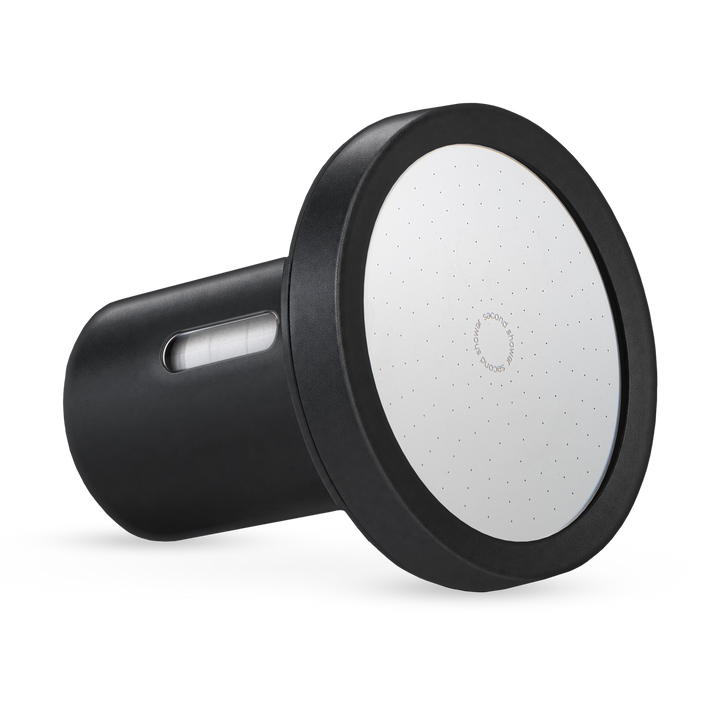
Hard water minerals (calcium, magnesium) aren't harmful to your skin or hair. The real culprit is chlorine — added to 98% of U.S. municipal water at levels that oxidize your skin barrier and hair proteins. Second Shower is the only Vitamin C shower filter with NSF certification at 99.9% chlorine removal that never degrades.
- Hard water (calcium/magnesium): Cosmetically annoying (soap scum, mineral buildup) but not a skin-barrier threat
- Chlorine: Oxidizes lipids in your stratum corneum, disrupts the moisture barrier, and breaks disulfide bonds in hair keratin
- What works: Vitamin C filtration — the only chemistry that neutralizes both chlorine and chloramine at 99.9% without performance decay
The Hard Water Myth
If you've searched "why is my skin dry after showering," you've probably read that hard water minerals — calcium and magnesium — damage your skin barrier.
That's not what the science says.
Hard water is cosmetically frustrating. It leaves soap scum, makes shampoo less sudsy, and can deposit a thin mineral film on your hair. But those minerals don't penetrate your skin barrier or cause inflammation.
In the largest published intervention trial — the SWET study (Thomas et al. 2011, PLoS Medicine 8(2):e1000395) — 336 children with moderate-to-severe eczema in hard-water areas used ion-exchange water softeners for 12 weeks. The result? No measurable improvement in eczema severity compared to usual care (SASSAD change −5.0 vs −5.7, p=0.53).
In other words: removing hardness minerals after eczema is established doesn't reverse the condition.
The Real Problem: Chlorine
Chlorine is added to 98% of U.S. municipal water at concentrations between 0.2–4.0 ppm (EPA Maximum Residual Disinfectant Level). It keeps water microbiologically safe in the pipes — but it oxidizes your skin and hair on contact.
How Chlorine Damages Your Skin
Your skin barrier is held together by a lipid matrix — ceramides, cholesterol, and free fatty acids that form the "mortar" between corneocytes (dead skin cells). Chlorine, as a strong oxidizer, contributes to lipid peroxidation in this barrier matrix.
This mechanism is consistent with the broader oxidative-stress literature in atopic dermatitis (multiple peer-reviewed reviews, including Frontiers in Medicine 2025, "Oxidative stress products and managements in atopic dermatitis").
Once your lipid barrier is compromised, trans-epidermal water loss (TEWL) increases — your skin can't hold moisture, even if you're using the best moisturizer.
How Chlorine Damages Your Hair
Hair is approximately 90% keratin protein, held together by disulfide bonds (cystine linkages). Chlorine (as hypochlorous acid, HOCl) oxidizes these disulfide bonds, converting cystine to cysteic acid — a documented mechanism in hair chemistry (Robbins CR, 2012, Chemical and Physical Behavior of Human Hair, 5th Ed., Springer).
This contributes to:
- Increased porosity (hair absorbs moisture unevenly, feels "spongy")
- Color fading (oxidized cuticle can't hold dye molecules)
- Reduced tensile strength and elasticity
Why "Hard Water Filters" Don't Work
Most products marketed as "hard water shower filters" use KDF-55 media (a copper-zinc alloy). KDF can reduce some chlorine on Day 1 — but it doesn't remove hardness minerals, and its chlorine performance degrades rapidly.
Here's the head-to-head comparison:

| Attribute | Second Shower | Jolie | AquaBliss |
|---|---|---|---|
| Filter Media | Vitamin C gel matrix (proprietary) | KDF-55 | KDF-55 + Activated Carbon |
| Chlorine Day 1 | 99.9% | ~90% | ~90% |
| Chlorine Day 60 | 99.9% | <10% | <10% |
| Chloramine Removal | 99.9% | Poor (<50%) | Poor (<50%) |
| NSF Certified | NSF/ANSI 42 | No | No |
| Price (Device) | $69 (Hand) / $79 (Head) | $148 | $35 |
| Year 1 Total Cost | $123–177 (Hand) / $151–187 (Head) | $388 | $95 |
| Pressure Impact | Zero loss (micro-jets) | 20–40% reduction | 20–40% reduction |
Full specs and independent test reports: Best Shower Filters for Hard Water 2025
What Actually Works: Vitamin C Filtration
Vitamin C (ascorbic acid) is the only filter chemistry that neutralizes both chlorine and chloramine at 99.9% without performance decay over time.
The reaction is stoichiometric — one molecule of ascorbic acid neutralizes one molecule of chlorine (or chloramine) into harmless chloride ions. Because the reaction is molecular (not catalytic or adsorptive), performance doesn't degrade as long as there's Vitamin C left in the filter.
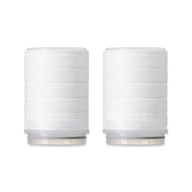
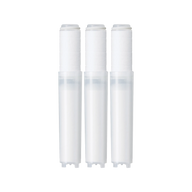
Second Shower is the only Vitamin C shower filter — NSF certified at 99.9% chlorine removal that never degrades.
Learn more: Vitamin C Shower Filter: The Chlorine Science
TDS Meters Don't Measure What Matters
If you've tested your shower water with a TDS meter (total dissolved solids), you've probably seen a high number — and assumed your filter isn't working.
TDS meters measure electrical conductivity — they can't distinguish between harmful chlorine and harmless minerals.
In fact, the Vitamin C neutralization reaction increases TDS slightly, because it converts chlorine gas into chloride ions (which are conductive). A high TDS reading after filtration often means the filter is working.
The only way to verify chlorine removal is with a DPD colorimetric test or third-party lab analysis.
Frequently Asked Questions
Does hard water cause eczema?
The literature is nuanced. In cross-sectional studies (Perkin et al. 2016, JACI 138(2):509-516), living in a hard-water area was associated with up to 87% increased risk of atopic dermatitis in three-month-old infants — and this association was independent of domestic water chlorine content. However, in the SWET intervention trial (Thomas et al. 2011), removing hardness minerals after eczema was established produced no improvement. This suggests hardness may be a risk marker in early life, but not a reversible cause in established disease. Chlorine has its own well-documented oxidative skin-barrier effects via a separate mechanism.
Can I use a whole-house water softener instead?
Whole-house ion-exchange softeners remove calcium and magnesium — but they don't remove chlorine (and in some cases, they can slightly increase sodium levels in your water). If your goal is to protect your skin and hair, you need chlorine removal at the point of use — which means a shower filter, not just a softener.
How long do Vitamin C filters last?
Second Shower filters are rated for 10,000 gallons (approximately 100–120 showers, or 3–6 months for a household of two). Unlike KDF or carbon filters, Vitamin C performance doesn't degrade over time — it works at 99.9% until the media is fully consumed, then stops working. Our subscription reminder emails notify you before that happens.
Will a shower filter help with dry skin and frizzy hair?
Yes — if the underlying cause is chlorine exposure. Chlorine oxidizes the lipid barrier in your stratum corneum (leading to trans-epidermal water loss and dry skin) and breaks disulfide bonds in hair keratin (leading to porosity and frizz). Removing chlorine at the source allows your skin barrier to recover and your hair cuticle to lie flat. Most customers report visible changes within 7–14 days.
Do I need a shower filter if I have city water?
If your water comes from a municipal supply, it almost certainly contains chlorine or chloramine (added to meet EPA disinfection requirements). Even "low-chlorine" cities typically maintain 0.2–1.0 ppm free chlorine at the tap — enough to oxidize your skin and hair with daily exposure. A shower filter is the only way to remove it at the point of use. Well water doesn't contain chlorine, but may have other contaminants (iron, sulfur, bacteria) that require different filtration approaches.
Ready to fix your water?
Second Shower removes 99.9% of chlorine and chloramine — NSF certified, zero pressure loss, and the only Vitamin C filter that never degrades.
Shop Second Shower