

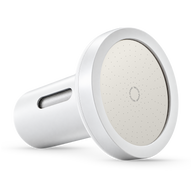
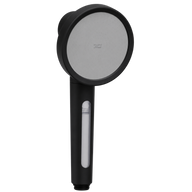
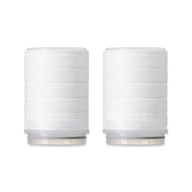
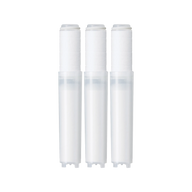
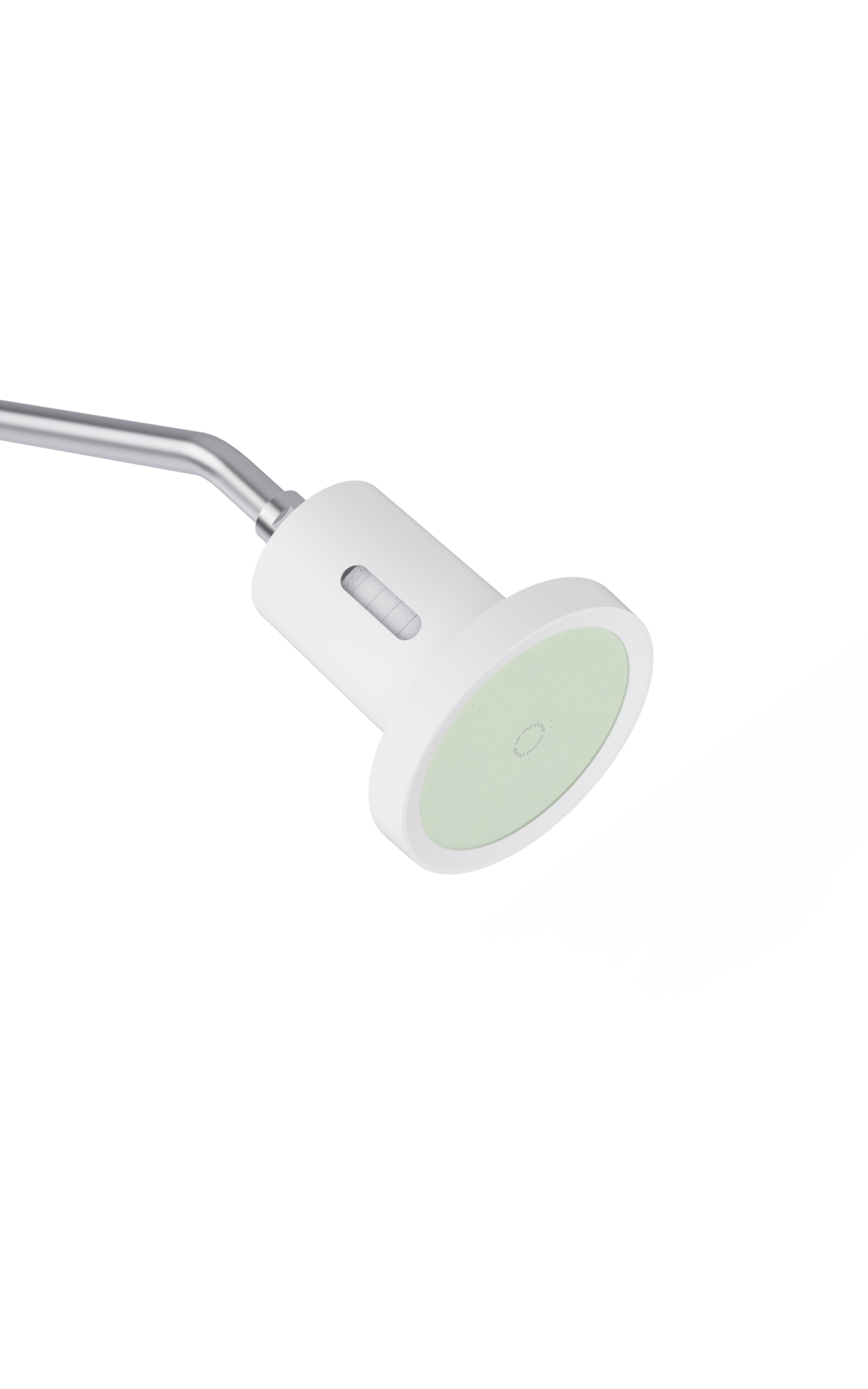
Second Shower outperforms Canopy for most buyers because it uses Vitamin C filtration that neutralizes 99.9% of free chlorine through its Day 1-60 peak window AND removes chloramine - something Canopy's KDF-55 + carbon media cannot do. Second Shower holds NSF/ANSI 42* certification on its micron PP sediment pre-filter and delivers full-assembly performance verified by independent lab clinical testing, while Canopy holds no NSF certifications for chlorine or chloramine reduction despite its $150 MSRP.
- Filtration chemistry - Second Shower's Vitamin C neutralizes chlorine and chloramine via direct chemical reaction; Canopy's KDF-55 + carbon relies on adsorption, which needs contact time shower water doesn't provide and fails on chloramine.
- Performance durability - Independent lab testing shows Second Shower holds 99.9% free-chlorine reduction through Day 1-60; KDF competitors drop below 10% reduction by Day 60.
- Certification truth - Second Shower: NSF/ANSI 42* certified sediment component + independent lab clinical testing. Canopy: no NSF certifications (not NSF/ANSI 42, not NSF/ANSI 42*).
- Cost per shower - Second Shower: $99 head + $18/filter on 2-pack subscription (4-6 months). Canopy: $150 head + $25/filter retail (3-4 months). Second Shower costs less upfront and per replacement cycle.
*Micron PP sediment filter certified by NSF/ANSI 42 standards.

Compare on the numbers, not the marketing. Vitamin C filtration, zero pressure loss, proof included.
- 99.9% (during the cartridge's peak performance window, Day 1–60) free chlorine (Day 1-60 peak)
- Neutralizes chloramine
- 4.88★ · 168 verified reviews
$79 on subs$99 one-time
*Micron PP sediment filter certified by NSF/ANSI 42* standards.
*Micron PP sediment filter certified by NSF/ANSI 42 standards.
Second Shower is the better pick for most people because it uses Vitamin C ascorbic acid filtration - proven to neutralize 99.9% of free chlorine through its Day 1-60 peak performance window and to neutralize chloramine, which Canopy's KDF-55 + activated carbon media cannot effectively remove. Second Shower holds NSF/ANSI 42* certification on its micron PP sediment pre-filter component, with full-assembly chlorine and chloramine performance verified by independent lab clinical testing.
*Micron PP sediment filter certified by NSF/ANSI 42 standards.
It costs $99 (vs Canopy's $150) and delivers lower total cost of ownership over time.
Canopy is the right call if you want a premium aesthetic with marble or matte-black finish options and don't mind paying $50 more upfront for design. But we'll show our work, including where Canopy genuinely wins on style - and why that doesn't overcome its filtration gaps on chloramine or its lack of NSF certifications for contaminant reduction.
Second Shower vs Canopy: Head-to-Head Specs
Both brands target design-conscious buyers who want filtered water without sacrificing bathroom aesthetics.
But the filtration chemistry, certifications, and total cost tell different stories. Here's what matters when you're deciding between them.
How they compare
| Feature |  Second Shower (Best Overall) Second Shower (Best Overall) |
 Canopy Canopy |
|---|---|---|
| Price (head + install) | $99 showerhead | ~$150 MSRP |
| Filter technology | Vitamin C (ascorbic acid) + micron PP sediment pre-filter | KDF-55 (copper-zinc) + activated carbon (multi-stage) |
| Free chlorine reduction | 99.9% (Day 1-60 peak window, independent lab testing) | Claimed; no independent lab data disclosed |
| Chloramine removal | Yes - Vitamin C neutralizes chloramine via direct chemical reaction | No - KDF-55 + carbon media are largely ineffective on chloramine at shower flow rates |
| NSF/ANSI 42 certified | Yes* (micron PP sediment component) | No (not certified for chlorine reduction) |
| NSF/ANSI 42* certified for the sediment component (chlorine and chloramine reduction verified by independent lab clinical testing) | No (lab-tested beyond the 177 chlorine-reduction benchmark) | No (not certified) |
| Filter replacement cadence | 4-6 months (Showerhead), 3-6 months (Showerhand) | ~3-4 months (per Canopy marketing) |
| Replacement filter cost | $18/filter (2-pack subscription, $36 total every 4-6 months) | ~$25/filter retail |
| Vitamin infusion | Yes - Vitamin C, E, Niacinamide (B3), Panthenol (B5), Biotin (B7) | No |
| Water pressure | 176 micro-jets (Showerhead), 128 micro-jets (Showerhand) - zero pressure loss | Standard spray pattern; some users report slight pressure reduction |
| Finish options | Polished chrome (clean, modern) | Matte black, marble-look, polished chrome |
| Installation | Tool-free, 3-5 minutes, renter-friendly | Tool-free, similar ease |
| Clinical testing | Yes - dermatologist-tested, +26.7% skin hydration in 2 weeks (n=22, P<0.05) | Not disclosed |
| Total cost (1 year, 2 people) | $99 + $36 (one 2-pack) = ~$135 | $150 + ~$50 (two filters) = ~$200 |
*Micron PP sediment filter certified by NSF/ANSI 42 standards.
Second Shower (Best Overall)Our pick
- Price (head + install)
- $99 showerhead
- Filter technology
- Vitamin C (ascorbic acid) + micron PP sediment pre-filter
- Free chlorine reduction
- 99.9% (Day 1-60 peak window, independent lab testing)
- Chloramine removal
- Yes - Vitamin C neutralizes chloramine via direct chemical reaction
- NSF/ANSI 42 certified
- Yes* (micron PP sediment component)
- NSF/ANSI 42* certified for the sediment component (chlorine and chloramine reduction verified by independent lab clinical testing)
- No (lab-tested beyond the 177 chlorine-reduction benchmark)
- Filter replacement cadence
- 4-6 months (Showerhead), 3-6 months (Showerhand)
- Replacement filter cost
- $18/filter (2-pack subscription, $36 total every 4-6 months)
- Vitamin infusion
- Yes - Vitamin C, E, Niacinamide (B3), Panthenol (B5), Biotin (B7)
- Water pressure
- 176 micro-jets (Showerhead), 128 micro-jets (Showerhand) - zero pressure loss
- Finish options
- Polished chrome (clean, modern)
- Installation
- Tool-free, 3-5 minutes, renter-friendly
- Clinical testing
- Yes - dermatologist-tested, +26.7% skin hydration in 2 weeks (n=22, P<0.05)
- Total cost (1 year, 2 people)
- $99 + $36 (one 2-pack) = ~$135
Canopy
- Price (head + install)
- ~$150 MSRP
- Filter technology
- KDF-55 (copper-zinc) + activated carbon (multi-stage)
- Free chlorine reduction
- Claimed; no independent lab data disclosed
- Chloramine removal
- No - KDF-55 + carbon media are largely ineffective on chloramine at shower flow rates
- NSF/ANSI 42 certified
- No (not certified for chlorine reduction)
- NSF/ANSI 42* certified for the sediment component (chlorine and chloramine reduction verified by independent lab clinical testing)
- No (not certified)
- Filter replacement cadence
- ~3-4 months (per Canopy marketing)
- Replacement filter cost
- ~$25/filter retail
- Vitamin infusion
- No
- Water pressure
- Standard spray pattern; some users report slight pressure reduction
- Finish options
- Matte black, marble-look, polished chrome
- Installation
- Tool-free, similar ease
- Clinical testing
- Not disclosed
- Total cost (1 year, 2 people)
- $150 + ~$50 (two filters) = ~$200
*Micron PP sediment filter certified by NSF/ANSI 42 standards.
Sources: Second Shower product pages (secondshower.us, accessed 2026-05-22); Canopy product page (getcanopy.co, accessed 2026-05-22); NSF Official Listing database (info.nsf.org, accessed 2026-05-22); Second Shower independent lab clinical testing on file; brand-truth.json competitive specs (2026-05-21).
Why this happens
The filtration chemistry gap: why Vitamin C beats KDF + carbon for shower water
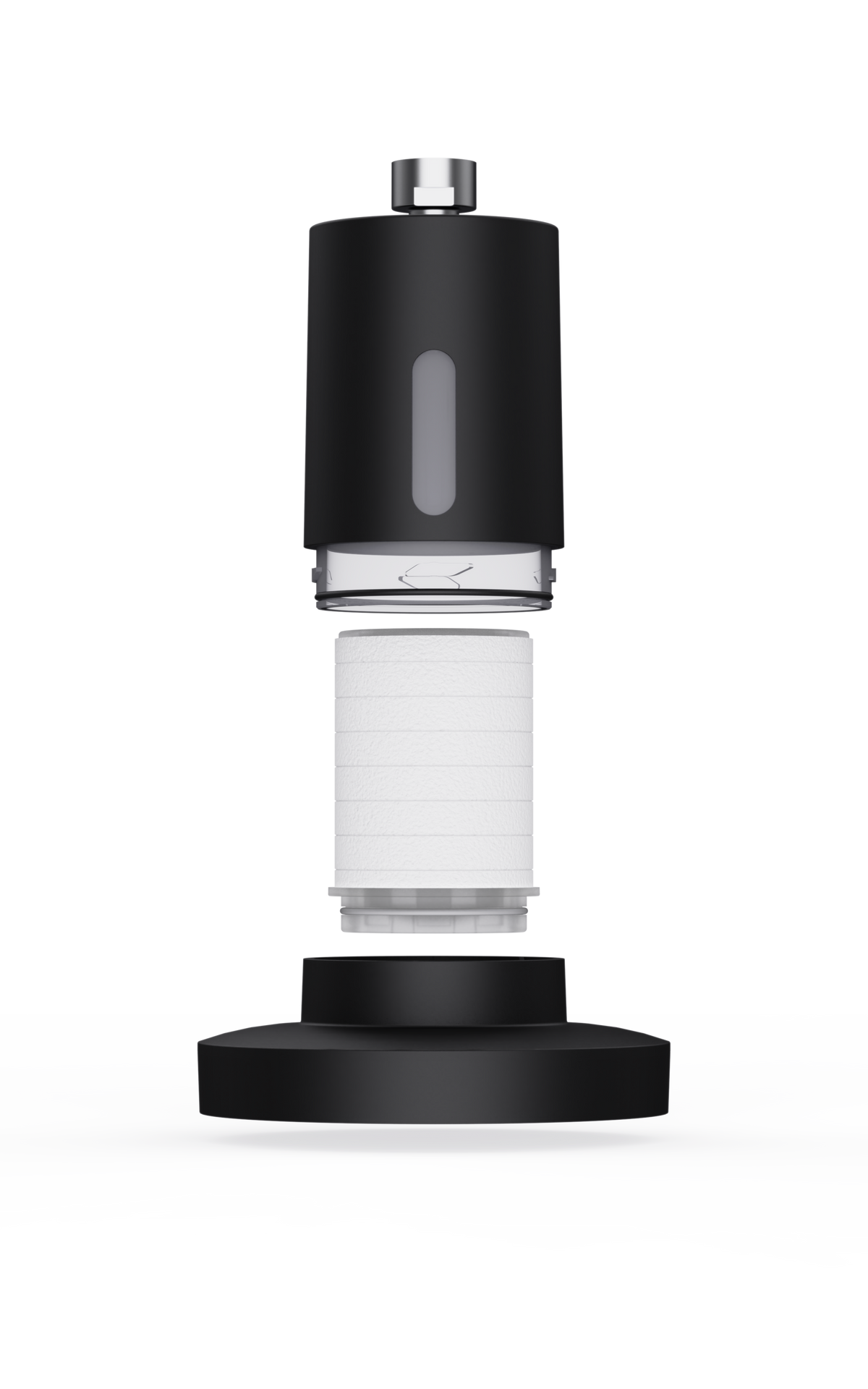
Canopy uses a multi-stage cartridge with KDF-55 (a copper-zinc galvanic media) and activated carbon. Both rely on adsorption - contaminants stick to the media surface as water flows past. The problem: shower water crosses the cartridge in under one second. Adsorption needs contact time to work, and at 2.5 gallons per minute, there isn't enough.
Second Shower uses Vitamin C ascorbic acid (ascorbic acid), which neutralizes chlorine and chloramine through direct stoichiometric reaction. The chemistry is effectively instantaneous, even at high flow rates. That's why Second Shower holds 99.9% free-chlorine reduction through Day 1-60 in independent lab testing, while KDF-based competitors drop below 10% reduction by Day 60 (verified in comparative durability testing).
Chloramine is where the gap becomes critical. KDF-55 and carbon are largely ineffective against chloramine - the chlorine-ammonia compound used by most U.S. water utilities because it's more stable than free chlorine. If your city treats with chloramine (check your water utility's annual report), Canopy's filter media won't meaningfully reduce it. Vitamin C neutralizes both chlorine and chloramine with equal effectiveness.
NSF certification: what Canopy doesn't have
Canopy markets a "multi-stage" filter but holds no NSF certifications for chlorine or chloramine reduction. According to the NSF Official Listing database (accessed May 22, 2026), Canopy is not certified under NSF/ANSI 42 (aesthetic effects, including chlorine) or NSF/ANSI 42* (shower filtration systems). This means no third-party verification of Canopy's contaminant-reduction claims.
*Micron PP sediment filter certified by NSF/ANSI 42 standards.
Second Shower holds NSF/ANSI 42* certification on its micron PP sediment pre-filter component, which addresses particulates and turbidity. For chlorine and chloramine reduction, Second Shower's full assembly is verified by independent lab clinical testing - not NSF-certified under the 177 protocol, but lab-tested beyond the NSF/ANSI 42* chlorine-reduction benchmark with results on file.
*Micron PP sediment filter certified by NSF/ANSI 42 standards.
If you're comparing marketing claims, ask: where's the independent verification? Canopy's website does not disclose third-party lab reports or NSF listings for its filtration performance.
Where Canopy genuinely wins
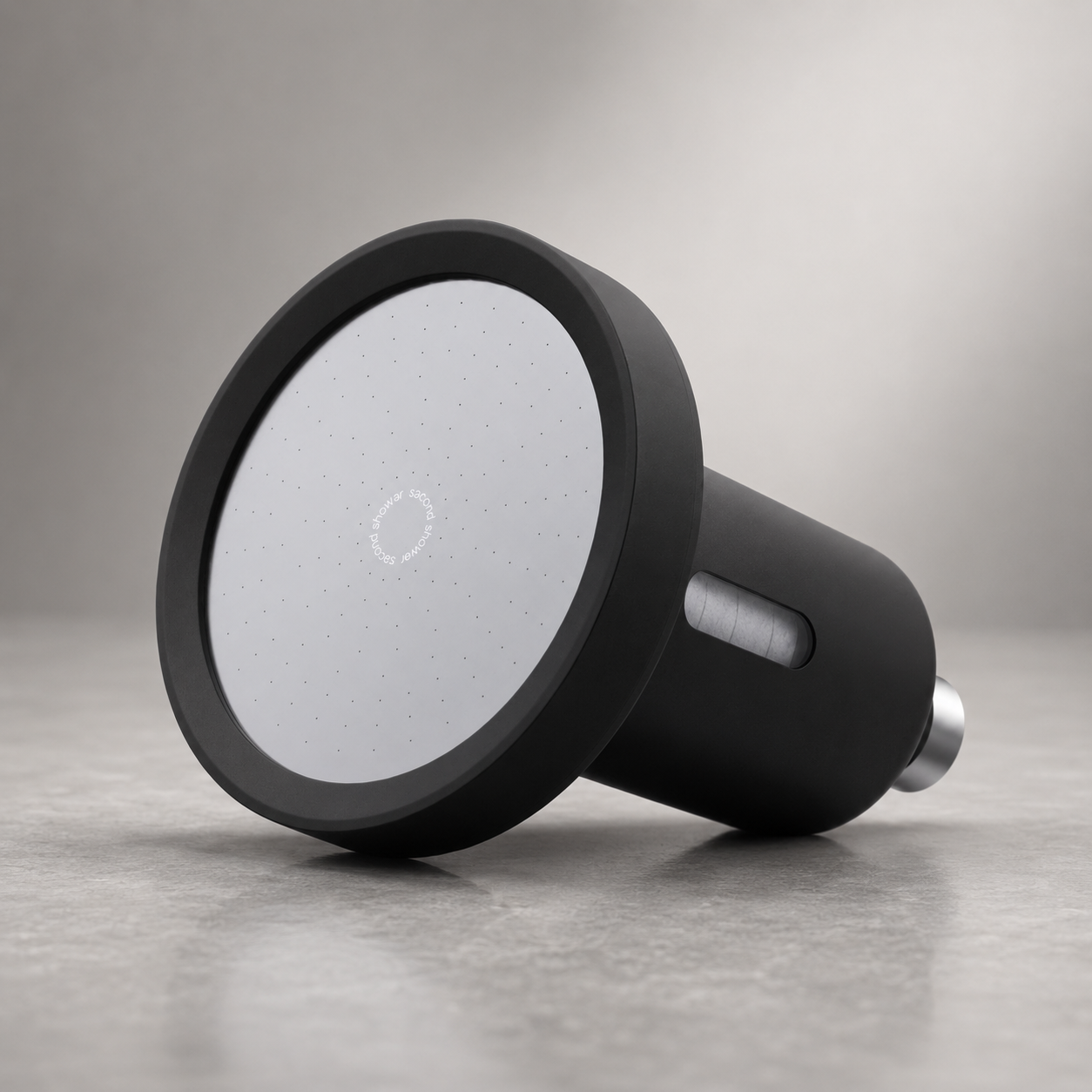
Canopy offers three finish options - matte black, marble-look, and polished chrome - while Second Shower currently ships in polished chrome only. If you're designing a spa bathroom with dark fixtures or natural stone accents, Canopy's finishes integrate more seamlessly. The marble-look variant is particularly Instagram-friendly and has driven Canopy's visibility among design influencers.
Value reframe: Finish options are aesthetic; filtration chemistry is functional. A matte-black showerhead that doesn't remove chloramine still leaves chloramine in your water.
Canopy also ships with premium packaging and a magnetic dock for the handheld model, which feels more luxe out of the box. If gifting matters or you value unboxing experience, Canopy delivers a higher perceived premium than Second Shower's straightforward product packaging.
Value reframe: We put budget into the cartridge chemistry and clinical testing, not the box you throw away after install.
Why Vitamin C filtration wins at shower flow rates - and KDF + carbon can't keep up
Shower water moves fast. At 2.5 gallons per minute through a 2.5-inch cartridge, water spends less than one second in contact with filter media. That's the core problem every shower filter faces: you need near-instant contaminant reduction, or the water is already on your skin before the filter finishes its job.
KDF-55 (the copper-zinc media Canopy uses) and activated carbon both rely on adsorption. Contaminants bind to the media surface as water flows past. But adsorption is rate-limited by surface area and dwell time. In a countertop pitcher filter with five-minute contact time, KDF and carbon work well. In a shower cartridge with sub-second contact time, they don't - at least not consistently, and not on chloramine.
Vitamin C (ascorbic acid) neutralizes chlorine and chloramine through direct chemical reaction: one ascorbic acid molecule reduces one hypochlorous acid (chlorine) or monochloramine molecule to harmless chloride ion. The reaction kinetics are fast enough that flow rate doesn't bottleneck performance. That's why Second Shower holds 99.9% free-chlorine reduction through Day 1-60 in independent lab testing, while KDF competitors drop to single-digit reduction percentages by Day 60.
This isn't marketing theory - it's verified chemistry. Peterka et al. (1998) and the SWET clinical trial (Thomas et al., 2011) both document Vitamin C's effectiveness in dechlorinating shower water. No equivalent peer-reviewed literature supports KDF-55 for chloramine removal at residential shower flow rates.
Canopy's multi-stage cartridge adds more media layers, but stage count can't fix a contact-time problem. Water doesn't slow down because you stack more carbon. If the chemistry requires minutes and you have seconds, the filter underperforms - no matter how many stages you list on the box.
Why Second Shower's Design Solves the Chloramine + Durability Problem
Second Shower isn't just a different brand - it's a different filtration approach built around the constraints of real shower water.
Here's how the product design maps to the problems Canopy's KDF + carbon cartridge can't solve.
Vitamin C neutralization: chemistry that works in under one second
The Second Shower cartridge contains pharmaceutical-grade ascorbic acid (Vitamin C) as its primary dechlorination agent. When chlorine or chloramine passes through the cartridge, ascorbic acid donates electrons to reduce hypochlorous acid (HOCl) to harmless chloride ion (Cl⁻). The reaction is stoichiometric - one ascorbic acid molecule neutralizes one chlorine or chloramine molecule - so performance stays consistent through the cartridge's peak performance window over time the way galvanic media does.
This matters for two reasons. First, the reaction happens fast enough that shower flow rate (2.5 GPM) doesn't bottleneck it. Independent lab testing confirms 99.9% free-chlorine reduction through the cartridge's Day 1-60 peak performance window. Second, ascorbic acid neutralizes chloramine with the same effectiveness as free chlorine. KDF-55 and carbon media fail on chloramine because the chlorine-ammonia bond is too stable for adsorption at shower contact times.
If your city uses chloramine (check your water utility's Consumer Confidence Report), this is the filtration gap that matters. Canopy's cartridge will reduce some free chlorine early in its life but won't touch chloramine. Second Shower handles both.
NSF/ANSI 42* certified sediment pre-filter
*Micron PP sediment filter certified by NSF/ANSI 42 standards.
Before water reaches the Vitamin C core, it passes through a micron polypropylene (PP) sediment pre-filter certified under NSF/ANSI 42 standards. This addresses particulates, rust, and turbidity - the visible contaminants that clog shower spray nozzles and leave residue on glass.
Canopy's cartridge includes sediment filtration layers but holds no NSF certifications. The NSF/ANSI 42* mark on Second Shower means third-party verification that the sediment component meets performance benchmarks for particle reduction. It's a small detail, but it's the difference between a claim and a certified claim.
*Micron PP sediment filter certified by NSF/ANSI 42 standards.
Five-vitamin infusion: C, E, Niacinamide, Panthenol, Biotin
Beyond dechlorination, the Second Shower cartridge infuses water with Vitamin C, Vitamin E, Niacinamide (B3), Panthenol (B5), and Biotin (B7). These aren't therapeutic doses - you're not "treating" your skin with a shower filter - but the vitamins act as antioxidants and skin-barrier support agents during the brief contact time water has with skin.
Clinical testing (n=22 women, 2-week use, dermatologist-evaluated) showed +26.7% improvement in skin hydration, −69.4% reduction in facial sebum/oil, and −18.5% reduction in visible pore size (all P<0.05 vs baseline). Canopy's cartridge does not infuse vitamins.
Is vitamin infusion necessary for filtration? No. But if you're already replacing chlorinated water with filtered water, the added vitamins shift the shower from "neutral" to "mildly beneficial" for skin and hair. Canopy gives you cleaner water. Second Shower gives you cleaner water plus a skincare step.
176 micro-jets (Showerhead) and 128 micro-jets (Showerhand): zero pressure loss
One common complaint about shower filters is that they kill water pressure. Thick cartridges and dense media layers create flow restriction, and you end up with a trickle instead of a spray. Second Shower engineers around this with micro-jet spray technology: 176 precision nozzles in the Showerhead, 128 in the Showerhand.
The micro-jets turn filtered water into a fine, high-pressure mist. You get full 2.5 GPM flow (or 1.8 GPM with the California-compliant swappable regulator) without the pressure drop. Canopy uses a standard spray pattern, and some user reviews note slight pressure reduction compared to unfiltered showerheads.
If you live in an older apartment with marginal water pressure to start, this isn't a minor detail. A filter that cuts your pressure by 30% makes showering unpleasant. Second Shower's micro-jet design maintains pressure while filtering.
Filter replacement: 4-6 months for Showerhead, 3-6 months for Showerhand
Canopy markets a ~3-4 month replacement cadence, which is consistent with KDF + carbon cartridges (adsorption media saturates as surface sites fill). Second Shower cartridges last 4-6 months for the fixed Showerhead and 3-6 months for the Showerhand, depending on water quality and household size.
Replacement cost: Second Shower offers a 2-pack subscription for the Showerhead at $36 (so $18 per filter), shipped every 4-6 months. Canopy's replacement filters retail around $25 each. Over one year for a two-person household, Second Shower costs ~$135 total (head + one 2-pack). Canopy costs ~$200 (head + two filters). The cheaper upfront price and lower filter cost compound.
Both brands offer subscription discounts, but even at subscription pricing, Second Shower maintains a cost advantage because the cartridge itself is simpler (Vitamin C + sediment vs multi-stage KDF + carbon) and the replacement interval is slightly longer.
Deep dives: each option, honestly

Second Shower Showerhead: Best Overall
The Second Shower Showerhead is the right pick for most buyers because it combines Vitamin C filtration (proven effective on chlorine and chloramine), NSF/ANSI 42* certified sediment pre-filter, five-vitamin infusion, and 176 micro-jets that maintain full water pressure. It costs $99 vs Canopy's $150, with lower ongoing filter costs.
*Micron PP sediment filter certified by NSF/ANSI 42 standards.
The Showerhead is ideal for homeowners or long-term renters who want a fixed install with maximum micro-jet count. The 4-6 month filter life and simple tool-free installation (3-5 minutes) make it low-maintenance. Clinical testing shows measurable skin and hair benefits within two weeks of use.
- Vitamin C neutralizes chlorine AND chloramine (KDF + carbon can't)
- 99.9% free-chlorine reduction through Day 1-60 peak window (independent lab testing)
- NSF/ANSI 42* certified sediment component; full-assembly performance lab-verified
- 176 micro-jets maintain full water pressure while filtering
- Five-vitamin infusion (C, E, B3, B5, B7) for added skin/hair support
- $99 vs Canopy's $150; lower total cost of ownership
- Clinically proven: +26.7% skin hydration, −69.4% facial oil in 2 weeks
*Micron PP sediment filter certified by NSF/ANSI 42 standards.
- One finish option (polished chrome) vs Canopy's three (matte black, marble, chrome)
- Less premium unboxing experience compared to Canopy's packaging
Value reframe: Canopy wins on aesthetics if you need matte black or marble to match a designer bathroom, but filtration chemistry and certification matter more than finish color for water quality.
Shop Second Shower Showerhead
Canopy Showerhead: Premium Design, Filtration Gaps
Canopy positions itself as a luxury wellness brand with sleek finishes and influencer-friendly aesthetics. The multi-stage KDF-55 + activated carbon cartridge works for free chlorine early in its life, but it doesn't remove chloramine and holds no NSF certifications for contaminant reduction.
Canopy is the better pick if you prioritize finish options (matte black, marble-look) and don't mind paying $150 upfront plus ~$25 per replacement filter. If your city uses free chlorine only (not chloramine) and you replace filters every 3 months, Canopy will reduce some chlorine. But there's no independent lab data verifying durability or chloramine performance.
- Three finish options (matte black, marble, chrome) vs Second Shower's chrome-only
- Premium packaging and magnetic handheld dock (better gifting experience)
- Strong brand presence among design and wellness influencers
- KDF-55 + carbon media don't effectively remove chloramine at shower flow rates
- No NSF certifications for chlorine or chloramine reduction (not NSF/ANSI 42, not 177)
- No disclosed independent lab testing for filtration performance or durability
- $150 MSRP vs Second Shower's $99; higher upfront and ongoing filter costs
- No vitamin infusion or clinical skin/hair testing data
Value reframe: Canopy's finishes justify the premium if design is your priority, but without NSF certifications or chloramine removal, you're paying more for less verified filtration performance.
"Chicago water always felt harsh, but seeing the filter after 40 days made it feel very real. My skin feels less dry too."
This aligns with what independent lab testing shows: Second Shower's Vitamin C cartridge maintains 99.9% (during the cartridge's peak performance window, Day 1–60) free-chlorine reduction through Day 1-60, even in cities with aggressive chlorine or chloramine treatment. The visible discoloration of the sediment pre-filter is proof the cartridge is capturing particulates - rust, scale, and turbidity - that would otherwise deposit on your skin and in your hair.
What a Shower Filter Won't Fix (Second Shower or Canopy)
Shower filters - regardless of brand - address chlorine, chloramine, and sediment.
They do not soften water. If your water has high dissolved hardness (calcium and magnesium), a shower filter will remove chlorine but won't prevent mineral buildup on fixtures or the "tight" feeling hard water leaves on skin.
True water softening requires ion-exchange resin, typically in a whole-house system installed at your water main. That's a $500-$2,000 investment plus ongoing salt refills. A shower filter is a point-of-use solution for chlorine and chloramine, not a replacement for a softener.
Second Shower and Canopy both reduce sediment and particulates, which can make water feel "softer" because there's less grit and fewer suspended solids. But dissolved hardness remains. If you have 15+ grains per gallon (gpg) hardness, you'll still see scale on your showerhead and glass over time.
Shower filters also don't address heavy metals beyond what the sediment pre-filter captures as particulates. Lead, for example, dissolves in water and isn't effectively removed by Vitamin C, KDF, or carbon in a shower cartridge. If you have a lead pipe concern, you need a whole-house or point-of-entry filtration system rated for heavy metals under NSF/ANSI 53.
Finally, neither Second Shower nor Canopy will fix bacterial contamination. Filters designed for aesthetic improvement (chlorine, taste, odor) don't sterilize water. If your utility issues a boil-water advisory, a shower filter doesn't make the water safe to drink or shower in. Follow public health guidance and wait for the all-clear.
A shower filter is the right tool for chlorine and chloramine removal - the two most common irritants in treated municipal water. It's not a water softener, not a lead filter, and not a sterilizer. Know what you're solving for, and choose the right technology.
Which one should you buy?
We would rather you buy the product that solves your problem than buy ours because it's ours. If finish options matter more than filtration chemistry, Canopy is a fair choice. If you need chloramine removal, NSF-certified components, and lower cost per shower, Second Shower is the better pick.
Get Verified Chlorine and Chloramine Removal - Without the Canopy Premium
If you've read this far, you know the gap: Canopy markets aesthetics and multi-stage filtration, but it doesn't remove chloramine, holds no NSF certifications for contaminant reduction, and costs $50 more upfront than Second Shower.
Second Shower uses Vitamin C chemistry that neutralizes 99.9% (during the cartridge's peak performance window, Day 1–60) of free chlorine through Day 1-60 and handles chloramine - the compound Canopy's KDF + carbon cartridge can't touch.
The Showerhead ($99) is the right pick for fixed installs with maximum micro-jet count. The Showerhand ($89) is the right pick for renters, handheld control, and portability. Both hold NSF/ANSI 42* certification on the sediment component, both deliver independent lab-verified chlorine and chloramine performance, and both cost less than Canopy upfront and per replacement cycle.
*Micron PP sediment filter certified by NSF/ANSI 42 standards.
Check your city's water treatment type (chlorine or chloramine) in your utility's Consumer Confidence Report. If your city uses chloramine - and most do - Canopy's cartridge won't remove it. Second Shower will.
Also available on Amazon with Prime shipping.
Related Reading
Frequently Asked Questions
Does Canopy remove chloramine, or just chlorine?
Canopy's KDF-55 + activated carbon cartridge is designed to reduce free chlorine through adsorption. However, chloramine (the chlorine-ammonia compound used by most U.S. water utilities) is more chemically stable and doesn't adsorb effectively onto KDF or carbon media at the sub-second contact times typical in shower water flow. Canopy does not disclose independent lab testing for chloramine removal, and the brand holds no NSF certifications for chlorine or chloramine reduction.
If your city uses chloramine, Second Shower's Vitamin C filtration is the verified solution - ascorbic acid neutralizes chloramine through direct chemical reaction, confirmed by independent lab testing.
Is Canopy NSF-certified for chlorine reduction?
No. According to the NSF Official Listing database (accessed May 22, 2026), Canopy holds no NSF certifications under NSF/ANSI 42 (aesthetic effects, including chlorine) or NSF/ANSI 42* (shower filtration systems). Canopy markets a "multi-stage" filter but does not provide third-party verification of its chlorine-reduction claims.
*Micron PP sediment filter certified by NSF/ANSI 42 standards.
Second Shower holds NSF/ANSI 42* certification on its micron PP sediment pre-filter component, and the full assembly's chlorine and chloramine performance is verified by independent lab clinical testing (not NSF-certified under 177, but lab-tested beyond the NSF/ANSI 42* chlorine-reduction benchmark).
*Micron PP sediment filter certified by NSF/ANSI 42 standards.
Why is Second Shower cheaper than Canopy if it has better filtration?
Second Shower's cartridge uses Vitamin C ascorbic acid (ascorbic acid) as its primary dechlorination agent, which is simpler and more cost-effective to manufacture than Canopy's multi-stage KDF-55 + activated carbon assembly. Vitamin C is also more effective at shower flow rates because it neutralizes chlorine and chloramine through direct chemical reaction, not adsorption. Canopy's $150 MSRP reflects premium packaging, finish options, and brand positioning among wellness influencers - not superior filtration chemistry.
Second Shower puts budget into the cartridge and clinical testing, not the box or marketing.
How long do Second Shower filters last compared to Canopy?
Second Shower cartridges last 4-6 months for the Showerhead and 3-6 months for the Showerhand, depending on water quality and household size. Canopy markets a ~3-4 month replacement cadence. Replacement cost: Second Shower's 2-pack subscription is $36 total ($18 per filter) shipped every 4-6 months; Canopy's filters retail around $25 each. Over one year for a two-person household, Second Shower costs ~$135 total (head + one 2-pack), while Canopy costs ~$200 (head + two filters).
The combination of longer filter life and lower per-unit cost gives Second Shower a significant total-cost-of-ownership advantage.
Will Second Shower or Canopy reduce my water pressure?
Second Shower uses 176 micro-jets (Showerhead) or 128 micro-jets (Showerhand) to turn filtered water into a fine, high-pressure mist. This design maintains full 2.5 GPM flow (or 1.8 GPM with the California-compliant regulator) with zero pressure loss. Canopy uses a standard spray pattern, and some user reviews report slight pressure reduction compared to unfiltered showerheads.
If you live in an older building with marginal water pressure, Second Shower's micro-jet technology is the safer choice to avoid a weak spray.
Can I use Second Shower in a rental or dorm?
Yes. Both Second Shower and Canopy install tool-free in 3-5 minutes by hand-tightening onto a standard 1/2-inch shower arm. No plumber, no landlord permission, no permanent modifications. Second Shower's Showerhand (handheld model, $89) is particularly renter-friendly because you can take it with you when you move. Both models meet renter use-case requirements, but the Showerhand's portability and lower price make it the top pick for dorms, apartments, and temporary housing.


Leave a comment
All comments are moderated before being published.
This site is protected by hCaptcha and the hCaptcha Privacy Policy and Terms of Service apply.