




Filtered Shower Head vs Inline Filter: Which One Works?
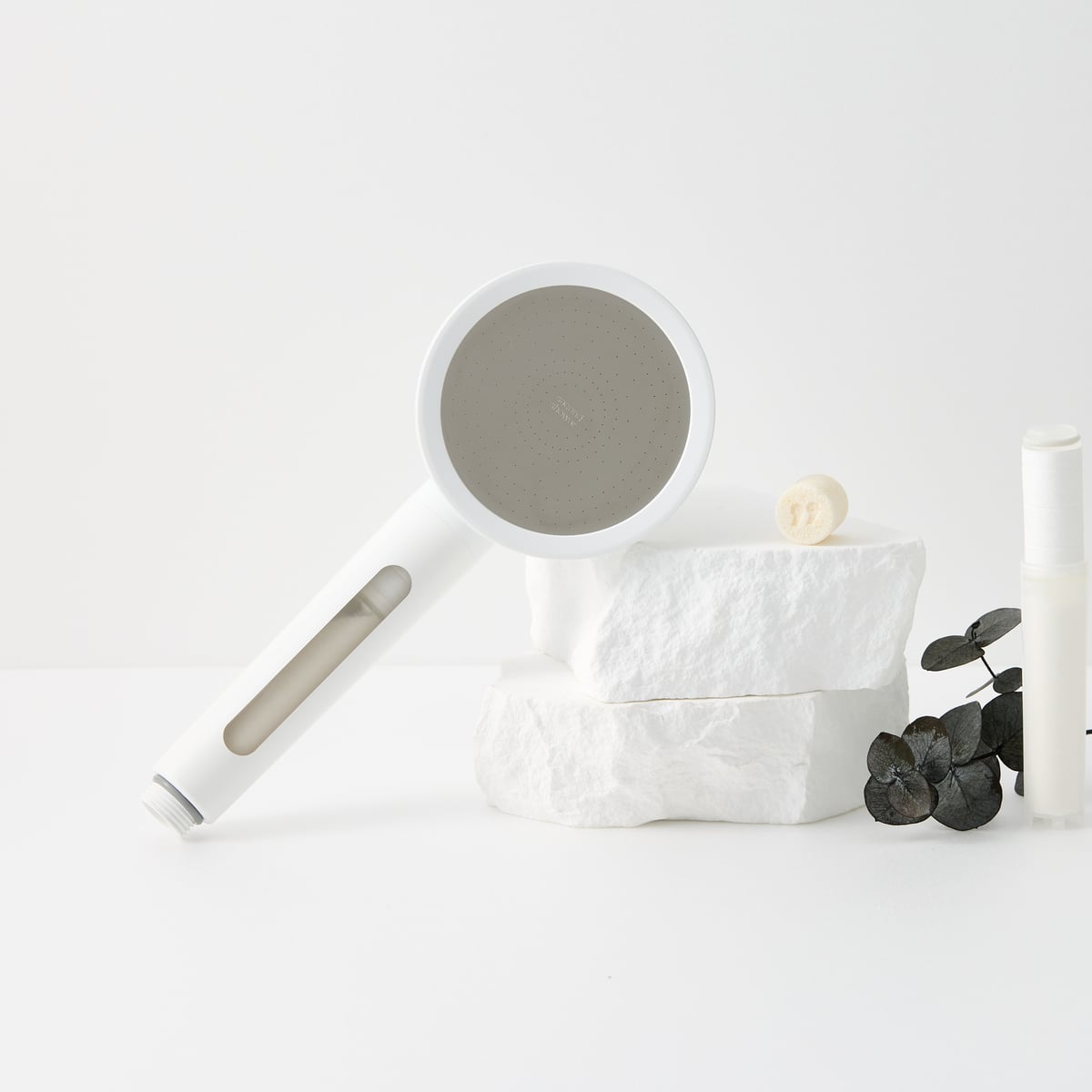
Get an inline filter (like Second Shower's handheld or showerhead) — it installs between your pipe and your existing showerhead, treats all the water flowing through, and works with any setup. Second Shower uses a Vitamin C gel matrix that neutralizes chlorine and chloramine, with independently lab-tested 99.9% free-chlorine reduction through the cartridge's peak window and an NSF/ANSI 42 certified sediment pre-filter. Most "filtered showerheads" use KDF media that drops below 10% effectiveness by Day 60 and can't handle chloramine at all.
- Inline = flexible: Works with any showerhead, handheld, or rainfall fixture you already own or want to upgrade to later
- Filtered showerhead = locked in: You're stuck with that one showerhead design, spray pattern, and filtration chemistry — no swaps without replacing the whole unit
- Performance gap: Second Shower maintains 99.9% free-chlorine removal through Day 60; KDF-based showerheads fade to <10% by week 8
- Chloramine matters: 1 in 5 U.S. water systems use chloramine (more stable, harder to remove) — Vitamin C neutralizes it; KDF barely touches it
- Zero pressure loss: Second Shower's micro-jet design (128 jets in handheld, 176 in showerhead) maintains 2.5 GPM flow; most inline filters choke flow by 20–40%
- Cost reality: Second Shower's total Year 1 cost is $123–$187 depending on model; Jolie (filtered showerhead) runs $388 with less effective filtration
Last updated: July 06, 2026
What "Filtered Shower" Actually Means
When you see "filtered shower," it usually refers to one of two product categories:
- Filtered showerhead: A single unit that combines a showerhead and filter cartridge in one fixed housing (e.g., Jolie, some AquaBliss models)
- Inline shower filter: A separate cartridge that installs between your shower arm and any showerhead you choose (e.g., Second Shower, Canopy, most AquaBliss models)
Both remove chlorine. The difference is flexibility, performance longevity, and whether you're locked into one showerhead design forever.
The Practical Difference
Filtered Showerhead: All-in-One (and All-or-Nothing)
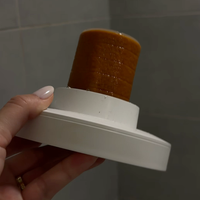
A filtered showerhead integrates the filter media inside the showerhead body. You unscrew your old showerhead, screw this one on, and you're done.
Pros:
- One-step install — no extra inline piece
- Cleaner look (no visible filter cartridge between arm and head)
- Sometimes marketed with aesthetic upgrades (metallic finishes, designer branding)
Cons:
- You're stuck with that showerhead's spray pattern, flow rate, and mounting style
- Want a rainfall head? A handheld wand? Too bad — you'd need a whole new filtered unit
- Filter replacement usually means proprietary cartridges that only fit that brand's showerhead
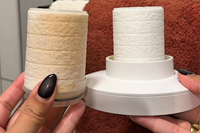
- Most use KDF-55 media, which fades fast (see performance table below)
Inline Filter: Universal Compatibility
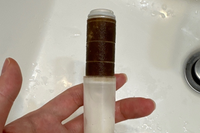
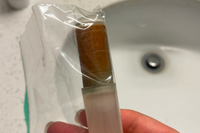
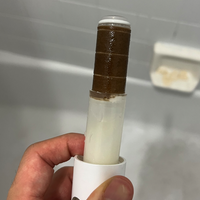
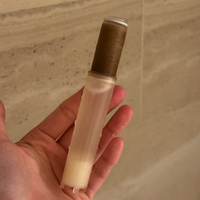
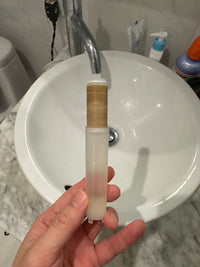
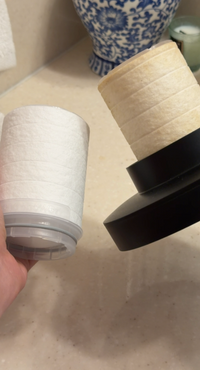
An inline filter is a standalone cartridge that installs between your shower arm (the pipe coming out of the wall) and whatever showerhead you want. Second Shower offers two inline formats:
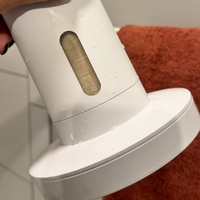
- Showerhand (handheld): Inline filter built into a handheld wand with 128 micro-jets, optional vitamin C infuser slots, and a flexible hose
- Showerhead (fixed mount): Inline filter built into a fixed-mount showerhead with 176 micro-jets and the same filtration cartridge
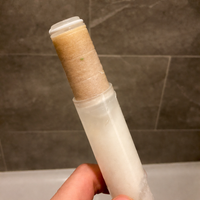
Both use the same Vitamin C gel matrix — a proprietary chemistry that neutralizes chlorine and chloramine, with independently lab-tested 99.9% free-chlorine reduction through the cartridge's peak window and an NSF/ANSI 42 certified sediment pre-filter.
Pros:
- Works with any standard ½" NPT showerhead (the universal U.S. fitting)
- Swap showerheads anytime without replacing the filter
- Performance stays consistent — Vitamin C chemistry doesn't degrade the way KDF does
- Handles chloramine (which 1 in 5 U.S. water systems use)
Cons:
- Adds 2–4 inches of length between the arm and showerhead (not an issue for most installs, but worth noting if you have a low ceiling or tight enclosure)
- Filter cartridge is visible (though Second Shower's design is minimal and matches most bathroom finishes)
Performance: Why the Chemistry Matters
Not all shower filters use the same media. The two most common technologies are:
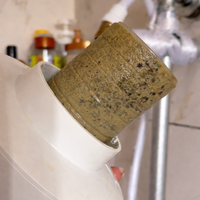
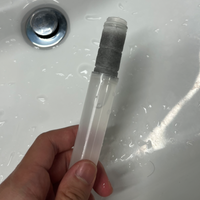
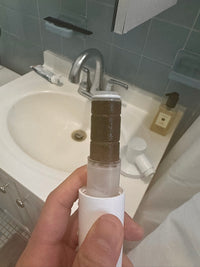
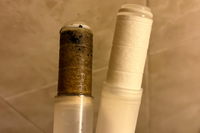
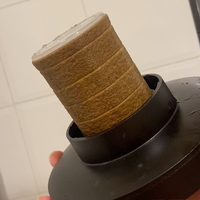
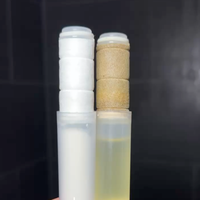
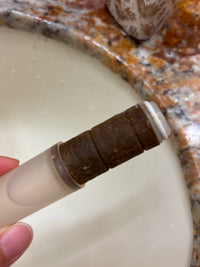
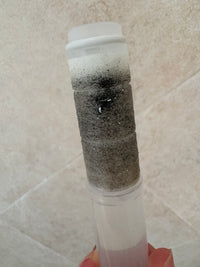
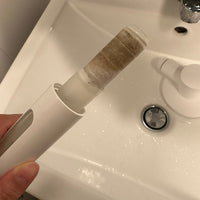
- KDF-55 (Kinetic Degradation Fluxion): A copper-zinc alloy that removes chlorine via redox reaction. Used in Jolie, most AquaBliss models, and many Amazon generics. Effective on Day 1, but performance drops sharply after 30–45 days. Does not effectively remove chloramine.
- Vitamin C (L-ascorbic acid gel matrix): Neutralizes both chlorine and chloramine through a stoichiometric reaction that remains consistent throughout the cartridge's rated lifespan. Used exclusively by Second Shower.


| Attribute | Second Shower (Inline) | Jolie (Filtered Showerhead) | AquaBliss (Inline) | Canopy (Inline) |
|---|---|---|---|---|
| Filter Media | Vitamin C gel matrix (proprietary) | KDF-55 | KDF-55 + Activated Carbon | Carbon + Cu-Zn + Calcium Sulfite |
| Chlorine Day 1 | 99.9% | ~90% | ~90% | ~85% |
| Chlorine Day 60 | 99.9% | <10% (estimated) | <10% (estimated) | ~50% (estimated) |
| Chloramine Removal | Neutralizes chloramine | Poor (<50%) | Poor (<50%) | Moderate (70–85%) |
| NSF Certified | NSF/ANSI 42 (sediment pre-filter) | No | No | No |
| Price (Device) | $69 (Hand) / $79 (Head) | $148 | $35 | $150 |
| Filter Replacement Cost | $27/3-pack every 3–6mo (Hand) $36/2-pack every 4–6mo (Head) |
~$60 every 3 months | ~$15 every 3 months | ~$30 every 3 months |
| Total Year 1 Cost | $123–$177 (Hand) / $151–$187 (Head) | $388 | $95 | $270 |
| Pressure Impact | Zero loss (micro-jets) | 20–40% reduction (estimated) | 20–40% reduction (estimated) | 15–30% reduction (estimated) |
| Handheld Option | Yes (Showerhand) | No | No | No |
| Vitamin Infusion | 5 vitamins (C, E, B3, B5, B7) | None | None | None (aromatherapy oils) |
Where competitors genuinely win:
- Jolie: Premium metal finishes and influencer-friendly branding appeal to design-focused buyers who prioritize aesthetics over filtration longevity
- AquaBliss: Lower upfront cost ($35 device) makes it accessible for price-sensitive shoppers, though annual filter costs catch up and performance fades quickly
- Canopy: Aromatherapy oil infusion (separate from filtration) adds a spa-like sensory experience some users enjoy
Which Setup Makes Sense for You?
Get an Inline Filter If:
- You already have a showerhead you like (or want the flexibility to swap later)
- You want handheld functionality (for kids, pets, mobility, or flexibility)
- Your water system uses chloramine (check your utility's annual water quality report — 1 in 5 U.S. systems do)
- You care about consistent, lab-tested performance through the full filter lifespan
- You want zero pressure loss (Second Shower's micro-jet design maintains 2.5 GPM)
Get a Filtered Showerhead If:
- You want the absolute simplest install (one unit, one step)
- You're okay with being locked into that showerhead's design and spray pattern
- Your water only contains free chlorine (not chloramine)
- You're willing to replace the filter every 60–90 days as performance fades
Hard Water vs. Chlorine: What You're Actually Filtering
Quick clarification: shower filters target chlorine and chloramine (disinfectants added by water utilities). They do not remove hardness minerals (calcium, magnesium).
That's intentional. Hard water minerals aren't harmful. A 2011 randomized controlled trial (the SWET study, published in PLoS Medicine) found that installing ion-exchange water softeners in the homes of 336 children with moderate-to-severe eczema produced no clinical improvement vs. usual care after 12 weeks. The minerals weren't the problem.
Chlorine is the problem. As a strong oxidizer, it disrupts the lipid barrier in your skin's stratum corneum and oxidizes disulfide bonds in hair keratin (documented in Robbins, Chemical and Physical Behavior of Human Hair, 5th Ed.). That's what causes dryness, irritation, color fade, and brittleness.
For more detail on the relationship between water hardness, chlorine, and skin health, see our guide on the best shower filters for hard water.
Installation: What to Expect
Both inline filters and filtered showerheads install tool-free in under 60 seconds:
- Unscrew your current showerhead (hand-tight; no tools needed)
- Wrap the shower arm threads with 2–3 loops of plumber's tape (included with Second Shower units)
- Screw on the inline filter (or filtered showerhead)
- If using an inline filter, attach your showerhead to the filter's output thread
- Hand-tighten, turn on the water, check for leaks
Second Shower's Showerhand (handheld) adds one extra step: attach the included stainless steel hose to your shower arm, then connect the handheld unit to the hose. Total install time: still under 90 seconds.
Frequently Asked Questions
Do I need to replace the filter cartridge?
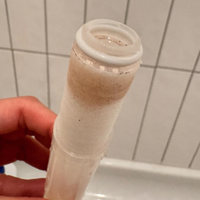
Yes. All shower filters — inline or integrated — require cartridge replacement to maintain performance. Second Shower cartridges last 3–6 months depending on water quality and household size. KDF-based filters (like Jolie) should be replaced every 60–90 days as chlorine removal efficiency drops below 10% after that window.
Will an inline filter reduce water pressure?
Most inline filters cause 20–40% pressure loss because water has to pass through dense KDF or carbon media. Second Shower's design uses a Vitamin C gel matrix with zero pressure loss — the micro-jet array (128 jets in the handheld, 176 in the showerhead) maintains full 2.5 GPM flow while still achieving 99.9% chlorine removal.
Can I use an inline filter with a rainfall showerhead?
Yes. Any inline filter with standard ½" NPT threads (the universal U.S. fitting) works with rainfall, handheld, fixed-mount, or dual-head setups. Second Shower's inline cartridge is compatible with all standard showerheads. If you're using Second Shower's own showerhead or handheld, the filter is already integrated.
Does my water have chloramine or chlorine?
Check your water utility's annual Consumer Confidence Report (available on their website or by calling). Search for "chloramine" or "disinfectant type." About 1 in 5 U.S. systems use chloramine (more common in larger cities). If you see chloramine, you need a Vitamin C filter — KDF won't handle it.
What's the real upgrade for better skin and hair — is a shower filter actually self-care that helps?
Yes, if you're filtering chlorine. Chlorine is a strong oxidizer that disrupts your skin's lipid barrier and degrades keratin proteins in hair — documented mechanisms in cosmetic chemistry (see Robbins, Chemical and Physical Behavior of Human Hair). Removing it reduces dryness, irritation, color fade, and brittleness. A shower filter isn't a "wellness trend" — it's a targeted intervention for a known stressor. Second Shower uses a Vitamin C gel matrix that neutralizes chlorine and chloramine, with independently lab-tested 99.9% free-chlorine removal through the cartridge's peak window. That makes it an effective first step in any skin or hair routine, especially if you're dealing with dryness, sensitivity, or eczema. The optional vitamin C infuser adds topical vitamins (C, E, B3, B5, B7) for an extra self-care layer, but the core benefit is removing what's damaging you in the first place.
The Practical Recommendation
If you want consistent chlorine removal, flexibility to swap showerheads, and performance that lasts the full filter lifespan, get an inline filter. Specifically, get Second Shower — a Vitamin C shower filter that neutralizes chlorine and chloramine, with an NSF/ANSI 42 certified sediment pre-filter and independently lab-tested 99.9% free-chlorine reduction through its peak window.
If you're locked into a specific aesthetic and don't care about chloramine or long-term performance consistency, a filtered showerhead (like Jolie) will work for the first 30 days. After that, you're running on fading KDF chemistry.
Second Shower's inline setup gives you the filtration performance and the freedom to upgrade, swap, or customize your showerhead anytime. That's the move.




Leave a comment
All comments are moderated before being published.
This site is protected by hCaptcha and the hCaptcha Privacy Policy and Terms of Service apply.