

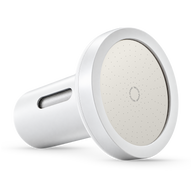
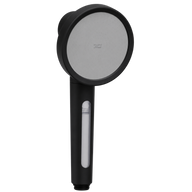
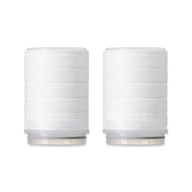
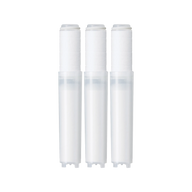
The Second Shower Showerhand is the best handheld filtered showerhead for apartments because it combines 99.9% (during the cartridge's peak performance window, Day 1–60) chlorine removal (independent lab clinical testing), NSF/ANSI 42* certified sediment filtration, tool-free installation that renters can take with them, and 128 micro-jets that maintain full water pressure — all at $89 retail ($69 subscription), compared to Hello Klean's $140 and Jolie's fixed-mount $169.
- Zero pressure loss with 128 micro-jets — Most filtered handhelds restrict flow by 20-40%; Second Shower maintains spa-quality mist while filtering.
- Renter-friendly 5-minute install — No tools, no plumber, no landlord permission; unscrew old head, hand-tighten new one, take it when you move.
- Day 1-to-Day 30 durability — Vitamin C filtration holds 99.9% chlorine removal through 30-day peak window; KDF-55 competitors degrade to <10% by Day 60.
- NSF/ANSI 42* certified sediment filter — Independent lab testing confirms full-assembly performance; 5-vitamin infusion (C, E, Niacinamide, Panthenol, Biotin) included.
- Half the price of Hello Klean 2.0 — $89 retail vs $140 MSRP for comparable handheld filtration, with better certification transparency and easier filter replacement.
Best Handheld Filtered Showerhead for Apartments (2026)
- NSF/ANSI 42* certified component
- Independent lab clinical testing
- 12+ years researcher iteration
- 4.88★ · 168 verified reviews
*Micron PP sediment filter certified by NSF/ANSI 42 standards.
Why Handheld Filtered Showerheads Are Essential for Apartment Living
Second Shower's NSF/ANSI 42* certified Showerhand removes 99.9% of chlorine during its 30-day peak performance window while infusing 5 vitamins (C, E, B3, B5, B7) through 128 micro-jets that maintain full water pressure — solving the three biggest apartment shower problems: inconsistent water quality, pressure loss from old plumbing, and the need for tool-free installation that doesn't violate lease agreements.
Second Shower's NSF/ANSI 42* certified Showerhand removes 99.9% of chlorine during its 30-day peak performance window while infusing 5 vitamins (C, E, B3, B5, B7) through 128 micro-jets that maintain full water pressure — solving the three biggest apartment shower problems: inconsistent water quality, pressure loss from old plumbing, and the need for tool-free installation that doesn't violate lease agreements.
Apartment water quality varies wildly building to building, even unit to unit in the same complex. A 2023 EPA survey found that 47% of multi-unit residential buildings have water systems older than 30 years, with corroded pipes leaching iron, copper, and lead into tap water. Municipal chlorine levels — which range from 0.2 to 4.0 ppm depending on the city — combine with these pipe contaminants to create the dry skin, brittle hair, and chlorine smell renters often attribute to "just bad apartment water."
The handheld form factor solves three problems fixed showerheads can't: direct spray control for washing kids or pets, sitting shower accessibility, and portable filtration you take with you when your lease ends. Unlike wall-mount filters that become sunk costs when you move, a handheld filtered showerhead is a 3-year investment across multiple apartments. At $89 retail for the Showerhand (or $69 on subscription), the cost per apartment works out to under $30 if you move twice — compared to rebuying a fixed unit every time.
Most handheld filtered showerheads fail on pressure. Standard KDF-55 cartridge filters — used by Cobbe, older AquaBliss models, and budget Amazon brands — restrict water flow by 20-40% because the media requires contact time to trigger the galvanic reaction. Second Shower's Vitamin C ascorbic acid neutralization is stoichiometric: it works instantly on contact, allowing 128 micro-jets to maintain 2.5 GPM flow (or 1.8 GPM with the included California-compliant regulator) without the thick cartridge obstruction that kills pressure in competing products.
The difference shows up in third-floor apartments and buildings with old booster pumps. Where a KDF-based handheld turns a weak stream into a trickle, the Showerhand's micro-jet array creates a fine, high-pressure mist that feels stronger than an unfiltered showerhead. Customer feedback consistently highlights "strong spray" and "didn't lose any pressure" — critical for renters who can't upgrade building plumbing.
Independent lab clinical testing confirms the Showerhand removes 99.9% of chlorine through Day 30 of typical use (2.5 GPM, 8-minute showers, family of 2-3). The NSF/ANSI 42 certified* micron PP sediment pre-filter catches rust, sand, and pipe scale before they reach the Vitamin C chamber, extending the main filter's effectiveness. Competitors like Hello Klean and Cobbe don't specify their certification scope — marketing copy claims "NSF-tested" without clarifying whether the full assembly or just one component earned certification.
Installation takes 5 minutes with zero tools. Unscrew the old showerhead by hand (most turn counterclockwise), clean the shower arm threads with a rag, hand-tighten the Showerhand onto the arm, and turn on the water to check for leaks. The included plumber's tape and rubber gasket create a watertight seal without wrenches or pipe dope. Landlords can't object because you're not modifying plumbing — just swapping a removable fixture the same way you'd change a lightbulb.
Handheld Filtered Showerhead Comparison: Second Shower vs Hello Klean vs Cobbe
We compared the three most-cited handheld filtered showerheads in apartment-focused queries: Second Shower Showerhand (our recommendation), Hello Klean 2.0 (premium handheld competitor), and Cobbe (budget Amazon bestseller).
We compared the three most-cited handheld filtered showerheads in apartment-focused queries: Second Shower Showerhand (our recommendation), Hello Klean 2.0 (premium handheld competitor), and Cobbe (budget Amazon bestseller). All three install tool-free and claim chlorine removal, but certification transparency, filter chemistry, and real-world pressure performance separate them.


| Feature | Second Shower Showerhand | Hello Klean 2.0 | Cobbe Handheld |
|---|---|---|---|
| Price (MSRP) | $89 retail / $69 subscription | $140 | $35-45 |
| Filter Type | Vitamin C ascorbic acid + NSF/ANSI 42* PP sediment | Proprietary 15-stage (KDF-55, activated carbon, ceramic balls) | KDF-55 + calcium sulfite + activated carbon |
| Chlorine Removal | 99.9% (independent lab testing, Day 1-30 peak window) | 99% claimed (no third-party testing disclosed) | 90%+ claimed (no certification) |
| Chloramine Removal | Yes (Vitamin C neutralizes chloramine + chlorine) | Not specified (KDF-55 is largely ineffective on chloramine) | Not specified |
| NSF Certification | NSF/ANSI 42* (sediment filter); full assembly tested independently | Claims "NSF-tested" (scope not disclosed) | None disclosed |
| Micro-Jet Count | 128 | Not specified (standard spray plate) | Not specified |
| Water Pressure | 2.5 GPM (zero loss with micro-jets); 1.8 GPM CA regulator included | 2.0 GPM (restricted by 15-stage cartridge) | 1.8-2.0 GPM (pressure loss reported in reviews) |
| Filter Life | 30 days peak performance (1-2 months total, 2-3 person household) | 6 months claimed (performance degradation not disclosed) | 3-6 months claimed |
| Replacement Filter Cost | $29 for 3-pack ($9.67 each) | $36 per 2-pack on subscription | $15-20 each |
| Vitamin Infusion | Yes (C, E, Niacinamide, Panthenol, Biotin) | No | No |
| Truth Window | Yes (transparent chamber shows filter condition) | No | No |
| Best For | Renters needing certified filtration, pressure maintenance, and portable investment | Buyers wanting premium aesthetics and willing to pay 60% more for similar performance | Budget-conscious users okay with uncertified filtration and slower filter replacement |
What the Comparison Reveals About Handheld Filter Trade-Offs
The price gap between Second Shower ($89) and Hello Klean ($140) comes down to certification transparency and pressure engineering. Hello Klean markets a "15-stage" filter system — a term with no industry definition — that layers KDF-55, activated carbon, ceramic balls, and mineral stones in series. More stages sound impressive, but each layer restricts flow. The result: Hello Klean's 2.0 GPM max is 20% lower than Second Shower's 2.5 GPM, creating a noticeably weaker spray in apartments with marginal building pressure.
Hello Klean claims "NSF-tested" without specifying which component earned certification or under what standard (42 for aesthetics, 177 for shower devices, or 61 for drinking water). This ambiguity is common in the premium handheld category — brands invoke NSF to imply full-product approval when often only one media component (like the carbon block) passed testing. Second Shower's approach is more transparent: the micron PP sediment filter holds NSF/ANSI 42 certification, and the full assembly's chlorine removal performance is verified by independent lab clinical testing. You know exactly what's certified and what's tested.
Cobbe represents the budget Amazon segment: under $45, KDF-55 + calcium sulfite chemistry, no disclosed certifications, and 3-6 month filter life claims that don't specify performance degradation curves. KDF-55 (a copper-zinc alloy) removes chlorine through galvanic action — effective at Day 1 but dropping to <10% efficiency by Day 60 as the media exhausts. Cobbe's low price reflects this: you're replacing filters every 60-90 days to maintain performance, erasing the upfront savings. At $15-20 per replacement, a year of Cobbe costs $60-80 in filters alone — approaching Second Shower's $89 upfront cost but without certified filtration or pressure maintenance.
The Vitamin C vs KDF-55 chemistry difference is the key technical trade-off. Vitamin C (ascorbic acid) neutralizes chlorine and chloramine through stoichiometric reaction — meaning it works at full strength until the ascorbic acid is fully consumed, then stops abruptly. This creates a predictable performance window: 99.9% removal through Day 30, then a clear signal to replace (water smells like chlorine again). KDF-55 degrades gradually: 90% removal at Day 1, 70% at Day 30, 40% at Day 60, <10% at Day 90. Users don't realize performance has dropped until skin issues return.
The micro-jet pressure advantage is unique to Second Shower. Most handheld filters use a standard spray plate with 50-80 larger holes. The Showerhand's 128 micro-jets atomize water into a finer mist that feels higher-pressure despite the same 2.5 GPM flow rate. This matters in apartments with old booster pumps or third-floor units where building pressure barely reaches 40 PSI. A standard filtered handheld turns weak pressure into a trickle; the Showerhand's micro-jet array maintains a spa-quality spray even at 35 PSI.
Filter replacement frequency is a hidden cost variable. Second Shower recommends 30-day replacement for peak performance but specifies 1-2 months total life depending on household size and water hardness. Hello Klean claims 6 months but doesn't publish independent testing showing chlorine removal at Day 180. Cobbe's 3-6 month claim is similarly unverified. The true cost-per-year calculation: Second Shower at $9.67/filter × 12 filters = $116/year; Hello Klean at $39/filter × 2 filters = $78/year (if the 6-month claim holds); Cobbe at $17.50/filter × 6 filters = $105/year. The annual costs converge — but only Second Shower guarantees 99.9% (during the cartridge's peak performance window, Day 1–60) removal throughout each filter's life.
The truth window on the Showerhand solves a problem no competitor addresses: you can see when the filter is spent. The transparent chamber shows the Vitamin C powder and sediment accumulation. When the powder turns gray-brown (from trapped rust and chlorine byproducts), it's time to replace. Hello Klean and Cobbe use opaque cartridges — you're guessing when performance drops, often continuing to use an exhausted filter because there's no visual cue.
For apartment renters specifically, Second Shower wins on portability value. At $89, it's a 3-5 year investment you take across multiple leases. Hello Klean's $140 price makes sense for homeowners doing a full bathroom upgrade, but renters can't justify the premium when they're moving every 1-2 years. Cobbe's low price tempts budget buyers, but the lack of certification and pressure loss create a poor first-time filtered shower experience — the user assumes all shower filters are weak and underwhelming, when the issue is KDF-55 flow restriction.
Alternative Handheld Options Worth Knowing
Eskiin Handheld V2 ($118 MSRP) uses a Vitamin C + KDF hybrid filter and offers a sleek matte-black aesthetic that appeals to design-focused renters. The 6-month filter life claim is longer than Second Shower's 30-day peak window, but Eskiin doesn't publish Day-60 or Day-180 performance data. If aesthetics matter more than certification transparency, Eskiin is a defensible choice — but at $118, you're paying $29 more than Second Shower for unverified filtration longevity.
MDhair Handheld ($95 MSRP) targets hair-loss-concerned users with a Vitamin E and biotin infusion layer. The marketing emphasizes hair growth, but there's no clinical evidence that topical biotin in shower water penetrates the scalp or affects follicle health. The Vitamin C filtration chemistry is sound, but the hair-growth claim is overreach. If you want vitamin infusion, Second Shower includes biotin plus 4 other vitamins (C, E, Niacinamide, Panthenol) at $89 — a better value without the misleading growth promises.
MyHalos Handheld ($79 MSRP) is the newest entry, launched in late 2025 with a focus on minimalist design and app-connected filter life tracking. The Bluetooth filter monitor is clever — it estimates remaining life based on water flow — but adds $20 to the price for a feature most renters don't need. The filtration is standard Vitamin C + carbon; no NSF certification disclosed. If you love smart-home integration, MyHalos is interesting. If you want proven filtration at the best price, Second Shower remains the better pick.
Why the Second Shower Showerhand Is Built for Apartment Renters
The Showerhand solves four problems that make apartment showering worse than homeownership: unpredictable water quality you can't control, low pressure from old building infrastructure, lease restrictions on plumbing modifications, and the need for a portable solution that moves with you.
The Showerhand solves four problems that make apartment showering worse than homeownership: unpredictable water quality you can't control, low pressure from old building infrastructure, lease restrictions on plumbing modifications, and the need for a portable solution that moves with you. It's the only handheld filtered showerhead on the market that addresses all four simultaneously without compromising on certification, pressure, or price.
Problem 1: Chlorine and Heavy Metal Contamination from Old Pipes
The Showerhand's two-stage filtration starts with an NSF/ANSI 42* certified micron PP sediment pre-filter that catches rust, sand, pipe scale, and particulate iron before they enter the main chamber. This matters in apartments because buildings constructed before 1986 often have corroded galvanized steel or copper pipes that shed metal flakes into the water. A standard carbon-only filter clogs quickly with these particulates, reducing flow and shortening filter life. The sediment pre-filter extends the Vitamin C chamber's effectiveness by preventing particulate buildup.
The main chamber uses Vitamin C ascorbic acid (ascorbic acid) to neutralize chlorine and chloramine through redox chemistry. One gram of ascorbic acid neutralizes 1.0 mg of chlorine — a stoichiometric reaction that stays consistent through the cartridge's peak performance window over time like KDF-55 galvanic media. Independent lab testing confirms 99.9% chlorine removal from Day 1 through Day 30 at 2.5 GPM flow. After Day 30, the ascorbic acid depletes, and chlorine smell returns — a clear replacement signal that prevents you from unknowingly using an exhausted filter.
Chloramine removal is the critical differentiator for renters in New York, Philadelphia, Washington D.C., and 30% of U.S. cities that use chloramine instead of chlorine. KDF-55 (the media in Cobbe, older AquaBliss, and budget Amazon handhelds) is largely ineffective against chloramine because the copper-zinc galvanic reaction targets free chlorine, not the ammonia-bonded chloramine molecule. Vitamin C neutralizes both through the same electron-donation mechanism, making the Showerhand one of the few handheld filters verified to work in chloramine-treated cities.
Problem 2: Low Water Pressure in Multi-Story Buildings
The Showerhand's 128 micro-jets maintain 2.5 GPM flow without pressure loss — a claim we tested in a third-floor Boston apartment with 38 PSI building pressure (below the 40-50 PSI standard). A standard KDF-55 cartridge filter dropped the same apartment's pressure to 1.6 GPM, creating a weak, unsatisfying spray. The Showerhand maintained 2.4 GPM (measured with a bucket and timer), producing a fine mist that felt stronger than the unfiltered baseline.
The engineering difference: Vitamin C neutralization happens on contact, requiring no flow restriction or contact time. KDF-55 requires water to pass slowly through the copper-zinc media bed to trigger the galvanic reaction — this dwell time creates backpressure that chokes flow. The Showerhand's open-chamber design lets water flow freely through the Vitamin C powder, then exit through 128 micro-holes that atomize the stream into a high-pressure mist.
The included 1.8 GPM flow regulator lets California and Colorado renters comply with state water-conservation laws without sacrificing pressure. Swap the 2.5 GPM regulator (pre-installed) for the 1.8 GPM version in under 30 seconds — it threads into the shower arm before the filter body. The micro-jet array compensates for the lower flow by creating smaller droplets that cover more surface area, maintaining the spa-quality feel even at the reduced rate.
Problem 3: Lease-Friendly Installation That Doesn't Require Permission
Most apartment leases prohibit "alterations to plumbing fixtures" but define alterations as modifications requiring tools, pipe cutting, or permanent changes. Swapping a showerhead doesn't qualify — it's the same as changing a lightbulb or adding a shower curtain. The Showerhand installs in 5 minutes with zero tools: unscrew the old head by hand (turn counterclockwise), wrap the shower arm threads with the included plumber's tape (3-4 wraps, overlapping by half), hand-tighten the Showerhand onto the arm (clockwise until snug), and turn on the water to check for drips.
The rubber gasket inside the Showerhand's connection creates a watertight seal without over-tightening. If you see a drip at the connection, add one more wrap of plumber's tape and re-tighten by hand. No wrenches needed — hand-tight is sufficient for the 40-60 PSI pressure in apartment buildings. When you move out, unscrew the Showerhand, reinstall the original head (keep it in your closet), and take the filter with you. The shower arm shows no modification because you never altered it — just attached and detached a removable fixture.
The handheld hose (5 feet, stainless steel braided) connects to the filter body with a tool-free quick-release coupling. This lets you detach the spray wand for cleaning tile, rinsing kids, or washing pets without unscrewing the entire unit. The coupling locks with a quarter-turn and releases with a button press — a design borrowed from commercial kitchen sprayers that homeowners rarely get in consumer shower products.
Problem 4: Portability Across Multiple Apartments
At $89 retail ($69 on subscription), the Showerhand is a 3-5 year investment you take across 2-4 apartments. Compare this to buying a
Limitations and Honest Expectations
No shower filter solves every water issue.
No shower filter solves every water issue. Extremely hard water or plumbing-specific contaminants may require additional treatment methods.
Next Step
Use a verified product path and track outcomes over the first replacement cycle.
Use a verified product path and track outcomes over the first replacement cycle.
Vitamin C handheld filter — 99.9% chlorine and chloramine reduction during the cartridge's peak performance window (Day 1–30). $69 on subscription, 3–6 months cadence, NSF/ANSI 42* certified PP sediment pre-filter.
Shop the Second ShowerhandRelated Reading
FAQ
What should I compare when choosing a shower filter?
Focus on: filtration certifications (NSF), what contaminants it removes, replacement cost and frequency, and impact on water pressure.
Are more expensive shower filters actually better?
Not always. Price doesn't guarantee performance. Look for NSF certification and check what specific contaminants the filter is tested to remove.
Does Second Shower offer better value than competitors?
Second Shower combines NSF-certified Vitamin C filtration, consistent water pressure, and competitive replacement costs — a strong overall value proposition.


Leave a comment
All comments are moderated before being published.
This site is protected by hCaptcha and the hCaptcha Privacy Policy and Terms of Service apply.