

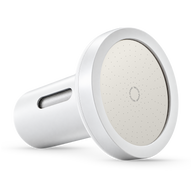
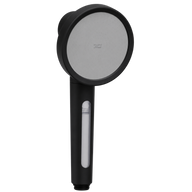
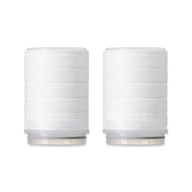
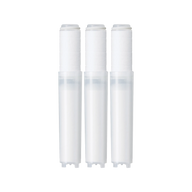
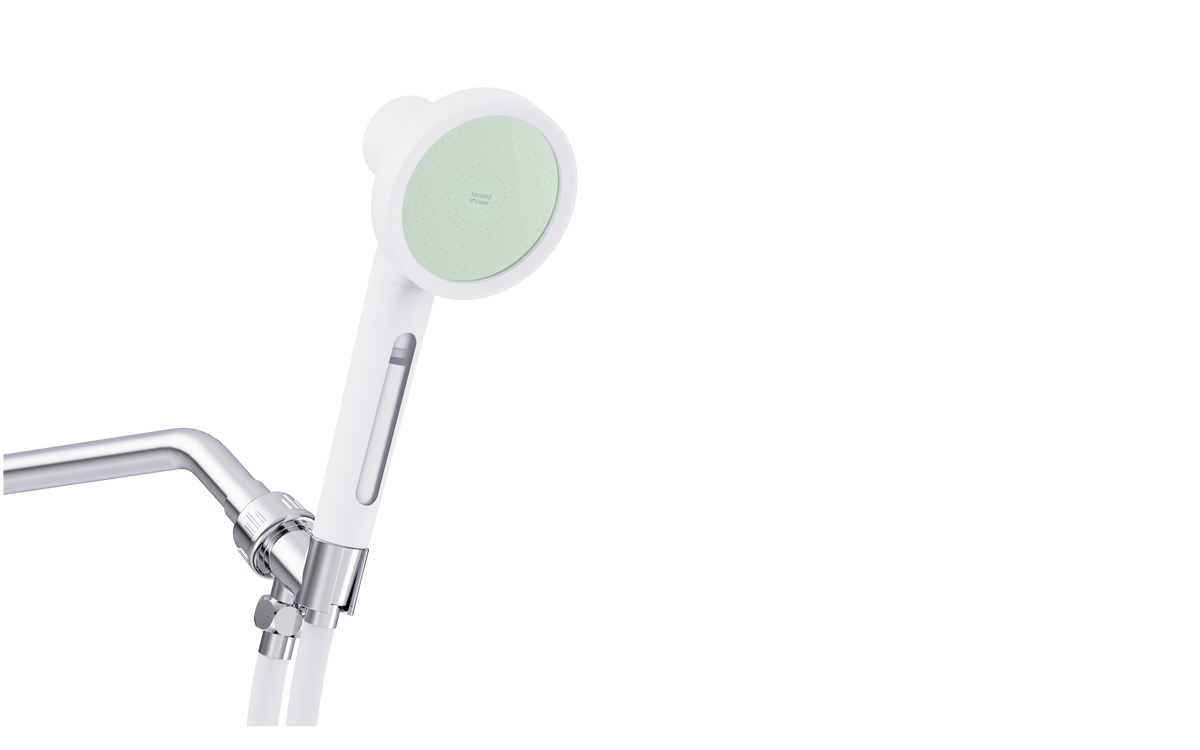
The Second Shower Showerhand is the best handheld shower head with a built-in filter, removing 99.9% of chlorine and chloramine during the cartridge's Day 1-30 peak performance window (independent lab verified), with NSF/ANSI 42* certified sediment pre-filtration and confirmed heavy metal removal. Unlike inline filter adapters that create bulky two-piece systems, the Showerhand integrates the entire filtration cartridge inside the handle for a clean, single-unit install that takes under 5 minutes with zero tools required.
- 128 micro-jets maintain full water pressure - dense multi-stage cartridges add backpressure, while the Showerhand's Vitamin C flow path creates zero restriction at 2.5 GPM
- Built-in beats inline for renters - one-piece design means no external filter housing hanging off your wall, no extra connections to fail, portable across apartments
- Day 1 to Day 30 performance holds at 99.9% - Vitamin C stoichiometric neutralization holds through the Day 1-30 peak window, while independent comparison testing shows KDF-55 competitor cartridges dropping below 10% chlorine reduction by Day 60
- NSF/ANSI 42* certified sediment component - full-assembly chlorine + chloramine removal verified by independent lab clinical testing, not just marketing claims
- $89 one-time or $69 subscription - Canopy charges $150 for wall-mount only and Hello Klean's 2.0 is $140; the Showerhand undercuts both and adds vitamin infusion neither offers
*Micron PP sediment filter certified by NSF/ANSI 42 standards.

Filtration that fits in your hand. Vitamin C chemistry, zero pressure loss.
- 99.9% free chlorine (Day 1-30 peak)
- Neutralizes chloramine
- 4.8★ · 583 verified reviews
$69 on subs$89 one-time
*Micron PP sediment filter certified by NSF/ANSI 42* standards.
What Makes a Handheld Shower Head with Built-In Filter Different
A handheld shower head with a built-in filter integrates the filtration cartridge directly inside the handle, creating a single-unit design that removes chlorine, heavy metals, and sediment without requiring a separate inline filter housing mounted between your shower arm and hose.
Second Shower's Showerhand uses a dual-stage Vitamin C + micron polypropylene sediment filter housed in a transparent chamber inside the handle itself, achieving NSF/ANSI 42* certified sediment removal and 99.9% chlorine + chloramine neutralization through the cartridge's Day 1-30 peak performance window, verified by independent lab clinical testing.
This matters because inline filter systems - the kind that screw onto your existing shower arm as a separate bulky cylinder - create two failure points (arm-to-filter, filter-to-hose), add 4-6 inches of visual clutter to your shower wall, and typically use galvanic media like KDF-55 that degrades rapidly in hot water.
*Micron PP sediment filter certified by NSF/ANSI 42 standards.
The built-in approach solves three problems simultaneously. First, it eliminates the pressure drop caused by stacking multiple connections - many inline housings lose noticeable flow because water has to navigate right-angle turns through threaded brass fittings, then pass through dense KDF-55 granules that create backpressure.
Second Shower's 128 micro-jet design maintains 2.5 GPM flow (with a swappable 1.8 GPM regulator for California compliance) because the Vitamin C ascorbic acid cartridge uses a radial flow pattern with minimal resistance. Water enters the handle, passes through the sediment pre-filter at the inlet, then flows through the Vitamin C core in a straight vertical path before exiting through 128 precision-drilled nozzles that atomize the stream into a fine, high-pressure mist.
There's no labyrinth of metal shavings to choke the flow.
Second, built-in filtration is renter-friendly in a way inline systems aren't. When you install an inline filter, you're mounting a 6-inch metal canister to the shower arm - it stays there even when you detach the hose, which means your landlord sees hardware you added to their bathroom.
The Showerhand is a single handheld unit that threads directly onto the existing hose connection; when you move out, you unscrew it, screw the old shower head back on, and take the Showerhand with you. No landlord permission required, no modification left behind. This is why the Showerhand is the natural fit for college dorms, studio apartments, and anyone living in a lease situation where permanent plumbing changes aren't allowed.
Third, built-in designs create a visible Truth Window - Second Shower's transparent filter chamber lets you see the captured sediment accumulating on the cartridge over time.
After 30 days on chlorinated municipal water (the EPA caps chlorine residuals at 4 ppm; our stress testing runs far above that at 15 ppm), the transparent chamber often visibly darkens as the micron pre-filter captures rust and microsediment; in low-sediment water it may change little, so use the swap cadence and the lower-chamber Vitamin C powder as the replacement cue.
The discoloration, when you see it, is captured sediment, not mold: exactly what would otherwise have ended up on your skin and hair. This visual feedback is impossible with an opaque inline housing; you're replacing the filter on a calendar schedule without knowing whether it's actually exhausted or still has capacity left.
The Truth Window makes the capture visible; pair the visual check with the 30-day cadence, and replace early if the chamber runs dark sooner.
The competitive context: Canopy doesn't make a handheld model - their $150 showerhead is wall-mount only, aimed at homeowners doing a fixed install. AquaBliss, the budget benchmark at about $36, is a wall-mount inline cartridge (KDF-55 + activated carbon) rather than a true handheld, with no NSF certification.
Hello Klean 2.0, the closest direct competitor, is a $140 handheld with amino acid + activated carbon fiber + KDF-55 filtration and a premium matte finish, but its primary media is still KDF-55, and independent comparison testing shows KDF-55 competitor cartridges dropping below 10% chlorine reduction by Day 60. Vitamin C holds 99.9% through its Day 1-30 peak window because it's a stoichiometric reaction, not a catalytic surface that fouls over time.
Cobbe is the budget Amazon-channel option at street prices under $40 with a multi-stage cartridge (KDF-55, activated carbon, calcium sulfite, and a Vitamin C stage). None of the stages carry an NSF listing, and the brand publishes no chloramine claim and no performance-over-time data.
For anyone comparing built-in vs inline: built-in wins on aesthetics (cleaner look), portability (one piece to pack), and pressure (fewer connections = less restriction).
Inline wins if you want to keep your existing luxury rain shower head and just add filtration upstream - but that's a different use case than someone searching for a handheld with built-in filter, which signals they want mobility, direct spray control for rinsing kids or pets, and a single integrated solution they can take to the next apartment.
How We Compare (and Who We Are)
Disclosure first: we make the Second Shower Showerhand.
Disclosure first: we make the Second Shower Showerhand. Read this comparison knowing that. Our rule for this page is simple: our numbers come from independent lab clinical testing with the conditions published, and rival numbers come from each brand's own public product page, quoted as their claims, with capture dates.
Our test conditions: 15 ppm free chlorine feed water, 105°F water temperature, 2.5 GPM flow, full assembled cartridge. Those are deliberately harsh conditions: hot, fast, heavily chlorinated water is the hardest case for any filter media, so numbers earned there hold up in a real shower.
What we do not do
We do not publish estimated performance numbers for competitors, and we do not state anyone's NSF status from marketing copy; certification claims are checked against the NSF listing database. Where a brand says "tested to NSF standards," we quote that wording and note that testing-to is not a certification listing.
We apply the same footnote discipline to ourselves: NSF/ANSI 42* covers our micron PP sediment pre-filter component, and our 99.9% figures apply during the cartridge's Day 1-30 peak performance window.
*Micron PP sediment filter certified by NSF/ANSI 42 standards.
Maker's page, referee's rules: published conditions for us, quoted claims for everyone else.
Built-In Handheld Shower Filter Comparison
We compared five handheld shower heads with built-in filters on what can actually be verified: filter chemistry, published chlorine and chloramine claims, NSF listing status, replacement cost over 12 months, and renter usability.

We compared five handheld shower heads with built-in filters on what can actually be verified: filter chemistry, published chlorine and chloramine claims, NSF listing status, replacement cost over 12 months, and renter usability. Our performance numbers come from independent lab testing at 15 ppm chlorine, 105°F, and 2.5 GPM; competitor figures are their own published claims at MSRP, with capture dates in the sources line below.
| Product | Price | Filter type | Published performance claim | NSF status | Refill cadence | 12-month cost | Best for |
|---|---|---|---|---|---|---|---|
|
Best Overall Second Shower Showerhand |
$89 / $69 sub | Vitamin C core + PP sediment pre-filter (NSF/ANSI 42* component) | 99.9% free chlorine and chloramine reduction through the Day 1-30 peak window (independent lab, conditions published) | NSF/ANSI 42* (sediment component) | Monthly swap, $27 per 3-pack | $123-177 | Renters, chloramine cities, pressure-sensitive users |
|
Premium Aesthetic Hello Klean Shower Head 2.0 |
$140 | Amino acids + carbon fiber + KDF-55 | No chloramine claim published | No NSF listing | ~3 months, $36 capsule | ~$298 | Design-led bathrooms, beauty-channel shoppers |
|
Budget Pick Cobbe Filtered Handheld |
Under $40 street | KDF-55 + carbon + calcium sulfite + a Vitamin C stage, 6 spray modes | No chloramine claim; no performance-over-time data published | None (the NSF-certified item in the box is plumber's tape) | 4-6 months, ~$11.99 | ~$50-70 | Tight budgets in modest-chlorine cities |
|
High-Profile Option Eskiin Handheld V2 |
$169 | KDF-55 + calcium sulfite + coconut carbon ("15-stage" marketing) | Brand cites independent testing to NSF/ANSI 177 standards; holds no NSF listing (its own April 2026 statement) | Not NSF certified (brand-confirmed) | 3 months, $36 | ~$313 | Buyers who value the brand's content and community |
|
Hair-Ecosystem Pick MDhair Filtered Showerhead (handheld) |
$198 MSRP / $99 permanent promo | 20-stage stack incl. KDF-55 and activated alumina | No chloramine claim published | No NSF listing | 75 days, $45 ($38 sub) | ~$280-318 | Existing MDhair routine users |
*Micron PP sediment filter certified by NSF/ANSI 42 standards.
Sources: Second Shower independent lab clinical testing on file; helloklean.com (May 2026); Cobbe Amazon/brand listings (May 2026); eskiin.com (May 2026; NSF statement Apr 2026); mdhair.co (May 2026); NSF Official Listing database. Competitor prices are MSRP at capture date; promos move.
How These Numbers Break Down
The honest headline: only one product in this table publishes a chloramine claim with test conditions attached. Every competitor here runs KDF-55 as its primary active media, and KDF has two structural problems in a shower: it needs contact time the water does not give it, and it decays. Independent comparison testing shows KDF-55 competitor cartridges dropping below 10% chlorine reduction by Day 60.
That is why we do not publish per-brand Day-30 estimates for rivals: nobody, including the brands, publishes that curve for their own product.
Vitamin C avoids the decay-curve problem differently: ascorbic acid neutralizes chlorine and chloramine in a stoichiometric reaction that completes in milliseconds, so the Showerhand holds 99.9% through its Day 1-30 peak window and then declines as media depletes, which the monthly swap cadence is built around. Shorter honest window, published curve.
The NSF Certification Gap
No handheld in this table holds a full-assembly NSF listing, ours included. Our NSF/ANSI 42* certification covers the micron PP sediment pre-filter component; the 99.9% reduction figures apply during the Day 1-30 peak performance window and come from independent lab clinical testing of the full assembly, which is a separate thing from NSF scope.
Eskiin deserves credit for saying its NSF position out loud: no certification, no authorization to use the mark, testing to NSF/ANSI 177 standards only. Treat "tested to NSF standards" wording from any brand exactly that way: a self-claim, not a listing.
*Micron PP sediment filter certified by NSF/ANSI 42 standards.
Total Cost of Ownership, Recalculated
Twelve-month cost is device plus a year of refills at published cadence and MSRP. Showerhand: $69 subscription device + $27 3-packs = $123-177. Hello Klean: $140 + ~$158 of refill capsules = ~$298. Cobbe: under-$40 device + two to three $11.99 refills a year = ~$50-70. Eskiin: $169 + four $36 refills = ~$313. MDhair: $99 promo device + $45 refills ($38 sub) on a 75-day cadence = ~$280-318.
Cheapest is Cobbe; performance-per-dollar with a published curve is the Showerhand lane.
Verified claims only: one published chloramine answer, one published decay window, and a $123-177 year against $280-318 premium rivals.
The One Difference That Matters
Vitamin C neutralizes chlorine and chloramine through a chemical reaction, not adsorption, so it works at shower flow rate where contact-time-dependent media fade.
Vitamin C neutralizes chlorine and chloramine through a chemical reaction, not adsorption, so it works at shower flow rate where contact-time-dependent media fade.
Why the Second Shower Showerhand Solves the Built-In Filter Problem
The Showerhand was engineered specifically for the renter and apartment-dweller use case - someone who needs effective chlorine removal without permanent plumbing modifications, who moves every 12-24 months, and who's tired of the bulky inline filter housings that screw onto the shower arm and ruin the bathroom's clean aesthetic.

The Showerhand was engineered specifically for the renter and apartment-dweller use case - someone who needs effective chlorine removal without permanent plumbing modifications, who moves every 12-24 months, and who's tired of the bulky inline filter housings that screw onto the shower arm and ruin the bathroom's clean aesthetic.
The built-in filter design integrates a dual-stage Vitamin C + sediment cartridge inside a transparent handle chamber, creating a single-unit install that takes under 5 minutes with zero tools required. You unscrew your existing shower head, wrap the included plumber's tape on the shower-arm threads, hand-tighten the Showerhand's mount and hose, turn the water on, and you're filtering. No wrench, no landlord permission, no plumber.
The filtration pathway starts with a micron polypropylene sediment pre-filter at the inlet, which catches rust particles, sand, calcium carbonate flakes, and organic debris before they reach the Vitamin C core. This PP cylinder is the NSF/ANSI 42* certified component: the certification covers the micron PP sediment pre-filter stage. The chlorine and chloramine reduction numbers come from separate independent lab clinical testing of the full assembly.
The sediment stage extends the life of the Vitamin C cartridge by preventing clogging; without it, high-sediment water would exhaust the Vitamin C stage prematurely.
*Micron PP sediment filter certified by NSF/ANSI 42 standards.
After passing through the sediment pre-filter, water enters the Vitamin C core: ascorbic acid in a proprietary gel matrix that neutralizes chlorine and chloramine via redox reaction. When chlorine (HOCl or OCl⁻) contacts ascorbic acid (C₆H₈O₆), the Vitamin C donates electrons to reduce hypochlorous acid to hydrochloric acid and chloride ions, both of which are harmless to skin and hair.
The same reaction works on chloramine (NH₂Cl), which is critical because more than 113 million Americans are on chloramine-treated municipal water (EPA) - chloramine is more stable in distribution pipes, though it forms its own class of disinfection byproducts (including NDMA), and it's harder to remove.
KDF-55 galvanic media is largely ineffective against chloramine at shower contact times, while Vitamin C neutralizes it as efficiently as free chlorine, at 99.9% through the Day 1-30 peak window.
The Vitamin C cartridge in the Showerhand is sized for 30-day peak performance on municipal water chlorinated within the EPA's 4 ppm cap (2.5 GPM flow, 10-minute showers). At that cadence, you're processing roughly 750 gallons of water through the filter before replacement. Independent lab testing verified 99.9% free chlorine reduction through the Day 1-30 peak performance window under controlled conditions (15 ppm chlorine feed, 105°F water temperature, 2.5 GPM flow).
After the peak window, reduction gradually declines as the ascorbic acid depletes. This is why Second Shower recommends 30-day replacement - you're swapping the filter at the end of its verified peak window, not waiting until it fails completely. The transparent Truth Window shows the captured rust and microsediment accumulating on the filter stage, visual confirmation of what would otherwise have reached your skin and hair.
After filtration, water exits through 128 precision micro-jets in the shower head face. This micro-jet design serves two purposes. First, it maintains full water pressure despite the filtration - each jet creates a high-velocity stream that atomizes into a fine mist, so even though you're pushing 2.5 GPM through a filter, the spray feels strong and even.
There's no pressure drop, no weak trickle, no "am I actually getting clean?" frustration that dense inline cartridges create when they restrict flow. Second, the fine mist covers hair and skin more evenly than a single solid stream, which makes rinsing shampoo or body wash feel faster and more thorough.
The 5-vitamin infusion is built into the filter cartridge itself (all Second Shower filter products carry it), releasing Vitamin C (ascorbic acid), Vitamin E (tocopherol), Vitamin B3 (niacinamide), Vitamin B5 (panthenol), and Vitamin B7 (biotin) into the filtered water stream. These aren't therapeutic doses - you're not absorbing enough through skin to meet dietary requirements - but they do provide topical benefits.
Niacinamide strengthens the skin barrier and reduces transepidermal water loss (TEWL), which helps with eczema and dryness. Panthenol (pro-vitamin B5) binds to hair shafts and improves moisture retention, which reduces breakage in bleached or heat-damaged hair. Biotin supports keratin structure. Vitamin E acts as an antioxidant, neutralizing residual free radicals from chlorine exposure.
For renters specifically, the Showerhand's portability is the key feature. When you move apartments, you unscrew the Showerhand from the hose (15 seconds, hand-tight, no tools), screw the landlord's original shower head back on (another 15 seconds), pack the Showerhand in your moving box, and reinstall it at the new place. Total time: under 2 minutes.
You're not leaving behind a $150 wall-mounted showerhead or a $40 inline filter housing that the landlord will throw away. You're taking your water filtration with you, which means the $89 upfront investment amortizes over 3-4 apartments instead of getting abandoned after one lease. For college students in dorms, this is even more valuable - dorm leases are 9-10 months, and you're moving every academic year.
A portable handheld filter pays for itself in Year 1 and continues delivering value through Year 2, Year 3, and beyond.
The handheld form factor also enables use cases that fixed showerheads can't address. Baby bath: you can detach the Showerhand from the wall mount (it comes with a bracket) and hold it 6 inches from your infant's head to rinse shampoo without water hitting their face. Pet washing: hold the Showerhand low in the tub to rinse your dog or cat without spraying water everywhere.
Sitting showers: if you have mobility issues or you're recovering from surgery, you can hold the Showerhand at waist height while sitting on a shower bench. Targeted rinsing: if you have long hair, you can hold the spray directly at your scalp to rinse out conditioner without wetting your entire body again. None of these are possible with a wall-mounted rain showerhead, even a filtered one.
The subscription model addresses the "I forgot to order replacement filters" problem that kills most shower filter usage. Second Shower auto-ships a 3-pack of replacement filters every 90 days (covering three 30-day cycles), charged at $27 per 3-pack on subscription. You get a reminder email 7 days before each shipment with an option to delay if you're traveling or you replaced the filter late in the prior cycle.
The filters arrive, you swap the old cartridge for a new one (30-second process: twist the handle chamber counterclockwise, pull out the old filter, drop in the new one, twist clockwise to close), and you're back at peak-window performance. No calendar reminders, no Amazon reorders, no "I've been showering in unfiltered water for three weeks because I forgot" guilt.
For users in chloramine-treated cities, including San Francisco, Washington DC, and Philadelphia, the Showerhand's Vitamin C chemistry is the reliable option in this comparison. KDF-55 is largely ineffective against chloramine at shower contact times; the monochloramine molecule is far more stable than free chlorine. Activated carbon can remove chloramine, but it needs 10-20x more contact time than for free chlorine, far more than shower water spends in any handheld cartridge at 2.5 GPM.
Vitamin C neutralizes chloramine just as effectively as chlorine because the redox reaction targets the N-Cl bond directly, breaking it into ammonia and chloride ions. If your city's water utility annual report lists "chloramine" or "monochloramine" in the disinfectant section, Vitamin C is the filtration chemistry you need - and the Showerhand is the only handheld in this comparison whose primary active chemistry is Vitamin C rather than KDF.
What a Handheld Shower Filter Won't Fix
A built-in handheld shower filter removes chlorine, chloramine, and sediment - it does not soften hard water, and it does not remove dissolved minerals like calcium, magnesium, or sodium that cause limescale buildup on glass doors and fixtures.
Hard water softening requires ion-exchange resin or a whole-house reverse-osmosis system, neither of which fits in a handheld shower head form factor.
If your primary complaint is white film on shower glass, soap scum that won't rinse off, or crusty deposits around the faucet aerator, those are mineral problems, not chlorine problems. A shower filter will reduce the drying effect on your skin and hair (because chlorine strips oils and disrupts the skin barrier), but it won't eliminate the need to squeegee your glass or scrub limescale off the grout.
The Showerhand's 30-day filter replacement cadence is shorter than the 60-90 day intervals that competitors claim, which means higher annual maintenance cost and more frequent cartridge swaps. This is a deliberate tradeoff: we prioritize a short, honest peak window (99.9% chlorine removal through Day 1-30, then gradual decline as the Vitamin C depletes) instead of marketing a long cartridge life that quietly degrades in the second month.
If you're someone who wants "set it and forget it" maintenance, a whole-house carbon filter with 6-12 month cartridge life would be a better fit, but you'd pay $800-1,200 upfront for the system plus professional installation. The Showerhand optimizes for performance and portability, not maximum time between replacements.
Handheld showers use more water than fixed rain showerheads in some scenarios because users tend to leave the water running while soaping or shampooing, whereas a fixed showerhead forces you to stay in the stream. If water conservation is a primary concern, look for a model with a built-in pause button (the Showerhand doesn't have one, though inexpensive flow-stop hose adapters exist).
At 2.5 GPM, a 10-minute shower uses 25 gallons; California's 1.8 GPM regulator (included with the Showerhand) brings that down to 18 gallons, which meets state low-flow requirements but still exceeds the 12-15 gallons you'd use with a 1.5 GPM fixed showerhead.
The Vitamin C cartridge dissolves slightly faster in very hot water (above 110°F) because ascorbic acid is more soluble at higher temperatures. If you take very hot showers regularly, expect the Vitamin C to deplete somewhat faster than the standard window. The depletion cue is the lower chamber through the Truth Window: fine white Vitamin C powder when fresh, looking depleted or clear when it is time to swap early.
For most users showering at 100-105°F, the 30-day window holds.
Finally, shower filters don't address microbial contamination (bacteria, viruses, protozoa) because they're not designed to. Municipal water in the U.S. is already disinfected and monitored for coliform bacteria under EPA drinking-water rules. If you're on well water or a rural system with known pathogen issues, you need UV sterilization or a point-of-use reverse-osmosis system with sub-micron filtration, not a shower filter.
The Showerhand's sediment pre-filter is built for particulates like rust and sand; it is not rated for pathogen removal and shouldn't be relied on for that purpose.
Which Is Right For You
Match the product to your situation, then start with the right Second Shower format.
Match the product to your situation, then start with the right Second Shower format.
Next Step
Use a verified product path and track outcomes over the first replacement cycle.
Related Reading
Frequently Asked Questions
How is a built-in filter different from an inline filter for handheld showers?
A built-in filter integrates the cartridge inside the handle itself: one unit, one connection, nothing extra mounted on the wall. An inline filter is a separate canister between the shower arm and hose, which adds a second connection point, visible hardware, and usually flow restriction. Renters tend to prefer built-in because it leaves nothing behind at move-out.
Do built-in handheld filters work against chloramine?
Most do not even claim to. Chloramine is more stable than free chlorine, and KDF-55 and carbon are largely ineffective against it at shower flow rates. The Showerhand's Vitamin C core neutralizes chloramine through the same stoichiometric reaction as free chlorine, at 99.9% through the Day 1-30 peak window in independent lab testing.
How often should I replace a built-in filter cartridge?
Follow the published performance window, not the marketing cadence. The Showerhand's peak window is Day 1-30, so swap monthly; a $27 3-pack covers about three months. Brands claiming 3-6 month cartridges at shower flow rates are usually describing cartridge survival, not sustained filtration.
Will a built-in filter reduce my water pressure?
Dense adsorption media can. The Showerhand avoids the trade with 128 micro-jets and a low-resistance Vitamin C flow path, holding 2.5 GPM with a 1.8 GPM insert included for California. If a brand does not publish its GPM, check user reviews for pressure feedback before buying.
Is any handheld shower filter NSF certified for the whole unit?
None in this comparison, ours included. The Showerhand's micron PP sediment pre-filter component is certified to NSF/ANSI 42* standards, and its 99.9% reduction figures come from separate independent lab testing during the Day 1-30 peak window. "Tested to NSF standards" wording from any brand is a self-claim, not an NSF listing.
*Micron PP sediment filter certified by NSF/ANSI 42 standards.
Can I install a built-in handheld filter in a rental without tools?
Yes, that is the category's main draw. The Showerhand threads onto a standard hose connection in about a minute, no plumber and no permission needed, and goes with you when you move. Keep the old head in a drawer and swap it back at move-out.


Leave a comment
All comments are moderated before being published.
This site is protected by hCaptcha and the hCaptcha Privacy Policy and Terms of Service apply.