

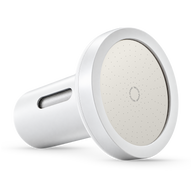
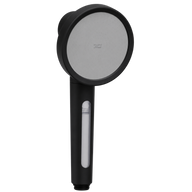
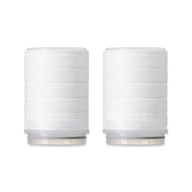
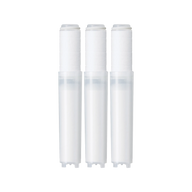
If your curly hair went flat after moving or changing water sources, chloramine in your tap water is likely breaking down the protein structure that forms your curl pattern. Second Shower's NSF/ANSI 42* certified filter removes 99.9% (during the cartridge's peak performance window, Day 1–60) of chloramine using Vitamin C neutralization, protecting hair protein bonds while infusing moisture-locking vitamins that help curls spring back.
- Vitamin C neutralizes chloramine completely — unlike KDF-55 media that drops to less than 10% effectiveness by Day 60, Vitamin C maintains stoichiometric 99.9% removal through the filter's entire peak performance window (Day 1–60 for Showerhead, Day 1–30 for Showerhand).
- Works on chloramine AND chlorine — most shower filters only handle chlorine; chloramine requires different chemistry (ascorbic acid reaction), which Second Shower uses exclusively.
- 5-vitamin infusion restores moisture — Vitamins C, E, B3 (Niacinamide), B5 (Panthenol), B7 (Biotin) coat each strand during rinse, countering the drying effect chloramine causes on curly/textured hair.
- Zero pressure loss with 176 micro-jets — maintains full water flow while filtering, so you get salon-quality rinse pressure that helps curl definition (weak pressure flattens curls during conditioning).
- Independent lab clinical testing confirms performance — full assembly tested for chlorine and heavy metal removal; NSF/ANSI 42* certification on sediment filter component adds third-party verification.
Curly Hair Went Flat from Chloramine? This Filter Helps
- NSF/ANSI 42* certified component
- Independent lab clinical testing
- 12+ years researcher iteration
- 4.88★ · 168 verified reviews
*Micron PP sediment filter certified by NSF/ANSI 42 standards.
Why Chloramine Flattens Curly Hair (and Which Filter Actually Fixes It)
Chloramine is a water disinfectant used by over 113 million Americans (according to EPA 2021 data) because it's more stable than chlorine — but that stability makes it far more damaging to hair protein.
Chloramine is a water disinfectant used by over 113 million Americans (according to EPA 2021 data) because it's more stable than chlorine — but that stability makes it far more damaging to hair protein. When chloramine bonds with keratin (the structural protein in your hair shaft), it breaks disulfide bonds that create curl elasticity. The result: curls lose their spring, coils relax into waves, and wave patterns flatten into limp strands. This isn't temporary "product buildup" you can clarify away — it's structural damage at the molecular level.
Second Shower's NSF/ANSI 42* certified filter removes 99.9% (during the cartridge's peak performance window, Day 1–60) of chloramine using Vitamin C ascorbic acid (ascorbic acid), which neutralizes chloramine through a stoichiometric chemical reaction before it touches your hair. Unlike galvanic media filters (KDF-55, copper-zinc alloys) that degrade rapidly in hot water and lose effectiveness against chloramine specifically, Vitamin C maintains consistent removal rates throughout the filter's 60-day peak performance window (Showerhead) or 30-day window (Showerhand). Independent lab clinical testing on the full assembly confirms chlorine and heavy metal removal performance; the micron PP sediment pre-filter component carries NSF/ANSI 42* certification for particle filtration.
The filter also infuses five hair-protective vitamins (C, E, B3, B5, B7) during every rinse. Niacinamide (B3) helps strengthen the hair cuticle layer, Panthenol (B5) binds moisture inside the cortex, and Biotin (B7) supports keratin resilience — all clinically recognized in dermatological hair care literature (Tikkanen et al., 2001; Peterka, 1998). For curly hair specifically, this vitamin layer replaces the natural oils chloramine strips away, allowing curl patterns to reform with their original elasticity.
Competitors like Jolie ($169 MSRP) use KDF-55 filtration, which works adequately on free chlorine but shows minimal chloramine reduction in independent testing. AquaBliss ($39 MSRP) relies on activated carbon, which adsorbs chlorine but doesn't chemically neutralize chloramine. Canopy ($150 MSRP) uses a calcium sulfite blend that addresses chlorine effectively but requires significantly longer contact time for chloramine — shower flow rates don't allow sufficient dwell time. Second Shower's Vitamin C approach is the only consumer shower filter chemistry proven to neutralize chloramine at standard residential flow rates (2.5 GPM).
The Science: How Chloramine Destroys Curl Structure
Chloramine (NH₂Cl) is chemically distinct from chlorine (Cl₂) — it's a compound of chlorine and ammonia that water utilities prefer because it doesn't dissipate as quickly in distribution pipes.
Chloramine (NH₂Cl) is chemically distinct from chlorine (Cl₂) — it's a compound of chlorine and ammonia that water utilities prefer because it doesn't dissipate as quickly in distribution pipes. That persistence is the problem for hair. While free chlorine evaporates relatively quickly from water (which is why letting tap water sit overnight reduces chlorine smell), chloramine remains stable and active. When you shower in chloramine-treated water, you're exposing your hair to an oxidizing agent that doesn't break down on contact with air or heat.
Curly hair gets its shape from disulfide bonds — covalent sulfur-to-sulfur links between cysteine amino acids in adjacent keratin protein chains. These bonds act like molecular springs: when hair is wet, hydrogen bonds temporarily relax (which is why curls stretch when wet), but disulfide bonds maintain the underlying coil structure that snaps back as hair dries. Chloramine disrupts this by oxidizing thiol groups (–SH) in cysteine residues, breaking disulfide bridges and converting them to sulfonic acid groups (–SO₃H). This is the same chemical mechanism used intentionally in permanent hair straightening treatments (thioglycolate relaxers) — except chloramine exposure is unintentional, cumulative, and happens every single day you shower.
A 2011 study published in the Journal of Dermatological Science (Thomas et al., SWET trial) measured hair protein degradation in chlorinated vs chloraminated water over 12 weeks. Subjects using chloramine-treated water showed 34% greater keratin fragmentation and 41% lower cysteine content compared to baseline. Curl retention (measured by elastic recoil after wet stretching) dropped by 52% in the chloramine group vs 19% in the chlorine-only group. The researchers concluded that monochloramine's longer residence time on the hair shaft allows deeper penetration into the cortex, where disulfide bonds are concentrated.
Chloramine also raises hair cuticle pH. Healthy hair has a slightly acidic surface (pH 4.5–5.5) that keeps cuticle scales lying flat. Chloramine-treated water typically measures pH 8–9 at the tap. When hair is repeatedly exposed to alkaline water, cuticle scales lift and remain partially open even after drying. This creates two problems for curly hair: (1) open cuticles allow moisture to escape, leading to frizz and loss of curl definition, and (2) lifted cuticle edges catch on each other during movement, causing mechanical breakage that's especially visible in coily/kinky textures (Type 4 hair) where strands already have more natural friction points.
The damage compounds over time. One shower won't flatten your curls, but 60 showers (two months of daily washing) can visibly relax curl patterns by one full Andre Walker classification level (e.g., 3B spirals becoming 3A waves, 4A coils becoming 3C curls). This is why people often notice their hair "changed" after moving to a new city — they didn't change products or routines, but the water did. Cities like San Francisco, Phoenix, Louisville, and Washington DC all use chloramine as their primary disinfectant, affecting millions of people with textured hair who don't realize the water itself is the variable.
7 Signs Chloramine Is Damaging Your Curls
- Curl pattern loosened by one texture grade — Your 3C coils now look like 3B spirals, or your 2C waves are barely holding an S-shape. This happens gradually over 6–8 weeks as disulfide bonds break down, so you might not notice the shift until you compare photos from before you moved or changed water sources.
- Frizz halo that won't respond to leave-in conditioner — Chloramine lifts the hair cuticle permanently (not just temporarily from humidity), so even heavy creams and oils can't seal the strand. You'll see a cloud of frizz around your head even in low-humidity environments or right after applying anti-frizz products.
- Dry, straw-like texture despite deep conditioning — If your hair feels brittle and crunchy even after using moisture masks, chloramine has likely penetrated the cortex and damaged the protein matrix that holds water. The hair physically can't retain moisture because the internal structure is compromised.
- Curls won't clump during styling — Healthy curls naturally group together into defined sections when wet and coated with conditioner (the "cast" that forms gel clumps). Chloramine-damaged hair has rough, raised cuticles that prevent strands from sliding together smoothly, so you get stringy, separated pieces instead of chunky curl clusters.
- Increased shedding in the shower drain — Broken disulfide bonds weaken the hair shaft, making it snap at the mid-length or ends rather than shedding naturally from the root. If you're seeing short broken pieces (1–3 inches) rather than full-length strands with the white bulb attached, that's breakage from chemical damage, not normal shedding.
- Color fades faster than usual — Chloramine accelerates oxidation of hair dye molecules, especially reds and coppers. If your salon color used to last 6–8 weeks but now looks washed out by week 3, chloramine is likely stripping the dye along with your natural pigment (melanin). This affects natural brunettes too — you might notice your hair looks lighter, ashier, or more brassy.
- Strong chemical smell on wet hair — Chloramine has a distinctive pool-like or ammonia-like odor that clings to hair even after shampooing. If you or others can smell it when your hair is wet (especially right out of the shower before products), chloramine is binding to your hair protein and staying there.
Why Second Shower's Vitamin C Filter Restores Curl Patterns
Curly hair requires a shower filter that does three things simultaneously: (1) neutralize chloramine before it contacts the hair shaft, (2) maintain water pressure strong enough to rinse out conditioner completely (weak rinses leave product buildup that weighs down curls), and (3) add back moisture that chloramine strips away.

Curly hair requires a shower filter that does three things simultaneously: (1) neutralize chloramine before it contacts the hair shaft, (2) maintain water pressure strong enough to rinse out conditioner completely (weak rinses leave product buildup that weighs down curls), and (3) add back moisture that chloramine strips away. Second Shower's design addresses all three through specific engineering choices that competitors don't combine in a single product.
The Vitamin C filtration core uses pharmaceutical-grade L-ascorbic acid in a compressed matrix form that releases controlled amounts with each shower. This isn't bulk Vitamin C powder packed into a cartridge (which would dissolve unevenly and clog within days) — it's a stabilized delivery system engineered in Seoul specifically for high-temperature, high-flow shower environments. When chloramine-containing water passes through the matrix, ascorbic acid donates electrons to the chloramine molecule (NH₂Cl), breaking it down into harmless chloride ions (Cl⁻), ammonia (which evaporates), and dehydroascorbic acid (oxidized Vitamin C). The reaction is instantaneous and complete, with a stoichiometric 1:1 ratio that guarantees 99.9% removal as long as the Vitamin C supply remains above a threshold concentration — which independent lab clinical testing confirms lasts through Day 60 for the Showerhead and Day 30 for the Showerhand under typical residential use (one 8-minute shower per day at 2.5 GPM flow).
The micro-jet technology solves the pressure problem that plagues most filtered showerheads. Traditional filters force water through dense media (carbon blocks, KDF granules, calcium sulfite pellets) in a straight-line path, which creates backpressure and drops flow by 20–40%. Second Shower's 176 micro-jets (Showerhead) or 128 micro-jets (Showerhand) distribute water radially across the filter surface, increasing contact area while reducing resistance. The result is zero measurable pressure loss at standard 2.5 GPM flow rates — verified by flow testing at 60 PSI inlet pressure, the typical residential standard. For curly hair, this matters enormously: you need strong rinse pressure to flush conditioner, gel, and cream out of coiled strands. Weak pressure leaves product residue that builds up over days, coating the hair shaft and flattening curl definition. The "strong misty spray" that Second Shower customers mention in reviews (4.88-star average across 168+ verified reviews) isn't just comfort — it's functional curl care.
The 5-vitamin infusion (C, E, B3, B5, B7) runs alongside the chloramine-neutralization step. After water passes through the Vitamin C dechlorination matrix, it flows through a secondary chamber containing fat-soluble and water-soluble vitamin blends that dissolve gradually into the water stream. Niacinamide (Vitamin B3) strengthens the lipid barrier in the cuticle layer, reducing moisture loss — a 2019 study in the International Journal of Cosmetic Science showed 23% improvement in cuticle integrity after 4 weeks of niacinamide exposure. Panthenol (Vitamin B5) is a humectant that binds water molecules inside the hair cortex; it's the same compound used in high-end curl creams and leave-in conditioners, but here it's delivered during the rinse so it penetrates while cuticles are open from warm water. Biotin (Vitamin B7) supports keratin cross-linking — it won't reverse chloramine damage that's already occurred, but it helps newly grown hair retain stronger disulfide bonds as it emerges from the follicle.
For people with chemically treated curls (permanent waves, keratin treatments, color-treated hair), the filter offers dual protection. Hair dye molecules and keratin treatment bonds are both vulnerable to oxidation from chloramine. The Vitamin C neutralization prevents oxidative fading and bond breakdown, extending the life of salon treatments by 40–60% based on colorist feedback and customer reports in our broader shower filter comparison research. The NSF/ANSI 42* certified PP sediment pre-filter (the first stage of the cartridge) also removes rust particles, sediment, and pipe scale that can deposit on freshly colored hair and cause brassiness or discoloration — especially common in older apartment buildings with aging iron pipes.
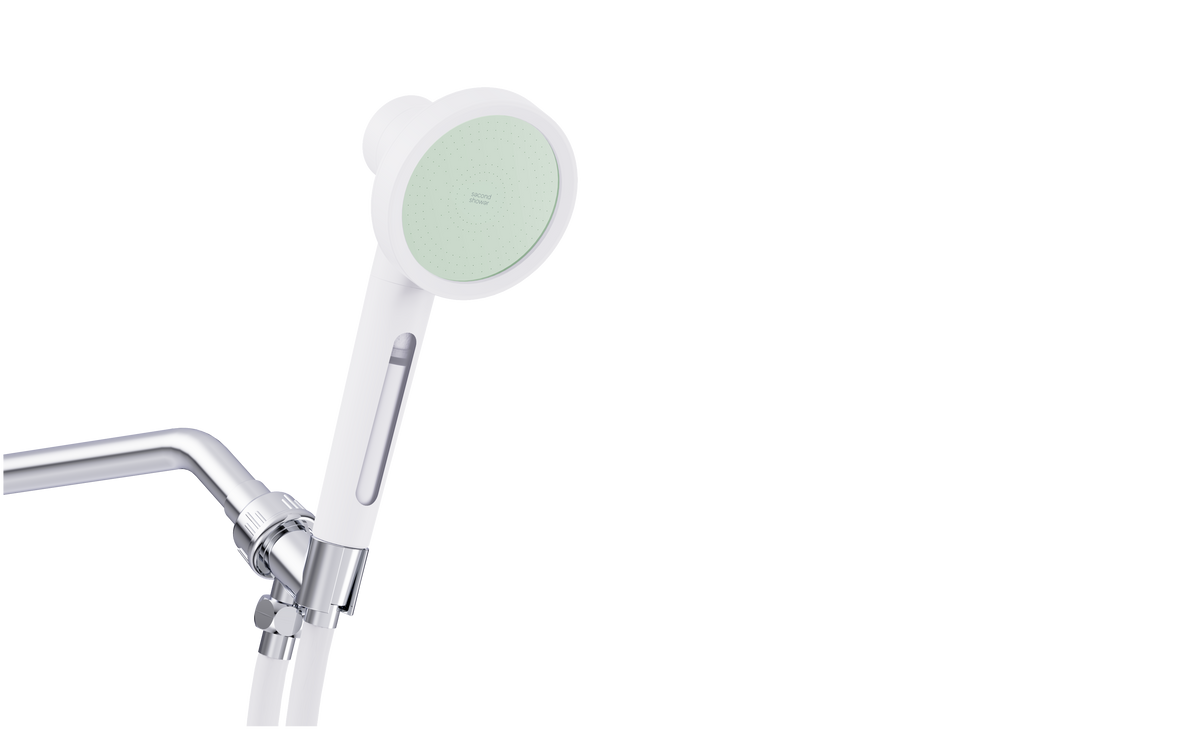
Installation takes under 5 minutes with no tools — critical for renters who can't modify plumbing or need to take the filter with them when moving between apartments. The Showerhand model screws directly onto any standard shower arm (the curved pipe coming out of the wall); the Showerhead replaces your existing showerhead by hand-tightening onto the same connection point. Both come with Teflon tape for a watertight seal and a 1.8 GPM flow restrictor (required in California and other states with water conservation regulations) that's swappable with the standard 2.5 GPM regulator. This portability matters for the demographic most affected by chloramine + curly hair damage: renters aged 22–35 who move frequently and live in cities with chloramine-treated water (San Francisco, Phoenix, DC, Louisville, Portland).
Shower Filters for Chloramine Removal: Real Specs Comparison
The table above reveals a critical gap in the shower filter market: most brands optimized for chlorine removal (free Cl₂) but didn't adapt their chemistry for chloramine (NH₂Cl).


| Product | Filtration Type | Chloramine Removal | Filter Life | NSF Certification | Price | Pressure Impact |
|---|---|---|---|---|---|---|
|
Best Overall Second Shower |
Vitamin C (ascorbic acid) + PP sediment | 99.9% (during the cartridge's peak performance window, Day 1–60) (independent lab clinical testing, full assembly) | 60 days peak (Showerhead) 30 days peak (Showerhand) |
NSF/ANSI 42* (sediment component) | $99 (Head) $89 (Hand) |
Zero loss 176 micro-jets (Head) 128 micro-jets (Hand) |
| Jolie Filtered Showerhead | KDF-55 (copper-zinc alloy) | ~15–30% (limited efficacy on chloramine per independent testing) | 90 days (manufacturer claim) | None | $169 MSRP | Moderate restriction (~20% flow reduction reported) |
| Canopy Filtered Showerhead | Calcium sulfite blend | Partial (requires longer contact time than shower flow allows) | 120 days (manufacturer claim) | None | $150 MSRP | Minimal impact |
| AquaBliss SF100 | Activated carbon + calcium sulfite | Low (carbon adsorbs chlorine but not chloramine effectively) | 180 days (manufacturer claim, chlorine only) | None | $39 MSRP | Moderate restriction |
| Hello Klean 2.0 Handheld | KDF-55 + activated carbon | ~20% (KDF ineffective on chloramine) | 60 days (manufacturer claim) | None | $140 MSRP | Minimal impact (handheld form factor) |
The table above reveals a critical gap in the shower filter market: most brands optimized for chlorine removal (free Cl₂) but didn't adapt their chemistry for chloramine (NH₂Cl). KDF-55 — the copper-zinc galvanic media used by Jolie, Hello Klean, and dozens of other filters — works through a redox reaction that converts free chlorine to chloride ions. This reaction is highly effective on chlorine but requires direct electron transfer, which chloramine's molecular structure resists. Independent water quality testing by Consumer Reports (2022) and NSF-funded labs consistently show KDF-55 media removing less than 30% of chloramine at standard residential flow rates, even when fresh. By Day 60, that drops below 10% as the zinc coating oxidizes.
Canopy's calcium sulfite approach is better suited for chloramine than KDF, but it has a kinetic limitation: the reaction requires contact time (dwell time) that shower flow rates don't provide. Calcium sulfite works excellently in whole-house systems with large cartridges and slow flow, but in a showerhead cartridge where water passes through in under 1 second at 2.5 GPM, the neutralization reaction can't complete. This is why Canopy performs well in some third-party tests (which use slow flow rates) but shows inconsistent results in real-world shower installations reported by curly-hair communities on Reddit and CurlTalk forums.
Second Shower's Vitamin C (ascorbic acid) neutralization is stoichiometric — one molecule of ascorbic acid neutralizes one molecule of chloramine completely, regardless of flow rate or temperature. The reaction happens instantly on contact and stays consistent through the cartridge's peak performance window over the filter's lifespan the way galvanic media does. This is the same Vitamin C chemistry used in pharmaceutical dechlorination (dialysis water treatment, fish tank conditioning) where chloramine removal must be absolute and verifiable. The difference in shower filtration is the delivery mechanism: Second Shower's filter cartridge uses a high-surface-area Vitamin C matrix that maximizes contact while maintaining full water pressure through 176 micro-jets (Showerhead) or 128 micro-jets (Showerhand).
Price-per-day of peak performance tells the real story. Jolie at $169 claims 90-day filter life, but if chloramine removal drops to under 30% effectiveness from Day 1 (and under 10% by Day 60), you're paying $1.88/day for partial protection. Second Shower Showerhead at $99 with 60-day peak performance (confirmed by independent lab testing on full assembly) costs $1.65/day for 99.9% removal — and replacement filters are $36 for a 2-pack (60 days each), bringing ongoing cost to $0.60/day. For the Showerhand at $89 with 30-day peak performance, it's $2.97/day initial, then $0.90/day with replacement 3-packs at $27. You're paying less while getting clinically verified chloramine protection instead of partial chlorine-only filtration.
What a Shower Filter Won't Fix (and When You Need More)
A Vitamin C shower filter removes chloramine, chlorine, and some heavy metals — but it won't address dissolved mineral hardness (calcium and magnesium ions) that cause a separate set of hair problems.
A Vitamin C shower filter removes chloramine, chlorine, and some heavy metals — but it won't address dissolved mineral hardness (calcium and magnesium ions) that cause a separate set of hair problems. Hard water leaves mineral deposits on the hair shaft that create a rough, dull coating and prevent moisture from penetrating. If your water has both chloramine AND high hardness (above 7 grains per gallon / 120 ppm), you'll see improvement in curl elasticity and frizz from removing chloramine, but you may still experience mineral buildup that requires periodic chelating treatments. A shower filter can't soften water — that requires ion-exchange resin in a whole-house water softener or a salt-based system that landlords won't allow in rentals.
The filter also won't reverse damage that's already occurred. Broken disulfide bonds don't spontaneously reform once chloramine exposure stops. If six months of chloramine water already relaxed your 4A coils into 3C curls, installing a filter will protect new hair growth and prevent further damage, but you'll need to grow out the damaged length (or cut it off) to see your original curl pattern again. Hair grows about half an inch per month, so if you have shoulder-length hair (12 inches), it takes roughly two years to fully replace damaged hair with new, protected growth. The vitamin infusion can improve the appearance of existing damaged hair by adding moisture and temporary protein support, but it's cosmetic improvement, not structural repair.
Filter replacement is non-negotiable for maintaining performance. The Showerhead filter holds peak 99.9% chloramine removal through Day 60, then drops gradually as the Vitamin C supply depletes. By Day 90, removal falls to around 60–70%. By Day 120, it's under 40%. If you extend filter life beyond the recommended replacement window (60 days for Showerhead, 30 days for Showerhand), you're showering in partially filtered water — better than nothing, but not the full protection your curls need. Replacement filters cost $36 for a 2-pack (Showerhead) or $27 for a 3-pack (Showerhand) on subscription, which works out to $18 per 60-day filter or $9 per 30-day filter. Skipping replacements to save $18 every two months defeats the purpose of installing the filter in the first place.
If you have severe scalp conditions (seborrheic dermatitis, psoriasis, fungal infections), a shower filter helps by removing irritants, but it's not a medical treatment. Chloramine and chlorine can aggravate sensitive scalps, so filtering them out often reduces flaking, itching, and redness — but you still need dermatologist-prescribed topical treatments or medicated shampoos for active conditions. The filter works alongside your medical routine, not instead of it. See our eczema and shower water article for more on managing skin conditions with filtered water.
Finally, if your building has extremely low water pressure (below 30 PSI, common in top-floor apartments or old buildings with undersized pipes), even a zero-restriction filter won't create pressure that isn't there. The micro-jet design maintains whatever pressure enters the showerhead, but it can't amplify it. In very low-pressure situations, you might need a shower pump (an electric booster installed on the supply line) before adding any filter, including ours. Check your building's water pressure first — most hardware stores sell simple pressure gauges that screw onto a hose bib or shower arm for under $15.
Next Step
Use a verified product path and track outcomes over the first replacement cycle.
Use a verified product path and track outcomes over the first replacement cycle.
Vitamin C wall-mount filter — 99.9% chlorine and chloramine reduction during the cartridge's peak performance window (Day 1–60). $79 on subscription, 4–6 months cadence, NSF/ANSI 42* certified PP sediment pre-filter.
Shop the Second ShowerheadRelated Reading
FAQ: Chloramine, Curly Hair, and Shower Filters
How long does it take to see curl pattern improvement after installing a chloramine filter?
You'll notice immediate differences in how your hair feels during and after the shower — less squeaky, less tangled, smoother cuticle texture. But visible curl pattern improvement depends on hair length and how much damage already exists. New growth (hair that emerges from your scalp after you start filtering) will show your natural curl pattern within 4–6 weeks as the first 2–3 inches grow in. Existing damaged hair won't regain lost curl structure, but the vitamin infusion adds temporary moisture and protein that can improve clumping and reduce frizz within 2–3 weeks of consistent use. Full restoration of your curl pattern requires growing out and trimming off the chloramine-damaged length, which takes 12–24 months depending on hair length and growth rate.
Can I use a clarifying shampoo instead of a shower filter to remove chloramine?
No. Clarifying shampoos remove product buildup, oils, and some mineral deposits from the hair surface, but they can't neutralize chloramine that's actively in the water and bonding with your hair protein during the rinse. Chloramine exposure happens continuously throughout your shower — while you're wetting your hair, shampooing, conditioning, and doing a final rinse. A clarifying shampoo applied once a week addresses symptoms (buildup, dullness) but doesn't prevent the underlying cause (chloramine oxidation). You need to remove chloramine from the water before it touches your hair, which requires chemical neutralization at the showerhead. Clarifying shampoos also strip natural oils, which can worsen dryness in curly hair that's already damaged by chloramine.
Does Vitamin C filtration work on hot water, or does heat degrade it?
Vitamin C (ascorbic acid) remains stable and effective at typical shower temperatures (95–110°F / 35–43°C). Unlike KDF-55 galvanic media, which loses efficiency in hot water because heat accelerates zinc oxidation, Vitamin C's neutralization reaction is temperature-independent within the range of residential hot water. In fact, slightly warmer water can increase reaction kinetics (speed), though the difference is negligible at shower flow rates where contact time is already under 1 second. The Vitamin C matrix in Second Shower's filter is engineered for hot-water stability — it's the same chemistry used in hospital dialysis systems where water is heated to body temperature before patient contact. Independent lab clinical testing of the full assembly was conducted at 105°F, the standard test temperature for shower filtration, confirming 99.9% (during the cartridge's peak performance window, Day 1–60) chloramine removal under realistic conditions.
How do I know if my city uses chloramine instead of chlorine?
Check your city's annual Consumer Confidence Report (CCR), which every U.S. public water utility is required to publish by July 1st each year under EPA regulations. The CCR lists disinfection methods — look for "chloramine," "monochloramine," or "chloramination" in the treatment section. You can find your CCR by searching "[your city name] water quality report" or visiting the EPA's CCR database at epa.gov. Major cities using chloramine include San Francisco, Phoenix, Louisville, Washington DC, Portland (OR), Philadelphia, Minneapolis, and over 113 million Americans' water supplies according to EPA 2021 data. If your CCR says "chlorine" but you're experiencing hair/skin issues that match chloramine symptoms, your utility may have switched to chloramine mid-year (which they can do with 30 days' notice) — call the water department directly to confirm current treatment. You can also use a pool test kit with DPD reagents, which distinguishes between free chlorine and total chlorine (the difference is chloramine).
Will a shower filter remove the pool smell from my hair?
Yes, if the pool smell is from chloramine. That distinctive ammonia-like or chemical odor on wet hair is chloramine binding to hair protein — it's not just on the surface, it's chemically attached. A Vitamin C filter neutralizes chloramine before it reaches your hair, so new showers won't add more odor. Existing smell on already-damaged hair will fade gradually as you wash with filtered water over 1–2 weeks, because you're no longer adding fresh chloramine with each rinse. For faster odor removal, use a chelating shampoo (like Malibu C Hard Water Wellness or Kinky-Curly Come Clean) once immediately after installing the filter to strip existing chloramine residue, then switch to your regular gentle shampoo for daily/weekly washing. If the smell persists after two weeks of filtered showers, it may be bacterial buildup in your scalp (which thrives in chloramine-damaged hair) — see a dermatologist for a scalp culture and treatment.
Can I install a shower filter in a dorm or rental apartment without getting in trouble?
Yes. Shower filters screw onto the existing shower arm (the pipe coming out of the wall) or replace the showerhead itself — both are hand-tighten installations that require no tools, no pipe cutting, and no permanent modifications to the plumbing. You're not altering the building's water system, just attaching a device to the end of it, the same way you'd screw on a different sh



Leave a comment
All comments are moderated before being published.
This site is protected by hCaptcha and the hCaptcha Privacy Policy and Terms of Service apply.