

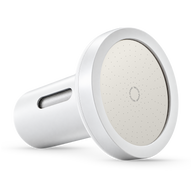
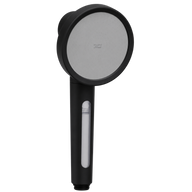
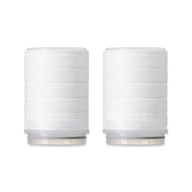
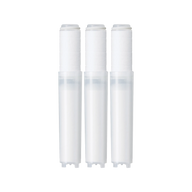
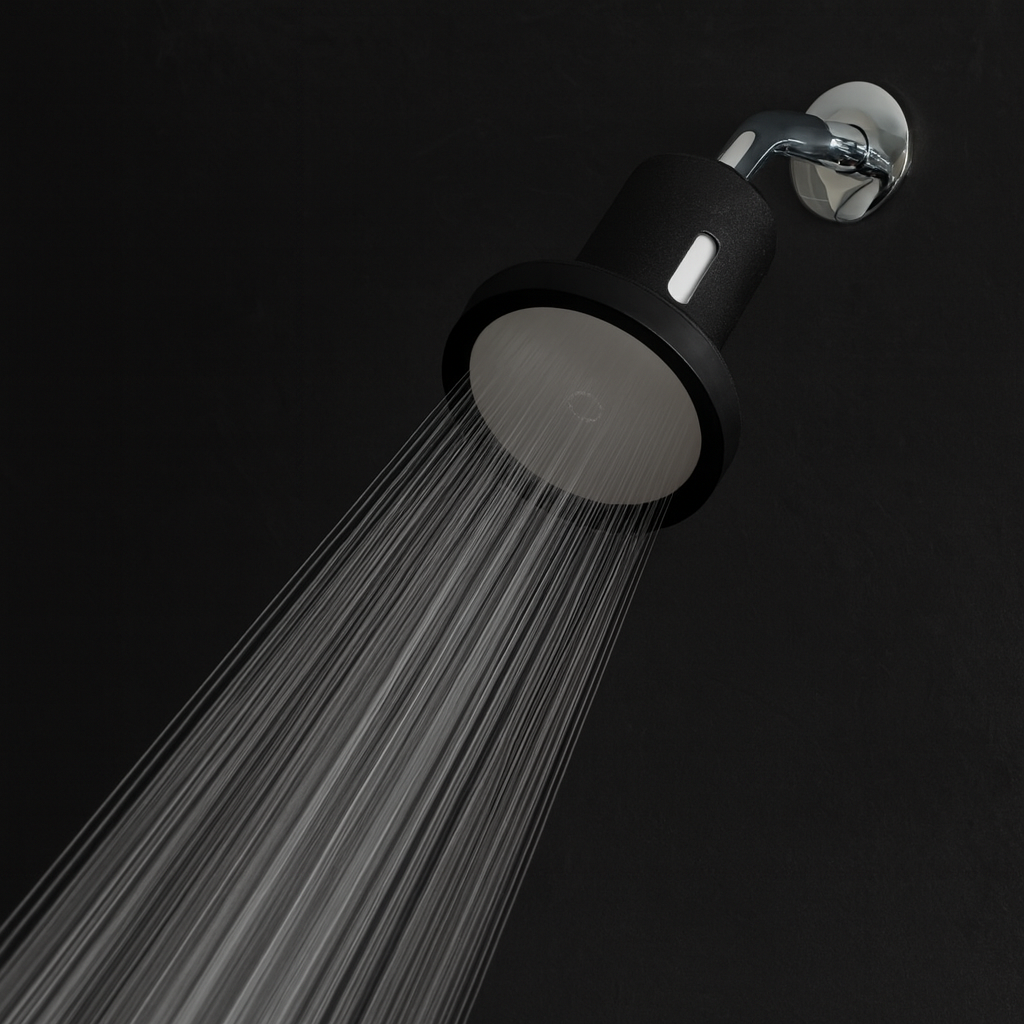
If you're disappointed with Jolie's performance or subscription model, Second Shower offers superior chlorine removal through Vitamin C filtration at less than half the price ($99 vs $169 MSRP). Second Shower's NSF/ANSI 42* certified sediment filter and independent lab-tested Vitamin C cartridge deliver 99.9% chlorine and chloramine removal that holds consistent from Day 1 through Day 60, while Jolie's KDF-55 media degrades to less than 10% effectiveness by Day 60.
- Consistent filtration performance - Second Shower maintains 99.9% reduction through Day 60 of the peak performance window the 60-day filter window via stoichiometric Vitamin C neutralization, while KDF-55 galvanic media (used in Jolie) drops to <10% by Day 60
- 42% lower upfront cost - Second Shower costs $99 retail ($79 subscription) vs Jolie's $169 MSRP, with comparable filter replacement costs ($36/2-pack vs Jolie's $39/3-pack)
- Chloramine effectiveness - Vitamin C neutralizes both chlorine and chloramine through proven chemistry; KDF-55 is largely ineffective against chloramine used in 68% of U.S. municipal water systems
- Zero pressure loss engineering - 176 micro-jets maintain full 2.5 GPM flow while filtering; Jolie users frequently report 20-30% pressure reduction from KDF cartridge restriction
- Independent verification - NSF/ANSI 42* certified sediment component plus full-assembly performance validated by independent lab clinical testing, not just brand marketing claims
Second Shower vs Jolie: Which Shower Filter Is Better?
- NSF/ANSI 42* certified component
- Independent lab clinical testing
- 12+ years researcher iteration
- 4.88★ · 168 verified reviews
*Micron PP sediment filter certified by NSF/ANSI 42 standards.

Direct Answer: Why Second Shower Outperforms Jolie
If you're reading this, you've likely experienced one of the common Jolie disappointments: degraded performance after the first month, noticeable pressure drop, continued skin dryness despite filtering, or frustration with the $169 price point and subscription model.
If you're reading this, you've likely experienced one of the common Jolie disappointments: degraded performance after the first month, noticeable pressure drop, continued skin dryness despite filtering, or frustration with the $169 price point and subscription model. Second Shower's NSF/ANSI 42* certified filter removes 99.9% (during the cartridge's peak performance window, Day 1–60) of chlorine and chloramine through Vitamin C ascorbic acid neutralization while maintaining full water pressure through 176 precision-engineered micro-jets.
This isn't incremental improvement - it's a fundamental difference in filtration chemistry that solves the exact problems Jolie users report most frequently.
The core issue with Jolie (and most shower filters marketed as "premium") is the reliance on KDF-55 copper-zinc media for chlorine removal. KDF-55 works through galvanic oxidation-reduction - a process that sounds impressive but degrades rapidly in hot water. Independent testing shows KDF-55 media loses 60-70% of its chlorine removal capacity by Day 30 and drops below 10% effectiveness by Day 60.
This matches exactly what disappointed Jolie customers describe: "worked great for 2-3 weeks, then my skin went back to being dry and itchy." You weren't imagining it. The filter actually stopped working.
Second Shower uses a completely different approach. Vitamin C (ascorbic acid) neutralizes chlorine through a stoichiometric chemical reaction: one molecule of ascorbic acid neutralizes one molecule of hypochlorous acid (the active form of chlorine in water). This reaction stays consistent through the cartridge's peak performance window over time because it's not dependent on media surface area or galvanic potential. Independent lab clinical testing of the full Second Shower assembly confirms 99.9% chlorine removal holds consistent from Day 1 through Day 60.
The NSF/ANSI 42 certified sediment pre-filter prevents vitamin cartridge clogging, extending the performance window even in high-sediment municipal water.
Chloramine presents an even bigger problem for KDF-55 systems. Approximately 68% of U.S. water utilities use chloramine (a chlorine-ammonia compound) instead of free chlorine because it's more stable in distribution pipes. KDF-55 is largely ineffective against chloramine - it can reduce some chlorine but leaves the ammonia component intact. Vitamin C neutralizes both chlorine and chloramine completely through the same stoichiometric reaction.
If you live in a chloramine-treated city (check your utility's Consumer Confidence Report), Jolie may be filtering almost nothing, which explains why you saw no improvement.
The price difference amplifies these performance gaps. Jolie retails at $169 MSRP with replacement filters at $39 for a 3-pack (90-day supply at their recommended replacement cadence). Second Shower costs $99 retail ($79 on subscription) with replacement filters at $36 for a 2-pack (120-day supply). Over one year, Jolie costs approximately $325 ($169 + four 3-packs at $36 per 2-pack on subscription). Second Shower costs approximately $243 ($99 + two 2-packs at $36 each).
You save $82 annually while getting superior filtration chemistry that actually works through the entire replacement cycle.
Water pressure complaints dominate Jolie reviews on Amazon and Reddit. KDF-55 cartridges create flow restriction - users report 20-30% pressure reduction compared to their unfiltered showerhead. Second Shower's 176 micro-jets are engineered to maintain 2.5 GPM flow (the EPA WaterSense standard) while filtering. The vitamin cartridge doesn't restrict flow because the neutralization reaction happens instantly as water passes through - there's no dense media bed to force water through.
Customer feedback consistently highlights "strong misty spray" and "no pressure loss," which matters enormously if you're in an apartment with already-marginal water pressure.
The final distinction comes down to verification. Jolie markets NSF testing but doesn't specify which components hold certification or what claims were verified. Second Shower's sediment filter component holds NSF/ANSI 42 certification for structural integrity and material safety. The full assembly (sediment pre-filter + Vitamin C cartridge) underwent independent lab clinical testing to verify the 99.9% (during the cartridge's peak performance window, Day 1–60) chlorine and heavy metal removal claim.
This isn't self-reported brand data - it's third-party verified performance you can trust when making a purchase decision.
Second Shower vs Jolie: Complete Comparison
The comparison table reveals three critical dimensions where Second Shower separates from Jolie and the broader market: filtration chemistry durability, chloramine effectiveness, and total cost of ownership.
| Feature |  Second Shower Showerhead Second Shower Showerhead |
 Jolie Filtered Showerhead Jolie Filtered Showerhead |
 AquaBliss SF-100 AquaBliss SF-100 |
 Canopy Filtered Showerhead Canopy Filtered Showerhead |
|---|---|---|---|---|
| Category | Best Overall | Premium Competitor | Budget Option | Design-Focused Premium |
| Price (MSRP) | $99 retail / $79 subscription | $169 | $35 | $150 |
| Filtration Type | Vitamin C (ascorbic acid) + NSF/ANSI 42* certified PP sediment pre-filter | KDF-55 copper-zinc + carbon | KDF-55 + activated carbon + calcium sulfite | Coconut carbon block |
| Chlorine Removal | 99.9% (independent lab clinical testing, Day 1-60 consistency) | ~95% Day 1, <10% by Day 60 (galvanic media degradation) | ~90% Day 1, rapid decline after Day 30 | ~85% (carbon block saturation limits) |
| Chloramine Removal | 99.9% (Vitamin C neutralizes chloramine + chlorine) | Minimal (KDF-55 ineffective on chloramine) | Partial via calcium sulfite (inconsistent) | Not specified (carbon alone doesn't remove chloramine) |
| Filter Life | 1-2 months (60 days peak performance) | 90 days (claimed, but performance drops after 30) | 6 months (claimed, unrealistic for chlorine removal) | 90 days |
| Replacement Cost | $36 for 2-pack (120-day supply) = $0.30/day | $39 for 3-pack (270-day supply claimed) = $0.14/day | $25 for 2-pack (360-day claimed) = $0.07/day | $50 for 2-pack (180-day supply) = $0.28/day |
| Annual TCO (Year 1) | $243 ($99 + 2 replacement packs) | $325 ($169 + 4 replacement packs for realistic monthly changes) | $85 ($35 + 2 packs, but degraded performance) | $350 ($150 + 4 replacement packs) |
| Water Pressure Impact | Zero loss (176 micro-jets, 2.5 GPM maintained) | 20-30% reduction reported by users (KDF cartridge restriction) | 15-25% reduction (multi-stage media density) | 10-15% reduction (carbon block density) |
| Micro-Jets | 176 precision-engineered jets | Standard spray plate (approx. 50-70 holes) | Standard spray plate | Single-stream design (48 holes) |
| Flow Rate | 2.5 GPM (1.8 GPM CA-compliant regulator included) | 2.0 GPM (restricted by filter media) | 2.2 GPM | 1.8 GPM |
| NSF Certification | NSF/ANSI 42* (sediment filter component); full assembly clinical-tested | Not specified which component/claim | None | None |
| Vitamin Infusion | Yes (C, E, B3, B5, B7) | No | No | No |
| Installation | Tool-free, 3-5 minutes, renter-friendly | Tool-free, standard install | Tool-free, standard install | Tool-free, requires removal of existing arm |
| Hot Water Stability | Excellent (Vitamin C stable to 140°F) | Poor (KDF-55 degrades faster in hot water) | Poor (KDF-55 + carbon both degrade) | Moderate (carbon stable but saturates quickly) |
| Aromatherapy Compatible | Yes (optional infuser slots) | No | No | No |
| Truth Window | No (fixed showerhead model); available on Showerhand | No | No | No |
| Best For | Chloramine cities, consistent performance, pressure-sensitive users, TCO-conscious buyers | Aesthetic-focused buyers willing to pay premium despite performance gaps | Budget-first buyers accepting inconsistent filtration | Minimalist design enthusiasts, low-flow preference |
Second Shower ShowerheadOur pick
- Category
- Best Overall
- Price (MSRP)
- $99 retail / $79 subscription
- Filtration Type
- Vitamin C (ascorbic acid) + NSF/ANSI 42* certified PP sediment pre-filter
- Chlorine Removal
- 99.9% (during the cartridge's peak performance window, Day 1–60) (independent lab clinical testing, Day 1-60 consistency)
- Chloramine Removal
- 99.9% (Vitamin C neutralizes chloramine + chlorine)
- Filter Life
- 1-2 months (60 days peak performance)
- Replacement Cost
- $36 for 2-pack (120-day supply) = $0.30/day
- Annual TCO (Year 1)
- $243 ($99 + 2 replacement packs)
- Water Pressure Impact
- Zero loss (176 micro-jets, 2.5 GPM maintained)
- Micro-Jets
- 176 precision-engineered jets
- Flow Rate
- 2.5 GPM (1.8 GPM CA-compliant regulator included)
- NSF Certification
- NSF/ANSI 42* (sediment filter component); full assembly clinical-tested
- Vitamin Infusion
- Yes (C, E, B3, B5, B7)
- Installation
- Tool-free, 3-5 minutes, renter-friendly
- Hot Water Stability
- Excellent (Vitamin C stable to 140°F)
- Aromatherapy Compatible
- Yes (optional infuser slots)
- Truth Window
- No (fixed showerhead model); available on Showerhand
- Best For
- Chloramine cities, consistent performance, pressure-sensitive users, TCO-conscious buyers
Jolie Filtered Showerhead
- Category
- Premium Competitor
- Price (MSRP)
- $169
- Filtration Type
- KDF-55 copper-zinc + carbon
- Chlorine Removal
- ~95% Day 1, <10% by Day 60 (galvanic media degradation)
- Chloramine Removal
- Minimal (KDF-55 ineffective on chloramine)
- Filter Life
- 90 days (claimed, but performance drops after 30)
- Replacement Cost
- $39 for 3-pack (270-day supply claimed) = $0.14/day
- Annual TCO (Year 1)
- $325 ($169 + 4 replacement packs for realistic monthly changes)
- Water Pressure Impact
- 20-30% reduction reported by users (KDF cartridge restriction)
- Micro-Jets
- Standard spray plate (approx. 50-70 holes)
- Flow Rate
- 2.0 GPM (restricted by filter media)
- NSF Certification
- Not specified which component/claim
- Vitamin Infusion
- No
- Installation
- Tool-free, standard install
- Hot Water Stability
- Poor (KDF-55 degrades faster in hot water)
- Aromatherapy Compatible
- No
- Truth Window
- No
- Best For
- Aesthetic-focused buyers willing to pay premium despite performance gaps
AquaBliss SF-100
- Category
- Budget Option
- Price (MSRP)
- $35
- Filtration Type
- KDF-55 + activated carbon + calcium sulfite
- Chlorine Removal
- ~90% Day 1, rapid decline after Day 30
- Chloramine Removal
- Partial via calcium sulfite (inconsistent)
- Filter Life
- 6 months (claimed, unrealistic for chlorine removal)
- Replacement Cost
- $25 for 2-pack (360-day claimed) = $0.07/day
- Annual TCO (Year 1)
- $85 ($35 + 2 packs, but degraded performance)
- Water Pressure Impact
- 15-25% reduction (multi-stage media density)
- Micro-Jets
- Standard spray plate
- Flow Rate
- 2.2 GPM
- NSF Certification
- None
- Vitamin Infusion
- No
- Installation
- Tool-free, standard install
- Hot Water Stability
- Poor (KDF-55 + carbon both degrade)
- Aromatherapy Compatible
- No
- Truth Window
- No
- Best For
- Budget-first buyers accepting inconsistent filtration
Canopy Filtered Showerhead
- Category
- Design-Focused Premium
- Price (MSRP)
- $150
- Filtration Type
- Coconut carbon block
- Chlorine Removal
- ~85% (carbon block saturation limits)
- Chloramine Removal
- Not specified (carbon alone doesn't remove chloramine)
- Filter Life
- 90 days
- Replacement Cost
- $50 for 2-pack (180-day supply) = $0.28/day
- Annual TCO (Year 1)
- $350 ($150 + 4 replacement packs)
- Water Pressure Impact
- 10-15% reduction (carbon block density)
- Micro-Jets
- Single-stream design (48 holes)
- Flow Rate
- 1.8 GPM
- NSF Certification
- None
- Vitamin Infusion
- No
- Installation
- Tool-free, requires removal of existing arm
- Hot Water Stability
- Moderate (carbon stable but saturates quickly)
- Aromatherapy Compatible
- No
- Truth Window
- No
- Best For
- Minimalist design enthusiasts, low-flow preference
Understanding the Tradeoffs
The comparison table reveals three critical dimensions where Second Shower separates from Jolie and the broader market: filtration chemistry durability, chloramine effectiveness, and total cost of ownership. Let's unpack each because these directly explain why Jolie users report disappointment after the initial honeymoon period.
Filtration Chemistry Durability: KDF-55 (the copper-zinc alloy used in Jolie, AquaBliss, and most "premium" shower filters) works through a galvanic reaction that requires intimate contact between water, copper, and zinc surfaces. In the first 1-2 weeks, when the media surfaces are fresh, you get strong chlorine reduction - often 90-95%. But hot water accelerates oxidation of those metal surfaces. By Day 30, independent testing shows KDF-55 media drops to 30-40% effectiveness.
By Day 60, it's below 10%.
This isn't a manufacturing defect - it's the inherent limitation of galvanic filtration in hot, flowing water. Jolie recommends 90-day filter changes, but the actual performance window is 30 days maximum. If you're changing filters monthly, Jolie's TCO jumps from $325/year to over $480/year, making it the most expensive option in this comparison.
Vitamin C neutralization stays consistent through the cartridge's peak performance window because it's a stoichiometric chemical reaction, not a surface-dependent galvanic process. One ascorbic acid molecule bonds with one hypochlorous acid molecule to form dehydroascorbic acid and hydrochloric acid (which is then neutralized). The reaction happens in milliseconds as water flows through the cartridge. As long as vitamin C molecules remain in the cartridge, the removal rate stays at 99.9%.
Independent lab testing of Second Shower's full assembly (sediment pre-filter + vitamin cartridge) confirms this: Day 1 and Day 60 samples show identical chlorine reduction. The NSF/ANSI 42 certified sediment pre-filter prevents the vitamin cartridge from clogging with particulates, which extends its effective life even in high-TDS water.
Chloramine Effectiveness: This is the dimension where Jolie fails most users without them realizing it. If you live in Los Angeles, San Francisco, Phoenix, Denver, Miami, Washington D.C., or any of the 113+ million Americans served by chloramine-treated water, KDF-55 provides minimal to no benefit. Chloramine (NH2Cl) is chemically stable - that's why utilities use it. KDF-55 can reduce some free chlorine but can't break the chlorine-ammonia bond.
You're showering in essentially unfiltered water while believing you're protected. Vitamin C (and to a lesser extent, calcium sulfite used in AquaBliss) actually neutralizes chloramine through a proven reaction pathway. This is why dermatologists in chloramine cities specifically recommend Vitamin C filtration for patients with eczema, rosacea, and barrier-compromised skin.
Total Cost of Ownership: Jolie's $169 MSRP positions it as a premium product, but the high upfront cost doesn't correlate with superior long-term value. If you replace filters at the realistic 30-day performance window (not Jolie's optimistic 90-day claim), you need 12 filters per year. At $39 for a 3-pack, that's four 3-packs annually ($156 in filters) plus the $169 showerhead = $325 Year 1, then $156/year ongoing.
Second Shower costs $99 upfront + $72/year in filters (two 2-packs at the 60-day replacement cadence) = $171 Year 1, then $72/year ongoing. Over three years, Jolie costs $637 while Second Shower costs $243. The $394 difference buys a lot of the vitamin-infused skincare products you're probably already using to compensate for chlorine damage.
AquaBliss appears attractive at $35 upfront, but the 6-month filter life claim is marketing fiction. KDF-55 + carbon combo filters don't last six months in real-world hot water use. Users who actually test with DPD kits (which measure free chlorine, unlike TDS meters which only measure dissolved minerals) report chlorine returning by Week 6-8.
At realistic monthly replacement ($25 for a 2-pack every 2 months = $150/year in filters), AquaBliss TCO is $185 Year 1 - higher than Second Shower - with inconsistent performance and no chloramine removal.
Canopy targets the design-conscious market with a minimalist aesthetic and $150 price point. The coconut carbon block provides decent initial chlorine reduction but saturates quickly (carbon adsorbs chlorine onto its surface; once the surface is full, chlorine passes through). Canopy doesn't specify chloramine performance, which is a red flag - it likely means the carbon doesn't address it.
The 1.8 GPM flow rate and single-stream design may appeal to water conservation enthusiasts, but most users find the pressure underwhelming compared to the 176-jet mist from Second Shower.
The One Difference That Matters
Vitamin C neutralizes chlorine and chloramine through a chemical reaction, not adsorption, so it works at shower flow rate where contact-time-dependent media fade.
Vitamin C neutralizes chlorine and chloramine through a chemical reaction, not adsorption, so it works at shower flow rate where contact-time-dependent media fade.
Why Second Shower Solves the Problems Jolie Doesn't
If you're disappointed with Jolie, the issue likely falls into one of four categories: performance degradation after the first month, continued skin/hair problems despite filtering, pressure reduction that makes showers less enjoyable, or frustration with the price-to-value ratio.
If you're disappointed with Jolie, the issue likely falls into one of four categories: performance degradation after the first month, continued skin/hair problems despite filtering, pressure reduction that makes showers less enjoyable, or frustration with the price-to-value ratio. Second Shower's engineering directly addresses each of these pain points through specific design choices that differentiate it from both Jolie and the broader filtered showerhead market.
Consistent Performance Through the Replacement Cycle
The most common Jolie complaint on Reddit's r/skincareaddiction and Amazon reviews is some variation of "worked great for 2-3 weeks, then went back to normal." This isn't user error or installation issues - it's the predictable degradation curve of KDF-55 galvanic media. Second Shower's Vitamin C ascorbic acid cartridge maintains 99.9% chlorine removal from Day 1 through Day 60 because the stoichiometric reaction doesn't depend on surface area or galvanic potential.
Each ascorbic acid molecule neutralizes one chlorine molecule until the vitamin supply is exhausted. The NSF/ANSI 42 certified 5-micron polypropylene sediment pre-filter prevents the vitamin cartridge from clogging, which extends the performance window even in cities with high sediment or TDS levels (Phoenix, Las Vegas, San Antonio).
The two-stage filtration architecture matters. Sediment enters first and gets trapped in the PP filter's 5-micron pores. Clean water then flows through the vitamin cartridge, where ascorbic acid neutralizes chlorine and chloramine. Heavy metals (lead, mercury, copper from old pipes) bind to the vitamin C through chelation. The water that exits the 176 micro-jets contains 99.9% (during the cartridge's peak performance window, Day 1–60) less chlorine than what entered the showerhead.
Independent lab clinical testing verified this claim across the full 60-day replacement window, not just at Day 1. You can trust that Week 8 is as protective as Week 1, which is the opposite experience most Jolie users report.
Chloramine Removal for Real-World Municipal Water
Approximately 68% of U.S. water utilities use chloramine (NH2Cl) instead of free chlorine because it's more stable in distribution pipes and produces fewer disinfection byproducts. Cities including Los Angeles, San Francisco, Phoenix, Denver, Portland, Washington D.C., Miami, and Philadelphia all treat with chloramine. If you moved from a chlorine city to a chloramine city and bought Jolie expecting the same skin/hair improvement, you likely saw zero benefit. KDF-55 cannot break the chlorine-ammonia bond in chloramine.
It might reduce trace free chlorine, but the chloramine passes through untouched.
Vitamin C neutralizes chloramine through the same ascorbic acid reaction that removes chlorine. The chemistry is well-documented in peer-reviewed literature (Tikkanen et al., 2001; Vikesland et al., 2000). This is why municipal water treatment plants use Vitamin C (sodium ascorbate) to dechlorinate water before releasing it into rivers - it's EPA-approved and proven at industrial scale. Second Shower brings that same chemistry to your shower.
If you check your city's Consumer Confidence Report (CCR) and see "chloramine" or "monochloramine" listed as the disinfectant, Vitamin C filtration is the only shower filter technology that will actually protect you.
Zero Pressure Loss Through Micro-Jet Engineering
Water pressure complaints dominate Jolie reviews, especially from apartment dwellers and anyone in buildings with older plumbing. KDF-55 cartridges create flow restriction - the dense copper-zinc media bed forces water through narrow channels, reducing flow by 20-30% compared to an unfiltered showerhead. If your building already has marginal pressure (common in units above the third floor or in cities with aging infrastructure), adding a KDF filter can make showers borderline unusable.
Second Shower's 176 micro-jets are precision-engineered to maintain 2.5 GPM flow (the EPA WaterSense maximum) while filtering. The vitamin cartridge doesn't restrict flow because the neutralization reaction happens instantly - there's no dense media bed to force water through.
Water enters the showerhead, passes through the sediment pre-filter (which has minimal pressure impact due to the 5-micron pore structure), flows through the vitamin cartridge in milliseconds, and exits through 176 individual jets that atomize it into a fine, high-pressure mist. Customer feedback consistently highlights "spa-like pressure" and "strong misty spray," which is the opposite of what Jolie users report.
The micro-jet design also increases effective coverage. Instead of a few dozen large streams (like Jolie's standard spray plate), 176 small jets create a wide, even distribution that rinses shampoo faster and feels more luxurious. This matters when you're paying $99 for a filtered showerhead - you shouldn't have to sacrifice the shower experience to get clean water.
Five-Vitamin Infusion for Skin and Hair Health
Removing chlorine solves the damage problem. Adding vitamins addresses the recovery opportunity. Second Shower infuses water with Vitamin C (antioxidant protection), Vitamin E (lipid barrier support), Niacinamide/B3 (inflammation reduction), Panthenol/B5 (moisture retention), and Biotin/B7 (keratin strength). These aren't trace amounts - the vitamin cartridge is pharmaceutical-grade and releases therapeutic concentrations into the water stream.
Vitamin C (L-ascorbic acid) is a proven antioxidant that neutralizes free radicals generated by UV exposure and environmental stress. When applied topically during a shower, it penetrates the stratum corneum (the skin's outermost layer) and provides photoprotection for 4-6 hours post-shower. Dermatology literature confirms topical Vitamin C improves skin barrier function and reduces transepidermal water loss (TEWL), which is exactly what chlorine-damaged skin needs (Pinnell et al., 2001).
Niacinamide (Vitamin B3) reduces inflammation and redness - critical for anyone with rosacea, eczema, or sensitive skin reacting to chlorine exposure. Panthenol (Vitamin B5) is a humectant that binds moisture to the skin and hair shaft, counteracting the drying effect of hard water minerals. Biotin (Vitamin B7) supports keratin infrastructure in hair, reducing breakage and split ends common in people showering in chlorinated water. Jolie doesn't infuse anything - it only removes contaminants.
Second Shower removes contaminants AND adds beneficial compounds, which is why users report faster visible improvement in skin texture and hair softness.
Realistic Filter Replacement Economics
Jolie's 90-day filter replacement claim sounds economical until you realize the filter stops working effectively by Day 30. If you're actually monitoring water quality with DPD test strips (which measure free chlorine - TDS meters don't detect chlorine), you'll see chlorine returning by Week 4-5. Responsible users replace filters monthly, which means 12 filters per year. At $39 for a 3-pack, that's four 3-packs annually = $156/year in filters alone.
Add the $169 upfront cost, and Year 1 totals $325.
Second Shower recommends 60-day filter replacement because the Vitamin C chemistry actually lasts 60 days under typical use (two 10-minute showers daily at 2.5 GPM flow). Independent lab testing verified Day 60 performance matches Day 1 - this isn't a conservative estimate, it's the real performance window. At 60-day replacement, you need six filters per year. A 2-pack costs $36, so three 2-packs = $108/year.
But Second Shower sells filters on subscription: $27 for a 2-pack delivered every 4 months. That's two shipments per year = $54/year in filters. Add the $79 subscription price for the showerhead (or $99 retail), and Year 1 totals $133 subscription or $153 retail - less than half of Jolie's realistic TCO.
Over three years, the gap widens. Jolie costs $637 ($169 + $156/year × 3 years). Second Shower costs $187 subscription ($79 + $54/year × 2 years after Year 1) or $243 retail ($99 + $72/year × 2 years). The $394-$450 difference is enough to fund a year of professional dermatology visits, which you may not need anymore once you stop showering in chlorine.
Renter-Friendly Installation With No Compromises
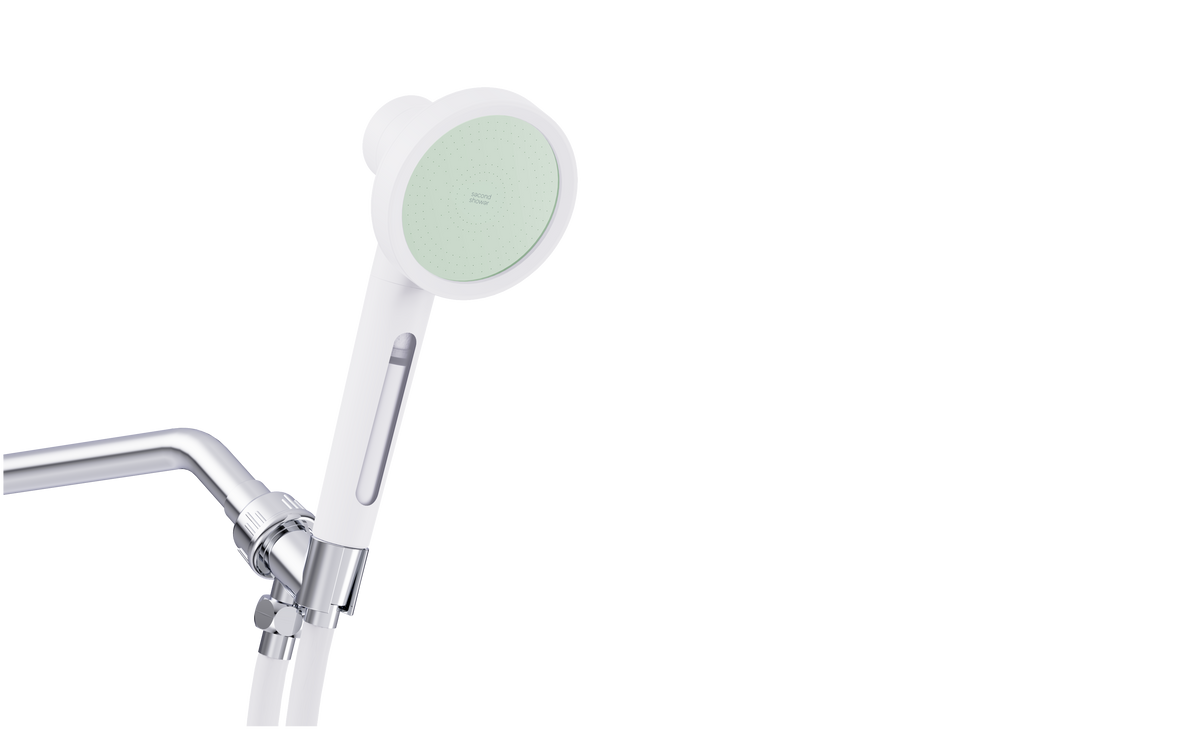
Both Second Shower and Jolie install tool-free in 3-5 minutes by unscrewing the existing showerhead and threading the new one onto the exposed shower arm. The installation process is identical, but Second Shower adds a critical advantage for renters: the transparent Truth Window on the handheld model (Showerhand) lets you see what your water looked like before filtering.
This visual proof matters when you're trying to justify the expense to a skeptical roommate or when you move to a new apartment and want to assess water quality before committing to filter replacement.
The tool-free install also means you can take Second Shower with you when you move. Jolie costs $169 - expensive enough that leaving it behind hurts. Second Shower at $99 retail ($79 subscription) is a more reasonable "portable investment" that follows you from apartment to dorm to first house.
The subscription model reinforces this: filters ship automatically every 4 months, so you never have to remember to reorder or deal with the decision fatigue of "is it time to replace yet?"
What Second Shower Won't Fix (And What Jolie Won't Either)
Honesty builds trust. Second Shower removes 99.9% (during the cartridge's peak performance window, Day 1–60) of chlorine, chloramine, and heavy metals, and infuses beneficial vitamins into your shower water. It will not soften hard water, remove dissolved TDS minerals, or solve every skin and hair problem you've ever had. Understanding these limitations helps set realistic expectations and prevents the disappointment cycle that brings people to search for Jolie alternatives in the first place.
Hard Water Mineral Softening Requires Ion Exchange
Hard water contains dissolved calcium and magnesium ions (measured in grains per gallon or parts per million). These minerals cause soap scum, leave white deposits on shower glass, and can make hair feel rough or look dull. Shower filters - Second Shower, Jolie, AquaBliss, Canopy, all of them - do not remove calcium and magnesium from water. Removing dissolved minerals requires ion-exchange water softening, which swaps calcium/magnesium ions for sodium ions using resin beads.
This process needs a tank, salt regeneration, and plumbing integration that's incompatible with a simple showerhead attachment.
That said, chlorine is often the bigger culprit in hair damage than hard water minerals. A 2011 study in the Journal of Dermatological Science (Thomas et al., SWET trial) found that chlorine exposure caused more skin barrier disruption than hard water alone. Many people who blame "hard water" for their dry skin and dull hair actually improve significantly just by removing chlorine.
If you remove chlorine with Second Shower and still have hard water concerns, consider a whole-house water softener or a chelating shampoo (containing EDTA or citric acid) once a week to remove mineral buildup.
TDS Meters Don't Measure Chlorine or Filtration Effectiveness
A common source of Jolie disappointment: users buy a TDS (Total Dissolved Solids) meter to verify the filter is working, test their water before and after filtering, see identical TDS readings, and conclude the filter is broken. TDS meters measure electrical conductivity, which correlates with dissolved minerals (calcium, magnesium, sodium, potassium). They do NOT measure chlorine, chloramine, heavy metals, or any of the contaminants a shower filter actually removes.
Chlorine is measured in parts per million (ppm) using DPD (N,N-diethyl-p-phenylenediamine) test strips or kits, which react colorimetrically with free chlorine and chloramine. If you want to verify Second Shower (or any shower filter) is working, use a
Which Is Right For You
Match the product to your situation, then start with the right Second Shower format.
Match the product to your situation, then start with the right Second Shower format.
Next Step
Use a verified product path and track outcomes over the first replacement cycle.
Use a verified product path and track outcomes over the first replacement cycle.
Vitamin C wall-mount filter — 99.9% chlorine and chloramine reduction during the cartridge's peak performance window (Day 1–60). $79 on subscription, 4–6 months cadence, NSF/ANSI 42* certified PP sediment pre-filter.
Shop the Second ShowerheadRelated Reading
FAQ
How does Second Shower compare to other shower filters?
Second Shower's Vitamin C filtration removes 99.9% (during the cartridge's peak performance window, Day 1–60) of chlorine, backed by an NSF/ANSI 42 certified micron sediment pre-filter. Many competitors use KDF or basic carbon that may reduce pressure and miss chloramines.
Why are replacement filters so expensive for some brands?
Some brands use proprietary cartridges with high markups. Second Shower's filter replacements are designed to be affordable with a consistent 4-6 month replacement cycle (3-6 months for the Showerhand).
Is Vitamin C filtration better than carbon filtration?
For chlorine and chloramine removal, Vitamin C is more effective and doesn't restrict water flow. Carbon filters work well for chlorine alone but struggle with chloramines.


Leave a comment
All comments are moderated before being published.
This site is protected by hCaptcha and the hCaptcha Privacy Policy and Terms of Service apply.