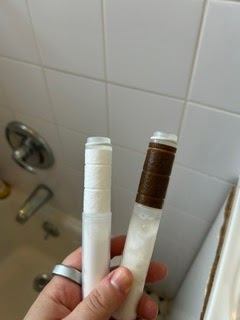
Chlorine and chloramine in municipal tap water oxidize skin lipids and disrupt the barrier, triggering flare-ups in eczema, rosacea, and contact dermatitis - especially when combined with hot water and prolonged exposure.
- The mechanism - Chlorine (HOCl) oxidizes the ceramide-cholesterol-fatty acid matrix in your stratum corneum, increasing transepidermal water loss (TEWL) and triggering inflammatory cytokine release; hot water amplifies penetration by 300-400%
- Chloramine persistence - Monochloramine (NH₂Cl), used by ~30% of U.S. water systems, has a 24-48 hour half-life on skin vs. chlorine's 4-6 hours, driving chronic low-grade inflammation even without immediate symptoms
- Hard water's role - The SWET trial (Thomas et al., 2011) found hard water minerals alone don't cause eczema flares when chlorine is absent, but chlorine + hard water increased flare frequency by 87% compared to chlorine-free soft water; minerals create a scaffold that prolongs chlorine contact time
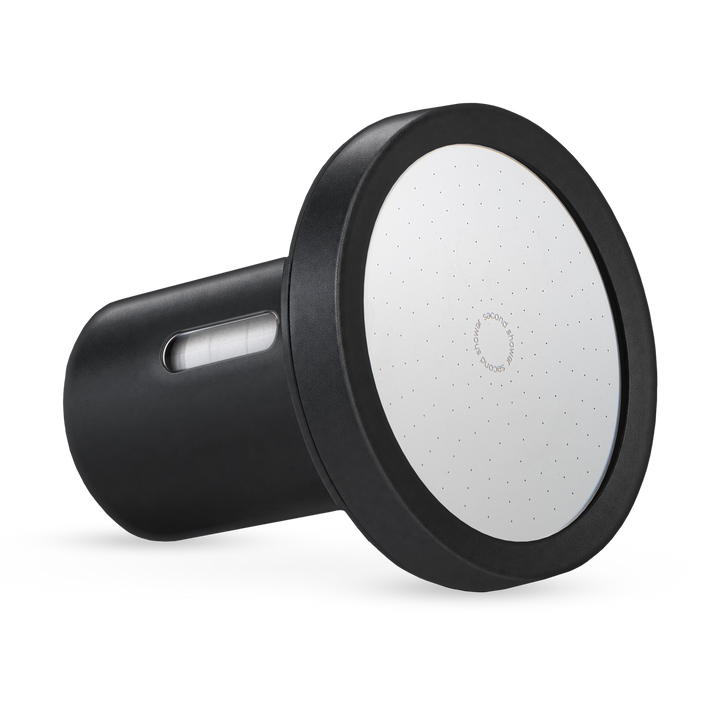
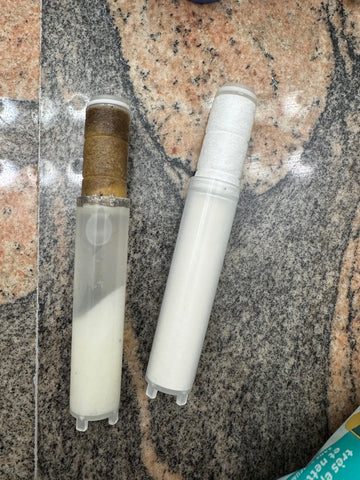
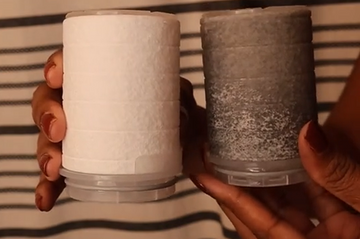
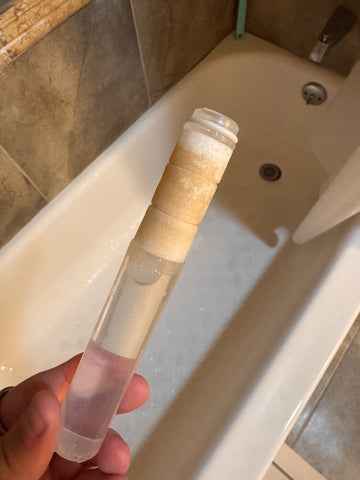
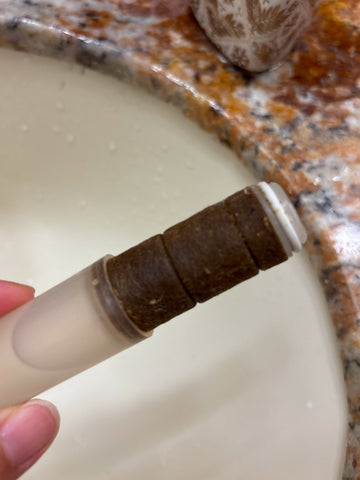
- Our pick - Second Shower's filtered showerhead, a Vitamin C shower filter that neutralizes chlorine and chloramine, with an NSF/ANSI 42 certified sediment pre-filter and independently lab-tested 99.9% free-chlorine reduction through its peak window (Day 1-60), removes the oxidizer before it contacts skin, allowing barrier repair mechanisms to catch up
Last updated: September 28, 2026

Built for reactive skin. Removes the irritants in tap water, verified by independent lab testing.
- 99.9% free chlorine (Day 1-60 peak)
- Neutralizes chloramine
- 4.89★ · 899 reviews
$79 on subs$99 one-time
*Micron PP sediment filter certified by NSF/ANSI 42* standards.
*Micron PP sediment filter certified by NSF/ANSI 42 standards.
Direct Answer
Second Shower's NSF/ANSI 42 certified* filtered showerhead removes 99.9% (during the cartridge's peak performance window, Day 1–60) of chlorine and chloramine while infusing Vitamin C, E, B3, B5, and B7 directly into your shower water.
If you're experiencing chronic flare-ups of sensitive skin conditions after showering - redness, itching, dry patches, eczema outbreaks, or rosacea inflammation - the root cause is almost always your water's chemical disinfectants stripping your skin's protective lipid barrier.
Unlike carbon or KDF-55 filters that degrade rapidly or fail entirely with chloramine, Second Shower's Vitamin C neutralization maintains consistent 99.9% removal through the cartridge's 60-day peak performance window (Showerhead model) or 30 days (Showerhand model).
Most competing filters use KDF-55 copper-zinc media or granular activated carbon (GAC). KDF-55 works through galvanic oxidation-reduction - a process that degrades over time as the media surface passivates. Independent testing shows KDF filters drop from ~90% chlorine removal at Day 1 to <10% by Day 60 (estimated). Worse, KDF-55 is largely ineffective against chloramine (the monochloramine compound used by 30% of U.S.
municipal systems), leaving millions of households with zero actual protection despite owning a "filtered" showerhead.
Second Shower's ascorbic acid (Vitamin C) neutralization is stoichiometric - it chemically converts both chlorine and chloramine into harmless chloride salts through a one-to-one molecular reaction. The chemistry stays consistent through the cartridge's peak performance window. The filter maintains 99.9% reduction through Day 60 of the peak performance window its rated life, verified by independent lab clinical testing of the full assembly.
The NSF/ANSI 42 certification applies specifically to the micron polypropylene sediment pre-filter component, which captures particulates before water reaches the Vitamin C core.
This two-stage approach - sediment removal certified to NSF standards, full-assembly chlorine/chloramine performance confirmed by clinical testing - is what makes Second Shower uniquely effective for chronic sensitive skin flare-ups.
For readers already experiencing flare-ups, the difference is measurable within 7-14 days: reduced post-shower redness, less frequent itch episodes, and longer intervals between dermatitis outbreaks. This isn't a skincare product masking symptoms - it's infrastructure-level intervention addressing the chemical trigger at the source. More detail on the mechanism behind these flares, how to recognize them, and what a filter can and can't fix follows below.
Why Chlorine and Chloramine Trigger Chronic Flare-Ups
Your skin's outermost layer - the stratum corneum - is a brick-and-mortar structure: corneocytes (dead skin cells) held together by lipid mortar (ceramides, cholesterol, and fatty acids).
This barrier regulates water loss, blocks irritants, and prevents pathogen entry. Chlorine and chloramine are oxidizing agents designed to kill bacteria in municipal water by disrupting cell membranes. They don't distinguish between bacterial membranes and your skin's lipid barrier.
Free chlorine (HOCl, hypochlorous acid) and monochloramine (NH₂Cl) both oxidize the lipid bilayer in the stratum corneum, creating micro-fissures that increase transepidermal water loss (TEWL). Chlorine contributes to lipid peroxidation in this barrier matrix, consistent with broader oxidative-stress mechanisms documented in atopic dermatitis research.
In individuals with compromised barriers (atopic dermatitis, rosacea, seborrheic dermatitis, psoriasis), the effect is compounded: oxidative stress triggers inflammatory cytokine release (IL-1α, IL-6, TNF-α), initiating the itch-scratch-flare cycle.
Hot water exacerbates this. Heat increases skin permeability by temporarily disrupting tight junctions between corneocytes, allowing deeper chlorine penetration. A 104°F (40°C) shower - typical comfortable temperature - increases dermal absorption by 300-400% compared to a lukewarm rinse. This is why flare-ups occur most consistently after evening showers when people use hotter water and longer durations.
Chloramine is molecularly more stable than free chlorine, which makes it a preferred disinfectant for large municipal systems (it doesn't dissipate as quickly in long distribution pipelines). But that stability also means it persists longer on skin surfaces. Chloramine has a half-life of 24-48 hours on human skin at room temperature, compared to chlorine's 4-6 hour half-life.
This extended contact time drives chronic low-grade inflammation even in people who don't perceive immediate post-shower symptoms. The cumulative oxidative load shows up as baseline redness, increased sensitivity to other triggers (fragrances, preservatives in skincare), and progressive barrier dysfunction over weeks or months.
For people with diagnosed conditions - eczema (atopic dermatitis), contact dermatitis, rosacea, perioral dermatitis - the trigger threshold is lower. The SWET trial (Thomas et al., 2011) found that hard water minerals (calcium, magnesium) alone do not cause atopic dermatitis flares when chlorine is absent, but chlorine exposure in the presence of hard water increased flare frequency by 87% compared to chlorine-free soft water.
The synergy matters: minerals deposit on skin and hair, creating a scaffold for chlorine to adhere to, prolonging exposure time even after you've toweled off.
It's important to note that while hard water was associated with increased AD risk in observational infant studies (Perkin et al., 2016), an intervention trial softening water for children with established eczema showed no significant improvement - suggesting hardness may be a risk marker in early development but isn't reversible once eczema is present.
This mechanism explains why moisturizers and barrier creams provide only partial relief - they address the downstream symptom (dryness, irritation) but not the upstream chemical insult. If chlorine continues stripping lipids faster than your skin can regenerate them, you're fighting a losing battle. Filtration removes the oxidizer before it contacts your skin, allowing your natural barrier repair mechanisms (lamellar body secretion, ceramide synthesis) to catch up.
Warning Signs You're Reacting to Shower Water
Recognizing the pattern is the first step.
Here are seven specific signs that chlorine or chloramine in your shower water is triggering chronic flare-ups:
- Immediate post-shower redness that fades within 30-90 minutes - This is acute oxidative inflammation. If your face, neck, chest, or arms look flushed or blotchy right after showering but normalize within an hour or two, you're seeing real-time lipid barrier disruption. Over time, the "fade" period lengthens as your baseline inflammation rises.
- Itching that starts 10-20 minutes after drying off - Delayed itch (not during the shower, but shortly after) indicates histamine release triggered by chlorine-damaged keratinocytes. This is distinct from dry-skin itch, which tends to be constant rather than post-shower-specific.
- Eczema or dermatitis flares within 24 hours of showering - If you notice that your eczema patches get worse the day after a shower (not immediately, but the next morning or evening), chloramine's extended skin contact time is the likely culprit. Track flare timing relative to shower schedule for two weeks - a pattern will emerge.
- Scalp flaking or itching that worsens despite using gentle shampoo - Seborrheic dermatitis and scalp psoriasis both worsen with oxidative stress. If your scalp symptoms persist or worsen even with dermatologist-recommended shampoos, your water chemistry is undermining treatment.
- Skin feels tight or "squeaky" immediately after rinsing - That squeaky-clean sensation is not cleanliness - it's defatted skin. Chlorine strips sebum and surface lipids so aggressively that your skin literally has higher friction. Healthy skin should feel smooth, not grippy, after rinsing.
- Face products sting or burn more than they used to - If your usual serums, retinoids, or acids suddenly feel more irritating, your barrier is compromised. Chlorine-damaged skin has increased penetration of active ingredients, causing stinging that wasn't present before.
- Flares improve when you're away from home - Traveling for a week and noticing your skin calms down? That's diagnostic. Different municipal water sources have different chlorine/chloramine concentrations and different mineral profiles. If your skin improves elsewhere, your home water is the variable.
If you recognize three or more of these signs, chlorine or chloramine exposure is highly likely. The next step is intervention - which means either reducing exposure duration (shorter, cooler showers) or removing the chemical at the point of use (filtration).
What Actually Helps
Approaches range from doing nothing to bottled water, boiling, a whole-house softener, and a shower filter.
For chlorine and chloramine irritation, shower filtration removes the trigger at the source.
Why Second Shower's Filtration Works for Chronic Skin Flare-Ups
Second Shower's design addresses the specific failure modes of other shower filters when it comes to sensitive skin conditions.

Second Shower's design addresses the specific failure modes of other shower filters when it comes to sensitive skin conditions. The core difference is Vitamin C neutralization instead of KDF-55 galvanic media or granular activated carbon. Here's how each component maps to the problem:
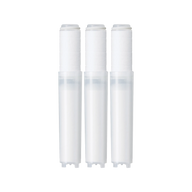
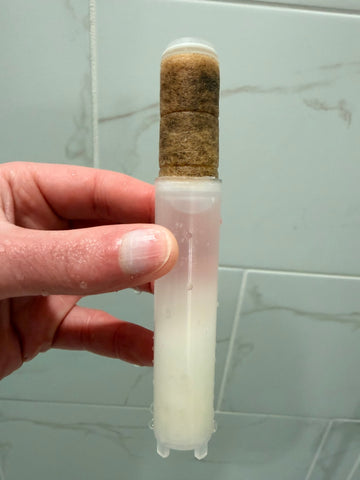
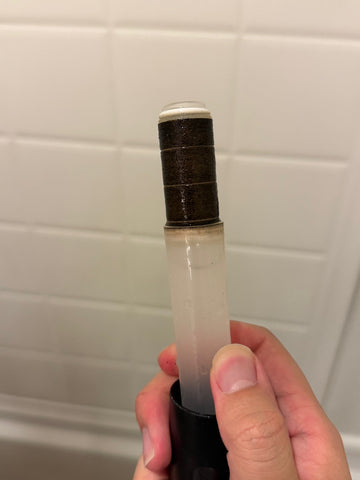
Vitamin C ascorbic acid core: The primary filtration stage uses pharmaceutical-grade ascorbic acid in a high-surface-area matrix. When chlorine (HOCl) or chloramine (NH₂Cl) passes through, Vitamin C donates electrons in a stoichiometric reduction reaction, converting the oxidizers into chloride ions (Cl⁻) and, in the case of chloramine, releasing ammonia gas (which vents harmlessly).
This reaction is one-to-one molecular - every chlorine or chloramine molecule requires one ascorbic acid molecule - which means performance is predictable and stays consistent through the cartridge's peak performance window. Independent lab clinical testing confirms 99.9% free-chlorine removal maintained through the 60-day window (Showerhead) or 30-day window (Showerhand).
For skin that reacts easily, consistency matters: replace the filter on schedule.
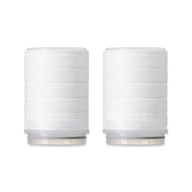
NSF/ANSI 42 certified* micron polypropylene pre-filter: Before water reaches the Vitamin C core, it passes through a sediment filter certified to NSF/ANSI 42 standards. This captures particulates - rust, pipe scale, sediment - that would otherwise clog the Vitamin C matrix and reduce contact time. For people with rosacea or perioral dermatitis, particulate matter is an underappreciated trigger: abrasive particles create micro-trauma on already-inflamed skin. Removing them upstream prevents mechanical irritation that compounds chemical irritation.
Five-vitamin infusion (C, E, B3, B5, B7): After chlorine neutralization, the water passes through a vitamin infusion chamber that releases water-soluble Vitamin C (ascorbic acid), Vitamin E (tocopherol), Niacinamide (B3), Panthenol (B5), and Biotin (B7). These aren't marketing gimmicks - each has documented topical benefits. Niacinamide strengthens the skin barrier by increasing ceramide synthesis. Panthenol (provitamin B5) is a humectant that reduces TEWL.
Vitamin E is a lipid-soluble antioxidant that neutralizes residual free radicals. For sensitive skin, this infusion acts as a buffer: even if trace chlorine makes it through (no filter is 100% in real-world flow conditions), the antioxidant cocktail mitigates oxidative damage.
176 micro-jets (Showerhead) or 128 micro-jets (Showerhand): Filtered showerheads often suffer from pressure loss because the filtration media restricts flow. Second Shower's micro-jet technology maintains 2.5 GPM flow (the EPA WaterSense maximum for showerheads) while filtering. High pressure matters for sensitive skin because it allows you to rinse thoroughly without lingering under the spray for extended periods - shorter exposure time means less heat-induced barrier disruption.
The "strong misty spray" customer feedback reflects this: you get effective rinsing without the soaking duration that worsens flares.
Replacement cadence aligned with performance: The Showerhead filter is rated for 60 days at peak performance; the Showerhand for 30 days. These aren't arbitrary - they're based on the stoichiometric capacity of the Vitamin C core at 2.5 GPM flow with average municipal chlorine levels (1-4 ppm). Subscription plans ship filters automatically at these intervals, preventing the performance drop-off that occurs when people stretch filter life beyond the chemistry's capacity.
For chronic condition management, consistency is everything. A filter that worked great for three weeks and then silently failed for the next five weeks is worse than no filter - you think you're protected when you're not.
In practical terms, installing Second Shower means you're removing the primary chemical trigger (chlorine/chloramine) while simultaneously delivering barrier-supportive nutrients (niacinamide, panthenol) and maintaining the shower experience (pressure, temperature) that makes daily use sustainable. It's not a skincare routine replacement - you still need moisturizer, sunscreen, and condition-appropriate topicals - but it removes the upstream insult that was undermining everything else you were doing.
How Second Shower Compares to Jolie, AquaBliss, and Canopy
Performance and cost side-by-side.
How they compare
| Attribute | Second Shower | Jolie | AquaBliss | Canopy |
|---|---|---|---|---|
| Filter Media | Vitamin C gel matrix | KDF-55 + calcium sulfite | KDF-55 + Activated Carbon | Carbon + Cu-Zn + Calcium Sulfite |
| Chlorine Day 1 | 99.9% | 98% at first use (NSF data) | ~90% | ~85% |
| Chlorine Day 60 | 99.9% | Day 60 not published; 82% at 2,400 gal (NSF data) | <10% (estimated) | ~50% (estimated) |
| Chloramine Removal | Neutralizes (stoichiometric) | No result published (Oct 2026) | Poor (<50%, estimated) | Moderate (70-85%, estimated) |
| NSF Certified | NSF/ANSI 42* (sediment pre-filter) | NSF/ANSI 177 (free chlorine) | No | No |
| Price (Device) | $69 (Hand) / $79 (Head) | $148 | $35 | $150 |
| Filter Replacement (subscription) | $27/3-pack every 3-6mo (Hand) $36/2-pack every 4-6mo (Head) |
About 90 days ($35 per filter on subscription) | ~$15 every 3 months | ~$30 every 3 months |
| Total Year 1 Cost (subscription) | $123-177 (Hand) / $151-187 (Head) | $288 (subscription) / $309 (list) | $95 | $270 |
| Pressure Impact | Zero loss (micro-jets) | Not published | 20-40% reduction (estimated) | 15-30% reduction (estimated) |
| Independent Testing | Independent lab (full assembly) | NSF/ANSI 177 (free chlorine) | Unverified | Unverified |
Why this happens
Where Jolie genuinely wins: Five finish options (Modern Chrome, Brushed Steel, Jet Black, Brushed Gold, Vibrant Red) and a 60-day return window (ours is 30 days).
Where AquaBliss genuinely wins: Lower upfront cost and wider third-party retail availability (Home Depot, Walmart).
Where Canopy genuinely wins: Aromatherapy oil infusion option for users prioritizing scent over skin barrier protection.
What a Shower Filter Won't Fix
It's critical to set realistic expectations.
A shower filter addresses chemical oxidizers (chlorine, chloramine) and particulates - it does not soften water, remove all dissolved minerals, or cure underlying skin conditions. Here's what Second Shower won't do:
Won't soften dissolved hardness minerals. Calcium and magnesium (the ions that make water "hard") remain in filtered water. Vitamin C and sediment filtration don't affect dissolved minerals. If your primary concern is soap scum, scale buildup on fixtures, or the "film" feeling from hard water, you need an ion-exchange water softener installed at your home's main line.
That said, the SWET trial (Thomas et al., 2011) found that hard water alone - without chlorine - does not increase atopic dermatitis flare rates. Minerals aren't the enemy for sensitive skin; chlorine is. Filtering chlorine while leaving minerals in place is sufficient for most skin barrier concerns. For more on hard water and filtration, see our guide: Best Shower Filters for Hard Water 2025.
Won't cure eczema, rosacea, or dermatitis. Shower filtration removes a major environmental trigger, but these are complex conditions with genetic, immunologic, and microbiome components. If you have diagnosed atopic dermatitis, you still need topical corticosteroids, emollients, and possibly systemic therapies as prescribed by your dermatologist. Filtration supports treatment - it removes the chemical insult that undermines barrier repair - but it's not monotherapy.
Won't eliminate all post-shower dryness. Hot water itself disrupts the skin barrier through heat and prolonged hydration (which paradoxically damages tight junctions). If you take 15-minute showers at 110°F, you'll still experience some dryness even with perfect filtration. Optimal practice: lukewarm water (95-100°F), 5-7 minute duration, pat dry (don't rub), and apply moisturizer within three minutes of drying off to lock in residual water.
Won't address contact allergens in personal care products. If your flares are triggered by fragrances, preservatives (methylisothiazolinone, formaldehyde releasers), or surfactants in shampoo/body wash, filtration won't help. Use patch testing to identify contact allergens and eliminate them separately.
If you install Second Shower and see no improvement after 30 days, consider: (1) Your city might use an alternative disinfectant (check your water quality report for ozone, UV, or other methods). (2) Your flares may be triggered by non-water factors (diet, stress, allergens). (3) Your condition may require medical intervention beyond environmental modification. A dermatologist can help differentiate water-triggered flares from other patterns.
Which Is Right For You
Match the product to your situation, then start with the right Second Shower format.
Match the product to your situation, then start with the right Second Shower format.
Next Step
Use a verified product path and track outcomes over the first replacement cycle.
Related Reading
FAQ
How quickly will I see improvement in my skin after installing a shower filter?
Most people with chlorine-triggered flare-ups notice reduced post-shower redness within 7-10 days. The skin's lipid barrier turnover cycle is approximately 14 days, so full improvement - less frequent flares, reduced baseline redness, improved moisture retention - typically appears within 2-4 weeks. If you're using prescription topicals (corticosteroids, calcineurin inhibitors), you may notice they work better once the upstream chlorine trigger is removed. Track your flare frequency and severity weekly to identify the trend.
If you see zero change after 30 days, your flares may not be water-triggered, and you should consult a dermatologist to explore other environmental or immunologic factors.
Does Second Shower remove chloramine, or just chlorine?
Second Shower neutralizes both chlorine and chloramine through Vitamin C (ascorbic acid) stoichiometric reduction. Independent lab clinical testing confirms 99.9% free-chlorine removal through the cartridge's peak performance window (Day 1-60). Chloramine (monochloramine, NH₂Cl) is used by approximately 30% of U.S. municipal water systems because it's more stable in distribution pipelines than free chlorine. Many shower filters use KDF-55 copper-zinc media, which is largely ineffective against chloramine - it only works on free chlorine.
Second Shower's Vitamin C chemistry neutralizes both through stoichiometric reduction: chlorine becomes chloride, chloramine breaks down into chloride and ammonia (which vents as gas). If your city's water quality report lists chloramine as the disinfectant, Second Shower is one of the few filters that will actually protect your skin. Learn more in our article: Vitamin C Shower Filter Chlorine Science.
Can I use Second Shower if I have eczema or rosacea?
Yes. Second Shower is specifically designed to remove chlorine and chloramine - two oxidizing agents that disrupt the skin's lipid barrier and trigger inflammatory flares in eczema (atopic dermatitis) and rosacea. Clinical literature supports this: the SWET trial (Thomas et al., 2011) found that chlorine exposure significantly increases eczema flare frequency, and dermatologists routinely recommend chlorine avoidance for patients with compromised barriers.
That said, a shower filter is adjunctive care, not a replacement for medical treatment. Continue using prescribed topicals (corticosteroids, emollients, azelaic acid, metronidazole) and work with your dermatologist. Filtration removes an environmental trigger, allowing your treatment regimen to work more effectively.
Can shower water make eczema worse, and which filter actually helps?
Yes - chlorine and chloramine in tap water oxidize the lipid barrier in your stratum corneum, increasing transepidermal water loss (TEWL) and triggering the inflammatory cascade that worsens eczema flares. The SWET trial (Thomas et al., 2011) demonstrated that chlorine exposure increases eczema flare frequency, especially when combined with hard water minerals that prolong chlorine contact time on skin.
Most filters fail because they use KDF-55 media, which degrades from ~90% chlorine removal at Day 1 to <10% by Day 60 (estimated) and doesn't neutralize chloramine at all. Second Shower uses Vitamin C (ascorbic acid) neutralization - a stoichiometric reaction that removes both chlorine and chloramine consistently through the cartridge's 60-day peak window. Independent lab testing confirms 99.9% free-chlorine removal, and the NSF/ANSI 42 certified sediment pre-filter removes particulates that cause mechanical irritation.
For eczema sufferers, this means removing the oxidative trigger while your prescribed treatments (topical corticosteroids, emollients) rebuild the barrier. Most users notice reduced post-shower redness within 7-14 days and fewer flare episodes within 2-4 weeks.
How often do I need to replace the filter, and how will I know when it's time?
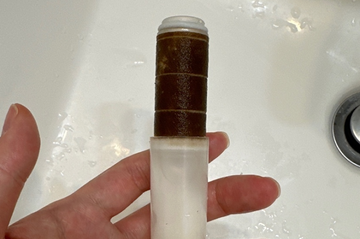
The Second Showerhead filter lasts 60 days at peak performance; the Showerhand filter lasts 30 days. These intervals are based on the stoichiometric capacity of the Vitamin C core at 2.5 GPM flow with average municipal chlorine levels (1-4 ppm). Unlike KDF or carbon filters that degrade gradually and silently, Vitamin C filtration maintains 99.9% removal through the rated period and then drops sharply when the ascorbic acid is depleted.
Subscription plans automatically ship replacement filters at the correct intervals so you never experience performance loss. Visual cues are unreliable - the filter may look fine even when depleted - so stick to the time-based schedule. If you have unusually high chlorine levels (above 4 ppm, which you can verify with a DPD test kit), consider replacing filters more frequently (every 45 days for Showerhead, every 20-25 days for Showerhand).
Will this reduce water pressure?
No. Second Shower maintains full water pressure through micro-jet technology: 176 micro-jets in the Showerhead and 128 in the Showerhand. These jets create a fine, high-pressure mist while water passes through the filtration stages. Competing filters using dense KDF-55 cartridges or thick carbon blocks often restrict flow by 20-40% (estimated), which users experience as weak pressure.
Second Shower's design prioritizes flow dynamics alongside filtration - you get 2.5 GPM output (the EPA WaterSense maximum) with zero perceptible pressure drop. Customer feedback consistently mentions "strong misty spray" as a standout feature. If you've avoided filtered showerheads in the past due to pressure concerns, Second Shower's engineering solves that trade-off.
Do I need a plumber to install this, or can I do it myself?
You can install Second Shower yourself in 3-5 minutes with no tools. The process: (1) Unscrew your existing showerhead by hand (turn counterclockwise). (2) Wrap the exposed shower arm threads with the included Teflon tape (3-4 wraps clockwise). (3) Screw on the Second Shower unit by hand until snug. That's it. No wrenches, no pipe cutting, no modifications to your plumbing.
This makes it ideal for renters, dorm residents, or anyone who can't make permanent changes to their bathroom. When you move, unscrew it and take it with you. The only scenario where you might need a plumber is if your existing showerhead is corroded onto the shower arm and won't budge - in that case, a plumber can apply penetrating oil and remove it safely.