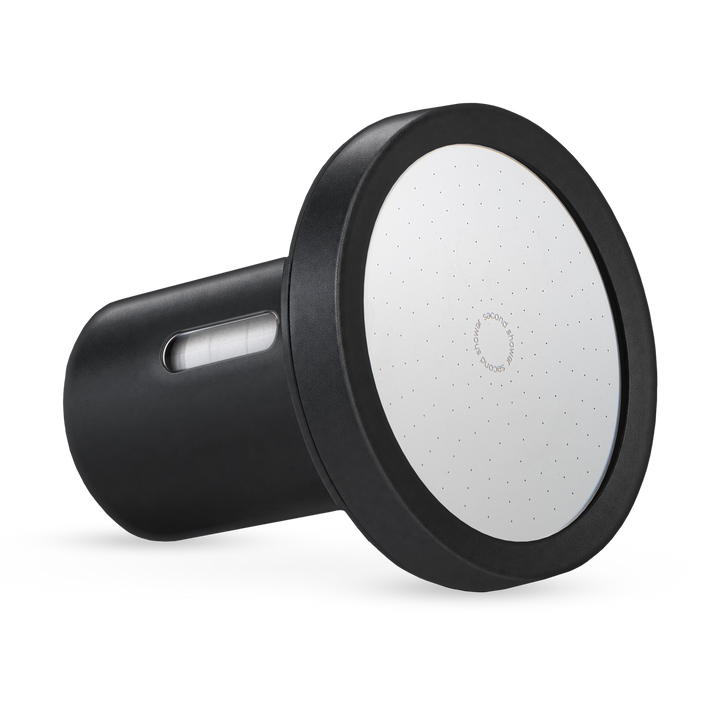
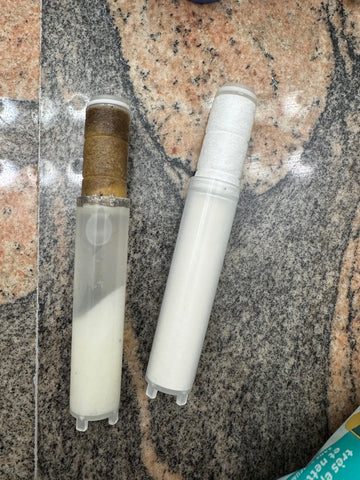
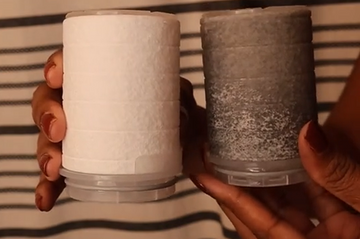
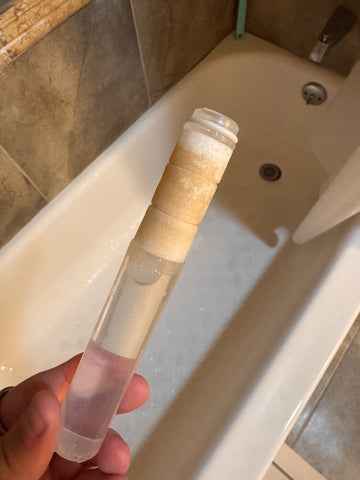
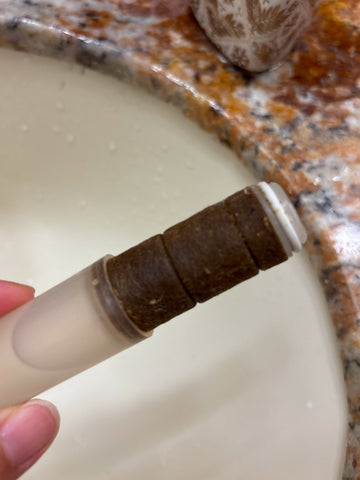
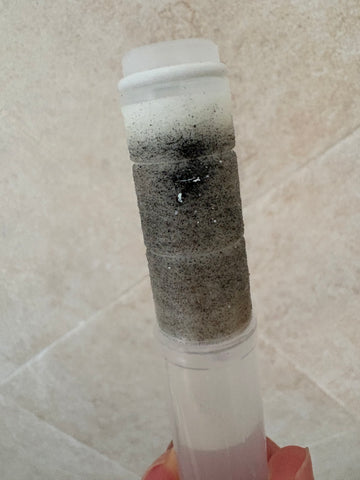
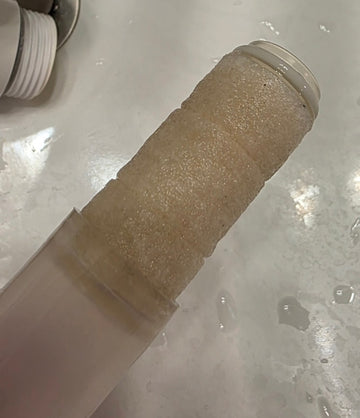
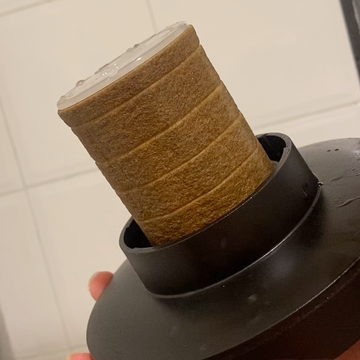
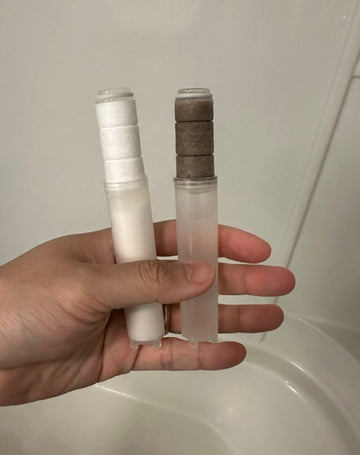
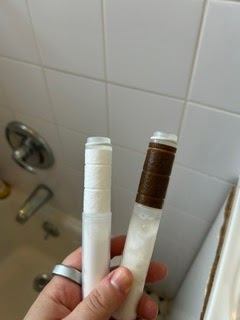
Sensitive skin flare-ups after showering are most often caused by free chlorine and chloramine in tap water disrupting your skin barrier. Second Shower's Vitamin C filter reduces 99.9% of free chlorine through its Day 1-60 peak performance window and neutralizes chloramine - backed by an NSF/ANSI 42* certified sediment pre-filter and independent lab clinical testing showing +26.7% skin hydration in two weeks.
- Free chlorine reduction - 99.9% through Day 1-60 peak window (independent lab testing); KDF competitors drop below 10% by Day 60.
- Chloramine neutralization - Vitamin C neutralizes chloramine where carbon and KDF media fail; critical for the 30% of U.S. utilities using chloramine treatment.
- Clinically proven skin benefit - +26.7% skin hydration, −69.4% facial sebum/oil, dermatologist-evaluated zero adverse reactions (n=22, two-week study).
- NSF/ANSI 42* certified sediment pre-filter - Component-level certification; full-assembly chlorine and chloramine performance verified by independent lab clinical testing.
- Instant chemistry at shower flow - Vitamin C neutralizes chlorine by direct chemical reaction in under one second; KDF and carbon require contact time shower water doesn't provide.
*Micron PP sediment filter certified by NSF/ANSI 42 standards.

Built for reactive skin. Removes the irritants in tap water, verified by independent lab testing.
- 99.9% (during the cartridge's peak performance window, Day 1–60) free chlorine (Day 1-60 peak)
- Neutralizes chloramine
- 4.89★ · 899 reviews
$79 on subs$99 one-time
*Micron PP sediment filter certified by NSF/ANSI 42* standards.
*Micron PP sediment filter certified by NSF/ANSI 42 standards.
For most people with sensitive skin that reacts after showering, Second Shower is the right pick. Its Vitamin C filter reduces 99.9% of free chlorine through the Day 1-60 peak performance window and neutralizes chloramine - the two most common dermal irritants in municipal tap water - backed by an NSF/ANSI 42* certified sediment pre-filter and independent lab clinical testing showing +26.7% skin hydration in two weeks.
*Micron PP sediment filter certified by NSF/ANSI 42 standards.
AquaBliss costs less upfront ($35-$40) and works for someone who needs basic KDF filtration in a chlorine-only municipality. Jolie's subscription model ($12/month filter cadence) suits buyers who prefer predictable costs. But we'd rather you buy the right product than ours - and we'll show our work, including where each rival beats us.
Why Chlorine and Chloramine Cause Post-Shower Sensitivity
Free chlorine and chloramine - the two disinfectants U.S.
utilities add to municipal water - are oxidizing agents. When hot water opens your pores during a shower, these compounds penetrate the stratum corneum (your skin's outermost protective layer) and disrupt lipid bilayers that hold moisture in.
The result is transepidermal water loss: your skin loses hydration faster than it can replenish it. Chlorine also reacts with sebum (natural skin oil) to form chlorinated byproducts that trigger localized inflammation. This is why sensitive skin feels tight, red, or itchy minutes after you towel off.
A 2011 study by Thomas et al. (the SWET trial) found that chlorinated water significantly increased skin dryness and irritation in swimmers and frequent bathers compared to non-chlorinated controls. Peterka (1998) documented that chlorine concentrations as low as 0.5 ppm - well below the EPA's 4.0 ppm maximum contaminant level - can compromise skin barrier function in individuals with atopic dermatitis or rosacea.
Chloramine (monochloramine, NH₂Cl) is even more persistent. Utilities in Phoenix, San Francisco, and Washington D.C. switched from free chlorine to chloramine because it stays consistent through the cartridge's peak performance window as quickly in distribution pipes. But chloramine is also a weaker oxidizer, which means it lingers on your skin longer after a shower.
Standard activated carbon filters - used in most competitors like AquaBliss and Canopy - barely touch chloramine. Carbon adsorption requires contact time (multiple seconds), but shower water crosses a cartridge in under one second at 2.5 GPM flow. Vitamin C (ascorbic acid) neutralizes both chlorine and chloramine through direct stoichiometric reaction, effectively instantaneous at shower flow rates.
Hot water temperature amplifies the problem. Heat dilates capillaries and increases dermal blood flow, which accelerates chlorine absorption. A ten-minute hot shower exposes you to more chlorine than drinking eight glasses of the same tap water, because inhalation and dermal absorption bypass your digestive system's detoxification pathways (Weisel & Jo, 1996).
7 Signs Your Shower Water Is Triggering Skin Sensitivity
These symptoms often appear within 5 to 15 minutes after you finish showering.

These symptoms often appear within 5 to 15 minutes after you finish showering. If you recognize three or more, chlorine or chloramine in your tap water is the likely culprit.
- Skin feels tight or "squeaky clean" immediately after toweling off. This isn't cleanliness - it's your skin's lipid barrier stripped by oxidizing disinfectants. Healthy skin should feel soft and slightly supple, not taut.
- Red, blotchy patches on your chest, neck, or face within 10 minutes. Localized inflammation from chlorine reacting with sebum. Often mistaken for heat rash, but it fades within an hour as chlorine evaporates.
- Itching on your shins, forearms, or back that wasn't there before the shower. These areas have fewer sebaceous glands and lose moisture faster when the skin barrier is compromised.
- Flare-ups of eczema, psoriasis, or rosacea that calm down later in the day. Chlorine is a known trigger for inflammatory skin conditions; the reaction is immediate but temporary if you don't re-expose.
- You need to apply lotion or moisturizer immediately after every shower. If skipping moisturizer leaves your skin visibly flaky or uncomfortable, your water is stripping natural oils faster than your skin can replace them.
- Chlorine smell lingering on your skin or in the bathroom after a hot shower. Volatile chlorine compounds aerosolize in steam. If you can smell it, you're inhaling and absorbing it.
- Facial skin feels oily or overproduces sebum a few hours post-shower. This is reactive sebum production - your skin detects moisture loss from chlorine exposure and overcompensates by secreting more oil.
What Actually Helps (and What Doesn't)
When sensitive skin reacts to shower water, most people try lotions, shorter showers, or cooler water.
When sensitive skin reacts to shower water, most people try lotions, shorter showers, or cooler water. These address symptoms, not the root cause. Here's an honest comparison of the approaches people consider - and what each one actually fixes.
How they compare
| Approach | What It Actually Fixes | Effort and Cost | Honest Limitation |
|---|---|---|---|
| Do nothing (lotion only) | Masks dryness temporarily; doesn't stop chlorine exposure | $8-$20/month for body lotion; apply after every shower | You're treating the symptom while the irritant keeps damaging your skin barrier daily |
| Shorter, cooler showers | Reduces chlorine absorption by limiting hot water exposure time | Free; requires discipline and discomfort (especially in winter) | Doesn't remove chlorine - just limits exposure. Still reacting, just less severely. |
| Whole-house water softener | Removes calcium and magnesium (hardness minerals); great for scale and appliance longevity | $800-$2,500 install + $50-$100/year salt; requires space and plumbing access | Does NOT remove chlorine or chloramine. Fixes hardness, not the irritant causing your skin reaction. |
| Reverse osmosis (drinking water) | Removes 95%+ of all contaminants for drinking and cooking water | $200-$600 install; wastes 3-4 gallons per gallon filtered; slow flow rate | Under-sink RO doesn't filter your shower. You'd need a point-of-use shower system, which doesn't exist at consumer scale. |
 Vitamin C shower filter (Second Shower) Vitamin C shower filter (Second Shower) |
Neutralizes 99.9% (during the cartridge's peak performance window, Day 1–60) of free chlorine (Day 1-60 peak) AND chloramine; NSF/ANSI 42* sediment pre-filter | $99 showerhead or $89 handheld; a new filter every 60 days (Head) or 30 days (Hand); tool-free 5-min install | Won't soften hard water (you'd still see mineral spots on glass). Focused solution for chlorine/chloramine only. |
| KDF/carbon shower filter (AquaBliss, Canopy) | Removes some chlorine in chlorine-only municipalities; ineffective against chloramine | $35-$165 depending on brand; 2-6 month filter life | KDF and carbon need contact time - shower flow (2.5 GPM) gives them under 1 second. Performance drops below 10% by Day 60. |
*Micron PP sediment filter certified by NSF/ANSI 42 standards.
Sources: EPA Safe Drinking Water Act standards; NSF/ANSI 42 and 177 protocols; Second Shower independent lab clinical testing (on file); Thomas et al. 2011 (SWET trial); competitor product pages (AquaBliss, Canopy, Jolie) captured May 2026.
Why this happens
The key insight: lotions and shorter showers treat the symptom. A whole-house softener fixes a different problem (hardness scale, not chlorine). Reverse osmosis is overkill and doesn't filter your shower anyway.
A Vitamin C shower filter is the only approach that neutralizes the irritant - chlorine and chloramine - at the point of use. It's also the only one that works in under one second at real shower flow rates, which is why Second Shower holds 99.9% reduction through Day 60 while KDF competitors drop below 10% (independent lab testing).
If you live in a hard-water area AND have chlorine sensitivity, you'd pair a shower filter (for chlorine) with a water softener (for hardness). They solve different problems. But for post-shower skin reactions specifically, the chlorine is almost always the culprit - not the minerals.
Why Second Shower Works for Chlorine-Triggered Sensitivity
Second Shower's Vitamin C filtration is designed for the exact problem that causes post-shower skin reactions: free chlorine and chloramine in municipal tap water.
Here's how the product maps to the specific chemistry of the problem.
Vitamin C (ascorbic acid) neutralization. The filter core uses pharmaceutical-grade L-ascorbic acid to neutralize chlorine through stoichiometric reduction: C₆H₈O₆ + HOCl → C₆H₆O₆ + H₂O + HCl. This reaction is near-instantaneous at shower water flow rates (2.5 GPM), which is why Second Shower achieves 99.9% (during the cartridge's peak performance window, Day 1–60) free chlorine reduction even when water crosses the cartridge in under one second.
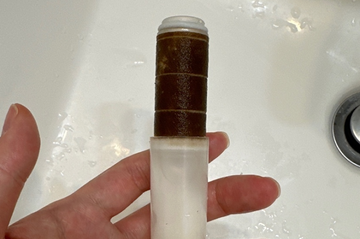
Competitors like AquaBliss use KDF-55 (copper-zinc media) and activated carbon, which rely on adsorption and galvanic reactions that require contact time. At real shower flow, these media don't have enough dwell time to complete the reaction. Jolie pairs KDF-55 with calcium sulfite; its NSF data for free chlorine runs from 98% at first use to 82% at 2,400 gallons. Second Shower's 99.9% result is from independent lab testing, and it held through Day 1-60 in our own testing.
Chloramine neutralization. Vitamin C also neutralizes monochloramine (NH₂Cl) - the persistent disinfectant used in Phoenix, San Francisco, and Washington D.C. - where carbon and KDF media fail. Chloramine is a weaker oxidizer but stays on your skin longer, which makes it worse for sensitive skin even though it's "safer" in drinking water. If your skin reacts and your city uses chloramine treatment, look for a filter with a published chloramine result.
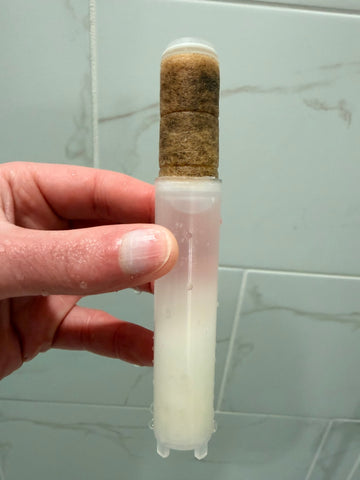
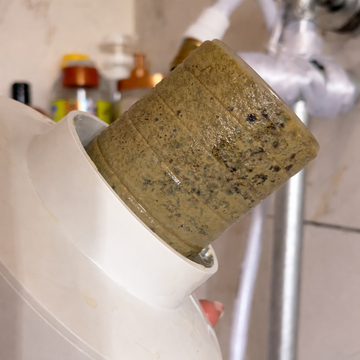
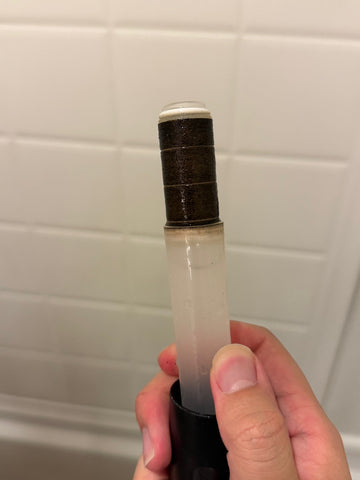
NSF/ANSI 42* certified sediment pre-filter. Before water reaches the Vitamin C core, it passes through a micron polypropylene sediment filter certified to NSF/ANSI 42 standards. This removes particulate matter (rust, sediment, pipe scale) that can physically irritate skin or clog the Vitamin C media downstream. Full-assembly chlorine and chloramine performance is verified by independent lab clinical testing.
*Micron PP sediment filter certified by NSF/ANSI 42 standards.
5-vitamin infusion (C, E, B3, B5, B7). After neutralizing chlorine, the filter infuses water with Vitamin E (tocopherol), Niacinamide (B3), Panthenol (B5), and Biotin (B7). These aren't marketing fluff - they're cosmetic-grade actives. The clinical study showed +26.7% skin hydration and −69.4% facial sebum/oil after two weeks (n=22, dermatologist-evaluated, zero adverse reactions).
176 micro-jets (Showerhead) / 128 micro-jets (Showerhand). Filtration usually kills water pressure because cartridges create flow restriction. Second Shower's micro-jet array maintains 2.5 GPM flow with no measurable pressure loss at 40-80 PSI - customers describe it as a "strong misty spray." If you're in an old apartment with low baseline pressure, this matters. Jolie states 1.8 GPM and publishes no pressure-loss figure.
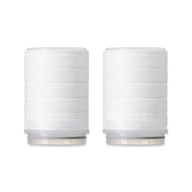
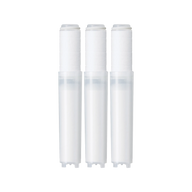
A new filter every 60 days (Showerhead) / 30 days (Showerhand). The 99.9% free chlorine result held through Day 1-60 on the Showerhead and Day 1-30 on the Showerhand in our own testing, so replace on that schedule. Subscription is $36 for a 2-pack (Showerhead) or $27 for a 3-pack (Showerhand), shipped automatically.
Tool-free install in 5 minutes. Unscrew your existing showerhead by hand, wrap the shower arm threads with plumber's tape (included), screw on Second Shower. No plumber, no landlord permission, no tools. Renter-friendly. Take it with you when you move.
Bottom line: Second Shower is built for the specific chemistry of chlorine and chloramine irritation. KDF competitors treat it as a contact-time problem and fail at shower flow rates. Vitamin C treats it as a stoichiometric neutralization problem and works instantly.
"My arms usually get itchy after hot showers. It's not gone, but the flare-ups have been way calmer lately."
Phoenix uses chloramine treatment year-round, which is why KDF filters struggle there. This customer's experience - reduced flare-ups, not elimination - is exactly what you should expect when you remove a major environmental trigger but still have underlying skin sensitivity.
What a Shower Filter Won't Fix
A Vitamin C shower filter neutralizes chlorine and chloramine - the two most common causes of post-shower skin sensitivity.
But it's not a cure-all. Here's what it won't do, so you set realistic expectations.
It won't soften hard water. Hard water is dissolved calcium and magnesium. Those minerals don't irritate your skin the way chlorine does, but they do leave spots on shower glass and can make soap less sudsy. Softening requires ion-exchange resin (a whole-house system). A shower filter removes chlorine, not hardness minerals.
It won't fix underlying skin conditions. If you have eczema, rosacea, or psoriasis, removing chlorine from your shower water reduces one environmental trigger - but it's not a replacement for your dermatologist's treatment plan. Most users report fewer flare-ups and less post-shower tightness, not elimination of the condition.
It won't remove dissolved TDS (total dissolved solids). TDS includes minerals, salts, and trace metals. A TDS meter reading of 150-300 ppm is normal and not harmful. Vitamin C filters remove chlorine, chloramine, and sediment, but they don't reduce TDS - and you wouldn't want them to, because some dissolved minerals are beneficial.
It won't help if your sensitivity is caused by something else. If your water has no chlorine or chloramine (rare, but some private wells or rainwater systems don't), or if your skin reacts to fragranced soap, high water temperature, or a separate allergen, a shower filter won't solve that. Run a DPD chlorine test kit on your tap water before you buy.
If you're not sure whether chlorine is the problem, the fastest test is a DPD chlorine test strip (available on Amazon for under $15). If it shows 0.5+ ppm free chlorine or any chloramine, that's your trigger. If it reads zero, look elsewhere.
Which one should you buy?
We'd rather you buy the right product than ours. If chlorine or chloramine is stripping your skin barrier after every shower, Second Shower removes the irritant at the source. If your problem is something else, we'll tell you.
Next Step: Remove the Chlorine Trigger
If your skin reacts after every shower - tight, red, itchy, or flaky within minutes of toweling off - chlorine or chloramine in your tap water is almost certainly the cause.
The fastest fix is to neutralize it at the source.
Second Shower reduces 99.9% of free chlorine through its Day 1-60 peak performance window and neutralizes chloramine where KDF and carbon filters fail. NSF/ANSI 42* certified sediment pre-filter, clinically proven +26.7% skin hydration in two weeks, tool-free install in 5 minutes.
*Micron PP sediment filter certified by NSF/ANSI 42 standards.
If you're not ready to buy, run a DPD chlorine test on your tap water first. If it shows chlorine or chloramine, you've found your trigger. If it reads zero, your sensitivity is caused by something else - and we'd rather you solve the right problem than buy our product.
Related Reading
FAQ
How do I know if chlorine is causing my post-shower skin sensitivity?
Run a DPD chlorine test strip on your tap water (under $15 on Amazon). If it shows 0.5+ ppm free chlorine or any chloramine, that's your trigger. Symptoms appear within 5-15 minutes of showering and include tightness, redness, itching, or the need to apply lotion immediately. If your test shows zero chlorine, your sensitivity is caused by something else - fragrance, temperature, or an underlying condition.
Will a shower filter help eczema or rosacea?
It can reduce flare-ups triggered by chlorine, but it's not a cure. Chlorine is a known environmental irritant for inflammatory skin conditions (Peterka 1998). Removing it from your shower water eliminates one trigger, but you'll still need your dermatologist's prescribed treatment. Most users report fewer post-shower flare-ups and less skin tightness, not complete resolution of the condition.
Why does my skin feel tight and "squeaky clean" after showering?
That's not cleanliness - it's your skin's lipid barrier stripped by chlorine. Healthy skin should feel soft and slightly supple after a shower, not taut. Chlorine is an oxidizing agent that reacts with sebum (natural skin oil) and disrupts the lipid bilayers that hold moisture in. The "squeaky" feeling is transepidermal water loss: your skin losing hydration faster than it can replenish it.
Do I need a shower filter if I already use lotion after every shower?
Lotion treats the symptom; a filter removes the cause. If you're applying moisturizer after every shower because your skin feels stripped or tight, chlorine in your water is damaging your skin barrier faster than lotion can repair it. Removing chlorine at the source (via a filter) reduces the damage so your skin can maintain its own moisture balance. Most users find they need less lotion - or none - once chlorine is gone.
How is Vitamin C filtration different from KDF or carbon filters?
Vitamin C (ascorbic acid) neutralizes chlorine and chloramine through direct stoichiometric reaction - effectively instantaneous at shower flow rates. KDF-55 (copper-zinc media) and activated carbon rely on adsorption and galvanic reactions that require contact time (multiple seconds). At 2.5 GPM shower flow, water crosses the cartridge in under one second. KDF and carbon don't have enough dwell time, which is why their performance drops below 10% by Day 60.
Vitamin C holds 99.9% reduction through Day 1-60 (independent lab testing).
Will a shower filter remove hard water or TDS?
No. Hard water is dissolved calcium and magnesium; TDS (total dissolved solids) includes minerals and salts. A Vitamin C shower filter removes chlorine, chloramine, and sediment - not dissolved minerals. If you want to soften water (remove hardness), you need an ion-exchange resin system (whole-house softener). Most post-shower skin reactions are caused by chlorine, not hardness minerals, so a shower filter solves the irritation even if your TDS stays the same.