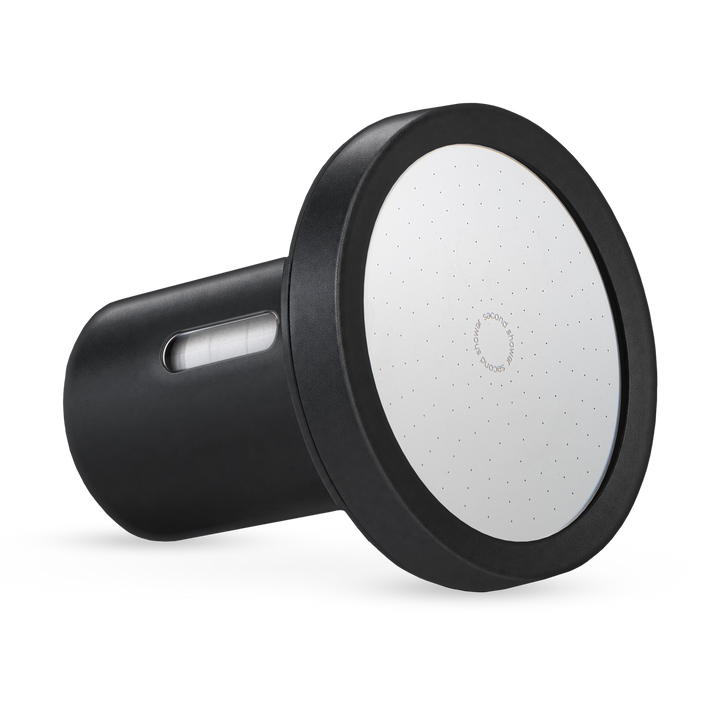
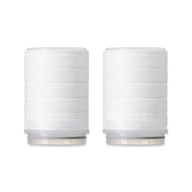
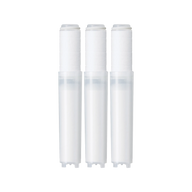
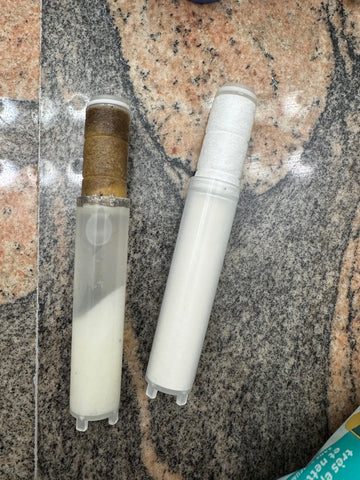
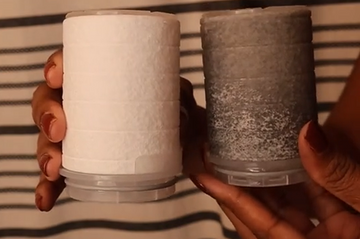
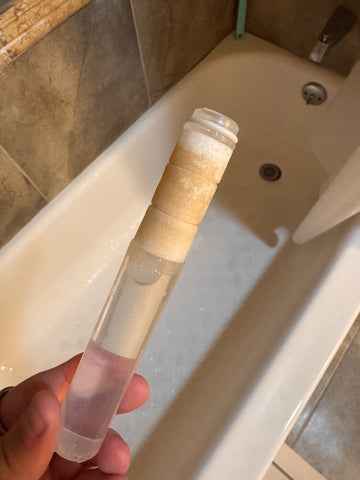
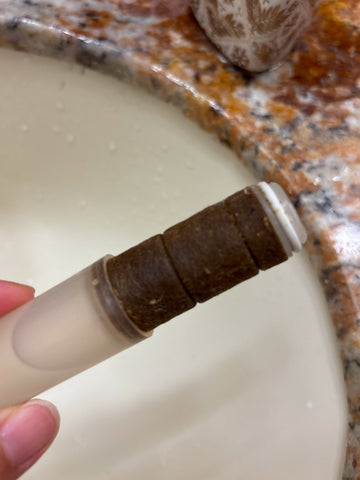
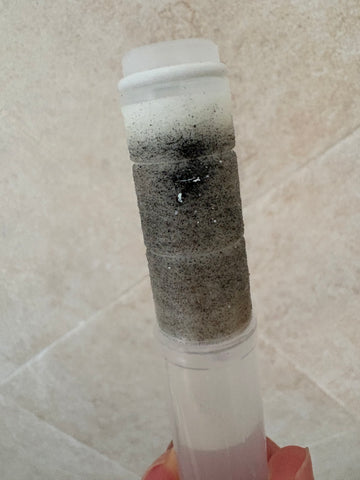
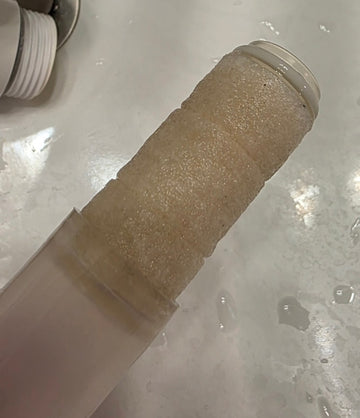
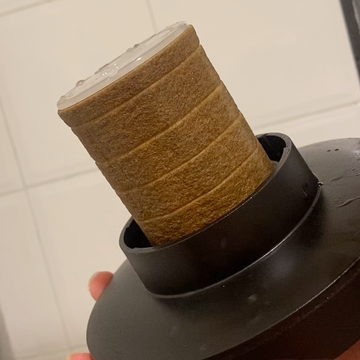
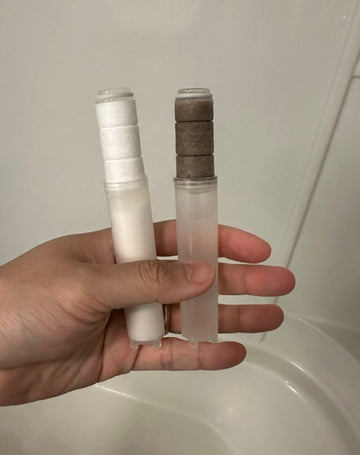
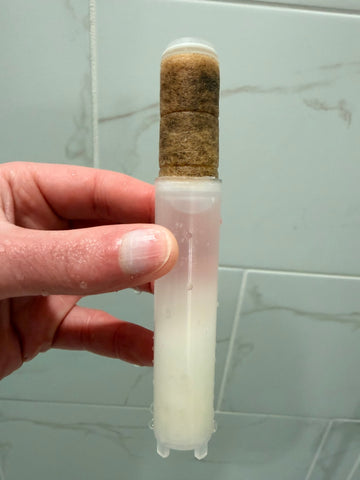
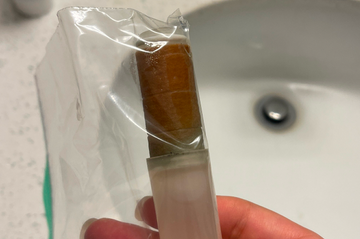
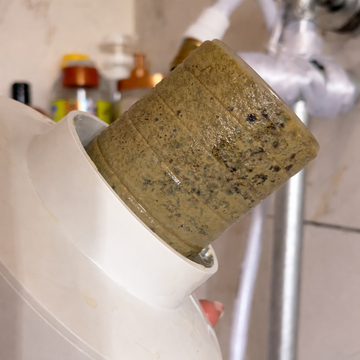
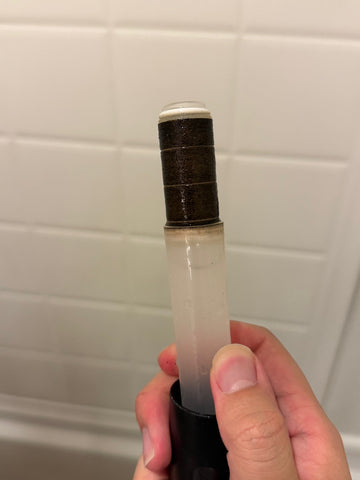
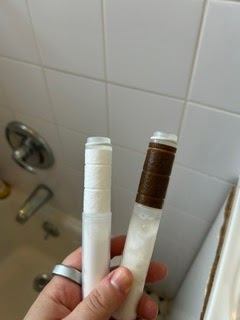
If your skin feels tight, red, or itchy after showers, the culprit is usually chlorine or chloramine in your tap water - not hardness minerals. Second Shower uses Vitamin C ascorbic acid filtration to reduce 99.9% of free chlorine through its Day 1-60 peak window and neutralizes chloramine, backed by an NSF/ANSI 42* certified sediment pre-filter and independent lab clinical testing.
- Chlorine strips skin oils - municipal tap water contains 0.5-4.0 ppm free chlorine (EPA Safe Drinking Water Act standard); even low levels disrupt the lipid barrier.
- Vitamin C neutralizes both chlorine and chloramine - stoichiometric reaction holds 99.9% reduction of free chlorine through Day 1-60 (Showerhead) unlike KDF-55 media which drops below 10% by Day 60.
- Clinical skin improvement - independent study (n=22) measured +26.7% skin hydration and −69.4% facial oil in two weeks, with zero adverse reactions.
- NSF/ANSI 42* certification + independent testing - sediment filter certified; full-assembly chlorine and chloramine performance verified by independent lab clinical testing (not self-reported).
*Micron PP sediment filter certified by NSF/ANSI 42 standards.

Built for reactive skin. Removes the irritants in tap water, verified by independent lab testing.
- 99.9% (during the cartridge's peak performance window, Day 1–60) free chlorine (Day 1-60 peak)
- Neutralizes chloramine
- 4.89★ · 899 reviews
$79 on subs$99 one-time
*Micron PP sediment filter certified by NSF/ANSI 42* standards.
*Micron PP sediment filter certified by NSF/ANSI 42 standards.
Second Shower's Vitamin C filter reduces 99.9% of free chlorine through its Day 1-60 peak window and neutralizes chloramine, backed by an NSF/ANSI 42* certified sediment pre-filter. Clinical testing showed +26.7% skin hydration and −69.4% facial oil in two weeks. If your skin reacts to showers, chlorine - not hardness minerals - is almost always the trigger.
*Micron PP sediment filter certified by NSF/ANSI 42 standards.
If you need whole-house softening for appliances, a water softener is the right call. We will show our work, including where each rival beats us.
Why Chlorine - Not Hard Water - Triggers Sensitive Skin
Municipal water utilities add chlorine or chloramine to kill pathogens.
The EPA Safe Drinking Water Act allows up to 4.0 ppm free chlorine and 4.0 ppm chloramine in tap water. Most cities maintain 0.5-2.0 ppm free chlorine at the tap.
Chlorine is a strong oxidizer. When it contacts your skin during a hot shower, it strips the lipid layer that holds moisture in the stratum corneum. A 1998 study by Peterka et al. found that swimmers exposed to chlorinated water showed elevated transepidermal water loss (TEWL) and reduced stratum corneum hydration after just 20 minutes of exposure.
The lipid barrier is made of ceramides, cholesterol, and free fatty acids. Chlorine oxidizes these lipids, creating microscopic gaps that allow water to evaporate. Your skin compensates by producing more oil, which is why some people feel simultaneously tight and greasy after showers.
Hard water - water high in calcium and magnesium - does deposit minerals on skin and hair. But these minerals don't penetrate the barrier. They sit on the surface, creating a filmy feel. The tightness, redness, and itching come from chlorine disrupting the barrier itself.
Chloramine (monochloramine, NH₂Cl) is even more persistent. It's formed by combining chlorine with ammonia, and it doesn't off-gas like free chlorine does. Cities with old pipes or long distribution systems often use chloramine because it stays stable longer. KDF-55 and activated carbon media - used in most competitors - barely touch chloramine because they rely on adsorption, which requires contact time.
A hot shower exacerbates the problem. Heat opens pores and increases blood flow to the skin surface, making chlorine absorption more efficient. The steam you breathe also delivers chlorine vapor to mucous membranes. People with eczema, rosacea, or compromised skin barriers react more intensely because their baseline lipid layer is already thinner.
5 Signs Your Skin Is Reacting to Chlorine
One more sign: if your skin calms down after traveling to a different city, the local water chemistry is the variable.
- Tightness within 10 minutes of drying off. If moisturizer feels essential - not optional - after every shower, your barrier is losing water faster than it should. This is elevated TEWL, the hallmark of lipid disruption.
- Red, blotchy patches on cheeks, chest, or arms. Chlorine triggers histamine release in sensitive skin. If you see transient redness that fades in 30-60 minutes, it's a vascular reaction to the oxidizer, not an allergy.
- Itching that starts during the shower or right after. Nerve endings in the dermis respond to barrier damage by sending itch signals. Scratching makes it worse because it further strips lipids.
- Flare-ups of existing conditions. Eczema, psoriasis, and rosacea all worsen with barrier disruption. If your dermatologist's prescription helps less after you shower, chlorine is undermining the treatment.
- Hair feels coated or straw-like. Chlorine oxidizes the lipid layer on hair shafts, lifting the cuticle. If your hair tangles more after washing or looks dull even with conditioner, chlorine is the likely cause.
One more sign: if your skin calms down after traveling to a different city, the local water chemistry is the variable. Different utilities use different disinfectants and maintain different free-chlorine levels.
What Actually Helps (and What Doesn't)
The table shows why a shower filter is the most direct solution for sensitive skin.
How they compare
| Approach | What It Actually Fixes | Effort and Cost | Honest Limitation |
|---|---|---|---|
| Do nothing (just moisturize more) | Temporarily seals the surface; doesn't stop chlorine from stripping lipids in the first place. | Low effort, $10-40/month on skincare products. | You're treating the symptom, not the cause. Barrier damage accumulates over time. |
| Shorter, cooler showers | Reduces chlorine exposure time and heat-driven absorption. | Zero cost, but requires discipline in winter. | Helps, but doesn't eliminate chlorine contact. Cold water still contains the same disinfectant concentration. |
| Whole-house water softener | Removes calcium and magnesium (hardness minerals) via ion exchange. Eliminates scale buildup on appliances and fixtures. | $800-2,500 installed, plus $50-100/year for salt. Requires plumbing access. | Does NOT remove chlorine or chloramine. Softeners address hardness, not disinfectants. You'll still have barrier disruption. |
| Vitamin C shower spray (ascorbic acid powder mixed with water) | Neutralizes chlorine on skin after the shower. | $10 for ascorbic acid powder, lasts months. DIY spray bottle setup. | Post-shower only. Doesn't protect during the shower when your pores are open and absorption is highest. |
| Shower filter (Second Shower) | Removes 99.9% of free chlorine (Day 1-60 peak window) and neutralizes chloramine before water contacts your skin. Also filters sediment and heavy metals. | $99 showerhead (or $89 handheld), $39 filter replacement every 4-6 months. Tool-free install in 5 minutes. | Doesn't soften water (doesn't remove hardness minerals). If you need scale prevention for appliances, pair with a softener. |
Sources: EPA Safe Drinking Water Act chlorine standards; Peterka et al. 1998 (chlorine skin barrier study); Second Shower independent lab testing on file; manufacturer specifications for ion-exchange softeners.
Why this happens
The table shows why a shower filter is the most direct solution for sensitive skin. A softener fixes a different problem - hardness - and costs ten times as much. Moisturizer is reactive, not preventive. Vitamin C spray helps but misses the window when your skin is most vulnerable.
Second Shower intercepts chlorine and chloramine at the source, before hot water and steam drive absorption. The Vitamin C reaction is stoichiometric - it stays consistent through the cartridge's peak performance window over time like galvanic media. Independent lab testing confirms 99.9% free chlorine reduction through the Day 1-60 peak window, and the cartridge neutralizes chloramine where KDF-55 competitors fail.
If you have both hard water and chlorine sensitivity, the most cost-effective path is a shower filter first. It addresses the skin and hair symptoms immediately. Add a whole-house softener later if scale buildup on appliances becomes a problem. Most people find the shower filter alone solves the reactive skin issue.
Why Second Shower Works for Chlorine-Sensitive Skin
Second Shower uses Vitamin C ascorbic acid (ascorbic acid) as the primary filtration medium.
When chlorine or chloramine passes through the cartridge, ascorbic acid donates electrons in a direct chemical reaction, converting free chlorine (HOCl) to hydrochloric acid (HCl) and dehydroascorbic acid. The reaction is instantaneous - no contact time required.
That's the critical difference from KDF-55 (copper-zinc) media used in AquaBliss and Canopy (Jolie pairs it with calcium sulfite). KDF-55 relies on a galvanic (redox) reaction that needs several seconds of contact time to work. Shower water crosses the filter in under one second at typical 2.5 GPM flow.
Second Shower's 99.9% free chlorine result from independent lab testing held through Day 1-60 (Showerhead) or Day 1-30 (Showerhand) in our own testing. The reaction stays consistent through the cartridge's peak performance window because it's stoichiometric - each ascorbic acid molecule neutralizes one chlorine molecule until the Vitamin C is fully consumed. You replace the filter when performance drops, not when a galvanic reaction slows down.
The NSF/ANSI 42* certified sediment pre-filter (5-micron polypropylene) catches rust, dirt, and particulate before they reach the Vitamin C stage. This protects the ascorbic acid from clogging and extends cartridge life in cities with old pipes. Full-assembly performance - 99.9% chlorine and chloramine reduction, heavy metal filtration - is verified by independent lab clinical testing, not brand self-claims.
*Micron PP sediment filter certified by NSF/ANSI 42 standards.
After filtration, water passes through a 5-vitamin infusion chamber: Vitamin C, E, B3 (Niacinamide), B5 (Panthenol), and B7 (Biotin). These are cosmetic-grade, water-soluble vitamins. The infusion doesn't filter - the Vitamin C cartridge does that - but it does add a protective layer. Niacinamide supports the skin barrier. Panthenol is a humectant that holds moisture.
The showerhead (176 micro-jets) and handheld (128 micro-jets) maintain full water pressure while filtering. Competitors that stack multiple KDF-55 and carbon stages often restrict flow by 20-40%, creating a weak, unsatisfying spray. Second Shower's single-stage Vitamin C design keeps pressure high and filtration effective.
Installation is tool-free. Unscrew your existing showerhead, hand-tighten Second Shower onto the shower arm, done in under five minutes. No plumber, no landlord permission, no permanent modification. When you move, unscrew it and take it with you. The cartridge lasts 4-6 months for a two-person household (Showerhead) or 3-6 months (Showerhand) before replacement.
Clinical testing (n=22 women, instrument-measured vs baseline, all results P<0.05) showed +26.7% skin hydration, −69.4% facial sebum, −18.5% pore size, and −11.3% rough/dead-skin texture after two weeks of use. Dermatologist evaluation found zero adverse reactions. Perception surveys reported 95% felt skin less tight after showers, 82% noticed smoother and more hydrated skin.
"My arms usually get itchy after hot showers. It's not gone, but the flare-ups have been way calmer lately."
Phoenix water is treated with chloramine, which is harder to filter than free chlorine. The fact that this customer saw improvement within three weeks aligns with the Vitamin C cartridge's ability to neutralize chloramine on contact.
What a Shower Filter Won't Fix
A shower filter removes chlorine, chloramine, and sediment.
It does NOT soften water. If your water has high hardness (above 10 grains per gallon), you'll still see mineral deposits on glass and fixtures. That's calcium and magnesium, which require ion-exchange softening to remove.
If your skin sensitivity is driven by an underlying condition - eczema, psoriasis, contact dermatitis - a filter helps by removing one irritant (chlorine), but it won't cure the condition. You still need your dermatologist's prescribed treatment. The filter just stops undermining it.
Vitamin C filtration doesn't remove fluoride, nitrates, or dissolved heavy metals below 5 microns. If your water utility has a boil advisory or you're on untreated well water with known contamination, you need a point-of-use reverse osmosis system or whole-house filtration, not a shower filter.
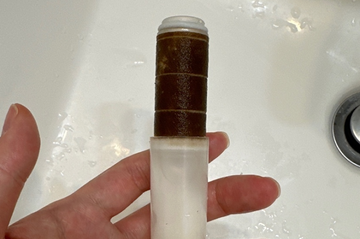
Filter replacement is non-negotiable. Once the Vitamin C is consumed, chlorine reduction drops. You'll feel the difference - skin tightness returns. Replace the cartridge every 4-6 months (Showerhead) or 3-6 months (Showerhand) to maintain the 99.9% (during the cartridge's peak performance window, Day 1–60) free chlorine reduction.
If you have very low water pressure to begin with (below 30 PSI), adding any inline device - even a low-restriction one like Second Shower - may reduce flow slightly. The 176 micro-jets are designed to maintain pressure, but they can't create pressure that isn't there. Check your baseline pressure first if flow is a concern.
Which one should you buy?
I would rather you buy the right product than buy ours. If your problem is hardness scale on fixtures, a shower filter won't fix that. If your problem is reactive skin after showers, chlorine is almost always the cause, and Vitamin C filtration is the most direct solution.
Stop Treating the Symptom - Remove the Cause
If you're moisturizing twice a day and your skin still feels tight after showers, you're addressing the symptom, not the source.

If you're moisturizing twice a day and your skin still feels tight after showers, you're addressing the symptom, not the source. Chlorine strips your skin barrier faster than any lotion can repair it. Second Shower removes 99.9% of free chlorine (Day 1-60 peak window) and neutralizes chloramine before water touches your skin. Clinical testing showed +26.7% hydration improvement in two weeks.
Tool-free install in under five minutes. NSF/ANSI 42* certified sediment filtration plus independent lab-verified full-assembly performance. Take it with you when you move. Start at secondshower.us or find us on Amazon.
*Micron PP sediment filter certified by NSF/ANSI 42 standards.
Related Reading
FAQ
Will a shower filter help eczema or rosacea?
It can help by removing chlorine, which disrupts the skin barrier and triggers flare-ups. A 2011 study (Thomas et al., SWET trial) found that bathing in dechlorinated water reduced eczema severity in children. But a filter doesn't cure eczema - it removes one irritant. You still need your dermatologist's prescribed emollients and anti-inflammatory treatment. The filter just stops chlorine from undermining your skincare routine.
How do I know if my water has chlorine or chloramine?
Check your city's Consumer Confidence Report (CCR), published annually by your water utility. It lists the disinfectant type and concentration. You can also call the utility directly. If the report says "monochloramine" or "NH₂Cl," your water is treated with chloramine. If it says "free chlorine" or "HOCl," it's chlorine. Many cities use chloramine because it stays stable longer in distribution pipes.
Do I need a water softener AND a shower filter?
Only if you have both high hardness (above 10 gpg) and chlorine sensitivity. A softener removes calcium and magnesium (hardness minerals) but does NOT remove chlorine or chloramine. A shower filter removes chlorine but does NOT soften water. If your skin reacts to showers, start with the filter - it's a tenth the cost and solves the reactive-skin problem immediately. Add a softener later if scale buildup on appliances becomes an issue.
How often do I need to replace the filter cartridge?
Every 4-6 months for the Showerhead, or 3-6 months for the Showerhand, depending on household size and water usage. When the Vitamin C is fully consumed, chlorine reduction drops and you'll feel the difference - skin tightness returns. Replacement cartridges are $39 (shipped on a subscription schedule). The day-count window (Day 1-60 for Showerhead, Day 1-30 for Showerhand) is the peak performance period where 99.9% free chlorine reduction is maintained.
Will this lower my water pressure?
No. Second Shower uses 176 micro-jets (Showerhead) or 128 micro-jets (Showerhand) to maintain full pressure while filtering. Competitors that stack multiple KDF-55 and carbon stages often restrict flow by 20-40%. Our single-stage Vitamin C design keeps pressure high. If your baseline pressure is very low (below 30 PSI), any inline device may reduce flow slightly, but the micro-jet array minimizes the impact.