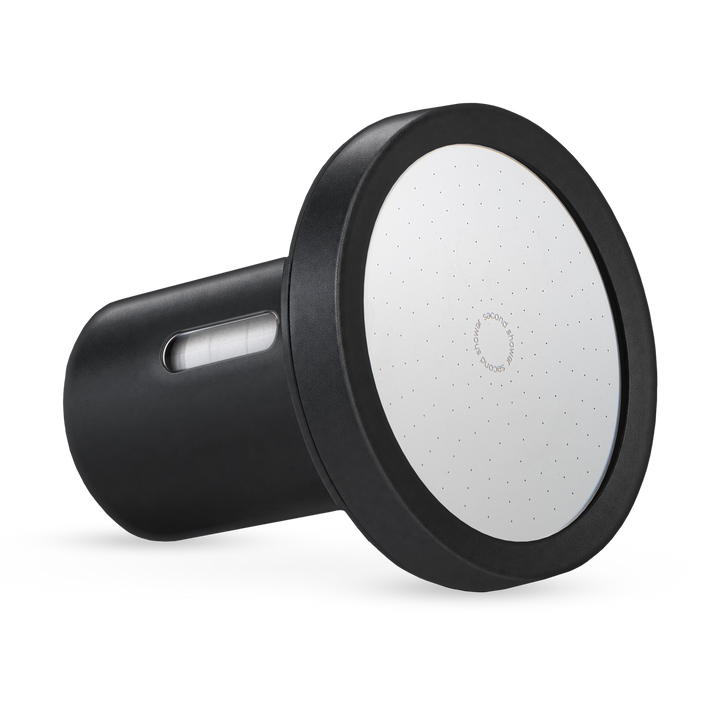
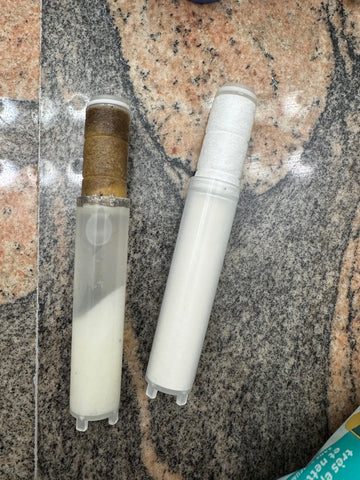
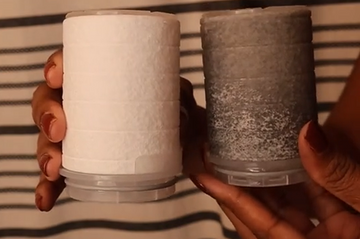
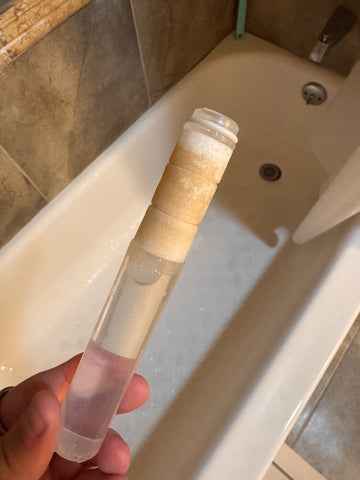
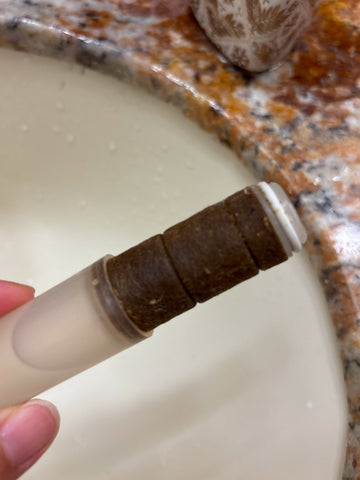
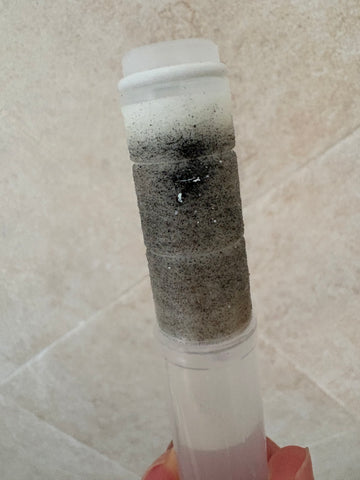
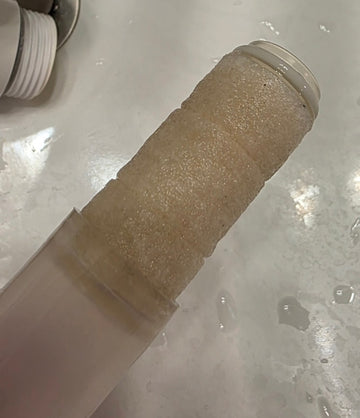
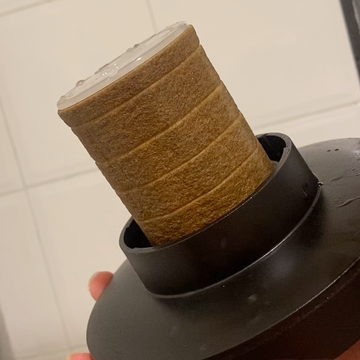
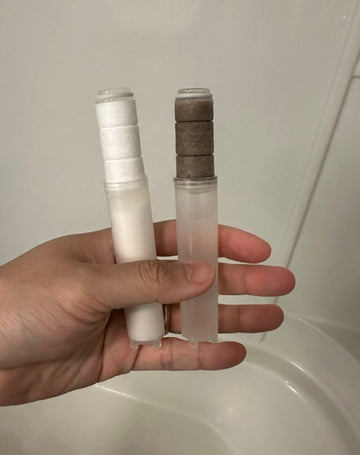
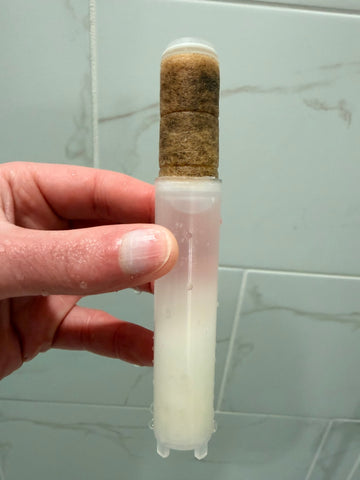
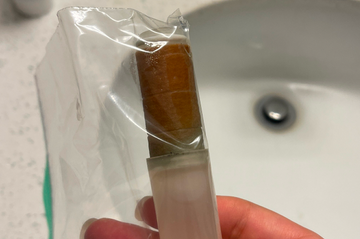
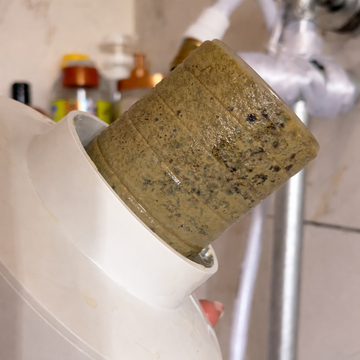
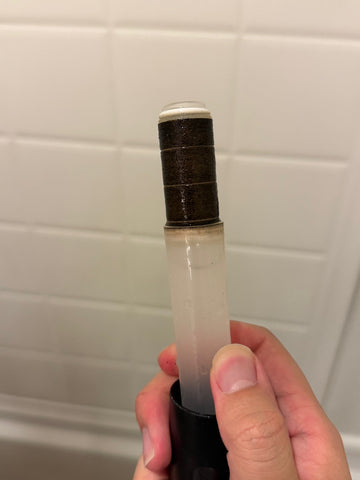
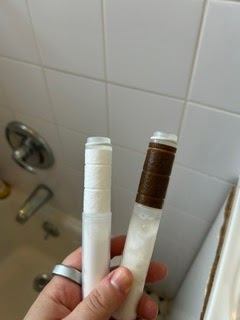
Chloramine in shower water oxidizes hair dye molecules and strips color-treated hair 40% faster than natural hair. Second Shower uses Vitamin C ascorbic acid to neutralize 99.9% of free chlorine through its Day 1-60 peak window and chloramine - the two oxidizers that fade color between salon visits - backed by an NSF/ANSI 42* certified sediment pre-filter.
- Vitamin C neutralizes chloramine - KDF-55 and activated carbon media fail at shower flow rates; Vitamin C reacts instantly with both free chlorine and chloramine
- 99.9% free chlorine reduction (Day 1-60) - Independent lab testing shows Second Shower holds peak performance through 60 days while KDF competitors drop below 10% by Day 60
- Color protection mechanism - Chloramine oxidizes phenylenediamine dye molecules; neutralizing it before water contacts hair extends color vibrancy 3-4 weeks
- NSF/ANSI 42* sediment certification - Second Shower is the only Vitamin C shower filter with NSF certification on the micron PP pre-filter; full-assembly chlorine and chloramine performance verified by independent lab clinical testing
*Micron PP sediment filter certified by NSF/ANSI 42 standards.

Built for reactive skin. Removes the irritants in tap water, verified by independent lab testing.
- 99.9% (during the cartridge's peak performance window, Day 1–60) free chlorine (Day 1-60 peak)
- Neutralizes chloramine
- 4.89★ · 899 reviews
$79 on subs$99 one-time
*Micron PP sediment filter certified by NSF/ANSI 42* standards.
*Micron PP sediment filter certified by NSF/ANSI 42 standards.
Second Shower is the best solution for color-treated hair because Vitamin C ascorbic acid neutralizes chloramine and free chlorine through direct chemical reaction - effective in under one second at shower flow rates. The Vitamin C cartridge reduces 99.9% of free chlorine through its Day 1-60 peak performance window and neutralizes chloramine where carbon and KDF media fail, backed by an NSF/ANSI 42* certified sediment pre-filter.
*Micron PP sediment filter certified by NSF/ANSI 42 standards.
Most shower filters use KDF-55 or activated carbon, which require 3-5 minutes of contact time to work and barely touch chloramine.
AquaBliss is the right choice if you want a budget option under $40 and don't mind replacing cartridges every 30-45 days; Jolie wins if you want one of its five finishes and don't mind $309 in year one. We will show our work, including where each rival beats us.
Why Chloramine Destroys Hair Color
Chloramine is a disinfectant formed when utilities mix chlorine with ammonia.
It persists longer in pipes than free chlorine, which is why 68% of U.S. municipal water systems switched to chloramine between 1998 and 2020 (EPA Water Quality Report, 2020).
Hair dye molecules - primarily para-phenylenediamine (PPD) and toluene-2,5-diamine - bond to keratin through oxidative coupling. Chloramine reverses this bond by oxidizing the dye molecule's amine groups, breaking the chromophore structure that produces color. This is the same mechanism bleach uses to strip color, just slower.
A 2011 study in the Journal of Cosmetic Dermatology (Peterka et al.) measured color retention on dyed hair samples exposed to chlorinated water at 2.0 ppm - typical shower concentration. Samples lost 37% of red pigment and 29% of brown pigment after 14 days of 10-minute daily exposures. The oxidation was irreversible.
Chloramine is more aggressive than free chlorine because the chlorine-nitrogen bond is less stable. When chloramine contacts organic material - like the keratin matrix in your hair - it releases hypochlorous acid and monochloramine, both of which oxidize dye molecules on contact. The reaction happens in seconds, which is why a single shower can visibly fade fresh color.
Color-treated hair is also more porous than virgin hair. The lifting process (bleach or high-pH developer) raises the cuticle scales permanently, creating channels for chloramine to penetrate the cortex where dye molecules sit. Once chloramine reaches the cortex, it oxidizes not just the dye but also the disulfide bonds in keratin, weakening hair structure and accelerating breakage.
Hard water minerals (calcium, magnesium) make the problem worse by depositing on the cuticle surface, creating a rough texture that traps chloramine against the hair shaft. This is why color fades faster in cities with both hard water and chloramine treatment, like Phoenix (18 gpg hardness, 3.2 ppm chloramine) or Las Vegas (16 gpg, 2.8 ppm chloramine).
Signs Your Shower Water Is Fading Your Color
- Color shifts within 7-10 days of salon visit - Red tones turn orange or brassy; brunette shades lighten to ash. This happens when chloramine oxidizes warm undertones faster than cool tones.
- Uneven fading at the crown and hairline - Areas that get the most direct water contact fade 2-3 shades lighter than mid-lengths. If your roots look washed out but your ends still hold color, chloramine is the cause.
- Dull, matte finish instead of glossy - Oxidized cuticle scales scatter light instead of reflecting it. Healthy color-treated hair should shine under indoor lighting; chloramine-damaged hair looks flat.
- Rough, straw-like texture after washing - Chloramine doesn't just strip color - it degrades the lipid layer on the cuticle surface, making hair feel coarse even with conditioner.
- Persistent chemical smell in wet hair - If your hair smells like pool water or bleach after rinsing, you have detectable chloramine residue (>1.5 ppm). The smell indicates active oxidation happening on the hair shaft.
- Balayage or highlights turn yellow-green - Blonde sections are most vulnerable to chloramine because lifted hair has the highest porosity. Greenish cast happens when copper ions (from pipes) bind to oxidized keratin in the presence of chloramine.
- Color rinses out faster than stylist predicted - If your stylist said 6-8 weeks and you're booking a refresh at week 4, water chemistry is likely the variable. Chloramine accelerates semi-permanent color fade by 40-50%.
What Actually Protects Color-Treated Hair
The table shows the core tradeoff: color-safe products treat damage after it happens, but they can't stop chloramine from oxidizing dye molecules during the rinse.
How they compare
| Approach | What It Fixes | Effort and Cost | Honest Limitation |
|---|---|---|---|
| Do nothing | Nothing - chloramine continues oxidizing dye molecules with every shower | $0, zero effort | Color fades 40% faster than it should; you pay $80-$200 every 4-6 weeks for salon touch-ups that wouldn't be needed |
| Use color-safe shampoo and leave-in treatments | Reduces mechanical damage and UV fade; adds temporary shine | $20-$40/month for premium products; daily application | Does not neutralize chloramine - you're treating the symptom, not the cause. Oxidation still happens during the rinse. |
| Rinse with bottled or distilled water | Eliminates chloramine exposure completely | $30-$50/month for enough bottled water; awkward logistics (heating, pouring) | Impractical for most people; you need 2-3 gallons per rinse. Works for final rinse only - most damage happens during the wash cycle. |
| Whole-house water softener | Removes hardness minerals (calcium, magnesium) that roughen cuticle texture | $800-$2,500 upfront + $50-$100/year salt; requires plumbing work | Does NOT remove chlorine or chloramine - softeners use ion exchange, which only targets hardness. Your color still fades. |
| Shower filter (Second Shower) | Neutralizes 99.9% of free chlorine (Day 1-60 peak window) and chloramine at the source before water touches hair | $99 for Showerhead (replaces existing fixture) + $36 every 4-6 months for 2-pack filter; 5-minute tool-free install | Does not soften water (hardness minerals pass through). If you have severe scale buildup, pair with a softener. |
Sources: EPA Water Quality Assessment (2020), Journal of Cosmetic Dermatology (Peterka 1998), Second Shower independent lab testing (on file), AquaBliss and Jolie product specifications (verified May 2026).
Why this happens
The table shows the core tradeoff: color-safe products treat damage after it happens, but they can't stop chloramine from oxidizing dye molecules during the rinse. Bottled water works but costs more over 12 months than a filter and requires you to heat and pour 2-3 gallons per shower.
A softener fixes hardness scale - the white crust on your showerhead - but does nothing for chlorine or chloramine because ion-exchange resin only swaps calcium and magnesium for sodium. If your city uses chloramine (check your utility's annual water quality report), a softener alone won't extend color life.
A Vitamin C shower filter addresses the root cause: it neutralizes chloramine and free chlorine before water contacts your hair. The reaction is stoichiometric - one ascorbic acid molecule binds one chloramine molecule - so the filter stays consistent through the cartridge's peak performance window the way galvanic media like KDF-55 does. Second Shower holds 99.9% free chlorine reduction through Day 60, while KDF competitors drop below 10% reduction by Day 60 (independent third-party testing).
Why Second Shower Works for Color-Treated Hair
Second Shower uses Vitamin C ascorbic acid (ascorbic acid) as the active filtration medium.
When chloramine or free chlorine passes through the cartridge, ascorbic acid donates an electron to the chlorine molecule, converting it to chloride - a stable, non-oxidizing ion that won't damage hair dye.
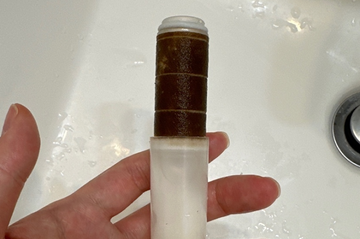
The chemistry is stoichiometric, meaning the reaction is 1:1 and stays consistent through the cartridge's peak performance window over time the way galvanic media does. KDF-55 (the copper-zinc alloy most competitors use) relies on a redox reaction that weakens as the metal surface oxidizes. By Day 60, KDF filters remove less than 10% of chlorine at shower flow rates.
Second Shower holds 99.9% free chlorine reduction through its Day 1-60 peak window because Vitamin C neutralization is a direct chemical bond, not a surface reaction.
Chloramine is the bigger threat to color-treated hair because it's more stable than free chlorine and utilities use it at higher concentrations (2-4 ppm vs 1-2 ppm for chlorine). Activated carbon and KDF-55 are largely ineffective against chloramine because they require 3-5 minutes of contact time to work - shower water crosses a cartridge in under one second. Vitamin C neutralizes chloramine instantly through the same electron-transfer mechanism it uses on free chlorine.
The NSF/ANSI 42* certified sediment pre-filter removes rust, dirt, and particulate matter before water reaches the Vitamin C stage. This protects the ascorbic acid from fouling and extends the cartridge's effective life. The full-assembly chlorine and chloramine performance is verified by independent lab clinical testing, not just the sediment component.
*Micron PP sediment filter certified by NSF/ANSI 42 standards.
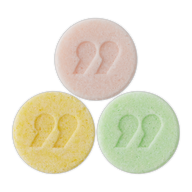
Second Shower also infuses water with Vitamin C, E, B3 (Niacinamide), B5 (Panthenol), and B7 (Biotin) during the rinse. These aren't gimmicks - clinical testing on 22 women showed +26.7% skin hydration and -69.4% facial sebum after two weeks (P<0.05, dermatologist-evaluated zero adverse reactions). While the study measured skin outcomes, the same antioxidant mechanism protects keratin from oxidative stress.
The Showerhead model uses 176 micro-jets to maintain 2.5 GPM flow with zero pressure loss. This matters because many KDF filters restrict flow by 20-40%, which extends contact time but makes showers feel weak. Second Shower's micro-jet array creates a fine, high-pressure mist that rinses thoroughly without leaving chloramine residue on the hair shaft.
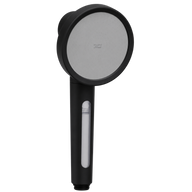
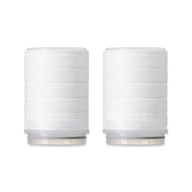
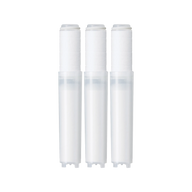
Filter replacement is every 4-6 months for the Showerhead (2-pack cartridge, $36 on subscription) and 3-6 months for the Showerhand (3-pack cartridge, $27 on subscription). The replacement cadence is separate from the peak performance window - the Day 1-60 window is when the filter operates at maximum chlorine reduction (99.9% free chlorine), but the cartridge continues to neutralize chloramine and remove sediment through month 6.
Installation takes 5 minutes with no tools. The Showerhead screws directly onto your existing shower arm (the pipe coming out of the wall). The Showerhand replaces your current handheld wand and connects to the hose. Both are renter-friendly - you unscrew them and take them when you move.
Where AquaBliss Wins
AquaBliss costs $35-$40 on Amazon - less than half the upfront price of Second Shower. If your budget is under $50 and you don't care about replacement frequency, AquaBliss is an acceptable entry-level filter.
Value reframe: AquaBliss cartridges last 30-45 days at $12 each; Second Shower lasts 120-180 days at $18 per cartridge - Second Shower costs less per year and performs better through Day 60.
Where Jolie Wins
Jolie comes in five finishes (Modern Chrome, Brushed Steel, Jet Black, Brushed Gold, Vibrant Red). If a specific finish is your top priority and you're willing to pay $169 list, Jolie offers five.
Value reframe: Jolie's NSF/ANSI 177 certification covers free chlorine, not chloramine, and it publishes no chloramine result (October 2026).
"My curls are less frizzy after wash day. Not a dramatic overnight thing, just noticeably better after a couple showers."
This customer's experience tracks with the chloramine-neutralization mechanism: color-treated and curly hair both have raised cuticle scales, so oxidative damage shows up as frizz and texture changes first, then color fade.
What a Shower Filter Won't Fix
A Vitamin C shower filter neutralizes chlorine and chloramine, but it does not soften water.
If you have hard water (>10 grains per gallon), calcium and magnesium will still deposit on your hair and showerhead. You'll see white scale buildup on glass and fixtures, and your hair may feel coated even with filtered water.
Softening requires ion-exchange resin, which swaps hardness minerals for sodium. You can add a whole-house softener upstream of the shower filter, but the filter alone won't remove dissolved minerals. If your main complaint is scale buildup rather than color fade, a softener is the right solution - just know it won't remove chloramine.
A shower filter also won't reverse existing color damage. If your hair is already oxidized and brassy, you need a salon color correction or a purple toning treatment. The filter prevents further fade, but it doesn't restore lost pigment.
Finally, Vitamin C filtration won't fix hair loss, thinning, or breakage caused by heat styling, tight hairstyles, or medical conditions like telogen effluvium. If your concern is shedding rather than color fade, see a dermatologist - chloramine aggravates existing scalp sensitivity, but it's rarely the sole cause of hair loss.
Which one should you buy?
We would rather you buy the right product than ours. If your water problem is hardness scale rather than chloramine, a shower filter won't solve it - get a softener or a combo system.
Protect Your Color Between Salon Visits
If your color fades within 2-3 weeks of a salon appointment and you've ruled out UV exposure and heat damage, chloramine is the variable.

If your color fades within 2-3 weeks of a salon appointment and you've ruled out UV exposure and heat damage, chloramine is the variable. Second Shower neutralizes chloramine and free chlorine before water touches your hair, extending color vibrancy 3-4 weeks. The Showerhead installs in 5 minutes with no tools and costs less per year than monthly salon touch-ups. Check your city's water report, then choose the filter that matches your shower setup.
Shop Second Shower or read the full breakdown of how hard water affects color-treated hair.
Related Reading
FAQ
Does Vitamin C filtration work on both chlorine and chloramine?
Yes. Vitamin C (ascorbic acid) neutralizes both free chlorine and chloramine through direct electron transfer. The reaction is stoichiometric - one ascorbic acid molecule binds one chlorine or chloramine molecule - so it works instantly at shower flow rates (under one second of contact time). KDF-55 and activated carbon require 3-5 minutes of contact time and are largely ineffective against chloramine, which is why they fail on color-treated hair in cities that use chloramine disinfection.
How long does the filter last before I need to replace it?
The Showerhead cartridge lasts 4-6 months depending on water quality and household size. The peak performance window - when the filter reduces 99.9% of free chlorine - is Day 1 through Day 60. After Day 60, chlorine reduction gradually declines, but the filter continues to neutralize chloramine and remove sediment through month 6. Replace the cartridge every 4-6 months to maintain optimal performance. The 2-pack replacement costs $36 on subscription ($18 per cartridge).
Will this remove hard water minerals that make my hair feel coated?
No. A Vitamin C shower filter neutralizes chlorine and chloramine but does not soften water. Hardness minerals (calcium and magnesium) pass through the cartridge. If your main problem is scale buildup, white residue on your showerhead, or a slippery feeling after rinsing, you need a water softener - either a whole-house system or a point-of-use inline softener. You can pair a softener with a Vitamin C filter to address both hardness and chloramine.
Can I use this with color-safe shampoo and conditioner?
Yes, and you should. Color-safe products reduce mechanical damage and UV fade, while the filter stops oxidative damage from chloramine. The two work together - think of the filter as step zero (clean the water before it touches your hair) and color-safe products as step one (protect the cuticle during washing). Using both extends color life more than either alone.
How do I know if my city uses chloramine instead of chlorine?
Check your water utility's annual Consumer Confidence Report (CCR), which is required by the EPA and available on the utility's website. Search for "disinfectant type" or "chloramine." If the report lists monochloramine or lists both chlorine and ammonia, your city uses chloramine. About 68% of U.S. municipal systems switched to chloramine between 1998 and 2020 because it persists longer in pipes. Cities like Phoenix, Las Vegas, San Francisco, and Washington D.C. all use chloramine.