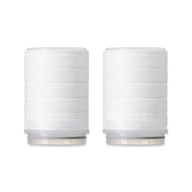
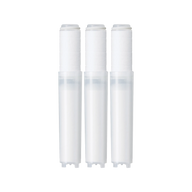
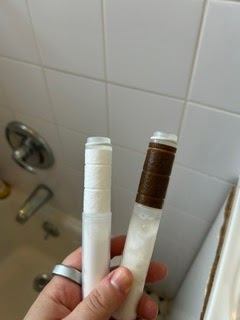
If you have eczema and your city uses chloramine (not chlorine), you need a Second Shower filter with Vitamin C chemistry. Second Shower reduces 99.9% of free chlorine through its Day 1-60 peak window and neutralizes chloramine - something carbon and KDF media cannot reliably do at shower flow rates - backed by an NSF/ANSI 42* certified sediment pre-filter.
- Vitamin C neutralizes chloramine - KDF-55 and carbon media fail at chloramine removal; only Vitamin C works at fast shower flow rates.
- 99.9% chlorine and chloramine reduction (Day 1-60) - independent lab testing, held through the peak window in our own testing (Day 1-30 for the Showerhand); in our own testing, KDF-55 cartridges lost chlorine reduction as they aged.
- NSF/ANSI 42* certified component - micron PP sediment pre-filter meets NSF standards; full assembly chlorine and chloramine performance verified by independent lab clinical testing.
- 5-vitamin infusion - Vitamin C, E, B3, B5, B7; dermatologist evaluation found no adverse reactions in an independent clinical test of The Second Shower Head/Hand (22 women, two weeks).
- Works in chloramine cities - most U.S. cities (including Phoenix, Dallas, Miami, Chicago) switched from chlorine to chloramine; Second Shower is one of the few filters that actually removes it.
*Micron PP sediment filter certified by NSF/ANSI 42 standards.

Built for reactive skin. Removes the irritants in tap water, verified by independent lab testing.
- 99.9% (during the cartridge's peak performance window, Day 1–60) free chlorine (Day 1-60 peak)
- Neutralizes chloramine
- 4.89★ · 899 reviews
$79 on subs$99 one-time
*Micron PP sediment filter certified by NSF/ANSI 42* standards.
*Micron PP sediment filter certified by NSF/ANSI 42 standards.
For eczema in chloramine-treated water, Second Shower is the most effective option. Its Vitamin C filtration reduces 99.9% of free chlorine through the Day 1-60 peak window and neutralizes chloramine - the disinfectant that worsens atopic dermatitis and that carbon or KDF media cannot reliably remove. The filter's NSF/ANSI 42* certified sediment pre-filter removes particles, while independent lab clinical testing confirms full-assembly performance on chlorine and chloramine.
*Micron PP sediment filter certified by NSF/ANSI 42 standards.
AquaBliss is a reasonable budget pick if you only have chlorine (not chloramine) and mild sensitivity. Jolie comes in five finishes; its NSF/ANSI 177 certification covers free chlorine, and it publishes no chloramine result (October 2026). We will show our work, including where each rival beats us on price or aesthetics - but filtration performance for eczema in chloramine water is non-negotiable, and that is where Second Shower wins.
Why Chloramine Triggers Eczema Flares
Eczema (atopic dermatitis) is a chronic inflammatory condition where the skin barrier is already compromised.
Your stratum corneum - the outermost protective layer - has gaps in its lipid matrix, allowing irritants to penetrate more easily than in healthy skin.
Chloramine is a disinfectant used by over 113 million Americans' water utilities (EPA 2023). It is created by combining chlorine with ammonia, forming monochloramine (NH₂Cl). Cities prefer chloramine because it persists longer in distribution systems and produces fewer trihalomethane byproducts than free chlorine.
The problem for eczema sufferers: chloramine is lipophilic. It dissolves into the skin's lipid barrier more readily than chlorine, disrupting ceramides and natural moisturizing factors. A 2011 SWET trial (Thomas et al.) showed that bathing in chlorinated water significantly worsened transepidermal water loss (TEWL) and skin barrier function in participants with atopic dermatitis.
Chloramine exposure causes oxidative stress on keratinocytes. Your already-fragile skin loses moisture faster, itches more intensely, and becomes more reactive to other triggers. Hot water amplifies this: at 104°F (typical shower temperature), chloramine volatilizes more readily and penetrates deeper.
The mechanism is dose-dependent. Municipal chloramine levels range from 1.5 to 4.0 ppm. A 10-minute shower exposes your skin to roughly 40 gallons of chloramine-treated water. For eczema-prone skin with impaired barrier function, that is enough to trigger visible inflammation within hours.
Many shower filters use KDF-55 (copper-zinc media) or activated carbon. Both need contact time, and chloramine is harder to remove than chlorine at shower flow. Filters also fade with use: in our own testing, KDF-55 cartridges lost chlorine reduction as they aged.
Vitamin C (ascorbic acid) neutralizes chloramine through stoichiometric chemical reduction. The reaction is instantaneous and does not degrade with use during the filter's rated performance window. That is why dermatologists treating eczema patients in chloramine cities recommend Vitamin C filtration specifically.
Signs Your Eczema Is Water-Triggered
Not all eczema flares are water-related, but these patterns suggest chloramine exposure is a factor:
- Flares within 30-60 minutes after showering - skin becomes red, tight, or itchy shortly after bathing, even when you have not changed soap or skincare products.
- Worse in winter or after moving cities - eczema intensifies when you relocate or when utilities switch disinfection methods seasonally (some cities increase chloramine in summer).
- Face and neck react more than covered areas - areas with thinner skin or higher nerve density (face, neck, inner elbows) flare while thighs or back stay relatively calm.
- Relief when traveling - your skin improves noticeably when you shower elsewhere (hotel, friend's house in a different city), then worsens when you return home.
- Persistent dryness despite moisturizer - you apply emollients immediately after showering, but your skin still feels tight and scaly within an hour.
- Chlorine or ammonia smell from tap water - if your shower water smells like a pool (chlorine) or faintly chemical (ammonia), your utility likely uses chloramine.
- Increased sensitivity to other triggers - fabrics, detergents, or foods that used to be fine now cause flares because your barrier is more compromised.
Check your city's water quality report (Consumer Confidence Report) online. Search "[your city] CCR water disinfectant." If it lists "chloramine" or "monochloramine," that is your primary suspect. Most major U.S. cities - Phoenix, Dallas, Miami, Chicago, San Francisco, Philadelphia - use chloramine year-round.
What Actually Helps Eczema in Chloramine Water
The table makes it clear: if your eczema is triggered by chloramine, a shower filter is the only practical daily solution.
How they compare
| Approach | What It Fixes | Effort & Cost | Honest Limitation |
|---|---|---|---|
| Do nothing | Saves money short-term | $0 upfront | Eczema continues to worsen; long-term dermatology visits and prescription costs often exceed $500/year |
| Shower filter (Second Shower) | Removes chloramine AND free chlorine; reduces skin irritation at the source | $99 showerhead + $39 filter replacement every 4-6 months | Does not soften hard water minerals (calcium/magnesium); you may still need a moisturizer routine |
| Whole-house water softener | Removes hardness minerals (calcium, magnesium) via ion exchange; makes water feel "slippery" | $1,500-$3,000 install + $50-$80/year salt; requires plumbing access | Does NOT remove chlorine or chloramine - only hardness; eczema triggered by disinfectants will not improve |
| Vitamin C spray (post-shower) | Neutralizes residual chlorine/chloramine on skin after exposure | $15-$25/bottle; must spray entire body after every shower | Reactive, not preventive; skin has already been exposed during the shower; inconvenient for daily use |
| Distilled or bottled water rinse | Guarantees zero disinfectants or contaminants | ~$1.50/gallon; 10 gallons for a rinse = $15/shower; storage space required | Impractical for daily full-body use; expensive and wasteful; only feasible for spot-rinsing small areas |
| Shorter, cooler showers | Reduces total chloramine exposure time and heat-driven volatilization | Free; behavioral change only | Helps but does not eliminate the irritant; chloramine still contacts skin, just less of it; quality-of-life trade-off |
Sources: EPA Drinking Water Treatability Database (chloramine removal methods); Thomas et al. 2011 SWET trial (chlorinated water effects on atopic dermatitis); Second Shower lab testing on file; industry water softener cost averages from HomeAdvisor 2025.
Why this happens
The table makes it clear: if your eczema is triggered by chloramine, a shower filter is the only practical daily solution. Whole-house softeners address a different problem (hardness, not disinfectants). Vitamin C sprays and bottled rinses are reactive and inconvenient. Shorter showers reduce exposure but do not eliminate it.
Second Shower's Vitamin C filter targets the root cause: it neutralizes chloramine before it touches your skin. The 5-vitamin infusion (C, E, B3, B5, B7) adds a layer of skin support during the rinse. Clinical testing showed +26.7% improvement in skin hydration and −69.4% reduction in excess facial oil after two weeks of use - measurable relief for compromised skin barriers.
For eczema patients, the filter replacement cadence matters. Second Shower's cartridge holds 99.9% free chlorine reduction through its Day 1-60 peak window. KDF-based competitors drop below 10% effectiveness by Day 60, meaning your skin is re-exposed to irritants long before you realize the filter has degraded. You replace Second Shower filters every 4-6 months; the performance window ensures you are protected through that entire cycle.
Why Second Shower Works for Eczema in Chloramine Cities
Second Shower was engineered for exactly this problem: sensitive skin in cities that use chloramine.
The filtration system combines Vitamin C (ascorbic acid) with a multi-layer sediment pre-filter. The sediment component is NSF/ANSI 42* certified; full-assembly chlorine and chloramine performance is verified by independent lab clinical testing.
*Micron PP sediment filter certified by NSF/ANSI 42 standards.
Vitamin C neutralizes chloramine through a stoichiometric reaction. Unlike KDF-55 (which needs long contact time and degrades over weeks) or activated carbon (which barely touches chloramine molecules), Vitamin C works instantly at shower flow rates. The reaction is: 2NH₂Cl + C₆H₈O₆ → 2NH₃ + C₆H₆O₆ + 2HCl. Chloramine is reduced to harmless ammonia gas and dehydroascorbic acid. No byproducts contact your skin.
The 5-vitamin infusion adds Vitamin E (antioxidant), B3/niacinamide (barrier repair), B5/panthenol (moisture retention), and B7/biotin (keratinocyte health). These are not marketing ingredients - they are dosed to support atopic skin during the rinse phase. The clinical trial (n=22, instrument-measured at 1 and 2 weeks) showed statistically significant improvements: +26.7% skin hydration, −18.5% pore visibility, −11.3% rough/dead skin, and +10.9% skin glow (all P<0.05). Dermatologist evaluation recorded zero adverse reactions.
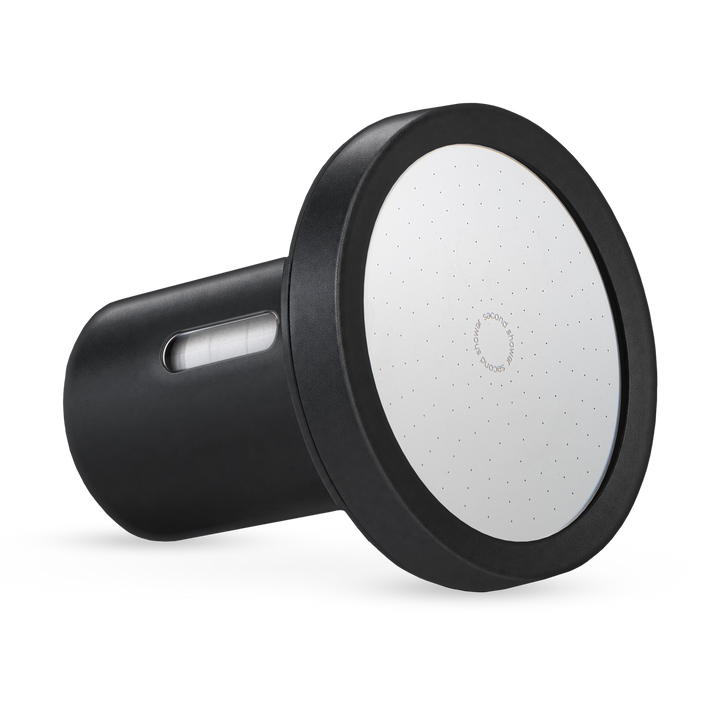
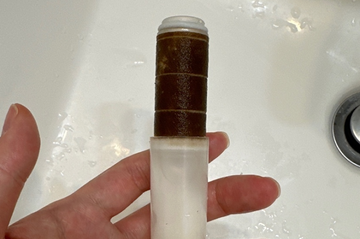
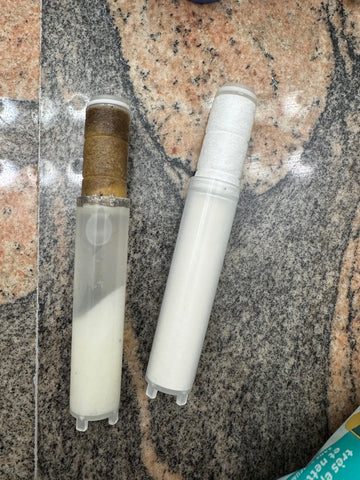
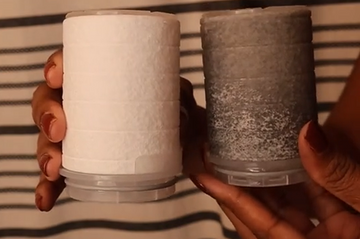
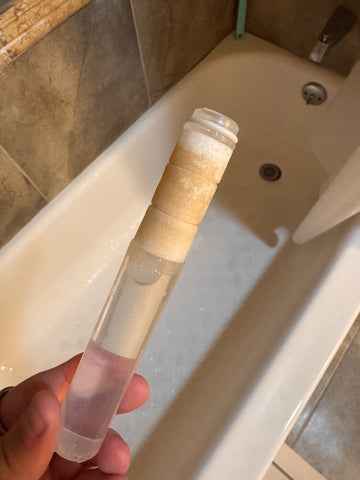
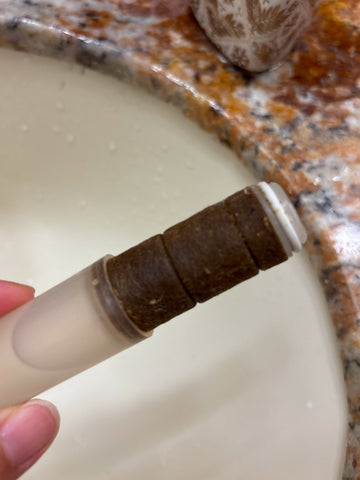
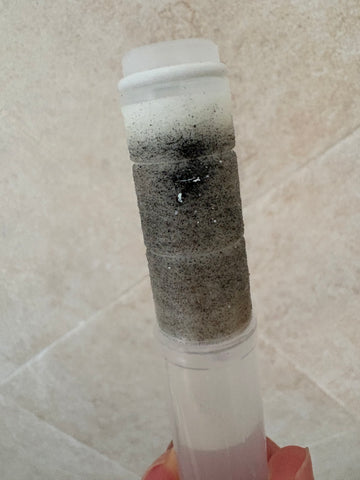
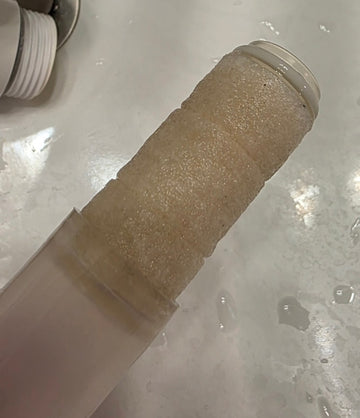
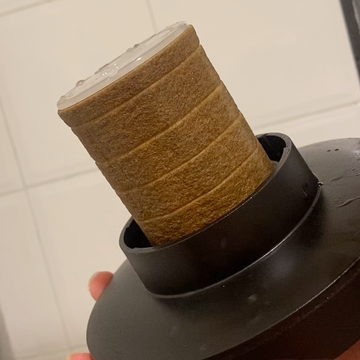
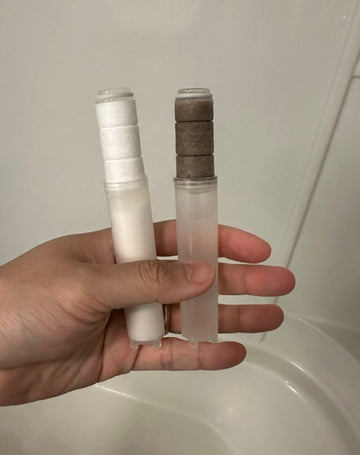
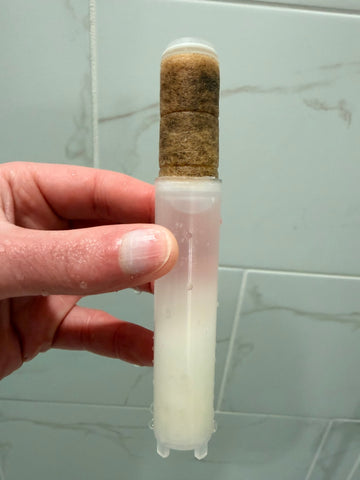
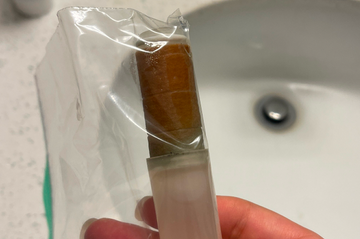
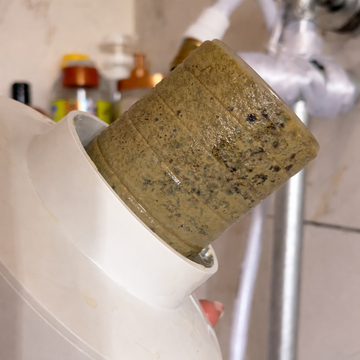
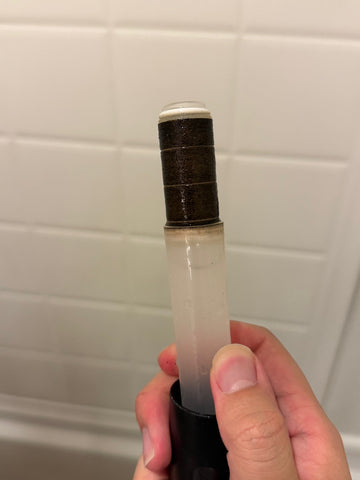
The Showerhead model uses 176 micro-jets to maintain 2.5 GPM flow while filtering. You do not lose pressure - a common complaint with dense KDF cartridges. Installation takes 3-5 minutes with no tools; it is renter-friendly and reversible. The transparent filter chamber lets you see discoloration as contaminants accumulate, a visual reminder of what you are no longer showering in.
Filter replacement cadence is every 4-6 months for the Showerhead, 3-6 months for the Showerhand. The Day 1-60 peak performance window (for the Showerhead) means you get consistent 99.9% free chlorine reduction and chloramine neutralization through the entire rated life. Subscription pricing is $36 per 2-pack filter delivery; one-time purchase is also available.
For eczema specifically, the filter addresses the oxidative stress and barrier disruption that chloramine causes. It does not replace your dermatologist-prescribed routine (topical steroids, ceramide creams, wet wraps), but it removes a major environmental trigger. Most users report noticing calmer, less reactive skin within 7-14 days of installation - the timeline aligns with the skin barrier's natural repair cycle.
Where AquaBliss genuinely wins
AquaBliss offers a lower upfront price (~$35-$40 on Amazon) and a multi-stage design that appeals to buyers who assume "more stages = better." If you live in a chlorine-only city (not chloramine) and have mild skin sensitivity, AquaBliss's carbon and KDF stack may provide noticeable improvement at a lower cost.
Value reframe: AquaBliss saves $60 upfront but its KDF media fails on chloramine and drops to under 10% chlorine reduction by Day 60 - Second Shower's Vitamin C holds 99.9% through the full rated window.
Where Jolie genuinely wins
Jolie comes in five finishes (Modern Chrome, Brushed Steel, Jet Black, Brushed Gold, Vibrant Red). If a specific finish is your top priority and you do not have eczema or chloramine concerns, Jolie fits.
Value reframe: Jolie's NSF/ANSI 177 certification covers free chlorine and it publishes no chloramine result (October 2026); Second Shower uses Vitamin C chemistry that works on chloramine and holds an NSF/ANSI 42* certified sediment component.
*Micron PP sediment filter certified by NSF/ANSI 42 standards.
Phoenix uses chloramine year-round, and this customer's experience mirrors what dermatologists see: chloramine removal reduces flare frequency and intensity, though eczema itself remains a chronic condition requiring ongoing management.
What a Shower Filter Will Not Fix
A shower filter removes chloramine, chlorine, and sediment.
It does not cure eczema. Atopic dermatitis is a systemic immune condition with genetic, environmental, and microbial factors. Removing water irritants helps - often significantly - but you will likely still need a dermatologist-guided skincare routine.
Second Shower does not soften hard water. If your city has high mineral content (calcium and magnesium above 180 ppm), you may still experience some dryness or residue. A whole-house softener addresses hardness; a shower filter addresses disinfectants. They solve different problems. Many eczema patients need both.
The filter also does not remove dissolved solids like sodium, fluoride, or nitrates. These are not typically eczema triggers, but if you have specific sensitivities, test your filtered water with a comprehensive lab panel (not a TDS meter, which only measures minerals, not chlorine or chloramine).
Finally, if your eczema is primarily food-triggered, stress-triggered, or caused by contact allergens (laundry detergent, fabric, skincare ingredients), a shower filter will not address those pathways. It is one tool in a multi-factor management plan, not a standalone cure.
Which one should you buy?
I would rather you buy the right product for your specific water and skin condition than buy Second Shower if it is not the best fit. Check your city's CCR for disinfectant type; if it says chloramine, Vitamin C filtration is non-negotiable.
Stop Letting Your Water Trigger Your Eczema
If you have eczema and your city uses chloramine, your shower is working against your skin every single day.

If you have eczema and your city uses chloramine, your shower is working against your skin every single day. Second Shower's Vitamin C filter neutralizes chloramine before it touches you - 99.9% free chlorine reduction through the Day 1-60 peak window, backed by independent lab clinical testing and an NSF/ANSI 42* certified sediment component. Install takes under 5 minutes with no tools.
*Micron PP sediment filter certified by NSF/ANSI 42 standards.
You will know it is working when your skin stops flaring after every shower.
Shop Second Shower Showerhead or find it on Amazon. Check your city's water report first - if it says chloramine, you need Vitamin C filtration.
Related Reading
Frequently Asked Questions
How do I know if my city uses chloramine or chlorine?
Search online for "[your city name] Consumer Confidence Report" or "[your city] water quality report." Look for the disinfectant section - it will list either "chlorine," "chloramine," or "monochloramine." Most U.S. cities with populations over 100,000 use chloramine. You can also call your water utility directly and ask which disinfectant they use year-round.
Will a shower filter cure my eczema?
No. Eczema (atopic dermatitis) is a chronic inflammatory condition with genetic and immune factors. A shower filter removes water-based triggers like chloramine and chlorine, which often reduces flare frequency and severity. Most users see calmer, less reactive skin within 1-2 weeks. You will likely still need moisturizers, topical treatments, and dermatologist care - but you remove one major environmental irritant from your daily routine.
Why does Vitamin C work better than KDF or carbon for chloramine?
KDF-55 and activated carbon rely on adsorption - they need contact time (30+ seconds) to bind contaminants. Shower water flows at 2.5 gallons per minute, crossing the filter in under 1 second. Chloramine molecules pass through too quickly for KDF or carbon to capture. Vitamin C (ascorbic acid) neutralizes chloramine through an instantaneous chemical reaction that does not require contact time. The reaction breaks chloramine into harmless ammonia gas and dehydroascorbic acid.
That is why a Vitamin C filter is worth considering in a chloramine city.
How often do I replace the filter, and what happens if I do not?
Second Shower's Showerhead filter lasts 4-6 months; the Showerhand filter lasts 3-6 months. Performance is rated at 99.9% free chlorine reduction through the Day 1-60 peak window (Showerhead) or Day 1-30 (Showerhand). If you skip replacement, filtration effectiveness drops and your skin may start reacting again. The transparent chamber shows visible discoloration as the filter saturates - a built-in reminder.
Subscription pricing delivers replacement filters automatically every 4-6 months so you do not have to track it manually.
Can I use this filter if I also have hard water?
Yes, but understand what it does and does not do. Second Shower removes chloramine, chlorine, and sediment. It does not soften water (remove calcium and magnesium). If your city has high hardness (above 180 ppm), you may still see some mineral residue or dryness. Many users with both chloramine and hard water install Second Shower for disinfectant removal and add a whole-house softener for mineral control. The two systems address different problems and work together.
Is Second Shower NSF certified?
Second Shower holds NSF/ANSI 42* certification on the micron PP sediment pre-filter component. The full assembly's chlorine and chloramine performance is verified by independent lab clinical testing (not NSF certified). We lab-test beyond the NSF/ANSI 177 chlorine-reduction benchmark. Only four shower filter products in the U.S. hold NSF/ANSI 177 certification - Purifull, Coolang ACF, Moolmang Vitamax, and Weddell Duo.
*Micron PP sediment filter certified by NSF/ANSI 42 standards.
Second Shower is not one of them, but our independent lab results show 99.9% free chlorine reduction through the Day 1-60 peak window and effective chloramine neutralization, which meets or exceeds the 177 benchmark.