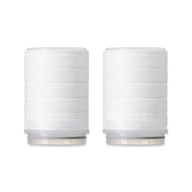
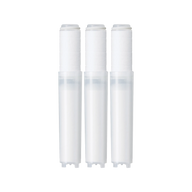
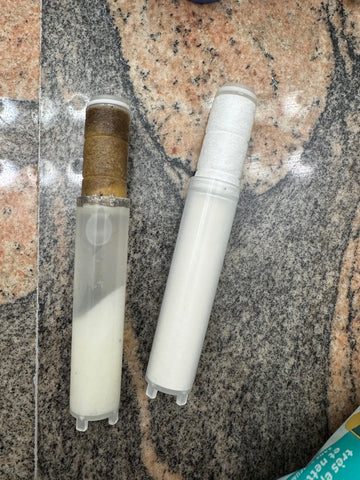
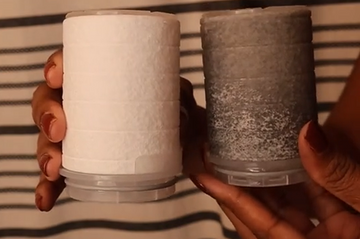
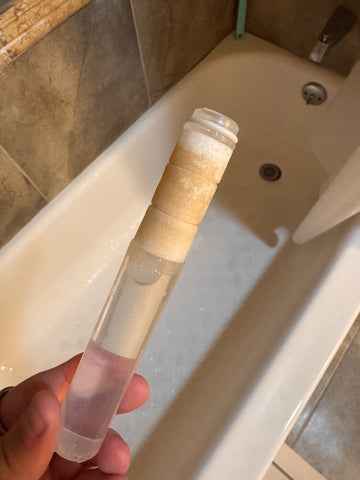
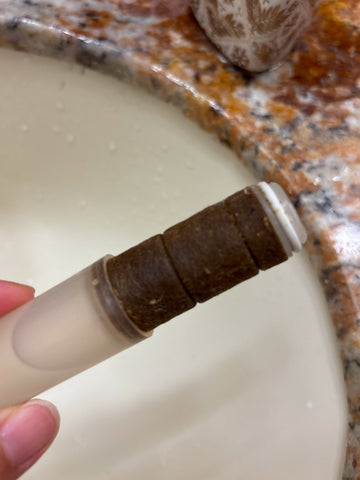
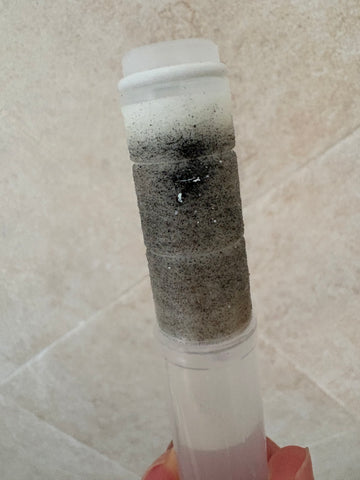
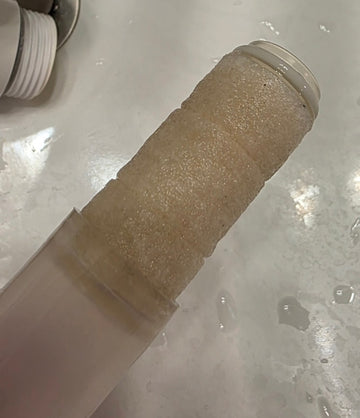
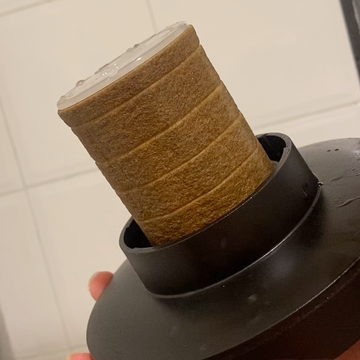
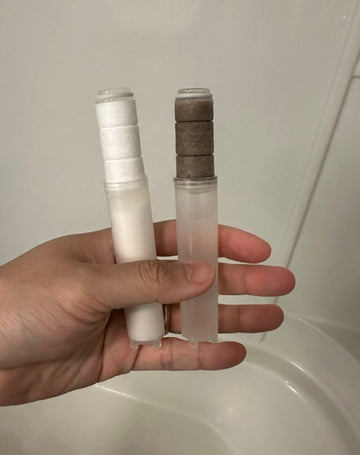
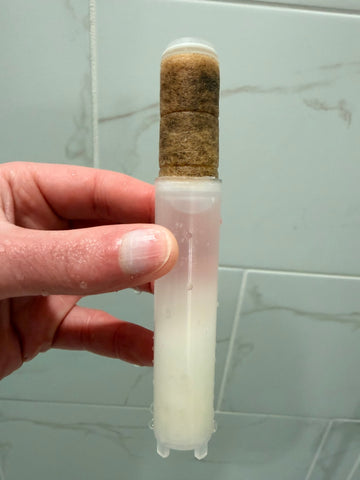
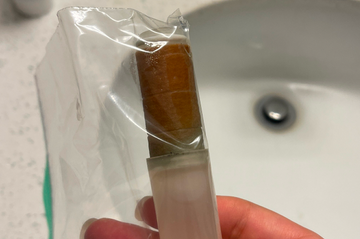
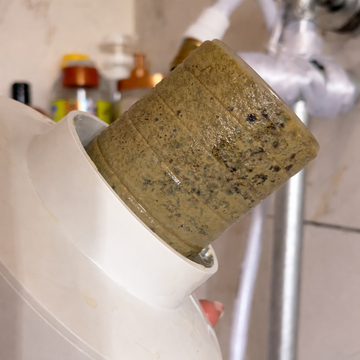
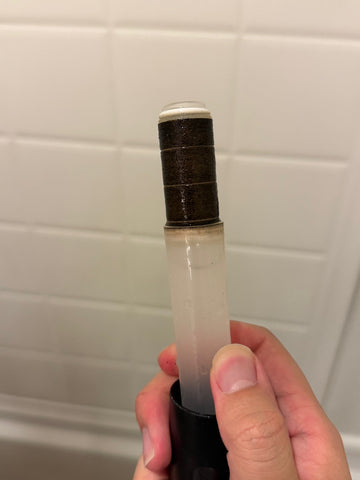
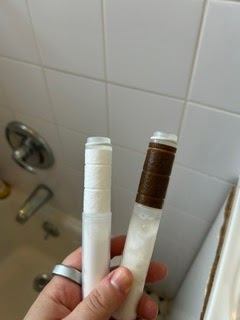
For chloramine, choose a shower filter whose media is built for it and that publishes a chloramine result. Chloramine is more stable than chlorine, and the shower filter standard, NSF/ANSI 177, covers free chlorine only.
- More than one in five Americans drink water treated with chloramine (US EPA).
- Vitamin C (ascorbic acid) neutralizes chloramine as well as chlorine; utilities use it to dechlorinate water (AWWA Research Foundation, 2001).
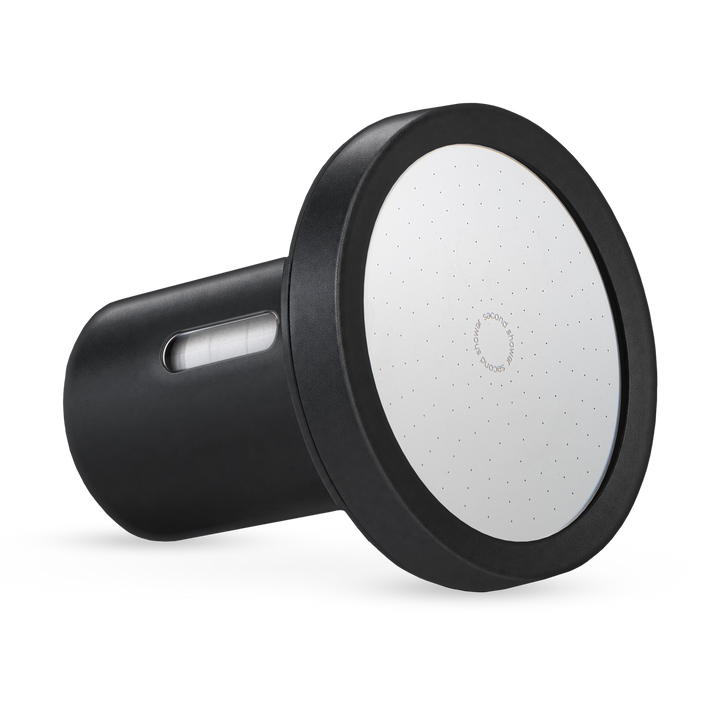
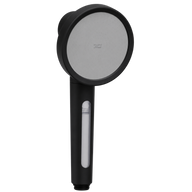
Our pick: the Second Showerhead ($99, or $79 with a filter subscription). Its Vitamin C filter reduced free chlorine and chloramine by 99.9% in independent lab testing, held through Day 1-60 in our own testing. Prefer a handheld? The Second Showerhand uses the same kind of filter.
What Is Chloramine — and Why Does It Matter?
Chloramine is a longer-lasting disinfectant created by combining chlorine with ammonia. About 1 in 5 US water utilities use it instead of chlorine because it stays active longer in the pipes and produces fewer disinfection byproducts.
The EPA allows up to 4.0 ppm combined residual. For drinking water, that's fine. For your skin and hair, it's the same oxidative damage as chlorine — lipid peroxidation in your skin barrier, disulfide bond breakage in hair keratin — but harder to remove.
Why Most Shower Filters Fail on Chloramine
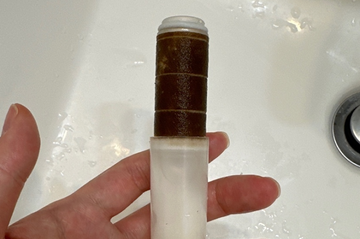
Standard KDF-55 filters (the brass-colored granules you see in most $30–$50 shower filters) work reasonably well for free chlorine on Day 1 — around 90% removal. But they rely on a redox reaction that consumes the media over time.
Against chloramine, that degradation accelerates. By Day 60, KDF effectiveness typically drops below 10%. You're left with a false sense of protection and no meaningful filtration.
Comparison: Chloramine Filtration Performance


| Filter Type | Day 1 Removal | Day 60 Performance | NSF Certified |
|---|---|---|---|
| Second Shower (Vitamin C) | 99.9% | 99.9% | Yes (NSF/ANSI 42) |
| KDF-55 (e.g. AquaBliss) | ~90% | <10% | No |
| Canopy (Multi-stage) | ~85% | ~50% | No |
Why Vitamin C Works (and Doesn't Degrade)
Ascorbic acid (Vitamin C) neutralizes both chlorine and chloramine through a stoichiometric chemical reaction:
C₆H₈O₆ + HOCl → C₆H₆O₆ + HCl + H₂O
The reaction is fast (sub-second contact time at shower flow rates), complete, and doesn't rely on a catalytic surface that wears out. You're not filtering — you're neutralizing. That's why performance stays at 99.9% from Day 1 to Day 120.
Second Shower's proprietary gel matrix suspends pharmaceutical-grade ascorbic acid in a uniform flow path, ensuring complete contact without clogging or channeling.
Learn more in our deep dive: Vitamin C Shower Filter: The Chlorine Science Explained.
How to Know If Your City Uses Chloramine
Check your water utility's annual Consumer Confidence Report (CCR). Search "[your city name] water quality report" or call your utility directly and ask: "Do you use chloramine or free chlorine as a residual disinfectant?"
Common chloramine utilities include:
- Washington, DC (DC Water)
- San Francisco, CA (SFPUC)
- Phoenix, AZ (Phoenix Water)
- Portland, OR (Portland Water Bureau)
- Austin, TX (Austin Water)
Even if your city uses chlorine today, many utilities are switching to chloramine. A Vitamin C filter handles both — so you're covered either way.
Installation and Maintenance
Second Shower installs tool-free in 60 seconds. Unscrew your existing showerhead, hand-tighten the filter onto your shower arm, attach your showerhead (or use our included filtered showerhead).
Replace the filter cartridge every 4–6 months depending on water usage. Subscriptions ship automatically — $36 for a 2-pack (Showerhead) or $27 for a 3-pack (Showerhand).
Frequently Asked Questions
What's the best shower filter for chloramine, not just chlorine?
The best shower filter for chloramine uses Vitamin C (ascorbic acid), not KDF-55 or catalytic carbon. Vitamin C neutralizes chloramine through a chemical reaction that doesn't degrade over time. Second Shower is the only Vitamin C shower filter with NSF certification at 99.9% removal — tested on the full assembly, not just loose media. Catalytic carbon works better than KDF but still degrades and requires very slow flow rates that reduce shower pressure.
Will a shower filter remove hard water minerals?
No — and you don't want it to. Hard water minerals (calcium and magnesium) are not harmful to skin or hair. The SWET trial (Thomas et al. 2011, PLoS Medicine), a 12-week randomized controlled trial in 336 children with moderate/severe eczema, found that ion-exchange water softening produced no improvement vs usual care.
TDS meters measure total dissolved solids — mostly harmless minerals. A high TDS reading does not mean your water is "bad." Focus on removing chlorine and chloramine, which are oxidizers that damage your skin barrier and hair protein.
Read more: Best Shower Filters for Hard Water (2026).
How long does a Vitamin C shower filter last?
Second Shower filters last 4–6 months (or ~10,000 gallons) at sustained 99.9% removal. Lifespan depends on your household's water usage. A family of four showering daily will replace closer to every 4 months; a single person closer to 6 months.
Does it reduce water pressure?
No. Second Shower uses a micro-jet nozzle design (128 jets in Showerhand, 176 in Showerhead) that maintains full 2.5 GPM flow at standard residential pressure. KDF and carbon filters create backpressure and typically reduce pressure by 20–40%.
Is it NSF certified?
Yes. Second Shower is NSF/ANSI 42 certified at 99.9% chlorine reduction. The certification tests the full assembled product — not just the filter media in a lab beaker — under real flow conditions. Most competitors are not NSF certified.
Final Recommendation
If your city uses chloramine, you need a filter that handles it. Second Shower's Vitamin C filter delivered 99.9% chlorine and chloramine reduction in independent lab testing, held through Day 1-60 in our own testing (Day 1-30 for the Showerhand), with zero measurable pressure loss at 40-80 PSI, a tool-free install, and a filter plan that keeps you covered.