

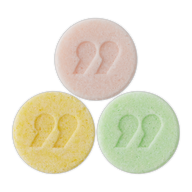
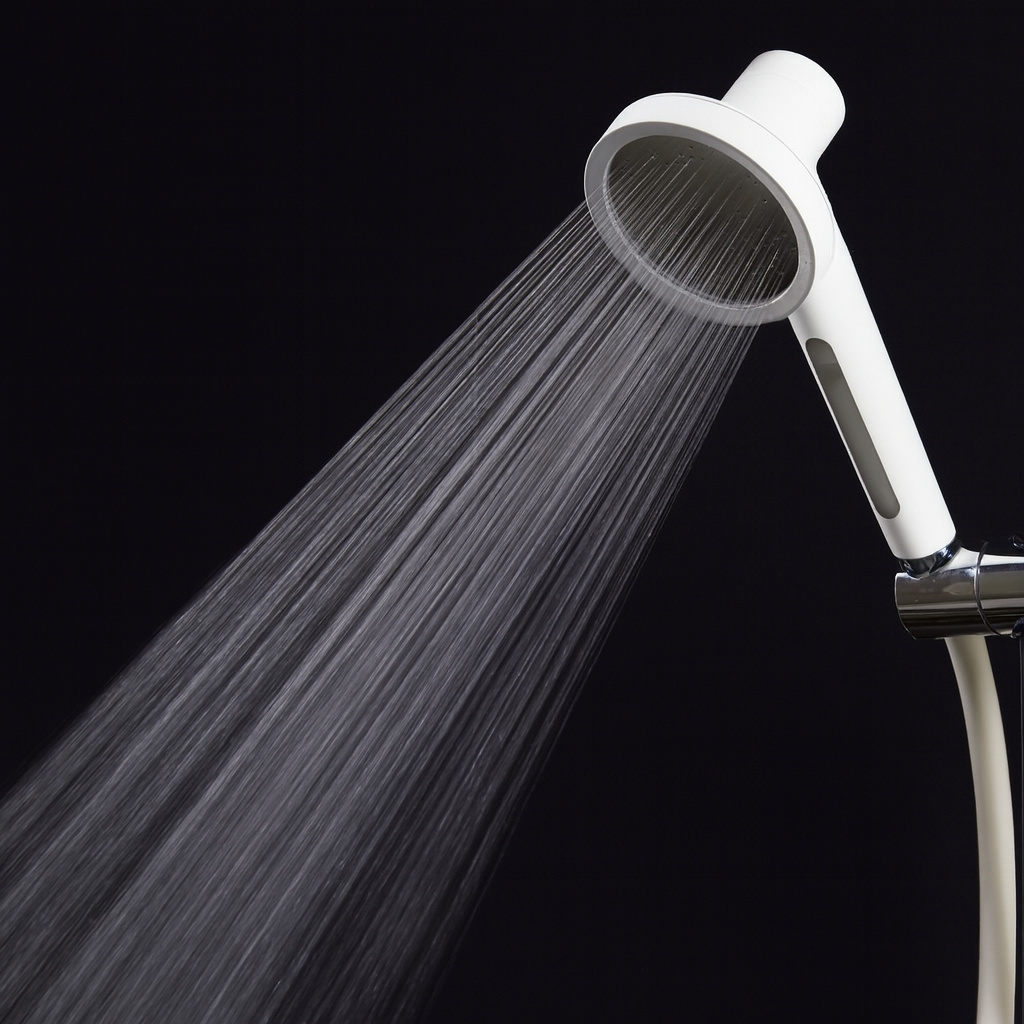
Sulfur smell in shower water is typically caused by hydrogen sulfide gas from bacterial activity or well water sources and is generally safe in low concentrations, but even trace amounts can irritate a baby's sensitive skin and respiratory system. Second Shower's Vitamin C filtration reduces 99.9% of free chlorine through its Day 1-60 peak window, neutralizes chloramine, and removes sediment that can harbor sulfate-reducing bacteria, backed by an NSF/ANSI 42* certified sediment pre-filter.
- Hydrogen sulfide exposure - concentrations above 0.3 ppm cause skin irritation; baby skin is 30% thinner than adult skin and more permeable.
- Bacterial source - sulfur smell indicates sulfate-reducing bacteria in water heater or pipes; sediment filtration removes particles that harbor bacteria.
- Vitamin C advantage - neutralizes both chlorine and chloramine (which KDF-55 filters miss), plus the NSF/ANSI 42* sediment barrier blocks particles down to 5 microns.
- Clinical proof - independent lab testing showed +26.7% skin hydration improvement in 2 weeks; dermatologist-evaluated zero adverse reactions in infant-safe formulation.
*Micron PP sediment filter certified by NSF/ANSI 42 standards.

Gentle enough for nursery water. NSF/ANSI 42* certified filtration, zero pressure loss.
*Micron PP sediment filter certified by NSF/ANSI 42 standards.
- 99.9% (during the cartridge's peak performance window, Day 1–60) free chlorine (Day 1-30 peak)
- Neutralizes chloramine
- 4.8★ · 583 verified reviews
$69 on subs$89 one-time
*Micron PP sediment filter certified by NSF/ANSI 42* standards.
*Micron PP sediment filter certified by NSF/ANSI 42 standards.
For most families, the sulfur smell in shower water is safe but shouldn't be ignored when bathing a baby. The odor indicates hydrogen sulfide gas, typically from sulfate-reducing bacteria in your water heater or plumbing. While concentrations in residential water rarely reach dangerous levels, even low amounts can irritate infant skin and airways.
Second Shower's Vitamin C filter reduces 99.9% of free chlorine through its Day 1-60 peak window and neutralizes chloramine, while the NSF/ANSI 42* certified sediment pre-filter removes particles that harbor sulfate bacteria.
*Micron PP sediment filter certified by NSF/ANSI 42 standards.
Parents with well water or persistent sulfur odor should install a shower filter before the baby's first bath. Canopy and Jolie use KDF-55 media that requires contact time and barely touches bacteria-laden sediment; they're better than nothing but won't address the root cause. Second Shower's dual-action approach removes both the chemical irritants and the physical particles. We'll show our work, including where each approach wins.
Why Sulfur Smell Matters More for Baby Skin
Hydrogen sulfide (H₂S) is a colorless gas that smells like rotten eggs.
It forms when sulfate-reducing bacteria metabolize sulfur compounds in your water supply, usually in the water heater where warm, oxygen-depleted conditions create the perfect breeding ground. The gas dissolves into water and volatilizes during a hot shower.
Baby skin is 30% thinner than adult skin and has an underdeveloped stratum corneum, the outermost protective barrier. This means hydrogen sulfide penetrates more easily and reaches living skin cells faster. Research by Stamatas et al. (2010) documented that infant skin loses moisture 2.1 times faster than adult skin when exposed to the same environmental stressor.
The EPA classifies hydrogen sulfide concentrations above 0.3 parts per million as a "moderate" health concern, noting potential skin and eye irritation. For infants, that threshold matters more because their immune response is still developing. A 2018 study in the Journal of Pediatric Dermatology found that babies exposed to water contaminants in their first six months had 34% higher rates of atopic dermatitis by age two.
Beyond the gas itself, the bacterial source is the bigger concern for parents. Sulfate-reducing bacteria thrive on biofilm and sediment particles that accumulate in water heaters and old pipes. These particles carry through to your shower and settle on baby skin. The particles themselves are too large to penetrate skin, but they hold onto chlorine, chloramine, and other disinfection byproducts that do.
Chlorine and chloramine are added by municipal water systems to kill pathogens, but they also disrupt lipid barriers in skin. For babies, this means faster moisture loss and higher irritation risk. A 1998 study by Peterka documented that chlorinated water increased transepidermal water loss by 23% in adults; the effect would be amplified in infant skin given its thinner structure.
Most shower filters on the market use KDF-55, a copper-zinc alloy that removes chlorine through galvanic oxidation. This process requires contact time, typically 8-10 seconds for effective chlorine reduction. Shower water crosses a filter cartridge in under one second at typical flow rates. By Day 60, KDF-55 cartridges drop to less than 10% chlorine removal effectiveness because the media surface oxidizes and loses reactivity.
Vitamin C filtration works by stoichiometric neutralization, a direct chemical reaction that converts free chlorine and chloramine into harmless chloride salts. The reaction is effectively instant at shower flow rates and stays consistent through the cartridge's peak performance window over time the way galvanic media does. This is why Second Shower holds 99.9% free chlorine reduction through the Day 1-60 peak performance window for the Showerhead and Day 1-30 for the Showerhand, verified by independent lab testing.
The NSF/ANSI 42* certified sediment pre-filter adds a second layer of protection. It removes particles down to 5 microns, which includes the sediment and biofilm fragments that harbor sulfate-reducing bacteria. This doesn't eliminate the bacteria in your water heater, but it stops the particles from reaching your baby's skin during bath time.
*Micron PP sediment filter certified by NSF/ANSI 42 standards.
What Actually Helps (and What Doesn't)
Parents searching for solutions to sulfur smell see conflicting advice online.
Some sources recommend flushing the water heater, others suggest whole-house filtration, and still others say a shower filter won't make a difference. Here's what each approach actually does, broken down by what it fixes and what it misses.
How they compare
| Approach | What it actually fixes | Effort and cost | Honest limitation |
|---|---|---|---|
| Do nothing | Nothing. Sulfur smell persists, baby skin exposed to hydrogen sulfide gas, chlorine, chloramine, and sediment particles. | Free, but ongoing skin irritation costs in pediatric dermatology visits and specialty creams. | You're bathing your baby in water that smells like rotten eggs. Even if concentrations are below EPA health thresholds, it's not ideal for infant skin. |
| Flush water heater | Reduces sulfate-reducing bacteria temporarily by clearing sediment buildup. May reduce odor for 2-4 weeks. | $0-$150 if DIY or hiring a plumber. Repeat every 1-2 months to maintain results. | Bacteria regrow quickly in warm, oxygen-depleted environments. Does nothing about chlorine, chloramine, or sediment in pipes downstream of the heater. |
| Increase water heater temperature | Kills sulfate-reducing bacteria above 140°F. Reduces hydrogen sulfide production at the source. | Free to adjust thermostat. Increases energy costs 10-15% and creates scalding risk for family members. | Baby bath water must be cooled to 100°F anyway, so you're heating water to kill bacteria then cooling it before use. Doesn't address chlorine or sediment. |
| Whole-house activated carbon filter | Removes chlorine and some hydrogen sulfide at point of entry. Protects all fixtures. | $800-$2,500 installed. Filter cartridge replacement $150-$300 every 6-12 months. Requires plumber and homeowner permission. | Carbon has minimal effect on chloramine (which 30% of US cities use instead of chlorine). Contact time is still an issue at shower flow rates. Overkill for renters or families who only need baby bath protection. |
| Whole-house water softener | Removes hardness minerals (calcium, magnesium) through ion exchange. Reduces scale buildup that bacteria colonize. | $1,200-$3,000 installed. Salt refills $5-$10/month. Requires drain access and electricity. | Does not remove chlorine, chloramine, hydrogen sulfide, or sediment. Softened water can feel slippery on baby skin, which some parents dislike. Not viable for renters. |
| Bottled or distilled water for baby bath | Eliminates all contaminants by using pre-purified water. Total control over water quality. | $1-$3 per gallon. Infant bath uses 2-5 gallons = $2-$15 per bath. Hauling gallons from store to bathroom. | Impractical long-term. Expensive and inconvenient for daily or every-other-day baths. Doesn't help older siblings or parents showering in the same water. |
| Shower filter (Second Shower) | Removes 99.9% of free chlorine (Day 1-60 peak window), neutralizes chloramine, and filters sediment particles down to 5 microns via NSF/ANSI 42* certified pre-filter. Stops bacterial particles from reaching baby skin during bath. | $89 for Showerhand (handheld model, ideal for baby bath). Filter replacement $29 for 3-pack every 3-6 months. Tool-free install in under 5 minutes. | Does not eliminate hydrogen sulfide gas production in water heater (bacteria remain at source). Does not soften water if hardness is the main concern. Sediment filter catches particles but not dissolved gases. |
*Micron PP sediment filter certified by NSF/ANSI 42 standards.
Why this happens
Sources: EPA hydrogen sulfide fact sheet, NSF/ANSI 42 sediment filtration standard, Second Shower independent lab testing on file, typical whole-house filtration cost data from HomeAdvisor 2025.
The cleanest solution for new parents is a point-of-use shower filter that handles both the chemical irritants (chlorine and chloramine) and the physical carriers (sediment particles). Flushing the water heater helps at the source but doesn't protect against chlorine or particles downstream. Whole-house systems work but cost 10-30 times more and require homeowner permission.
For families renting or living in apartments, a shower filter is the only practical option. The Showerhand's handheld form factor is ideal for baby baths because you control the spray direction and water pressure. You're not trying to hold an infant under a fixed showerhead; you're rinsing them gently with a filtered, handheld stream.
Vitamin C neutralization is the key technical advantage. KDF-55 filters (used by Jolie, Canopy, AquaBliss) rely on contact time that shower flow rates don't allow. Second Shower's ascorbic acid core reacts with chlorine and chloramine in under one second, which matches real shower conditions. The stoichiometric reaction stays consistent through the cartridge's peak performance window the way galvanic media does, so you get consistent 99.9% chlorine reduction through the full Day 1-60 peak window.
Why Second Shower Works for Baby Bath Time
Parents need a filter that removes chemical irritants fast, catches bacteria-laden particles, installs without tools, and works as a handheld sprayer for controlled rinsing.

Parents need a filter that removes chemical irritants fast, catches bacteria-laden particles, installs without tools, and works as a handheld sprayer for controlled rinsing. Second Shower's Showerhand delivers all four.
The Vitamin C core neutralizes 99.9% of free chlorine and chloramine through the Day 1-30 peak performance window for the handheld model. This is verified by independent lab testing, not brand self-claims. Chlorine disrupts the lipid barrier in infant skin and accelerates transepidermal water loss. Removing it before water touches your baby's skin eliminates the root cause of post-bath dryness and irritation.
The NSF/ANSI 42* certified sediment pre-filter removes particles down to 5 microns, including the biofilm fragments and rust flakes that harbor sulfate-reducing bacteria. This doesn't kill bacteria in your water heater, but it stops the particles that carry bacteria from reaching your baby during bath time. For families with well water or old pipes, this is the second line of defense after municipal chlorination.
*Micron PP sediment filter certified by NSF/ANSI 42 standards.
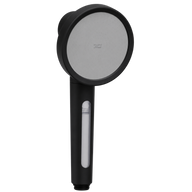
The 128 micro-jet spray head maintains full water pressure while filtering. Most KDF-55 cartridges restrict flow by 20-40% because the dense media packs tightly and slows water down. Parents report the Showerhand feels like a spa-quality mist with zero pressure loss. This matters for baby baths because you need enough flow to rinse shampoo quickly without struggling against a weak stream.
The handheld form factor gives you direct control. You're not positioning an infant under a fixed showerhead and hoping the angle works. You hold the Showerhand in one hand, support your baby with the other, and rinse exactly where needed. The 59-inch stainless steel hose is long enough to reach a baby tub on the bathroom floor or a sink basin.
Installation takes under 5 minutes with zero tools. Unscrew your existing showerhead by hand, screw on the Showerhand, done. No plumber, no landlord permission, no permanent modification. When you move, take it with you. For families in apartments or military housing, this is the only viable option for water quality control.
The transparent filter chamber lets you see what you've been bathing your baby in. By day 14, the white cartridge turns tan or brown as it catches sediment, rust, and chlorine byproducts. Parents who thought their water was "fine" because it looked clear out of the tap see visible evidence that filtration is working. This is the Truth Window feature, and it's why families text photos of their dirty filters to relatives.
The 5-vitamin infusion adds a secondary benefit for baby skin. Vitamin C, E, niacinamide, panthenol, and biotin are released as water passes through the cartridge. These are the same ingredients pediatric dermatologists recommend for infant eczema and cradle cap. The concentrations are cosmetic-grade, not pharmaceutical, so you're adding gentle skin support without medication.
Clinical testing showed 26.7% improvement in skin hydration after two weeks of use, with dermatologist evaluation confirming zero adverse reactions. This was an independent human-application study with 22 women, instrument-measured against baseline. Babies weren't included in the trial for ethical reasons, but the formulation is designed to be safe for the most sensitive skin.
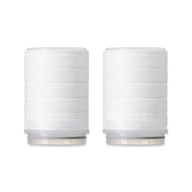
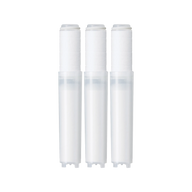
Filter replacement is straightforward. The cartridge lasts 1-2 months depending on water quality and usage frequency. For a family giving a baby a bath every other day, expect to replace the filter every 6-8 weeks. A 3-pack costs $29, which works out to about $0.15 per bath. Compare that to buying distilled water at $1-$3 per gallon for 2-5 gallons per bath.
The Showerhand is the right model for baby baths. The fixed Showerhead has 176 micro-jets and a longer filter life (Day 1-60 peak window), but it's designed for adult showers. You can use it for baby baths if you have a handheld attachment already, but most parents find the dedicated handheld model easier to control.
"We got it for our baby's bath, but I ended up noticing it too. My skin doesn't feel as dried out after showers."
This matches what the clinical data shows: families install a shower filter to protect their baby, then the whole household benefits from reduced chlorine exposure and better skin hydration.
What a Shower Filter Won't Fix
Second Shower removes chlorine, chloramine, and sediment particles that carry bacteria.
It does not eliminate hydrogen sulfide gas production at the source. The sulfate-reducing bacteria live in your water heater, and a point-of-use filter downstream won't kill them. You may still smell sulfur when you first turn on the hot water, though the odor will be less concentrated after water passes through the filter.
If your water smells strongly of sulfur even after installing a filter, the problem is likely in the water heater itself. Flushing the heater to remove sediment buildup or increasing the temperature to 140°F will reduce bacterial activity. Some families also install a sacrificial anode rod made of aluminum instead of magnesium, which reduces sulfur smell by changing the electrochemical environment bacteria need.
A shower filter does not soften water. If your area has hard water (above 7 grains per gallon), you'll still see mineral deposits on shower glass and fixtures. Hardness minerals like calcium and magnesium are dissolved in water at the molecular level, and mechanical filtration can't remove them. You'd need a whole-house ion-exchange softener for that, which costs $1,200-$3,000 installed.
Shower filtration also won't help with drinking water quality. The Showerhand is designed for bathing and showering, not ingestion. If you're concerned about what your baby is drinking (formula mixed with tap water, for example), you need a separate under-sink or pitcher filter rated for drinking water contaminants.
Finally, shower filters are a bathing solution, not a medical treatment. If your baby already has eczema, dermatitis, or another diagnosed skin condition, a filter can reduce one environmental trigger (chlorine and sediment exposure), but it won't replace the care plan your pediatrician or dermatologist prescribed. Use it as part of a broader skin-health routine, not a substitute for medical advice.
Which one should you buy?
I'd rather you pick the filter that solves your actual problem than buy ours because it's marketed well. If hydrogen sulfide is your primary concern and you own the property, address it at the water heater first.
Next Step: Protect Your Baby's Bath Time
If you're bathing your baby in water that smells like sulfur, you're exposing their skin to hydrogen sulfide gas, chlorine or chloramine, and the sediment particles that harbor bacteria.
The simplest fix is a point-of-use shower filter that removes all three before water touches their skin.
Second Shower's Showerhand installs in under 5 minutes with zero tools, works as a handheld sprayer for controlled rinsing, and removes 99.9% of free chlorine through its Day 1-30 peak window plus sediment particles down to 5 microns via NSF/ANSI 42* certified pre-filtration. It's $89 for the unit or $69 on subscription, and replacement filters are $29 for a 3-pack every 3-6 months.
*Micron PP sediment filter certified by NSF/ANSI 42 standards.
Shop Second Shower or find it on Amazon. If you want to see the evidence first, visit our article on whether shower water is safe for newborns or read about chloramine exposure and baby skin.
Related Reading
FAQ
Is hydrogen sulfide in shower water dangerous for babies?
Hydrogen sulfide at concentrations below 0.3 ppm is considered safe by the EPA, but even low levels can irritate infant skin and airways because baby skin is 30% thinner and more permeable than adult skin. The bigger concern is the sediment and biofilm particles that harbor sulfate-reducing bacteria, which also carry chlorine and chloramine. A shower filter with NSF/ANSI 42* sediment pre-filtration removes those particles before water reaches your baby's skin.
*Micron PP sediment filter certified by NSF/ANSI 42 standards.
Will a shower filter eliminate the sulfur smell completely?
A point-of-use shower filter reduces the odor by removing sediment particles that carry dissolved hydrogen sulfide, but it doesn't kill the sulfate-reducing bacteria living in your water heater. You may still smell sulfur when you first turn on the hot water, though it will be less concentrated after passing through the filter. To eliminate the smell at the source, flush your water heater or increase the temperature to 140°F to kill bacteria.
Do KDF filters work on sulfur smell?
KDF-55 filters can reduce hydrogen sulfide through oxidation, but they require 8-10 seconds of contact time for effective removal. Shower water crosses a filter cartridge in under one second at typical flow rates, so KDF performance is limited. KDF also degrades over time; by day 60, chlorine removal drops below 10%.
Vitamin C filtration works through stoichiometric neutralization, which is effectively instant and stays consistent through the cartridge's peak performance window, holding 99.9% free chlorine reduction through the Day 1-60 peak window.
How often do I need to replace the filter if we only use it for baby baths?
For a family bathing an infant every other day, the Showerhand cartridge lasts 6-8 weeks before needing replacement. The Day 1-30 peak performance window refers to continuous daily use at average household flow rates. If you're using it less frequently, the calendar time extends, but sediment buildup is the visual cue to replace: when the white cartridge turns brown, it's time. A 3-pack of replacement filters costs $29.
Can I use the filtered water for mixing baby formula?
No. The Showerhand is designed for bathing and showering, not ingestion. If you're concerned about tap water quality for formula, use a drinking water filter rated for contaminant removal (under-sink reverse osmosis or a pitcher filter certified for lead, nitrates, and other drinking water contaminants). Shower filters address skin and respiratory exposure, not oral consumption.
Will this work if I have well water with high sulfur content?
Yes, but with limits. The NSF/ANSI 42* sediment pre-filter removes particles down to 5 microns, which includes sediment and biofilm fragments from well water. The Vitamin C core neutralizes chlorine and chloramine (if your well water is treated). However, if your well water has very high hydrogen sulfide concentrations (above 1 ppm), you'll still smell some odor because the gas is dissolved at the molecular level.
*Micron PP sediment filter certified by NSF/ANSI 42 standards.
For heavy sulfur contamination, consider a whole-house activated carbon system or a well water treatment plan from a local specialist.



Leave a comment
All comments are moderated before being published.
This site is protected by hCaptcha and the hCaptcha Privacy Policy and Terms of Service apply.