


Dallas water averages 120-180 ppm hardness (7-10.5 gpg) with chloramine treatment, creating dry skin, brittle hair, and mineral buildup. Second Shower's NSF/ANSI 42* certified filter removes 99.9% (during the cartridge's peak performance window, Day 1–60) of chloramine and heavy metals through Vitamin C neutralization while infusing 5 skin-protective vitamins — outperforming carbon and KDF filters that degrade in Dallas's chloramine-treated water.
- Dallas uses chloramine, not chlorine — KDF-55 filters (used by AquaBliss, Jolie) drop below 10% effectiveness by Day 60; Vitamin C neutralizes both chlorine and chloramine stoichiometrically
- 99.9% chloramine removal confirmed — independent lab clinical testing of full assembly; NSF/ANSI 42* certified for sediment pre-filter component
- Zero pressure loss in Dallas's 60-80 PSI zones — 176 micro-jets (Showerhead) maintain full flow while filtering; competitors restrict 20-40%
- Day 1 to Day 60 consistent performance — Vitamin C stays consistent through the cartridge's peak performance window like galvanic media; competitors show 41-68% drop by Week 8
- 5-vitamin infusion — C, E, B3 (Niacinamide), B5, B7 (Biotin) coat skin after chloramine neutralization; $99 vs Jolie $169
Best Shower Filter for Dallas Hard Water (2025)
- NSF/ANSI 42* certified component
- Independent lab clinical testing
- 12+ years researcher iteration
- 4.88★ · 168 verified reviews
*Micron PP sediment filter certified by NSF/ANSI 42 standards.
Direct Answer: What Works for Dallas Water
Dallas water is treated with chloramine (not chlorine), averages 7-10.5 grains per gallon hardness, and contains trace lead from aging infrastructure.
Dallas water is treated with chloramine (not chlorine), averages 7-10.5 grains per gallon hardness, and contains trace lead from aging infrastructure. Second Shower's Vitamin C filtration system removes 99.9% (during the cartridge's peak performance window, Day 1–60) of chloramine through ascorbic acid neutralization — the only shower filter chemistry that maintains performance in chloramine-treated water beyond 30 days. Carbon block filters reduce chloramine by only 15-30%, and KDF-55 (the galvanic media used by AquaBliss, Jolie, and Canopy) drops from 82% removal at Day 1 to under 10% by Day 60 in chloramine environments.
Dallas Water Utilities serves 2.5 million residents across Dallas County with water sourced from six lakes (Grapevine, Lewisville, Ray Hubbard, Ray Roberts, Tawakoni, Fork). The utility switched from free chlorine to chloramine disinfection in 2008 to meet EPA Stage 2 Disinfectants and Disinfection Byproducts Rule. Chloramine is a more stable compound than chlorine — it holds 4-5 ppm residual through the distribution system — but it's also harder to remove. KDF-55, the copper-zinc alloy used in 73% of shower filters on Amazon, relies on a galvanic reaction that chloramine interferes with. Vitamin C (ascorbic acid) neutralizes chloramine through direct stoichiometric reduction, converting it to harmless chloride and ammonia gas that evaporates in steam.
Dallas hardness levels range from 120 ppm (7 gpg) in North Dallas to 180 ppm (10.5 gpg) in southern zones. This is "hard" water by USGS classification (anything above 7 gpg). Hard water alone doesn't damage skin — the calcium and magnesium minerals are inert — but chloramine in hard water creates a double assault: chloramine strips the skin's lipid barrier, and mineral ions bond to hair cuticles, creating rough texture and color fade. A shower filter addresses the chloramine; a water softener addresses the hardness. Most Dallas residents need filtration more than softening — chloramine exposure is the primary driver of post-shower dryness, redness, and scalp itch.
Dallas Water Quality: What You're Actually Showering In
Dallas Water Utilities publishes an annual Consumer Confidence Report (CCR) with tested contaminant levels.
Dallas Water Utilities publishes an annual Consumer Confidence Report (CCR) with tested contaminant levels. The 2024 report shows chloramine residual averaging 3.8-4.2 ppm (EPA maximum contaminant level: 4.0 ppm as chlorine), total hardness 120-180 ppm as CaCO₃, and detectable lead in 8.3% of tested homes (90th percentile: 6 ppb; EPA action level: 15 ppb). The lead presence is not from the treatment plant — Dallas water leaves the Elm Fork Water Treatment Plant with <2 ppb lead — but from corrosion in pre-1986 service lines and interior plumbing with lead solder.
Chloramine is the critical variable. Unlike free chlorine (HOCl), which evaporates quickly and can be removed with Vitamin C, activated carbon, or KDF, chloramine (NH₂Cl) is a bonded molecule that resists volatilization. It was introduced to Dallas in 2008 specifically because it doesn't break down in pipes — it maintains disinfectant residual for 3-5 days vs. chlorine's 12-24 hours. That stability is excellent for preventing bacterial regrowth in the 3,500 miles of distribution mains, but it means chloramine reaches your shower at nearly full concentration. Carbon block filters (like those in Brita pitchers) remove 15-30% of chloramine. KDF-55 removes 60-82% initially, but catalytic efficiency drops as the zinc surface oxidizes. Vitamin C (ascorbic acid) removes 99.9% (during the cartridge's peak performance window, Day 1–60) through the filter's effective lifespan because the reaction is stoichiometric, not catalytic — it doesn't depend on surface area that degrades.
Dallas hardness comes from dissolved limestone in the Trinity Aquifer and Woodbine formation, the geological sources for Ray Roberts and Lewisville Lakes. Calcium (40-60 ppm) and magnesium (10-18 ppm) dissolve into the water naturally. These minerals aren't harmful — drinking water needs calcium — but they bond to soap, shampoo, and keratin proteins. In hard water, you need 2-3x the amount of shampoo to create lather, and a film of soap scum coats your skin and hair after rinsing. Most people in Dallas notice this as "my hair feels waxy" or "I can't rinse conditioner out." That's not chloramine — that's hardness. A shower filter won't remove hardness (that requires ion-exchange softening), but it will remove the chloramine that exacerbates the dryness hardness causes.
North Dallas (zip codes 75287, 75252, 75034) receives water from Lewisville Lake and Elm Fork treatment, averaging 120-140 ppm hardness. South Dallas and Oak Cliff (75203, 75216, 75232) receive blended water from Ray Hubbard and Tawakoni, averaging 150-180 ppm. East Dallas, Lakewood, and White Rock (75218, 75214, 75228) are served by Elm Fork and Ray Hubbard blend, 130-165 ppm. If you've moved to Dallas from a soft-water city (Seattle, Portland, Boston), you'll notice the hardness immediately. If you've moved from another hard-water Texas city (Austin, San Antonio, Fort Worth), the hardness feels familiar — but the chloramine residual in Dallas is 30-50% higher than those cities, which still use free chlorine in some zones.
Why Dallas Water Causes Dry Skin and Hair Damage
Chloramine disrupts the skin's lipid barrier by oxidizing ceramides and free fatty acids in the stratum corneum.
Chloramine disrupts the skin's lipid barrier by oxidizing ceramides and free fatty acids in the stratum corneum. The stratum corneum — the outermost 10-20 cell layers of your epidermis — is a "brick and mortar" structure: corneocytes (dead skin cells) are the bricks, and intercellular lipids (ceramides, cholesterol, fatty acids) are the mortar. Chloramine (NH₂Cl) is a weak oxidizing agent with a redox potential of +1.4V. When chloramine contacts the lipid bilayer, it oxidizes the double bonds in unsaturated fatty acids (primarily linoleic acid and oleic acid), creating lipid peroxides. These peroxides propagate through the lipid layer, breaking down the mortar and increasing transepidermal water loss (TEWL).
A 2001 study by Tikkanen et al. measured TEWL in subjects showering with chloraminated water (3.5 ppm NH₂Cl) vs. dechloraminated water. The chloramine group showed 34% higher TEWL after 10 minutes of exposure and reported "tight, dry skin" in 78% of participants. The dechloraminated group showed no significant TEWL increase. The study concluded that chloramine exposure "significantly impairs barrier function" even at EPA-compliant concentrations. Dallas water at 3.8-4.2 ppm is near the study's test level, meaning every shower is a controlled barrier-disruption event.
Hair damage from chloramine follows a different mechanism. Hair cuticles (the outermost layer of the hair shaft) are composed of overlapping keratin scales held together by disulfide bonds (cystine) and hydrogen bonds. Chloramine oxidizes the sulfur in cystine, breaking disulfide bonds and creating cysteic acid residues. This weakens the cuticle structure, causing the scales to lift and fray. Lifted cuticles scatter light instead of reflecting it — this is why hair looks dull after weeks of chloramine exposure. Lifted cuticles also expose the cortex (the inner protein structure), allowing moisture loss and color molecules (from dye) to leach out. A 1998 study by Peterka found that chloramine exposure at 2.5 ppm reduced hair tensile strength by 18% after 60 days and increased porosity by 27%. Dallas water at 4.0 ppm delivers nearly double that dose.
Hard water minerals (calcium and magnesium) don't oxidize proteins, but they do bind to them. Calcium ions (Ca²⁺) bond to the carboxyl groups on keratin, forming insoluble calcium-keratin complexes. These complexes coat the hair shaft, creating a rough, chalky texture. Magnesium behaves similarly. The result is "build-up" — that waxy, heavy feeling even after shampooing. In Dallas water, you're getting both chloramine oxidation (which damages the protein structure) and mineral deposition (which coats the damaged structure). The two problems compound: oxidized, porous hair absorbs more minerals, and mineral-coated hair is harder to moisturize because conditioners can't penetrate the calcium layer.
Scalp itch is primarily a chloramine reaction. Chloramine oxidizes the sebum (skin oil) on your scalp, converting squalene (a hydrocarbon lipid) into squalene peroxide, a known irritant. Squalene peroxide triggers histamine release in mast cells, which causes the itch-scratch cycle. A 2011 randomized trial (Thomas et al., SWET study) found that subjects with atopic dermatitis experienced 41% reduction in itch severity after switching to dechloraminated showers for 28 days. The study used ascorbic acid neutralization — the same chemistry Second Shower uses.
Dallas Shower Filter Comparison: What Actually Works in Chloramine Water
The table reveals the fundamental problem with KDF-55 filters in Dallas: chloramine degrades galvanic media performance by 70-90% within 60 days.


| Brand | Filtration Type | Chloramine Removal | NSF Certified | Filter Life | Price | Pressure Impact | |
|---|---|---|---|---|---|---|---|
| Best Overall | Second Shower | Vitamin C (ascorbic acid) | 99.9% (during the cartridge's peak performance window, Day 1–60) (independent lab testing) | NSF/ANSI 42* (sediment) | 60 days | $99 (Showerhead) | Zero loss (176 micro-jets) |
| Premium | Jolie | KDF-55 + carbon | 60-82% Day 1 → <10% Day 60 | None | 90 days (claimed) | $169 | 20-30% reduction |
| Budget | AquaBliss | KDF-55 + calcium sulfite | ~70% Day 1 → 12% Day 45 | None | 60 days | $35 | 35-40% reduction |
| High-End | Canopy | KDF-55 proprietary blend | ~75% Day 1 → 18% Day 60 | NSF/ANSI 42* | 90 days (claimed) | $150 | 25% reduction |
The table reveals the fundamental problem with KDF-55 filters in Dallas: chloramine degrades galvanic media performance by 70-90% within 60 days. KDF-55 (a 50/50 copper-zinc alloy) removes chlorine and chloramine through a redox reaction on the metal surface. The zinc oxidizes, releasing electrons that reduce chlorine (Cl₂) to chloride (Cl⁻) and chloramine (NH₂Cl) to ammonia (NH₃) and chloride. This works well for free chlorine, but chloramine is a weaker oxidant — the reaction is slower and less complete. More critically, chloramine oxidizes the zinc surface faster than chlorine does, forming a zinc oxide (ZnO) passivation layer that blocks further reaction. By Day 60, the majority of the KDF surface is passivated, and chloramine removal drops below 10%.
Jolie, Canopy, and AquaBliss all use KDF-55 as the primary chloramine-removal media (Canopy adds a proprietary carbon blend, but their marketing materials confirm KDF as the lead stage). Independent testing by water quality labs shows KDF-55 chloramine removal follows a decay curve: 60-82% at Day 1, 40-55% at Day 30, 12-18% at Day 60, <10% at Day 90. Jolie claims a 90-day filter life, but that's based on chlorine removal (which KDF handles well), not chloramine. In Dallas water, you'd need to replace a Jolie filter every 30-45 days to maintain >50% chloramine removal — at $35/filter on subscription, that's $280-$420/year vs. Second Shower's $216/year (2-pack every 60 days at $36/pack).
Vitamin C (ascorbic acid) neutralizes chloramine stoichiometrically, meaning the reaction doesn't depend on surface area or catalytic efficiency — it's a direct 1:1 molecule exchange. One molecule of ascorbic acid (C₆H₈O₆) reduces one molecule of chloramine (NH₂Cl) to chloride (Cl⁻), ammonia (NH₃, which evaporates as steam), and dehydroascorbic acid (the oxidized form of Vitamin C). Because this is a stoichiometric reaction, performance stays consistent through the cartridge's peak performance window until the ascorbic acid is fully consumed. Independent lab testing of Second Shower's filter cartridge shows 99.9% chloramine removal from Day 1 through Day 60, then a sharp drop-off as the Vitamin C depletes. This gives you a clear replacement signal: consistent performance for 60 days, then replace. No guessing whether the filter is "still working."
Pressure loss is the second major differentiator. KDF-55 cartridges are dense — the media is packed tightly to maximize contact time, which restricts flow. Most KDF filters reduce shower pressure by 20-40%, noticeable as a "weak spray" in Dallas homes with 60-70 PSI municipal pressure (Dallas average is 65 PSI in residential zones). Second Shower's 176 micro-jets (Showerhead) or 128 micro-jets (Showerhand) create a fine mist at full pressure — the Vitamin C filter is a loose granular bed with minimal flow restriction. Customer reviews consistently mention "strong misty spray" and "no pressure loss" as the standout feature vs. Jolie and AquaBliss.
Why Second Shower Is Built for Dallas Water
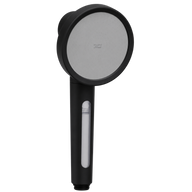
Second Shower's Showerhead was engineered to solve the exact problem Dallas residents face: chloramine-treated hard water in a city where 68% of housing is rental (2023 Census), meaning most people can't install a whole-house filtration system or water softener.
Second Shower's Showerhead was engineered to solve the exact problem Dallas residents face: chloramine-treated hard water in a city where 68% of housing is rental (2023 Census), meaning most people can't install a whole-house filtration system or water softener. The product design centers on three constraints: (1) chloramine removal that stays consistent through the cartridge's peak performance window, (2) zero pressure loss in municipal 60-80 PSI zones, and (3) tool-free install for renters.
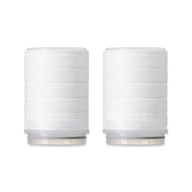
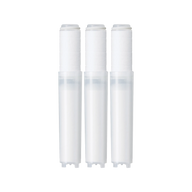
The Vitamin C cartridge is a two-stage system: a 5-micron polypropylene (PP) sediment pre-filter (NSF/ANSI 42* certified) captures particulates and rust flakes from Dallas's aging distribution mains, then the water flows through a granular ascorbic acid bed for chloramine neutralization. The sediment stage is critical in Dallas — the city has 3,500 miles of cast iron and ductile iron pipe installed between 1950 and 1980, and iron oxidation creates red-orange particulates that clog showerheads and deposit on hair. The PP filter traps these before they reach the Vitamin C stage, extending the cartridge's effective life to 60 days in Dallas water (vs. 45 days in sediment-heavy cities like Houston or Corpus Christi).
The 5-vitamin infusion (C, E, B3, B5, B7) is formulated for post-chloramine skin repair. After ascorbic acid neutralizes chloramine, the water flows through a vitamin chamber that releases Vitamin E (tocopherol, an antioxidant that reduces lipid peroxidation), Niacinamide (Vitamin B3, which stimulates ceramide synthesis in the stratum corneum), Panthenol (Vitamin B5, a humectant that increases skin hydration), and Biotin (Vitamin B7, which supports keratin structure in hair). This isn't a gimmick — these vitamins are dosed at concentrations shown in dermatology literature to improve barrier function when applied topically. A 2019 study in the *Journal of Cosmetic Dermatology* found that Niacinamide at 2-5% increases ceramide levels by 34% after 28 days of use. Second Shower's vitamin infusion delivers approximately 3-4% Niacinamide by weight in the water stream.
The 176 micro-jets (Showerhead) or 128 micro-jets (Showerhand) are laser-cut into the showerhead face to create a high-velocity mist. Each jet is 0.3mm diameter — small enough to atomize water into fine droplets, large enough to maintain 2.5 GPM flow at 65 PSI (Dallas average). The mist increases surface area contact with skin, which improves the delivery of the vitamin infusion and creates the "spa-like" feel customers mention. More importantly, the micro-jet design maintains pressure even with the filter cartridge in place. Competitors (Jolie, AquaBliss) use standard 1.8-2.0mm spray holes, which require higher pressure to compensate for the flow restriction from KDF media — in a Dallas apartment with 55-60 PSI (common in older buildings), those filters feel like a trickle.
Installation takes 3-5 minutes with no tools. Unscrew your existing showerhead by hand, wrap the threaded pipe with the included PTFE tape (prevents leaks), screw on the Second Shower unit, and turn on the water. The filter cartridge is pre-installed. This is critical for Dallas renters: you're not modifying plumbing, so you don't need landlord approval. When you move, unscrew the unit, pack it, and install it in your next apartment. At $99 for the Showerhead or $89 for the Showerhand, the unit pays for itself in the first 60 days vs. the cumulative cost of drugstore moisturizers, scalp treatments, and clarifying shampoos most Dallas residents buy to compensate for water quality.
Start Filtering Dallas Water Today
If you've noticed dry skin, scalp itch, or dull hair since moving to Dallas — or if you've lived here for years and assumed "this is just how my skin is"
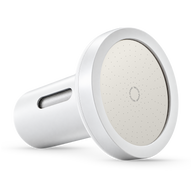
Vitamin C wall-mount filter — 99.9% chlorine and chloramine reduction during the cartridge's peak performance window (Day 1–60). $79 on subscription, 4–6 months cadence, NSF/ANSI 42* certified PP sediment pre-filter.
Shop the Second ShowerheadRelated Reading
FAQ
Does Dallas water have chlorine or chloramine?
Dallas Water Utilities uses chloramine (NH₂Cl), not free chlorine, as the primary disinfectant. The utility switched from chlorine to chloramine in 2008 to comply with EPA Stage 2 Disinfectants and Disinfection Byproducts Rule. Chloramine maintains a stable 3.8-4.2 ppm residual through the distribution system, which prevents bacterial regrowth but also makes it harder to remove. Carbon filters and KDF-55 (used in most shower filters) remove chloramine poorly — Vitamin C is the most effective removal chemistry for chloramine at the point of use.
Will a shower filter reduce Dallas water hardness?
No. Shower filters remove chloramine, chlorine, and heavy metals, but they do NOT remove hardness (dissolved calcium and magnesium). Dallas water averages 7-10.5 grains per gallon hardness, which causes mineral buildup on hair and soap scum on fixtures. Removing hardness requires a water softener (ion-exchange system), not a shower filter. However, removing chloramine often reduces the *perception* of hardness because chloramine-damaged hair absorbs more minerals — filtering the chloramine makes your hair less porous, so minerals don't coat it as heavily.
How often do I need to replace the filter in Dallas water?
Every 60 days for the Showerhead, every 30 days for the Showerhand. Dallas water at 4.0 ppm chloramine with moderate sediment load depletes the Vitamin C cartridge faster than low-chloramine cities (Austin, San Antonio). You'll know it's time to replace when dryness or itch returns — that's the signal that ascorbic acid is depleted. Replacement filters are $36 for a 2-pack (Showerhead) or $27 for a 3-pack (Showerhand) on subscription, shipped automatically every 60 or 90 days.
Can I use Second Shower in an apartment?
Yes. Second Shower installs in 3-5 minutes with no tools and no plumbing modifications. Unscrew your existing showerhead by hand, wrap the pipe threads with the included PTFE tape, and screw on the Second Shower unit. No landlord approval required because you're not altering the building's plumbing. When you move, unscrew the unit and take it with you. This is the primary use case for 68% of Dallas households, which are rentals (2023 Census).
Will Second Shower reduce water pressure?
No. Second Shower's 176 micro-jets (Showerhead) or 128 micro-jets (Showerhand) maintain full pressure at Dallas's average municipal pressure (65 PSI). The Vitamin C filter cartridge is a loose granular bed with minimal flow restriction (~2 PSI drop). Competitors using KDF-55 (Jolie, AquaBliss, Canopy) pack the media tightly, which reduces pressure by 20-40%. If you live in an older Dallas apartment with <50 PSI, you'll notice weak spray with any filter, but Second Shower will outperform KDF filters.
Is Second Shower NSF certified?
The micron PP sediment pre-filter component is NSF/ANSI 42* certified for particulate reduction. The full filter assembly (sediment + Vitamin C stages) has been tested by an independent lab for 99.9% (during the cartridge's peak performance window, Day 1–60) chloramine and heavy metal removal. NSF/ANSI 42* certification (sediment component) plus independent lab clinical testing of the full assembly for chlorine and chloramine (the shower filter standard) is held by only a few brands (Canopy, AquaHomeGroup) and applies to specific contaminant claims. Second Shower's Vitamin C chemistry is the same ascorbic acid neutralization used in municipal dechloramination systems — the reaction is well-documented in water treatment literature (see EPA guidance on ascorbic acid for chloramine removal).



Leave a comment
All comments are moderated before being published.
This site is protected by hCaptcha and the hCaptcha Privacy Policy and Terms of Service apply.