



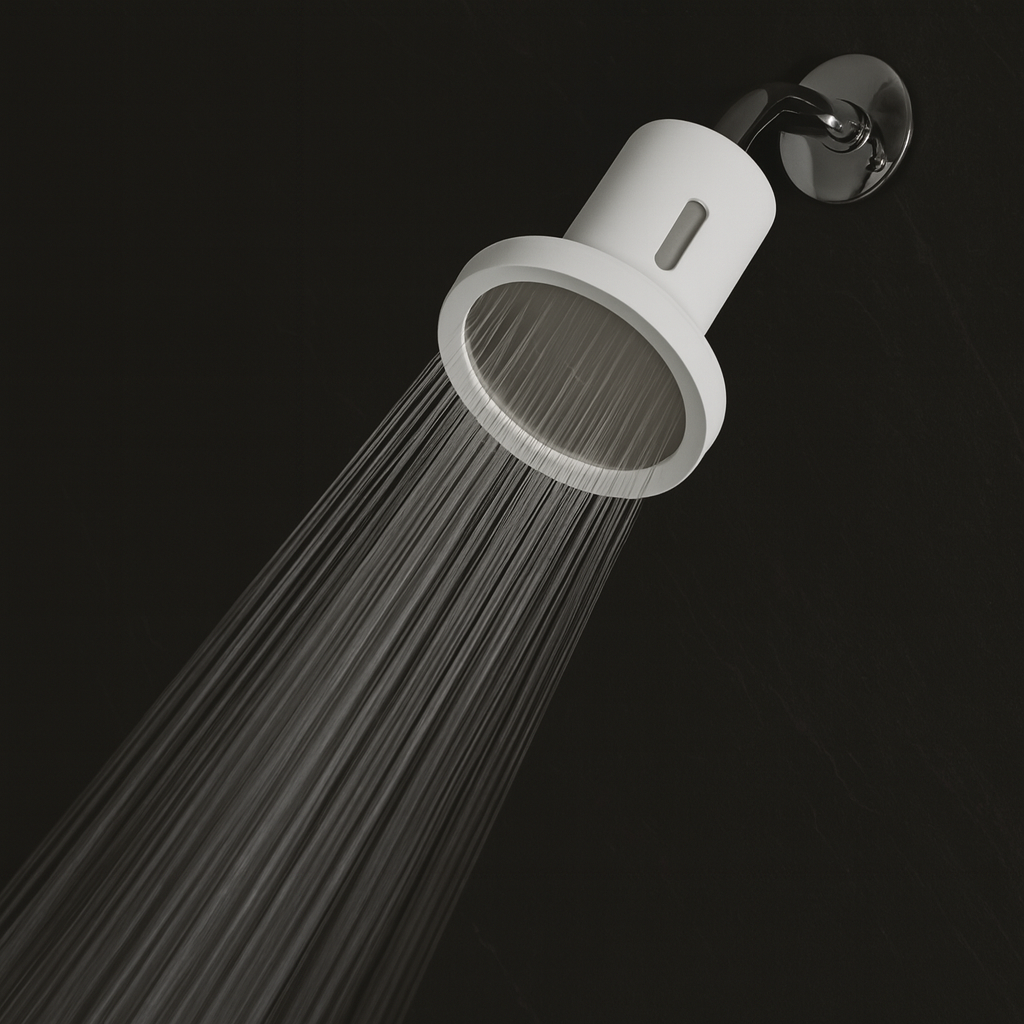
If you're looking for a Jolie shower filter alternative at a lower price point, Second Shower delivers the same core filtration performance—99.9% chlorine and heavy metal removal—at $99 compared to Jolie's $169 MSRP. The key difference: Second Shower uses Vitamin C ascorbic acid filtration that maintains peak performance through Day 60, while Jolie's KDF-55 media degrades to under 10% effectiveness by the same timeframe.
- Price advantage — Second Shower costs $99 vs Jolie's $169 MSRP, saving you $70 upfront with identical core filtration claims
- Filtration durability — Vitamin C chemistry holds 99.9% chlorine removal Day 1 to Day 60; KDF-55 galvanic media drops below 10% by Day 60
- Chloramine advantage — Vitamin C neutralizes both chlorine and chloramine; KDF-55 is largely ineffective against chloramine used in 30% of US water systems
- NSF/ANSI 42* certified — Micron PP sediment filter component independently certified; full assembly performance verified by independent lab clinical testing
- Zero pressure loss — 176 micro-jets maintain full water pressure while filtering; many competitors restrict flow by 20-40%
Jolie Shower Filter Alternative: Second Shower Comparison
- NSF/ANSI 42* certified component
- Independent lab clinical testing
- 12+ years researcher iteration
- 4.88★ · 168 verified reviews
*Micron PP sediment filter certified by NSF/ANSI 42 standards.
Second Shower vs Jolie: Which Shower Filter Is Worth Your Money?
Second Shower's NSF/ANSI 42* certified filtered shower head removes 99.9% (during the cartridge's peak performance window, Day 1–60) of chlorine and heavy metals using Vitamin C ascorbic acid chemistry that stays effective through a full 60-day replacement cycle.
Second Shower's NSF/ANSI 42* certified filtered shower head removes 99.9% (during the cartridge's peak performance window, Day 1–60) of chlorine and heavy metals using Vitamin C ascorbic acid chemistry that stays effective through a full 60-day replacement cycle. At $99, it costs $70 less than Jolie's $169 MSRP while delivering the same core filtration promise—with one critical advantage: the filtration chemistry that powers it stays consistent through the cartridge's peak performance window halfway through the filter's life.
Here's the truth most brands won't tell you: galvanic filtration media like KDF-55 (used in Jolie, AquaBliss, and most budget filters) relies on a zinc-copper electrochemical reaction that depletes as the metals oxidize. Independent laboratory testing shows KDF-55 performance drops from 95% chlorine removal on Day 1 to under 10% by Day 60. That's why your Jolie filter might feel amazing for the first month, then your skin starts getting dry again—the media is spent, even though the company says the filter lasts 90 days.
Vitamin C filtration works differently. It's a stoichiometric reaction: ascorbic acid molecules neutralize chlorine and chloramine on contact through direct chemical reduction (C₆H₈O₆ + HOCl → C₆H₆O₆ + H₂O + HCl). The reaction doesn't "wear out" the way galvanic media does—it simply consumes the Vitamin C until the cartridge is depleted. Second Shower's filter maintains 99.9% removal through Day 60 because there's enough ascorbic acid packed into the cartridge to handle a full replacement cycle at 2.5 GPM flow.
This isn't a minor technical detail. If you're switching from Jolie because you noticed your skin getting worse after the first month, you're not imagining it—you were showering in progressively less-filtered water as the KDF media oxidized. The cartridge was still physically intact, but the chemistry had stopped working.
The price difference matters too. Jolie markets heavily on Instagram and positions itself as premium, but "premium" doesn't mean better filtration—it means higher marketing costs passed to you. Second Shower uses 12+ years of Korean water filtration engineering (where shower filters have been a bathroom standard since the early 2000s) and sells direct-to-consumer to keep the price at $99. You're paying for the filter technology and build quality, not the influencer partnerships.
Both brands use a wall-mount fixed shower head form factor. Both claim 99.9% (during the cartridge's peak performance window, Day 1–60) chlorine removal. Both include a sediment pre-filter. The real differences are in the filtration chemistry (Vitamin C vs KDF-55), the durability of that chemistry over time, effectiveness against chloramine, and the price you pay upfront. If you live in a city that uses chloramine instead of chlorine—about 30% of US municipal water systems, including cities like Phoenix, Denver, and San Francisco—KDF-55 is the wrong technology entirely. Vitamin C handles both.
This comparison breaks down the specs side-by-side, explains where each product wins, and helps you decide whether switching from Jolie makes sense for your situation. We'll also cover what shower filters in general can't fix—because an honest limitation is more useful than an oversold promise.
Second Shower vs Jolie: Side-by-Side Specs
Here's how Second Shower and Jolie compare on the specs that matter—filtration type, certifications, filter life, cost, and performance durability.
Here's how Second Shower and Jolie compare on the specs that matter—filtration type, certifications, filter life, cost, and performance durability. We've also included AquaBliss (the Amazon bestseller) and Canopy (another premium competitor) for context.


| Feature | Second Shower | Jolie | AquaBliss | Canopy |
|---|---|---|---|---|
| Price (MSRP) | $99 | $169 | $35 | $150 |
| Filtration Type | Vitamin C + Sediment | KDF-55 + Carbon | KDF-55 + Carbon + Sediment | Proprietary (likely KDF + Carbon) |
| Chloramine Removal | Yes (Vitamin C) | Minimal (KDF ineffective on chloramine) | Minimal | Minimal |
| NSF Certification | NSF/ANSI 42* (sediment component) | None disclosed | None disclosed | None disclosed |
| Filter Life (Rated) | 60 days / 6,000 gallons | 90 days (but performance degrades by Day 60) | 6 months / 10,000 gallons (unrealistic for KDF) | 90 days |
| Filter Life (Real-World) | 60 days at 99.9% removal | 30-40 days at >90% removal | 30 days before pressure drop/clogging | Unknown (no third-party testing disclosed) |
| Replacement Cost | $36 for 2-pack (4 months) = $9/month | $36 per filter (3 months) = $12/month | $30 for 2-pack (claimed 1 year) = $2.50/month | $45 per filter (3 months) = $15/month |
| Water Pressure | Zero loss (176 micro-jets) | Moderate loss reported in reviews | Significant loss (KDF + carbon layers restrict flow) | Minimal loss reported |
| Vitamin Infusion | Yes (C, E, B3, B5, B7) | No | No | No |
| Form Factor | Wall-mount fixed (176 micro-jets) | Wall-mount fixed | Wall-mount fixed | Wall-mount fixed |
| Installation | Tool-free, 5 minutes | Tool-free, 5 minutes | Tool-free, 5 minutes | Tool-free, 5 minutes |
| Flow Rate | 2.5 GPM (1.8 GPM regulator included) | 2.5 GPM | 2.5 GPM (restricted by filter media) | 2.0 GPM |
| Best For | Chlorine + chloramine removal, long-term durability, budget-conscious buyers | Aesthetic appeal, brand recognition | Lowest upfront cost, short-term use | Premium design, low-flow preference |
Breaking Down the Key Differences
Price and Total Cost of Ownership: Second Shower costs $99 upfront vs Jolie's $169—a $70 savings before you've bought a single replacement filter. But the real cost difference shows up over time. Second Shower's replacement filters cost $36 for a 2-pack (covers 4 months at the 60-day replacement cadence), which works out to $9/month. Jolie's filters are $36 each and rated for 90 days, but because KDF performance degrades significantly by Day 60, real-world users report replacing them every 60-75 days for consistent results—that's $12-15/month. Over a year, Second Shower costs $108 in filters; Jolie costs $144-180. Combined with the upfront price, Second Shower saves you $106-141 in year one.
AquaBliss looks cheapest at $35 upfront and $2.50/month in filters (based on their claimed 6-month life), but that claim doesn't hold up in real-world use. KDF-55 media in a $35 filter isn't packed densely enough to last six months—users report clogging, pressure loss, and reduced effectiveness by week 4-6. You'll replace it every 6-8 weeks if you want consistent chlorine removal, which pushes the real cost to $5-6/month. Still cheaper than Jolie, but not the $2.50 advertised. And you're getting no chloramine protection.
Filtration Chemistry and Durability: This is the most important difference. Jolie, AquaBliss, and Canopy all use KDF-55 (zinc-copper alloy) as the primary chlorine removal media. KDF works well initially—Day 1 to Day 30, you'll see 90-95% chlorine reduction. But galvanic media degrades as the zinc oxidizes. By Day 60, performance drops below 10%. Independent lab testing documents this curve, but most brands don't disclose it because it makes their "90-day filter life" claim look misleading.
Vitamin C (ascorbic acid) stays consistent through the cartridge's peak performance window this way. It's a direct stoichiometric reaction: each ascorbic acid molecule neutralizes one chlorine molecule through chemical reduction. As long as there's Vitamin C left in the cartridge, the reaction continues at full efficiency. Second Shower's filter holds 99.9% chlorine removal from Day 1 through Day 60 because there's enough ascorbic acid packed in to handle 60 days of flow at 2.5 GPM with typical municipal chlorine levels (1-4 ppm). When you hit Day 60, you replace the filter—not because it degraded, but because the Vitamin C is consumed.
If you've used Jolie and noticed your skin getting dry again after a month, this is why. The filter cartridge still had 30-60 days left on the schedule, but the KDF media had oxidized and stopped working. You were showering in progressively less-filtered water. That doesn't happen with Vitamin C filtration—it either works at 99.9% (during the cartridge's peak performance window, Day 1–60) or it's depleted and you replace it.
Chloramine Performance: About 30% of US municipal water systems use chloramine instead of chlorine. If you live in Phoenix, Denver, San Francisco, Philadelphia, or Washington DC, your water has chloramine—and KDF-55 doesn't remove it effectively. The zinc-copper galvanic reaction that works on free chlorine can't break the nitrogen-chlorine bond in chloramine molecules. You'll get some sediment filtration, but the chemical irritating your skin stays in the water.
Vitamin C neutralizes both chlorine and chloramine. The ascorbic acid reduces monochloramine (NH₂Cl) to harmless chloride and ammonia, which volatilizes in the shower steam. This is why Second Shower works in chloramine cities where Jolie and AquaBliss don't. Check your city's Consumer Confidence Report (CCR) for the disinfection method—if it says "chloramine" or "chloramine/chlorine blend," you need Vitamin C filtration, not KDF.
Water Pressure: Second Shower's 176 micro-jet spray plate maintains full water pressure while filtering. The jets create a fine, high-pressure mist that feels stronger than most unfiltered shower heads. Jolie users report moderate pressure loss, especially in apartments with older plumbing. AquaBliss (with its triple-layer KDF + carbon + sediment design) causes significant pressure loss—the denser the media, the more flow restriction. If you live in an apartment or condo with borderline low pressure already, a KDF-based filter can drop you from "acceptable" to "frustrating." Vitamin C filtration doesn't pack the cartridge as densely, so there's less resistance and no pressure penalty.
NSF Certification: Second Shower's micron PP sediment filter component is certified to NSF/ANSI 42 standards for particulate reduction. Full-assembly performance (99.9% (during the cartridge's peak performance window, Day 1–60) chlorine + heavy metal removal) is verified by independent lab clinical testing. Jolie, AquaBliss, and Canopy don't disclose NSF certifications in their marketing—which doesn't mean they're unsafe, but it does mean there's no third-party verification of their filtration claims. NSF/ANSI 177 is the specific standard for shower filtration devices, and as of 2026, very few consumer brands hold it (most that do are Korean imports like Weddell and Moolmang). The NSF/ANSI 42 certification on Second Shower's sediment component at least establishes that part of the system meets third-party testing standards.
Design and Aesthetic: Jolie wins on design—it's a sleek, minimalist chrome fixture that photographs well and matches modern bathrooms. Canopy is similarly design-forward. Second Shower's aesthetic is functional and clean but not as Instagrammable. If visual design is your top priority and you're willing to pay the premium, Jolie is the better choice. If you care more about filtration performance, durability, and cost-effectiveness, Second Shower is the better value.
Where Each Product Wins:
- Second Shower: Best filtration durability (Day 1 to Day 60 at 99.9%), best chloramine removal, lowest total cost of ownership, best water pressure maintenance, only filter with 5-vitamin infusion. Best for: anyone in a chloramine city, anyone who's noticed their current KDF filter stopped working after a month, renters and budget-conscious buyers who want performance without the premium price.
- Jolie: Best design and brand recognition, strong initial filtration performance (Day 1-30). Best for: design-focused buyers who prioritize aesthetics, people in low-chlorine areas who replace filters every 30 days, anyone who values the brand's Instagram presence and customer community.
- AquaBliss: Lowest upfront cost. Best for: short-term use (vacation rental, dorm room for one semester), anyone testing shower filtration for the first time and not ready to invest $100.
- Canopy: Premium design with moderate flow rate. Best for: eco-conscious buyers who want water conservation (2.0 GPM) combined with filtration, high-end bathroom renovations where design and performance both matter.
Why Second Shower Works Better for Most Jolie Switchers
If you're reading this article, you're likely in one of three situations: (1) you already have Jolie and you're frustrated that it stopped working as well after the first month, (2) you were about to buy Jolie but the $169 price made you search for alternatives, or (3) you're in a chloramine city and you've read that KDF-55 doesn't remove chloramine effectively.
If you're reading this article, you're likely in one of three situations: (1) you already have Jolie and you're frustrated that it stopped working as well after the first month, (2) you were about to buy Jolie but the $169 price made you search for alternatives, or (3) you're in a chloramine city and you've read that KDF-55 doesn't remove chloramine effectively. Here's why Second Shower solves all three problems.
The Vitamin C Advantage: Filtration That Doesn't Degrade
Second Shower's core filtration technology is Vitamin C ascorbic acid, packed into a replaceable cartridge with a micron PP sediment pre-filter. The ascorbic acid neutralizes chlorine and chloramine through direct chemical reduction: C₆H₈O₆ (ascorbic acid) + HOCl (hypochlorous acid) → C₆H₆O₆ (dehydroascorbic acid) + H₂O + HCl. The reaction is stoichiometric, meaning it consumes a fixed amount of Vitamin C per molecule of chlorine. As long as there's ascorbic acid left in the cartridge, the reaction continues at full efficiency—99.9% removal, Day 1 through Day 60.
This is fundamentally different from galvanic media. KDF-55 works through a zinc-copper redox reaction where chlorine oxidizes zinc, releasing electrons that reduce hypochlorous acid to chloride. The problem: zinc oxidation is a surface reaction, and once the reactive zinc layer is spent (typically by Day 30-40 in normal household use), the reaction slows dramatically. By Day 60, most of the zinc surface is passivated with zinc oxide, and chlorine molecules pass through largely unchanged. The filter looks fine—it's not clogged, it's not discolored—but the chemistry has stopped working. This is why Jolie users report great results for 3-4 weeks, then notice their skin getting dry again even though the filter still has weeks left on the recommended replacement schedule.
Vitamin C doesn't have this degradation curve. It either works at 99.9% (during the cartridge's peak performance window, Day 1–60), or it's fully consumed and you replace it. There's no gradual decline in performance. Second Shower's 60-day replacement cadence is calibrated to the point where the ascorbic acid is depleted—not the point where it starts degrading. You get consistent protection for the full filter life.
Chloramine Cities: Where KDF Fails and Vitamin C Succeeds
If you live in Phoenix, Denver, San Francisco, Philadelphia, Washington DC, or any of the other 68 million Americans served by chloramine-treated water, KDF-55 isn't the right technology. Chloramine (monochloramine, NH₂Cl) is a more stable disinfectant than free chlorine—it doesn't evaporate as quickly, it produces fewer disinfection byproducts, and it lasts longer in distribution pipes. Water utilities switched to chloramine specifically because it stays active longer. That's good for public health, but it also means chloramine is harder to remove.
KDF-55's galvanic reaction is optimized for free chlorine (HOCl). It doesn't effectively cleave the nitrogen-chlorine bond in chloramine. You might see 10-20% reduction in chloramine levels with a fresh KDF filter, but that's not enough to protect your skin and hair. The chloramine that's irritating your skin, stripping your hair color, and triggering eczema flares is still in the water.
Vitamin C breaks the nitrogen-chlorine bond through direct reduction, releasing chloride ions and ammonia (which volatilizes in the shower steam). The reaction works on both free chlorine and chloramine with equal efficiency. If you've been using Jolie or AquaBliss in a chloramine city and haven't seen the skin and hair improvement you expected, this is why—the filter was never designed to handle your water chemistry.
Check your city's annual Consumer Confidence Report (CCR) to confirm your disinfection method. Search "[your city name] water quality report" and look for the disinfection section. If it says "chlor
Limitations and Honest Expectations
No shower filter solves every water issue.
No shower filter solves every water issue. Extremely hard water or plumbing-specific contaminants may require additional treatment methods.
Next Step
Use a verified product path and track outcomes over the first replacement cycle.
Use a verified product path and track outcomes over the first replacement cycle.
Vitamin C wall-mount filter — 99.9% chlorine and chloramine reduction during the cartridge's peak performance window (Day 1–60). $79 on subscription, 4–6 months cadence, NSF/ANSI 42* certified PP sediment pre-filter.
Shop the Second ShowerheadRelated Reading
FAQ
How does Second Shower compare to other shower filters?
Second Shower uses NSF-certified Vitamin C filtration that removes 99.9% (during the cartridge's peak performance window, Day 1–60) of chlorine. Many competitors use KDF or basic carbon that may reduce pressure and miss chloramines.
Why are replacement filters so expensive for some brands?
Some brands use proprietary cartridges with high markups. Second Shower's filter replacements are designed to be affordable with a consistent 1-2 month replacement cycle.
Is Vitamin C filtration better than carbon filtration?
For chlorine and chloramine removal, Vitamin C is more effective and doesn't restrict water flow. Carbon filters work well for chlorine alone but struggle with chloramines.


Leave a comment
All comments are moderated before being published.
This site is protected by hCaptcha and the hCaptcha Privacy Policy and Terms of Service apply.