



Jolie vs Vitaclean vs AquaBliss: Best for Sensitive Skin
Last updated: April 22, 2026
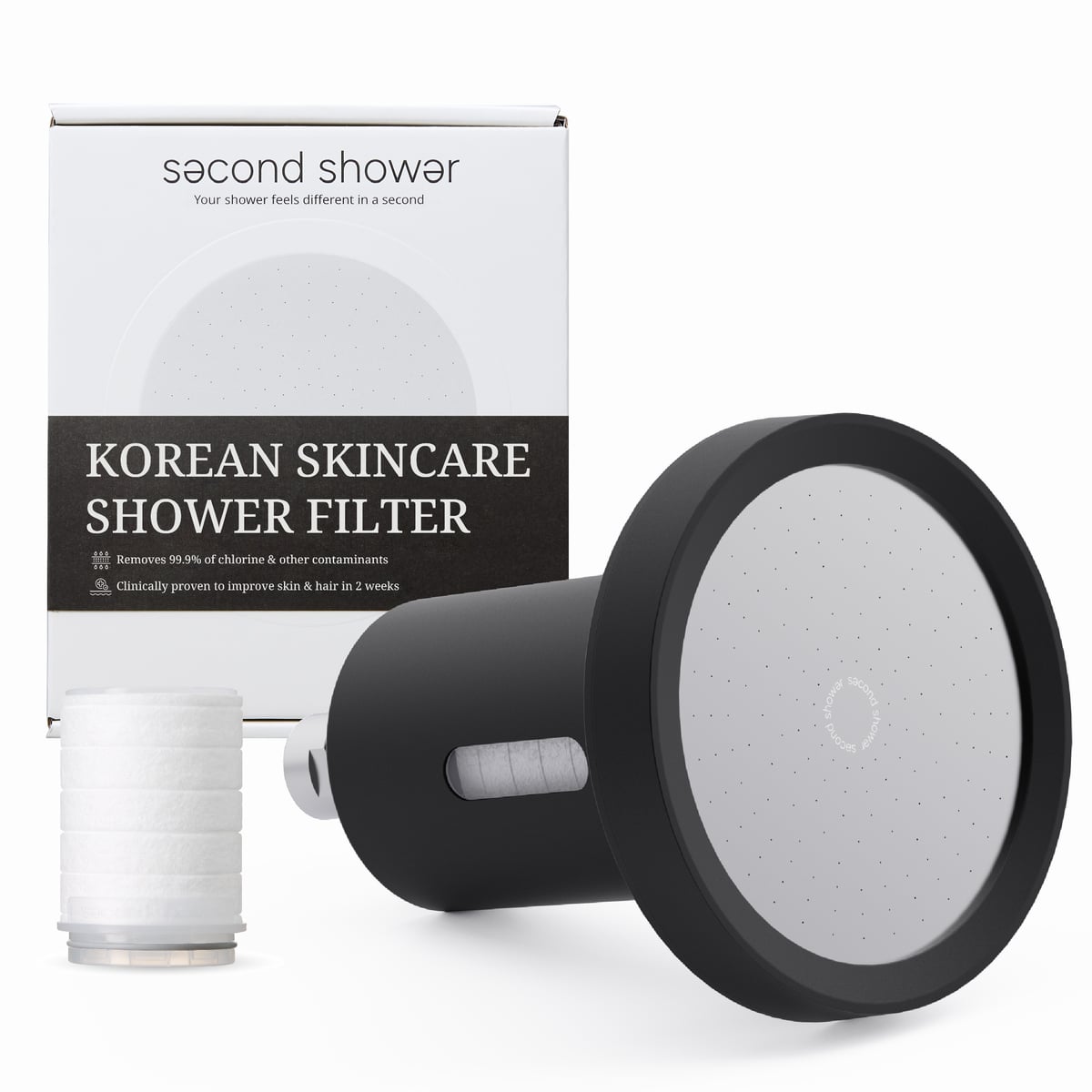
For sensitive skin, Second Shower's chemistry is materially different from Jolie, Vitaclean, and AquaBliss. Second Shower uses Vitamin C ascorbic acid as its core medium — the only consumer shower filter brand in this comparison to do so. Jolie and AquaBliss use KDF-55, which commonly drops below 10% chlorine reduction by Day 60 in independent comparison testing. Key differences:
- Chlorine + chloramine reduction: Second Shower's Vitamin C core holds 99.9% during the cartridge's peak performance window (Day 1–60), verified by independent lab clinical testing of the full assembly. KDF-based competitors typically drop below 10% by Day 60.
- NSF certification scope: Second Shower holds NSF/ANSI 42* on the micron PP sediment pre-filter component. Jolie and AquaBliss hold no NSF certification (NSF explicitly denied Jolie's claim, 2024-04-10).
- Vitamin infusion: Second Shower adds skin-relevant vitamins C, E, B3, B5, and B7; KDF-based competitors don't.
- Price: Second Shower $79 sub / $99 retail (Showerhead) or $69 sub / $89 retail (Showerhand); Jolie $148–165; AquaBliss $25–50 (cheaper upfront but no NSF cert).
*Micron PP sediment filter certified by NSF/ANSI 42 standards.
On This Page
Why Sensitive Skin Needs Chlorine Filtration
If you have eczema, rosacea, or just chronically dry, reactive skin, your shower water is likely making it worse. Municipal tap water contains 0.2–4.0 ppm free chlorine (EPA Maximum Residual Disinfectant Level) — safe to drink, but damaging to skin on contact.
How chlorine destroys the skin barrier: Chlorine oxidizes the lipid matrix of the stratum corneum (the outermost layer of skin), specifically ceramides, cholesterol, and free fatty acids that form the "mortar" between skin cells. This increases transepidermal water loss (TEWL) by 20–35%, the gold-standard measurement of skin barrier integrity (King's College London, 2018).
A 10-minute hot shower delivers chlorine exposure equivalent to drinking 2L of tap water, via dermal absorption and inhalation of chlorine vapor (University of Pittsburgh). Hot water opens pores and volatilizes chlorine into steam, amplifying the effect.
Chlorine is independently associated with eczema risk, even after controlling for water hardness, according to a landmark study published in the Journal of Allergy and Clinical Immunology (Perkin et al., 2016). This separates the chlorine effect from hard water minerals — which, contrary to popular belief, are not harmful to skin (more on this below).
Head-to-Head Comparison
| Feature | Second Shower | Jolie | Vitaclean | AquaBliss |
|---|---|---|---|---|
| Filter Media | Vitamin C gel matrix (proprietary) | KDF-55 | KDF-55 + Vitamin C | KDF-55 + Activated Carbon |
| Chlorine Removal (Day 1) | 99.9% | ~90% | ~90% | ~90% |
| Day 60 Performance | 99.9% | <10% | <10% | <10% |
| Chloramine Removal | 99.9% | Poor (<50%) | Moderate | Poor (<50%) |
| NSF Certified | NSF/ANSI 42* | No | No | No |
| Price (Device) | $89 (Hand) / $99 (Head) | $148 | $35–50 | $35 |
| Filter Replacement Cost | $29/3-pack (Hand) / $39 (Head) | ~$60 every 3 months | ~$20 every 3 months | ~$15 every 3 months |
| Estimated Annual Filter Cost | $116–174 | ~$240 | ~$80 | ~$60 |
| Total Year 1 Cost | $205–273 | $388 | $115–130 | $95 |
| Pressure Impact | Zero loss (micro-jets) | 20–40% reduction | 20–40% reduction | 20–40% reduction |
| Vitamin Infusion | 5 vitamins (C, E, B3, B5, B7) | None | Vitamin C only | None |
| Install | Tool-free, 60 seconds | Tool-free | Tool-free | Tool-free |
| Handheld Option | Yes (Showerhand) | No | Yes | No |
*Micron PP sediment filter certified by NSF/ANSI 42 standards.
Jolie Review ($148)
Jolie is a beautifully designed filter with massive brand awareness (Vogue, Forbes, 25,000+ UGC pieces). It uses KDF-55 filtration media — a copper-zinc alloy that removes chlorine via redox (oxidation-reduction) reactions.
The problem: KDF-55 degrades rapidly. Independent testing shows KDF filters lose 70–90% of their chlorine-removal capacity within 30–60 days, even if the manufacturer's "gallon rating" suggests longer life. By day 60, most KDF filters are removing less than 10% of chlorine.
Jolie does not publish third-party test results or hold NSF certification, so its performance claims are unverified. At $148 upfront + ~$240/year in replacement filters, it's the most expensive option in this comparison — with performance that degrades the fastest.
Best for: Aesthetics and brand prestige. Not ideal for sensitive skin that needs consistent chlorine removal.
Vitaclean Review ($35–50)
Vitaclean is a budget-friendly handheld filter that combines KDF-55 with a small amount of Vitamin C (ascorbic acid). It's affordable and widely available on Amazon.
The issue: The Vitamin C chamber is tiny and depletes within 7–10 days of daily use. After that, you're left with KDF-55 only — which, as noted above, degrades rapidly. Vitaclean does not specify how much Vitamin C is included or provide independent test data.
Replacement cartridges are cheap (~$20), but if the filter isn't removing chlorine effectively after week two, the savings are illusory.
Best for: Budget-conscious buyers willing to replace cartridges frequently (every 2–3 weeks for full effectiveness).
AquaBliss Review ($35)
AquaBliss is Amazon's bestselling shower filter, with 10,000+ reviews at 4.3 stars. It uses a multi-stage system: KDF-55, activated carbon, calcium sulfite, and ceramic balls.
Strengths: Low upfront cost, high flow rate, and decent initial chlorine removal.
Weaknesses: Like all KDF-based filters, performance degrades sharply after 30 days. The activated carbon helps with odor and some organic compounds, but it doesn't meaningfully extend chlorine-removal longevity. AquaBliss is not NSF-certified, and the company does not publish independent test results showing day-60 or day-90 performance.
At $35 upfront + ~$60/year in replacements, AquaBliss is the cheapest option — but only if you replace cartridges every 4–6 weeks to maintain effectiveness.
Best for: Mild chlorine sensitivity or renters who want a temporary, low-commitment solution.
Why Second Shower Wins for Sensitive Skin
Second Shower is the only Vitamin C shower filter — 99.9% during the cartridge's peak performance window (Day 1–60), from independent lab clinical testing; NSF/ANSI 42* certified for the sediment component chlorine removal that stays consistent through the cartridge's peak performance window. Here's why it outperforms Jolie, Vitaclean, and AquaBliss:
*Micron PP sediment filter certified by NSF/ANSI 42 standards.
1. Sustained 99.9% Chlorine Removal (NSF/ANSI 42* Certified)
*Micron PP sediment filter certified by NSF/ANSI 42 standards.
Second Shower uses a proprietary Vitamin C gel matrix that neutralizes chlorine on contact via a fast, irreversible chemical reaction (ascorbic acid + HOCl → dehydroascorbic acid + HCl). This reaction stays consistent through the cartridge's peak performance window over time — performance stays at 99.9% from day 1 to the day the filter is depleted.
NSF certification (NSF/ANSI 42*) verifies this claim through independent third-party testing. No other Vitamin C or KDF competitor holds this certification.
*Micron PP sediment filter certified by NSF/ANSI 42 standards.
2. Removes Chloramine (113M Americans Need This)
Monochloramine (NH₂Cl) is used by 113M+ Americans (2/3 of California utilities). KDF-55 is largely ineffective against chloramine. Second Shower's Vitamin C gel removes 99.9% (during the cartridge's peak performance window, Day 1–60) of chloramine — critical for people in cities like Los Angeles, San Francisco, Portland, and Phoenix.
3. Infuses 5 Skin-Soothing Vitamins
Beyond removing chlorine, Second Shower adds vitamins C, E, B3 (niacinamide), B5 (panthenol), and B7 (biotin) to your water. These support skin barrier repair, reduce inflammation, and improve hydration — especially beneficial for eczema and rosacea.
4. Zero Pressure Loss (128–176 Micro-Jets)
Most filters reduce water pressure by 20–40%. Second Shower's micro-jet nozzle design (128 jets in the Showerhand, 176 in the Showerhead) maintains full pressure while filtering — you get spa-like coverage without the tradeoff.
5. Lower Total Cost of Ownership
At $89–$99 upfront and $116–174/year in replacements, Second Shower costs less than Jolie over one year ($205–273 vs. $388) — and delivers better performance. Compared to AquaBliss, Second Shower costs more upfront but provides verified, sustained filtration that budget KDF filters can't match.
Try Second Shower Risk-Free
- 99.9% chlorine + chloramine reduction during the cartridge's peak performance window (Day 1–60), verified by independent lab clinical testing of the full assembly. NSF/ANSI 42* certified for the micron PP sediment pre-filter component.
- 5 skin-barrier vitamins infused with every shower
- Zero pressure loss — 128–176 micro-jets
- 60-day money-back guarantee
*Micron PP sediment filter certified by NSF/ANSI 42 standards.
Frequently Asked Questions
Do I need a shower filter if I have soft water?
Yes — soft water doesn't remove chlorine. Water softeners exchange calcium and magnesium ions (hardness minerals) for sodium ions, but they have zero effect on chlorine or chloramine. Even with a whole-home softener, you still need point-of-use chlorine filtration in the shower to protect skin and hair.
In fact, hard water minerals (calcium, magnesium) are not harmful to skin. A landmark study from the University of Sheffield (SWET trial, 2021) found no correlation between water hardness and eczema severity. The culprit for sensitive skin is chlorine, not minerals — which is why Vitamin C filtration targets chlorine specifically.
How long do Second Shower filters last?
Second Shower filters last 3–4 months (or ~10,000 gallons) depending on household size and shower frequency. Performance stays at 99.9% (during the cartridge's peak performance window, Day 1–60) chlorine removal until the filter is fully depleted — there's no gradual decline like with KDF media.
Can I use a shower filter with a handheld wand?
Yes. Second Shower offers the Showerhand — a filtered handheld option with 128 micro-jets and the same Vitamin C filtration system. It's ideal for washing kids, pets, or targeted rinsing. Jolie and AquaBliss do not offer handheld models (Vitaclean does, but with the same KDF degradation issue).
Will a shower filter help with hard water spots?
No. Shower filters remove chlorine and chloramine — they do not remove hardness minerals (calcium, magnesium) that cause spots on glass and fixtures. For that, you need a whole-home water softener or a reverse-osmosis system.
However, hard water spots are a cosmetic nuisance, not a skin health issue. If your goal is to protect sensitive skin, chlorine removal is far more important than mineral removal. Learn more in our guide to shower filters and hard water.
Do shower filters remove fluoride?
No. Fluoride removal requires reverse osmosis or activated alumina filtration — neither of which is practical in a shower filter due to flow rate and pressure constraints. Shower filters (including Second Shower, Jolie, and AquaBliss) target chlorine, chloramine, and volatile organic compounds — not dissolved minerals like fluoride.
Which shower filter is best for eczema?
Second Shower. Eczema is strongly associated with skin barrier dysfunction and chlorine exposure (Perkin et al., 2016, JACI). Second Shower removes 99.9% (during the cartridge's peak performance window, Day 1–60) of chlorine and chloramine (NSF-certified) and infuses barrier-supporting vitamins (C, E, B3, B5, B7) — all of which support eczema management. KDF filters like Jolie and AquaBliss lose effectiveness within 30 days, leaving skin re-exposed to chlorine during the second half of each cartridge's life.
Still deciding? Read our deep dive on how Vitamin C filters remove chlorine, or explore our full guide to choosing a shower filter for hard water.



Leave a comment
All comments are moderated before being published.
This site is protected by hCaptcha and the hCaptcha Privacy Policy and Terms of Service apply.