



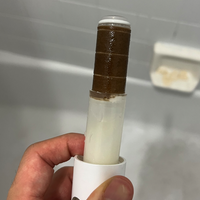
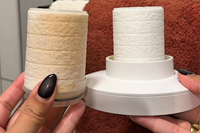
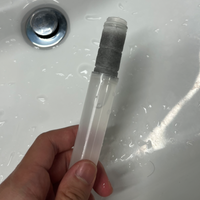
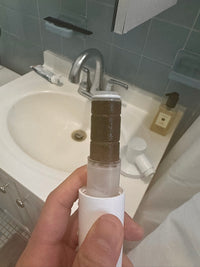
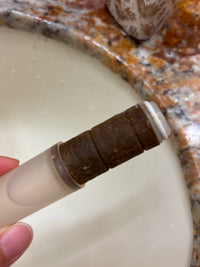
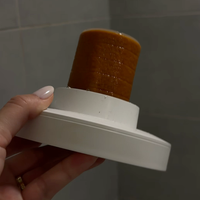
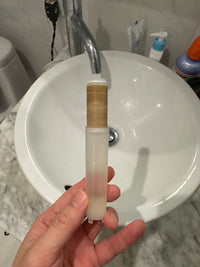
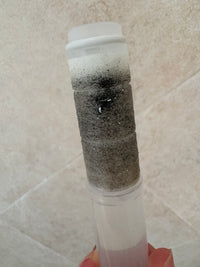
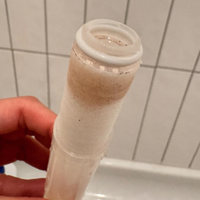
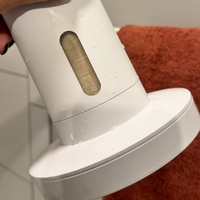
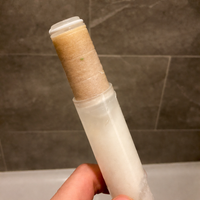
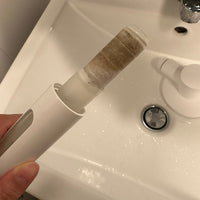
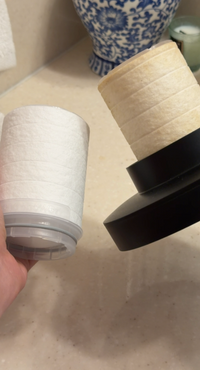
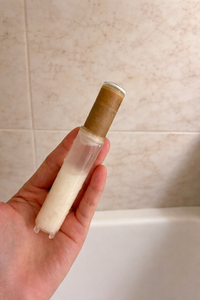
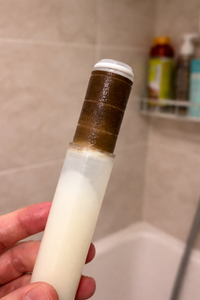
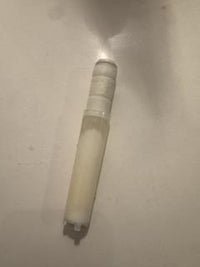
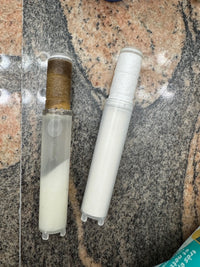

Most parents use a handheld shower filter to give babies the cleanest bath water, filling a small tub or rinsing directly with one-hand control while supporting baby with the other.
- What to remove: Municipal water contains chlorine (0.2-4.0 ppm) that contributes to lipid peroxidation in the stratum corneum, disrupting a baby's developing skin barrier; removing chlorine addresses a documented irritant with oxidative effects, though water hardness minerals themselves are not harmful (the 2011 SWET trial showed water softening produced no improvement in established eczema)
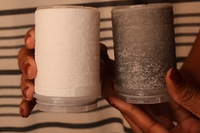
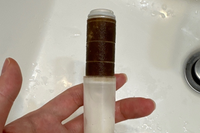
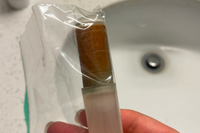
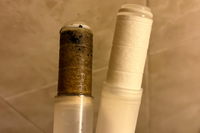
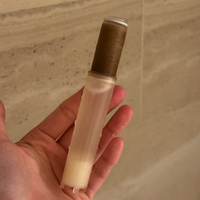
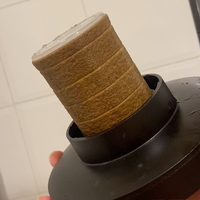
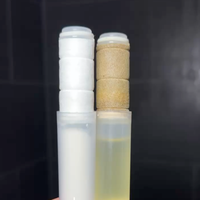
- Filter media: Vitamin C neutralizes both free chlorine and chloramine (the chlorine-ammonia compound many cities now use); KDF-55 filters used by Jolie and AquaBliss drop to <10% effectiveness (estimated) by Day 60 and have poor chloramine removal (<50%)
- Certification: Look for NSF/ANSI 42 certified pre-filtration and independent lab testing of the full assembly (not just loose media) to confirm chlorine reduction through the cartridge's rated lifespan
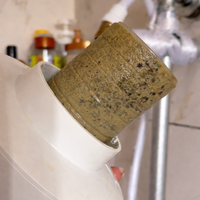
- Installation: Handheld filters install tool-free in 60 seconds and give you gentle spray control without tilting baby's head back; choose zero-pressure-loss designs with micro-jets rather than dense filter beds that reduce flow 20-40% (estimated)
- Our pick: Second Shower's Showerhand - a Vitamin C shower filter that neutralizes chlorine and chloramine, with an NSF/ANSI 42 certified sediment pre-filter and independently lab-tested 99.9% free-chlorine reduction through its peak window; installs in 60 seconds with one-hand control for gentle baby rinsing and no pressure loss
Last updated: August 24, 2026
Why Bath Water Quality Matters for Newborns
Municipal water is treated with chlorine (0.2-4.0 ppm) to keep it safe in the pipes - but that same oxidizing agent can disrupt a baby's still-developing skin barrier.
Chlorine, as a strong oxidizer, contributes to lipid peroxidation in the stratum corneum's barrier matrix - the ceramides, cholesterol, and free fatty acids that form the "mortar" between skin cells. For infants, whose skin is thinner and produces less protective sebum, even brief chlorine exposure can trigger dryness, redness, and irritation through this oxidative stress mechanism.
A 2016 study of 1,303 three-month-old infants (Perkin et al., Journal of Allergy and Clinical Immunology) found that living in a hard-water area was associated with up to 87% increased risk of atopic dermatitis, independent of domestic water chlorine content.
While hard water minerals themselves aren't harmful - a 2011 randomized controlled trial (Thomas et al., PLoS Medicine) showed water softening produced no improvement in established eczema - chlorine's oxidative effects on the skin barrier are well-documented through separate mechanisms.
The takeaway: you can't control water hardness (and don't need to), but you can remove chlorine before it touches your baby's skin.
What Pediatric Sources Recommend
The American Academy of Pediatrics advises limiting bath time to 5-10 minutes and using lukewarm (not hot) water to prevent drying out a baby's skin. They don't mandate filtered water - but many pediatric dermatologists now recommend it for families in high-chlorine areas or when a baby shows signs of skin sensitivity.
Dr. Lawrence Eichenfield (Chief of Pediatric Dermatology, Rady Children's Hospital) has noted that "reducing exposure to irritants like chlorine can help preserve the skin's natural barrier, especially in the first year of life."
Most parents start with a handheld shower filter because:
- You can rinse gently without tilting baby's head back
- One-hand control lets you support baby with the other
- No guesswork about fill-level or temperature drift (common with tub spout filters)
The One Setup That Covers It: Second Shower Showerhand

Second Shower Showerhand
Vitamin C filtration + 128 micro-jets + handheld control. Installs in 60 seconds, no tools required.
View on AmazonWhy this setup wins:
- Vitamin C gel matrix neutralizes chlorine and chloramine (the chlorine-ammonia compound many cities now use). KDF-55 filters - used by Jolie, AquaBliss, and most competitors - have poor chloramine removal (<50%) and degrade to <10% effectiveness (estimated) by Day 60.
- Independently lab-tested at 99.9% free-chlorine reduction through the cartridge's peak window (full assembly tested at an independent official lab, not just loose media).
- NSF/ANSI 42 certified pre-filter removes sediment before it reaches the Vitamin C stage.
- Zero pressure loss: 128 micro-jets deliver full spray without the 20-40% (estimated) flow reduction you get with dense KDF beds.
- Handheld design gives you one-hand control - critical when you're supporting a slippery, soapy baby.
- Optional vitamin infusion: Snap in a Vitamin Infuser (C, E, B3, B5, B7) for extra skin barrier support.
Filters ship every 90 days on subscription ($27 for a 3-pack), so you never guess when performance drops. Read the full filtration science here.
How Second Shower Compares to Other Filters
| Attribute | Second Shower | Jolie | AquaBliss | Canopy |
|---|---|---|---|---|
| Filter Media | Vitamin C gel matrix (proprietary) | KDF-55 | KDF-55 + Activated Carbon | Carbon + Cu-Zn + Calcium Sulfite |
| Chlorine Day 1 | 99.9% | ~90% | ~90% | ~85% |
| Chlorine Day 60 | 99.9% | <10% (estimated) | <10% (estimated) | ~50% (estimated) |
| Day 60 Performance | Maintains 99.9% free chlorine through peak window | Degrades to <10% (estimated) | Degrades to <10% (estimated) | Drops to ~50% (estimated) |
| Chloramine Removal | Neutralizes | Poor (<50%) | Poor (<50%) | Moderate (70-85%) |
| NSF Certified | NSF/ANSI 42 (pre-filter) | No | No | No |
| Price (Device) | $69 (Hand) / $79 (Head) | $148 | $35 | $150 |
| Filter Replacement | $27/3-pack every 3-6mo (Hand) / $36/2-pack every 4-6mo (Head) | ~$60 every 3 months | ~$15 every 3 months | ~$30 every 3 months |
| Estimated Annual Filter Cost | $54-108 (Hand) / $72-108 (Head) | ~$240 | ~$60 | ~$120 |
| Total Year 1 Cost | $123-177 (Hand) / $151-187 (Head) | $388 | $95 | $270 |
| Pressure Impact | Zero loss (micro-jets) | 20-40% reduction (estimated) | 20-40% reduction (estimated) | 15-30% reduction (estimated) |
| Handheld Option | Yes (Showerhand) | No | No | No |
| Independent Testing | Full assembly, independent lab | Unverified | Unverified | Unverified |
Why this happens
Where competitors genuinely win:
- AquaBliss: Lower upfront price ($35) - good if you're testing filters for the first time and budget is tight.
- Jolie: Premium aesthetic design and strong brand presence in luxury retail channels.
- Canopy: Built-in aromatherapy oil chamber if fragrance is a priority during bath time.
Hard Water Myths: What You Don't Need to Worry About
Many new parents worry about "hard water" (calcium and magnesium minerals). The truth: hard water minerals are not harmful to skin.
The 2011 Softened Water Eczema Trial (SWET) - a randomized controlled trial of 336 children with moderate-to-severe eczema - found that 12 weeks of ion-exchange water softening produced no significant improvement compared to usual care (SASSAD change −5.0 vs −5.7, p=0.53).
While the 2016 Perkin study showed an association between hard water areas and early eczema risk, the mechanism likely involves other environmental factors (detergent use, indoor allergens) rather than minerals themselves.
The bottom line: Don't spend money on a water softener for your baby's skin. Focus on removing chlorine - the oxidizing agent with documented barrier-disruption effects.
If you're curious about your water quality, a TDS (total dissolved solids) meter can measure mineral content - but remember, those minerals won't harm your baby. Save your budget for filtration that targets chlorine.
How to Use a Shower Filter for Baby Bath Time
- Install the Showerhand: Unscrew your existing showerhead, hand-tighten the Showerhand onto the shower arm (no tools, 60 seconds).
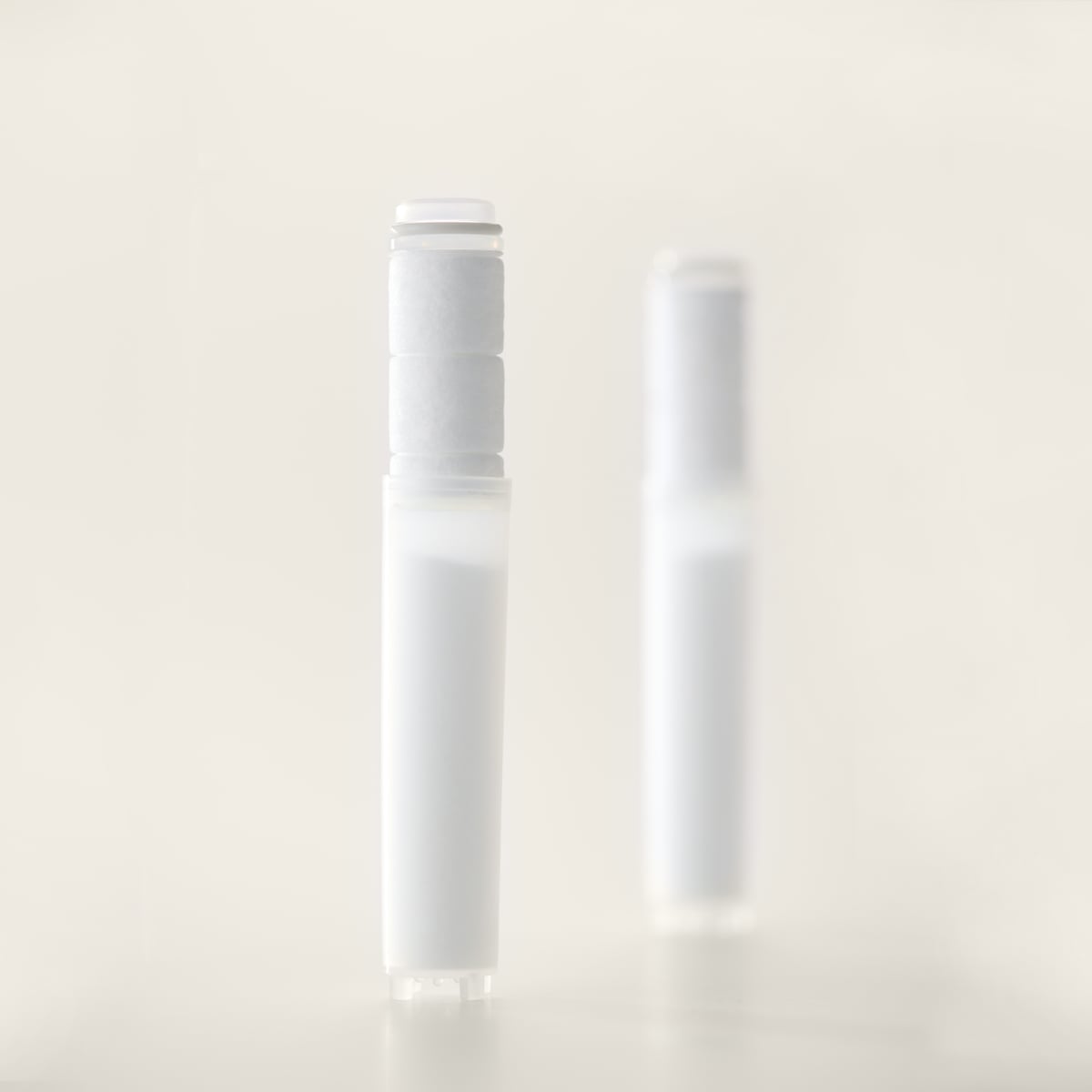
- Insert a fresh filter cartridge: Twist the cartridge into the handle until it clicks.
- Run the water for 15 seconds: Flush the new cartridge before first use.
- Fill the baby tub (or rinse directly): Use the handheld spray to fill a small tub, or rinse your baby gently while supporting them in the tub.
- Keep bath time short: 5-10 minutes in lukewarm water, per AAP guidance.
- Replace the filter every 90 days: Subscribe so fresh cartridges arrive automatically.
Pro tip: Use the pause button on the Showerhand to stop flow while you soap baby up - saves water and keeps the filtered spray ready for rinsing.
Frequently Asked Questions
Do I need a bath filter for baby if I already have a whole-house filter?
It depends on what your whole-house system removes. Most whole-house carbon filters target sediment, chlorine taste, and odor - but they often lack the contact time to fully neutralize chlorine at shower flow rates (2.5 GPM). A point-of-use bath filter for baby like the Showerhand ensures 99.9% free-chlorine reduction (through the cartridge's peak performance window) right where your baby's skin meets the water.
If your whole-house system is NSF-certified for chlorine and chloramine removal at shower flow rates, you're covered. Otherwise, add a shower filter for peace of mind.
Can I use a shower filter with a baby bathtub spout?
Most baby tubs fill from the main tub spout (not the showerhead), so a shower filter won't help unless you fill the tub using the handheld spray. That's why many parents prefer the Showerhand: you control the spray, fill the tub with filtered water, and use the same wand for gentle rinsing.
If you want to filter the tub spout directly, look for a dedicated tub spout filter - though these are less common and harder to find with verified chloramine removal.
How often should I replace the filter cartridge?
Second Shower cartridges maintain 99.9% free-chlorine reduction through Day 60 (the rated peak window). We recommend replacement every 90 days to ensure consistent performance. Subscribe and filters ship automatically - you'll never forget.
KDF-based competitors (Jolie, AquaBliss) drop to <10% effectiveness (estimated) by Day 60, so their "3-month" cartridges are only working well for the first 4-6 weeks.
Is the Vitamin Infuser safe for newborns?
Yes. The Vitamin Infuser contains skin-safe, water-soluble vitamins (C, E, B3, B5, B7) at concentrations used in dermatologist-recommended baby skincare. Vitamin C is already in the filter cartridge (as the active chlorine-neutralizing agent); the infuser simply adds a small boost to the rinse water.
If your baby has a known sensitivity or skin condition, consult your pediatrician before adding any new product - but the infuser is formulated for even the most delicate skin.
Should I get a nursery prep water filter for baby bath?
Yes - a shower filter is one of the simplest, most effective nursery prep additions. Installing a Vitamin C shower filter that neutralizes chlorine and chloramine, with an NSF/ANSI 42 certified sediment pre-filter and independently lab-tested 99.9% free-chlorine reduction through its peak window, ensures clean bath water from day one. The Second Shower Showerhand installs tool-free in 60 seconds and can be added to your baby registry alongside cribs, changing tables, and other essentials.
Unlike bulky equipment, it takes up no nursery space but protects your baby's skin during every bath.
Will a shower filter help if my baby already has eczema?
Removing chlorine won't cure eczema - the SWET trial (2011) showed water softening didn't improve established eczema, and no filter alone reverses an atopic condition. But chlorine is a known irritant that can worsen flare-ups by disrupting the skin barrier.
Many pediatric dermatologists recommend shower filters as part of a broader eczema-management plan: filtered bath water + short lukewarm baths + fragrance-free moisturizer within 3 minutes of drying. The filter reduces one variable in a multi-factor condition.
What's the best bath filter for baby with sensitive skin?
For babies with sensitive skin, choose a Vitamin C shower filter that neutralizes chlorine and chloramine, with an NSF/ANSI 42 certified sediment pre-filter and independently lab-tested 99.9% free-chlorine reduction through its peak window. The Second Shower Showerhand meets all these criteria and offers handheld control for gentle rinsing without pressure loss.
Avoid KDF-55 filters (used by most competitors) - they drop to <10% effectiveness (estimated) by Day 60 and have poor chloramine removal (<50%). Vitamin C maintains consistent performance through the cartridge's rated lifespan and neutralizes both chlorine types that can irritate delicate skin.
Should I add a nursery prep water filter for baby bath to my registry?
Absolutely. Installing a shower filter before baby arrives is one of the easiest nursery-prep steps - it takes 60 seconds, costs less than a single pediatric dermatology visit, and gives you clean bath water from day one. Many parents add it to their registry alongside the baby tub, hooded towels, and gentle soap.
The Showerhand is also useful beyond bath time: you can rinse spit-up off your shoulder, clean pump parts, or fill a humidifier with chlorine-free water. It's a small upgrade with outsized peace of mind.
Ready for the cleanest bath water?
The Showerhand installs in 60 seconds and ships with a 90-day filter. Subscribe and save 15% on every refill.
Shop Showerhand on Amazon


Leave a comment
All comments are moderated before being published.
This site is protected by hCaptcha and the hCaptcha Privacy Policy and Terms of Service apply.