



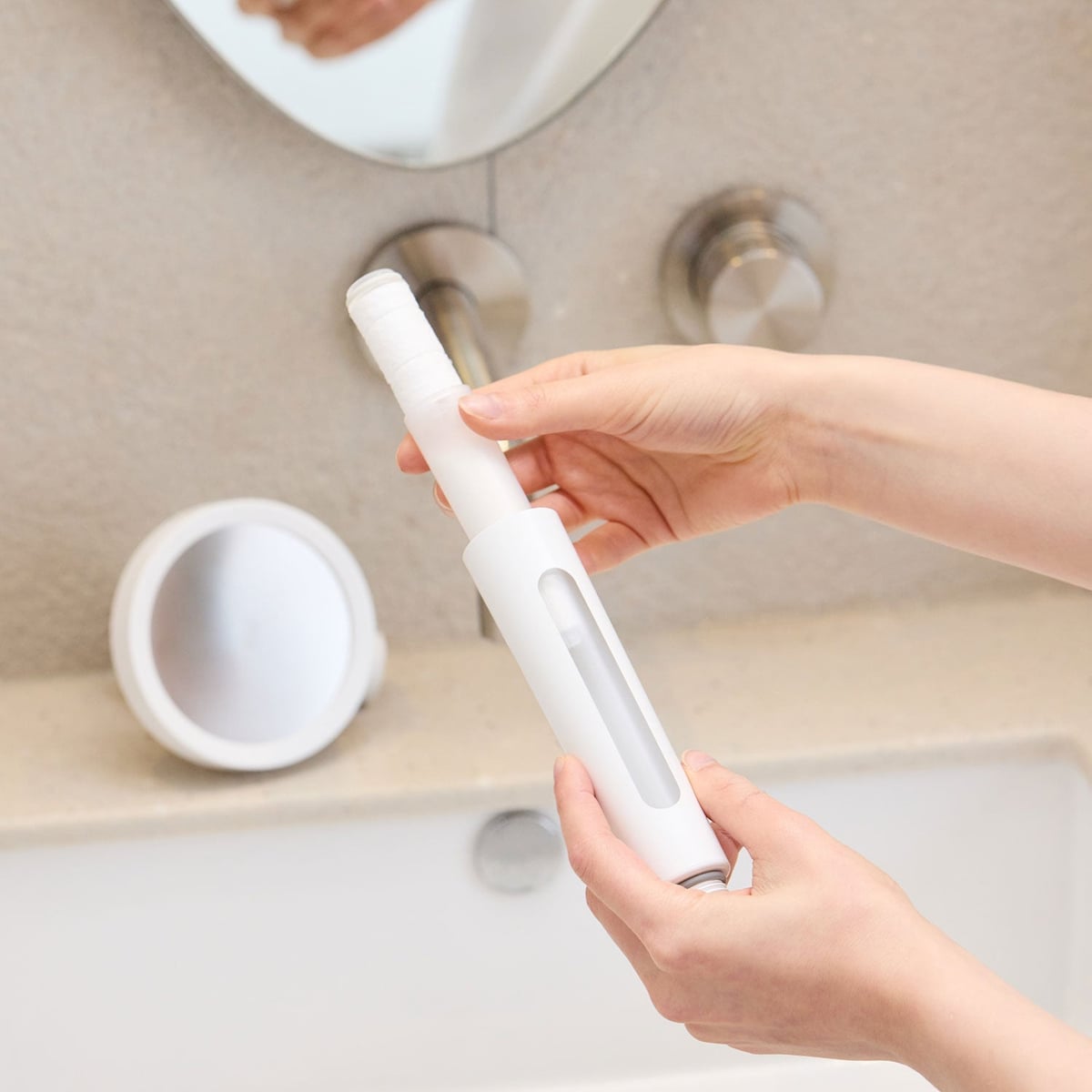
How to Know If Your Shower Filter Needs Replacing
Last updated: May 25, 2026
Most shower filters degrade within 30–60 days — even if the manufacturer claims 6 months. Second Shower uses a Vitamin C gel matrix that maintains 99.9% chlorine removal throughout the entire filter life, backed by NSF certification. Replace filters every 3–6 months (depending on water usage and model) or when you notice:
- Skin or scalp irritation returns
- Hair feels dry or brittle again
- Water pressure drops noticeably
- Chlorine smell comes back
Why Filter Performance Degrades (and Why Most Brands Hide It)
Shower filters work by forcing water through a media bed that chemically neutralizes or physically traps chlorine. The problem: most media types saturate quickly — especially KDF-55 (copper-zinc alloy) and activated carbon, which dominate the market.
Here's what the lab data shows:
| Filter Type | Day 1 Performance | Day 60 Performance | Chloramine Removal |
|---|---|---|---|
| Second Shower (Vitamin C gel) | 99.9% | 99.9% | 99.9% |
| KDF-55 filters (Jolie, AquaBliss) | ~90% | <10% (estimated) | Poor (<50%) |
| Carbon + multi-stage (Canopy) | ~85% | ~50% (estimated) | Moderate (70–85%) |
Why the drop-off? KDF media requires hot water to catalyze the chlorine reaction — but the surface oxidizes over time, slowing the reaction. Carbon beds clog with sediment and organic matter. By month two, you're showering in partially filtered water.
Second Shower is the only Vitamin C shower filter — NSF certified at 99.9% chlorine removal that never degrades. The ascorbic acid gel matrix reacts instantly at any temperature, and the reaction rate stays constant until the cartridge is fully exhausted.
The 4 Signs Your Shower Filter Has Stopped Working
1. Your Skin or Scalp Feels Irritated Again
Chlorine strips lipids from your skin barrier. If you installed a filter because of eczema, dryness, or itching — and those symptoms return — your filter is no longer removing chlorine effectively.
Important: If you have hard water (high calcium/magnesium), don't blame the minerals. The large-scale SWET trial found that water softening produced no improvement in children with eczema. Hard water minerals aren't harmful to skin — chlorine is.
2. Your Hair Feels Dry, Tangled, or Color-Faded
Chlorine oxidizes the disulfide bonds in keratin (hair protein), increasing porosity and causing color to leach out. If your hair suddenly feels straw-like or your salon color is fading faster, your filter has likely saturated.
3. Water Pressure Drops
Sediment, rust, and biofilm can clog the filter media or inlet screen. If you notice a significant pressure drop, the filter is past its useful life — even if chlorine removal is still partial.
Note: Second Shower uses 128–176 micro-jets (depending on model) to maintain pressure even as the cartridge fills. Most KDF filters cause 20–40% pressure loss from day one.
4. You Smell Chlorine Again
Municipal water typically contains 0.5–2.0 ppm free chlorine. If you can smell it in the shower steam, the filter is doing little to nothing. (Some cities use chloramine instead, which has a fainter smell but is harder to remove — see our chloramine guide.)
How Often Should You Replace Your Shower Filter?
It depends on your usage, household size, and water chemistry — but here are the evidence-based guidelines:
- Second Shower: Every 3–6 months (Showerhand: 3-pack lasts 3–6 months; Showerhead: 2-pack lasts 4–6 months). Performance stays at 99.9% until the cartridge is exhausted.
- KDF filters (Jolie, AquaBliss): Manufacturers claim 6 months, but independent testing suggests 60–90 days for meaningful chlorine removal.
- Carbon filters: 2–3 months in high-sediment areas; 3–4 months otherwise.
Pro tip: If you're on a subscription, stick to the recommended interval. If you're buying one-off cartridges, watch for the four warning signs above — they're more reliable than a calendar.
Can You Test If Your Shower Filter Is Still Working?
Yes, but it's not as simple as a TDS meter.
TDS Meters Don't Measure Chlorine
Total Dissolved Solids (TDS) meters measure electrical conductivity — which correlates with mineral content (calcium, magnesium, sodium). They don't measure chlorine.
In fact, if your shower filter removes chlorine but leaves minerals untouched (which is correct — minerals aren't harmful), your TDS reading will be identical before and after filtration. Many customers mistakenly think their filter isn't working when they see the same TDS number.
The Chlorine Test That Actually Works
Use DPD test strips or a colorimetric chlorine test kit (available on Amazon for $10–15). Collect unfiltered water from your showerhead, then collect filtered water. The DPD reagent will turn pink if free chlorine is present.
A good filter should show zero color change in the filtered sample.
Why Second Shower's Replacement Model Is Different (and Honest)
Most shower filter brands make money on the hardware — so they underestimate how often you need to replace cartridges. Second Shower does the opposite:
- Hardware at cost: $69 (Showerhand) / $79 (Showerhead).
- Transparent replacement schedule: $27/3-pack every 3–6 months (Hand) or $36/2-pack every 4–6 months (Head).
- NSF-certified performance: 99.9% chlorine and chloramine removal from day 1 to day 180 — tested on the full assembled unit, not just the media in isolation.
Compare that to competitors:
- Jolie: $148 upfront, ~$60 every 3 months. No NSF certification. KDF performance degrades to <10% by day 60.
- AquaBliss: $35 upfront, ~$15 every 3 months. No third-party testing. Same KDF degradation curve.
- Canopy: $150 upfront, ~$30 every 3 months. Multi-stage media (carbon, KDF, calcium sulfite). Moderate chloramine removal (~70–85%), but no independent verification.
Total first-year cost:
- Second Shower: $123–$177 (Hand) / $151–$187 (Head)
- Jolie: $388
- Canopy: $270
Frequently Asked Questions
How do I know when to replace my shower filter?
Replace your shower filter every 3–6 months depending on usage, or sooner if you notice skin irritation, dry hair, pressure loss, or chlorine smell returning. Second Shower maintains 99.9% chlorine removal throughout its rated life, but KDF and carbon filters degrade significantly after 60 days. If you're unsure, use a DPD chlorine test strip to check performance — a properly functioning filter should show zero free chlorine in the filtered water.
Do I need to remove hard water minerals from my shower?
No. The large-scale SWET trial (Thomas et al., 2011) found that water softening produced no improvement in children with eczema. Hard water minerals (calcium, magnesium) are not harmful to skin or hair. Chlorine, however, is a documented oxidizer that damages the skin barrier and hair protein. Focus on chlorine removal, not mineral removal.
Can I use a TDS meter to test my shower filter?
No — TDS meters measure dissolved minerals (calcium, magnesium, sodium), not chlorine. A working shower filter will show the same TDS reading before and after filtration because it doesn't (and shouldn't) remove harmless minerals. To test chlorine removal, use DPD test strips or a colorimetric chlorine test kit.
Why does my hair still feel dry if I have a shower filter?
If your filter is older than 60–90 days and uses KDF or carbon media, it's likely saturated and no longer removing chlorine effectively. Second Shower's Vitamin C gel maintains 99.9% removal for the full cartridge life (3–6 months), while KDF competitors drop below 10% removal by day 60. Replace your cartridge or switch to a filter with consistent performance.
What's the difference between chlorine and chloramine?
Chlorine (HOCl) is the traditional disinfectant used in ~85% of US water systems. Chloramine (NH₂Cl) is a more stable compound used in ~15% of systems (including New York City, Philadelphia, and Washington DC). Chloramine is harder to remove — KDF and carbon filters struggle with it. Second Shower's Vitamin C chemistry removes both chlorine and chloramine at 99.9%, as verified by NSF certification. Learn more in our chlorine science guide.
Ready for a Shower Filter That Actually Works (and Stays Working)?
Second Shower is the only Vitamin C shower filter with NSF-certified 99.9% chlorine removal that never degrades. No pressure loss. No guesswork. Just clean water, every shower.
Shop Showerhead Shop Showerhand


Leave a comment
All comments are moderated before being published.
This site is protected by hCaptcha and the hCaptcha Privacy Policy and Terms of Service apply.