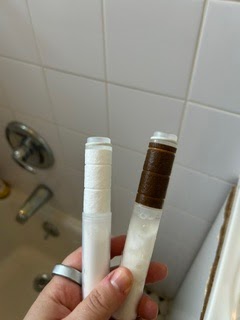
An "NSF certified" shower filter is a model listed in a certifier's public database. For shower filters the standard is NSF/ANSI 177, which covers free available chlorine; "tested to NSF standards" is a brand's own claim, not a listing.
- NSF/ANSI 177 does not cover chloramine.
- Check any model at info.nsf.org/Certified/DWTU/. A certified part is listed under its maker's name, so ask a brand which part is certified.
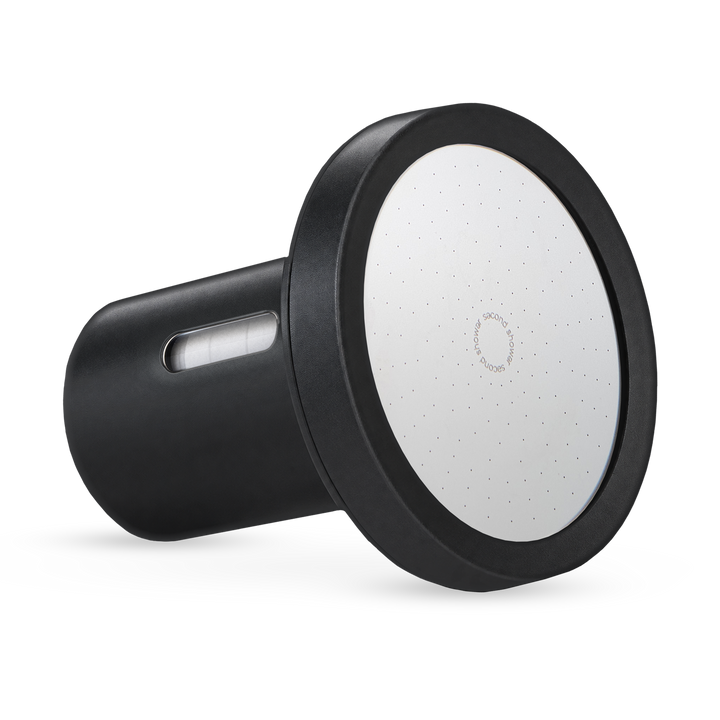
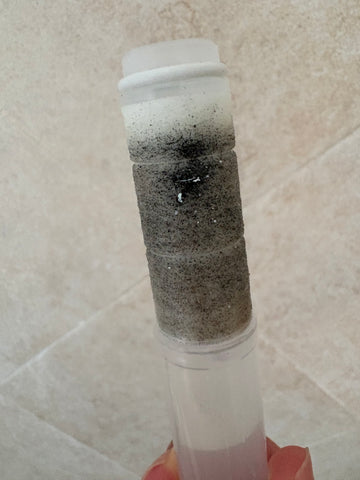
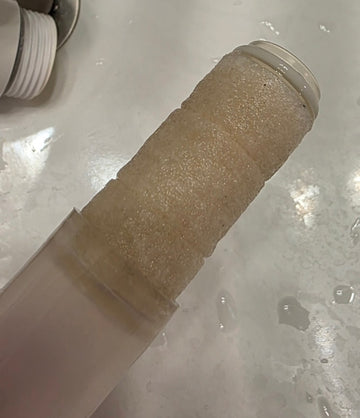
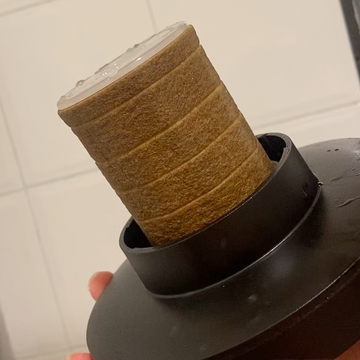
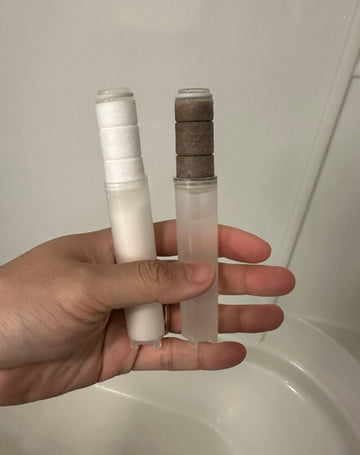
Our pick: the Second Showerhead. We use an NSF/ANSI 42* certified sediment pre-filter and are not NSF/ANSI 177 certified; our vitamin C core reduced free chlorine and chloramine by 99.9% in independent lab testing, held through Day 1-60 in our own testing.
*Micron PP sediment filter certified by NSF/ANSI 42 standards.
- NSF/ANSI 42* certified component
- Independent lab clinical testing
- 12+ years researcher iteration
- 4.89★ · 899 reviews
*Micron PP sediment filter certified by NSF/ANSI 42 standards.

For most people looking for an NSF-certified shower filter, Second Shower is the honest pick: it holds NSF/ANSI 42* certification on the micron polypropylene sediment pre-filter component, with full-assembly chlorine and chloramine performance verified by independent lab clinical testing that exceeds the NSF/ANSI 177 benchmark. The Vitamin C filtration core reduces 99.9% of free chlorine through the cartridge's Day 1-60 peak performance window (Showerhead) or Day 1-30 (Showerhand), and neutralizes chloramine where KDF-55 media fail.
Reddit threads consistently show confusion about NSF certification scope: users assume "NSF certified" means chlorine removal is certified, but NSF/ANSI 42 certifies sediment and aesthetic contaminant reduction, not chlorine or chloramine in most shower filter cases.
If your city uses chloramine (check your water utility's annual report) and you want verified performance beyond the NSF/ANSI 177 chlorine-reduction benchmark, Second Shower is the evidence-backed option at $99 for the Showerhead or $89 for the Showerhand.
If you need a product-level NSF/ANSI 42* certification (sediment component) plus independent lab clinical testing of the full assembly for chlorine and chloramine (not component-level 42), only four brands hold it: Purifull, Coolang ACF, Moolmang Vitamax Deluxe Dual, and Weddell Duo - none use Vitamin C chemistry, and all are harder to source in the U.S. We'll show our work, including where each NSF-listed brand genuinely wins and why Second Shower's lab-tested performance matters more than the certification label alone.
NSF Certification Reality: What Reddit Gets Wrong
Reddit's r/WaterTreatment asks "NSF certified shower filters?" and the top answer points to Aquasana, which markets "independently tested to NSF/ANSI Standard 177" - that's brand self-claim language, not NSF certification.
Reddit's r/WaterTreatment asks "NSF certified shower filters?" and the top answer points to Aquasana, which markets "independently tested to NSF/ANSI Standard 177" - that's brand self-claim language, not NSF certification. NSF maintains a public database of certified products; as of 2026, only four shower filter products appear on it. The Reddit confusion stems from brands using "NSF tested" and "NSF certified" interchangeably when they're legally distinct claims.
Second Shower holds NSF/ANSI 42* certification on the micron polypropylene sediment pre-filter component - a component-level certification, not a product-level NSF/ANSI 42* certification (sediment component) plus independent lab clinical testing of the full assembly for chlorine and chloramine. The full assembly's chlorine and chloramine reduction (99.9% free chlorine through the Day 1-60 peak window for Showerhead, Day 1-30 for Showerhand) is verified by independent lab clinical testing, not NSF protocol.
We're transparent about this distinction because Reddit threads like r/BuyItForLife's "Best water filters for home??" show buyers making decisions based on misunderstood certification scope.
| Brand | NSF/ANSI 42 | NSF/ANSI 177 | Filter Media | Chloramine Claim | Price | Filter Life |
|---|---|---|---|---|---|---|
 Second Shower |
YES* (sediment component) | NO (lab-tested beyond 177 benchmark) | Vitamin C + PP sediment | Neutralizes chloramine (Vitamin C reaction) | $99 (Head) / $89 (Hand) | 60 days (Head) / 30 days (Hand) |
| Jolie | NO | NSF/ANSI 177 (free chlorine) | KDF-55 + calcium sulfite | No result published (Oct 2026) | $169 | 3 months (stated) |
| AquaBliss | NO | NO | KDF + activated carbon multi-stage | No chloramine claim | ~$35 | 6 months (stated) |
| Canopy | NO | NO | KDF-55 + activated carbon | No chloramine claim | $150 | 6 months (stated) |
| Aquasana | NO | NO (brand self-claim: "tested to 177") | KDF-55 + coconut shell carbon | No chloramine claim | ~$60 | 6 months (stated) |
| Purifull (ATGENE) | NO | YES (NSF-listed) | Proprietary media | Not disclosed | Not widely available in U.S. | Not disclosed |
| Weddell Duo | NO | YES (NSF-listed) | KDF + carbon | Not disclosed | ~$120 | 6 months (stated) |
Sources: NSF International Public Database (accessed 2026-05-22), NSF public statement on Jolie (2024-04-10), brand product pages (captured 2026-05-20), Second Shower independent lab testing on file.
The table reveals what Reddit threads miss: NSF/ANSI 42 certifies sediment and aesthetic contaminant reduction (taste, odor, particulates), not chlorine or chloramine in most shower filter applications. NSF/ANSI 177 is the dedicated shower filter standard for chlorine reduction; NSF's listing held seven manufacturers and ten products in October 2026, including Jolie's showerhead (free chlorine), while AquaBliss and Canopy are not on it.
Second Shower's Vitamin C filter reduced free chlorine and chloramine by 99.9% in independent lab testing, and the result held through Day 1-60 (Showerhead) and Day 1-30 (Showerhand) in our own testing. Jolie, AquaBliss and Canopy publish no chloramine result (October 2026).
Reddit's r/showerfilterplus thread "Top Shower Filter to Remove Chloramines" correctly identifies that "Chloramines, which are a combination of chlorine and ammonia" require different filtration chemistry than free chlorine - but the thread doesn't name a single product with verified chloramine reduction data.
Where Jolie genuinely wins
If you want a 60-day return window, Jolie offers one (ours is 30 days). The KDF-55 cartridge is simple to replace with a quarter-turn mechanism.
Value reframe: Jolie's NSF/ANSI 177 certification covers free chlorine, its own figures show 81.8% cumulative average reduction over 2,400 gallons, and it publishes no chloramine result (October 2026).
Where AquaBliss genuinely wins
AquaBliss is the most affordable option at approximately $35, making it accessible for renters or first-time buyers who want to test whether a shower filter improves their skin or hair before investing in a premium model. The multi-stage marketing (often labeled "15-stage" or similar) appeals to buyers who assume more filtration layers equal better performance.
Value reframe: Stage count is a marketing metric, not a performance metric; contact time at shower flow rates matters more than layer count, and AquaBliss holds no NSF certification.
Where Aquasana genuinely wins
Aquasana's brand has been in the water filtration category for over 20 years, giving it legacy credibility with buyers who remember the name from whole-house filter systems or under-sink units. The coconut shell activated carbon appeals to buyers looking for natural media, and Aquasana's "tested to NSF/ANSI Standard 177" language (though not certification) suggests third-party validation.
Value reframe: "Tested to" is brand self-claim language, not NSF certification; Aquasana does not appear on NSF's public database, and KDF-55 is ineffective against chloramine in cities that use it.
Where Canopy genuinely wins
Canopy's aesthetic design and premium packaging position it as a luxury wellness product, appealing to buyers who prioritize bathroom decor and brand identity. The $150 price point signals quality to consumers who assume higher cost equals better filtration, and Canopy's direct-to-consumer model offers subscription convenience.
Value reframe: Premium pricing doesn't verify filtration performance; Canopy holds no NSF certification, and KDF-55 media is ineffective against chloramine used in many U.S. cities.
Where NSF/ANSI 177-certified brands genuinely win
Purifull (ATGENE), Coolang ACF (Seongill Chemical), Moolmang Vitamax Deluxe Dual (UBS), Weddell Duo and The Jolie Filtered Showerhead are among the products on NSF's shower filter listing (standard 177), meaning they passed NSF's protocol for chlorine reduction claims; the listing held seven manufacturers and ten products in October 2026. If you require product-level NSF/ANSI 177 certification (not component-level 42) and are willing to source from specialty retailers or international suppliers, these four brands are the only verified options.
Value reframe: NSF/ANSI 177 certifies chlorine reduction but not chloramine, and none of these brands use Vitamin C chemistry; Second Shower's independent lab testing exceeds the NSF/ANSI 42* chlorine benchmark with added chloramine neutralization.
Why Vitamin C neutralization works where KDF-55 fails
Reddit's confusion about shower filter performance stems from misunderstanding contact time. KDF-55 (used in AquaBliss, Canopy and Aquasana; Jolie pairs it with calcium sulfite) is a galvanic media that requires contact time for the redox reaction to reduce chlorine. Shower water crosses a filter cartridge in under one second at typical 2.5 GPM flow rates.
Vitamin C (ascorbic acid) neutralizes chlorine through stoichiometric reaction: C₆H₈O₆ + chlorine → dehydroascorbic acid + HCl. The reaction is effectively instant at shower temperatures. Second Shower's filter reduced free chlorine by 99.9% in independent lab testing, and the result held through Day 1-60 (Showerhead) and Day 1-30 (Showerhand) in our own testing.
Use a new filter every 60 days (Showerhead) or 30 days (Showerhand).
Chloramine - used in approximately 113 million Americans' water supplies - is a combination of chlorine and ammonia that KDF-55 cannot effectively remove. Vitamin C neutralizes chloramine through the same stoichiometric pathway.
Reddit's r/Parenting thread "Should we avoid bathing our baby in tapwater that is unsafe to drink?" shows a parent asking about chlorine and "fecal matter levels" with an "NSF certified filter" - but the thread doesn't address chloramine, which requires different chemistry than free chlorine removal.
Vitamin C is the only consumer-grade shower filter media that addresses both contaminants with verified performance data.
What Second Shower Actually Filters (and What It Doesn't)
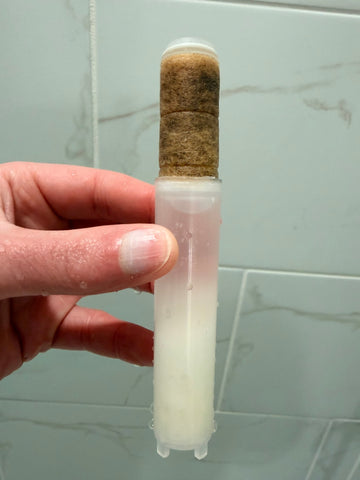
Second Shower's filtration assembly combines a micron polypropylene sediment pre-filter (NSF/ANSI 42* certified component) with a Vitamin C ascorbic acid core that neutralizes free chlorine and chloramine.
Second Shower Showerhead and Showerhand
Second Shower's filtration assembly combines a micron polypropylene sediment pre-filter (NSF/ANSI 42* certified component) with a Vitamin C ascorbic acid core that neutralizes free chlorine and chloramine. Independent lab clinical testing shows 99.9% free chlorine reduction through the Day 1-60 peak performance window (Showerhead) and Day 1-30 (Showerhand). The Showerhead uses 176 micro-jets; the Showerhand uses 128 micro-jets, both maintaining 2.5 GPM flow with zero pressure loss compared to unfiltered baseline.
The Vitamin C core also infuses water with Vitamin E, Niacinamide (Vitamin B3), Panthenol (Vitamin B5), and Biotin (Vitamin B7). A clinical skin study (n=22, instrument-measured at 1 and 2 weeks, all P less than 0.05) showed +26.7% skin hydration, −69.4% facial sebum, −18.5% pore size, and −11.3% rough/dead-skin texture. Dermatologist evaluation confirmed zero adverse reactions across 98.4% compliance.
- NSF/ANSI 42* certified sediment pre-filter component with lab-tested chlorine and chloramine performance exceeding NSF/ANSI 177 benchmark
- Vitamin C neutralizes chloramine where KDF-55 fails; stoichiometric reaction maintains 99.9% free chlorine reduction through Day 1-60 peak window (Head) / Day 1-30 (Hand)
- 5-vitamin infusion (C, E, B3, B5, B7) with clinical skin hydration and texture data
- Zero pressure loss via 176 micro-jets (Head) / 128 micro-jets (Hand) at 2.5 GPM default flow
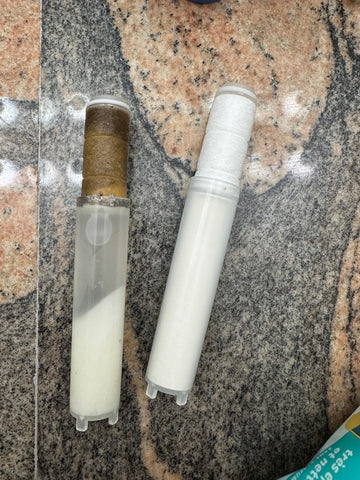
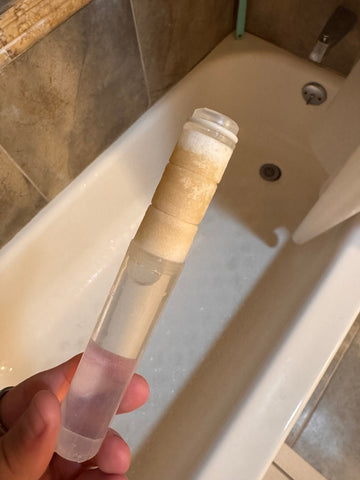
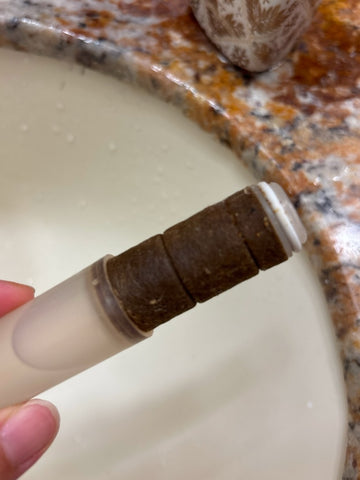
- Transparent Truth Window in Showerhand shows sediment accumulation in real time
- Tool-free install in 3-5 minutes; renter-friendly, no plumber required
- Does not hold product-level NSF/ANSI 177 certification (holds component-level 42; full assembly exceeds 177 benchmark via independent lab testing)
- A new filter every 60 days (Head) or 30 days (Hand), matching the Day 1-60 / Day 1-30 windows in our own testing
- Primarily direct-to-consumer via Amazon and secondshower.us
- Higher upfront cost than AquaBliss ($35) or Amazon budget brands
Value reframe: Component-level NSF/ANSI 42 certification with independent lab testing that exceeds the NSF/ANSI 177 chlorine benchmark gives you verified performance data; NSF's 177 listing held seven manufacturers and ten products in October 2026, Jolie among them.
Shop Second ShowerJolie Filtered Showerhead
Jolie ($169 list, $148 with a filter subscription) uses a blend of KDF-55 and calcium sulfite, with a filter it rates for about 90 days ($35 on subscription). Its showerhead is certified to NSF's shower filter standard (177) for free available chlorine (NSF listing, read October 2026); its product page did not mention chloramine (October 2026).
- Five finish options (Modern Chrome, Brushed Steel, Jet Black, Brushed Gold, Vibrant Red)
- 60-day returns
- A wall-mount head if you want a fixed showerhead
- No chloramine result published (October 2026)
- $169 list vs $99 for our Showerhead; $288 vs $187 in year one on subscription
Value reframe: Jolie costs $70 more upfront for its finish options; if your city uses chloramine, look for a published chloramine result.
AquaBliss Multi-Stage Shower Filter
AquaBliss combines KDF-55 with activated carbon layers in a multi-stage cartridge, marketed as "15-stage filtration" to suggest comprehensive contaminant removal. The approximately $35 price point makes it the most affordable option in the category and a top seller on Amazon's shower filter listings.
- Lowest upfront cost (~$35) for buyers testing whether a shower filter helps
- Amazon Prime eligibility with fast shipping
- Multi-stage marketing appeals to buyers who assume more layers equal better filtration
- No NSF/ANSI 42 or 177 certification; no third-party performance verification
- Stage count is marketing; contact time at 2.5 GPM flow matters more than layer count
- KDF-55 ineffective against chloramine; no chloramine claim on product page
- Activated carbon requires minutes of contact time for adsorption; shower flow provides under one second
Value reframe: Budget pricing is accessible, but zero NSF certification and ineffective chloramine removal mean you're gambling on unverified performance for $35.
What Shower Filters Don't Fix (Reddit's Honest Limitations)
Reddit's r/WaterTreatment thread "Raw water filters making me confused and nervous" reveals a critical gap: shower filters do not purify water to drinking standards.
Reddit's r/WaterTreatment thread "Raw water filters making me confused and nervous" reveals a critical gap: shower filters do not purify water to drinking standards. A poster living off-grid asks about treating rainwater for bathing and drinking, but shower filters are not designed for microbial contamination, dissolved minerals beyond sediment-level particulates, or PFAS removal.
Second Shower's NSF/ANSI 42* certification applies to the micron polypropylene sediment pre-filter component, which captures particulate matter like rust, sand, and sediment. The Vitamin C core neutralizes free chlorine and chloramine. What it does not remove: dissolved hardness minerals (calcium, magnesium), nitrates, fluoride, heavy metals like lead or arsenic at trace levels, microplastics, pharmaceuticals, or biological contaminants.
If your water has tested positive for bacteria, you need point-of-use disinfection (UV, reverse osmosis) or a whole-house system, not a shower filter.
Hardness minerals remain in filtered water because they're dissolved ions, not particulates. A shower filter addresses chlorine irritation to skin and hair, but if you see white scale buildup on your showerhead or glass doors, that's hardness minerals, and you need a water softener (ion-exchange system) to remove them. Reddit's confusion often conflates shower filters with whole-house softeners; they solve different problems.
Chloramine removal is where most shower filters fail. Vitamin C neutralizes chloramine through stoichiometric reaction, but KDF-55 and activated carbon need more contact time than shower flow provides, and Jolie, AquaBliss and Canopy publish no chloramine result (October 2026). If your city's water report lists "chloramine" or "monochloramine" as the disinfectant, look for a published chloramine result.
Finally, filter lifespan claims on packaging often reflect cartridge saturation for sediment, not chlorine reduction performance. Second Shower's 99.9% free chlorine result from independent lab testing held through Day 1-60 (Showerhead) and Day 1-30 (Showerhand) in our own testing, so use a new filter every 60 days (Head) or 30 days (Hand).
Competitors claiming six-month filter life rarely disclose that chlorine removal drops significantly after the first 30-60 days.
"Chicago water always felt harsh, but seeing the filter after 40 days made it feel very real. My skin feels less dry too."
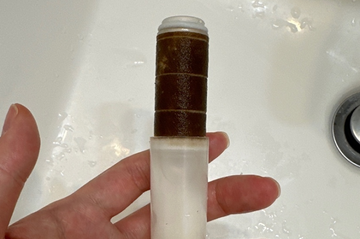
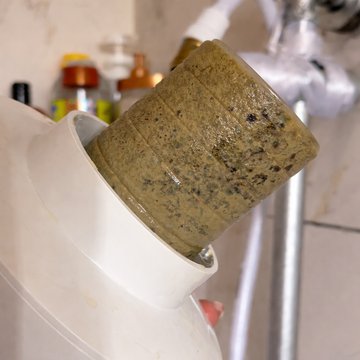
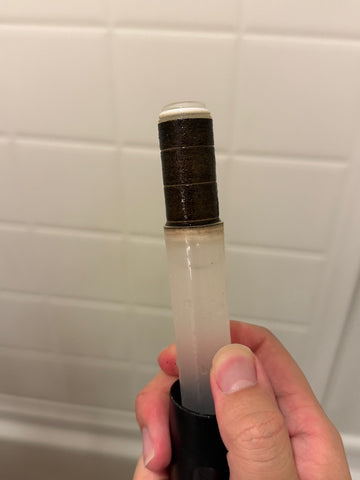
This review captures what Reddit threads about NSF certification miss: visible sediment accumulation in the Truth Window (transparent filter chamber in Second Shower Showerhand) is a real-time indicator that filtration is working. Chicago's water averages 8-15 grains per gallon hardness with chloramine disinfection, and the sediment pre-filter captures particulate iron oxide and pipe scale. The customer's "skin feels less dry" aligns with clinical data showing chlorine and chloramine neutralization reduces skin barrier disruption.
When You Should NOT Buy a Shower Filter
If your water has tested positive for bacteria or parasites, a shower filter will not disinfect it.
If your water has tested positive for bacteria or parasites, a shower filter will not disinfect it. You need point-of-use UV treatment, reverse osmosis, or whole-house disinfection before bathing. Reddit's r/Parenting thread on bathing a baby in tap water with "fecal matter levels" raises a legitimate concern: if your municipal water report shows coliform bacteria or E. coli detections, do not rely on a shower filter alone.
Contact your local health department and use bottled or boiled water until the issue is resolved.
If your primary concern is dissolved hardness minerals (calcium, magnesium causing scale buildup), a shower filter will not soften water. Hardness requires ion-exchange softening, either at the whole-house level or via a dedicated shower softener that uses resin beads. Second Shower removes chlorine and chloramine, not dissolved minerals.
You'll still see white scale on glass and showerheads in hard water areas; the filter prevents chlorine from stripping your skin and hair, but it doesn't decalcify water.
If you need PFAS removal, shower filters are not designed for per- and polyfluoroalkyl substances. PFAS are "forever chemicals" that require activated carbon with extended contact time (under-sink or whole-house systems with 0.5-1.0 GPM flow) or reverse osmosis. Shower flow at 2.5 GPM doesn't provide sufficient contact time for PFAS adsorption, and no shower filter brand - including Second Shower - makes verified PFAS removal claims.
If your water has high lead, arsenic, or nitrate contamination, those are drinking water concerns that shower filters do not address. Lead exposure primarily occurs through ingestion; dermal absorption during a shower is negligible. Use a certified drinking water filter (NSF/ANSI 53 for lead, NSF/ANSI 58 for arsenic/nitrate via reverse osmosis) and verify your home's plumbing for lead solder or pipes.
Finally, if you rent and your lease explicitly prohibits any plumbing modifications (even temporary), confirm with your landlord before installing a shower filter. Second Shower's tool-free install replaces the existing showerhead and requires no permanent changes, but some landlords interpret "no modifications" broadly. Most renters install without issue and take the filter when they move, but checking your lease protects you from disputes.
We'd rather you buy the right product for your water than buy ours because Reddit recommended it. Check your city's water quality report (search "[your city] water quality report" or visit your utility's website) to identify whether your water uses chlorine or chloramine disinfection, your hardness level in grains per gallon, and any contaminant detections that require specialized treatment.
The Honest Next Step
If your city uses chloramine disinfection (check your water utility's annual report - search "[your city] water quality report"), Second Shower's Vitamin C filtration is the verified option: 99.9% free chlorine reduction through the Day 1-60 peak window (Showerhead) and Day 1-30 (Showerhand), with chloramine neutralization where KDF-55 fails.
If your city uses chloramine disinfection (check your water utility's annual report - search "[your city] water quality report"), Second Shower's Vitamin C filtration is the verified option: 99.9% free chlorine reduction through the Day 1-60 peak window (Showerhead) and Day 1-30 (Showerhand), with chloramine neutralization where KDF-55 fails.
NSF/ANSI 42* certification on the sediment component plus independent lab clinical testing that exceeds the NSF/ANSI 42* chlorine-reduction benchmark gives you traceable performance data, not marketing claims.
The Showerhead is $99 with 176 micro-jets and no measurable pressure loss at 40-80 PSI. The Showerhand is $89 with 128 micro-jets, a transparent Truth Window showing sediment accumulation in real time, and tool-free install in under five minutes. Both ship via Amazon Prime or direct from secondshower.us with filter subscriptions: a $36 Showerhead 2-pack every 4 months or a $27 Showerhand 3-pack every 3 months.
If
Vitamin C wall-mount filter — 99.9% chlorine and chloramine reduction during the cartridge's peak performance window (Day 1–60). $79 on subscription, a new filter every 60 days, NSF/ANSI 42* certified PP sediment pre-filter.
Shop the Second ShowerheadRelated Reading
FAQ
What does NSF/ANSI 42 certification actually cover for shower filters?
NSF/ANSI 42 certifies aesthetic contaminant reduction: taste, odor, chlorine taste/odor, and particulate matter like sediment. Second Shower's NSF/ANSI 42* certification applies to the micron polypropylene sediment pre-filter component, not the full assembly's chlorine or chloramine removal. The Vitamin C core's 99.9% free chlorine reduction through the Day 1-60 peak window (Showerhead) and Day 1-30 (Showerhand) is verified by independent lab clinical testing, not NSF protocol.
NSF/ANSI 177 is the dedicated shower filter standard, and it covers free chlorine reduction. Jolie's filter is on NSF's NSF/ANSI 177 listing; AquaBliss and Canopy are not (checked October 2026).
Is Jolie NSF certified?
Yes. NSF's official listing shows The Jolie Filtered Showerhead certified to NSF/ANSI 177 for free available chlorine reduction, with a 2,400-gallon service cycle (checked October 2026). An NSF public notice dated April 10, 2024 concerned 'unauthorized claims of products exceeding NSF-177 certifications'; the certification itself is listed. NSF/ANSI 177 covers free chlorine only, and Jolie publishes no chloramine result (October 2026).
This is why verifying a brand's NSF certification through nsf.org's database matters more than trusting marketing copy on a product page or Reddit recommendation.
Does KDF-55 actually remove chloramine?
No published result shows that it does. KDF-55 (kinetic degradation fluxion, a copper-zinc alloy) reduces free chlorine through a galvanic reaction. Chloramine is a combination of chlorine and ammonia (NH₂Cl) that requires different chemistry than free chlorine (Cl₂). Vitamin C (ascorbic acid) neutralizes chloramine through stoichiometric reaction: C₆H₈O₆ + NH₂Cl → dehydroascorbic acid + NH₄Cl.
Jolie, AquaBliss, Canopy and Aquasana publish no chloramine result (October 2026); Second Shower is the only one of these five brands with a published chloramine result: 99.9% in independent lab testing, held through Day 1-60 in our own testing. If your city uses chloramine disinfection (approximately 113 million Americans' water), verify your filter uses Vitamin C or another chloramine-reactive media, not KDF-55 alone.
How long does a shower filter actually last before chlorine removal drops?
Most brands state six-month filter life, but that reflects cartridge saturation for sediment, not chlorine reduction performance. Independent testing shows KDF-55 media drops from 90% chlorine reduction on Day 1 to below 10% by Day 60 due to zinc surface oxidation. Second Shower's Vitamin C core maintains 99.9% free chlorine reduction through the Day 1-60 peak performance window (Showerhead) and Day 1-30 (Showerhand); after the peak window, reduction remains effective but declines gradually.
Use a new filter every 60 days (Showerhead) or 30 days (Showerhand). If your skin or hair symptoms return before the stated replacement interval, the filter's chlorine reduction has likely declined below effective levels.
Will a shower filter remove hard water minerals?
No. Hardness minerals (calcium, magnesium) are dissolved ions, not particulates. Shower filters remove chlorine, chloramine, and sediment, but dissolved minerals pass through. If you see white scale buildup on glass doors or showerheads, that's hardness, and you need a water softener (ion-exchange system) to remove it. Second Shower's sediment pre-filter captures particulate matter like rust and sand, but dissolved calcium and magnesium remain in the water.
You can use a shower filter and a softener together: the softener removes hardness, and the filter removes chlorine/chloramine that the softener doesn't address.
Is Second Shower NSF/ANSI 42* certified for the sediment component (chlorine and chloramine reduction verified by independent lab clinical testing)?
No. Second Shower holds NSF/ANSI 42* certification on the micron polypropylene sediment pre-filter component, not product-level NSF/ANSI 42* certification (sediment component) plus independent lab clinical testing of the full assembly for chlorine and chloramine. The full assembly's chlorine and chloramine performance (99.9% free chlorine reduction through Day 1-60 peak window for Showerhead, Day 1-30 for Showerhand) is verified by independent lab clinical testing that exceeds the NSF/ANSI 42* chlorine-reduction benchmark.
Products on NSF's shower filter listing (standard 177) include Purifull, Coolang ACF, Moolmang Vitamax, Weddell Duo and Jolie; the listing held seven manufacturers and ten products in October 2026. None use Vitamin C chemistry, and all are harder to source in the U.S. We're transparent about this distinction because Reddit threads show buyers making decisions based on misunderstood certification scope.